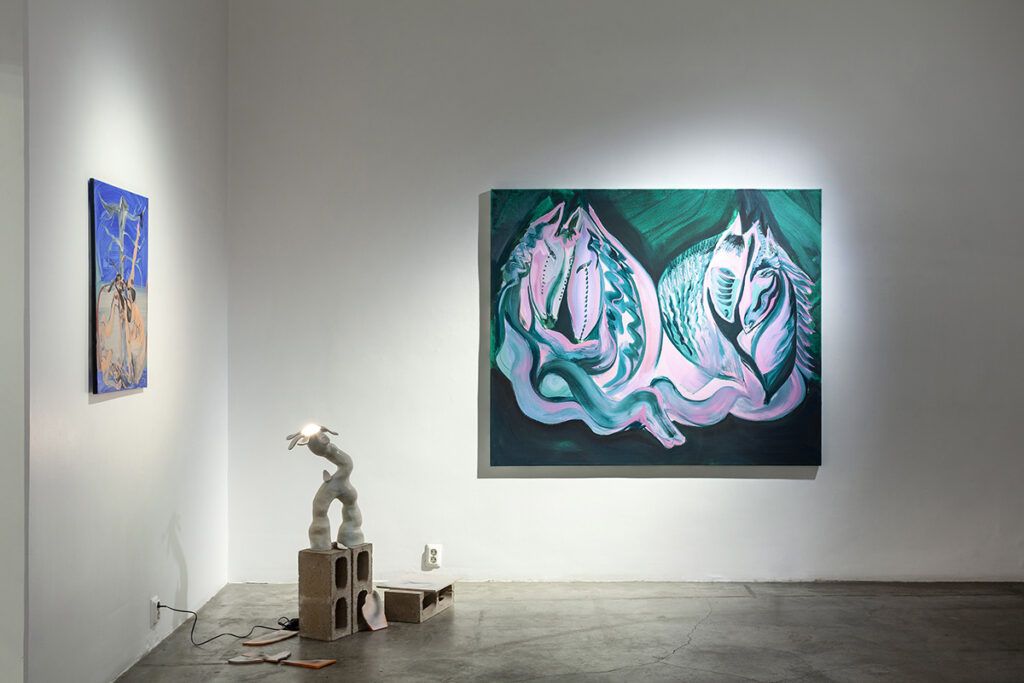
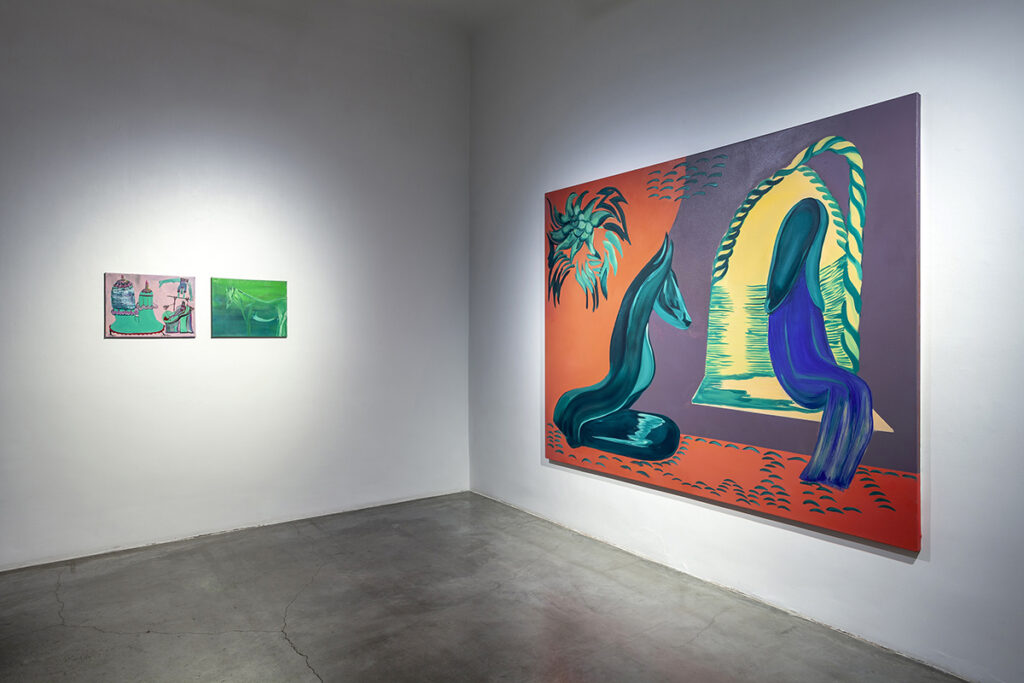
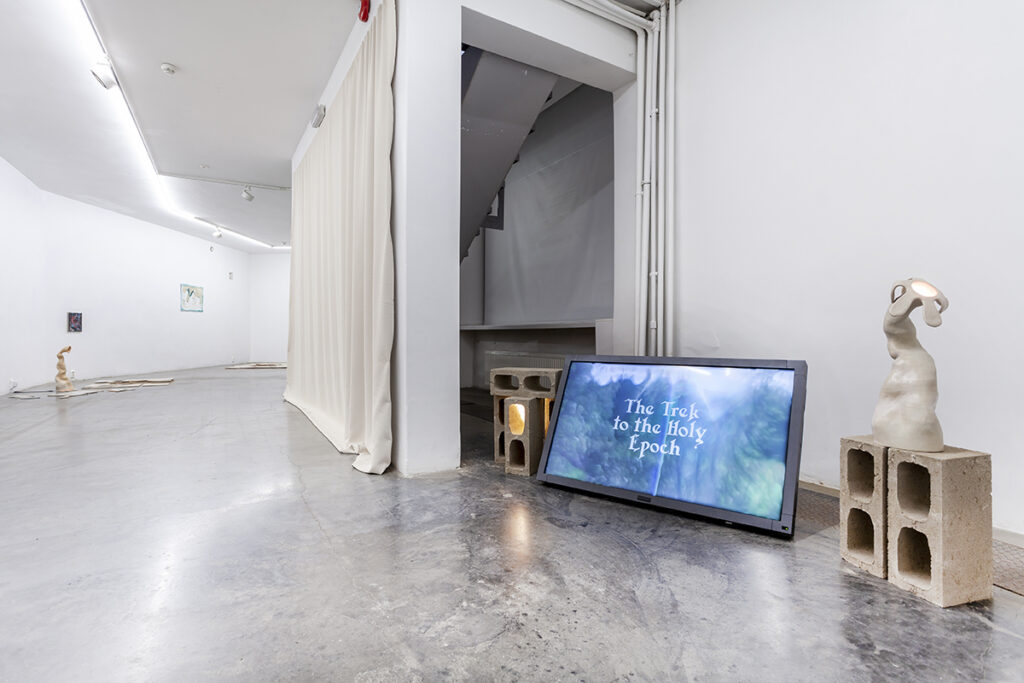
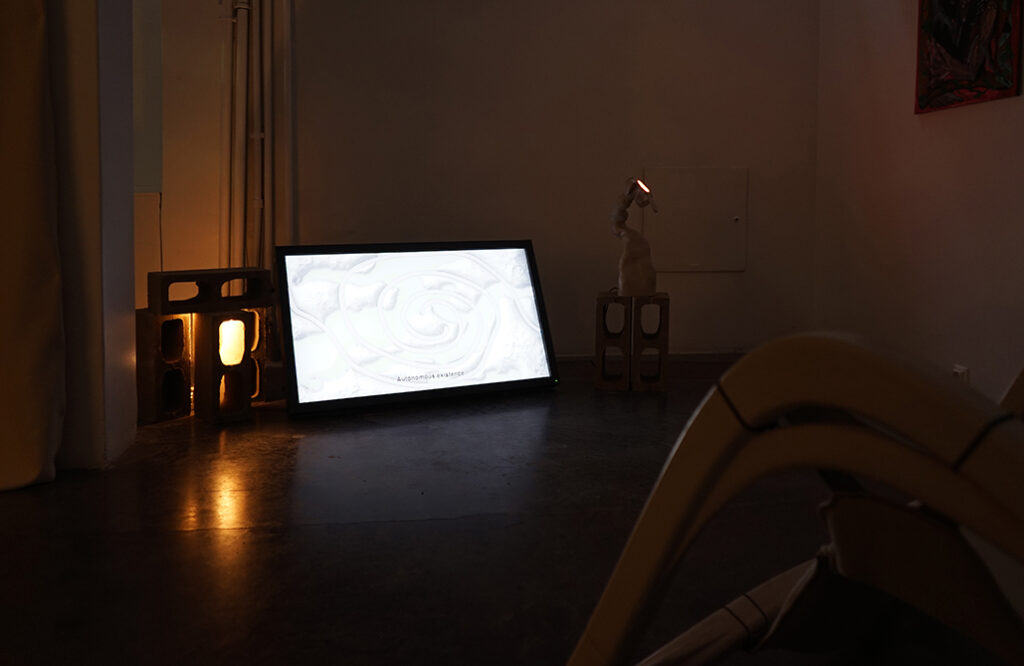
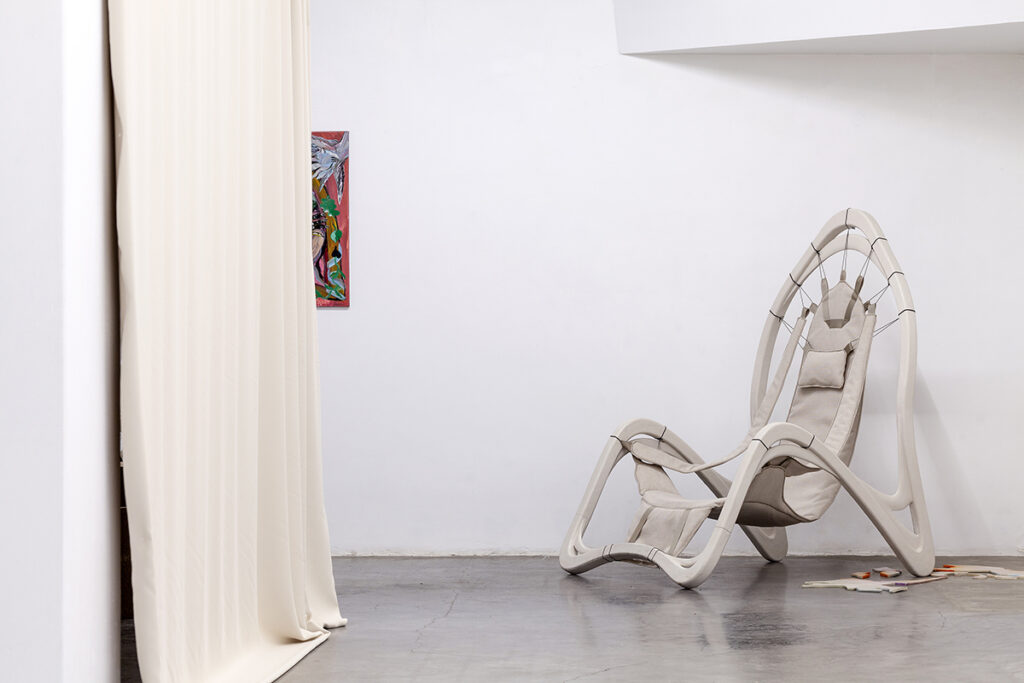
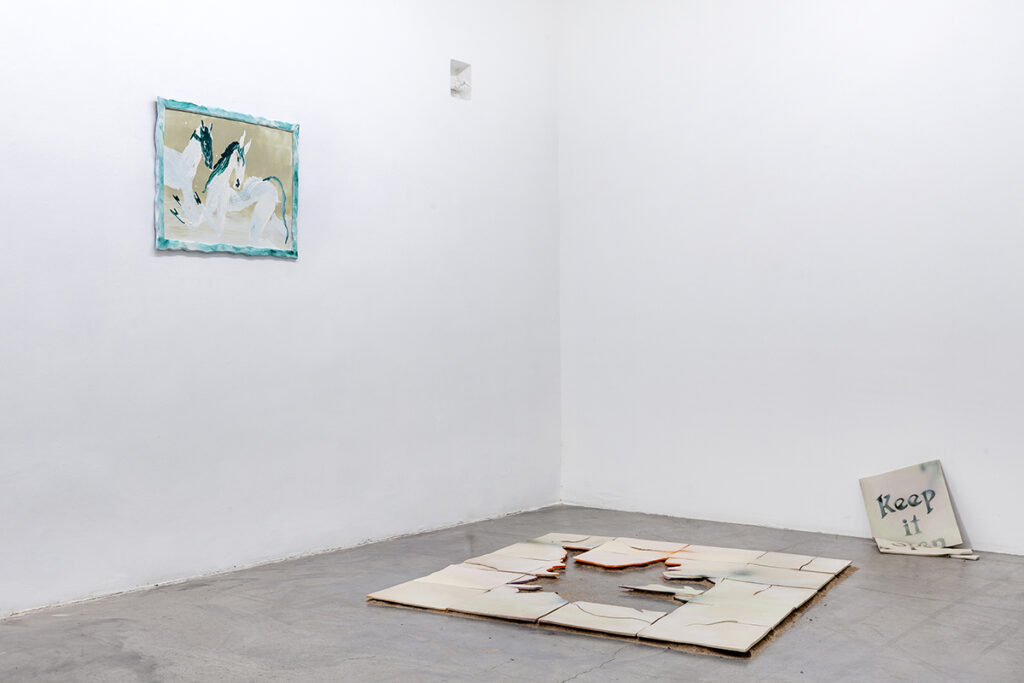
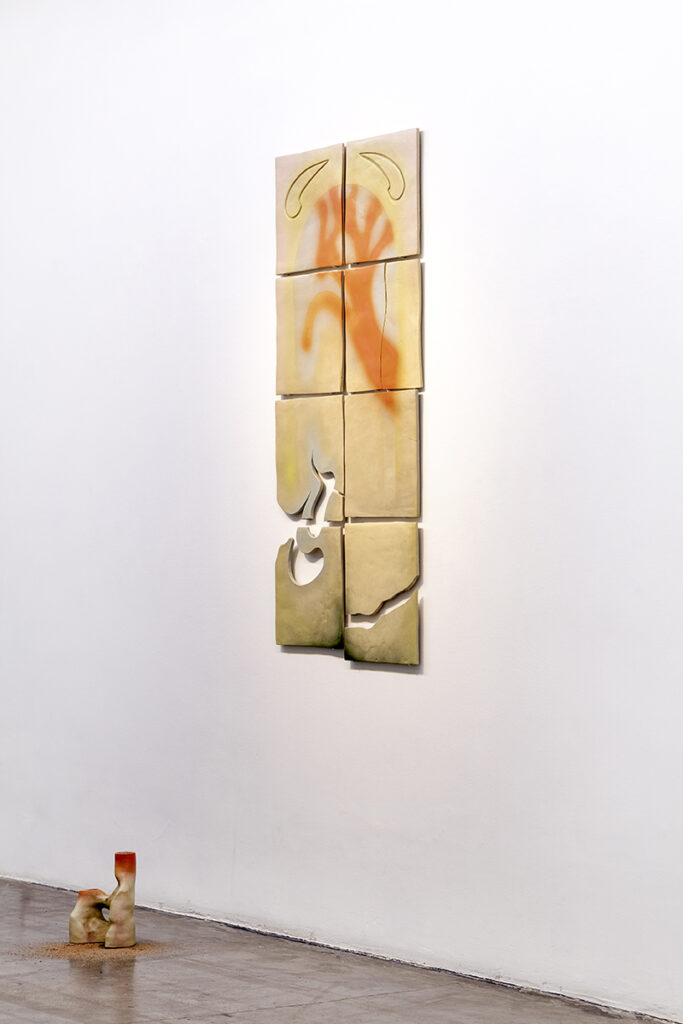
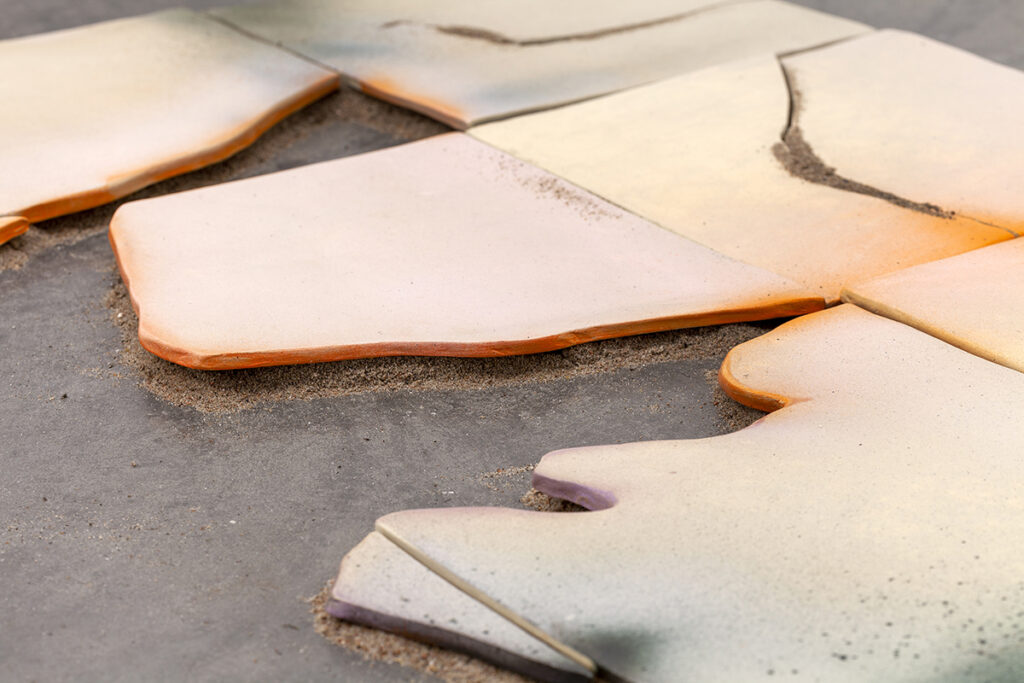
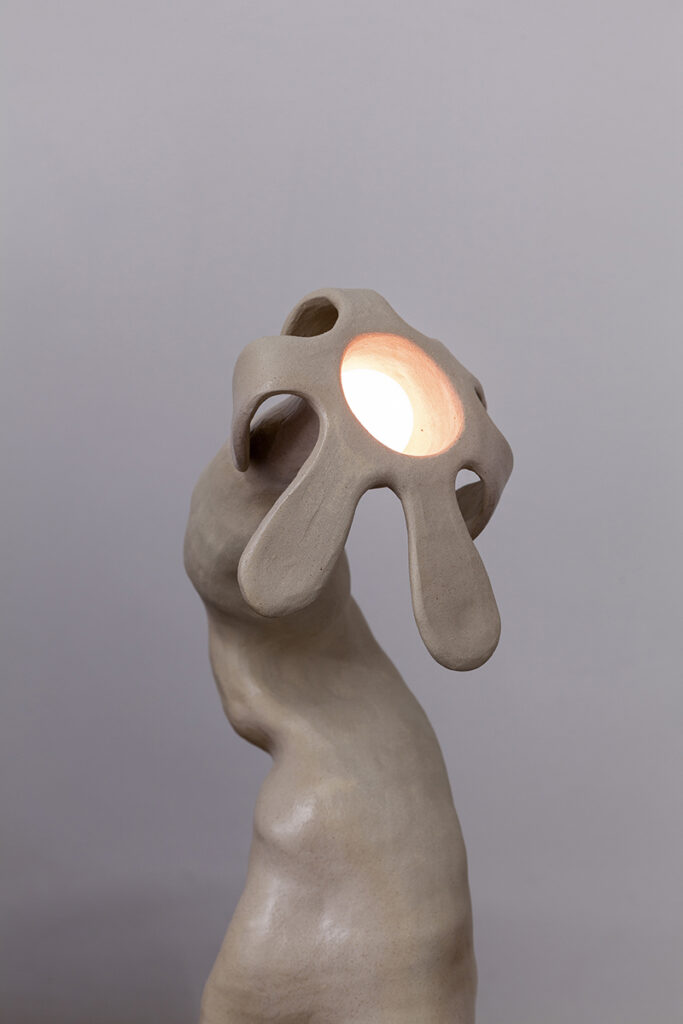
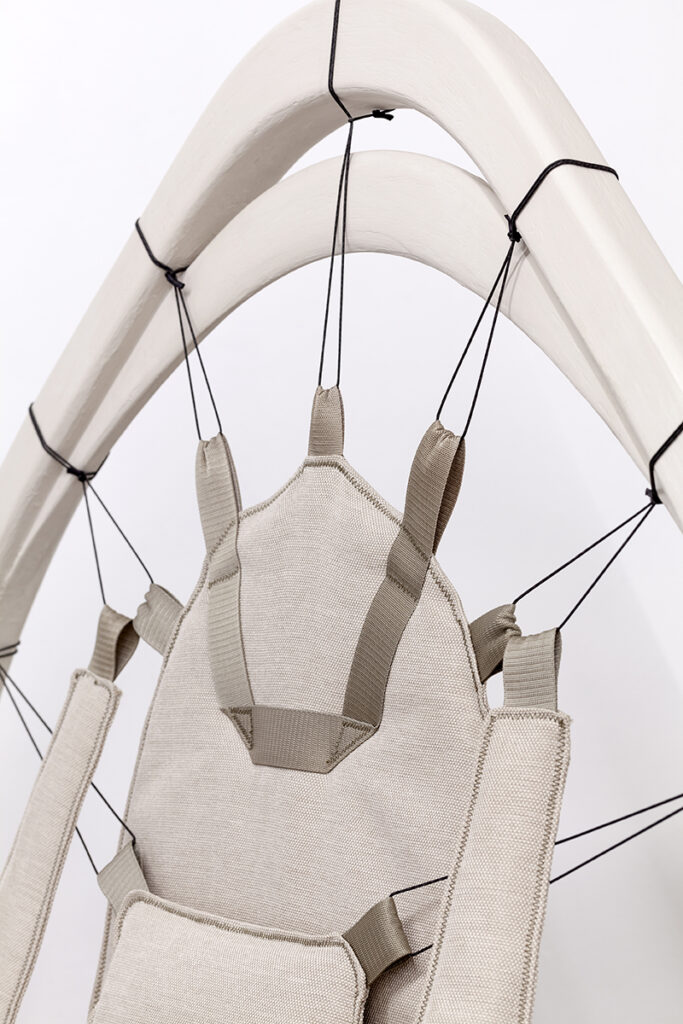
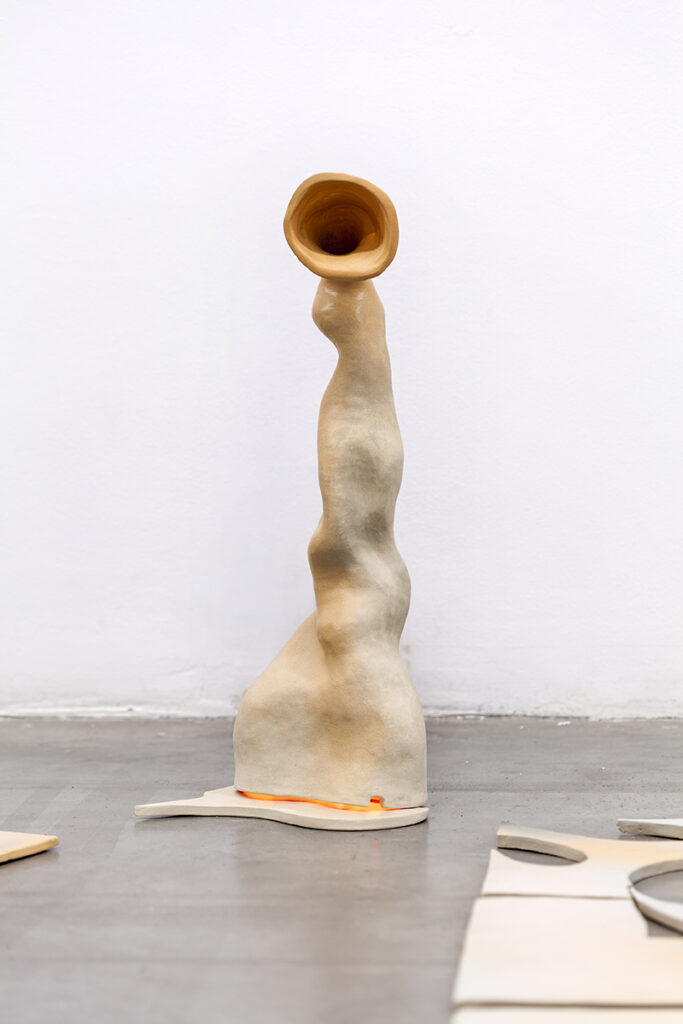
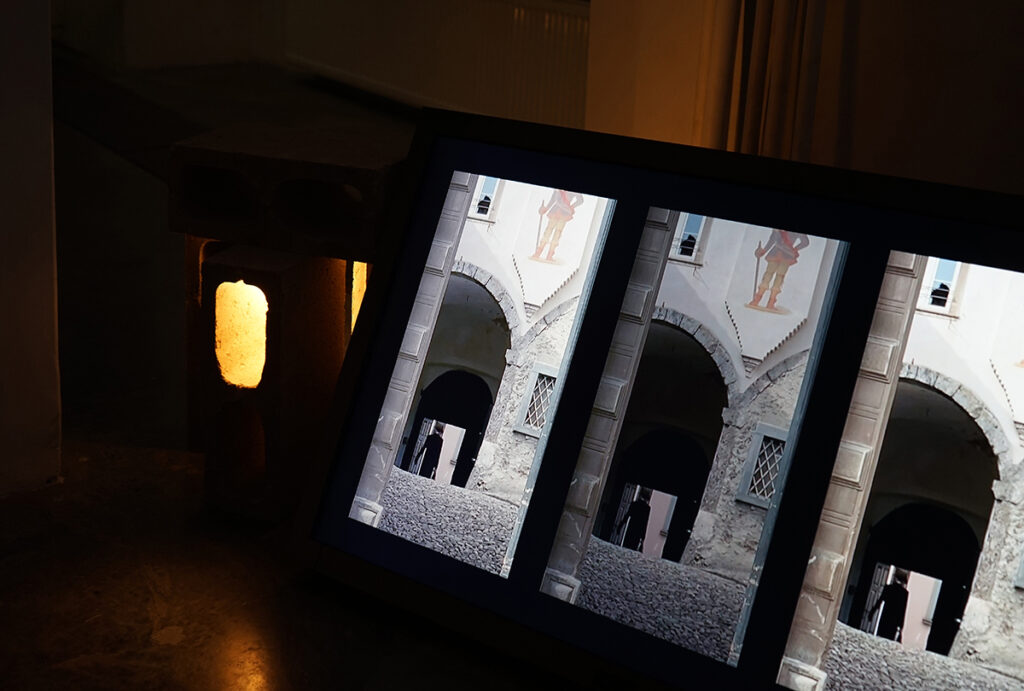
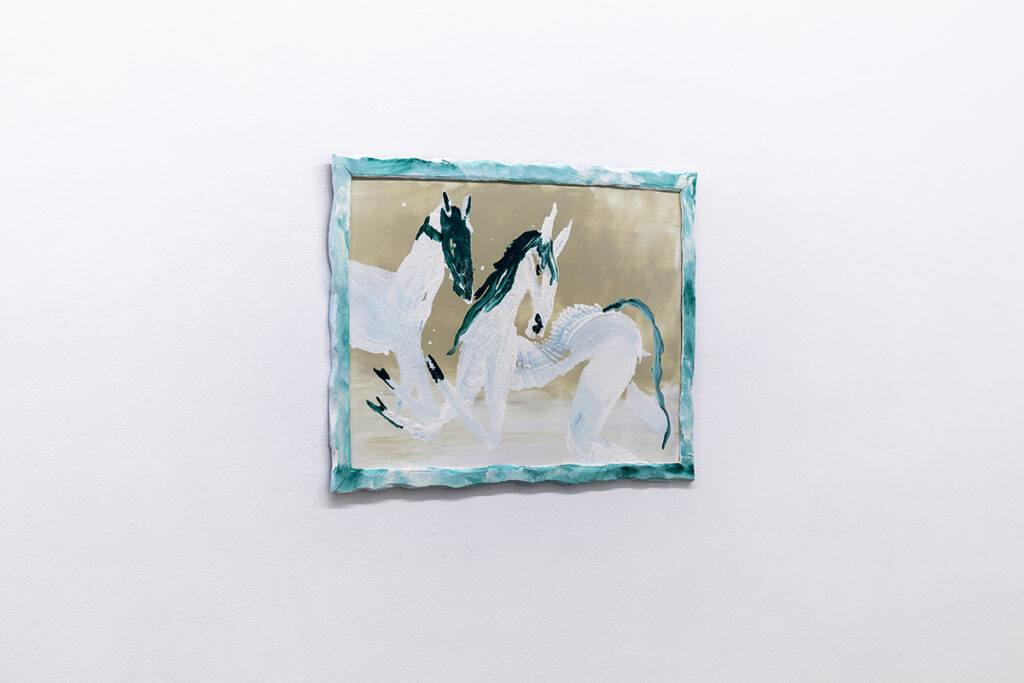
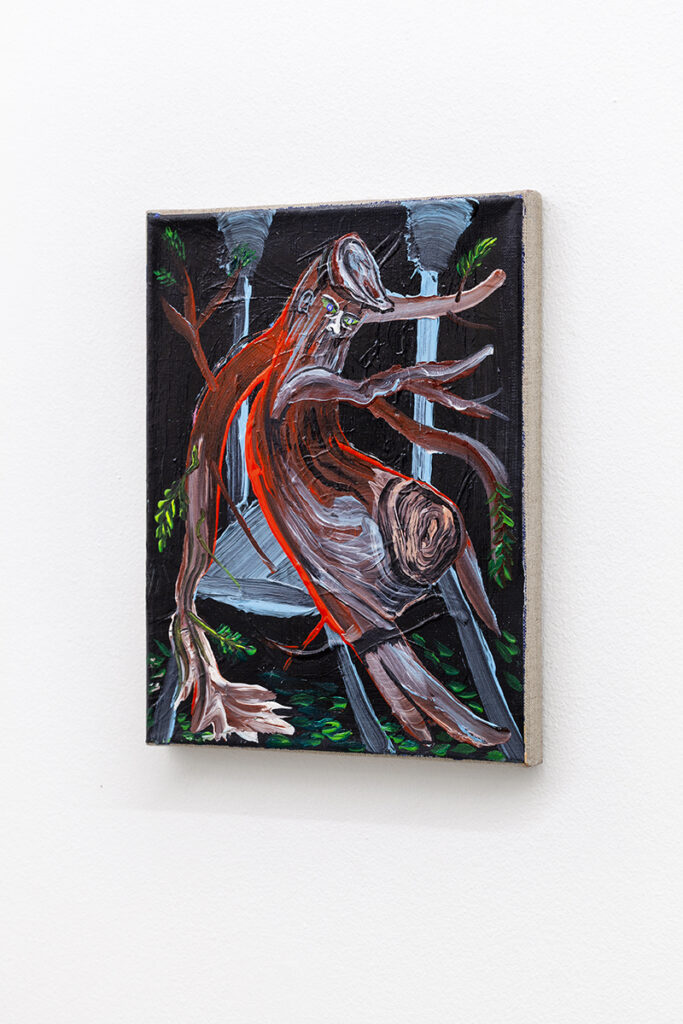
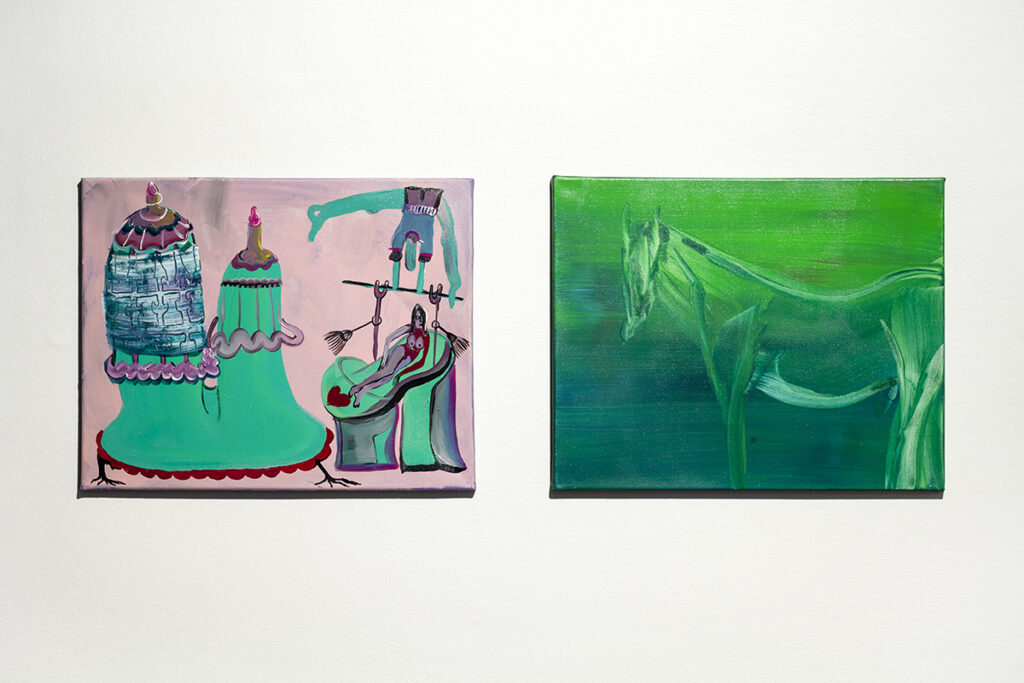
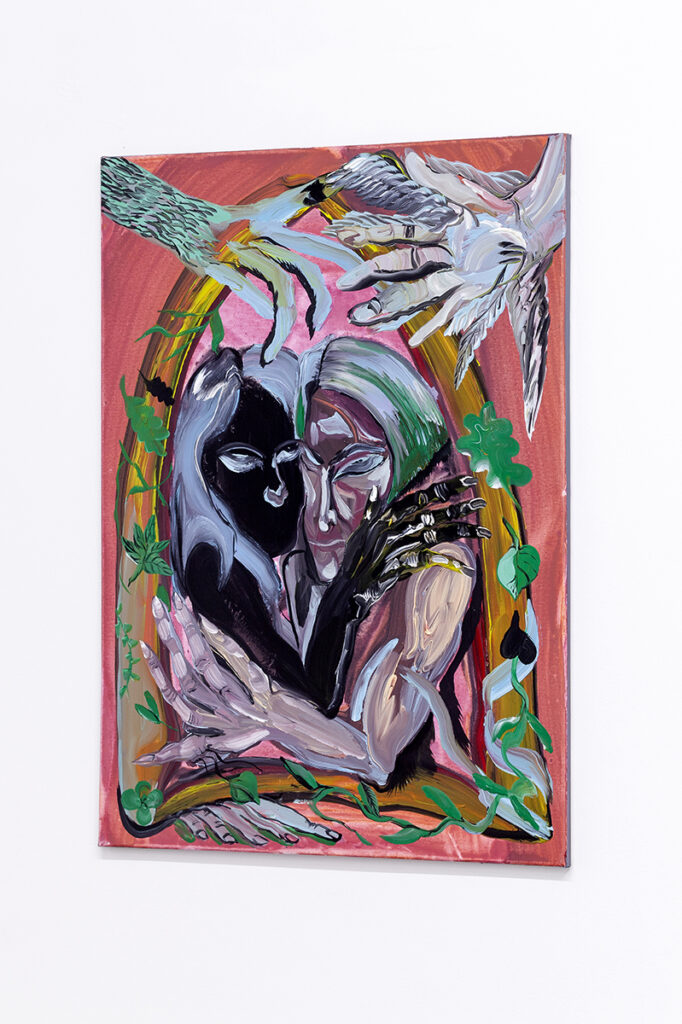
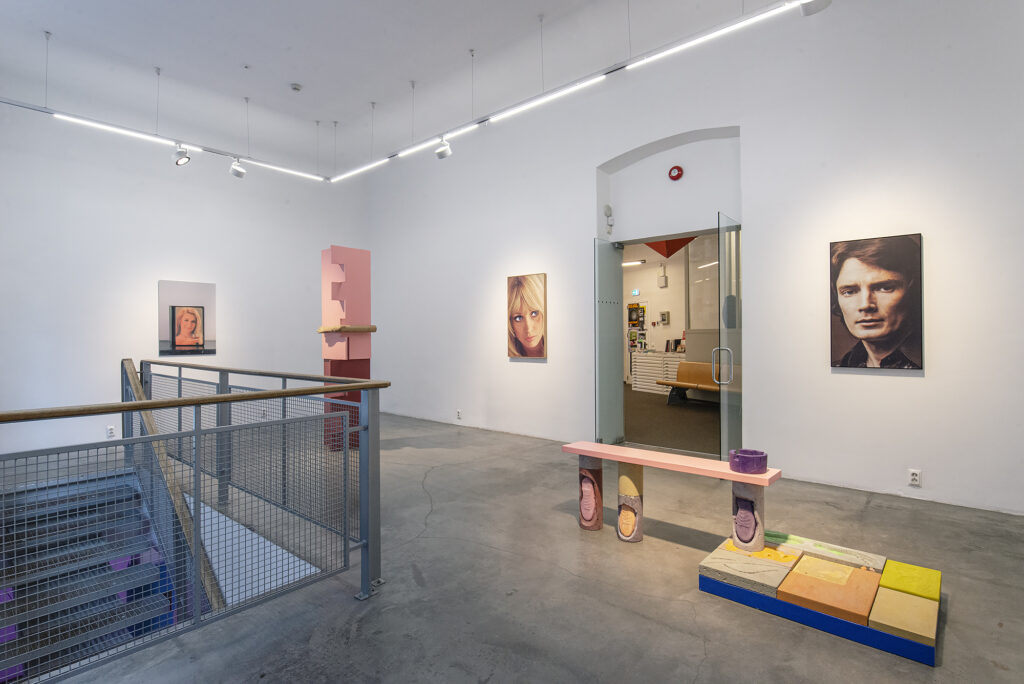
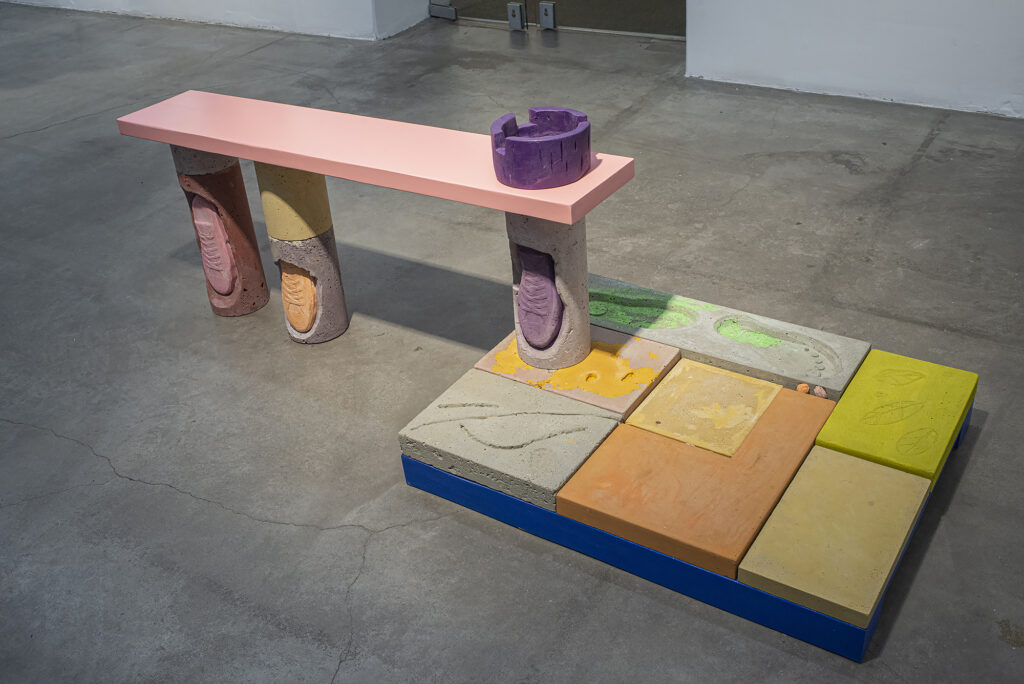
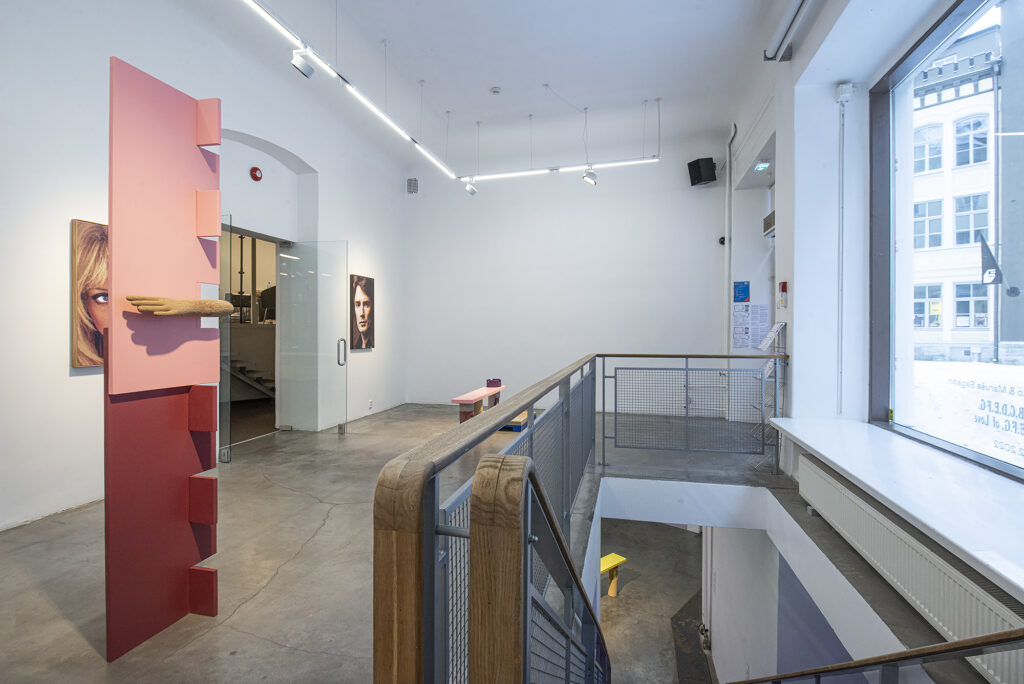
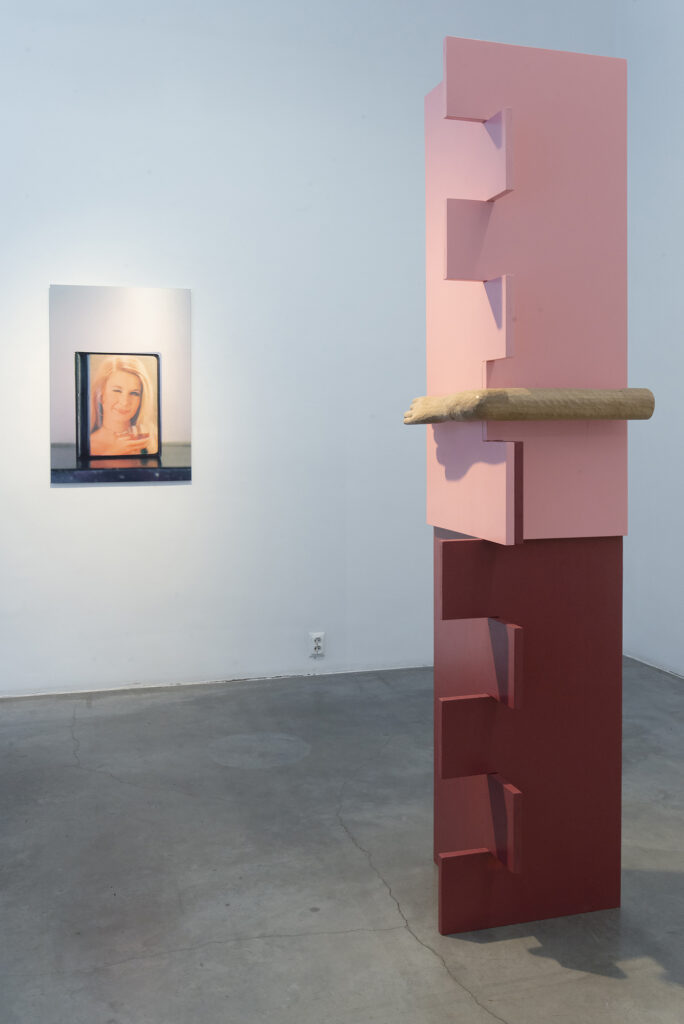
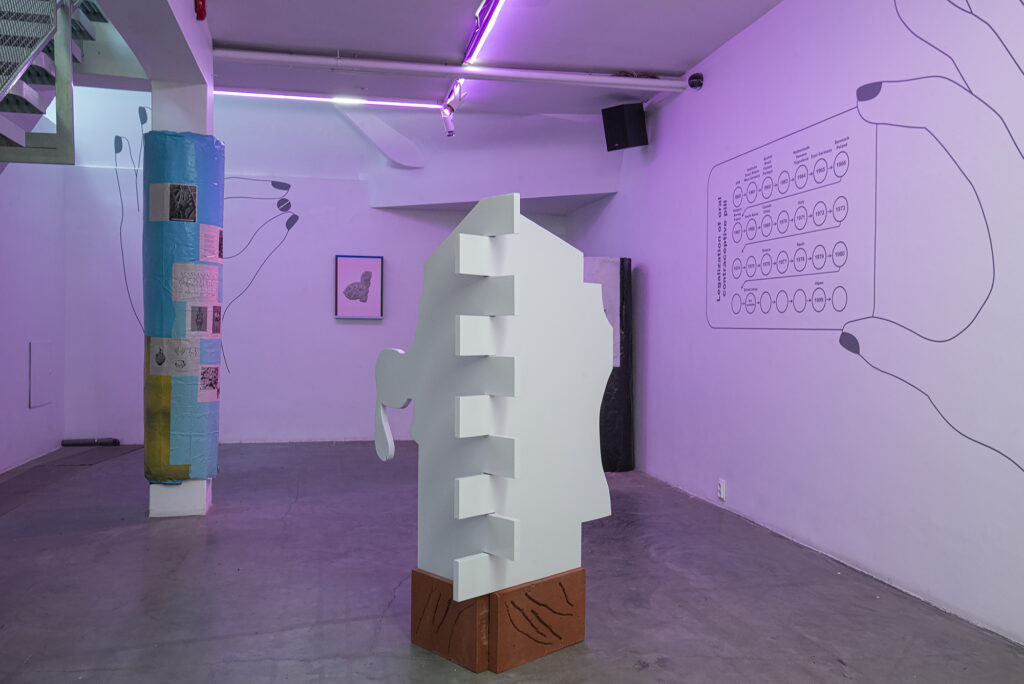
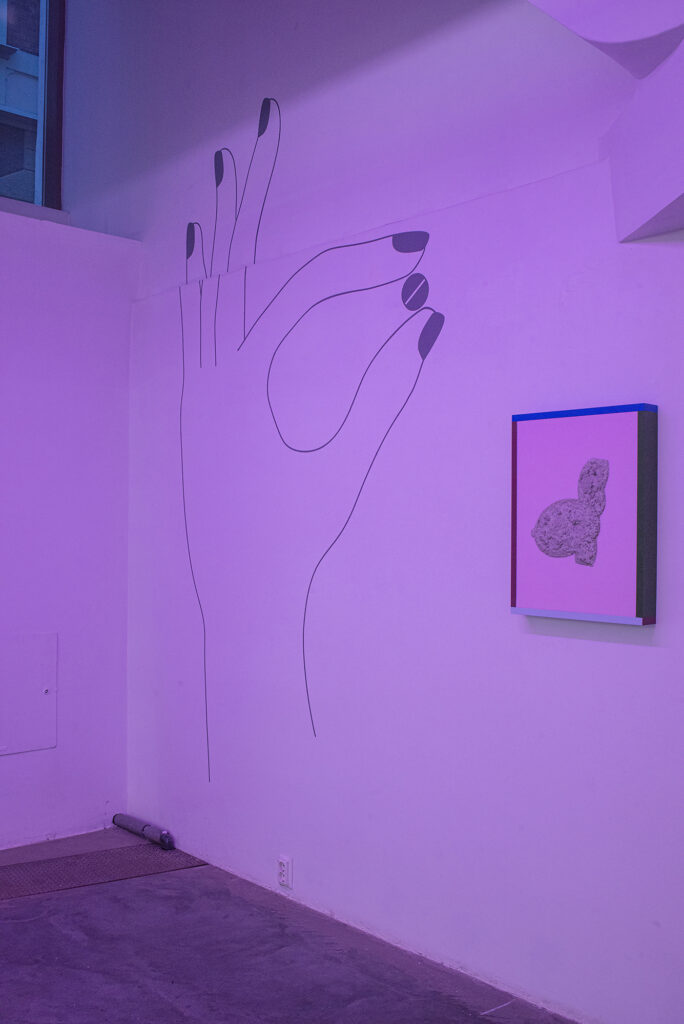
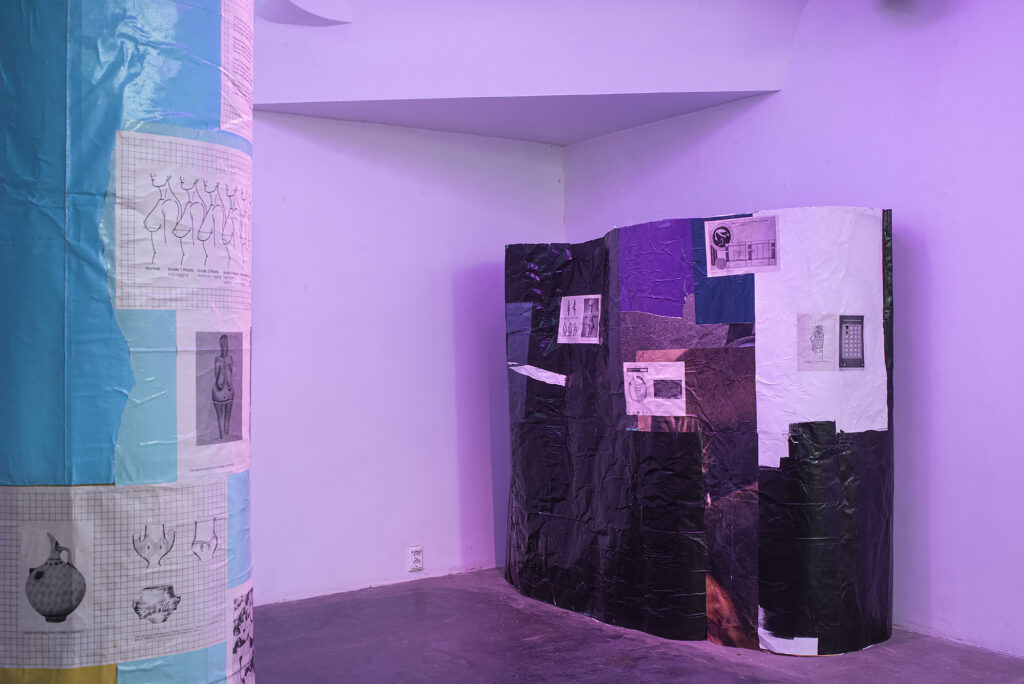
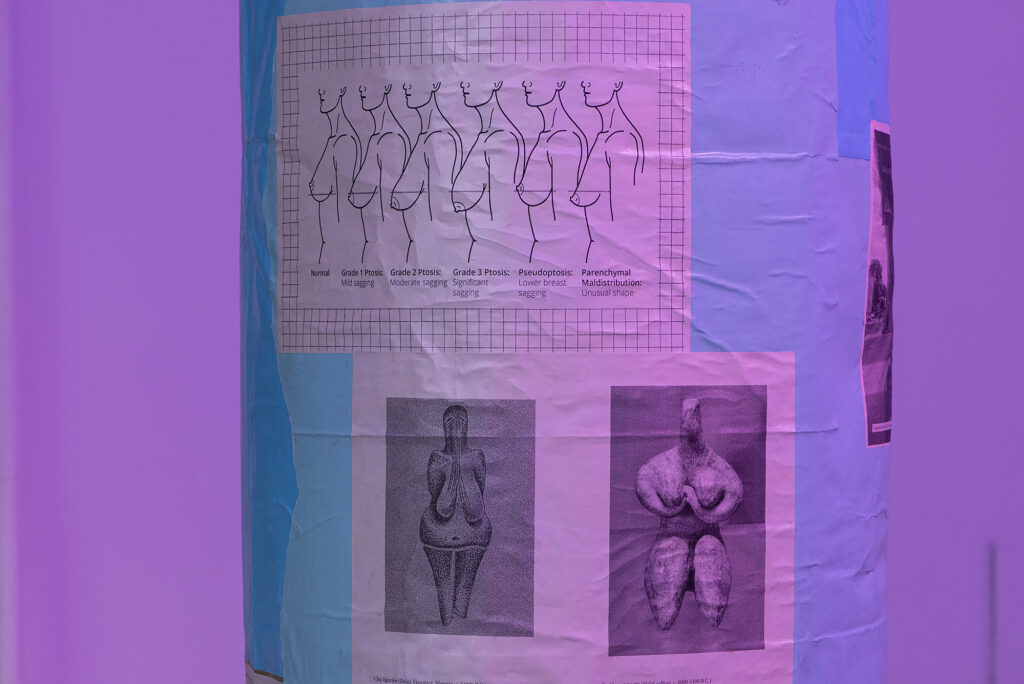
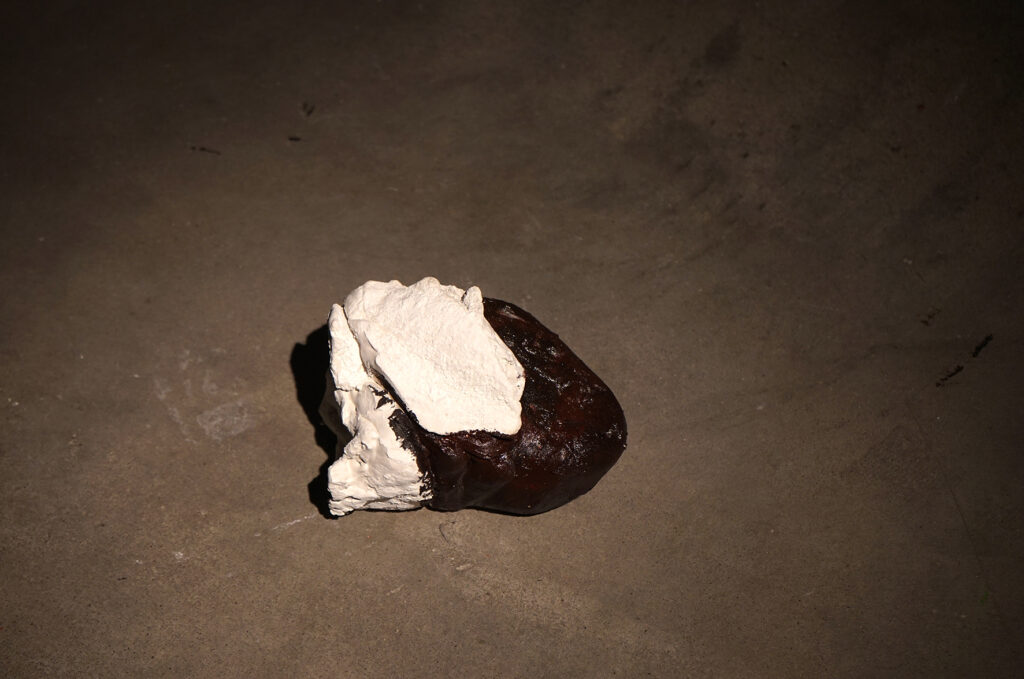
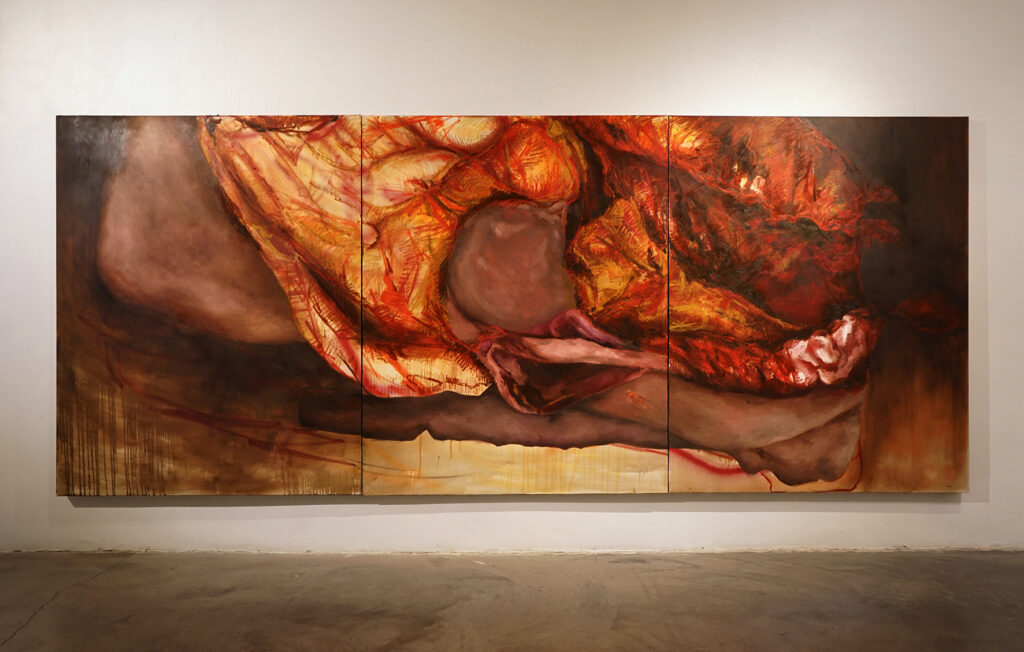
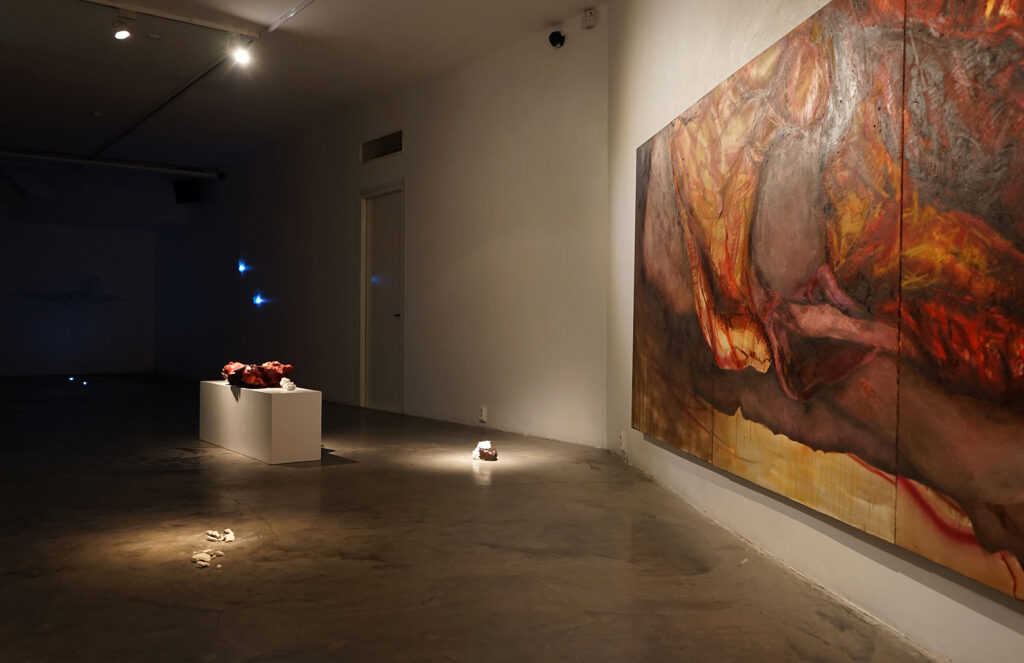
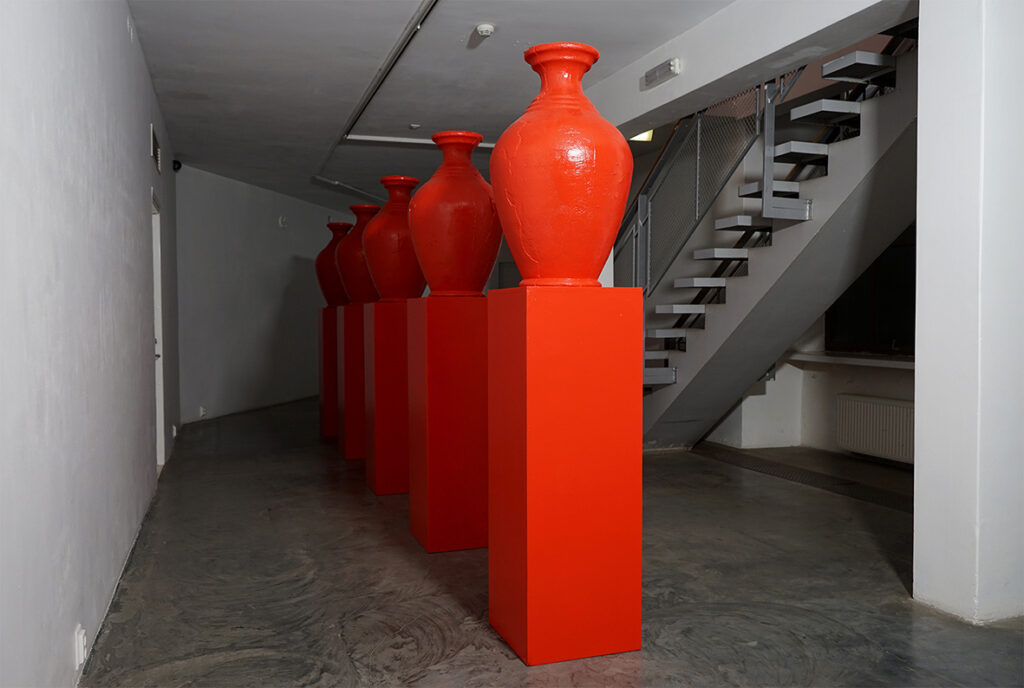
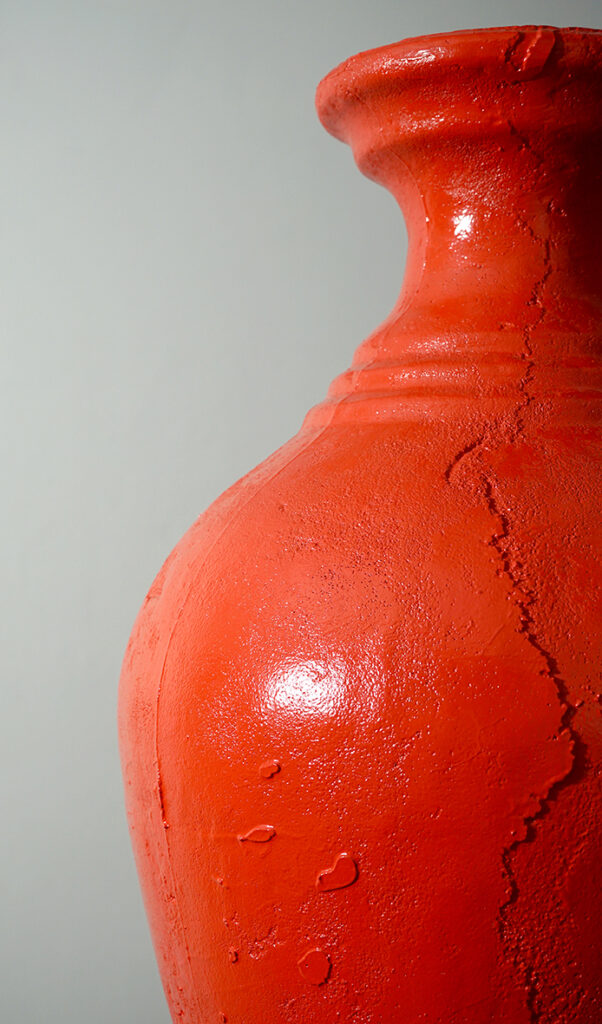
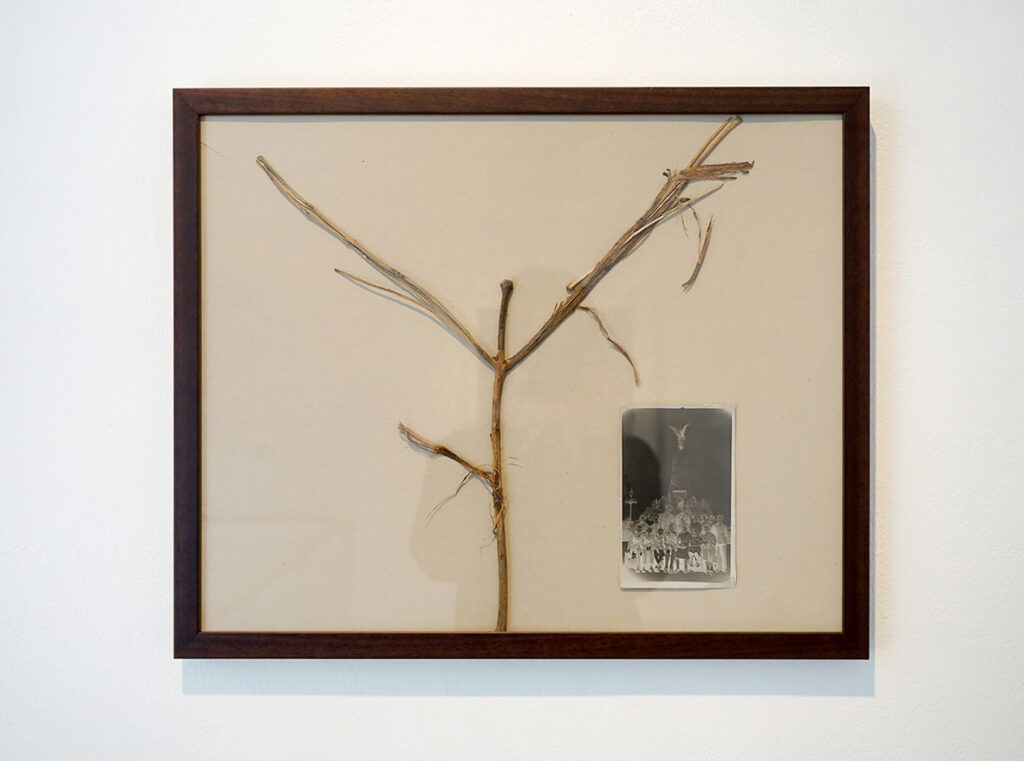
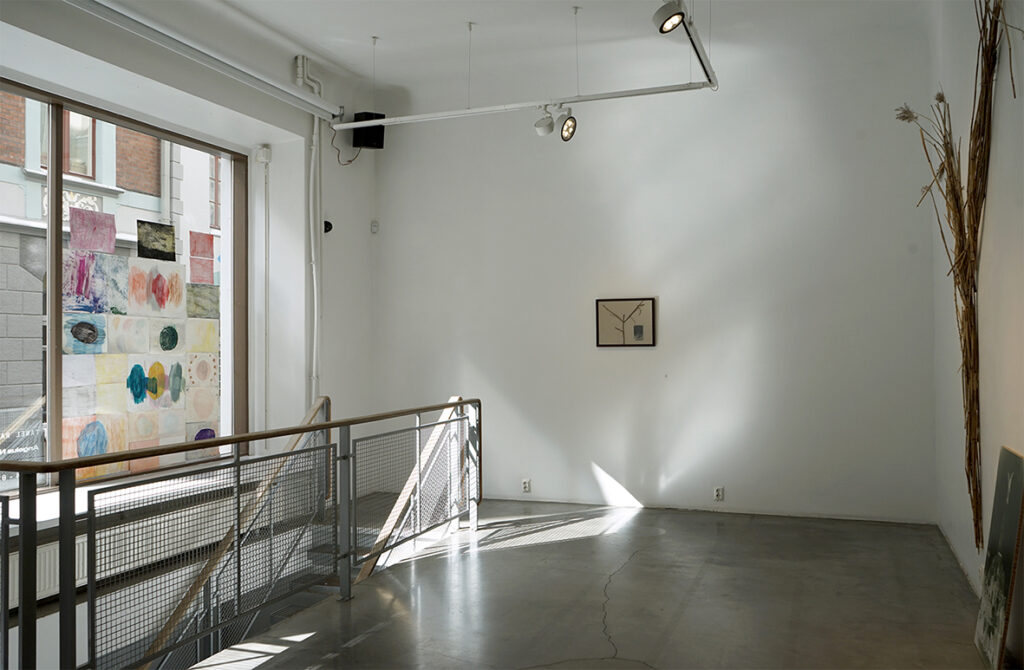
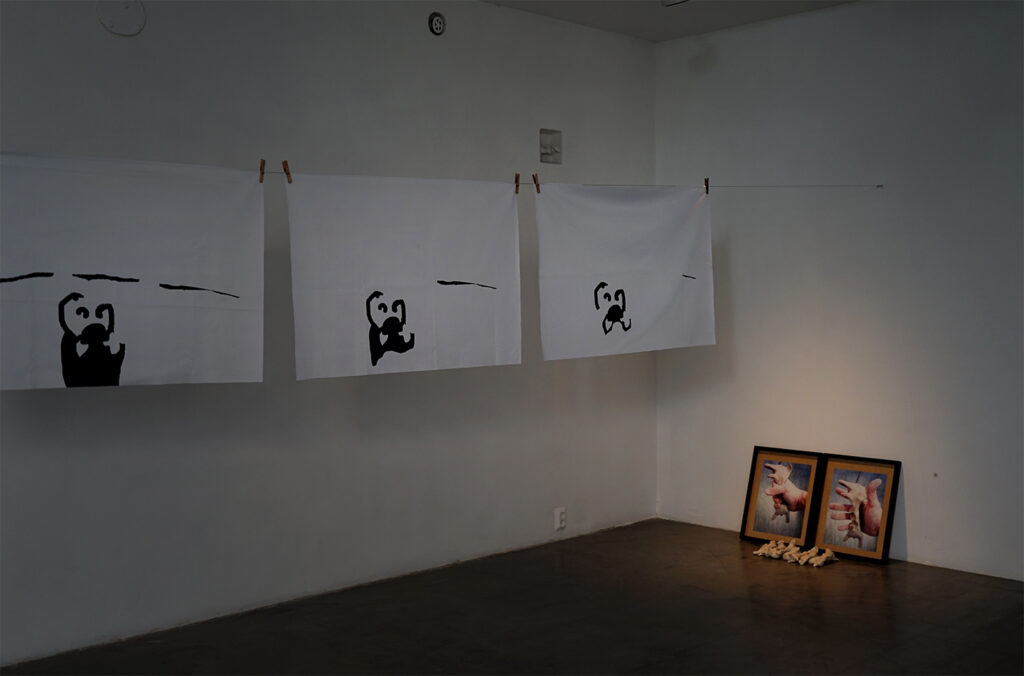
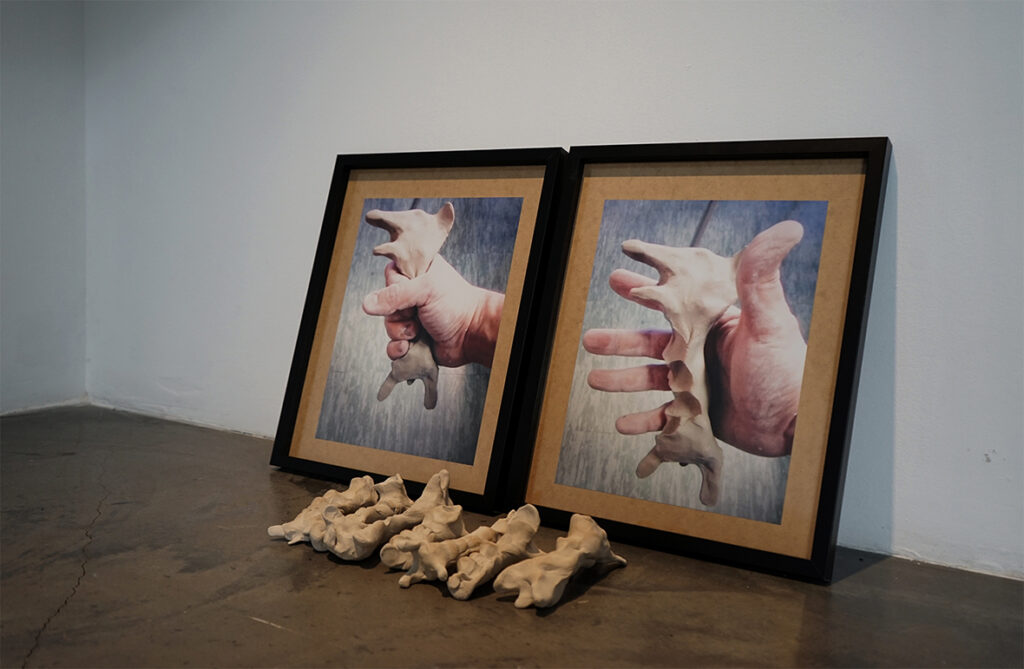
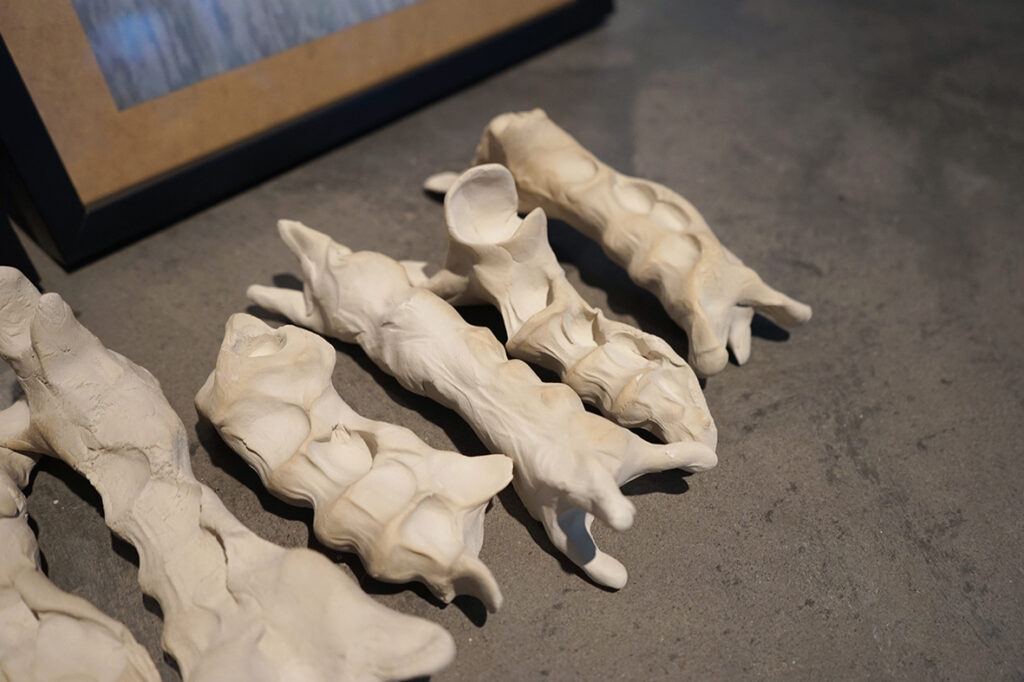
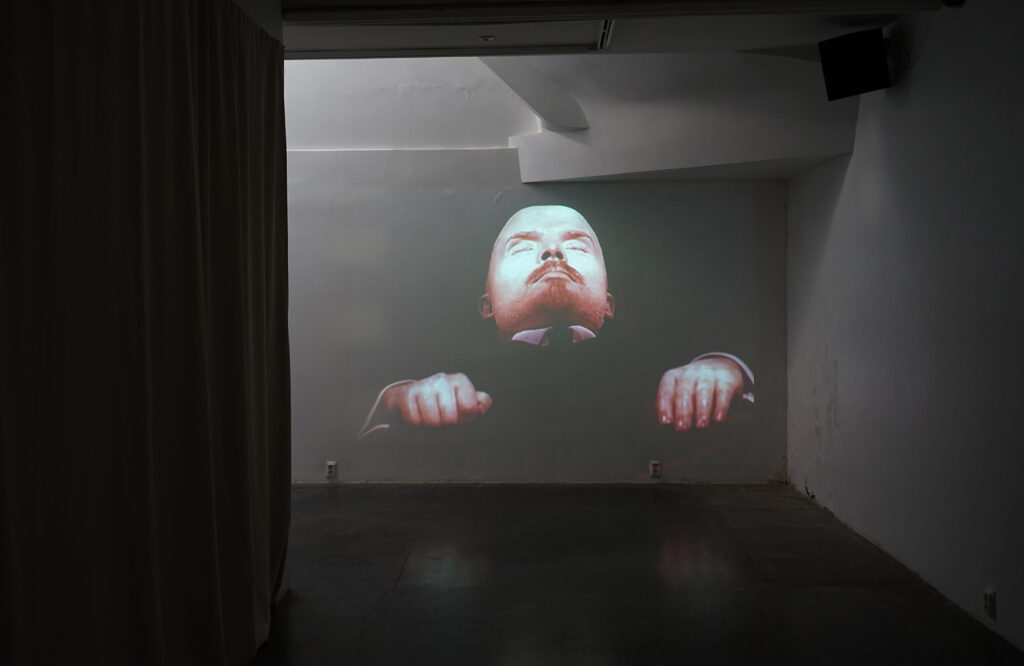
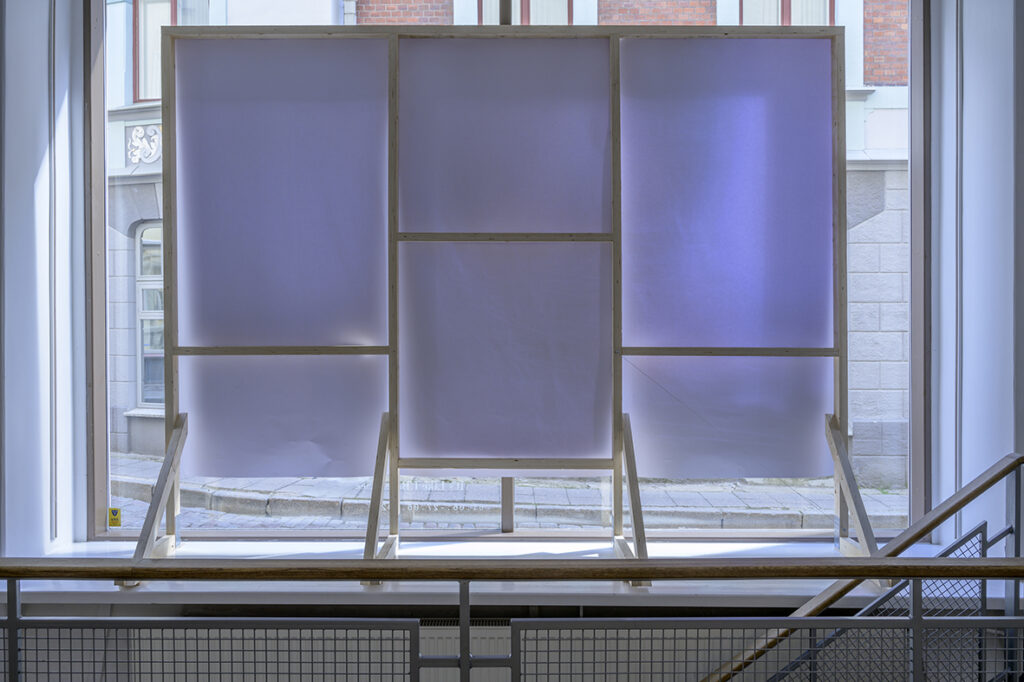
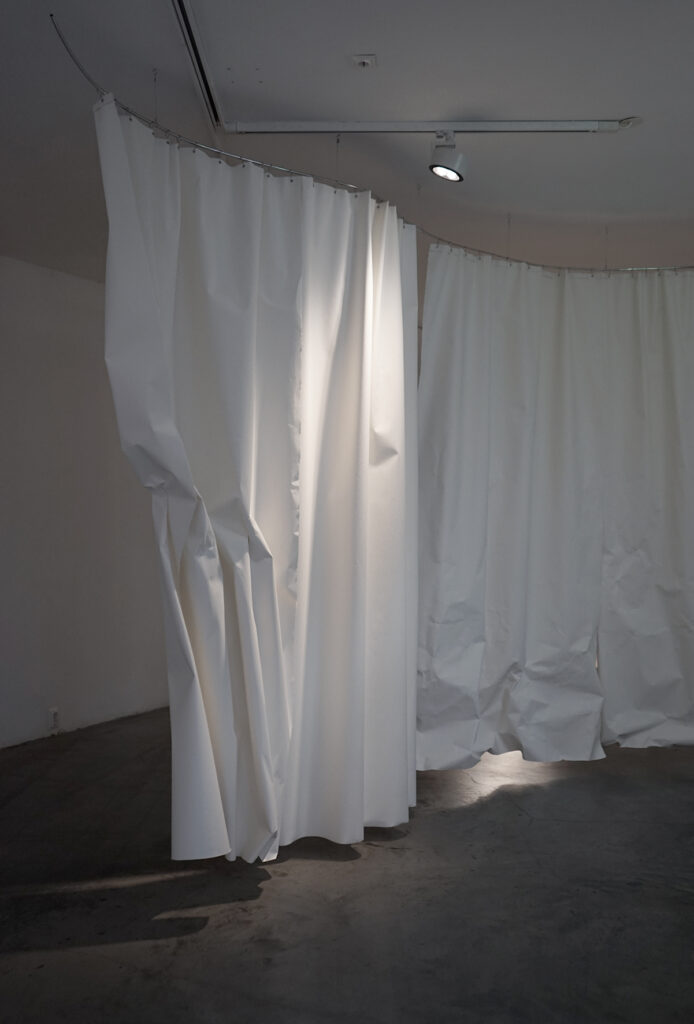
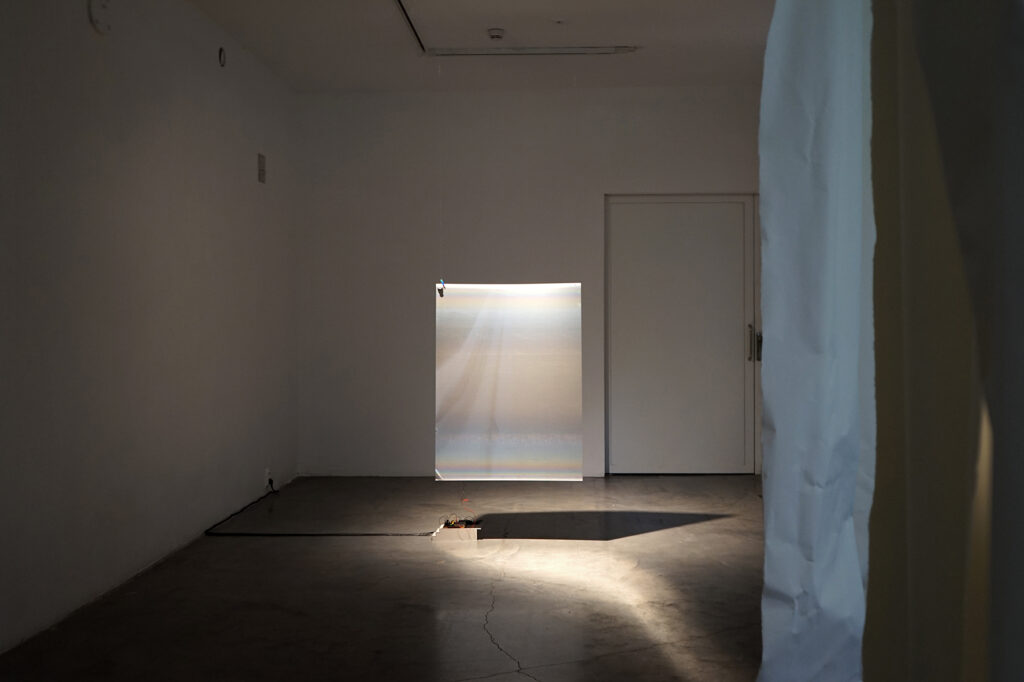
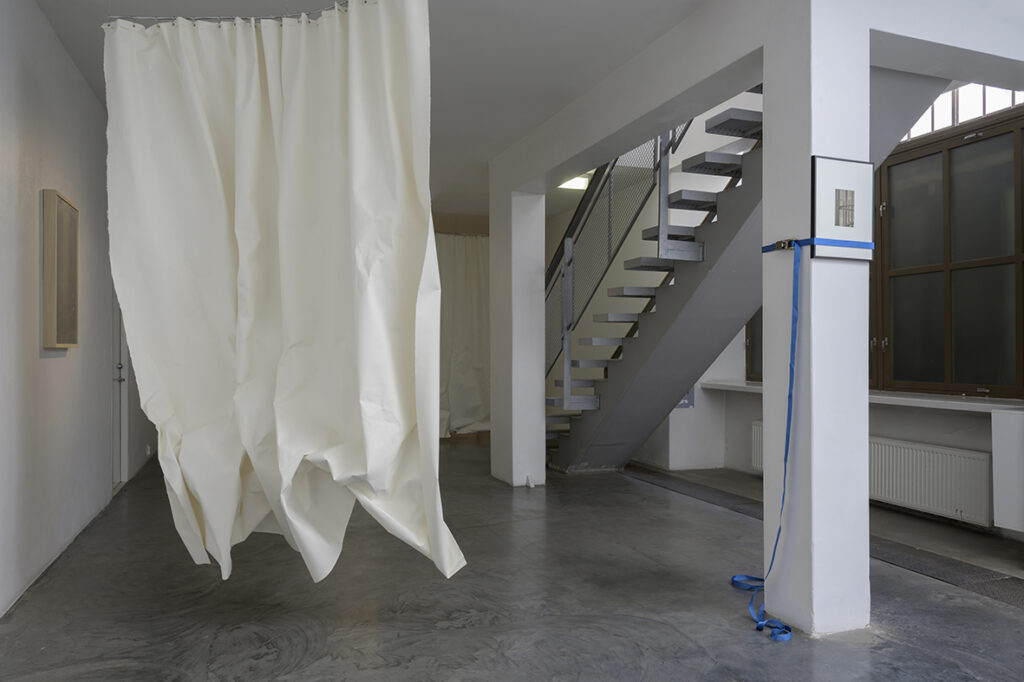
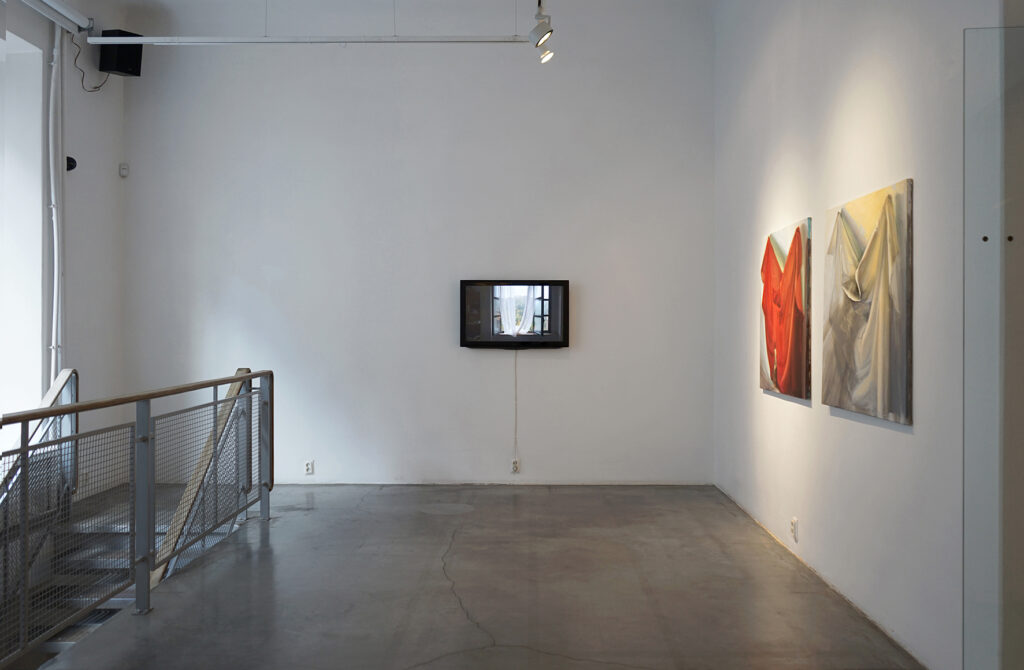
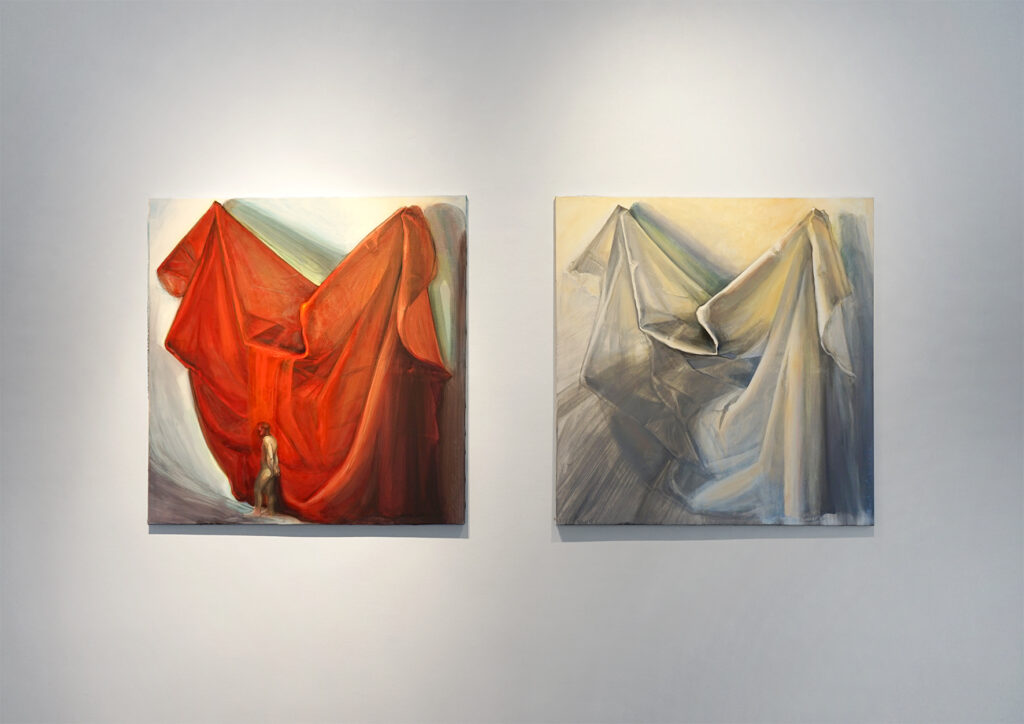
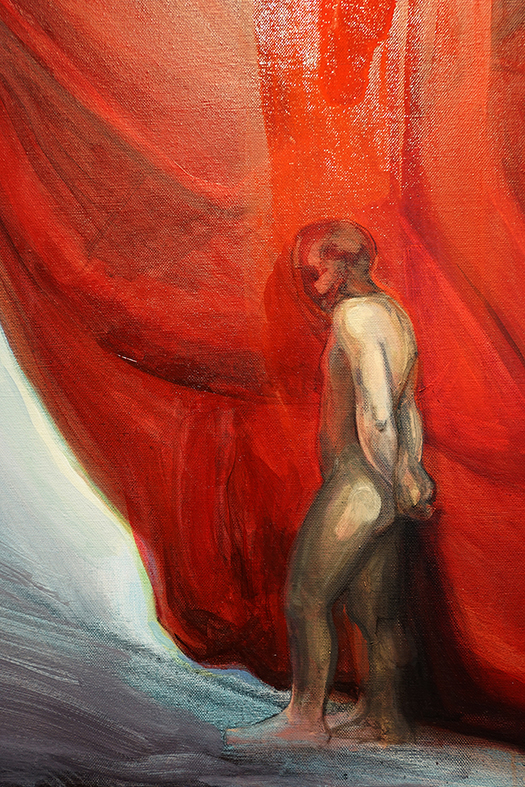
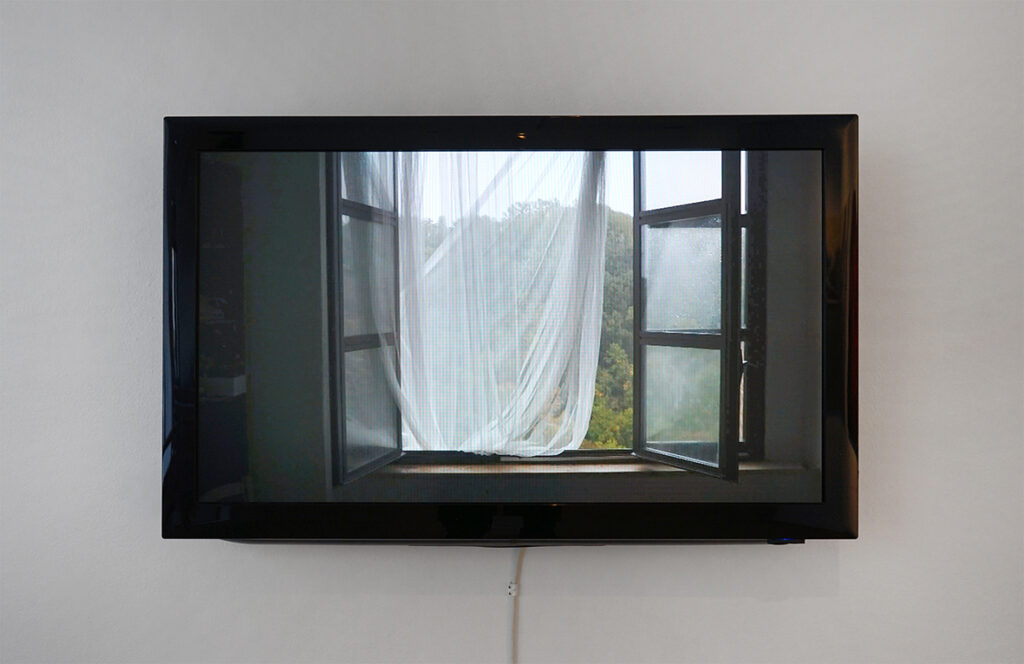
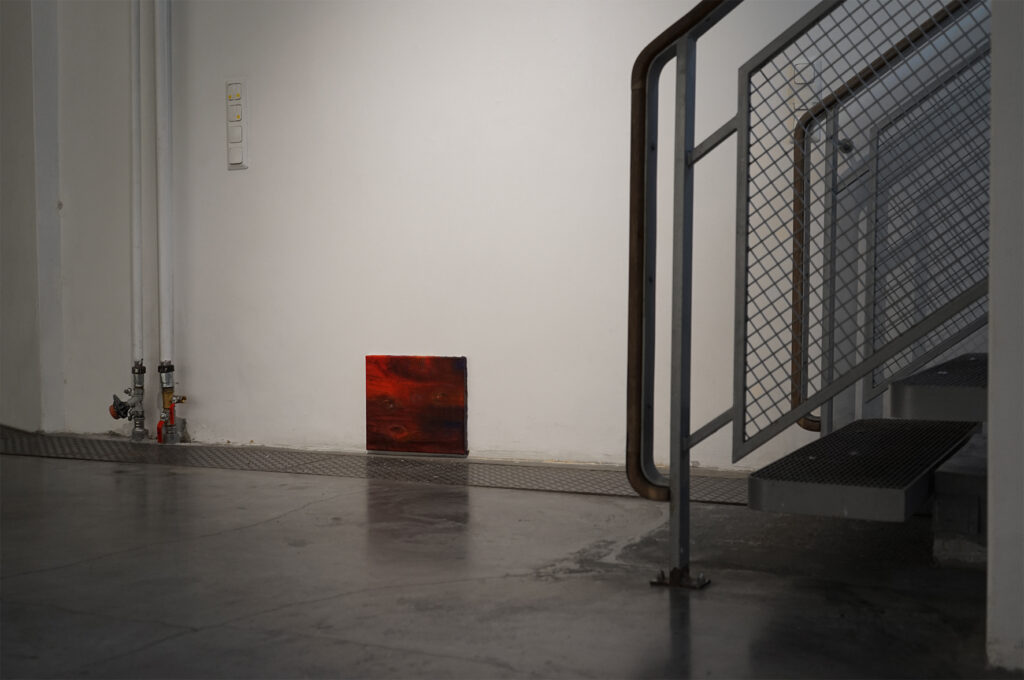
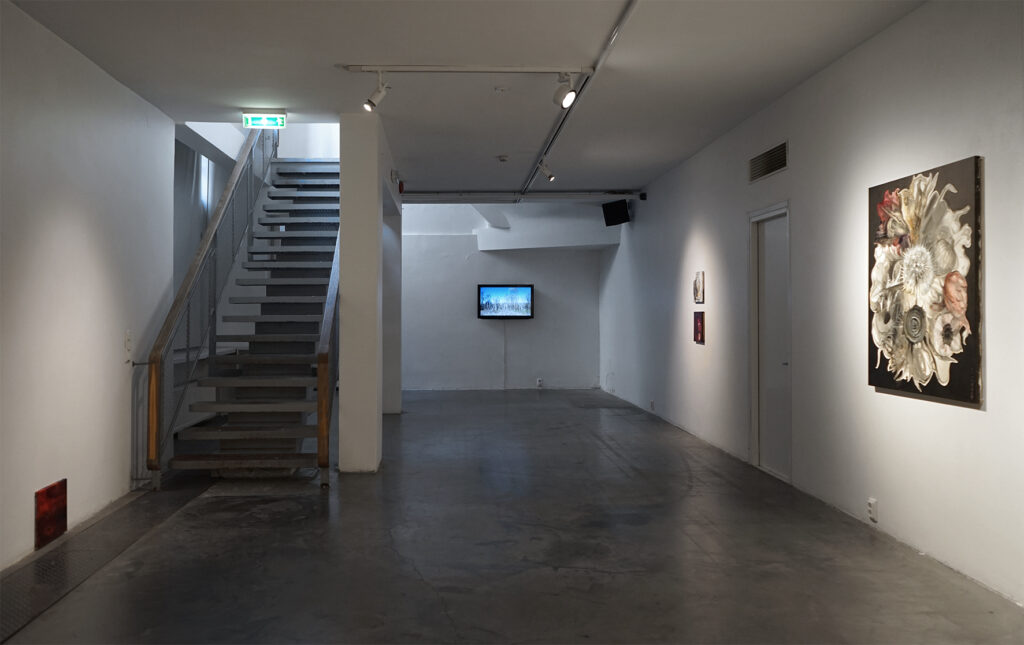
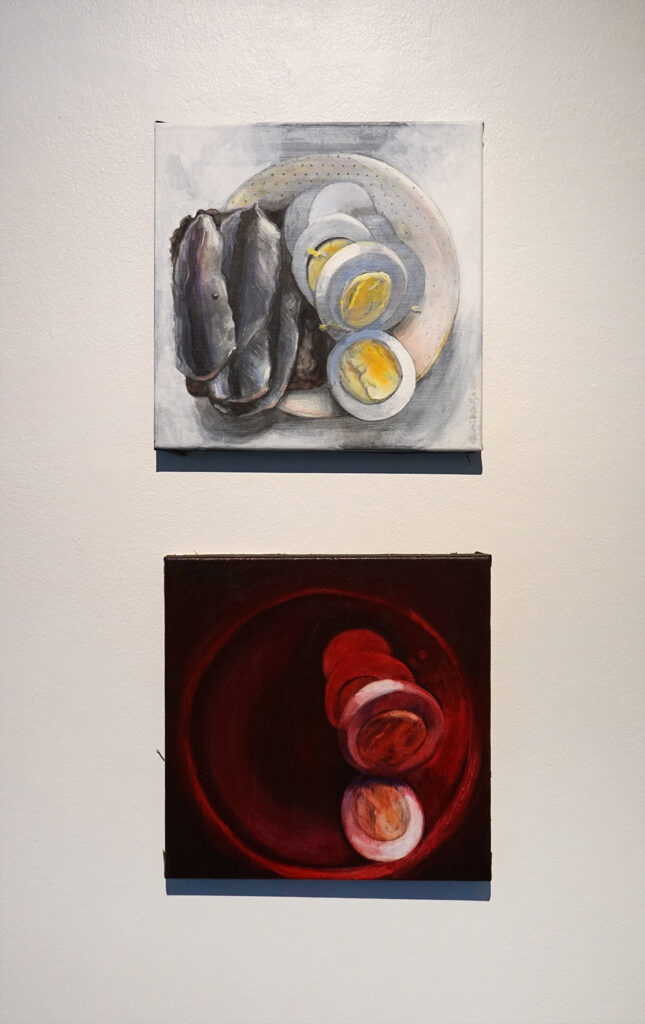
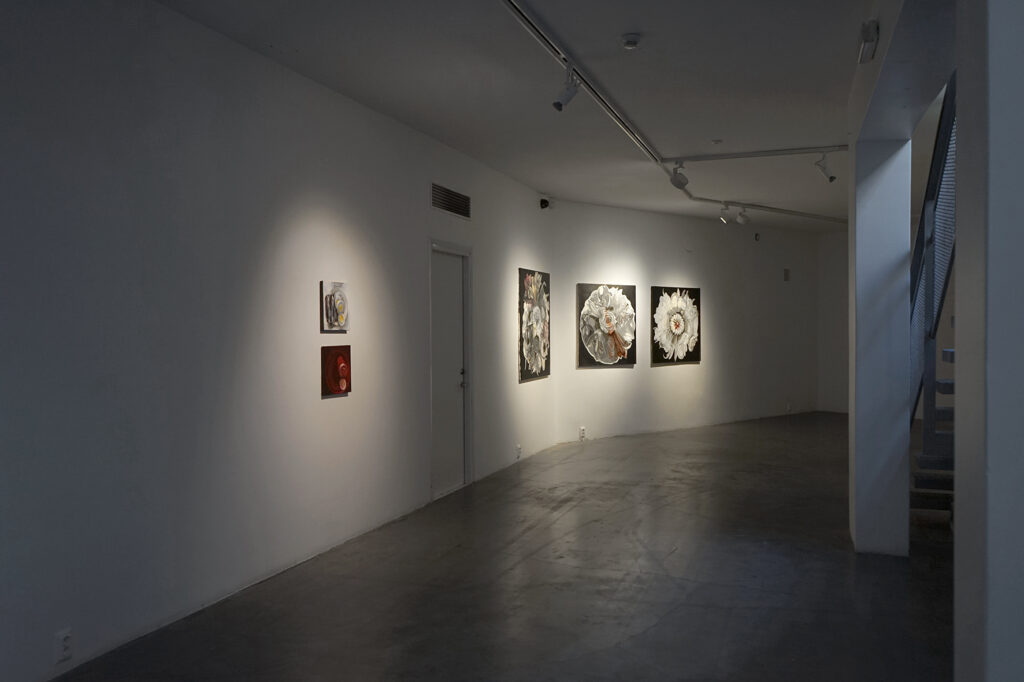
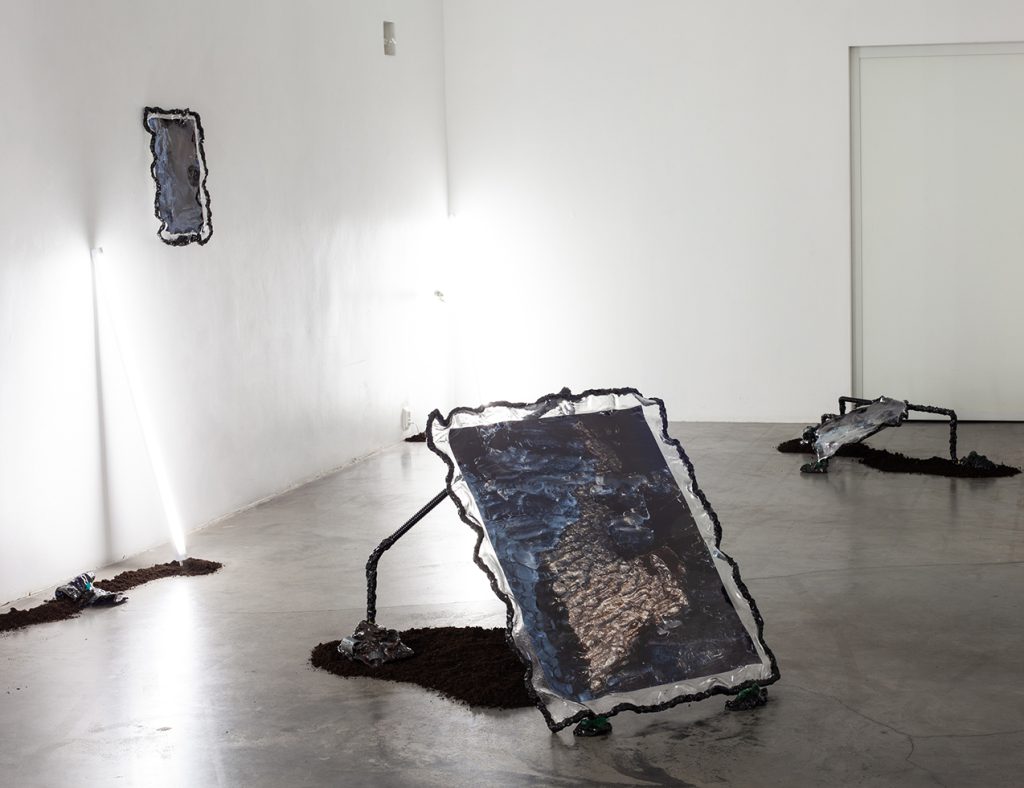
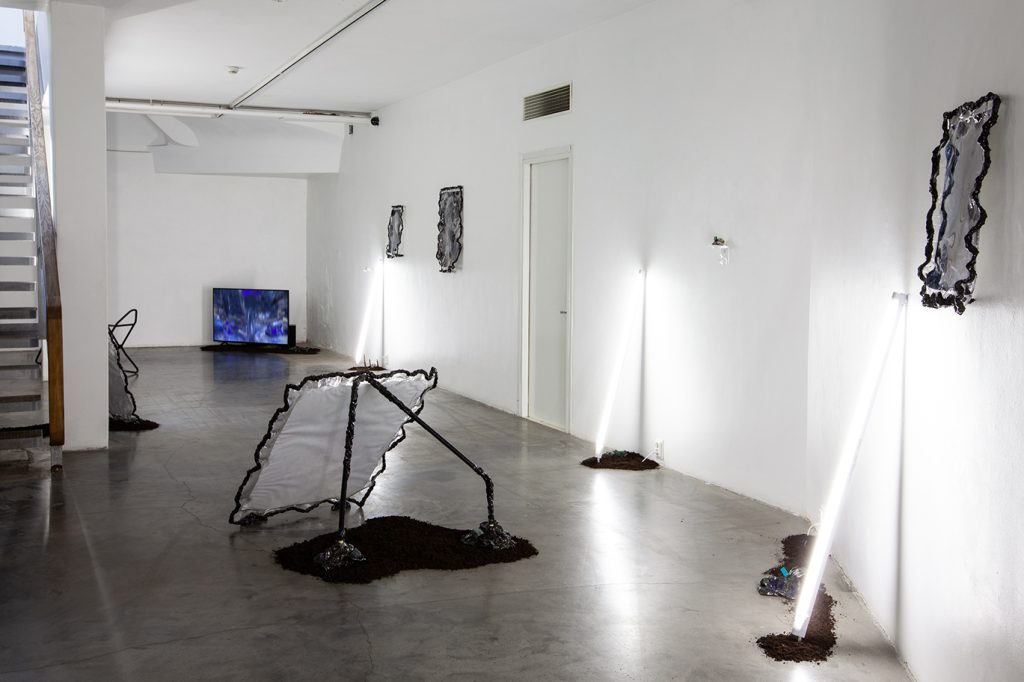
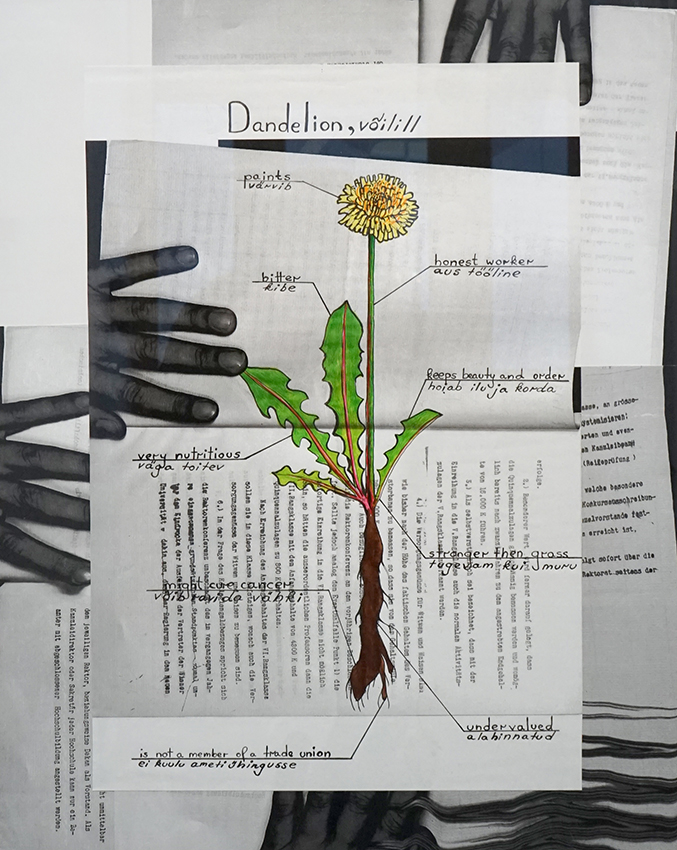
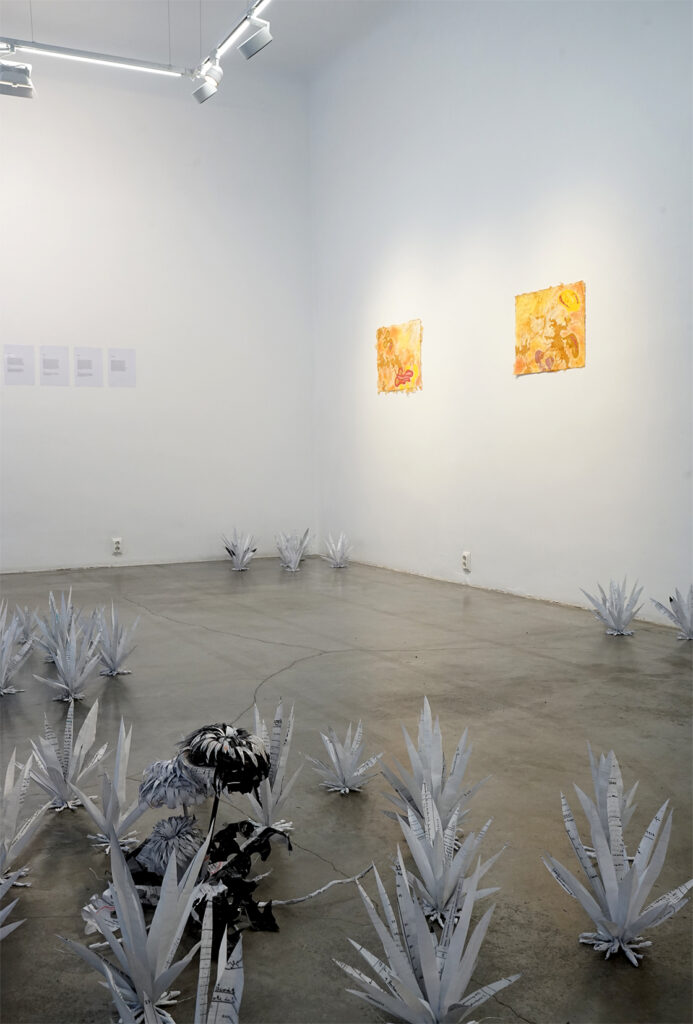
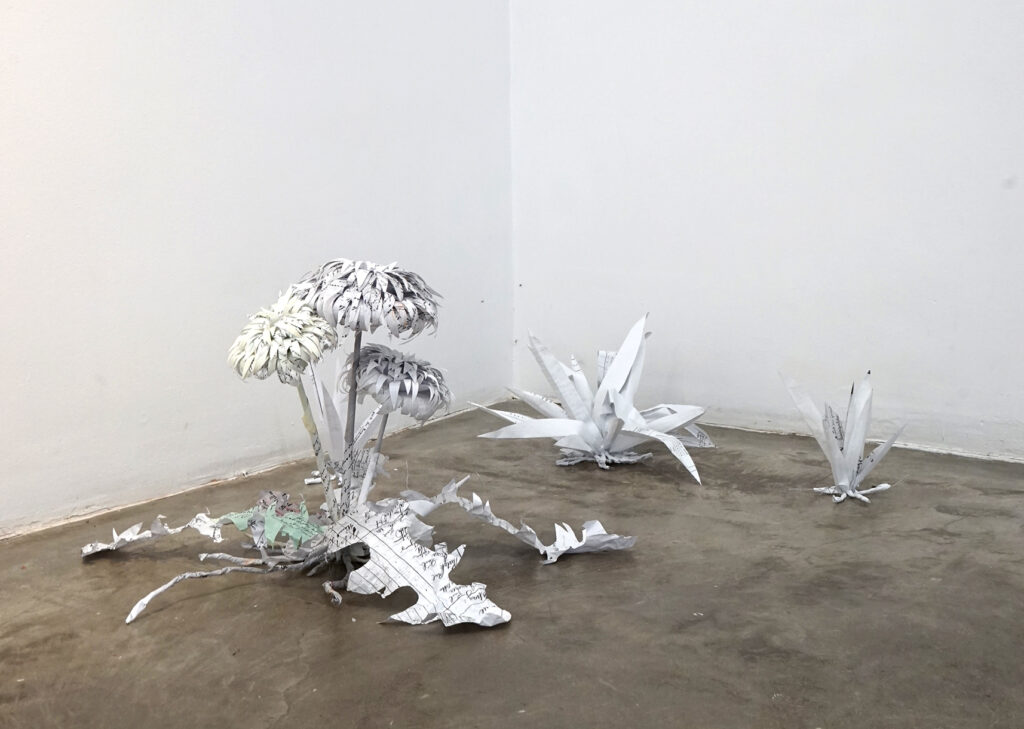
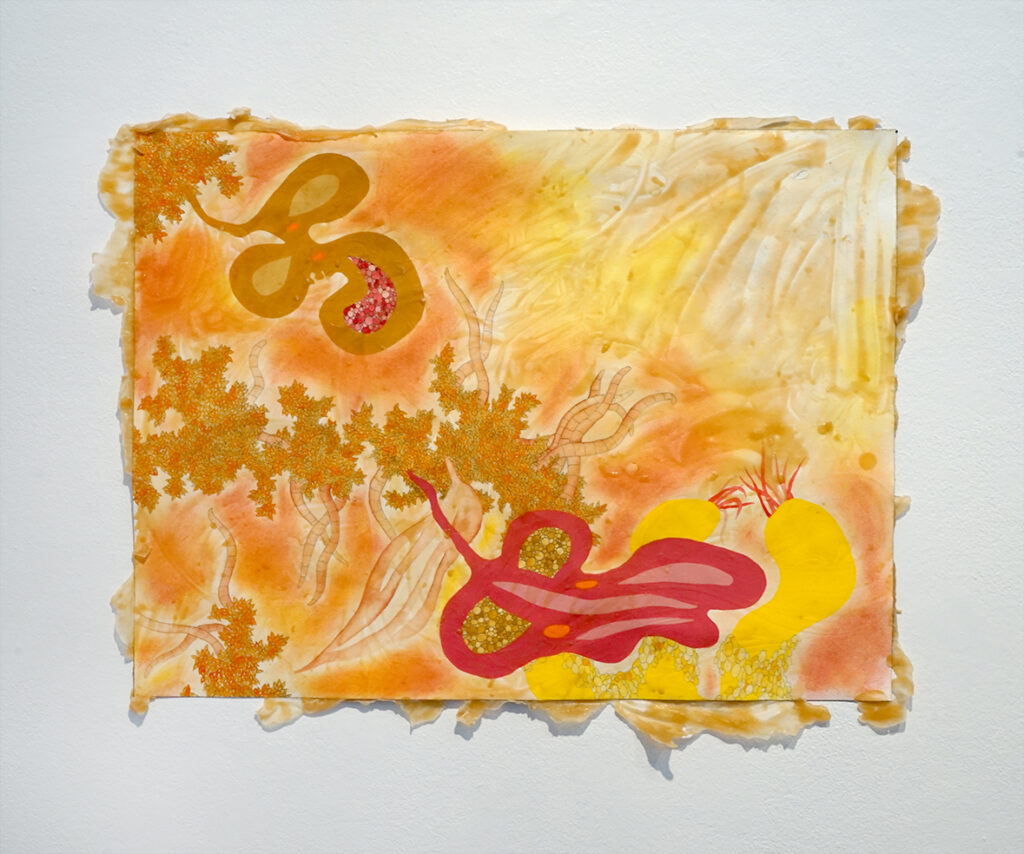
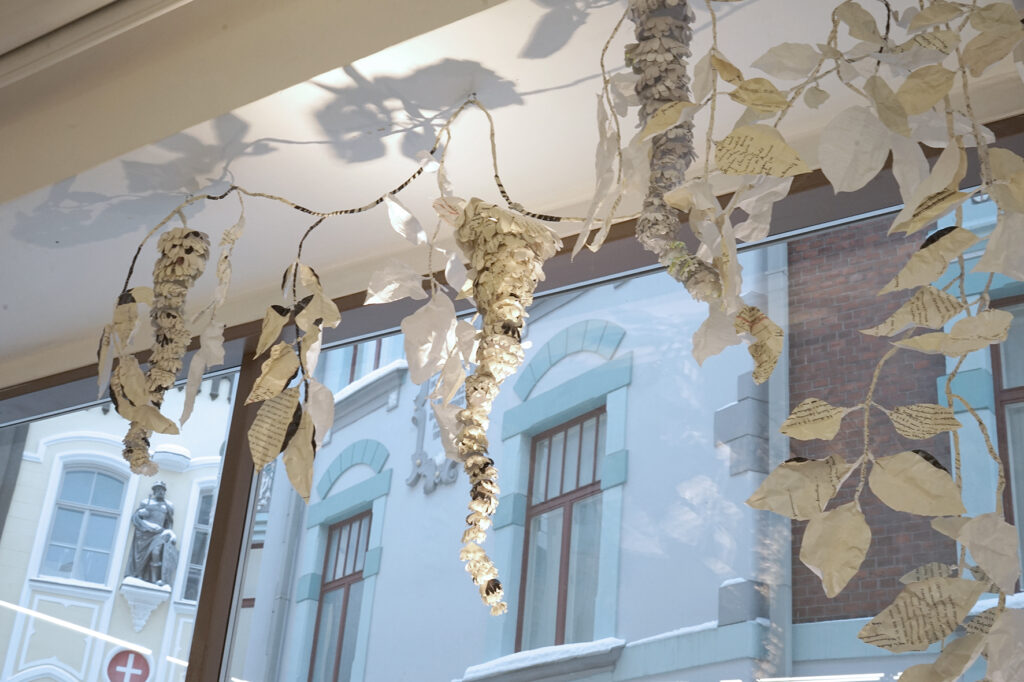
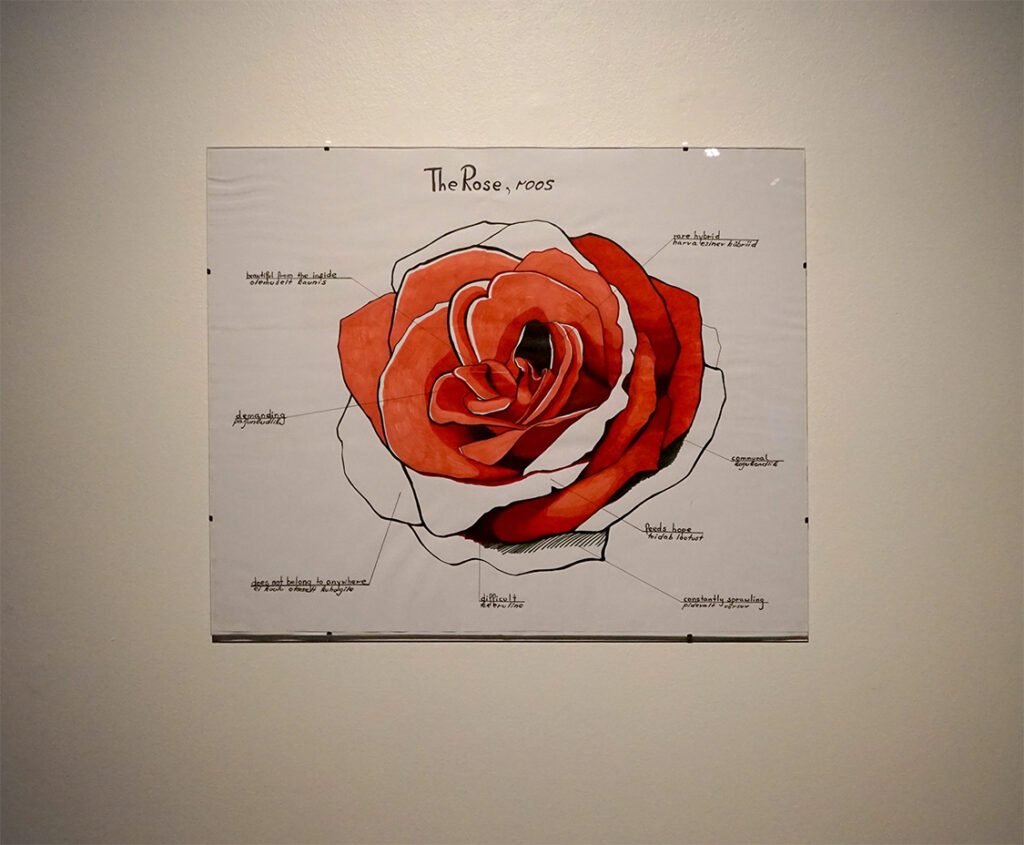
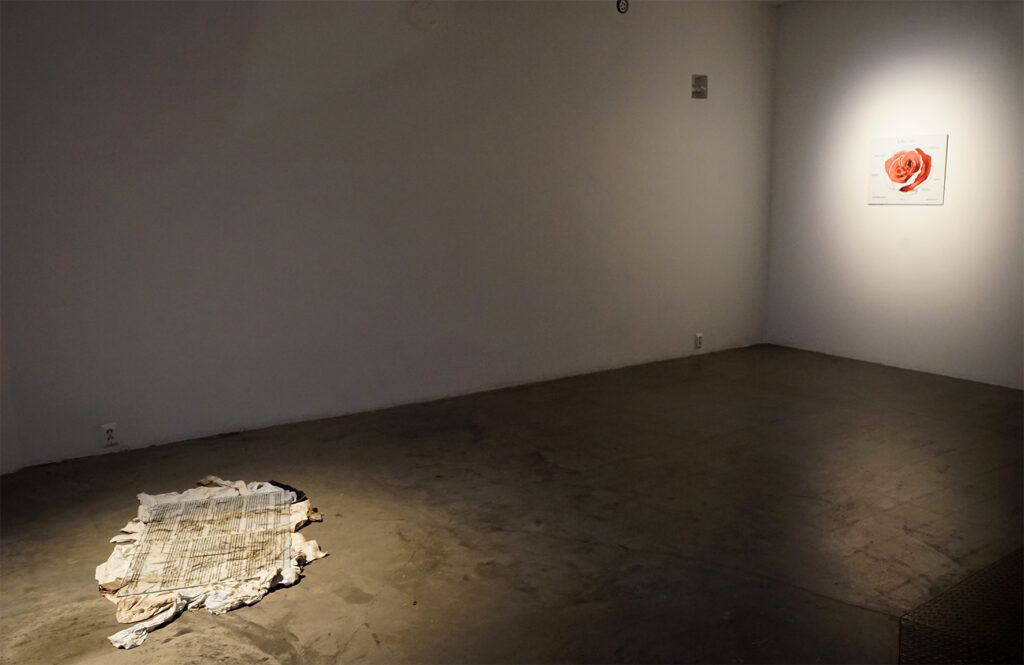
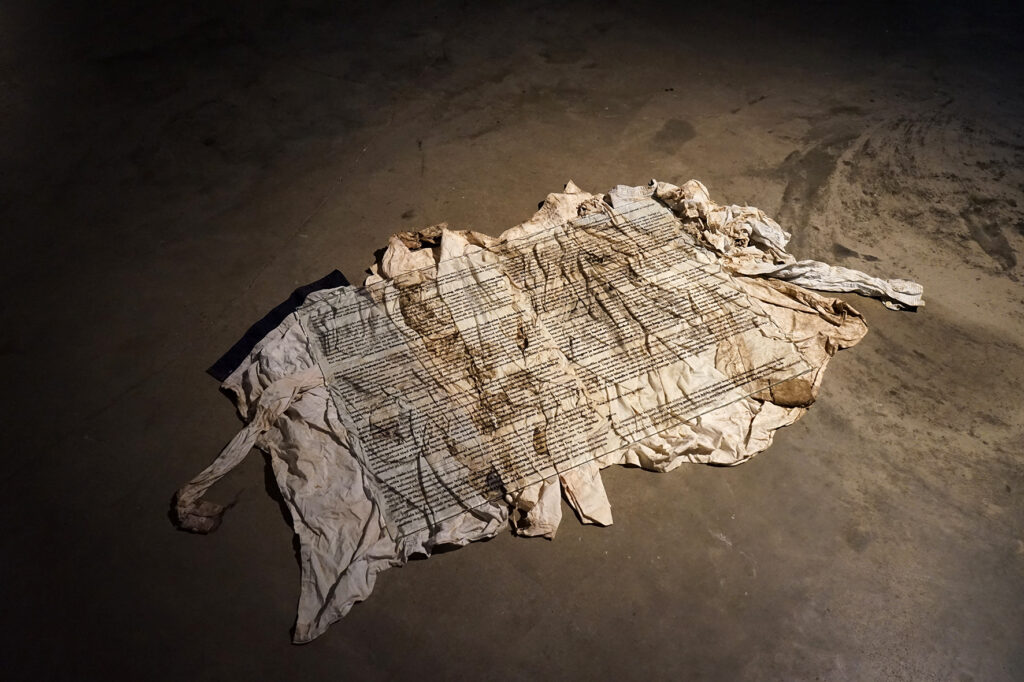
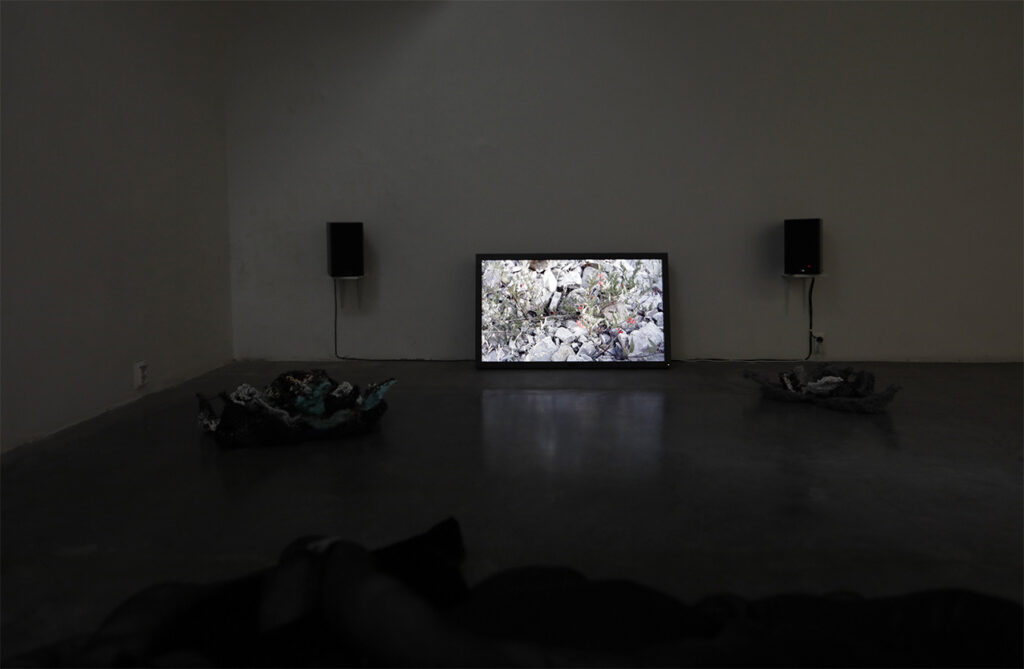
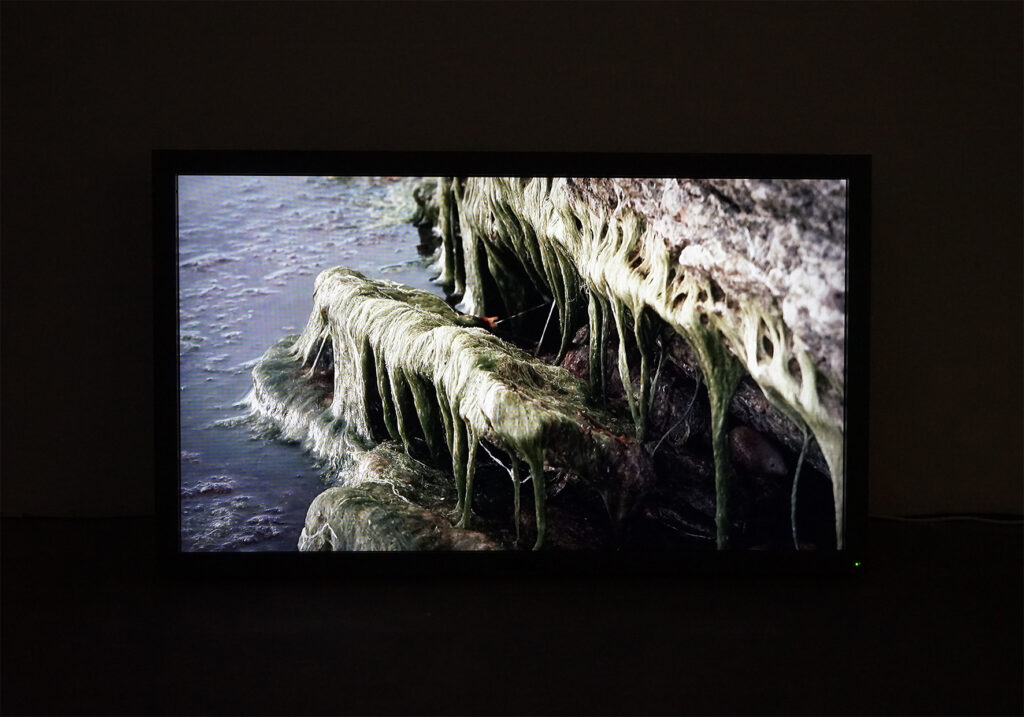
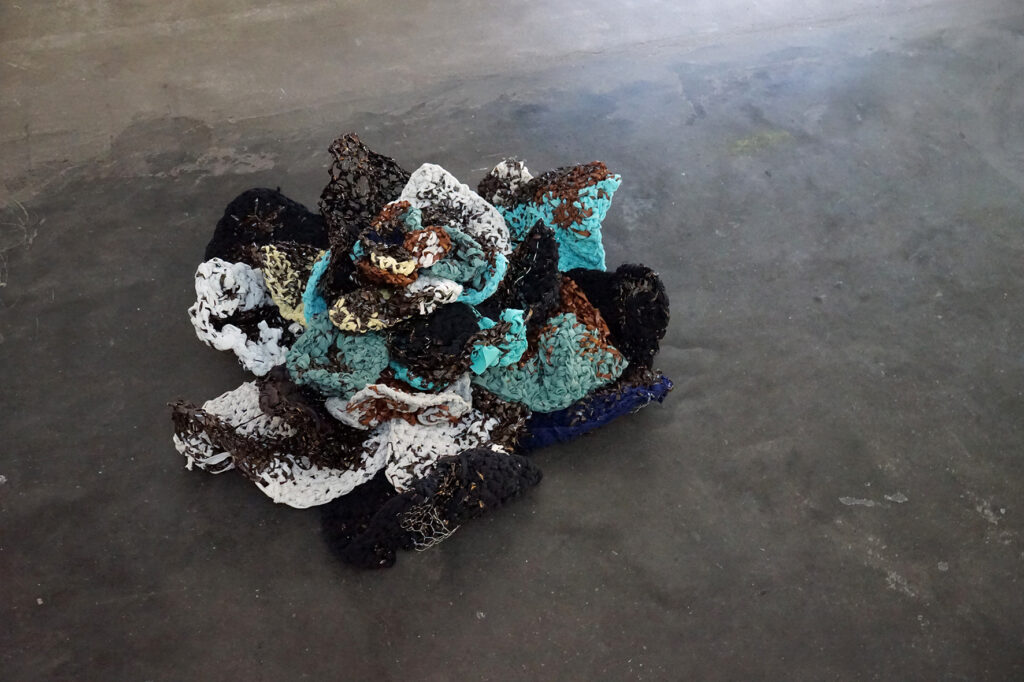
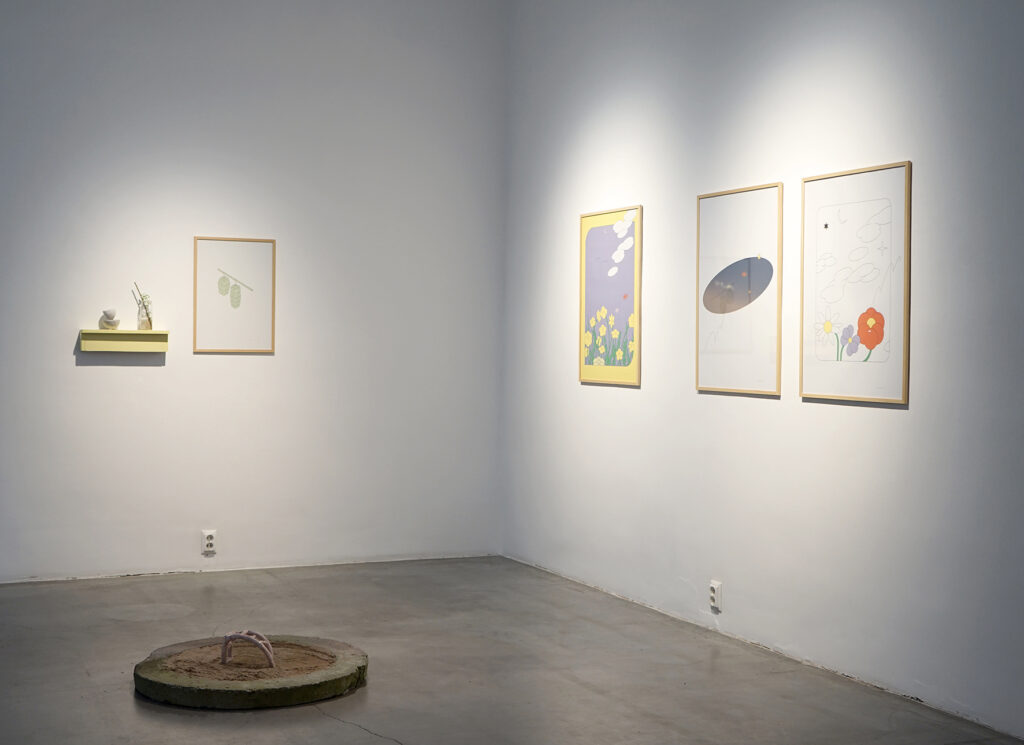
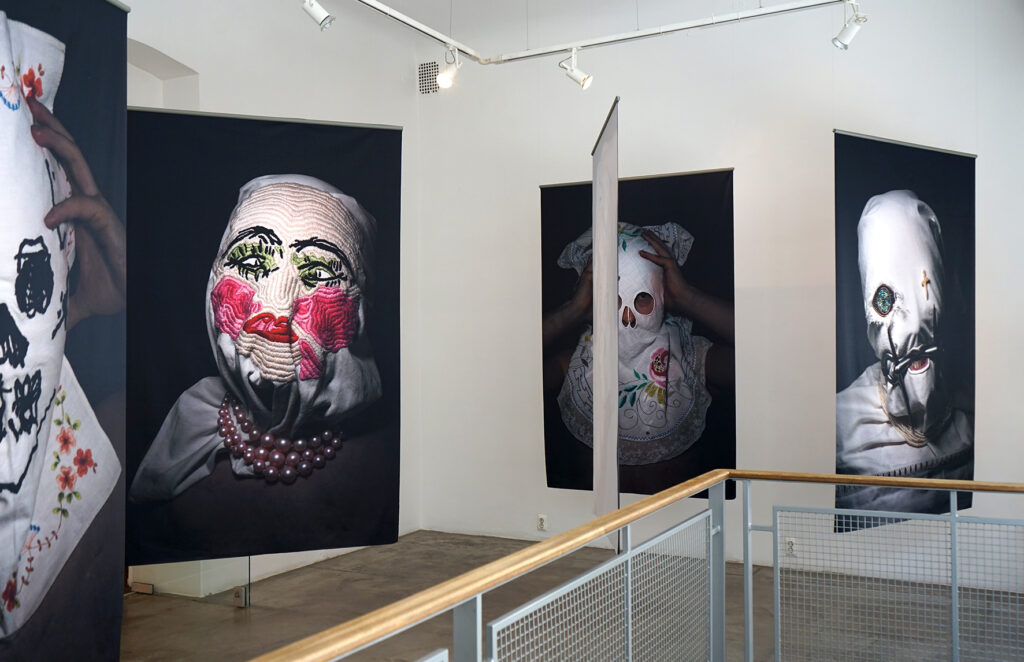
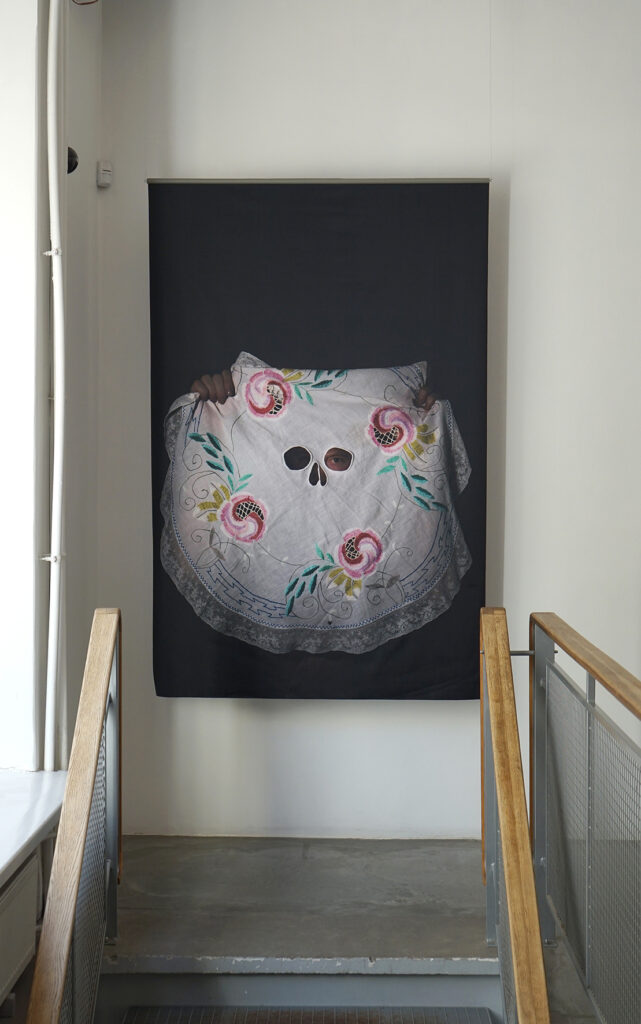
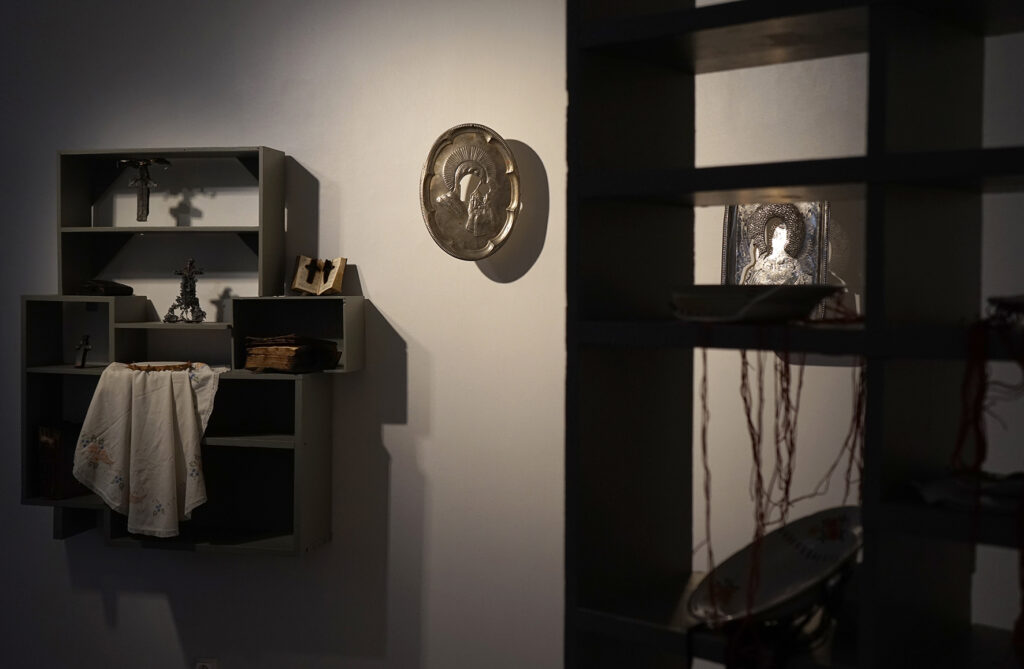
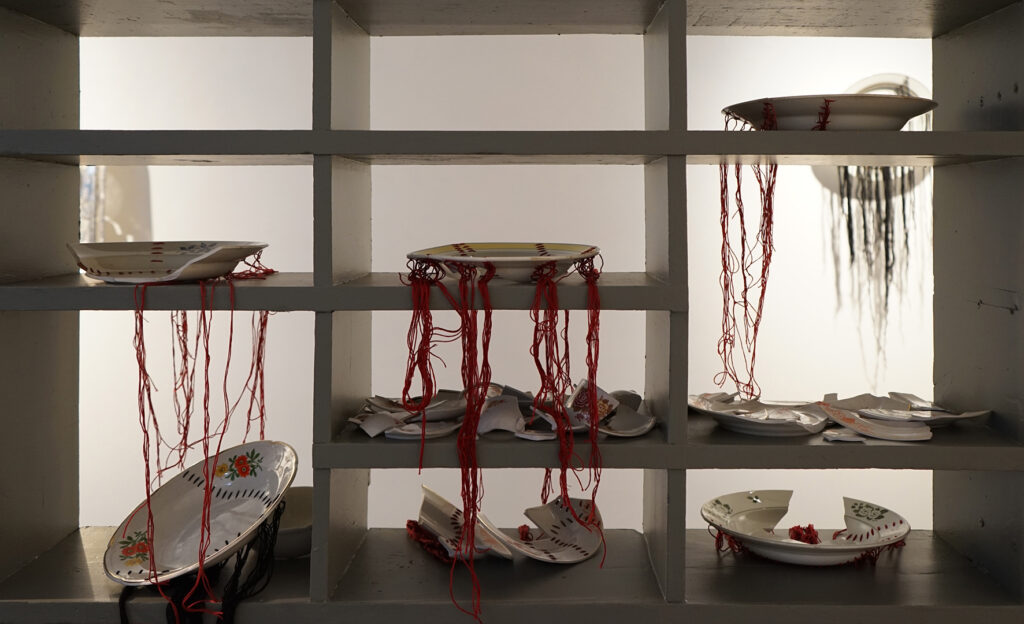
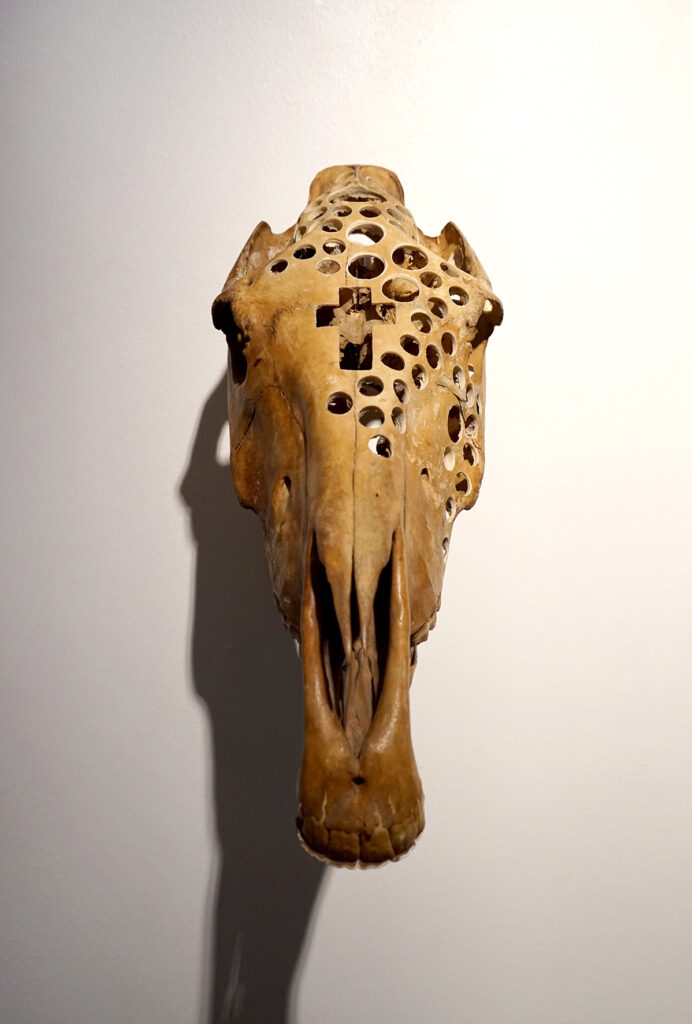
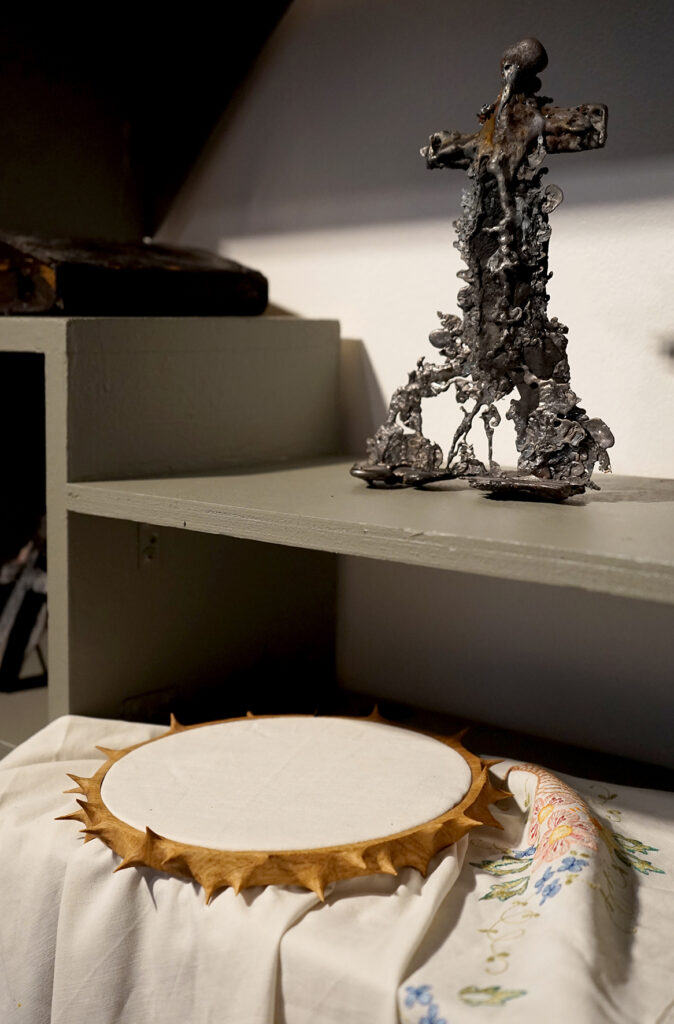
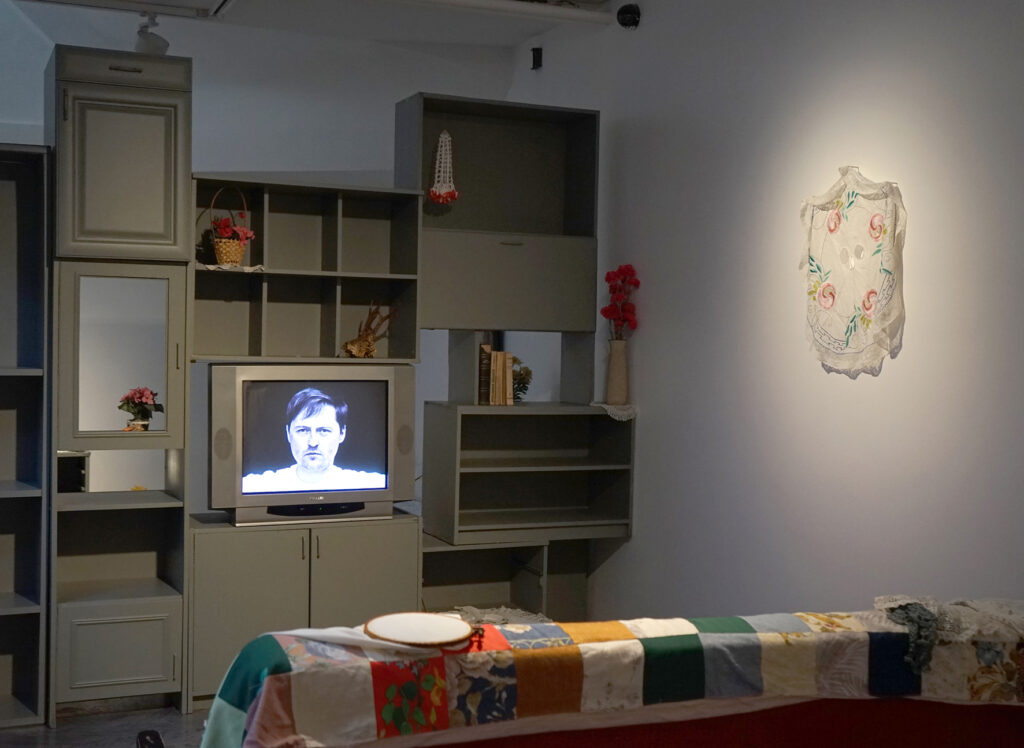
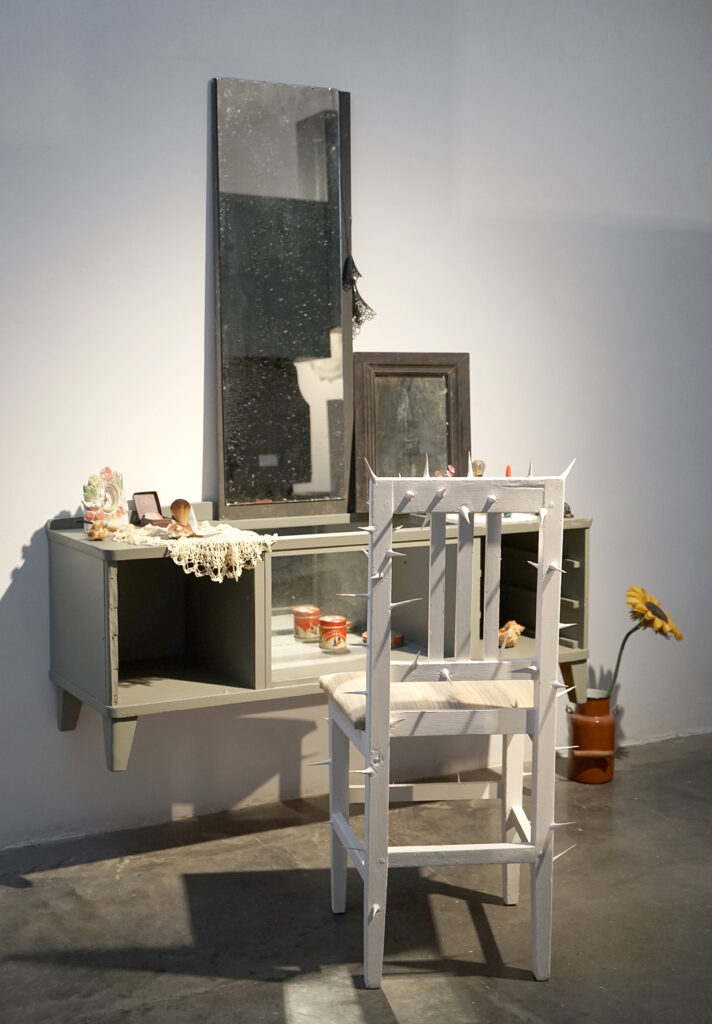
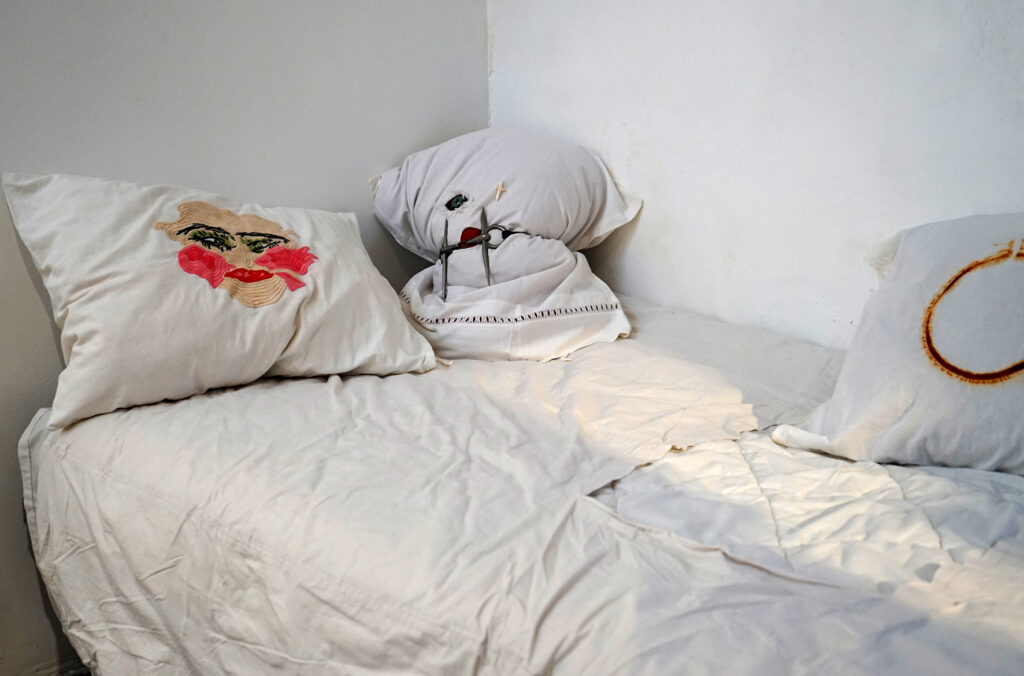
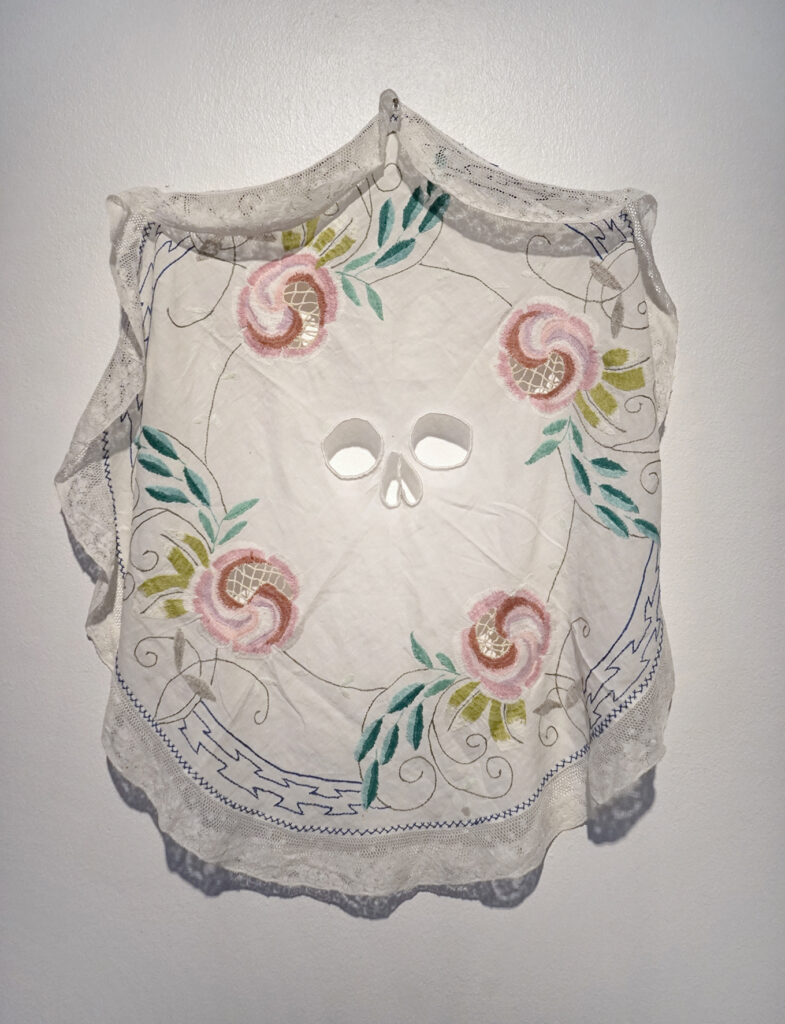
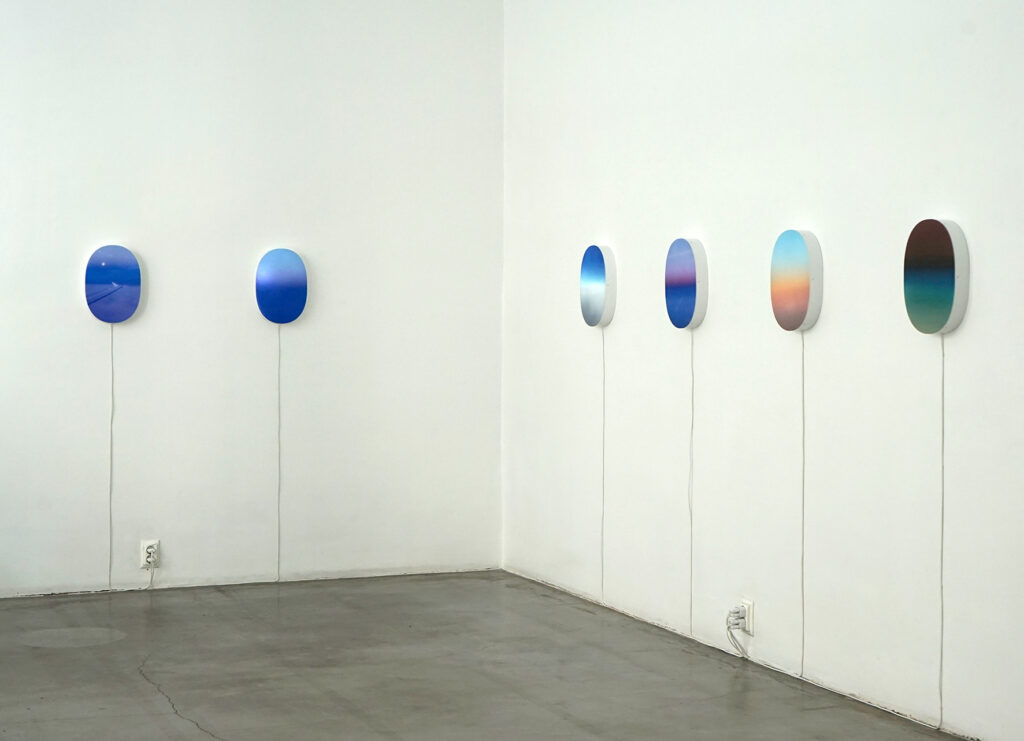
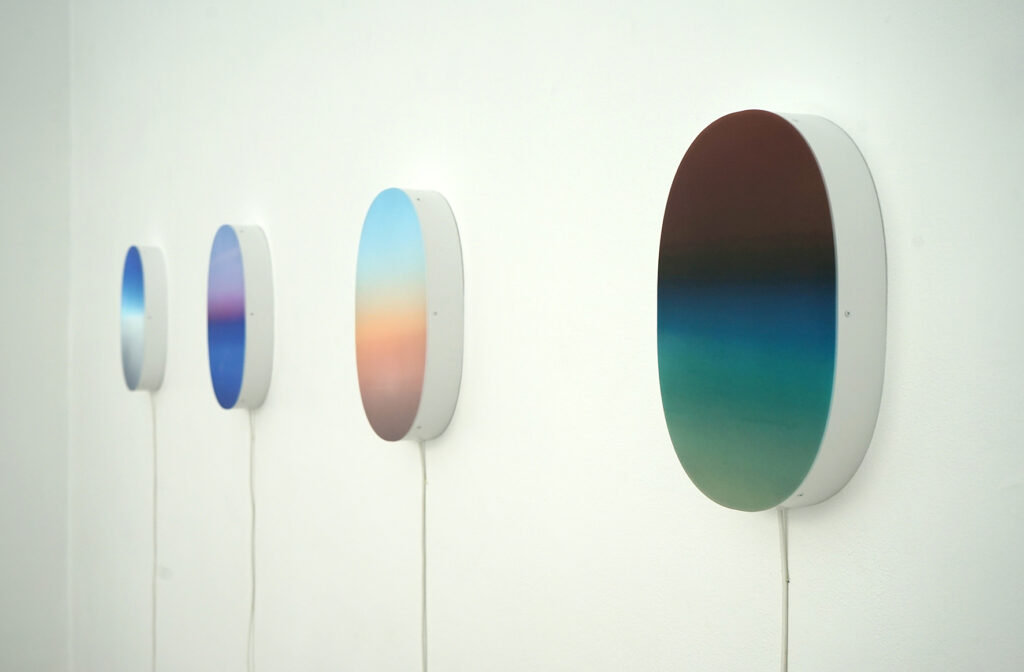
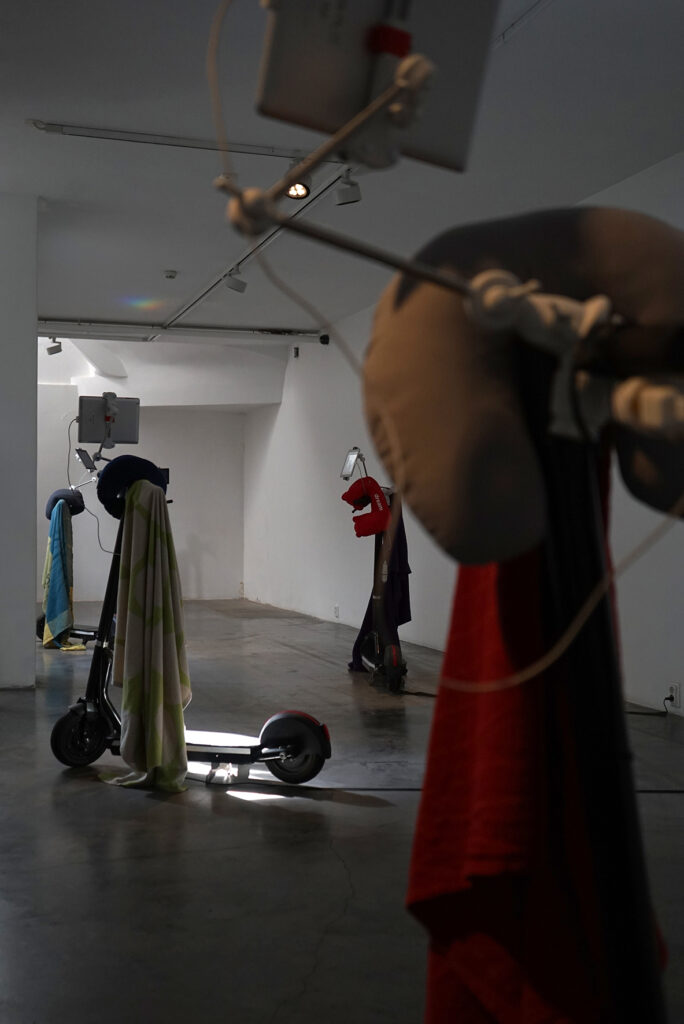
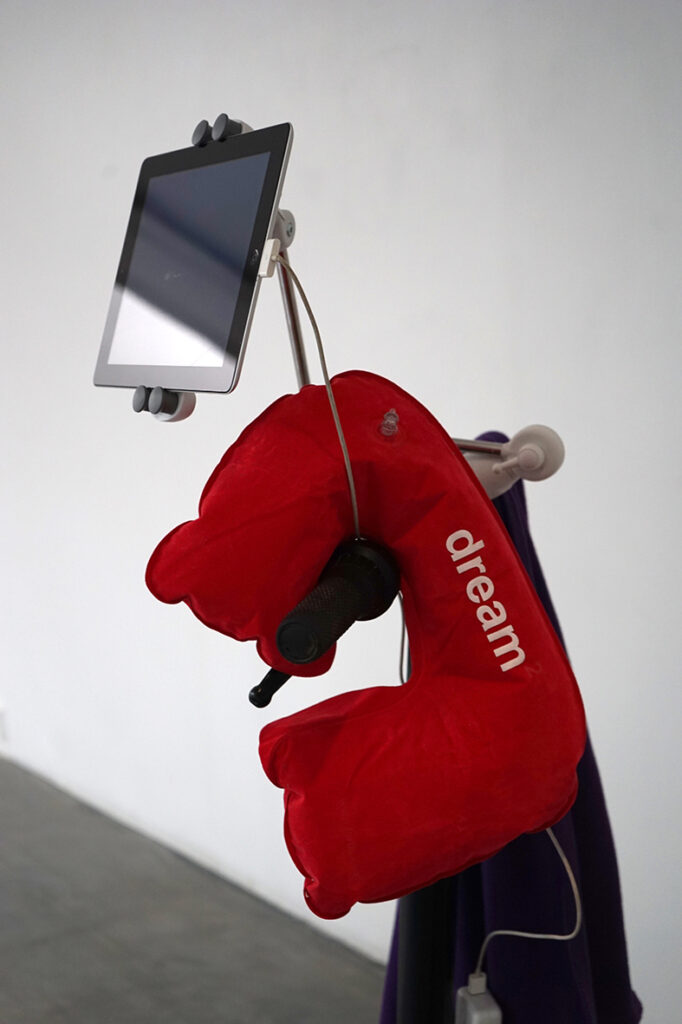
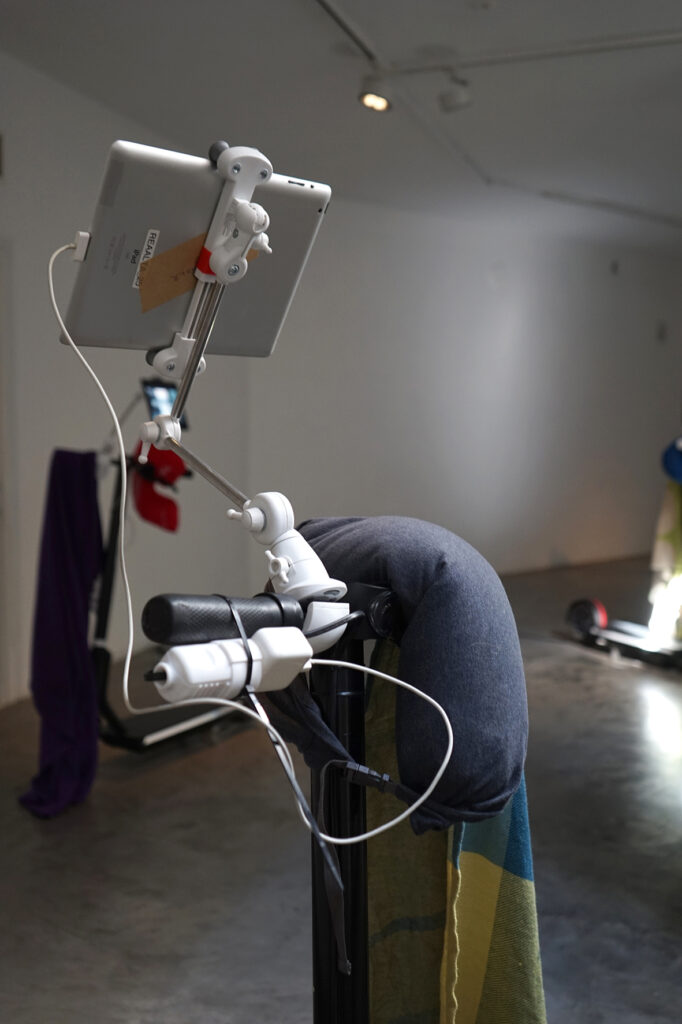
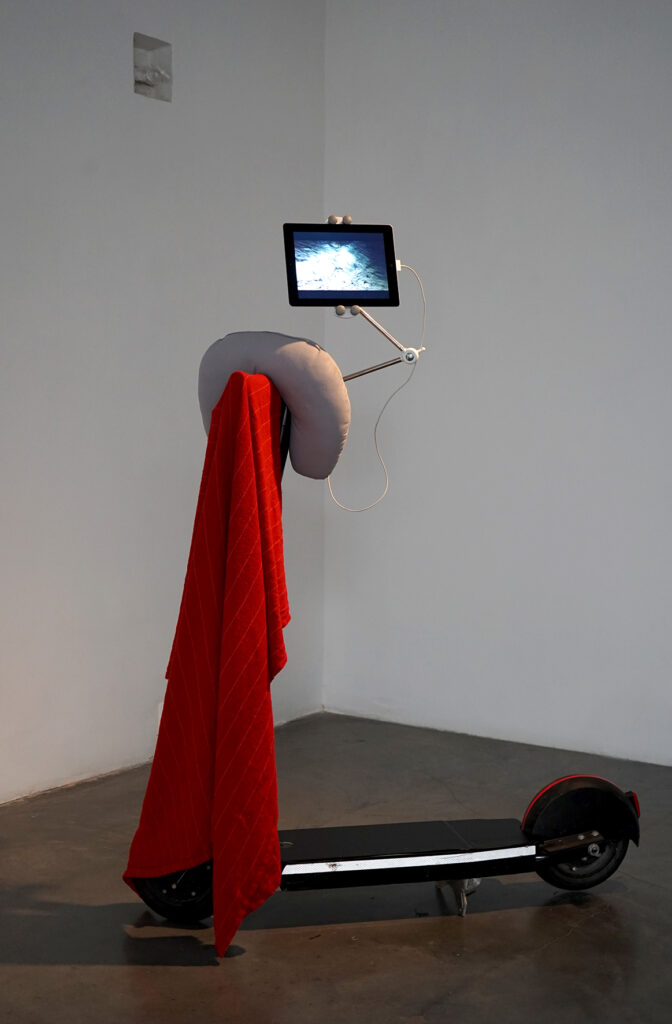
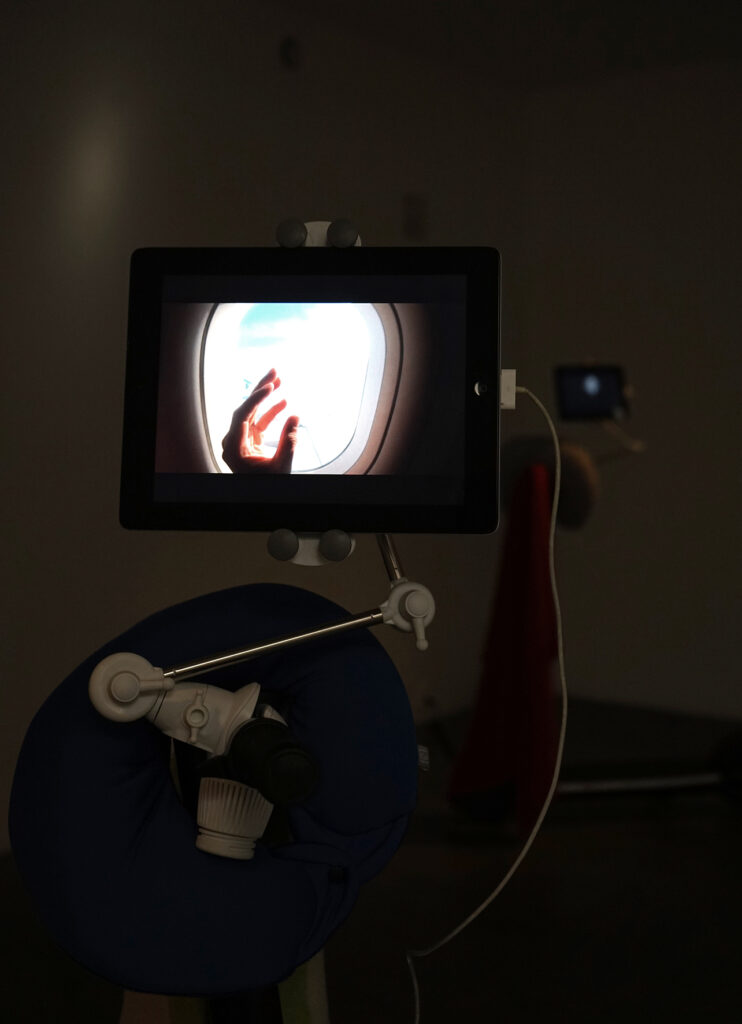
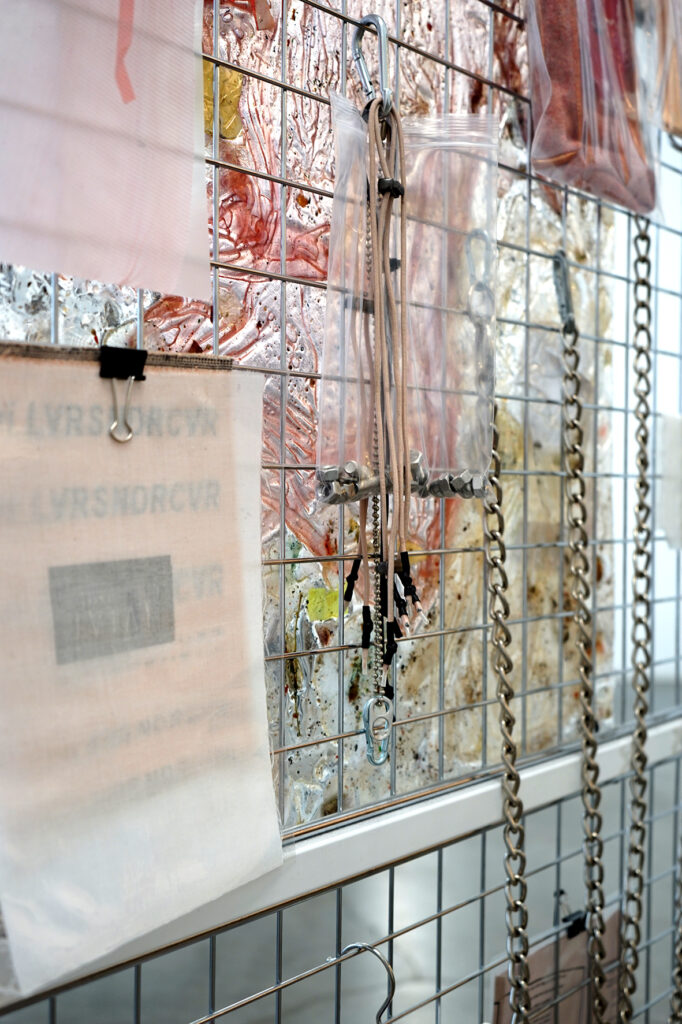
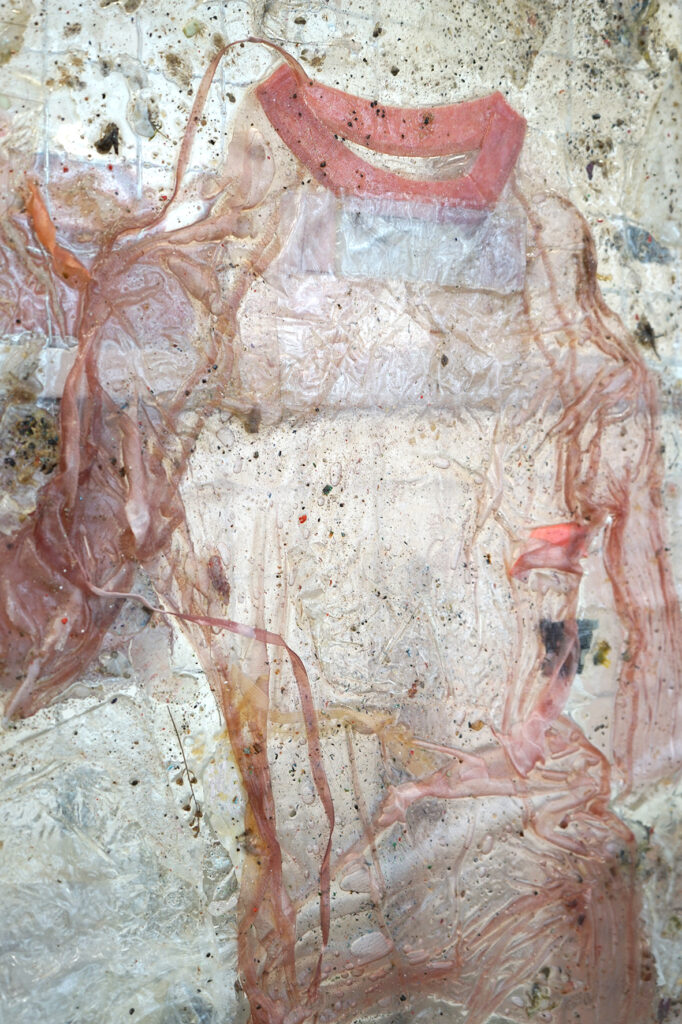
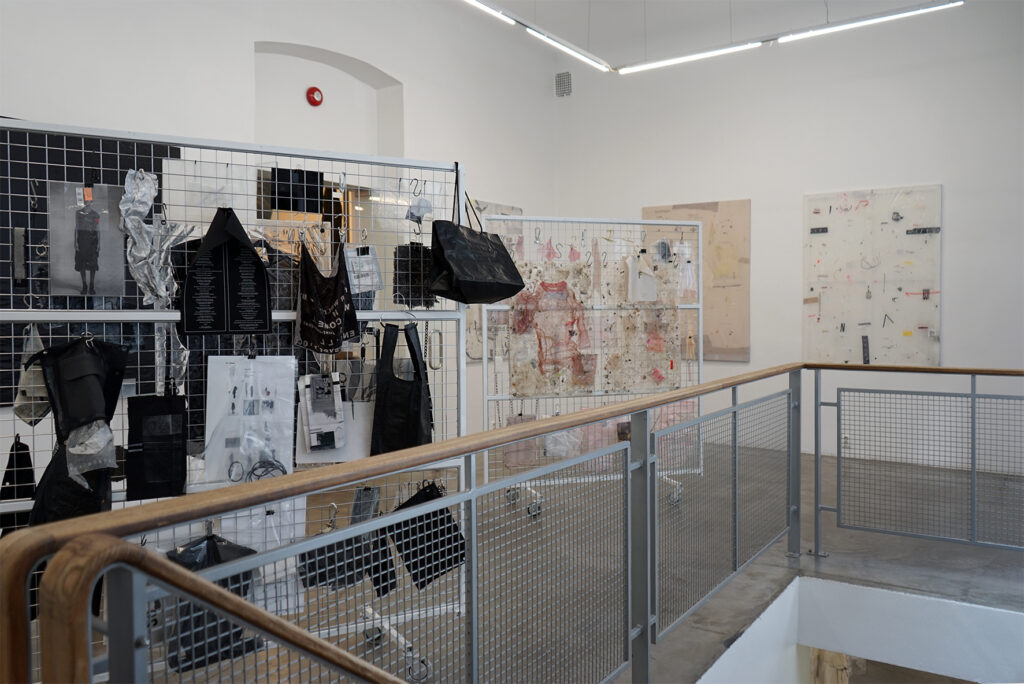
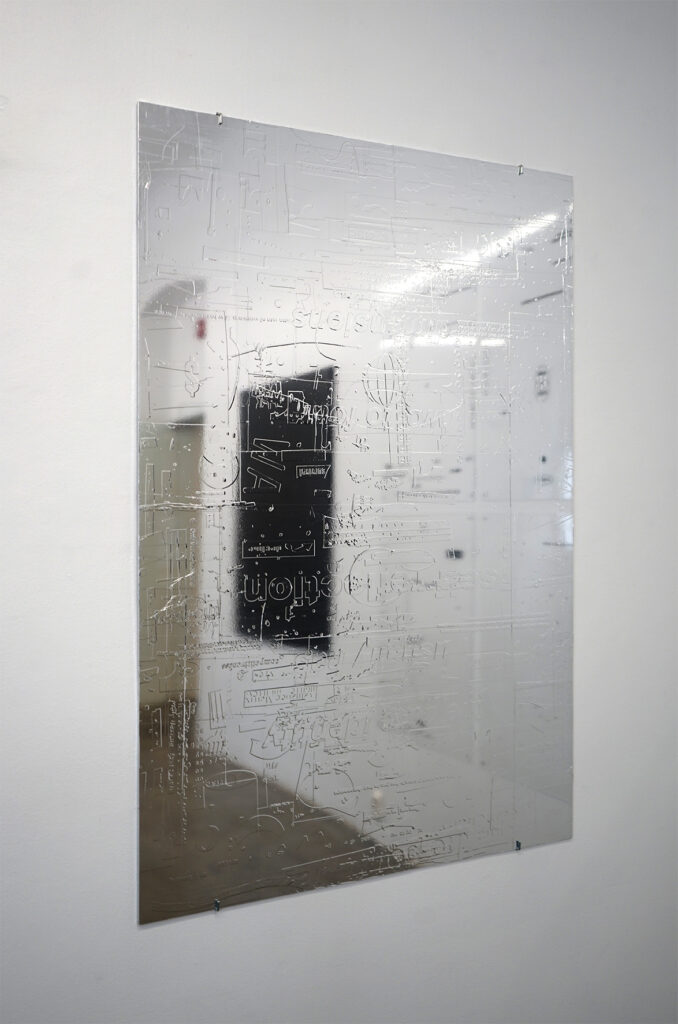
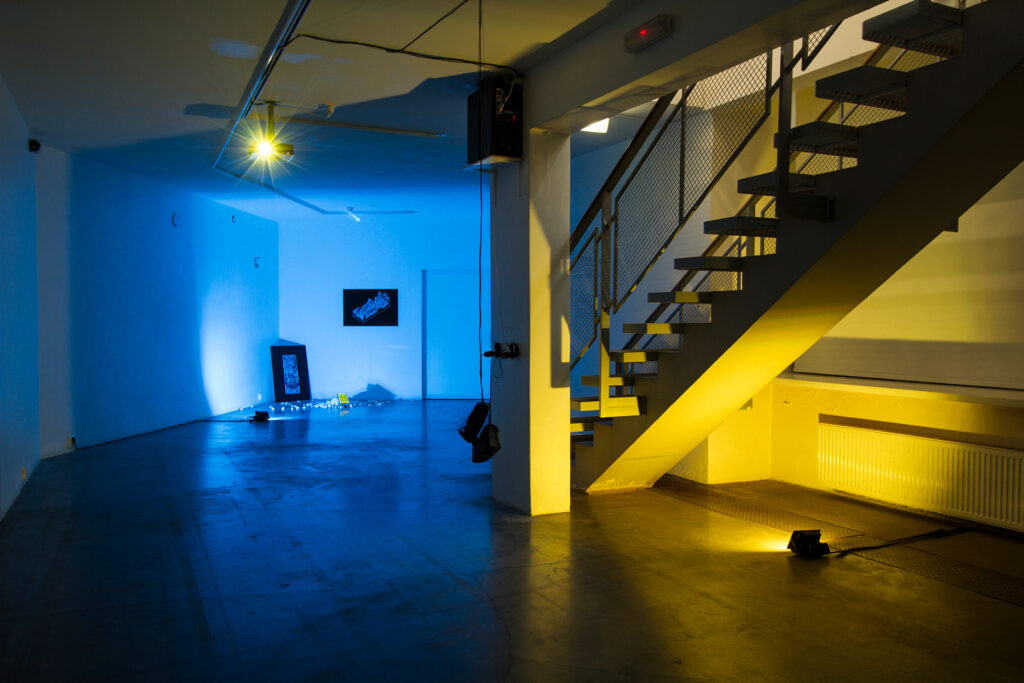
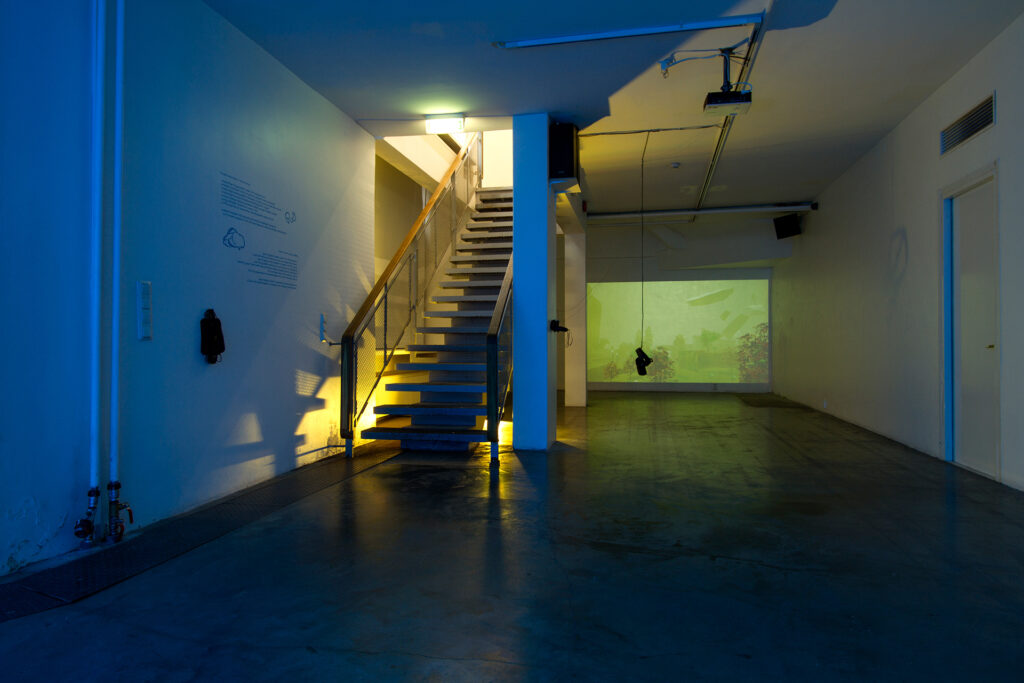
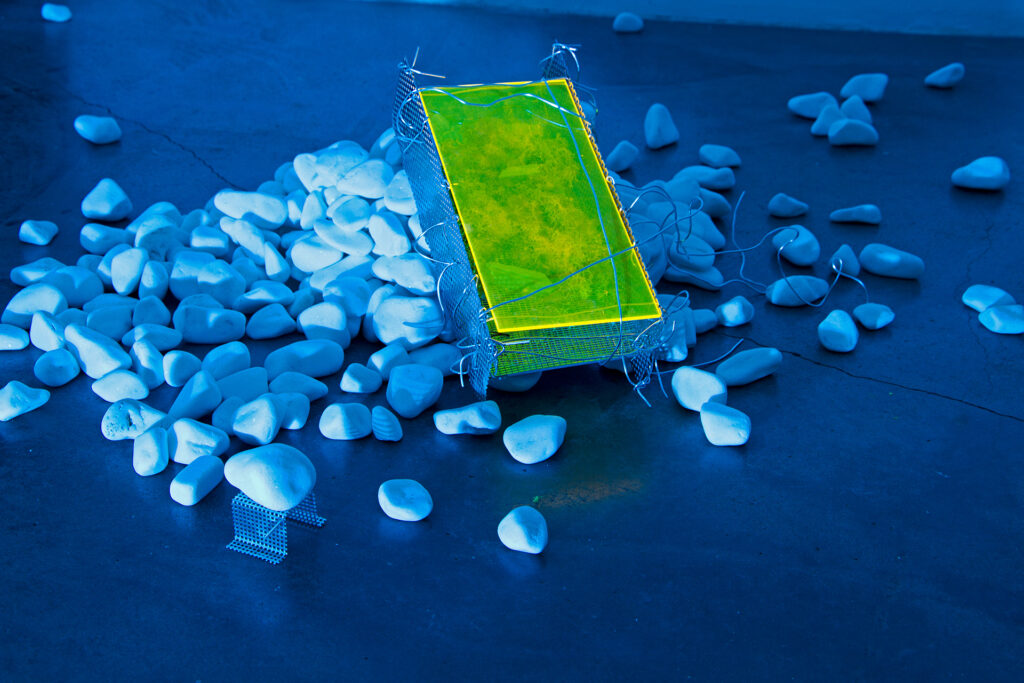
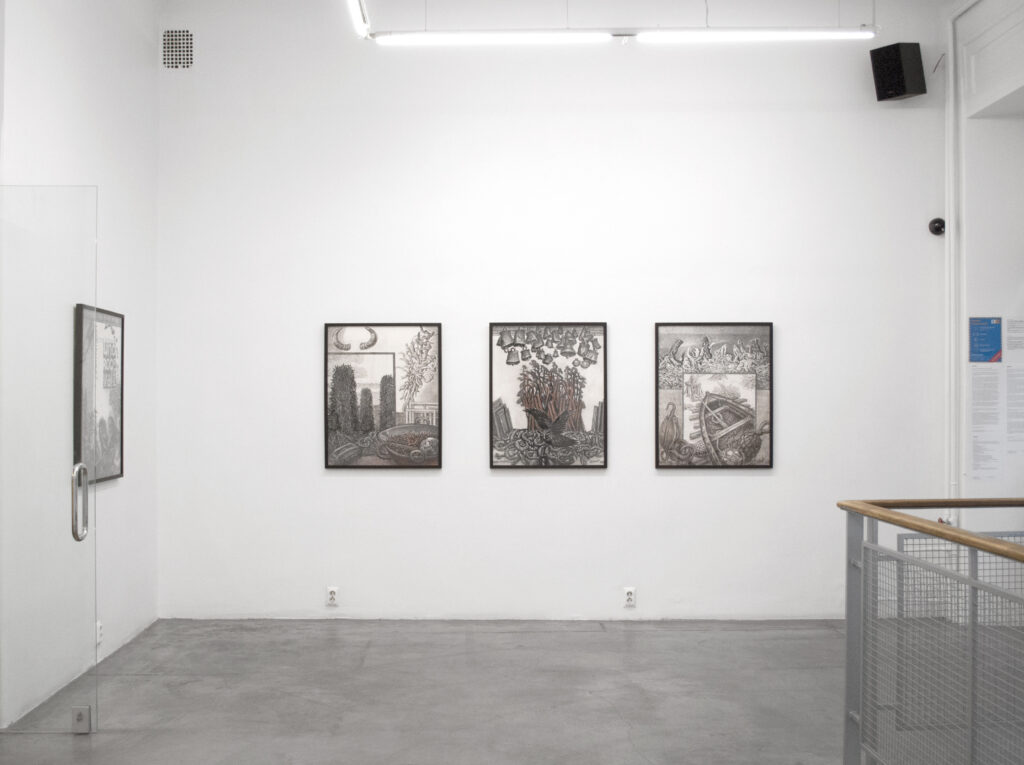
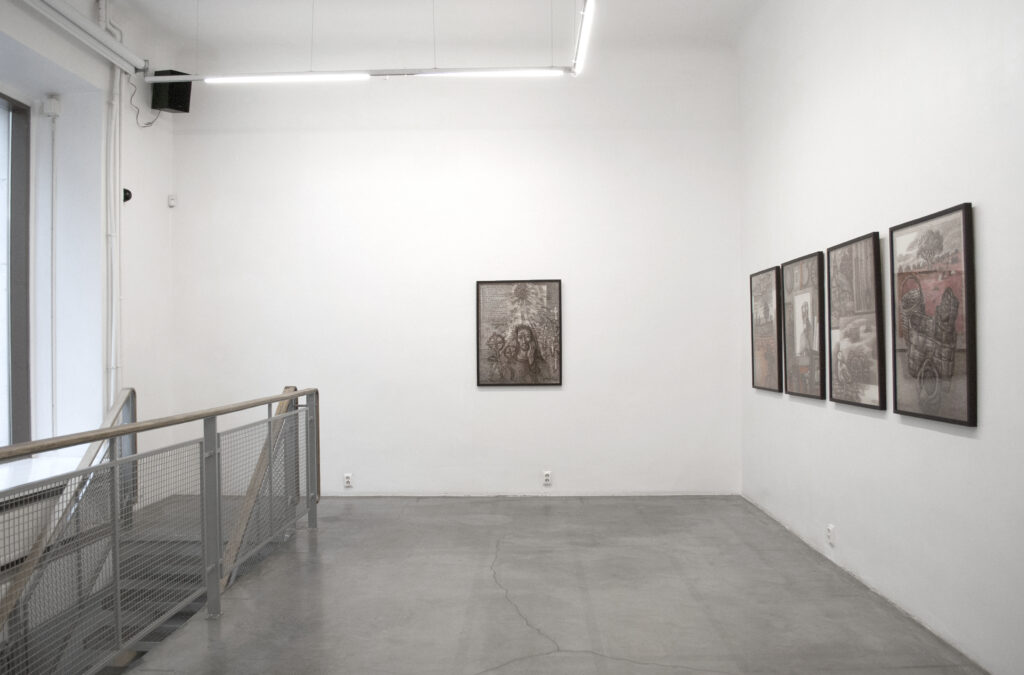
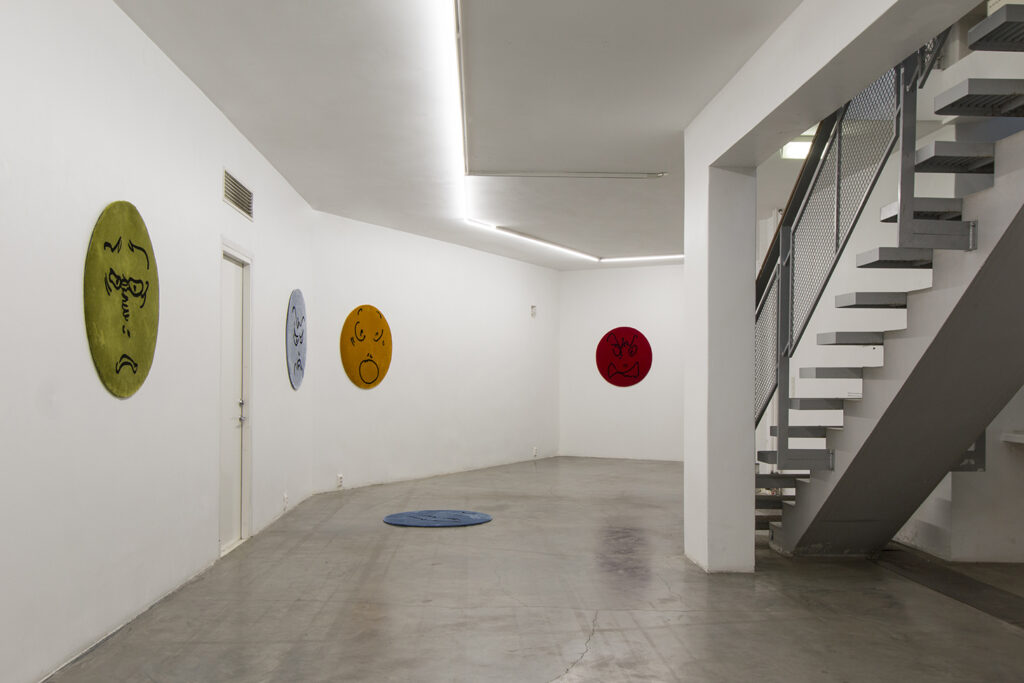
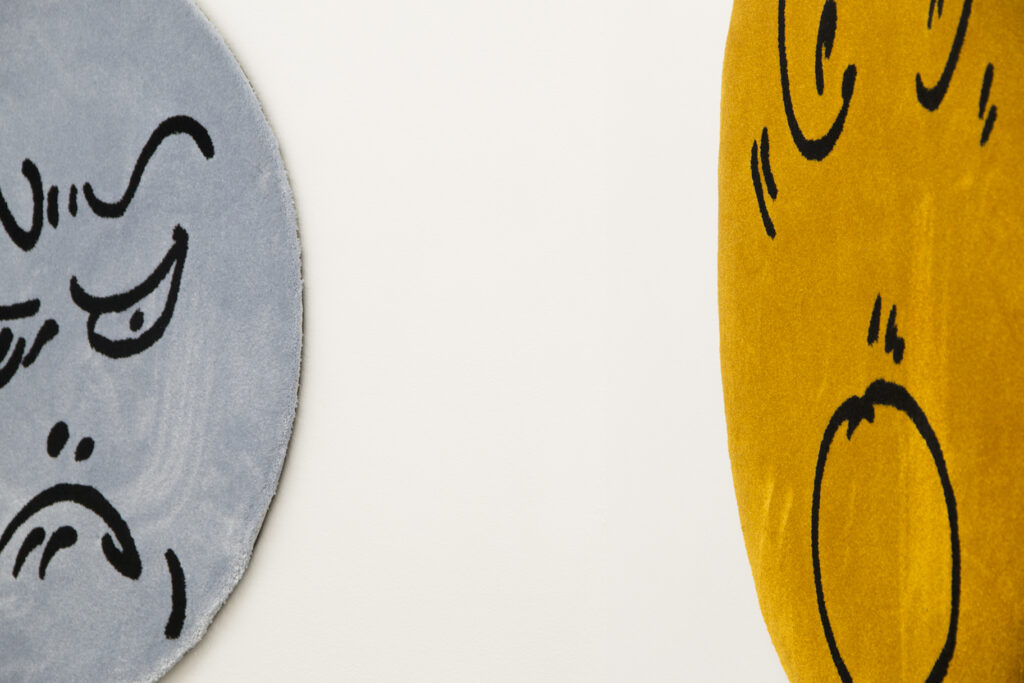
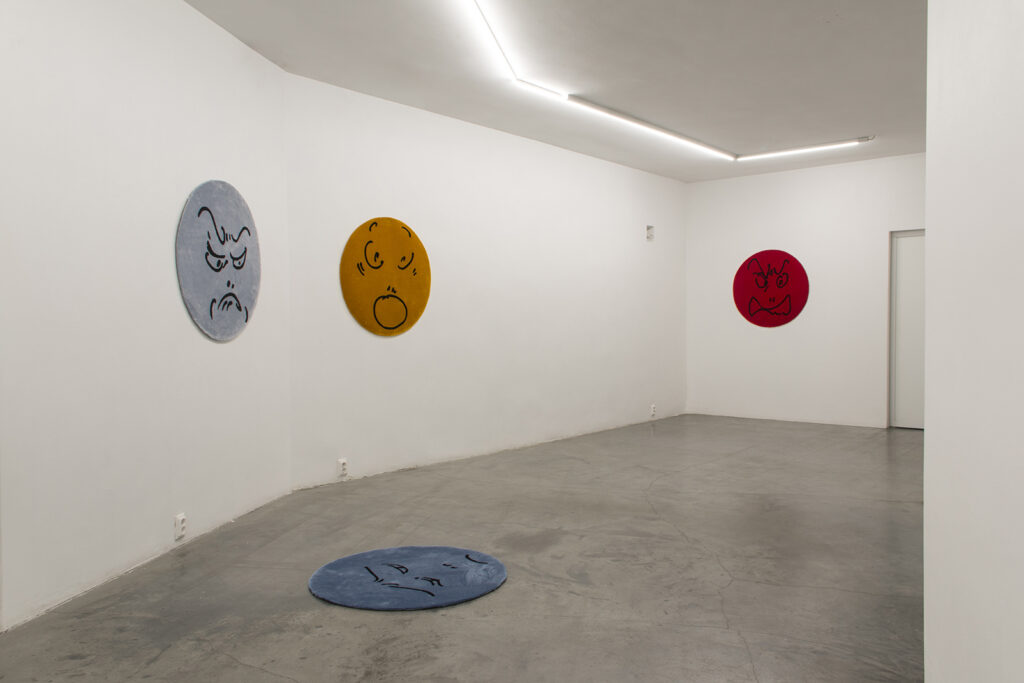
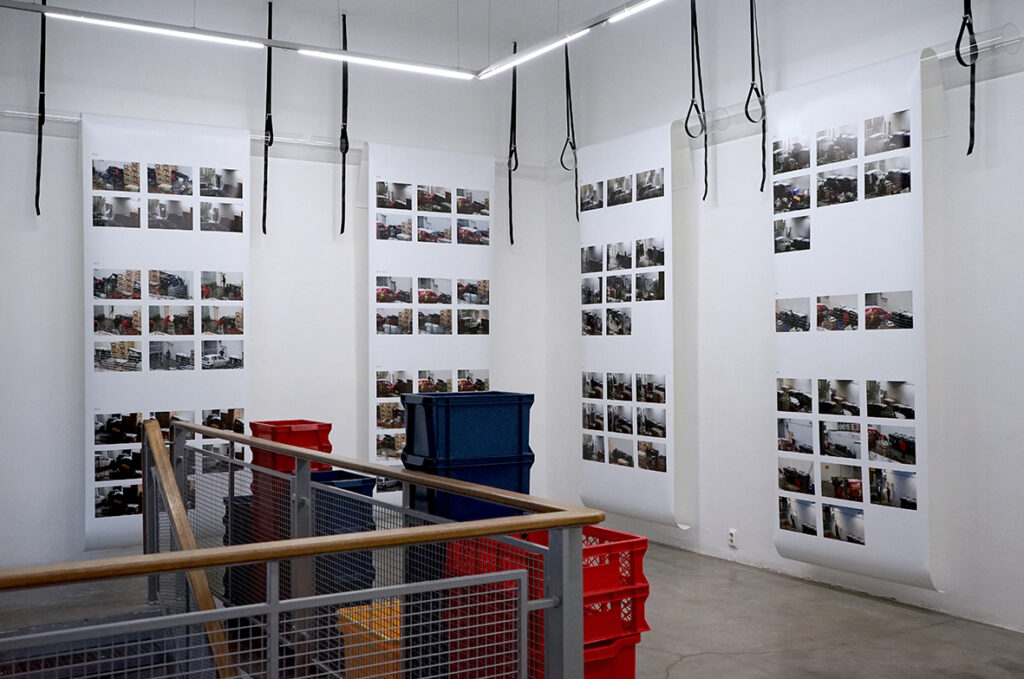
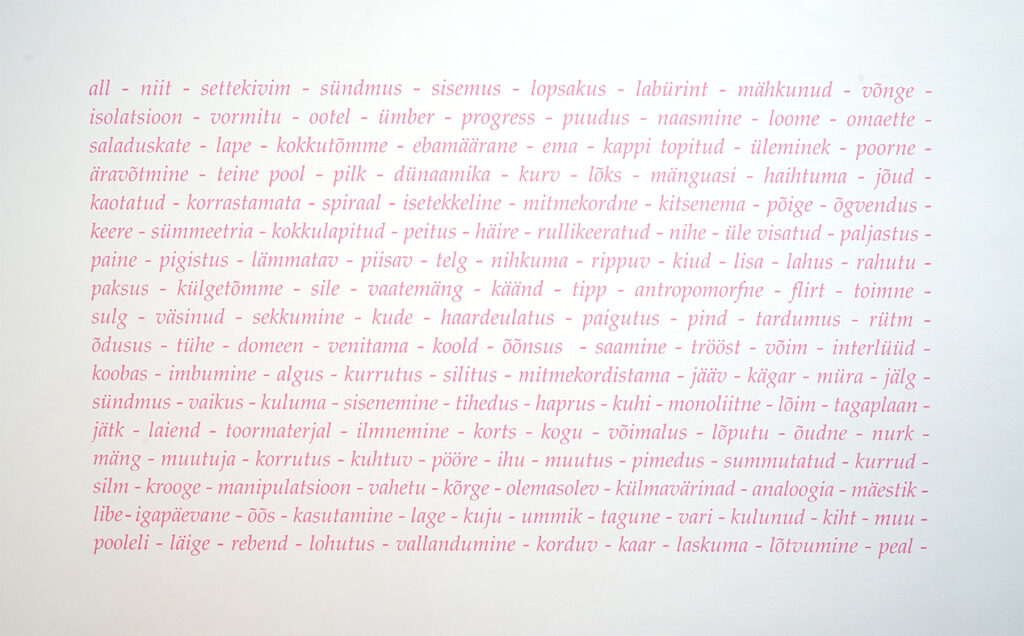
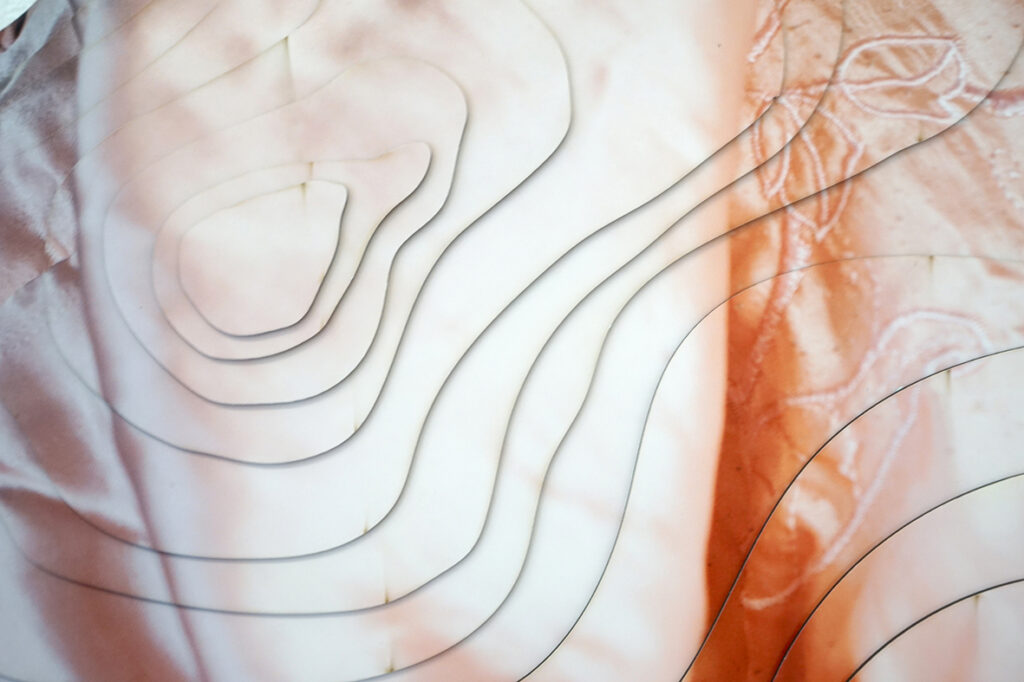
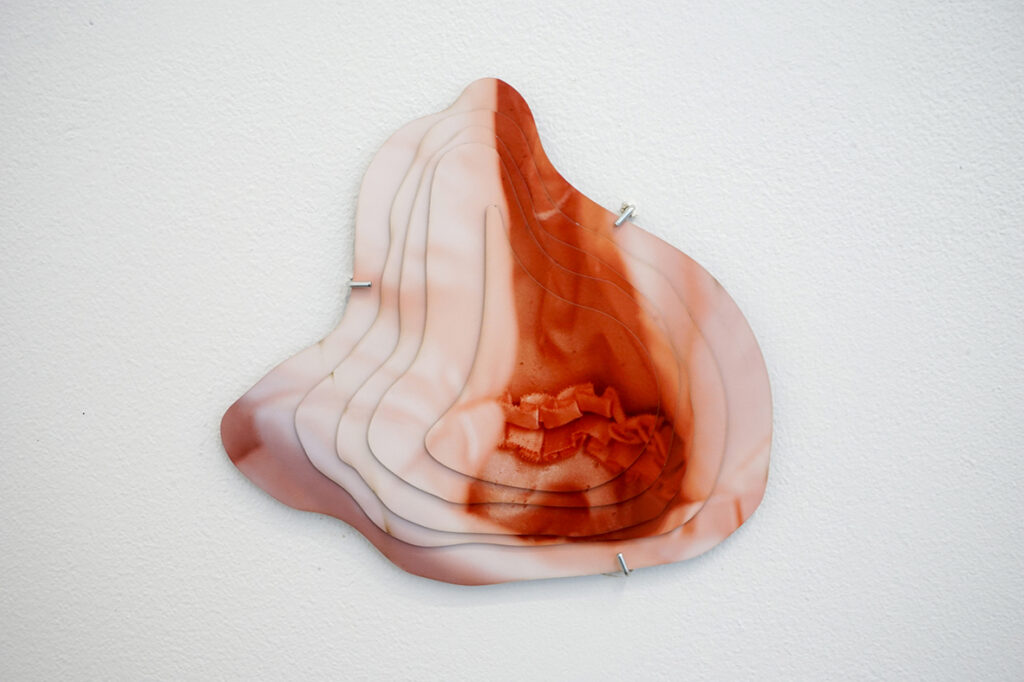
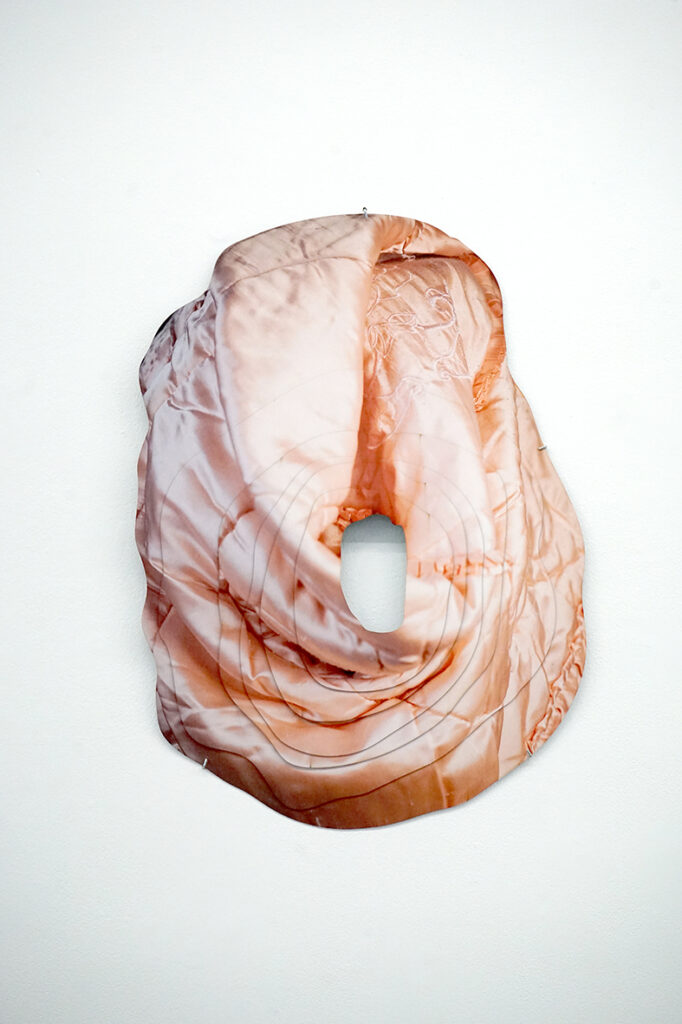
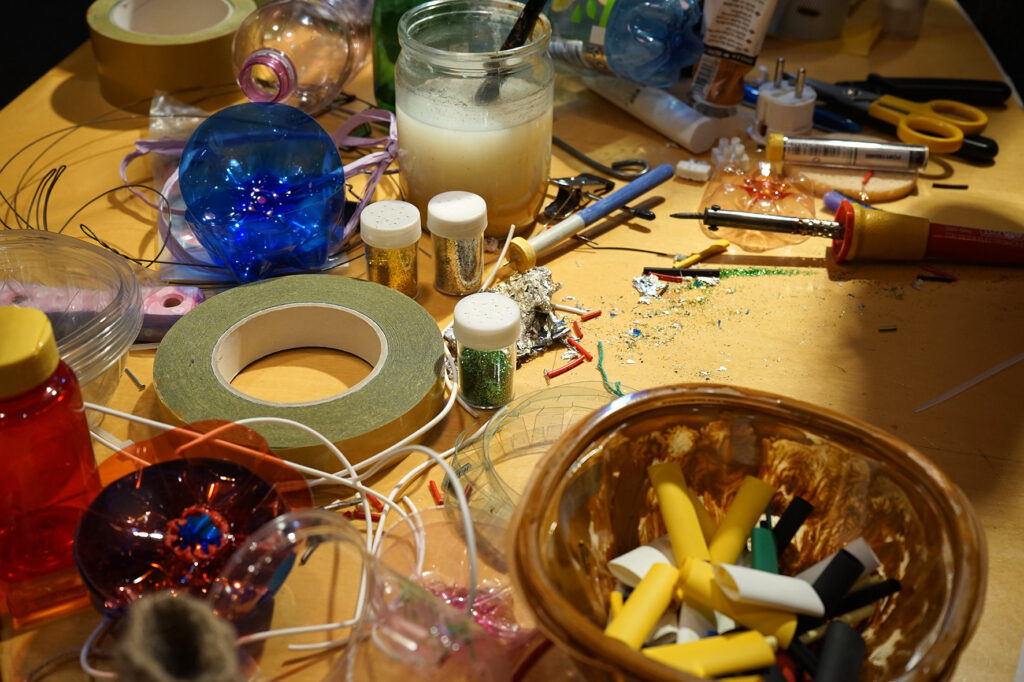
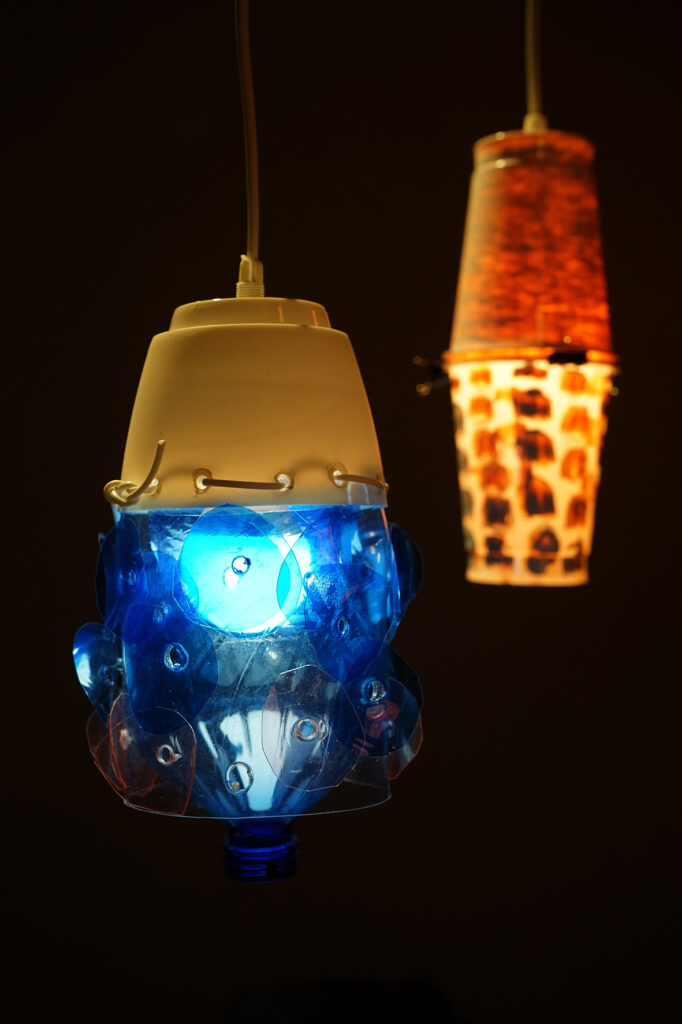
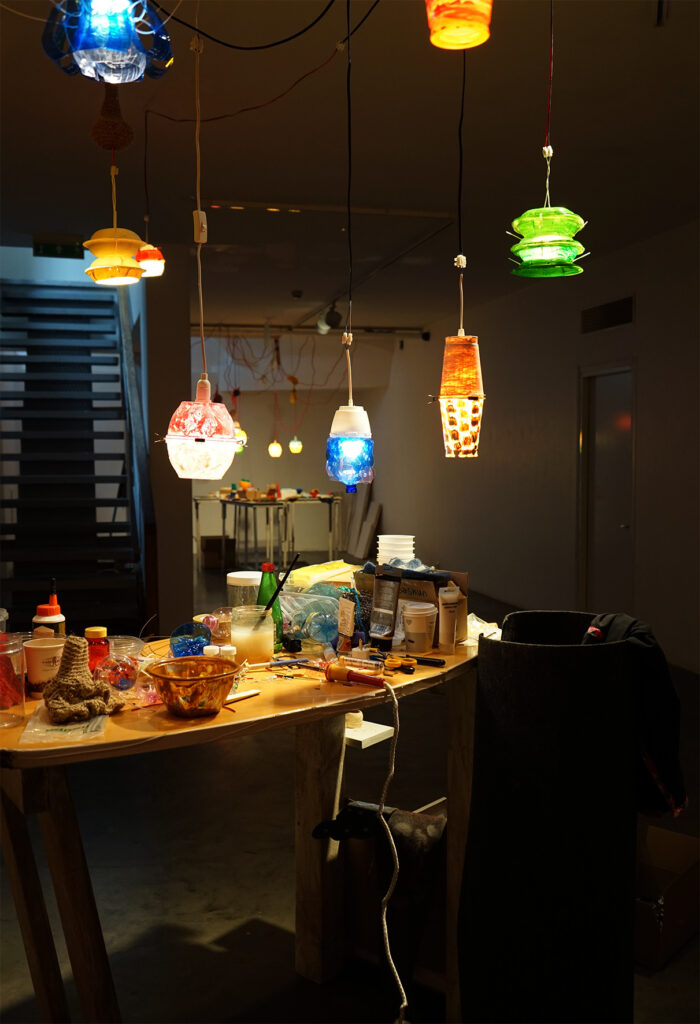
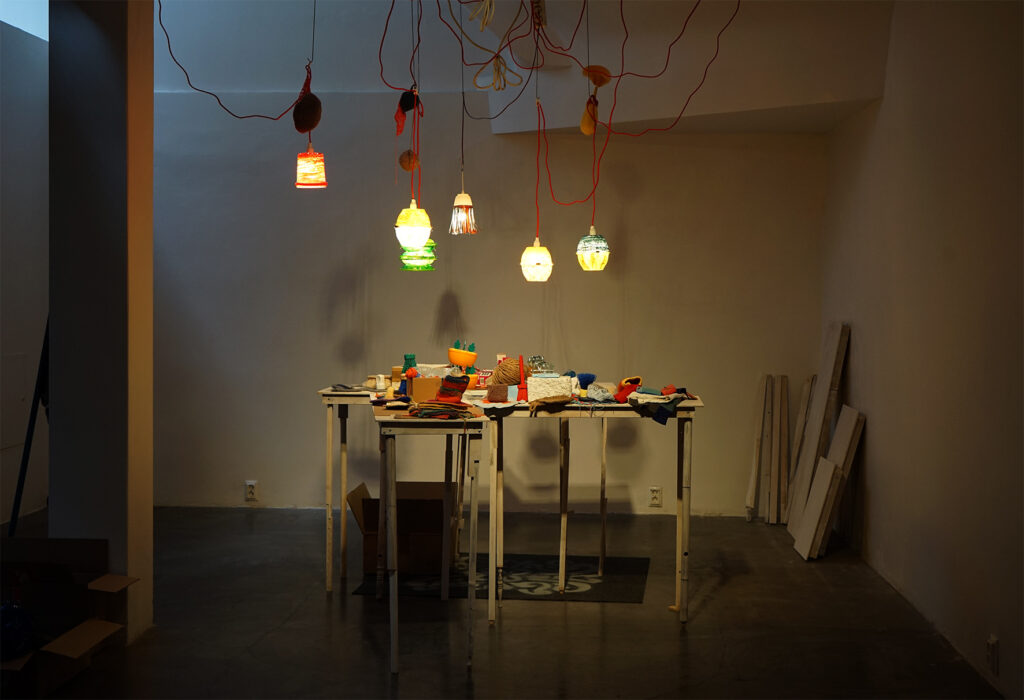
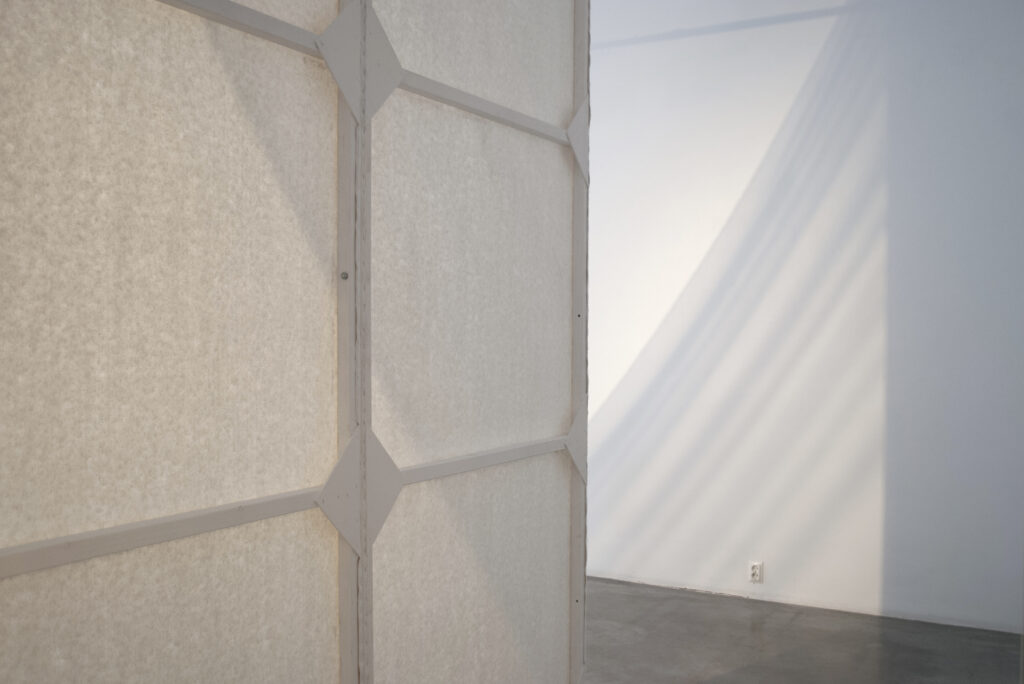
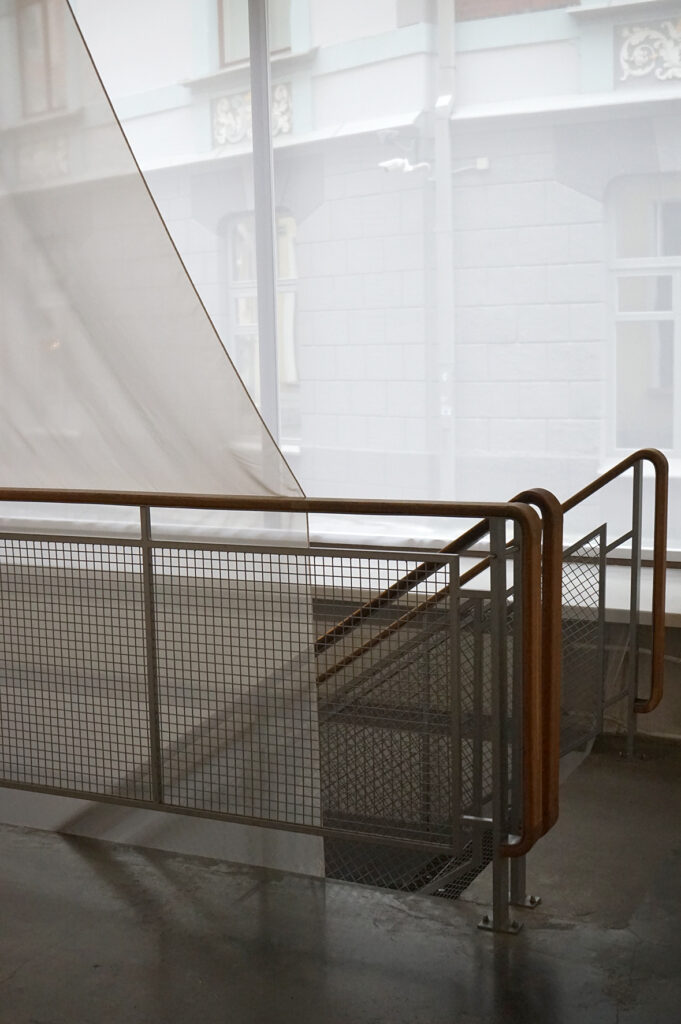
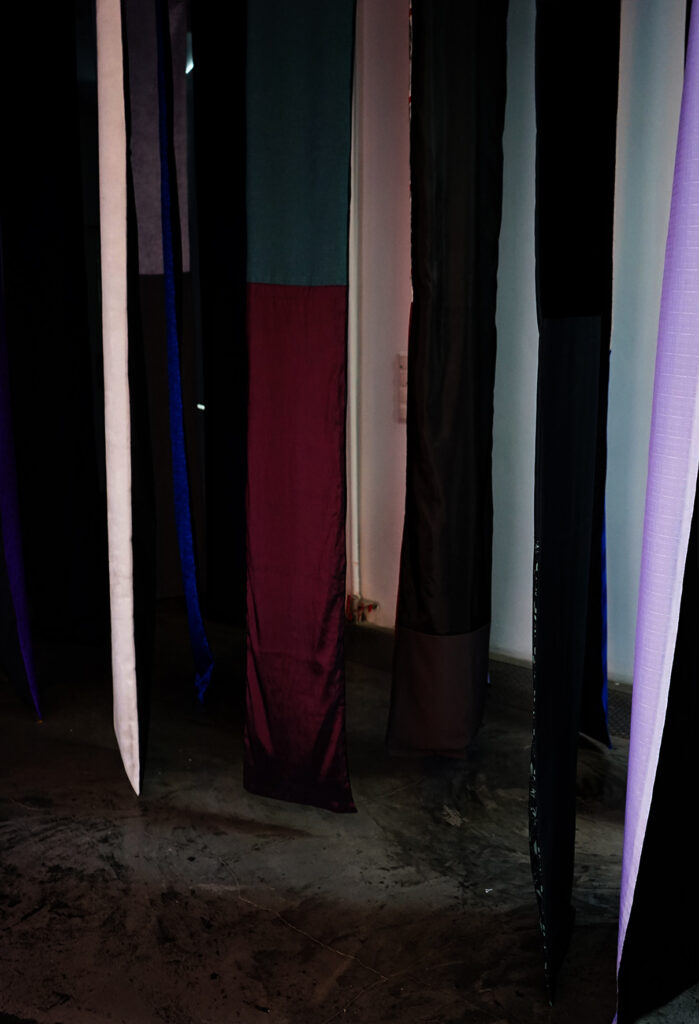
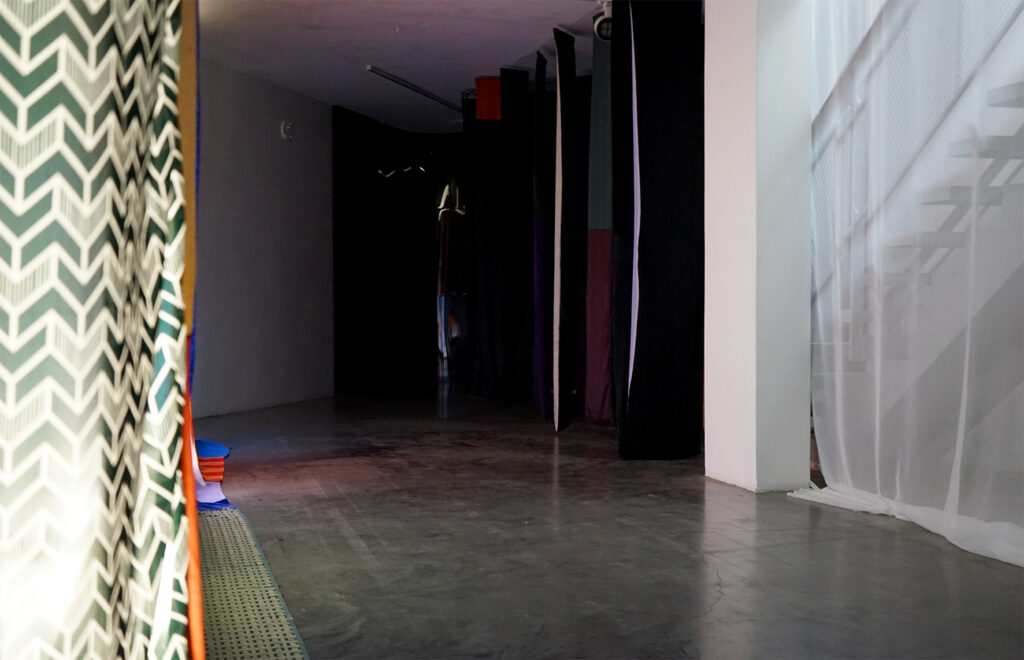
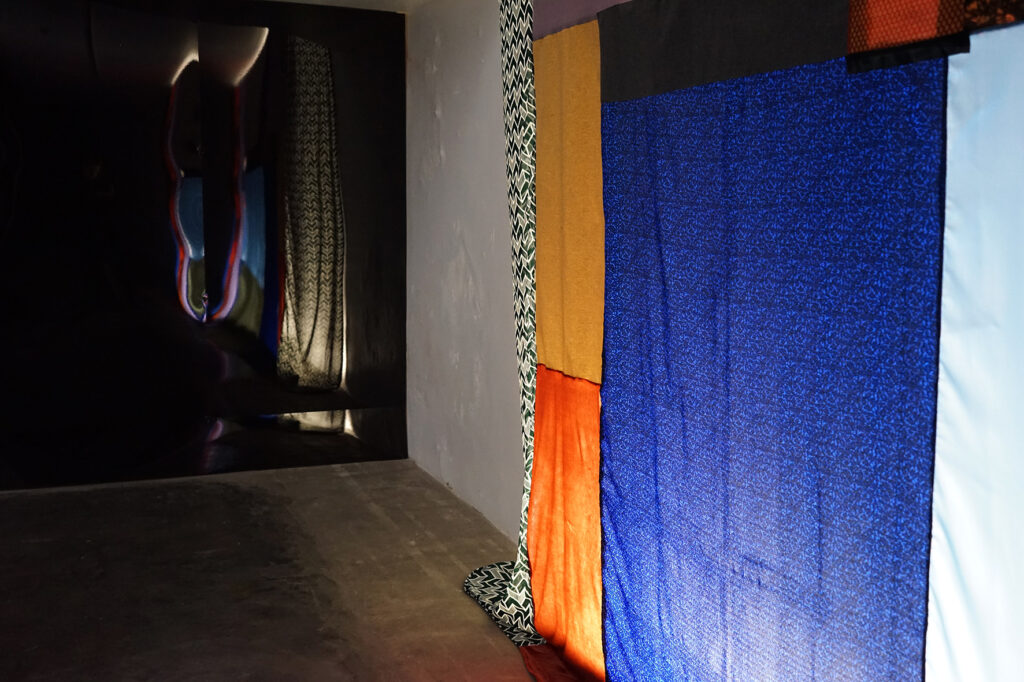
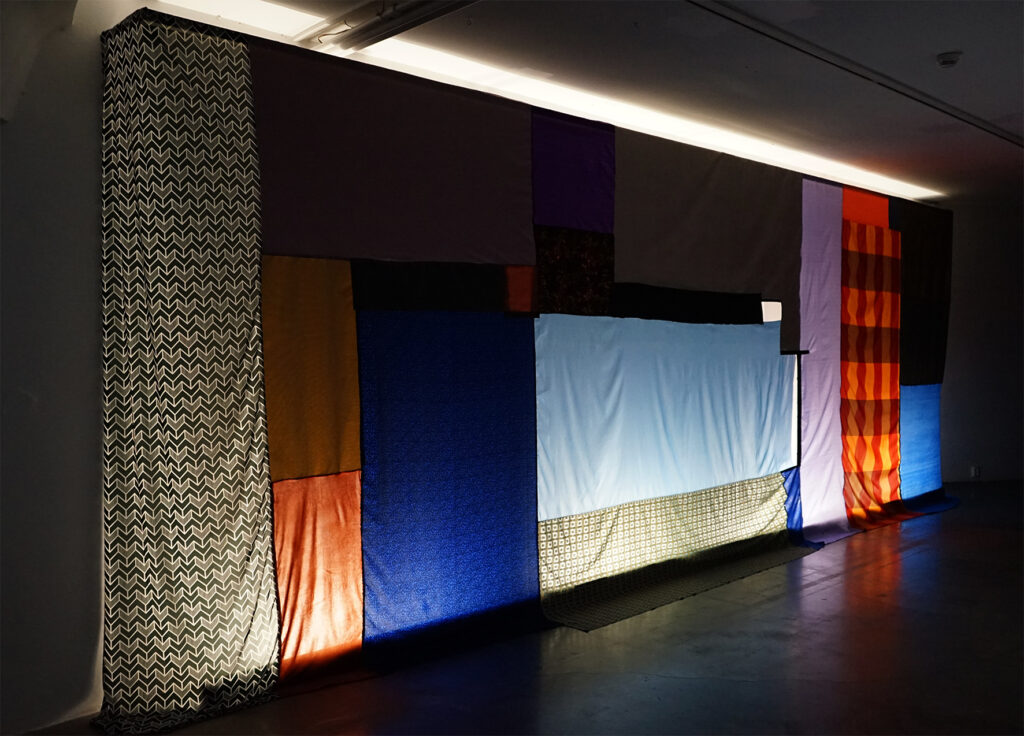
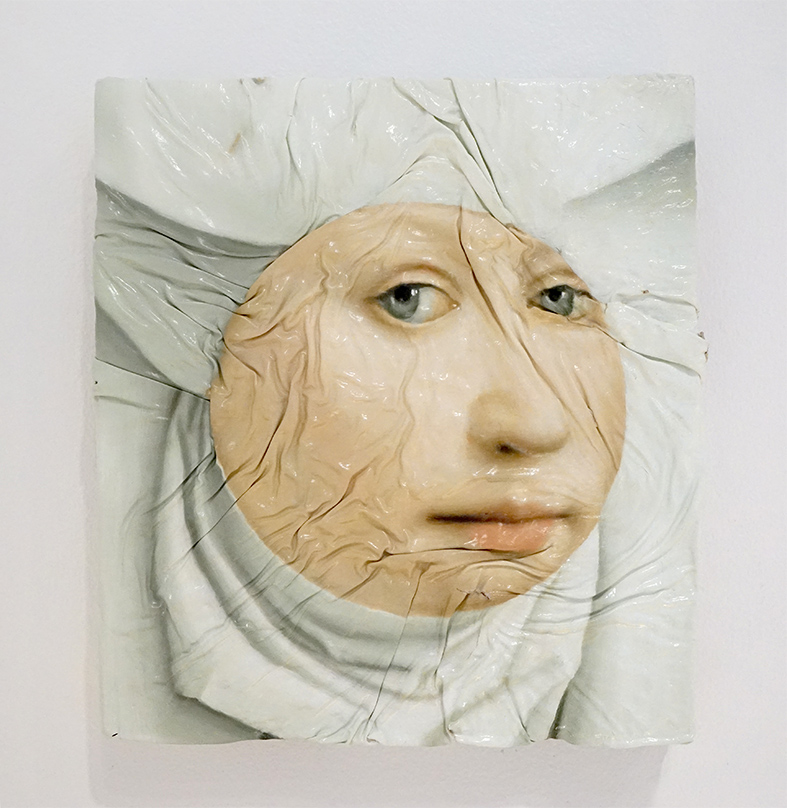
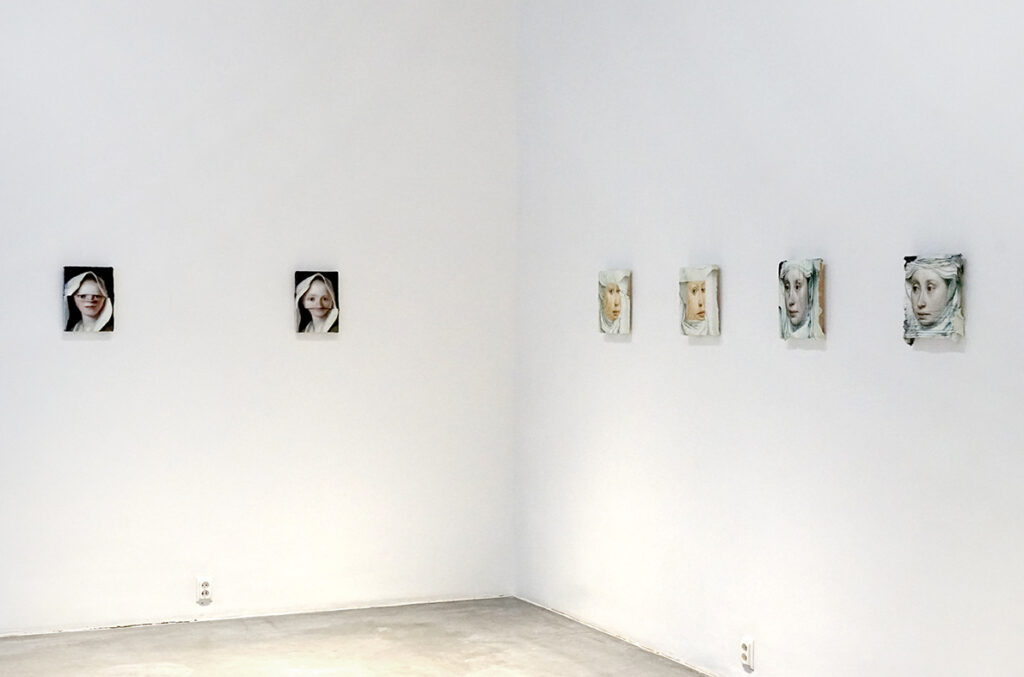
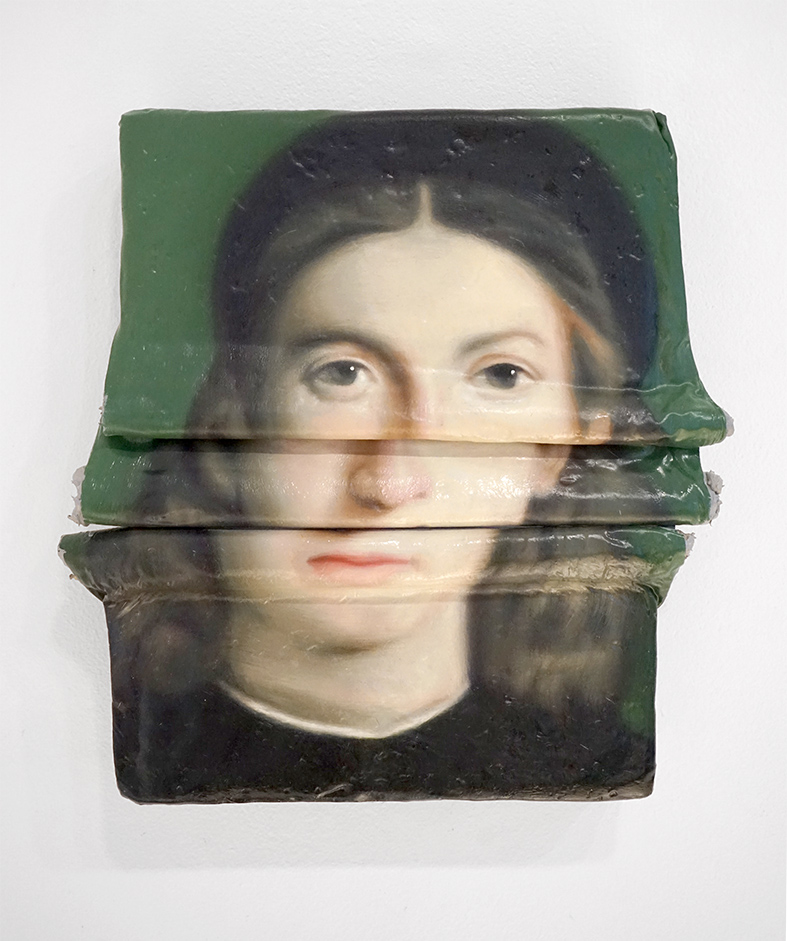
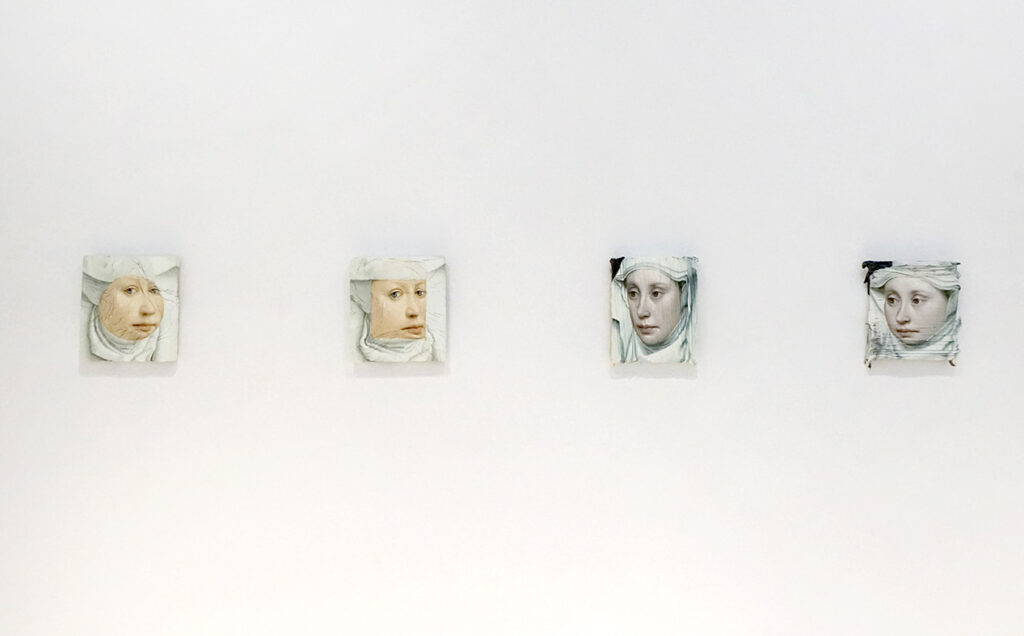
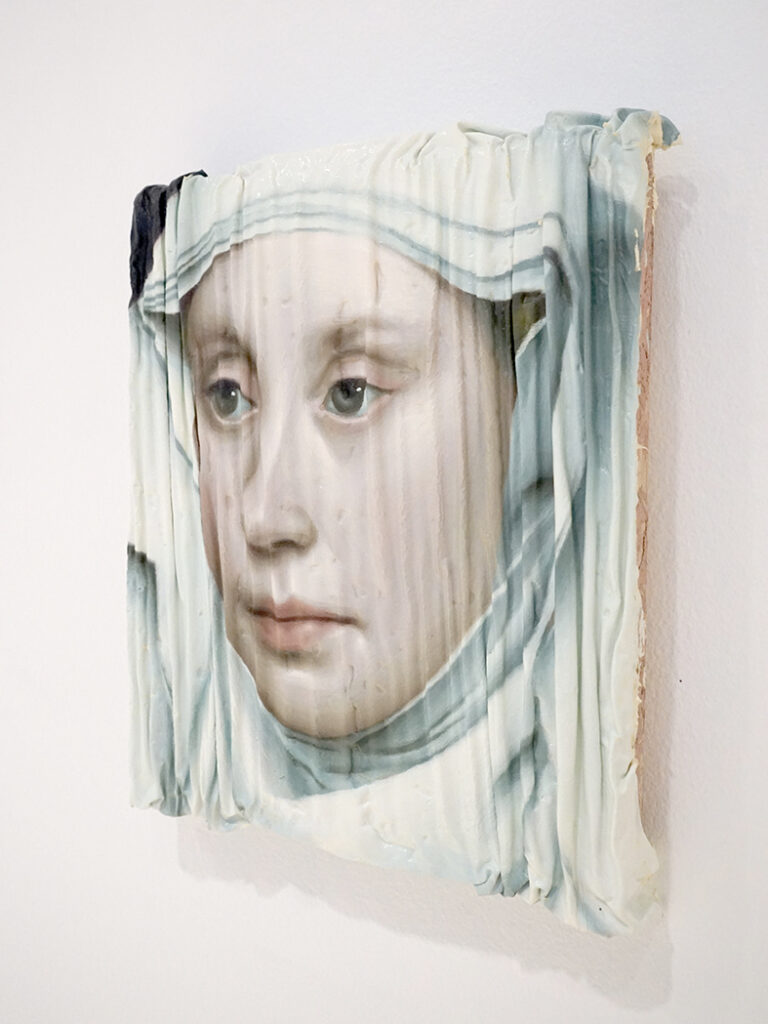
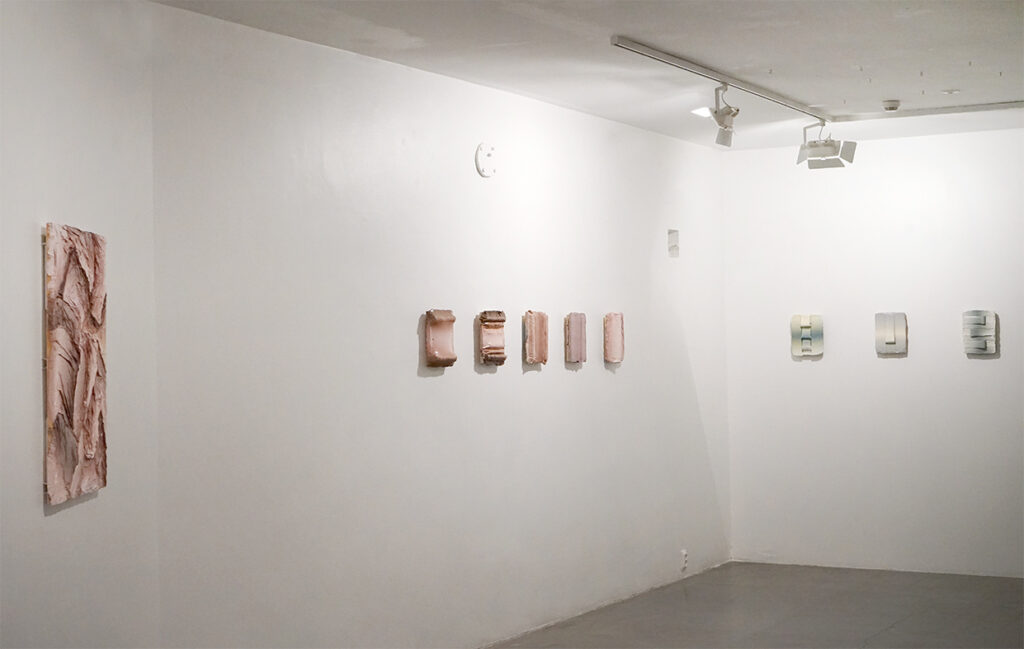
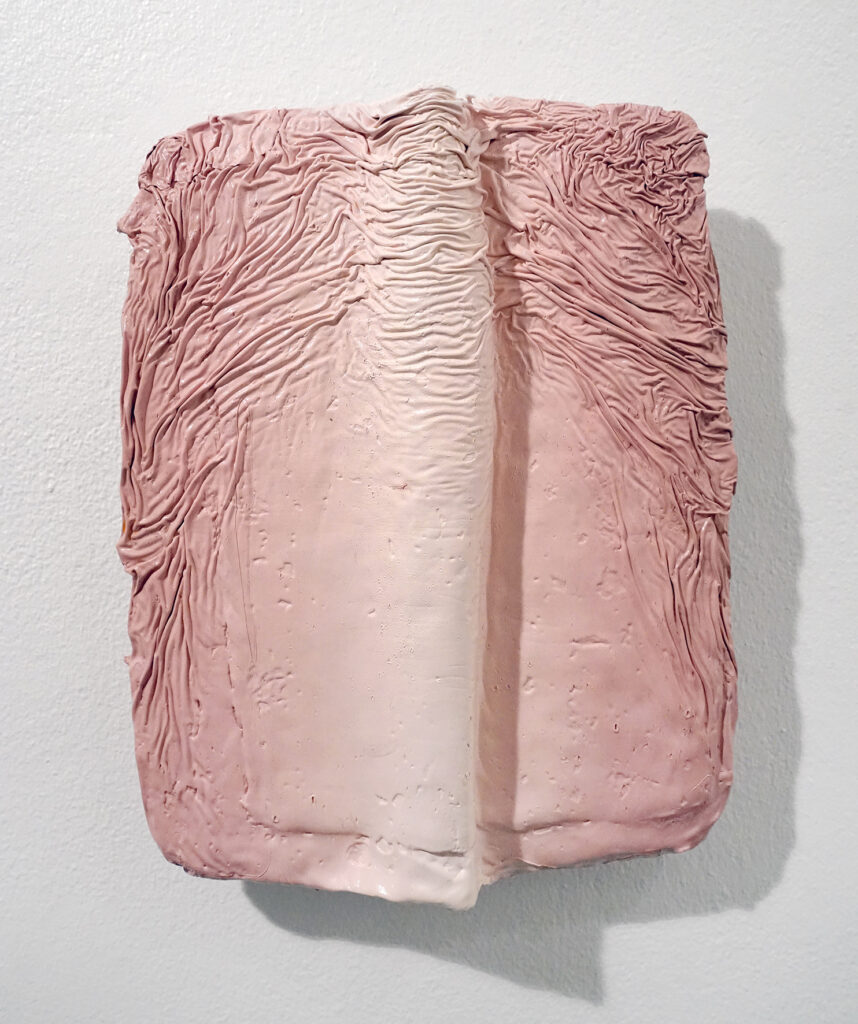
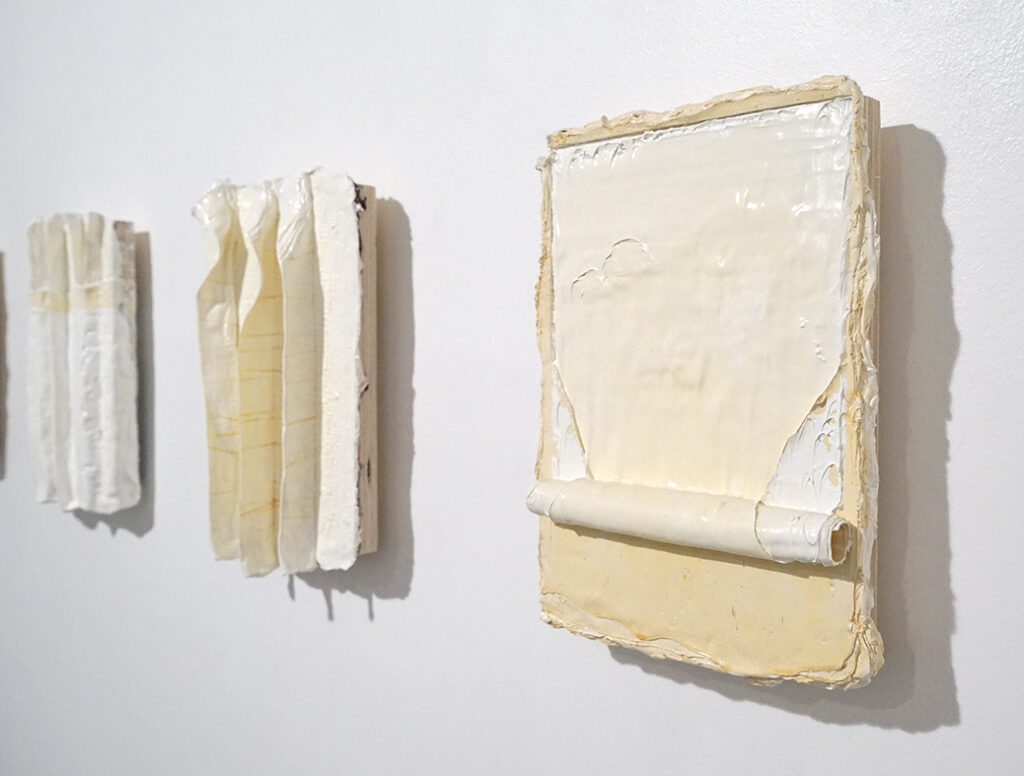
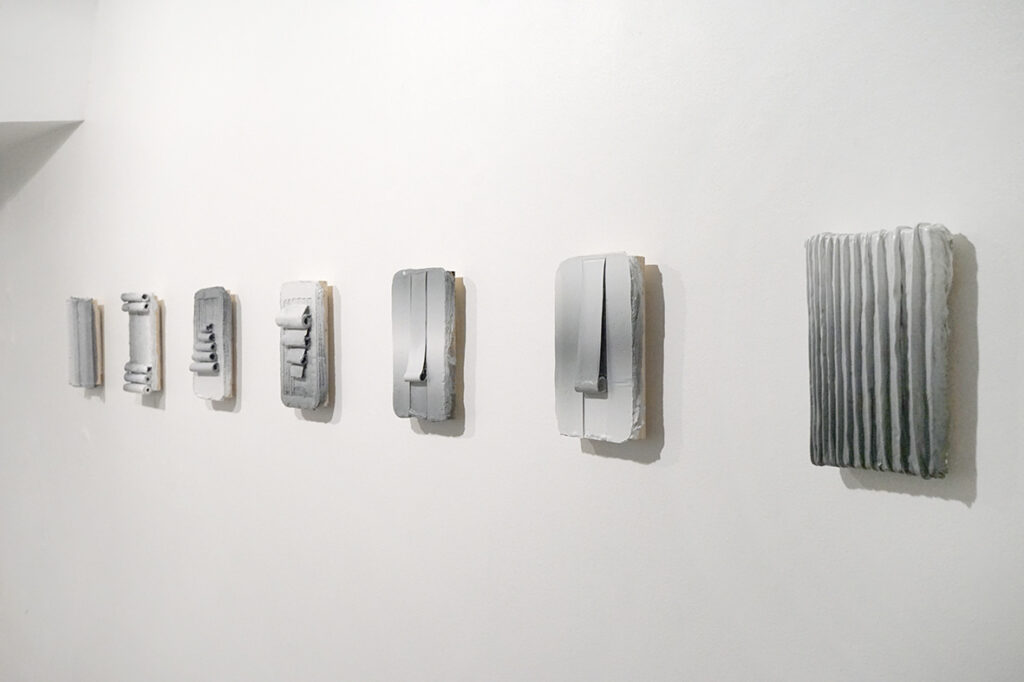
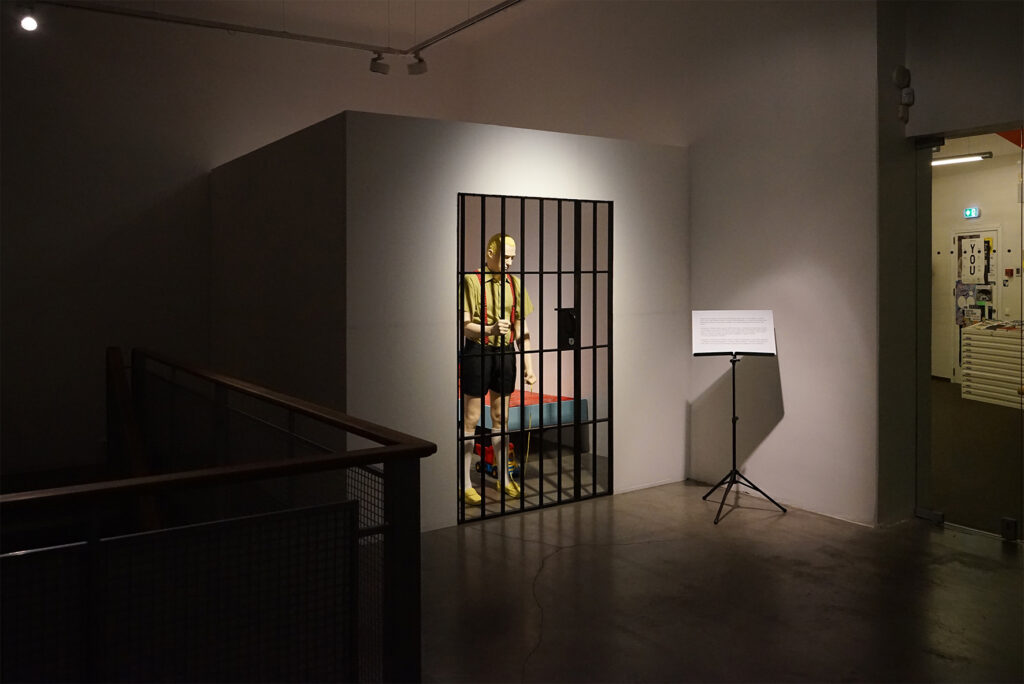
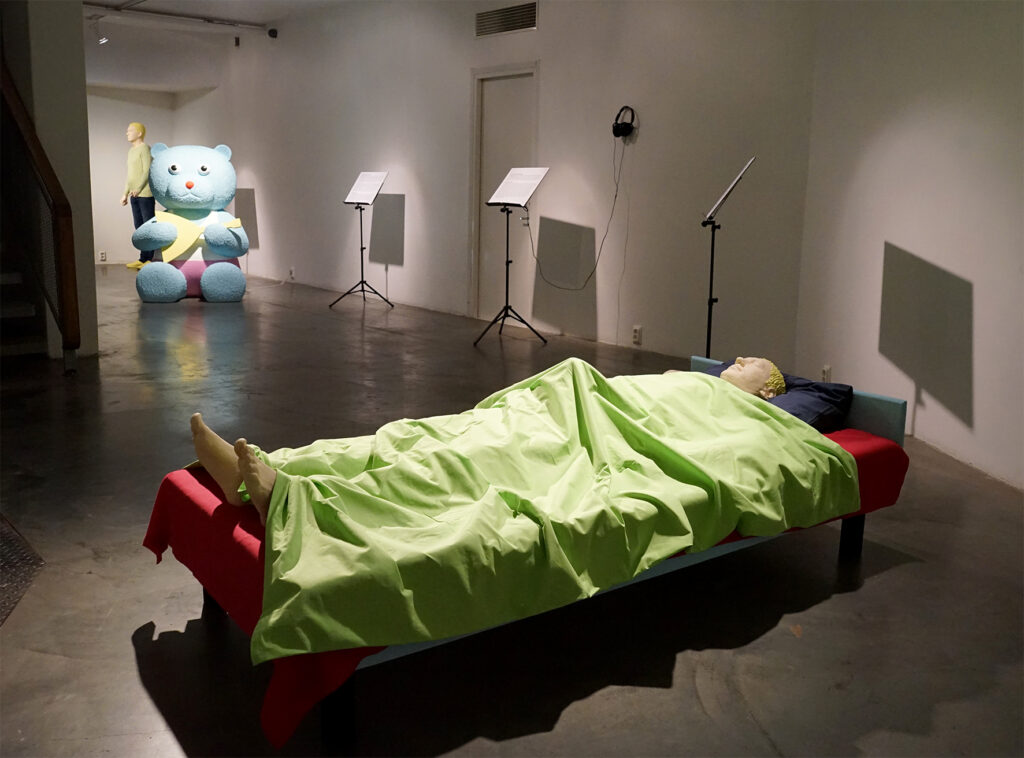
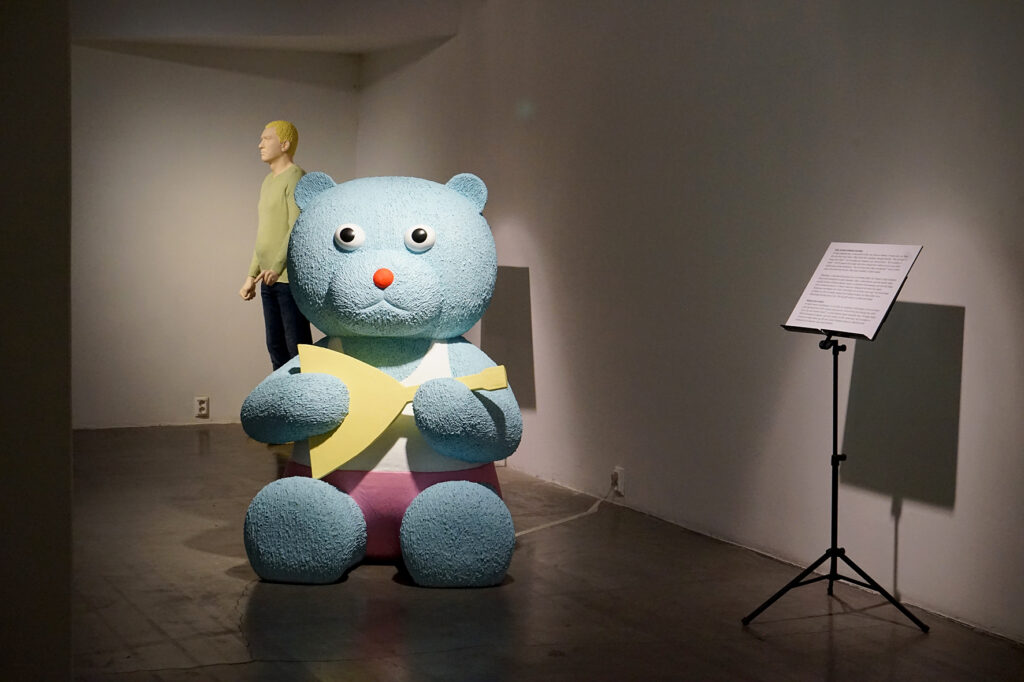
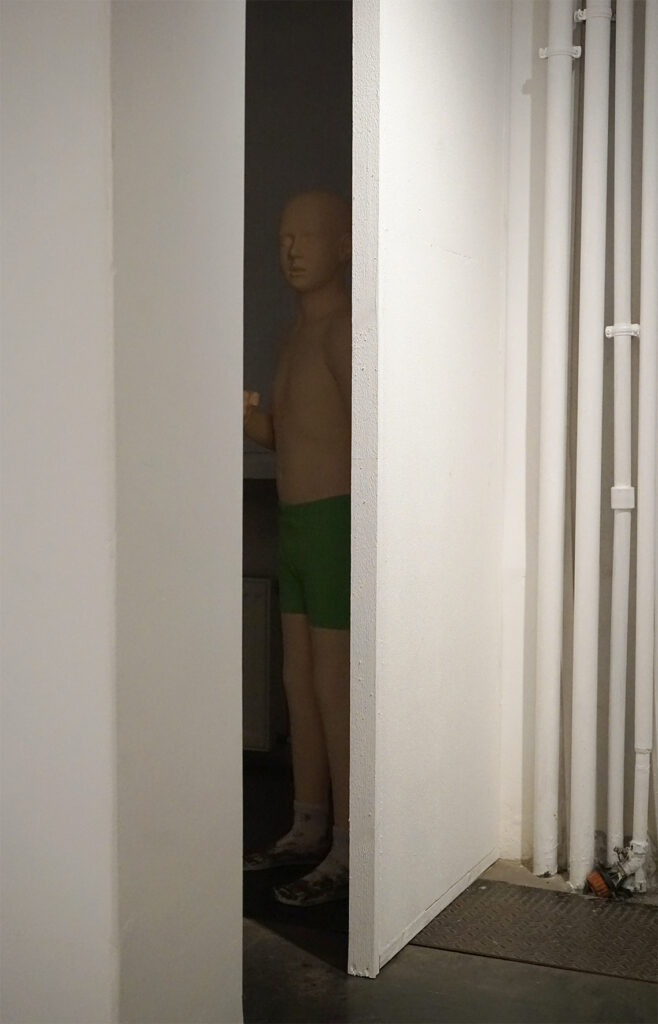
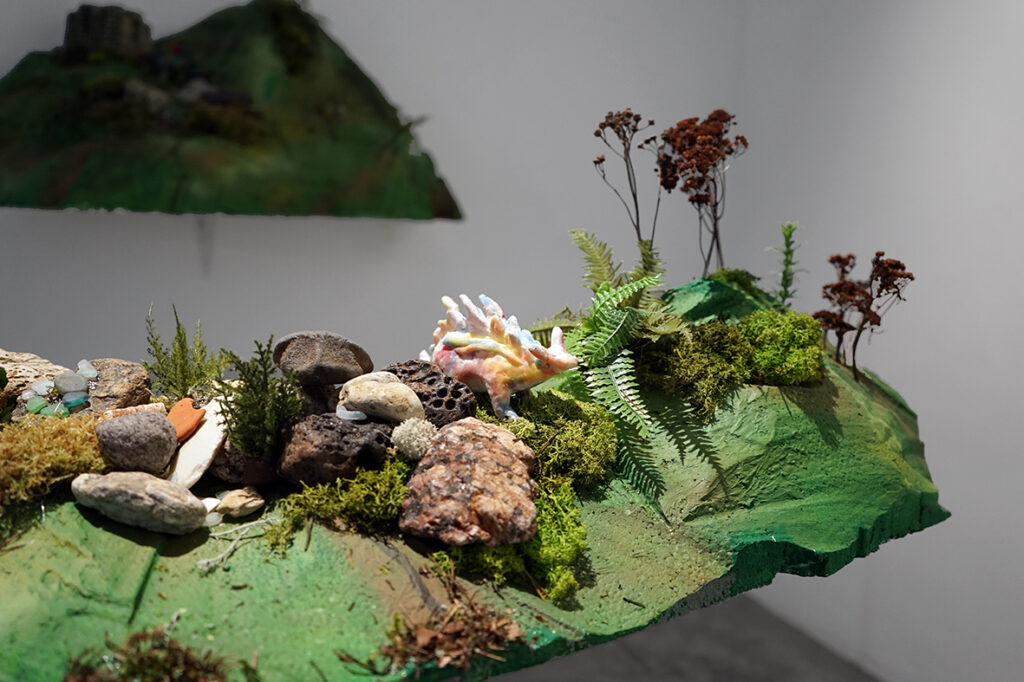
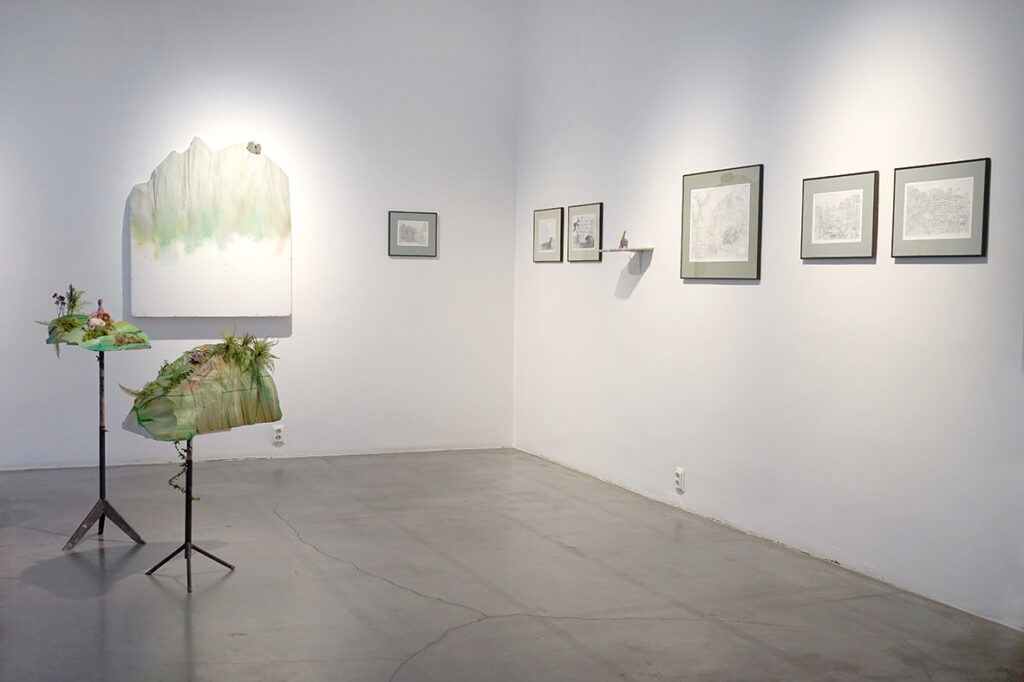
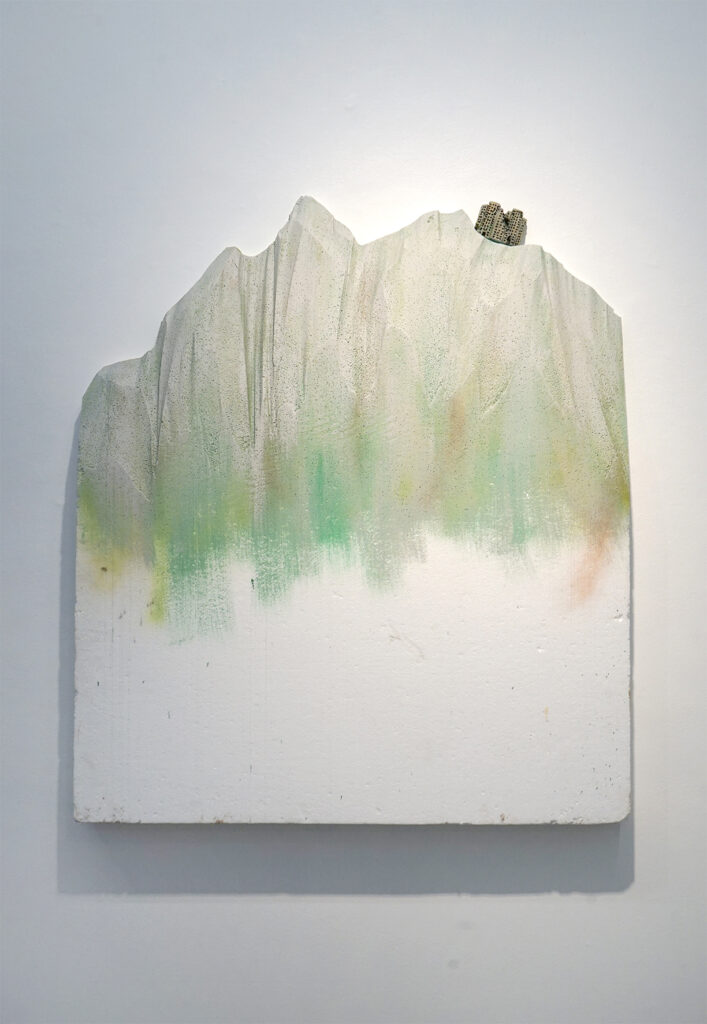
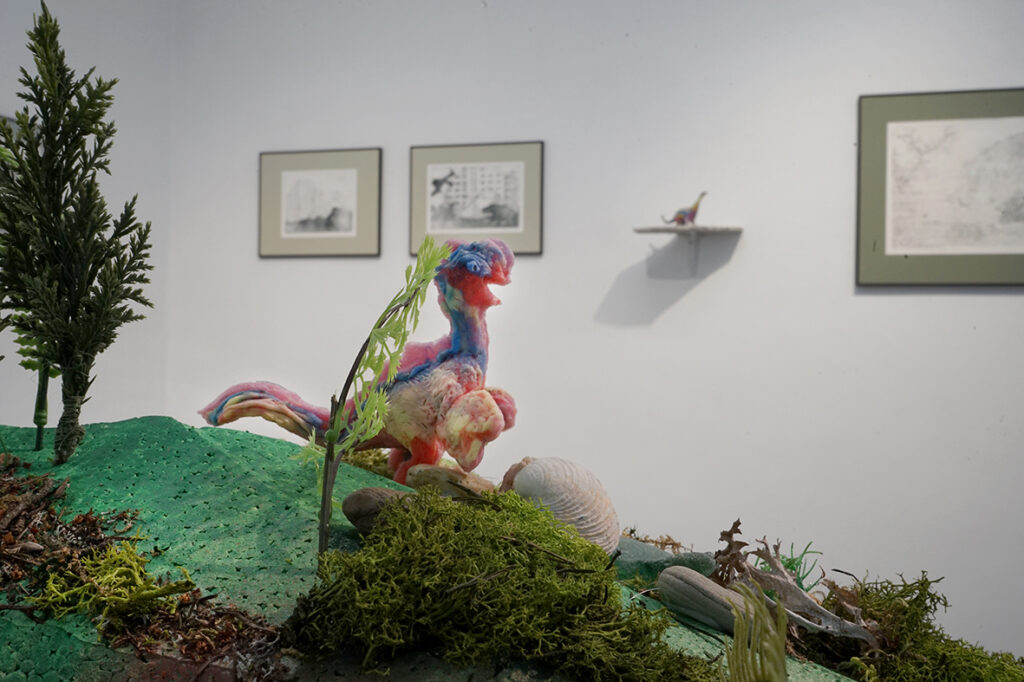
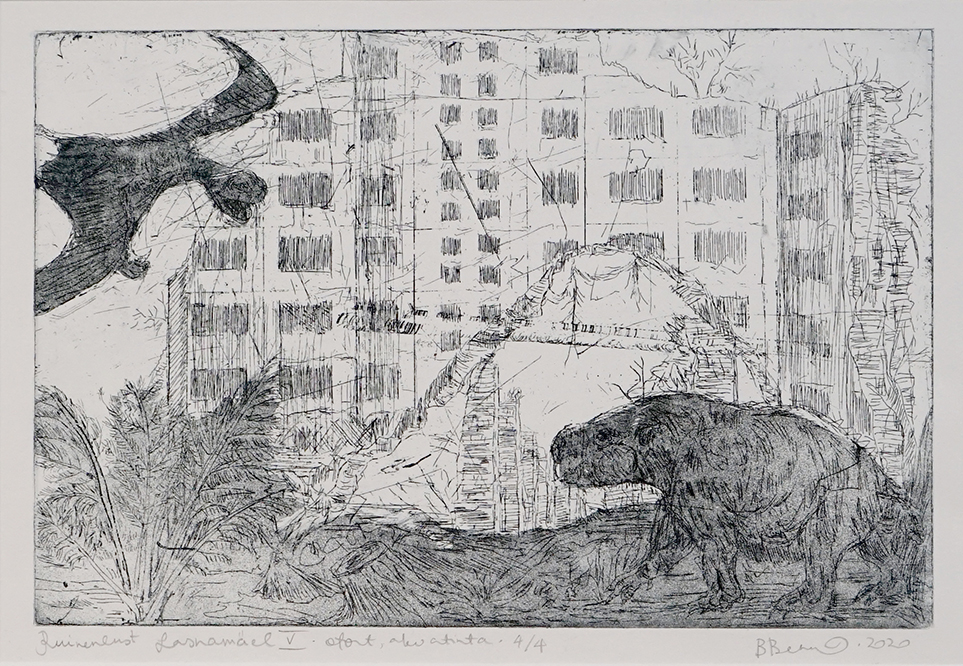
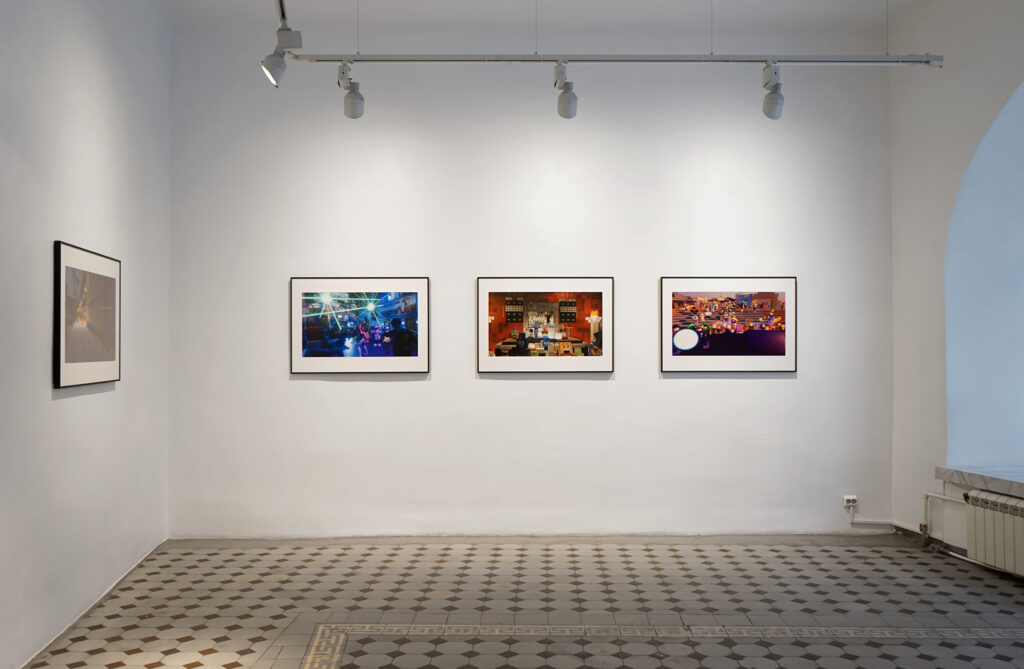
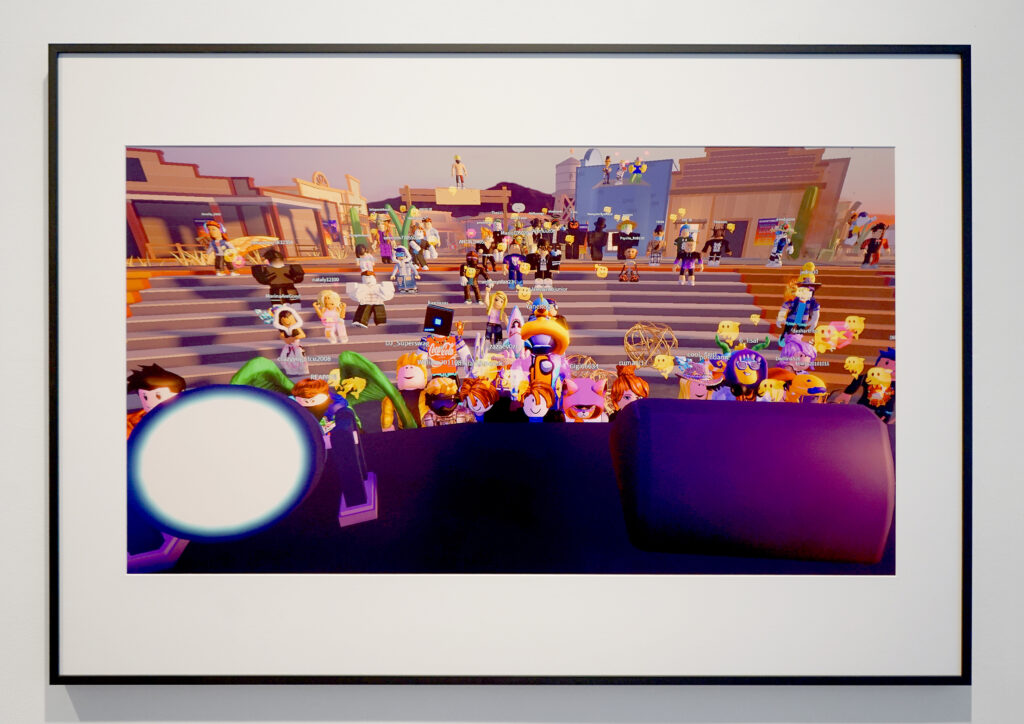
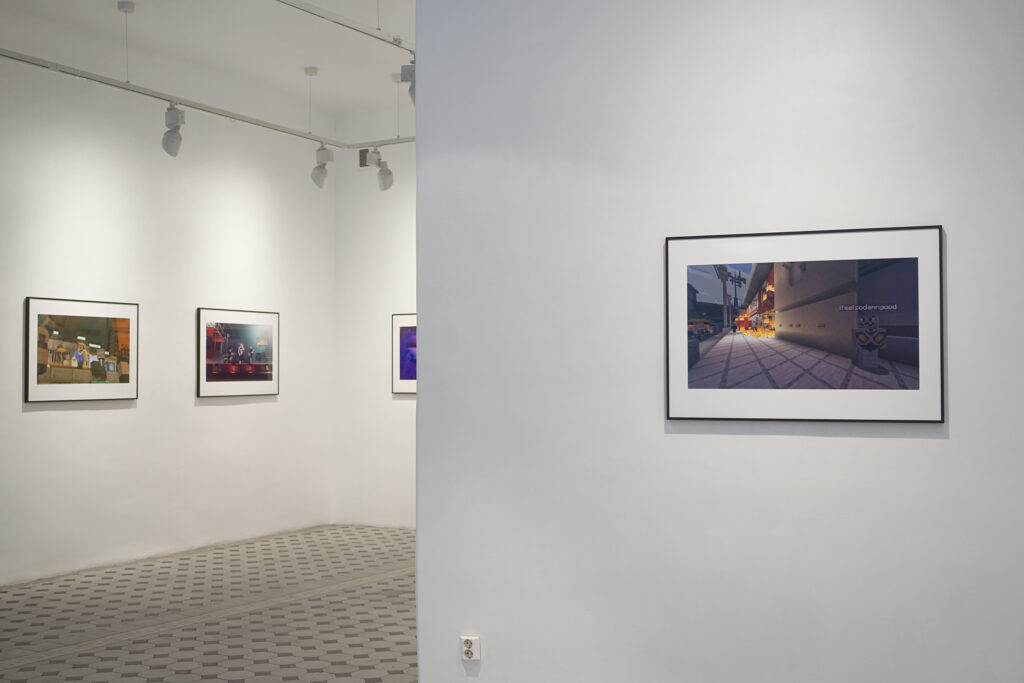
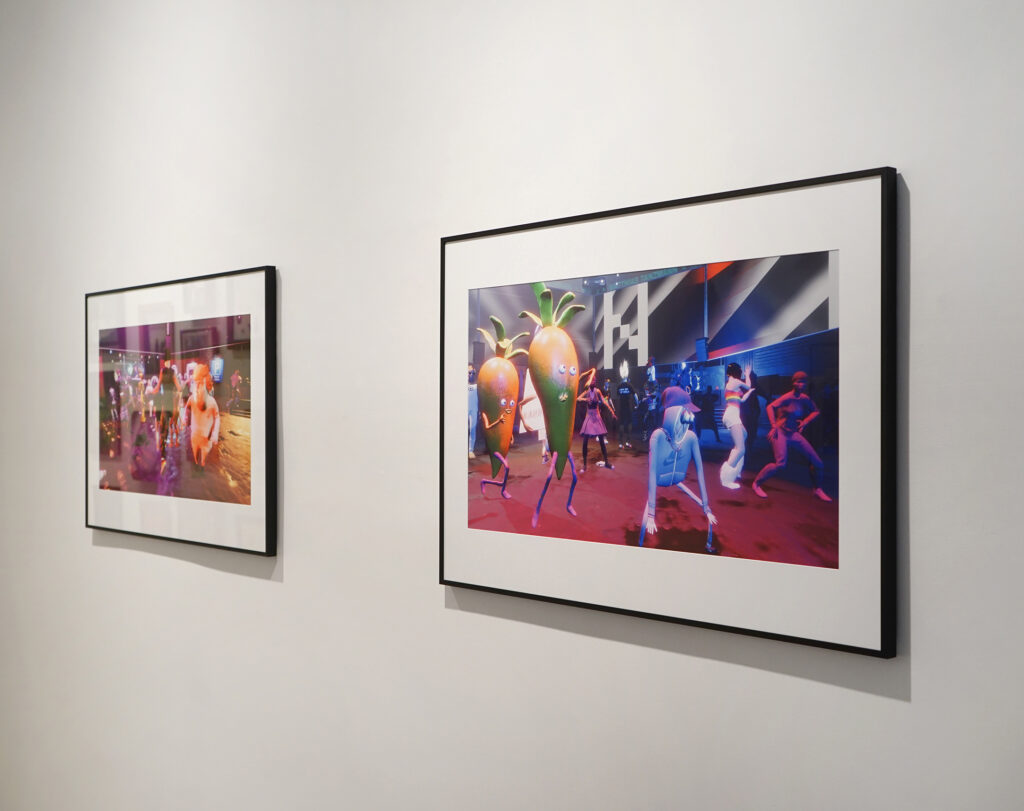
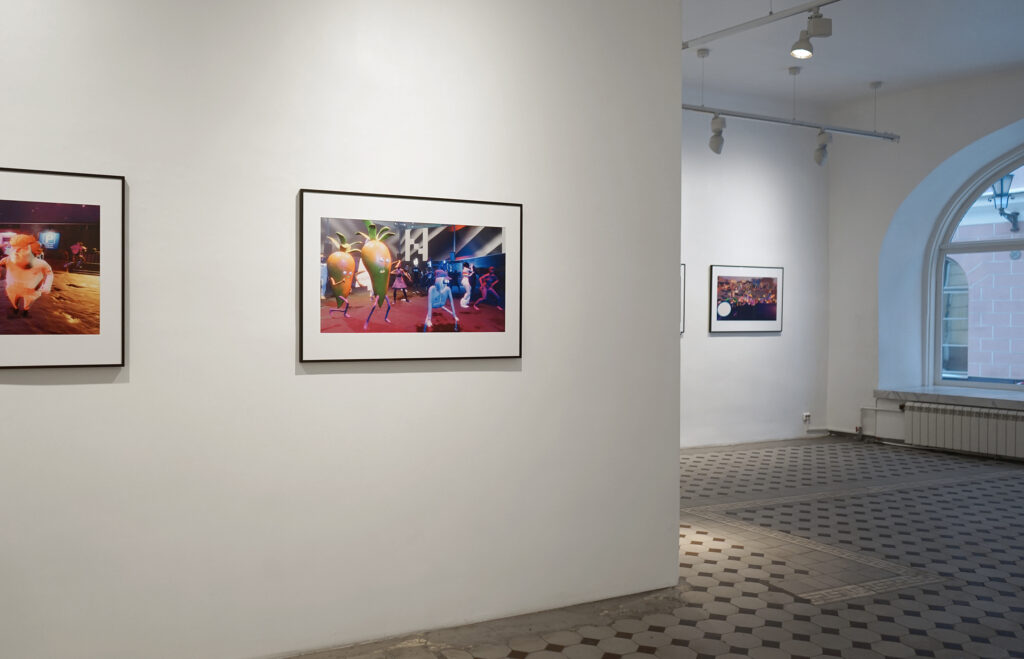
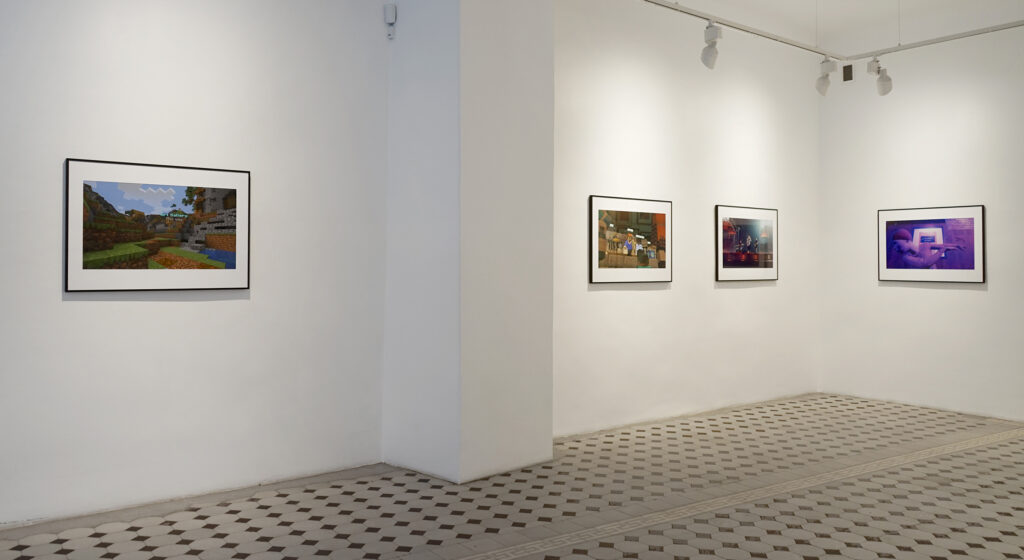
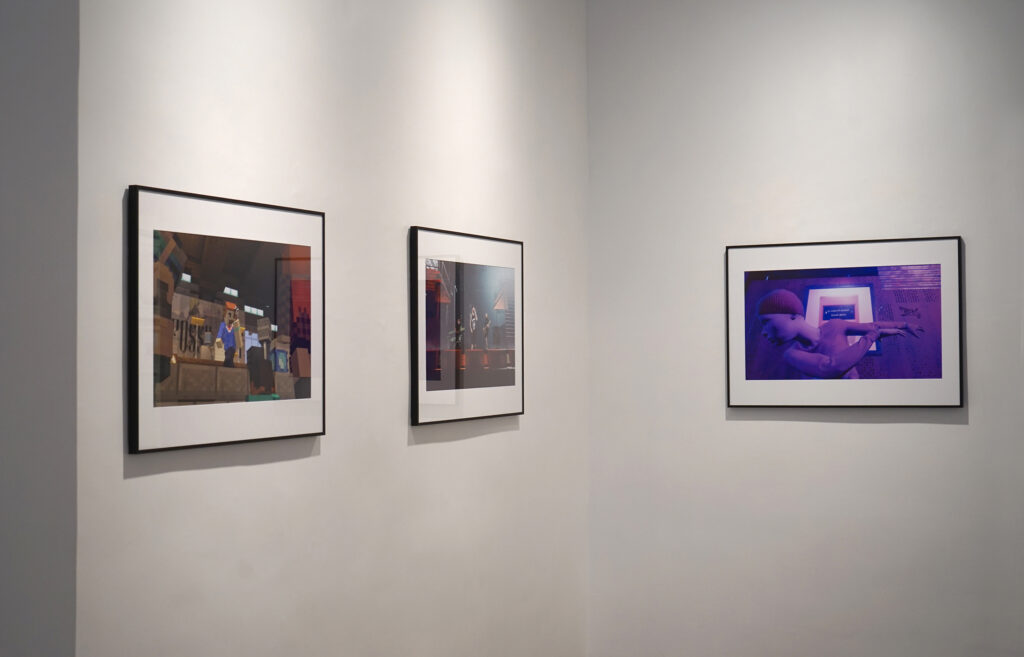
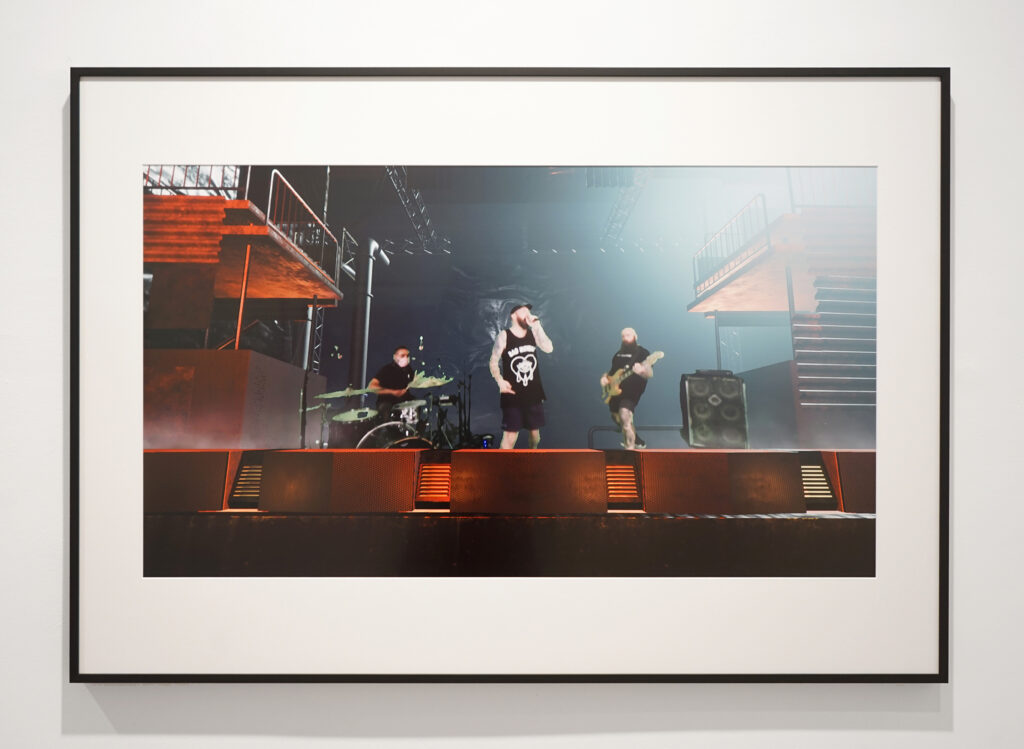
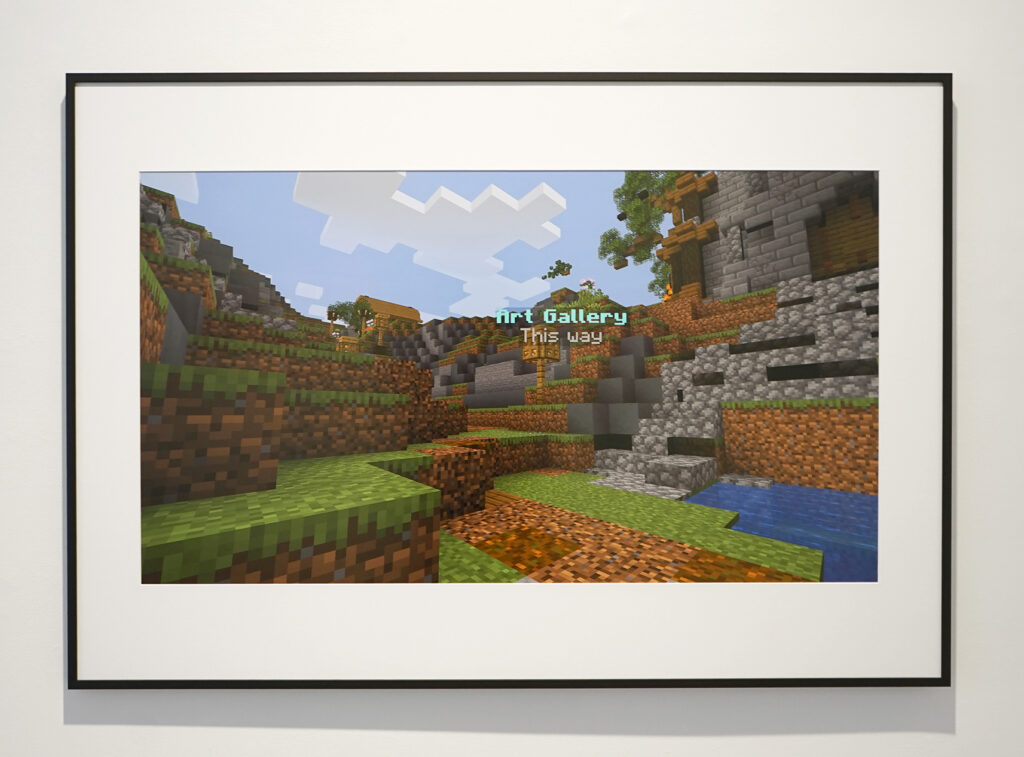
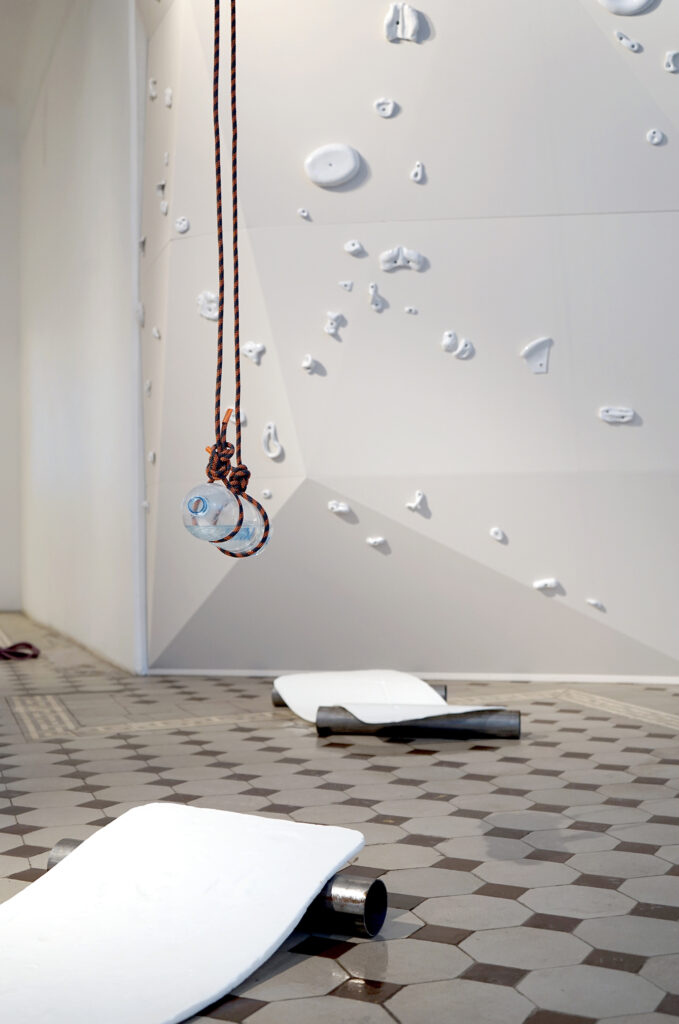
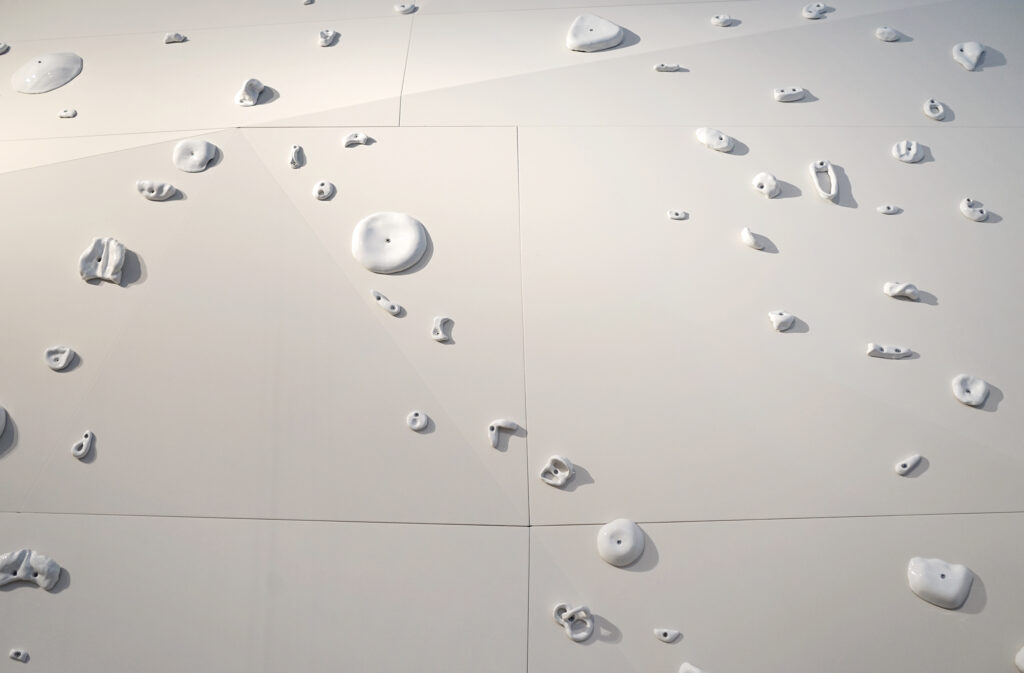
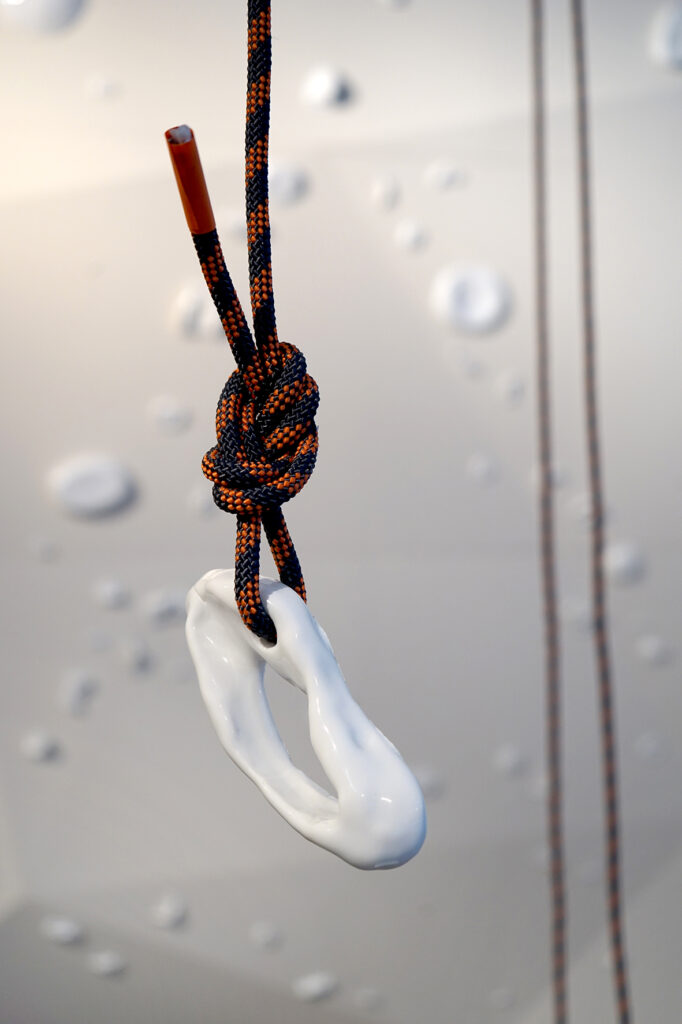
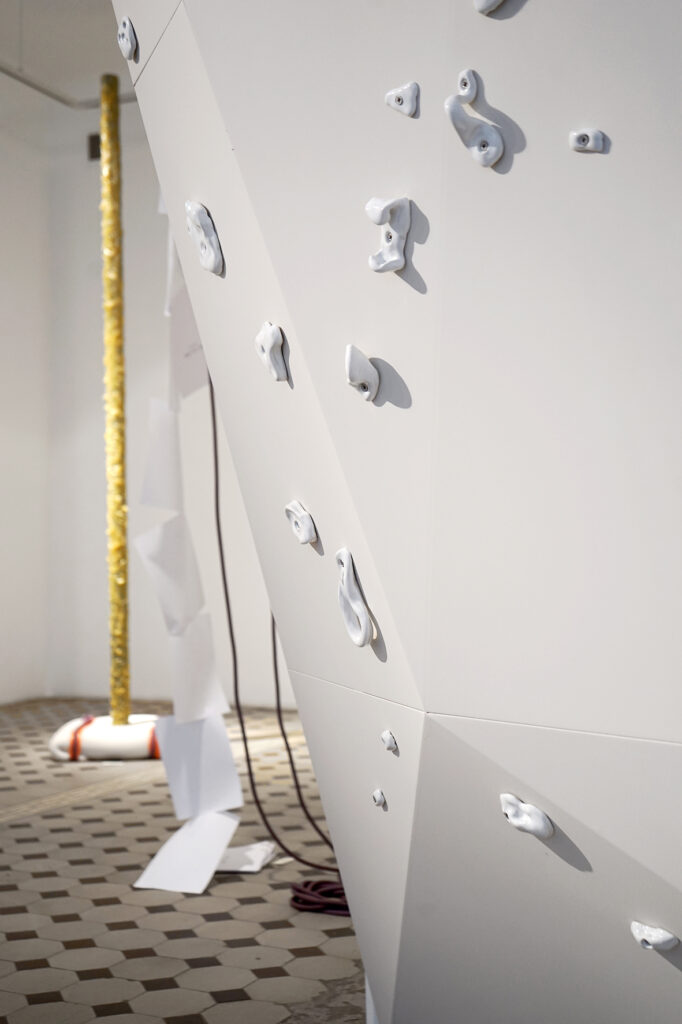
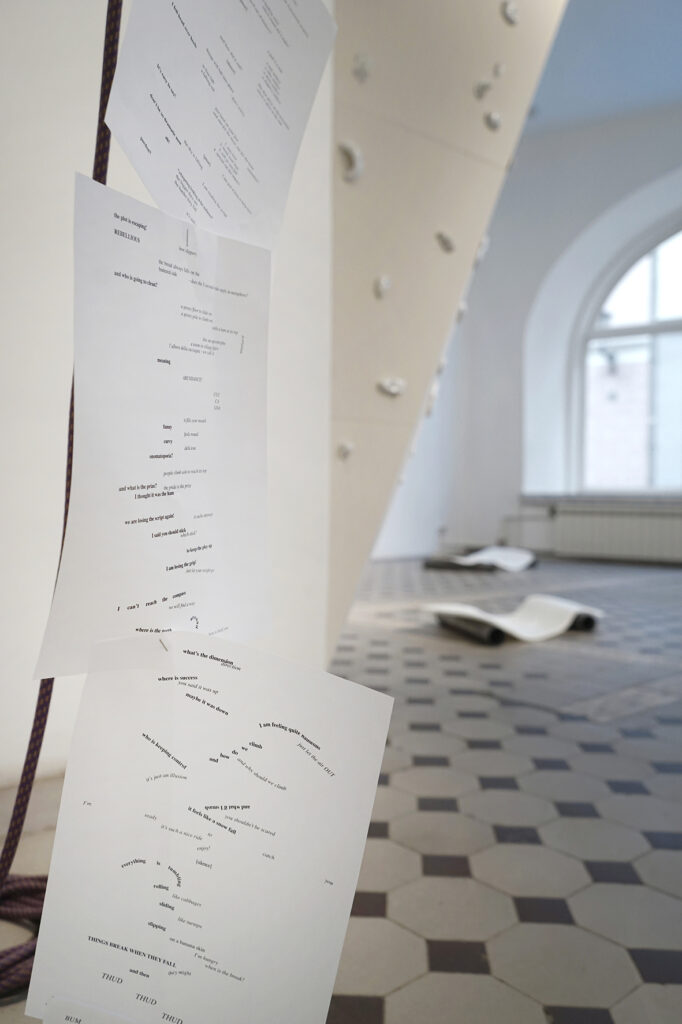
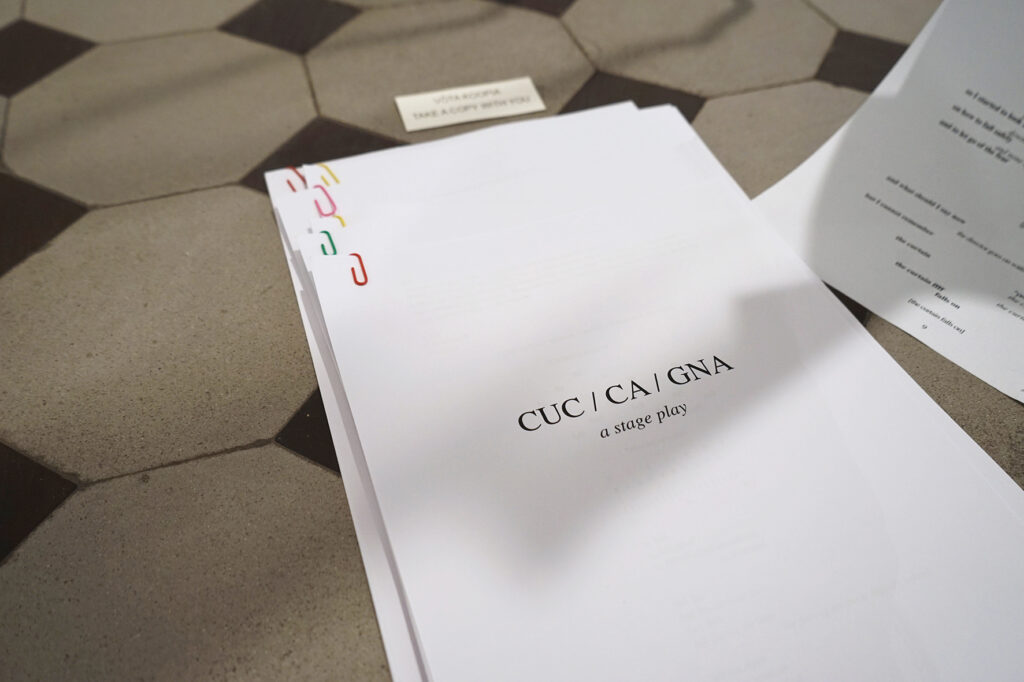
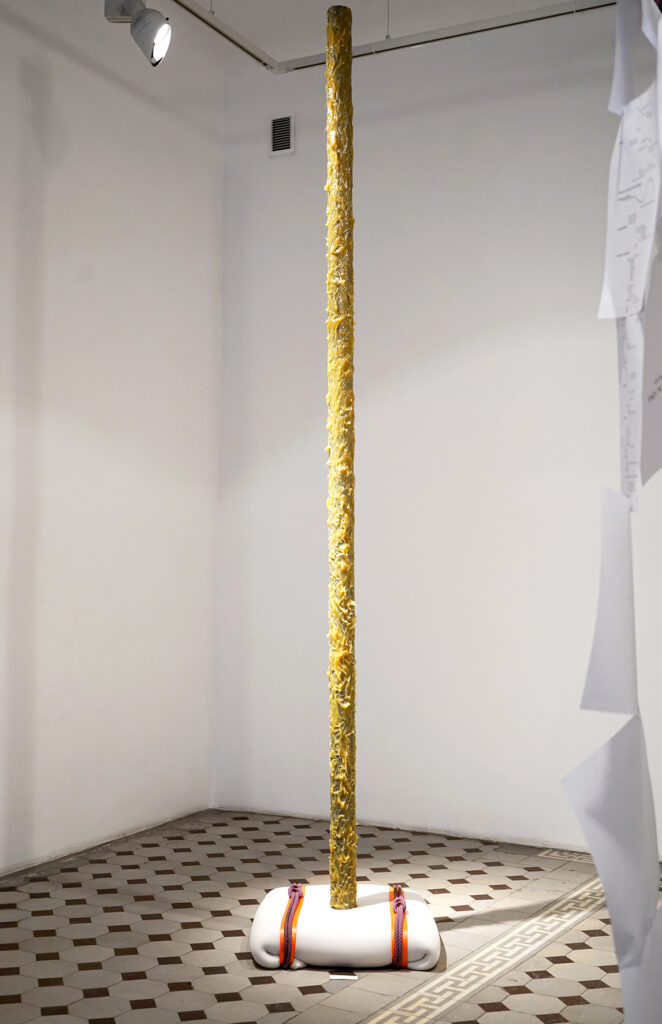
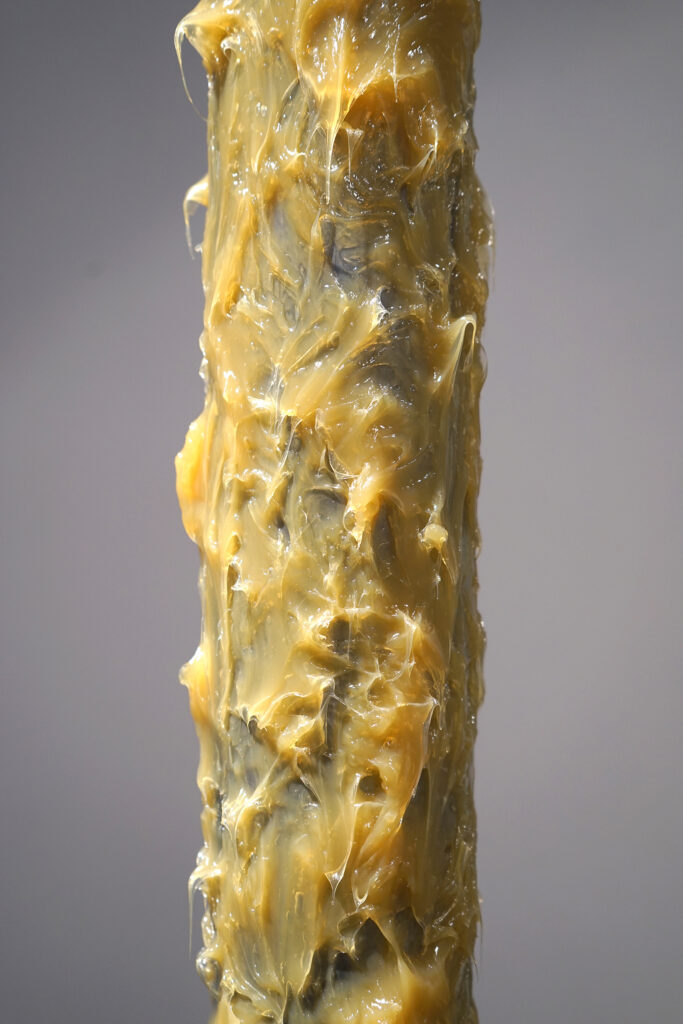
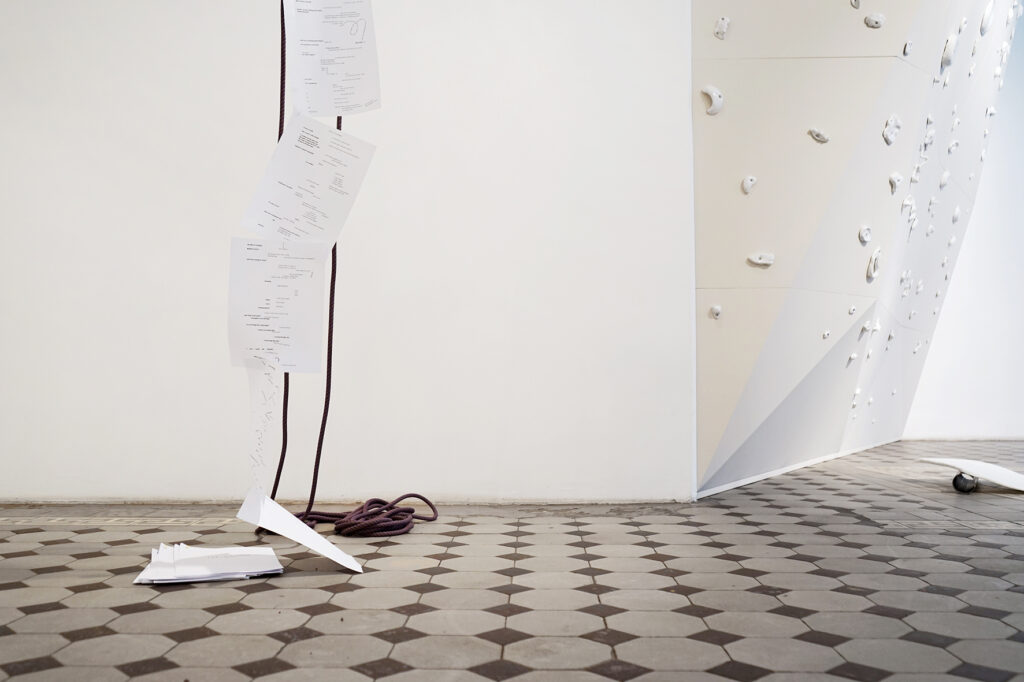
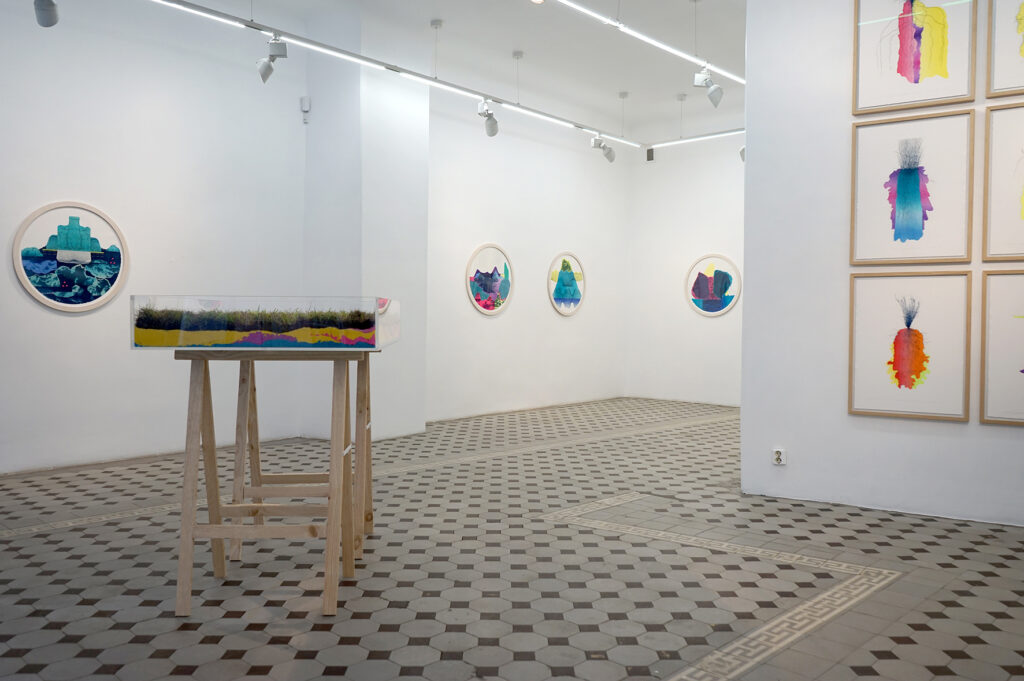
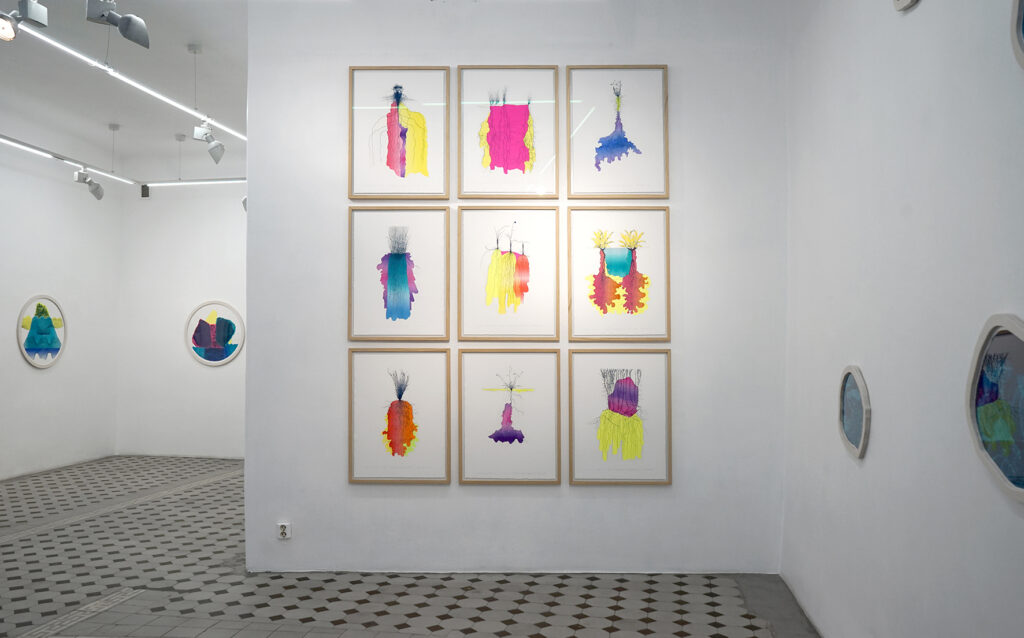
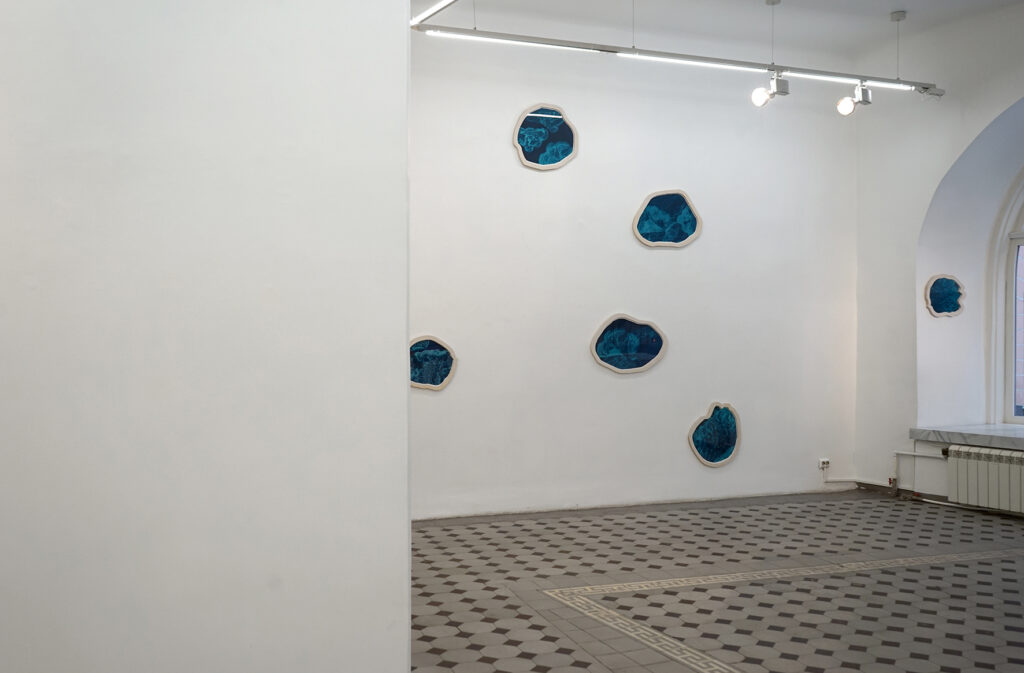
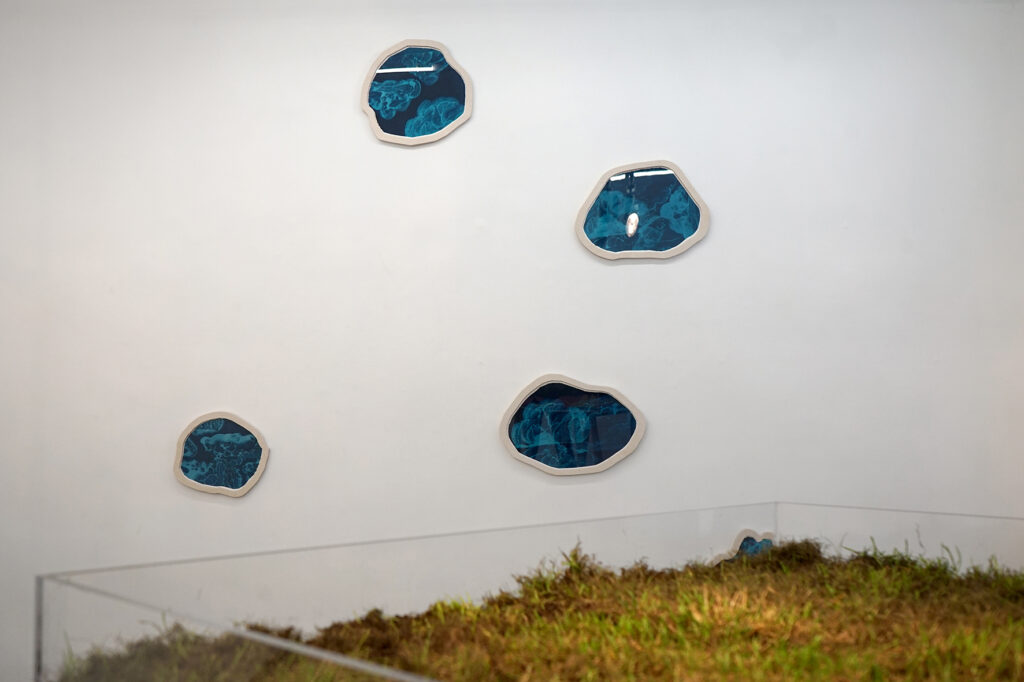
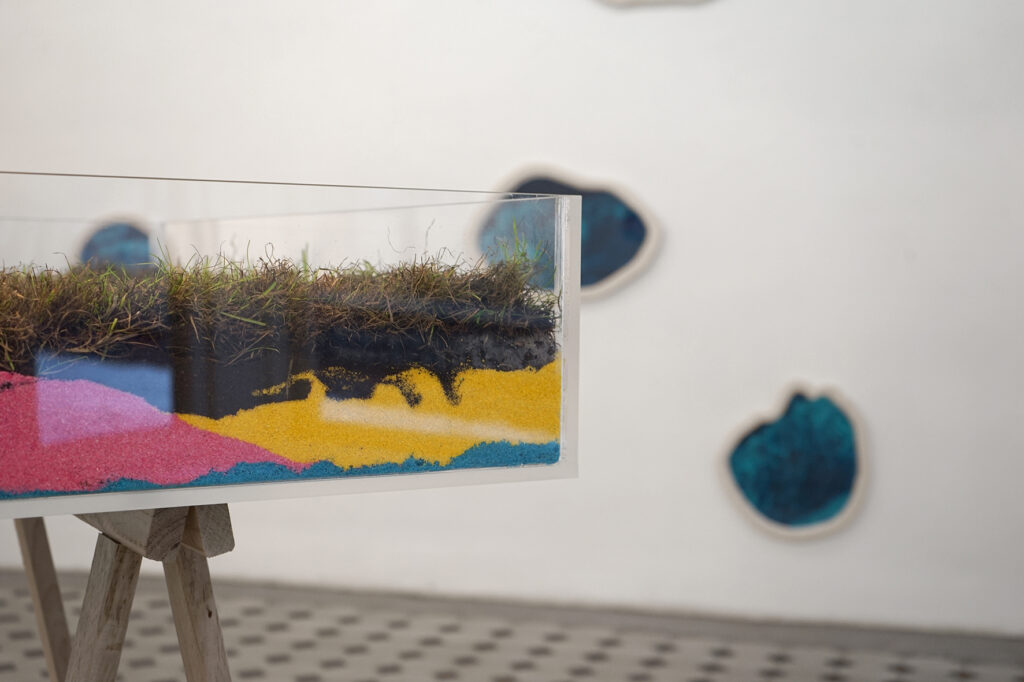
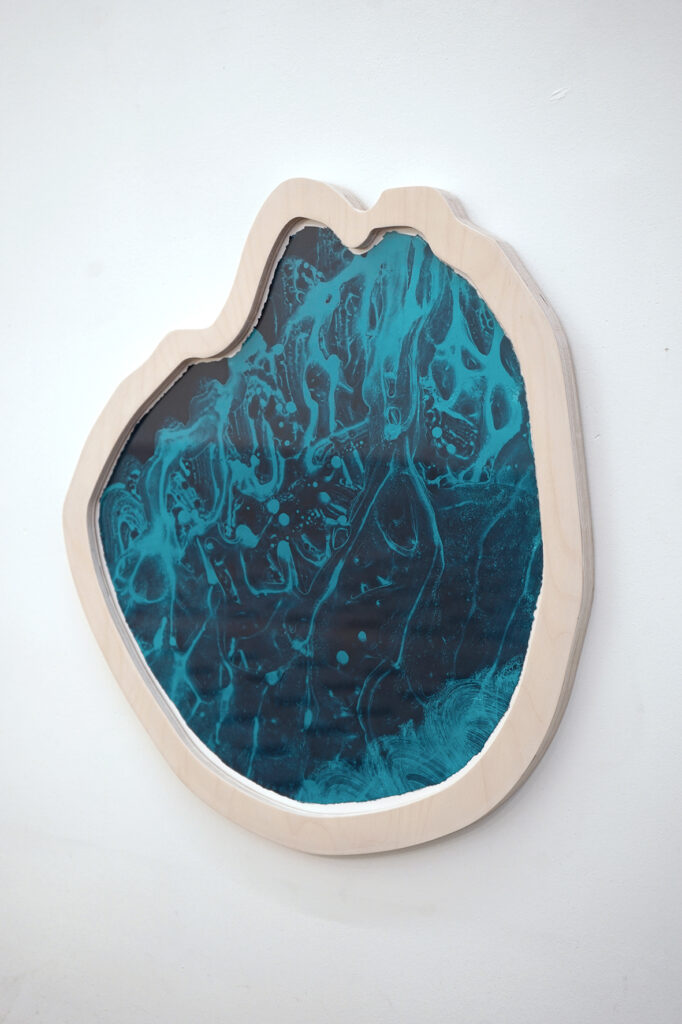
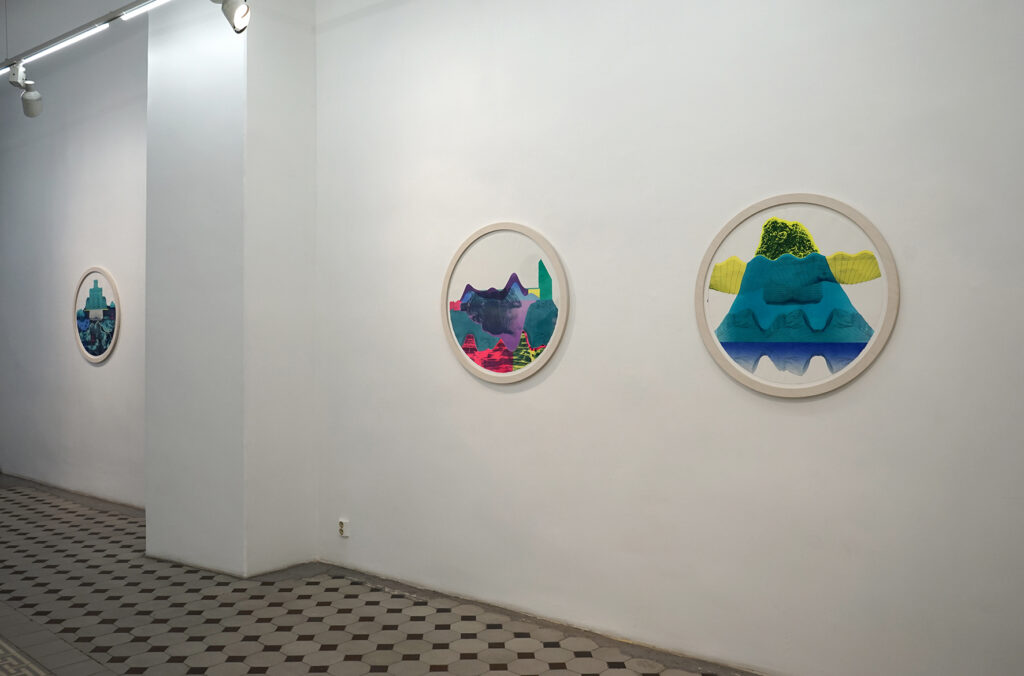
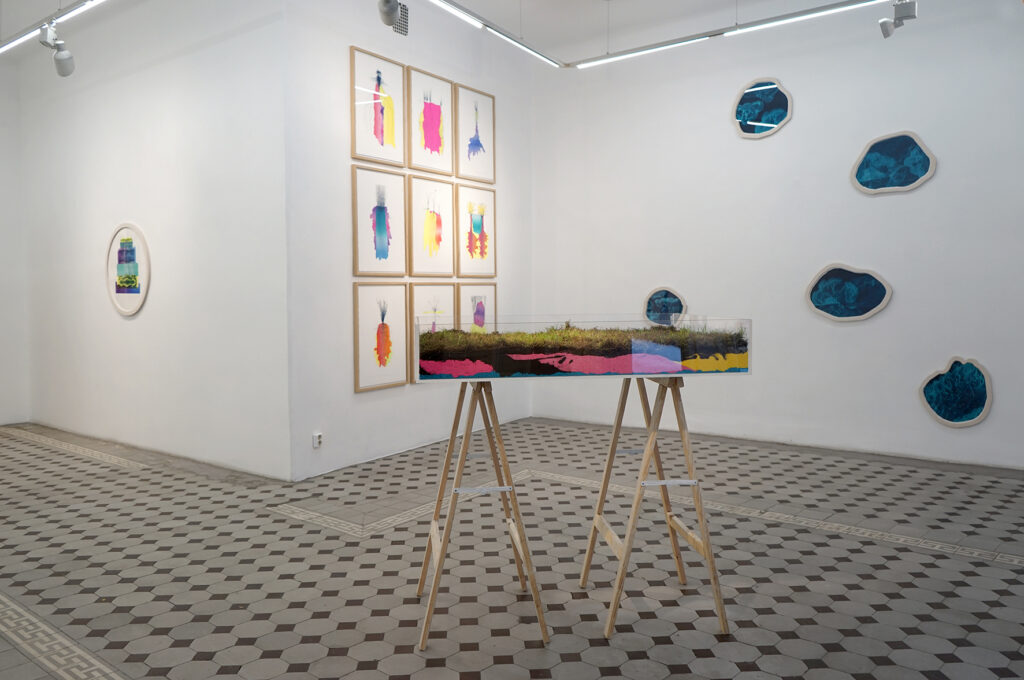
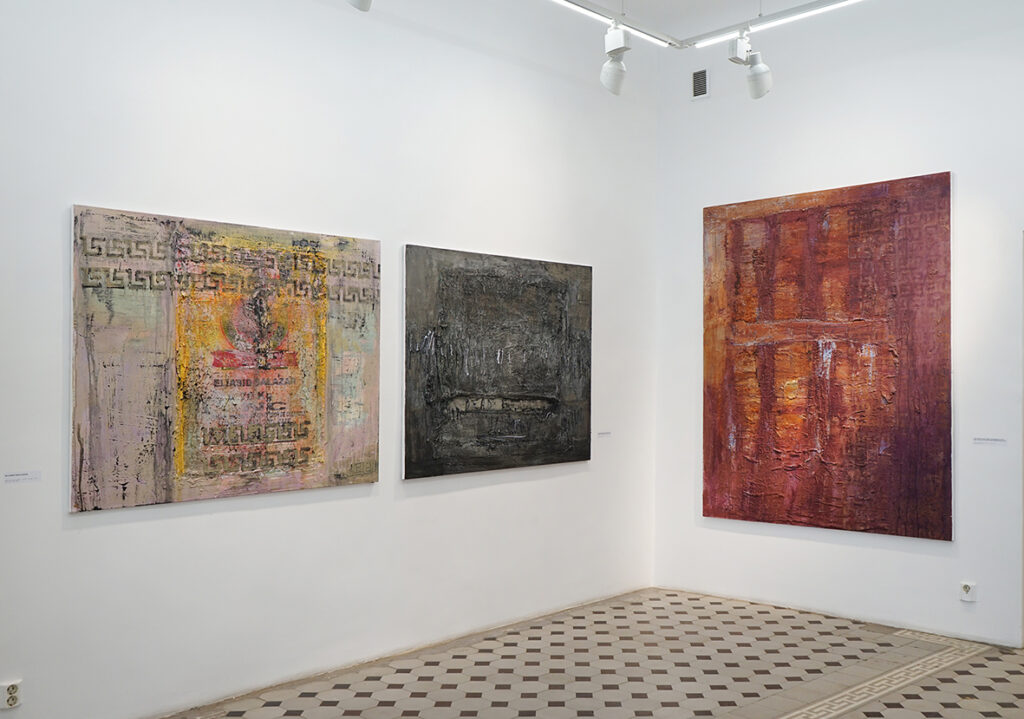
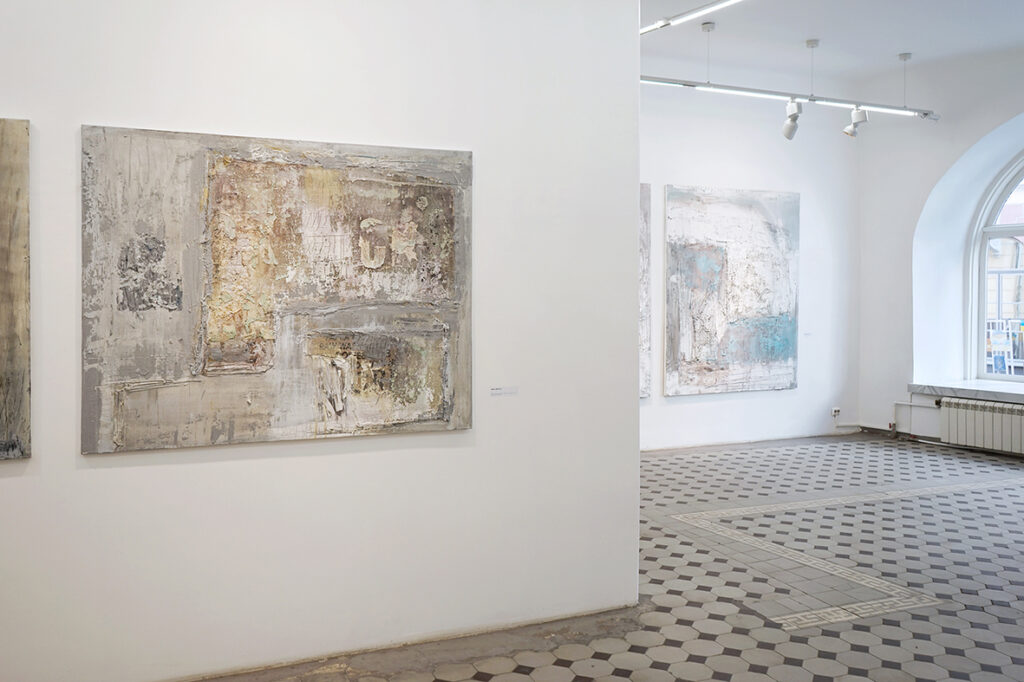
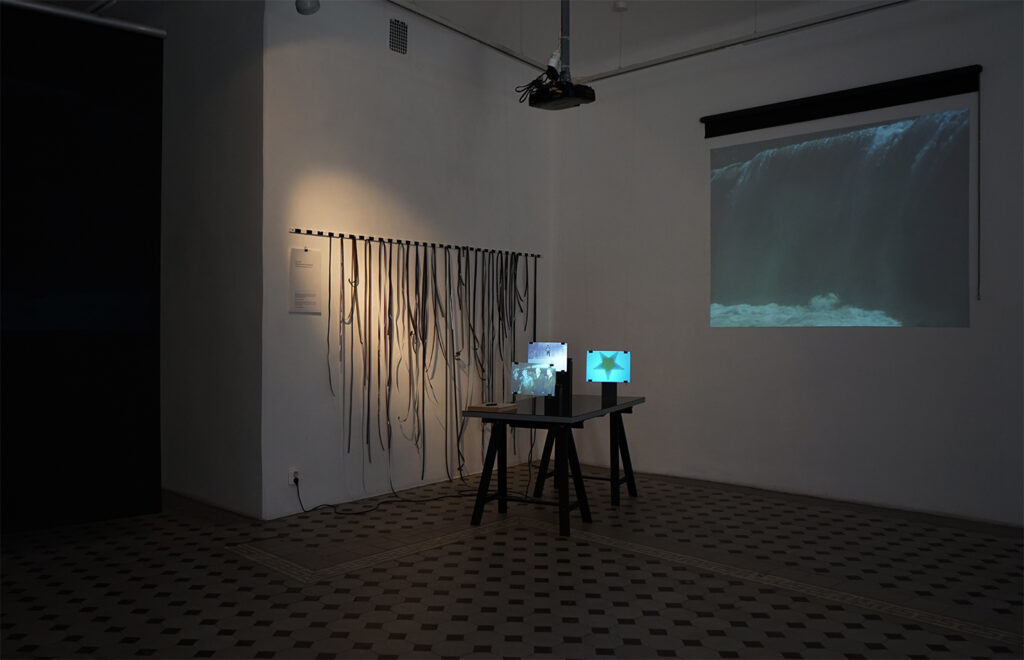
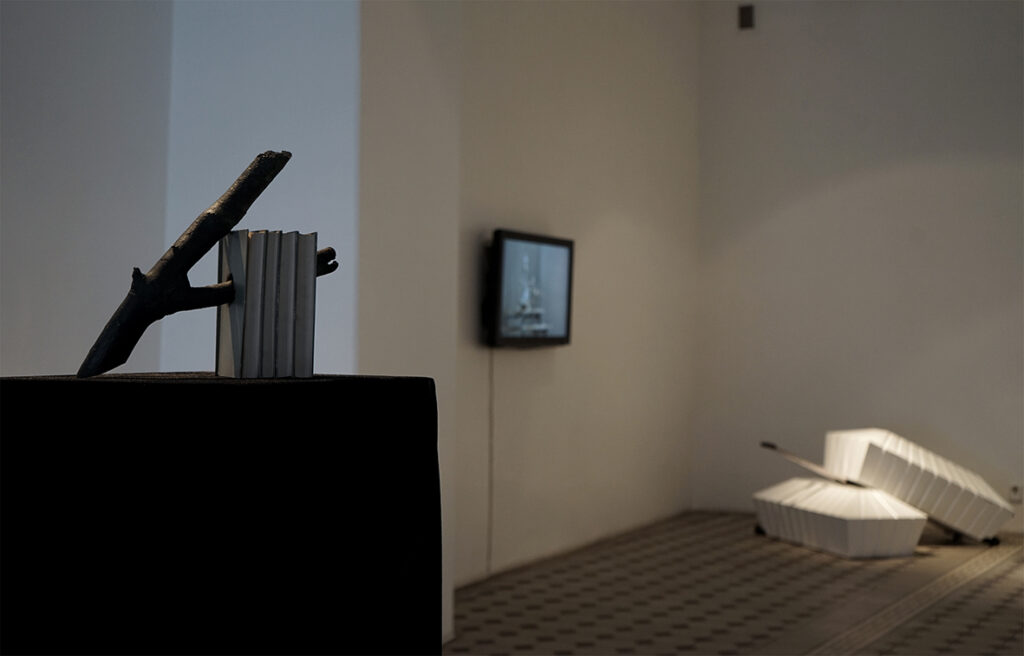
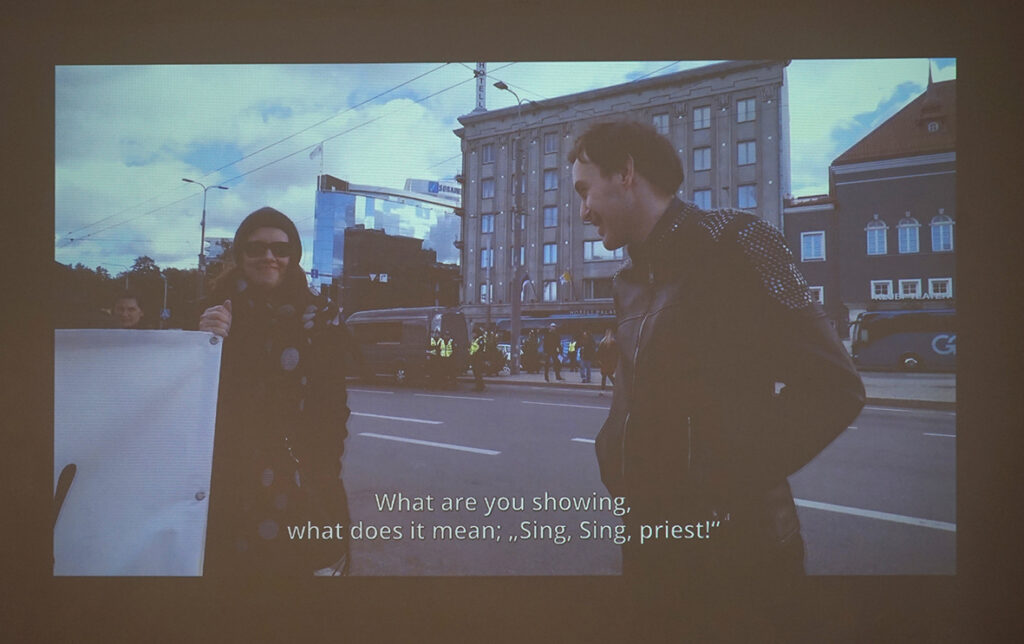
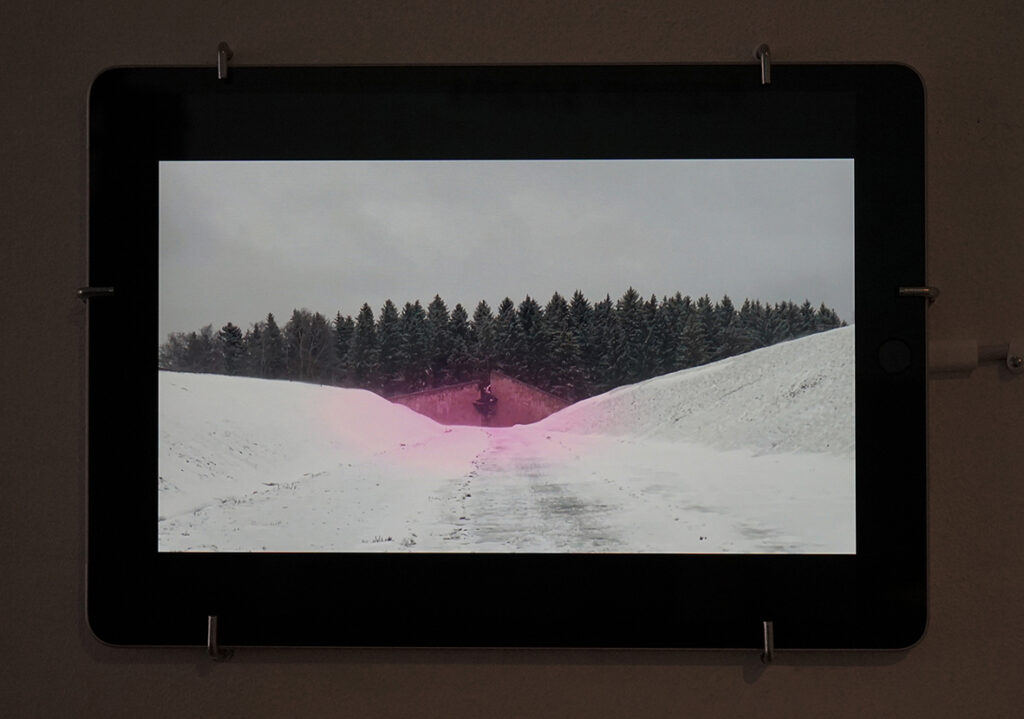
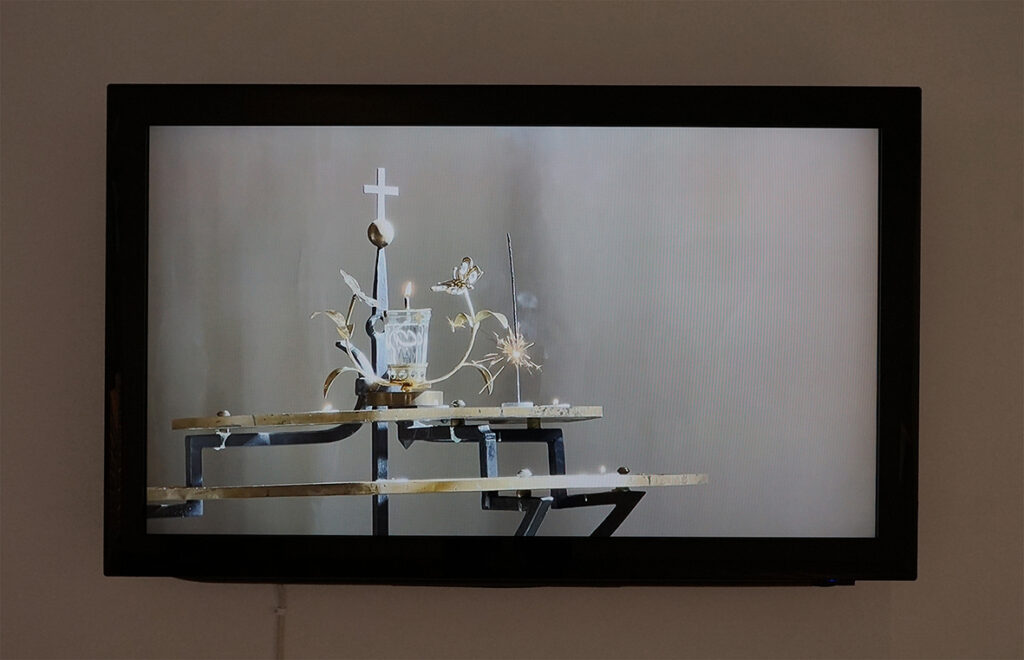
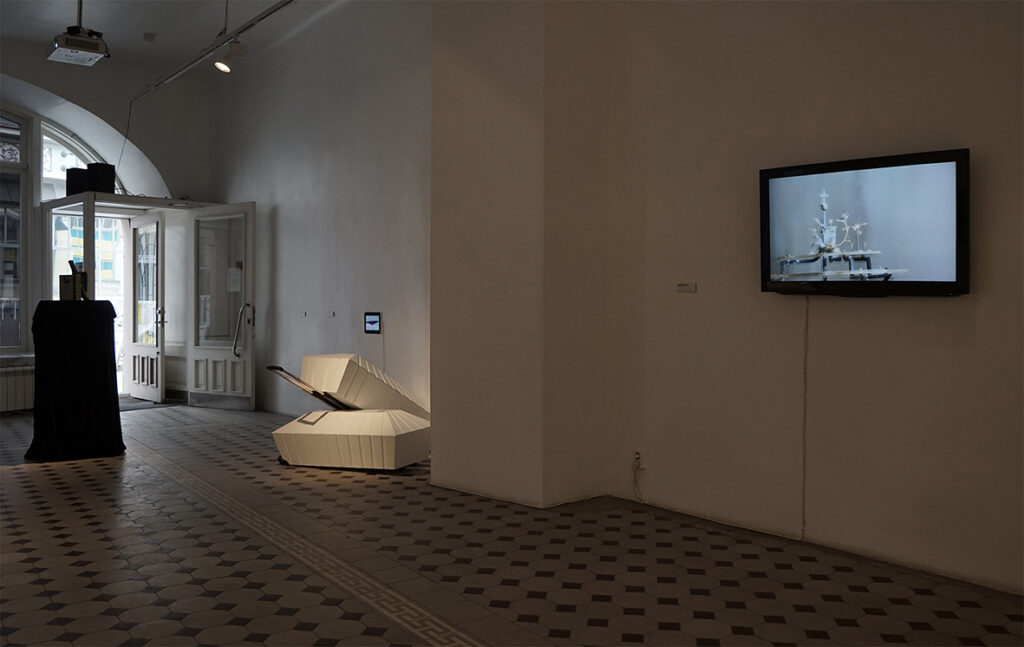
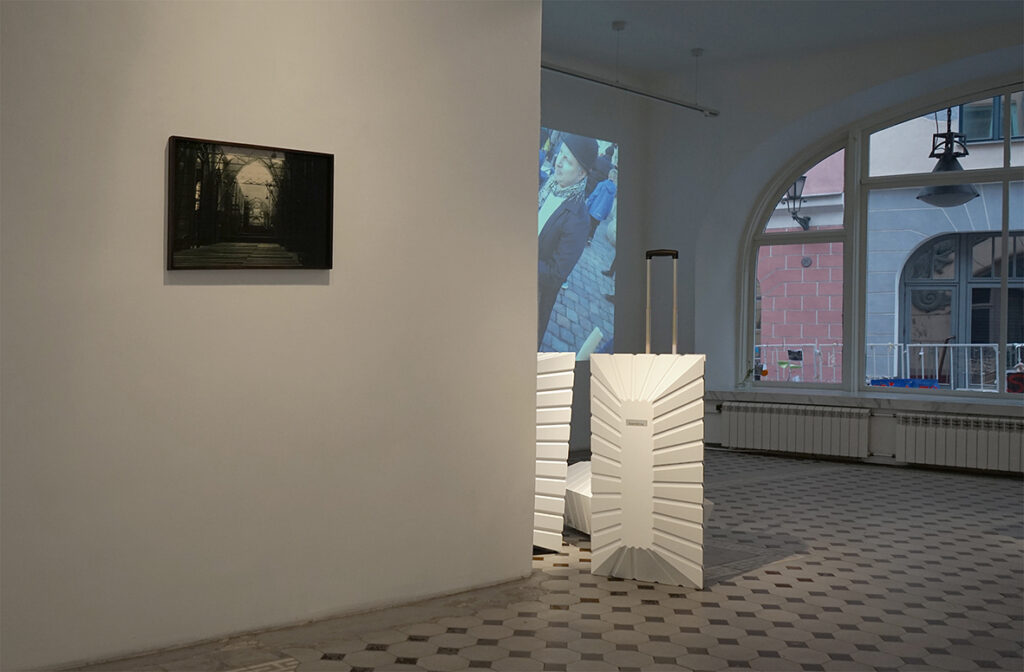
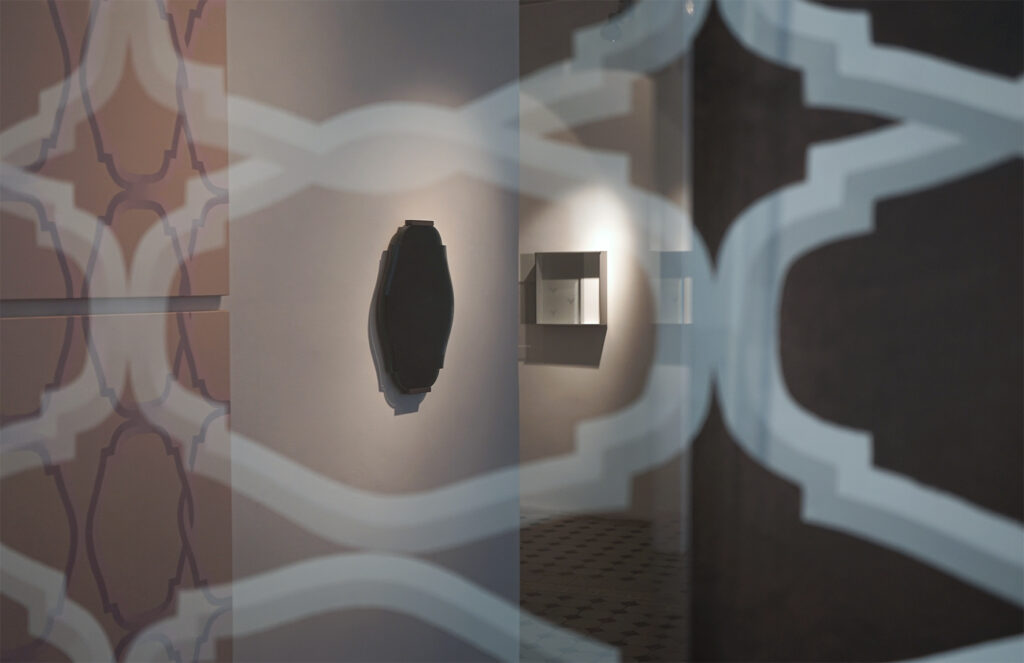
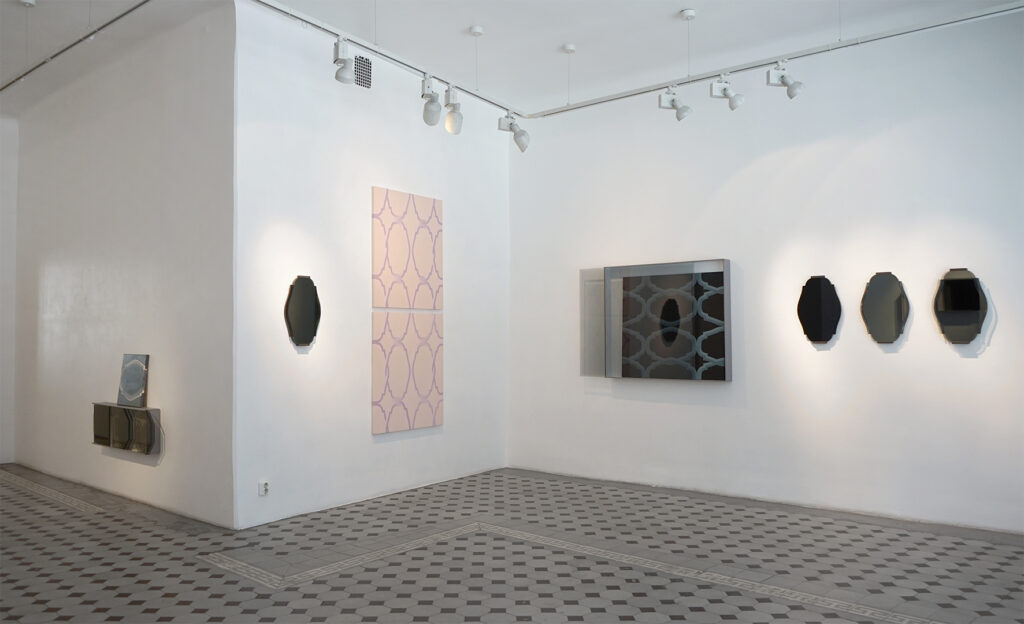
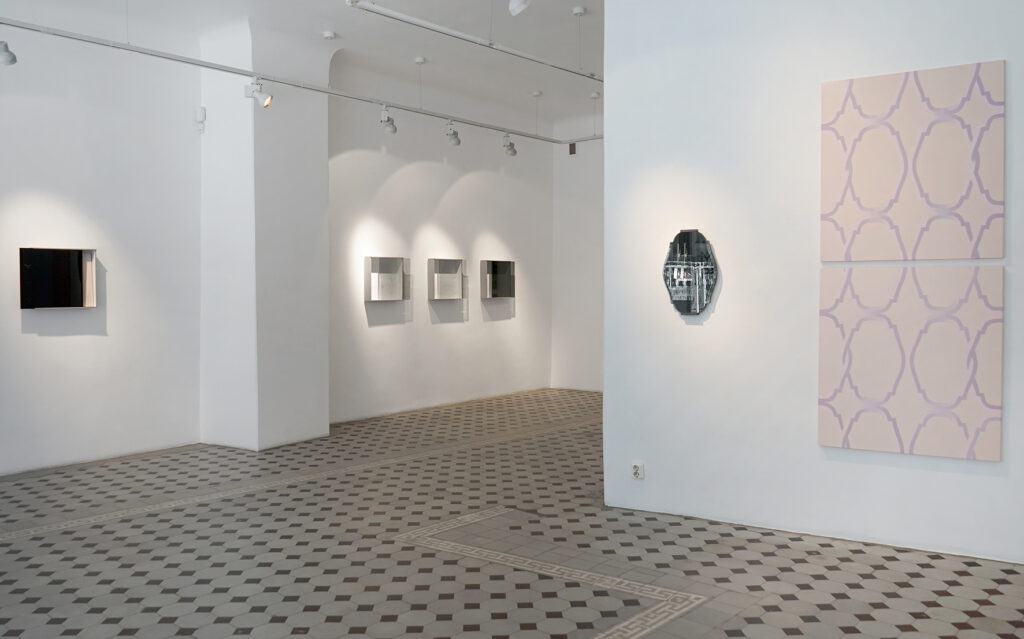
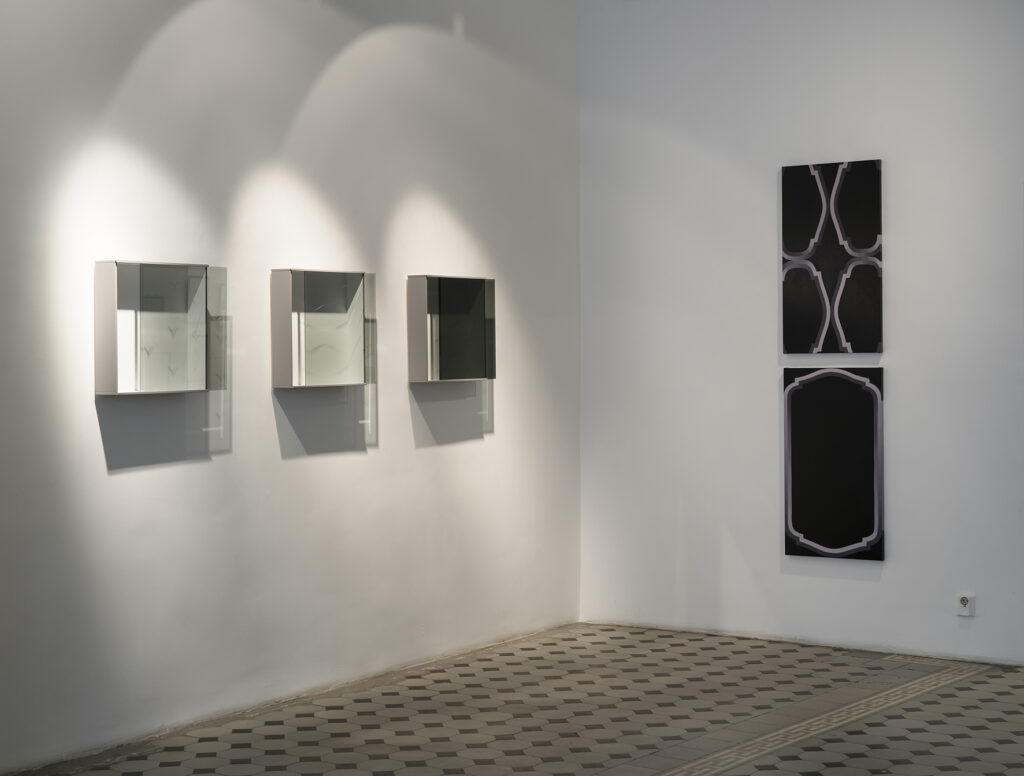
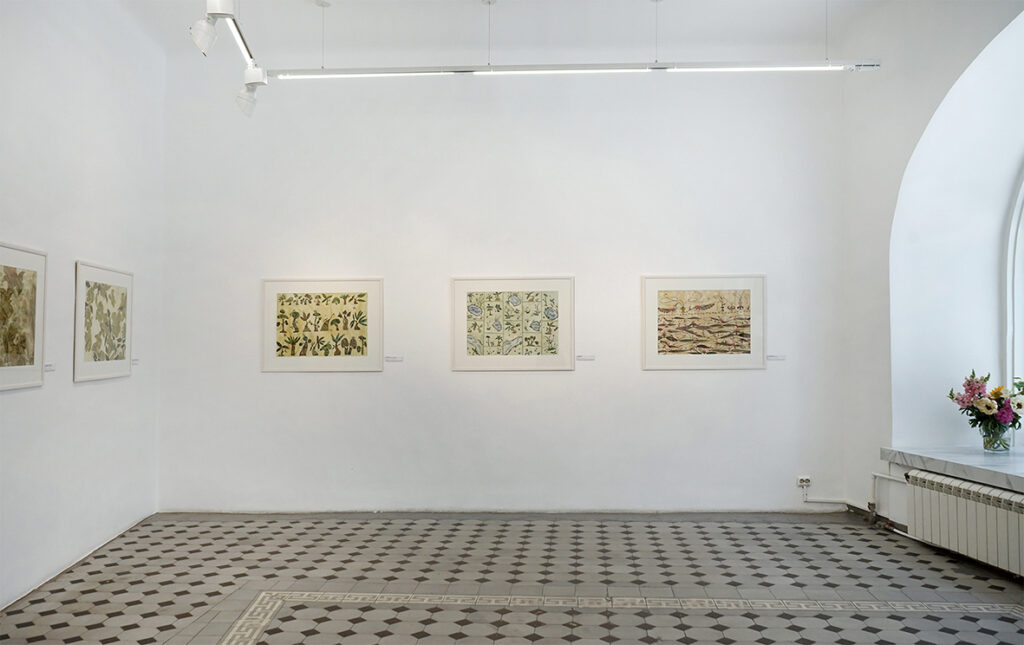
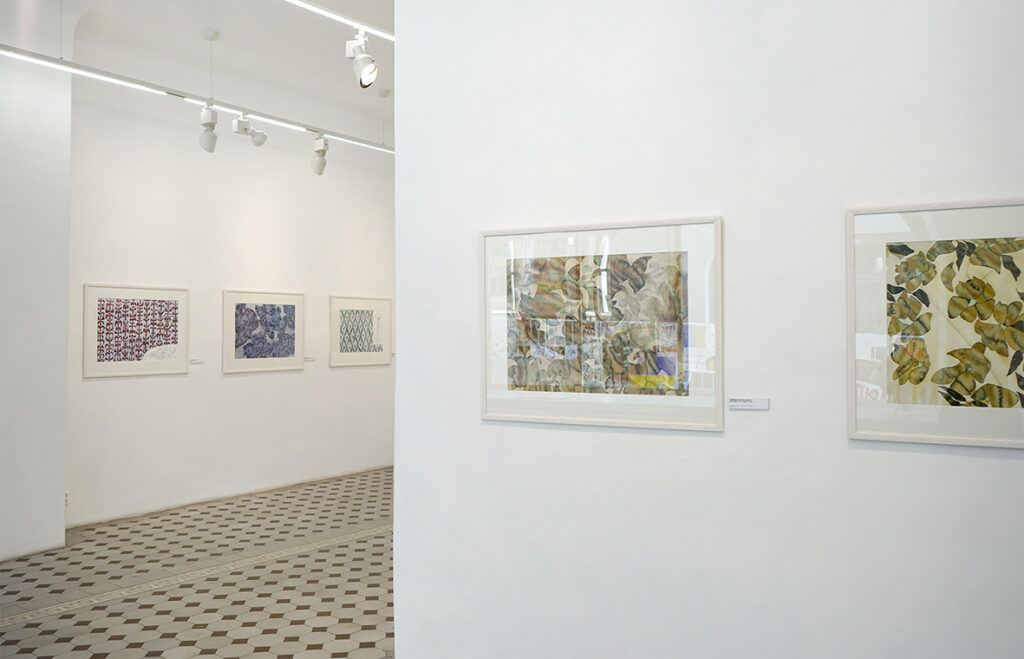
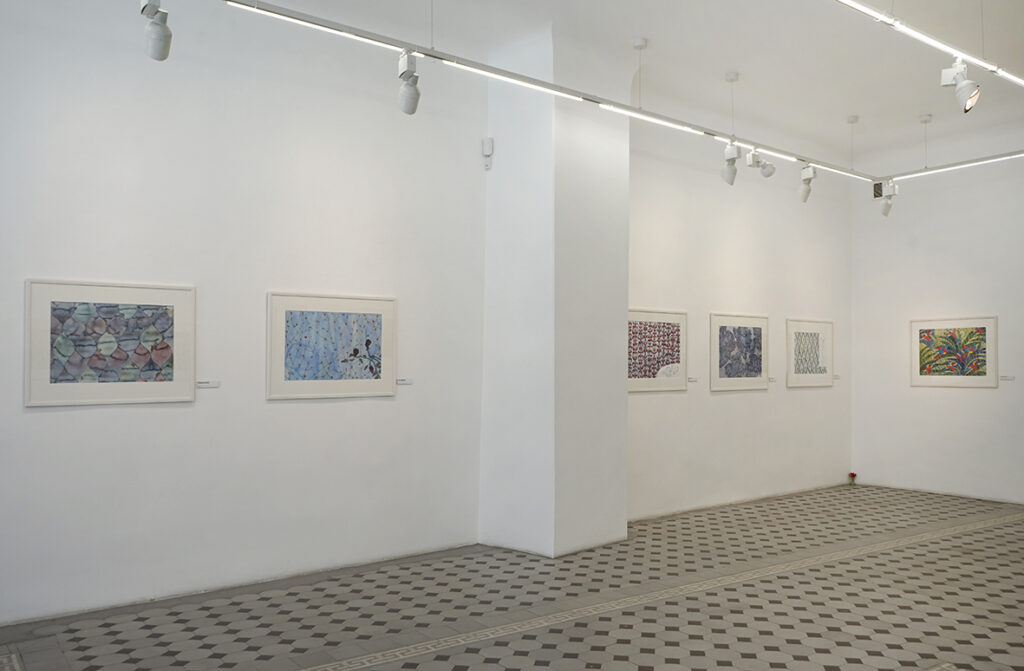
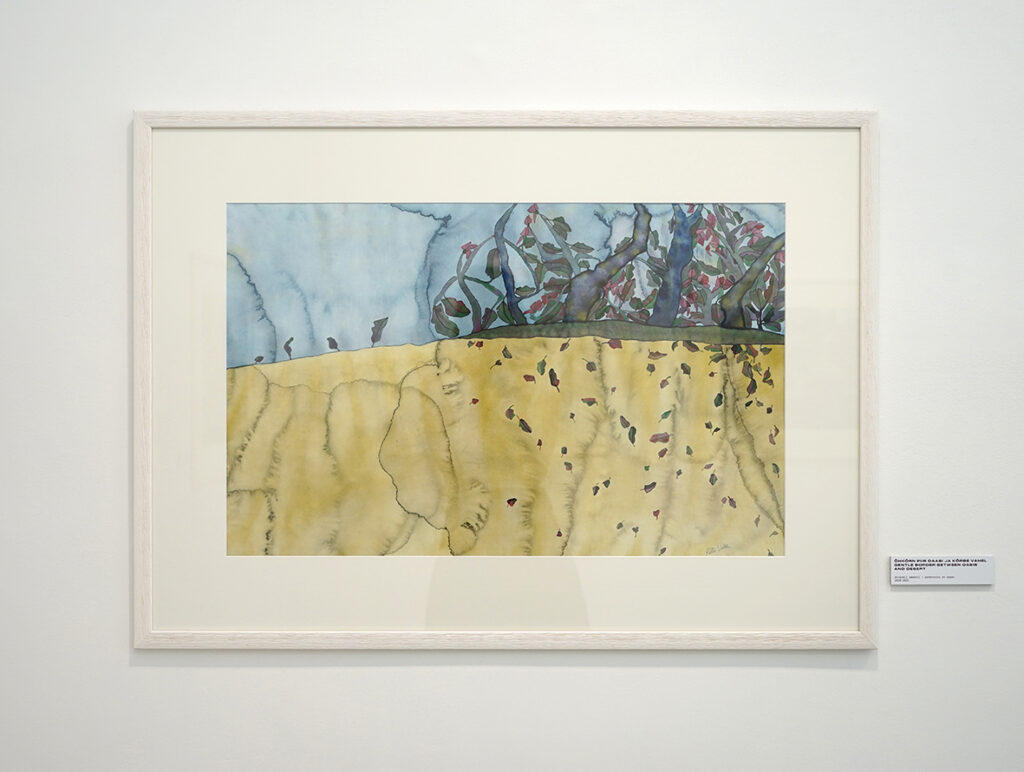
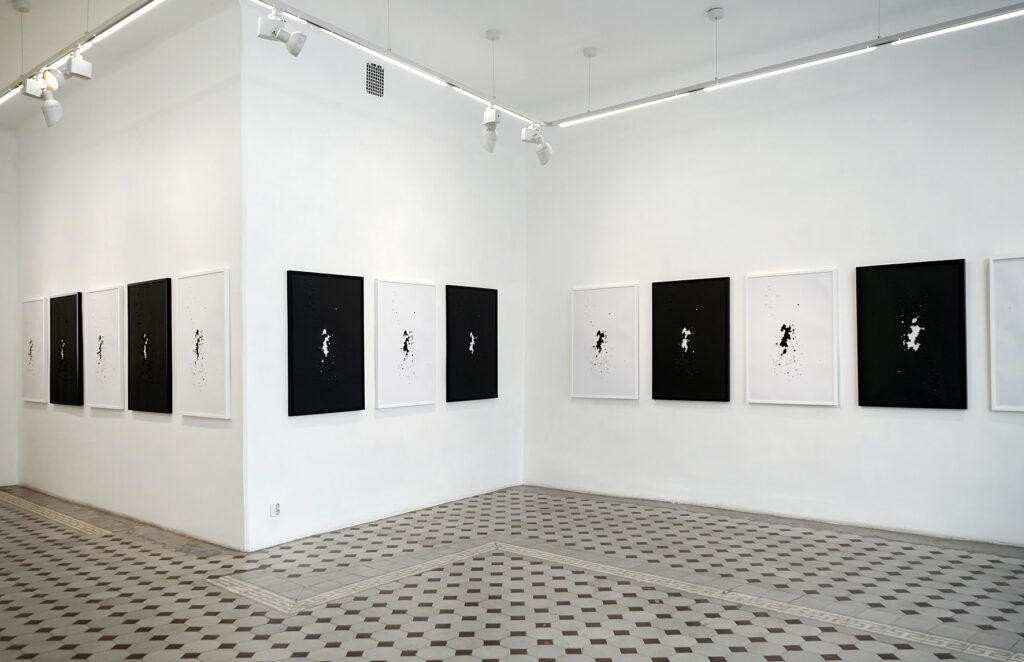
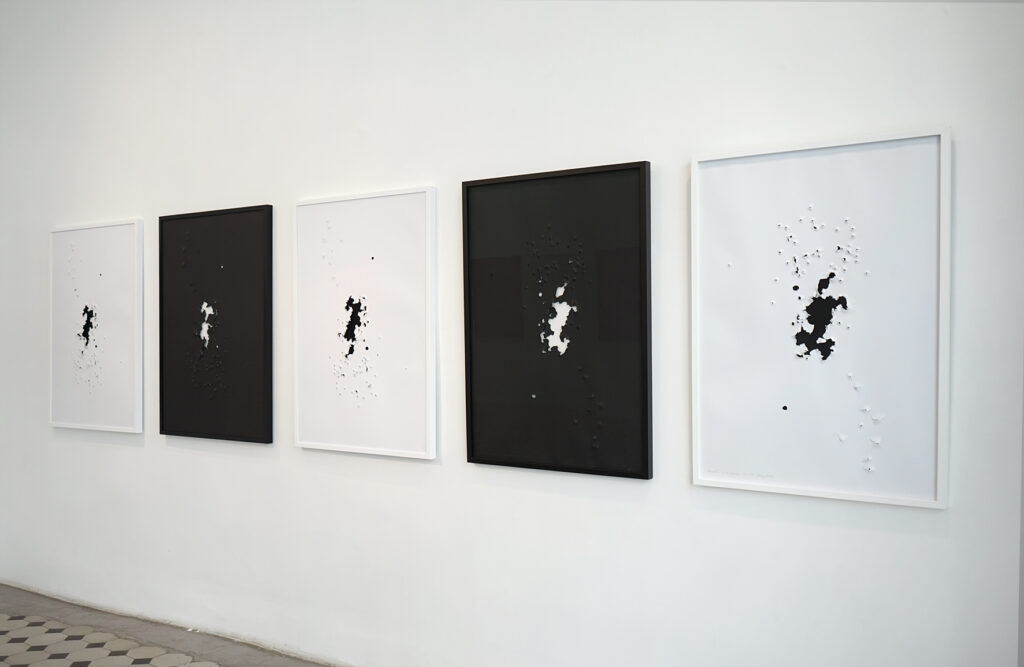
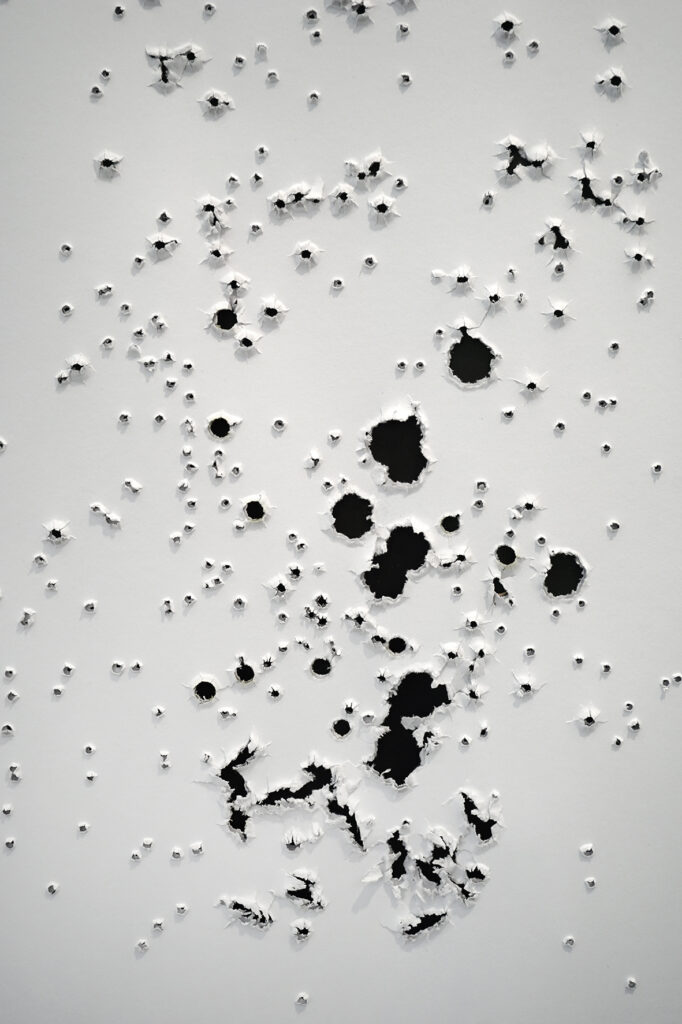
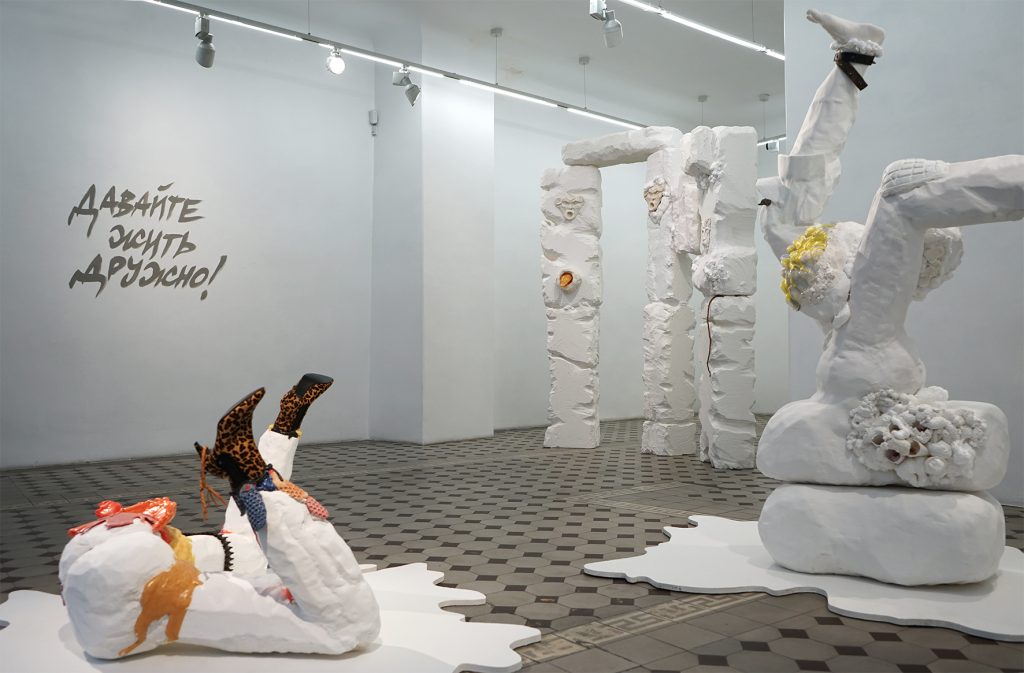
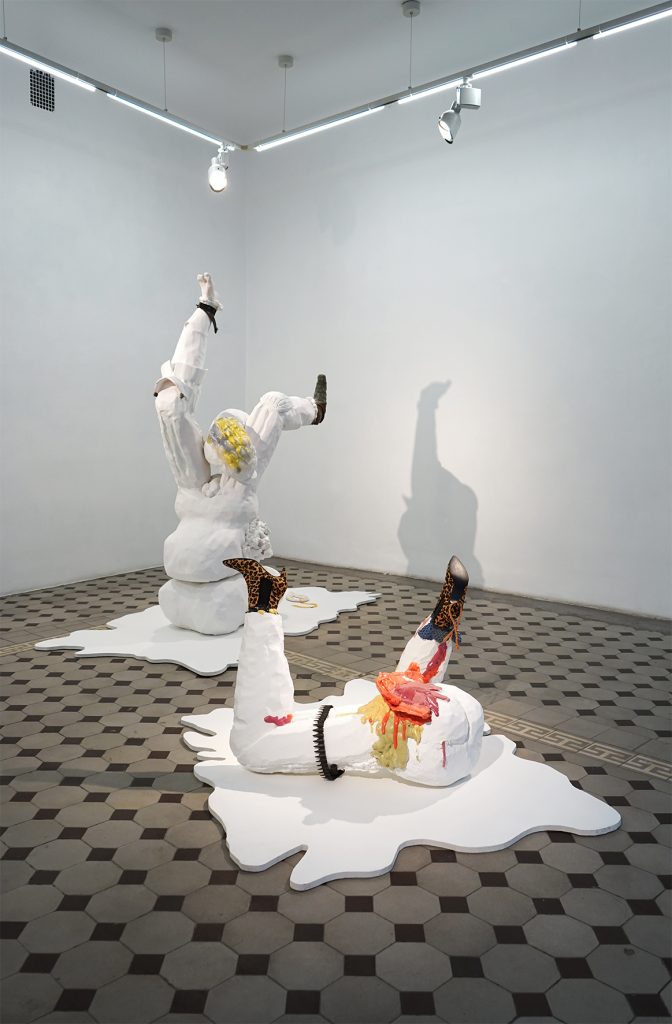
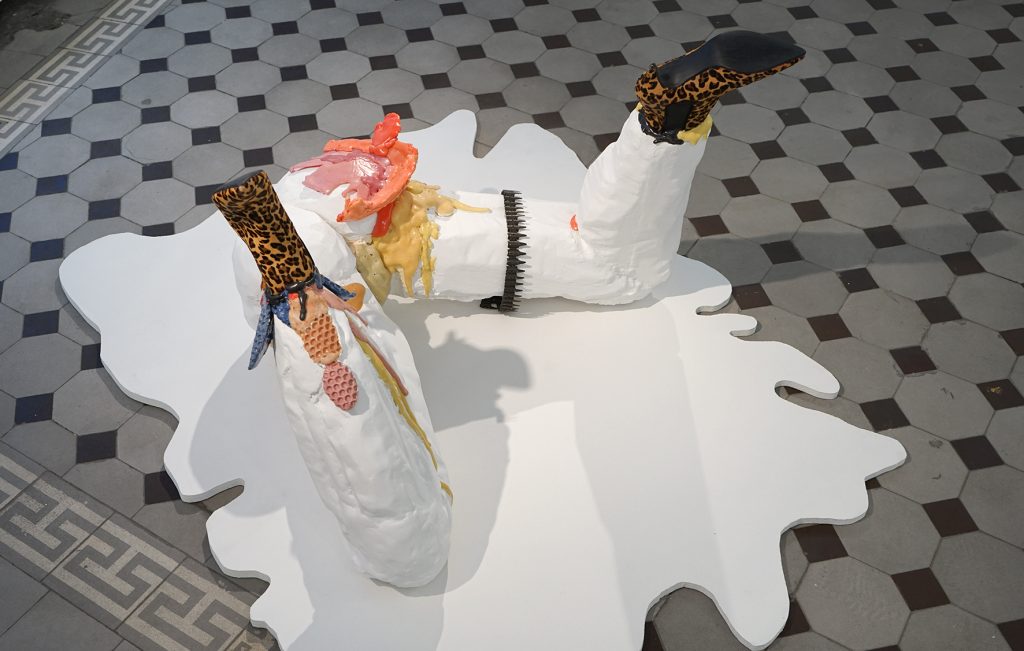
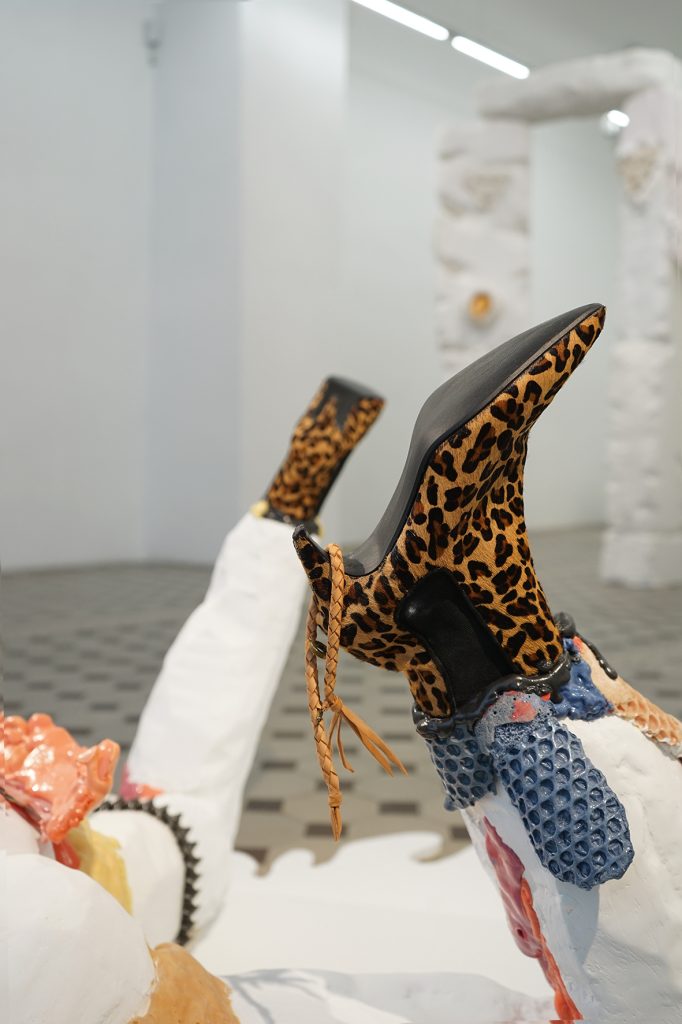
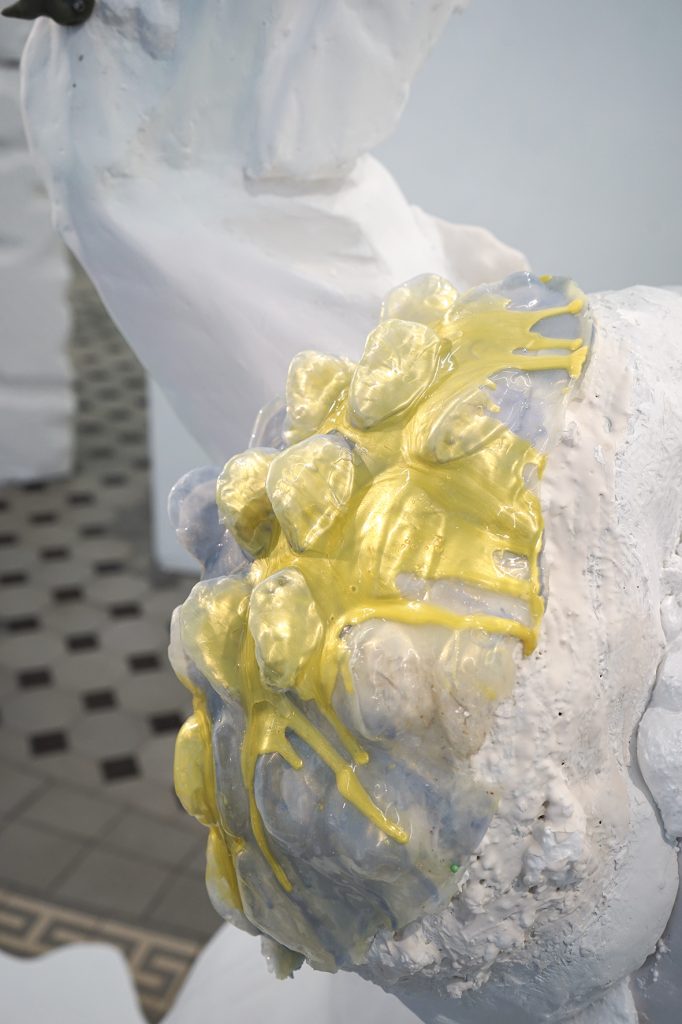
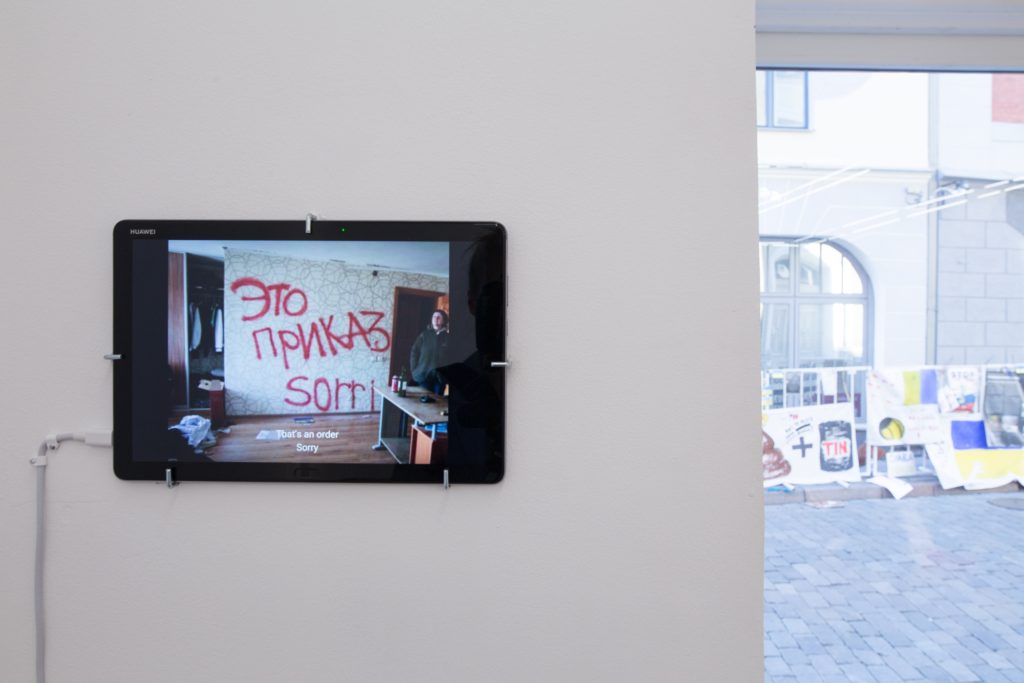
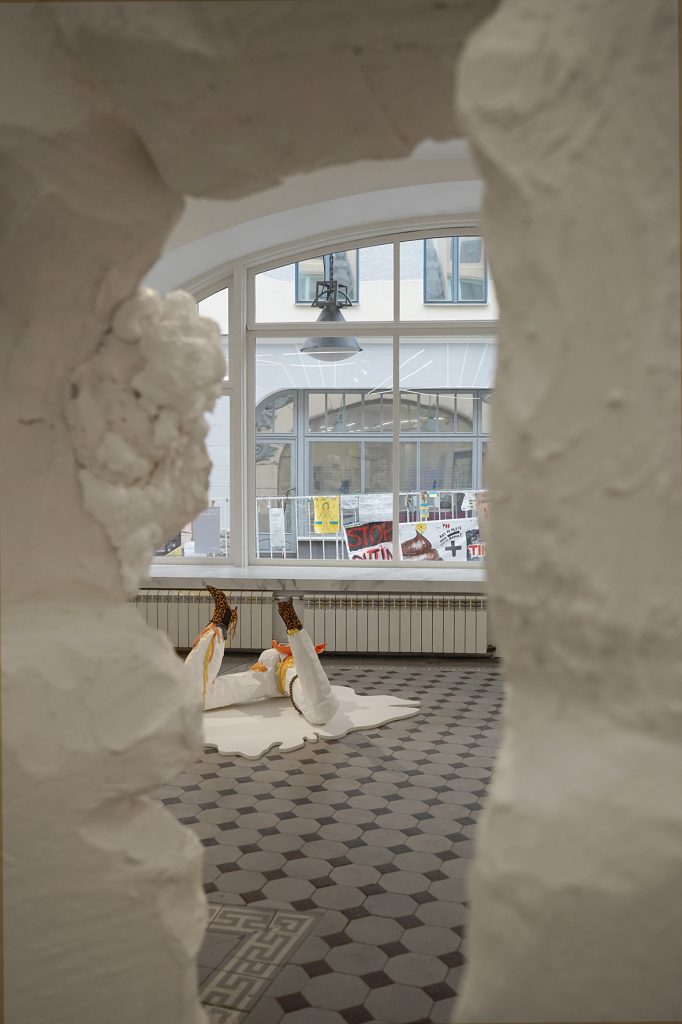
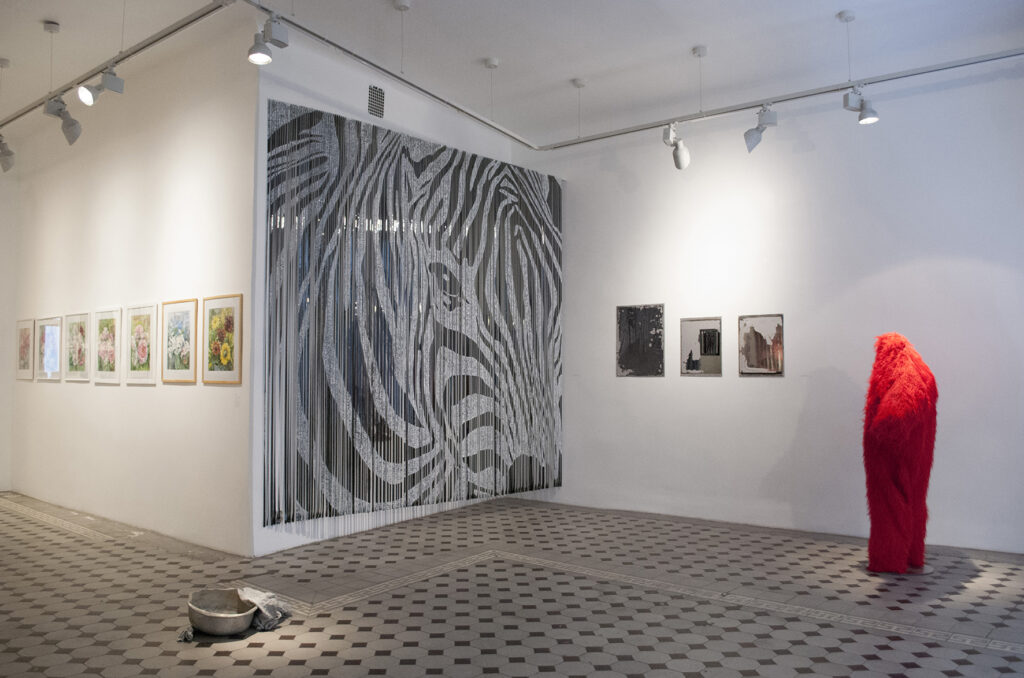
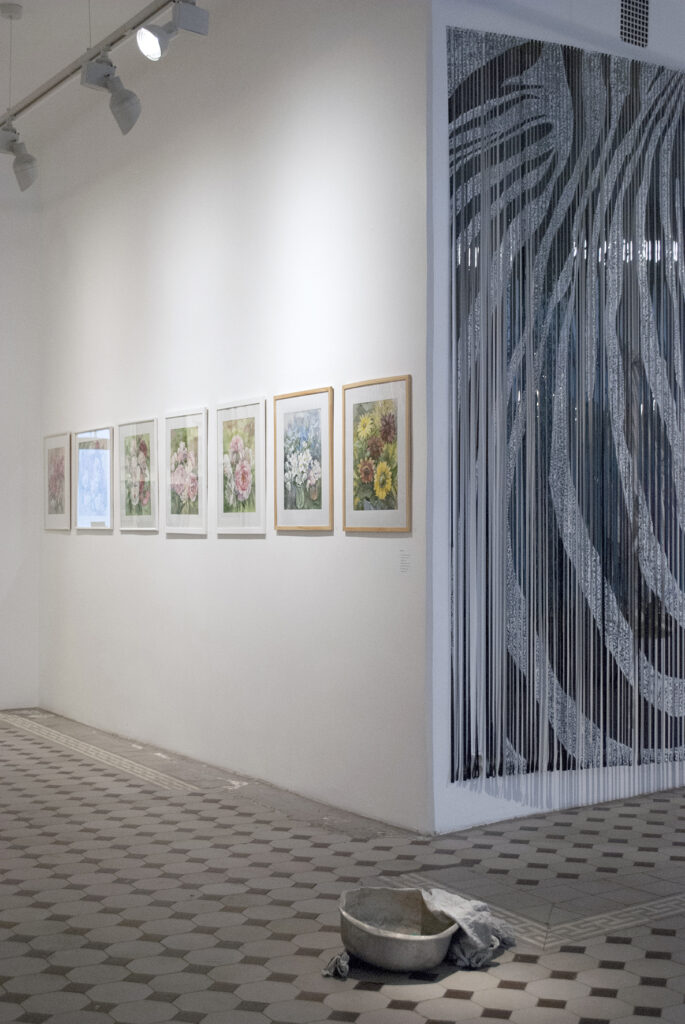
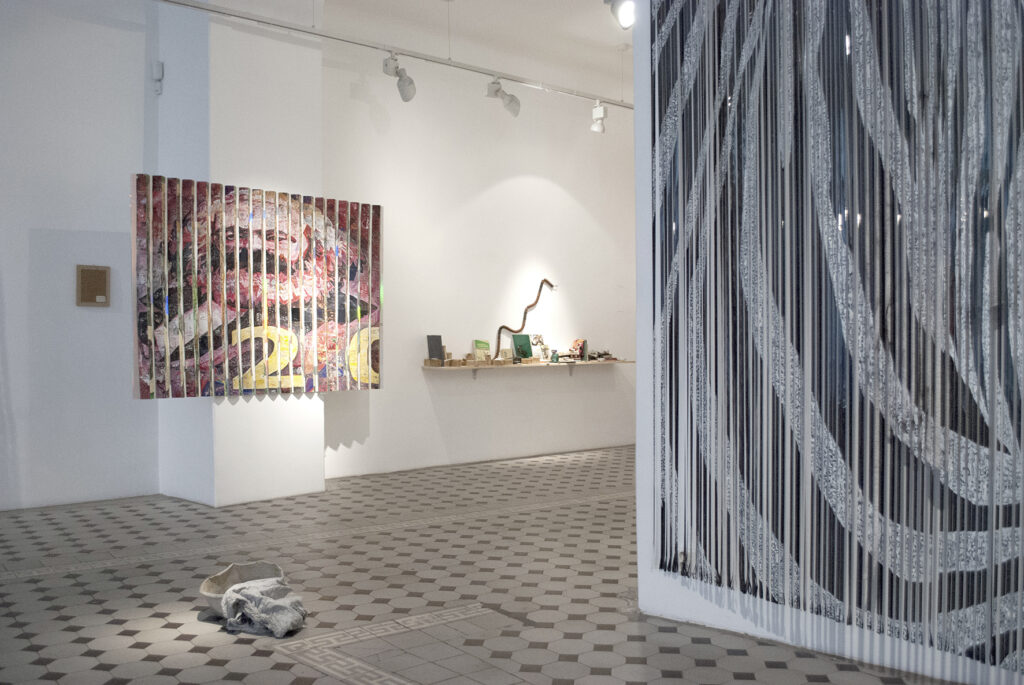
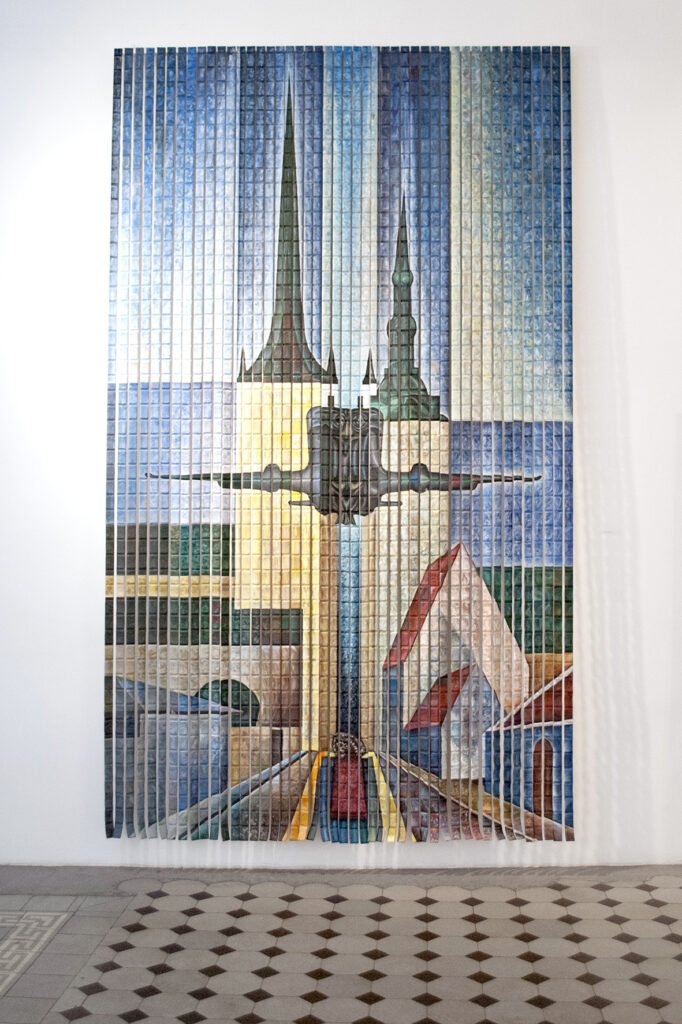
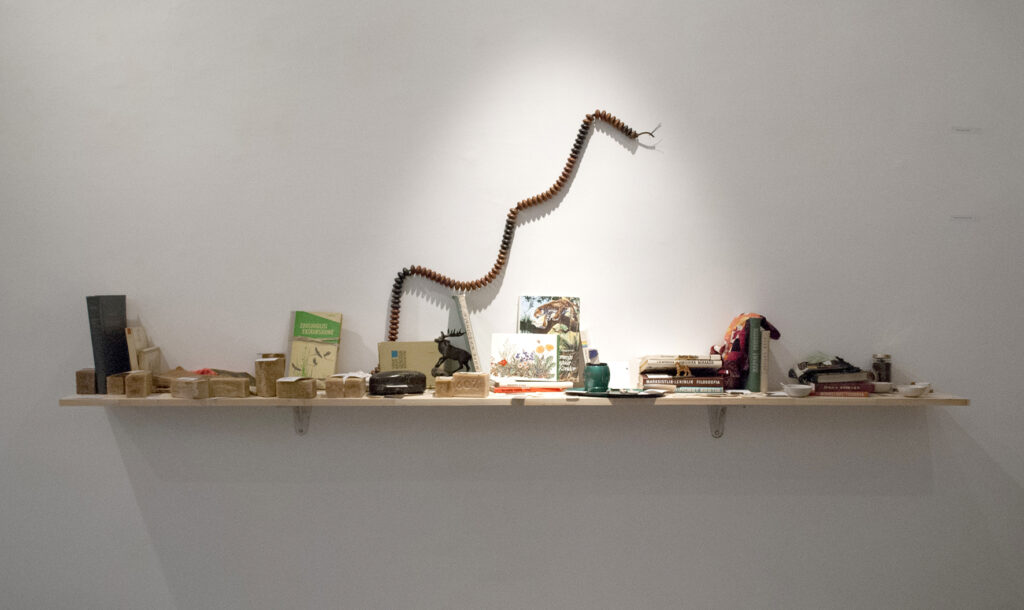
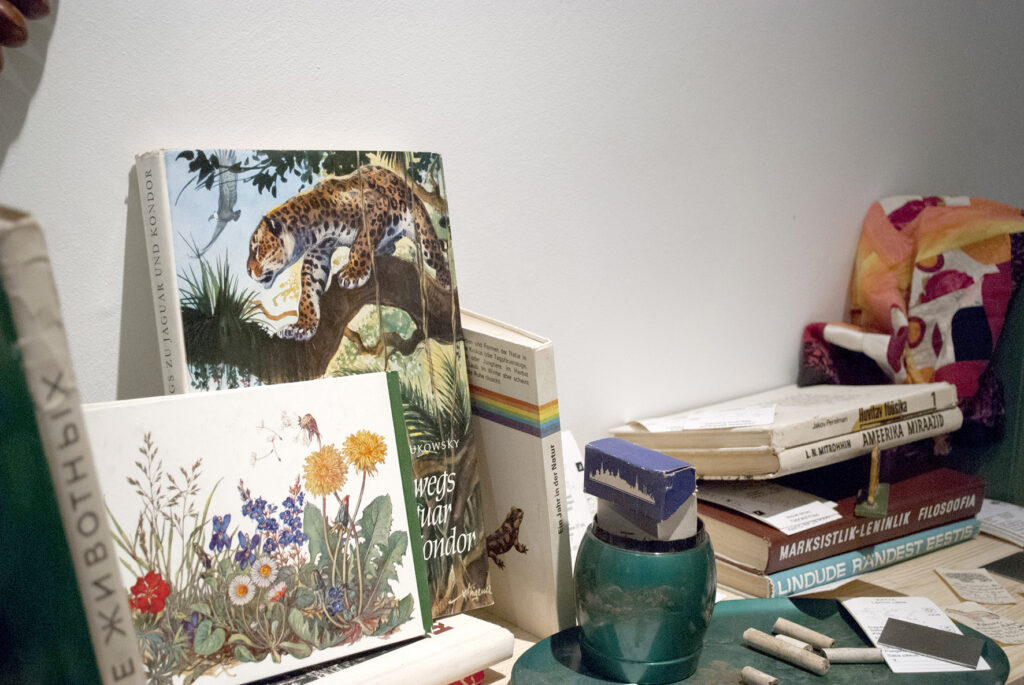
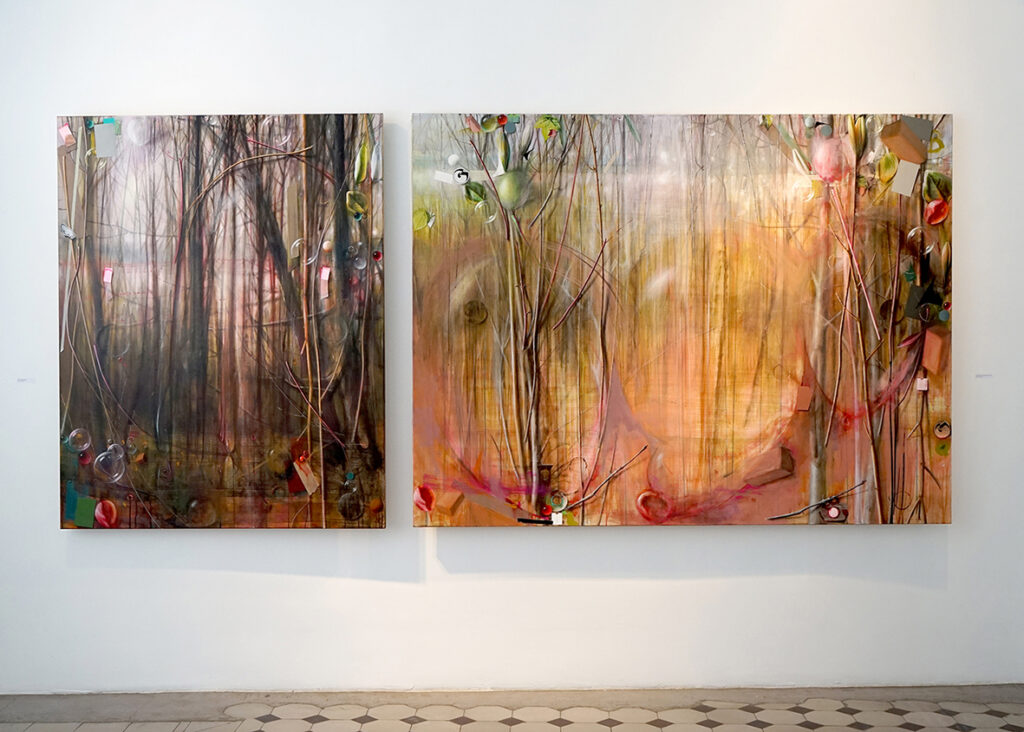
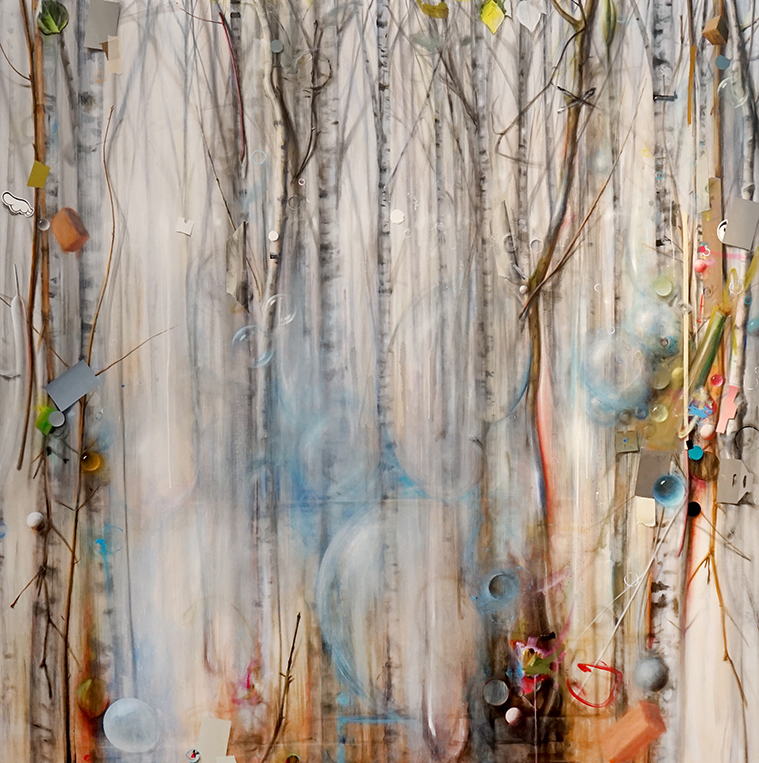
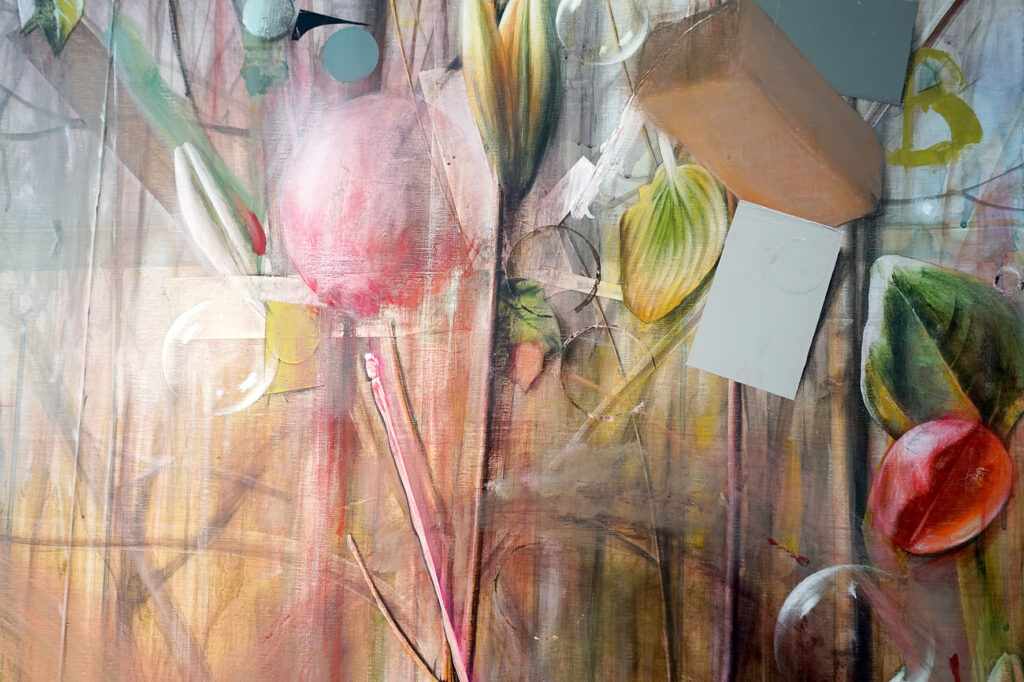
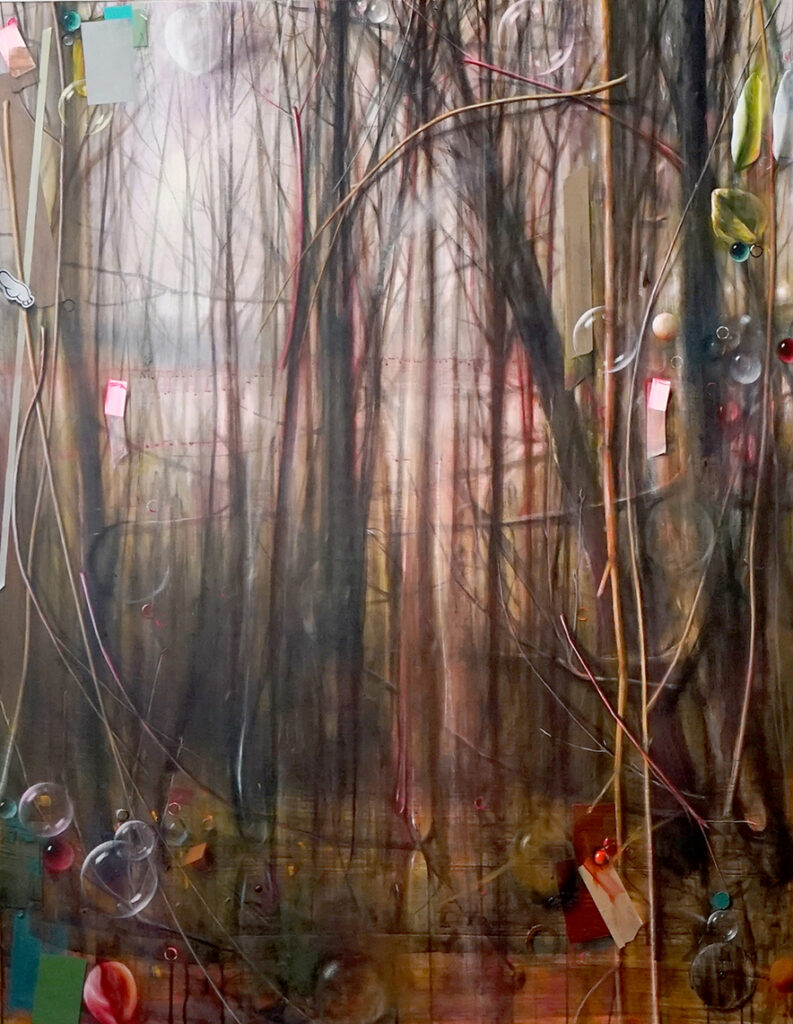
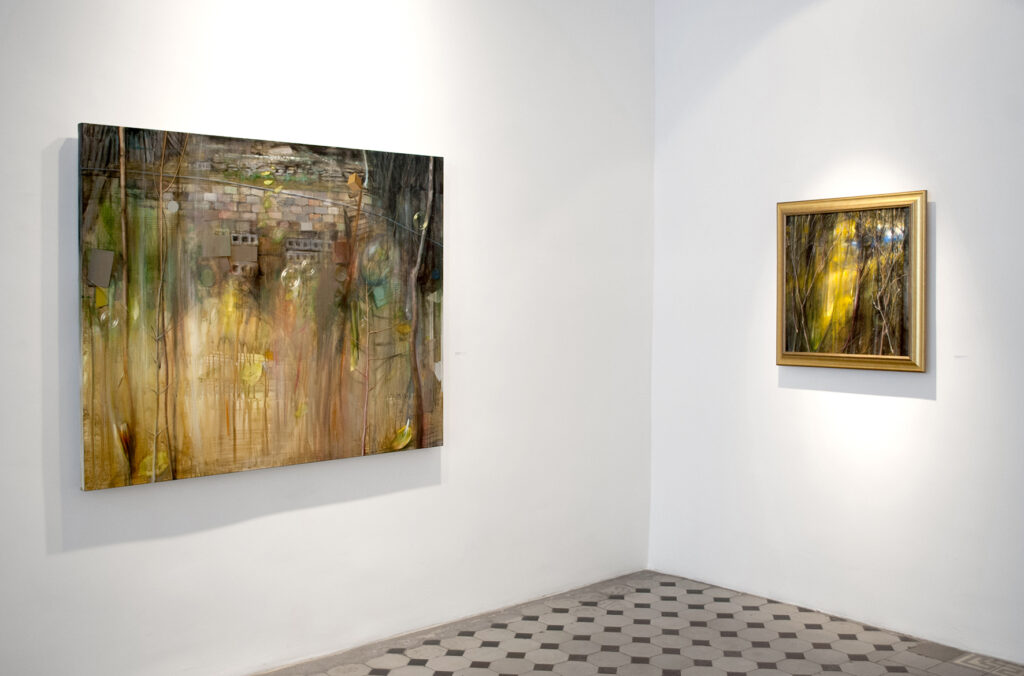
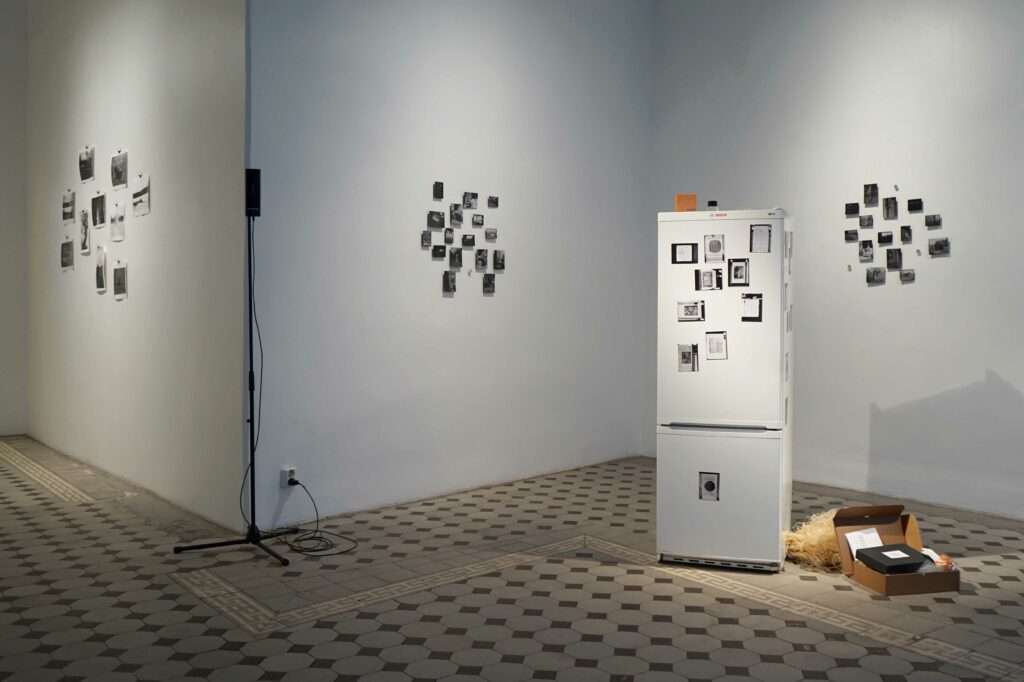
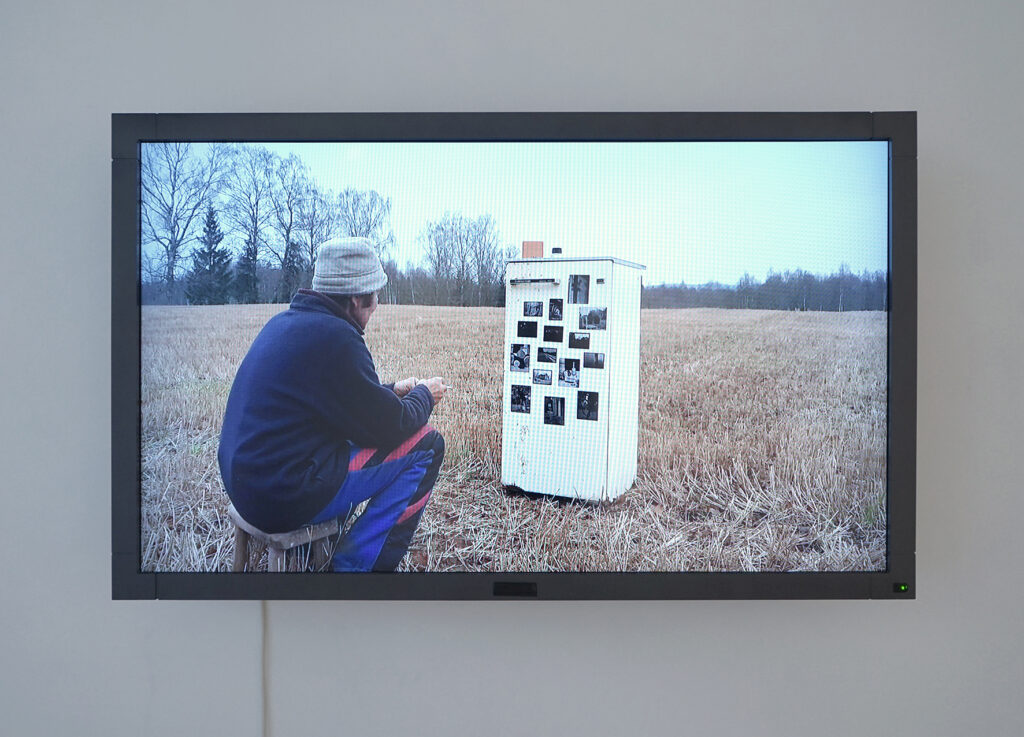
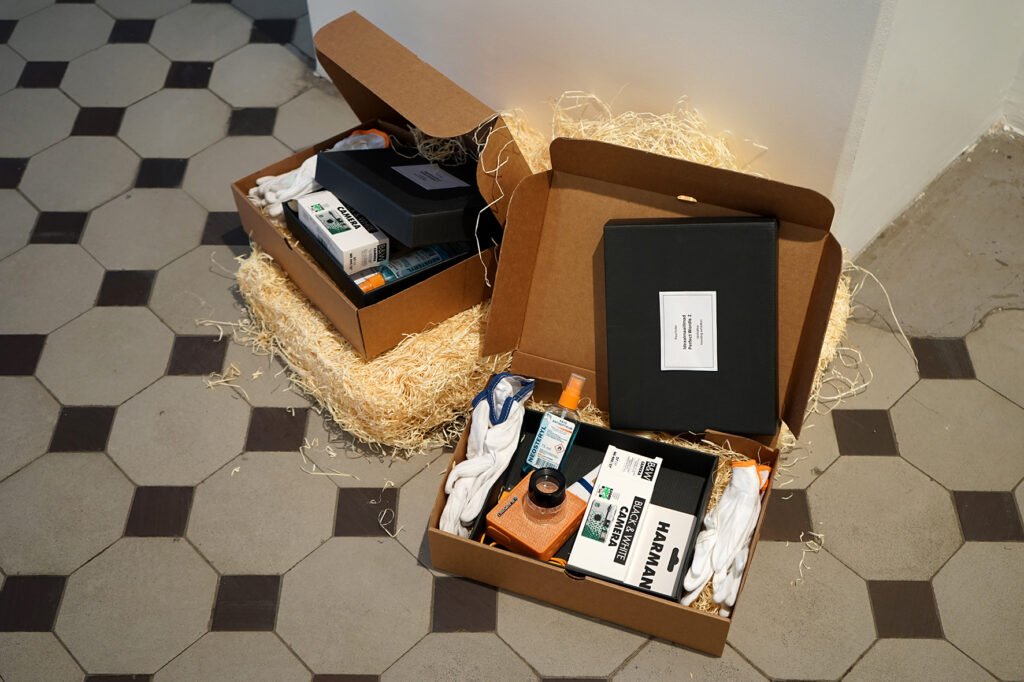
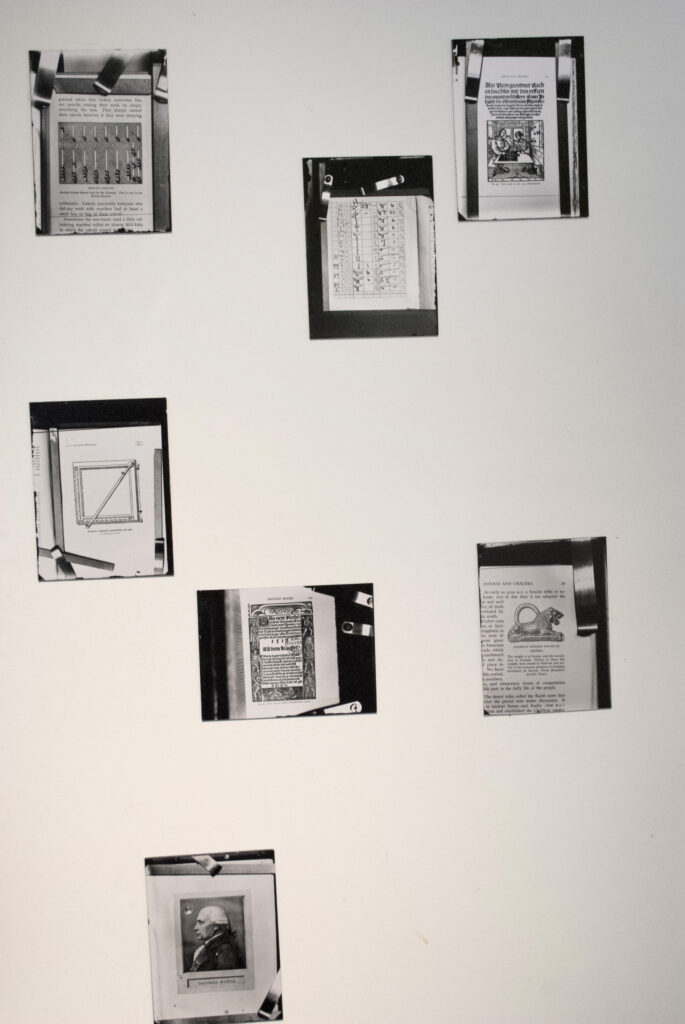
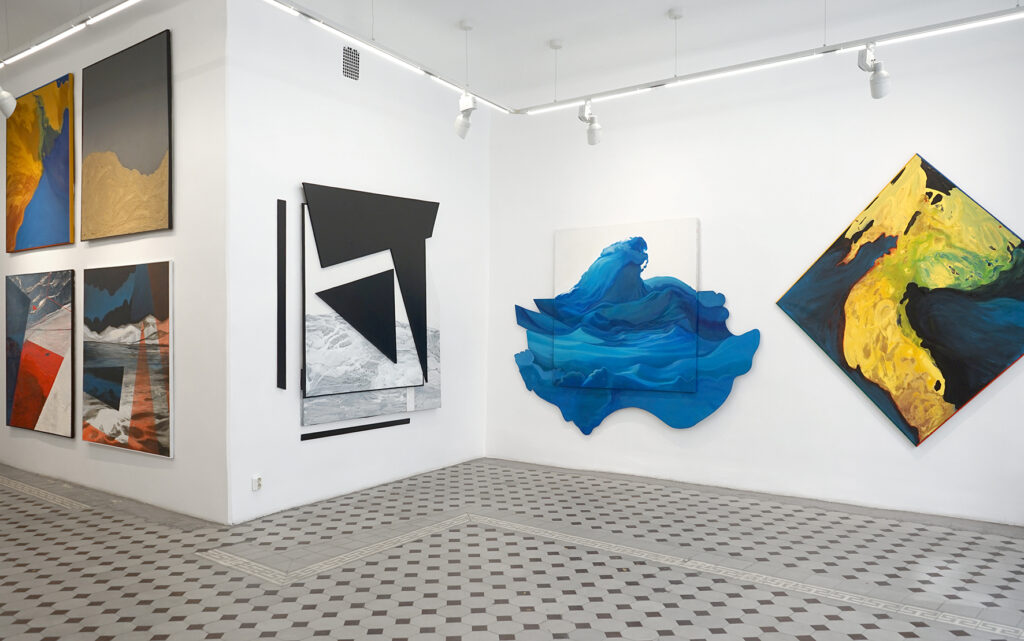
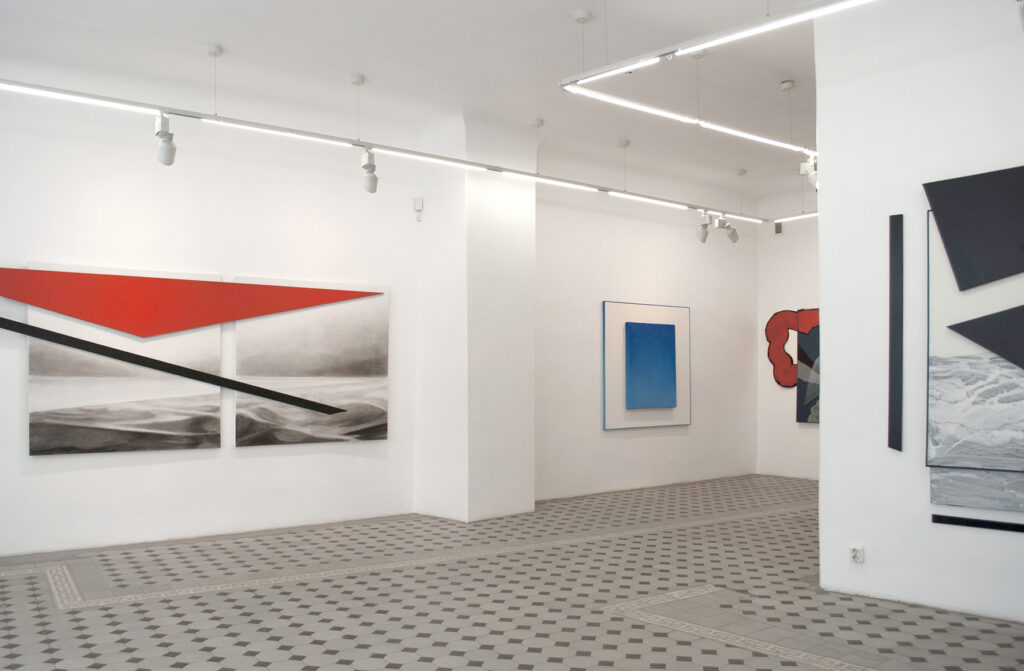
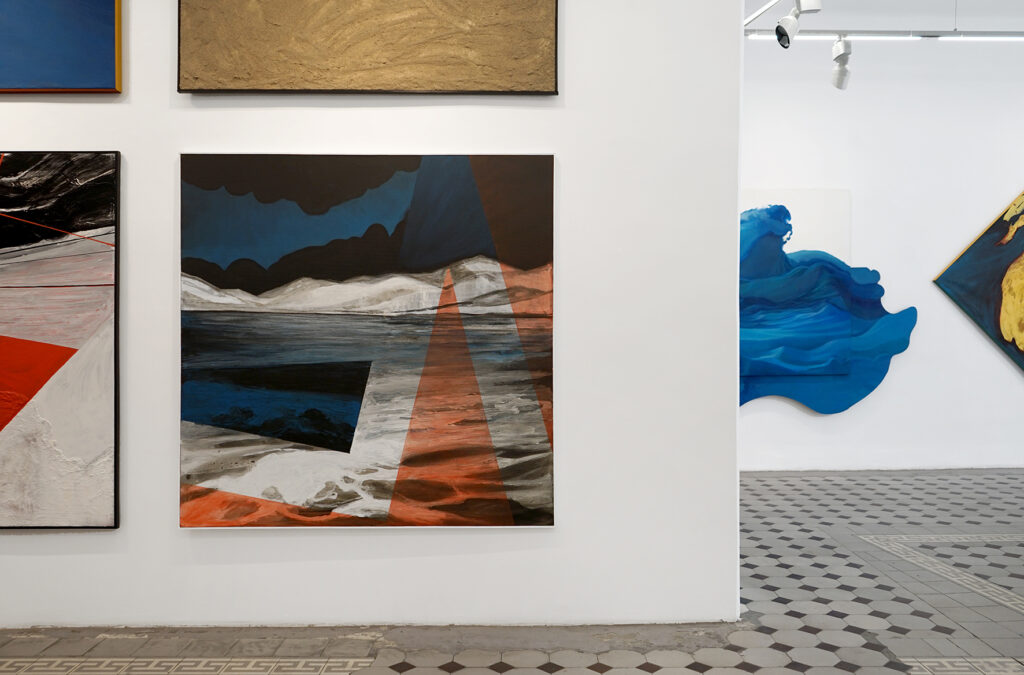
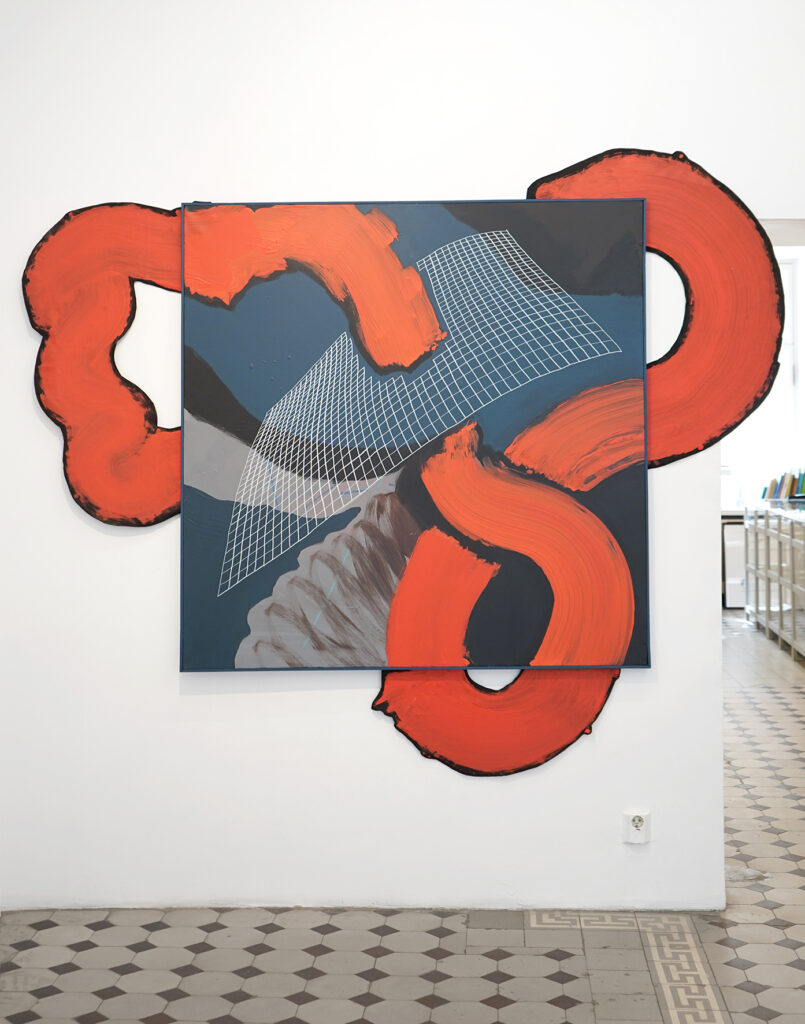
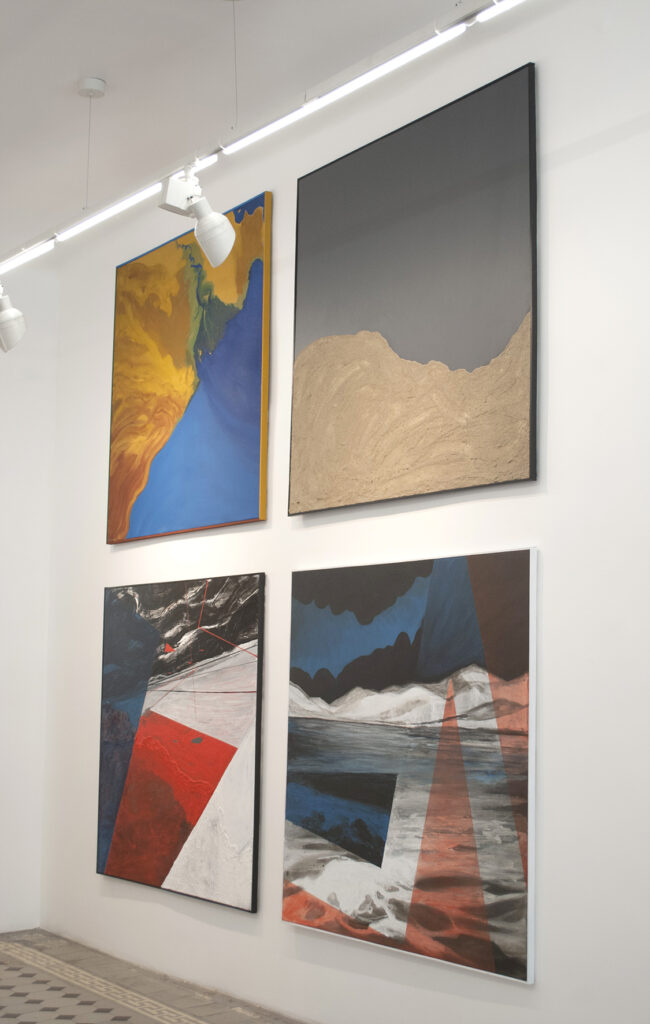
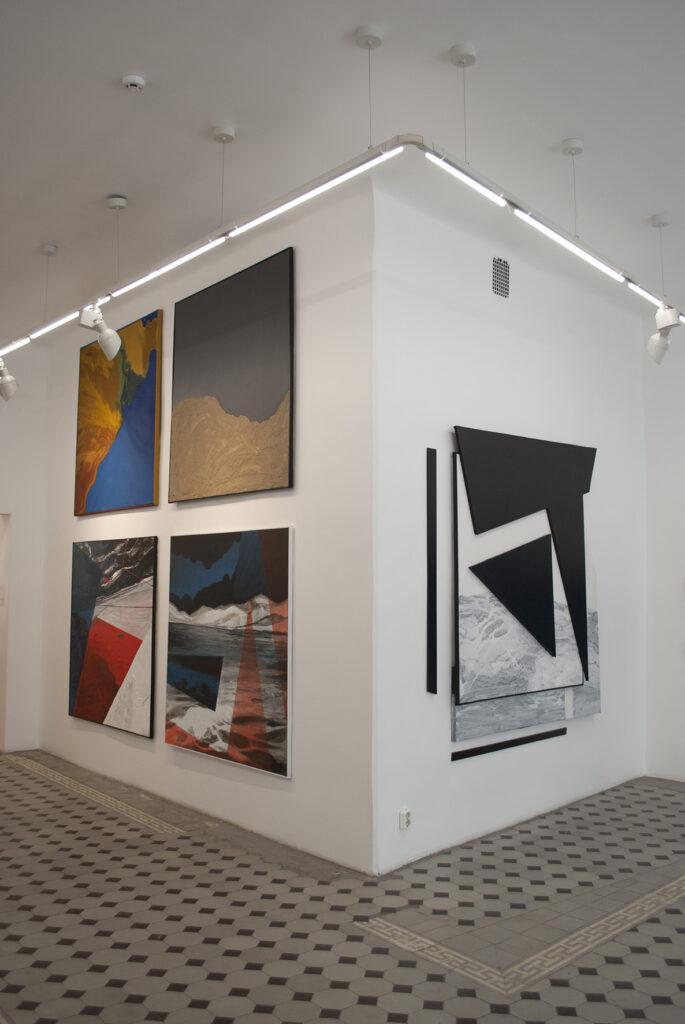
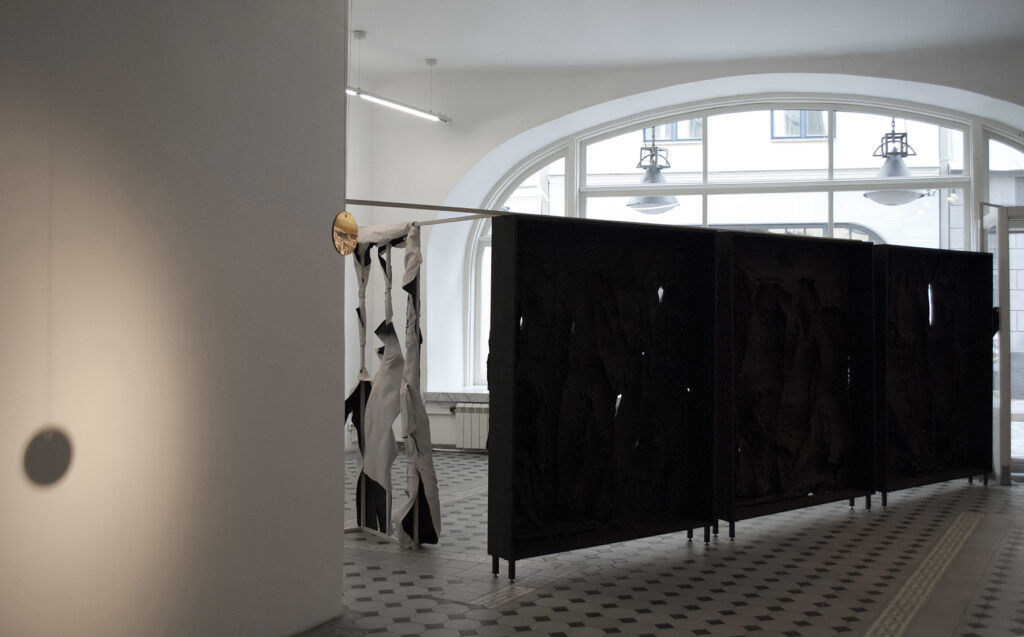
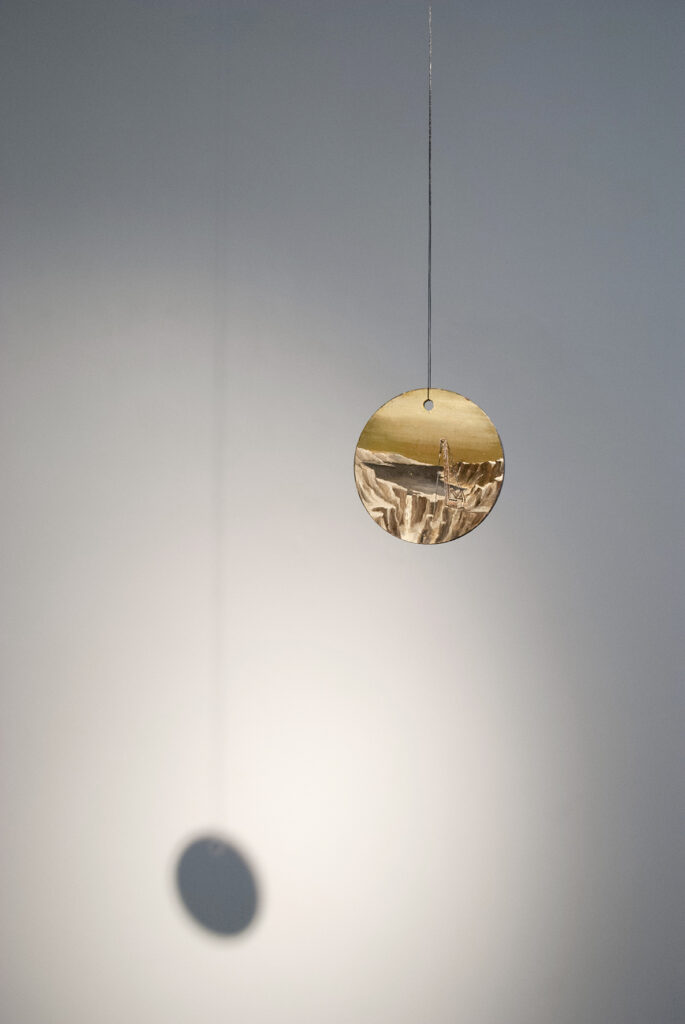
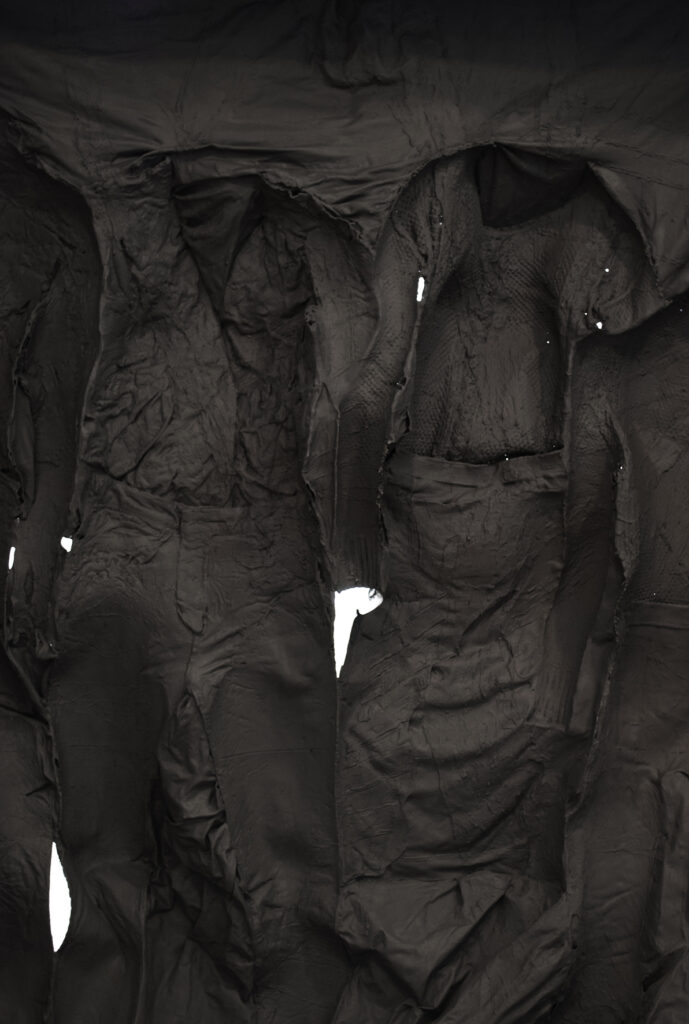
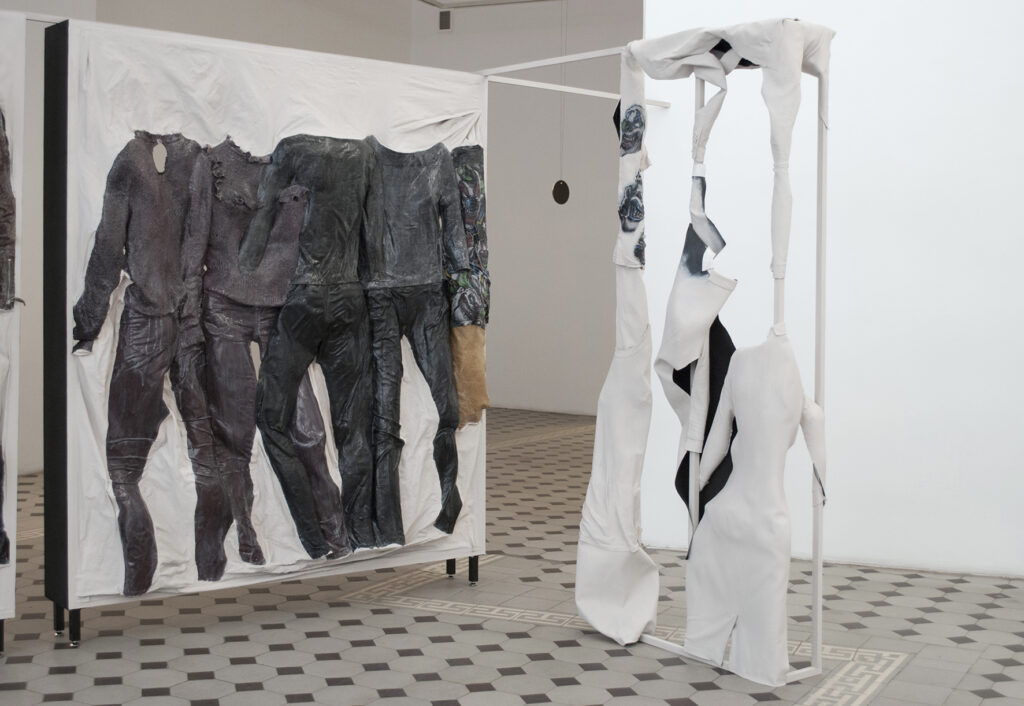
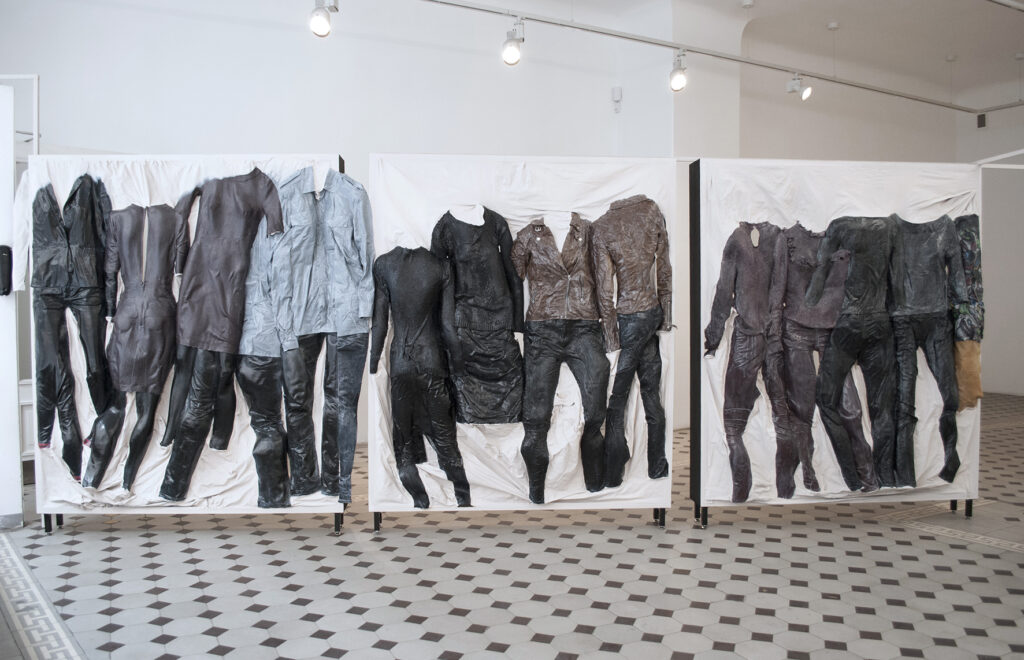
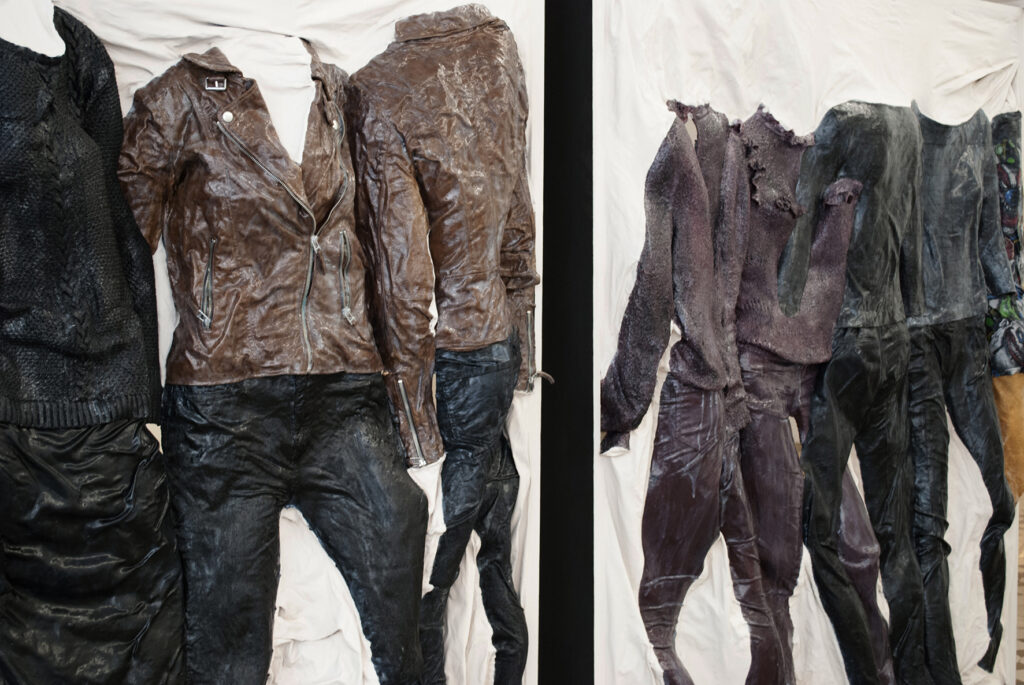
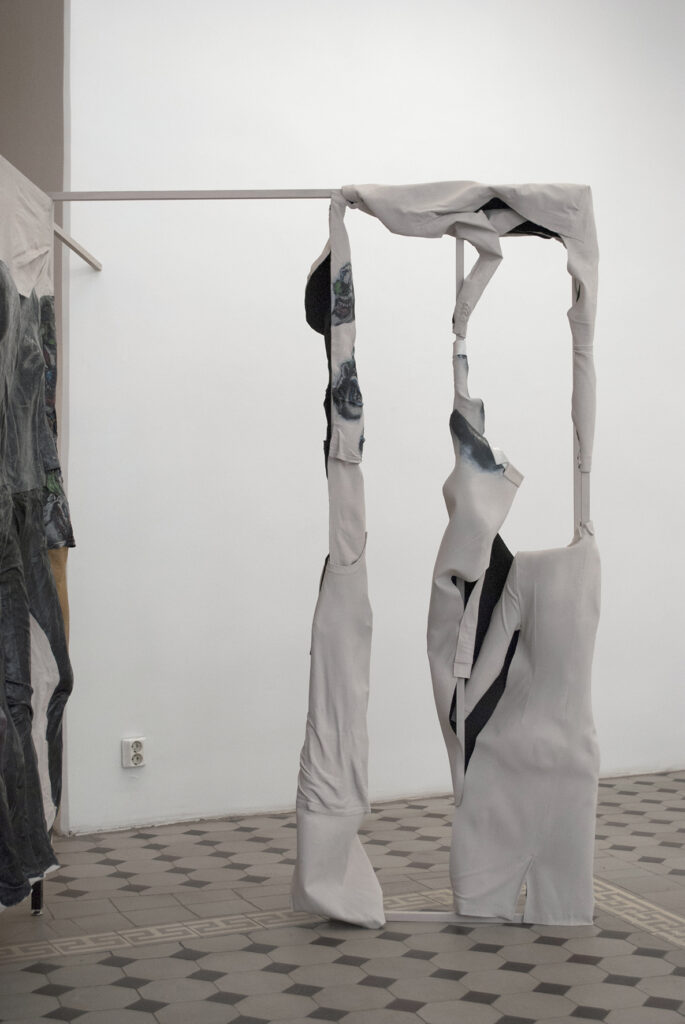
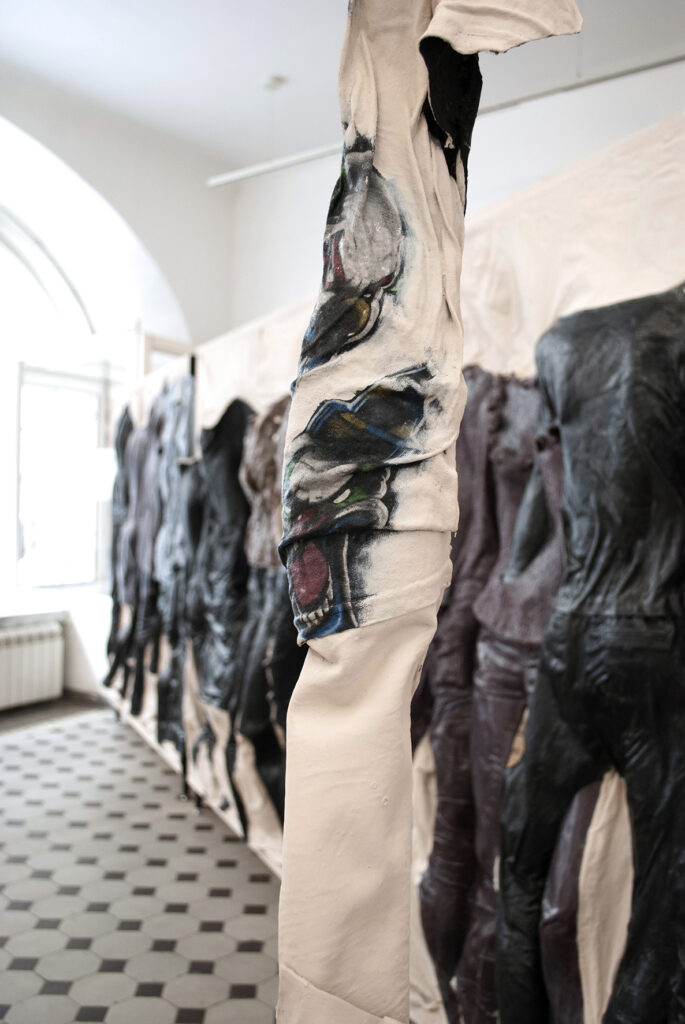
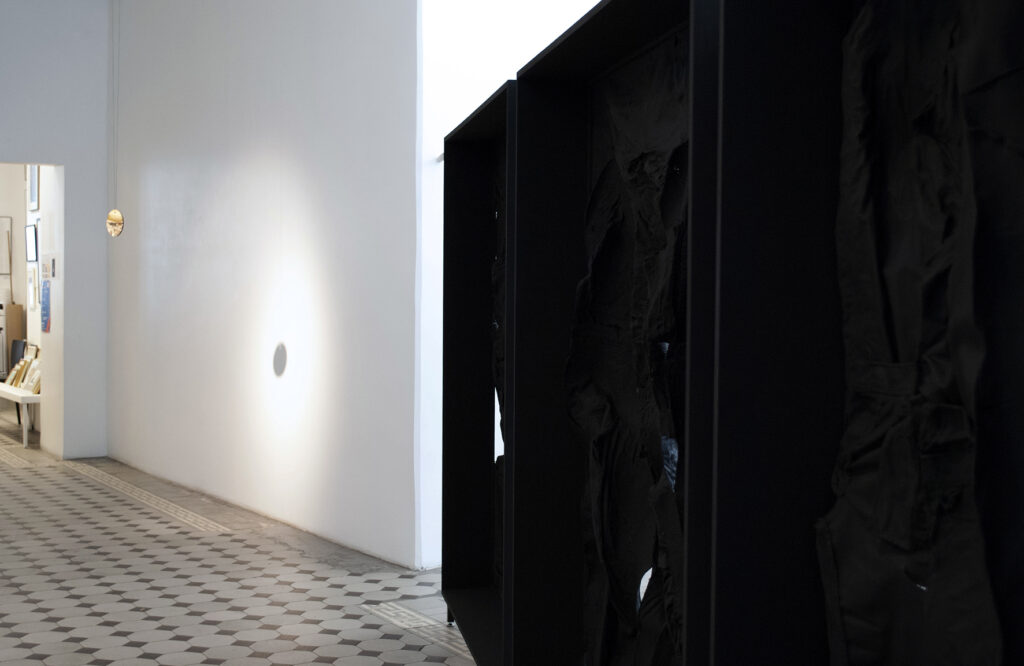
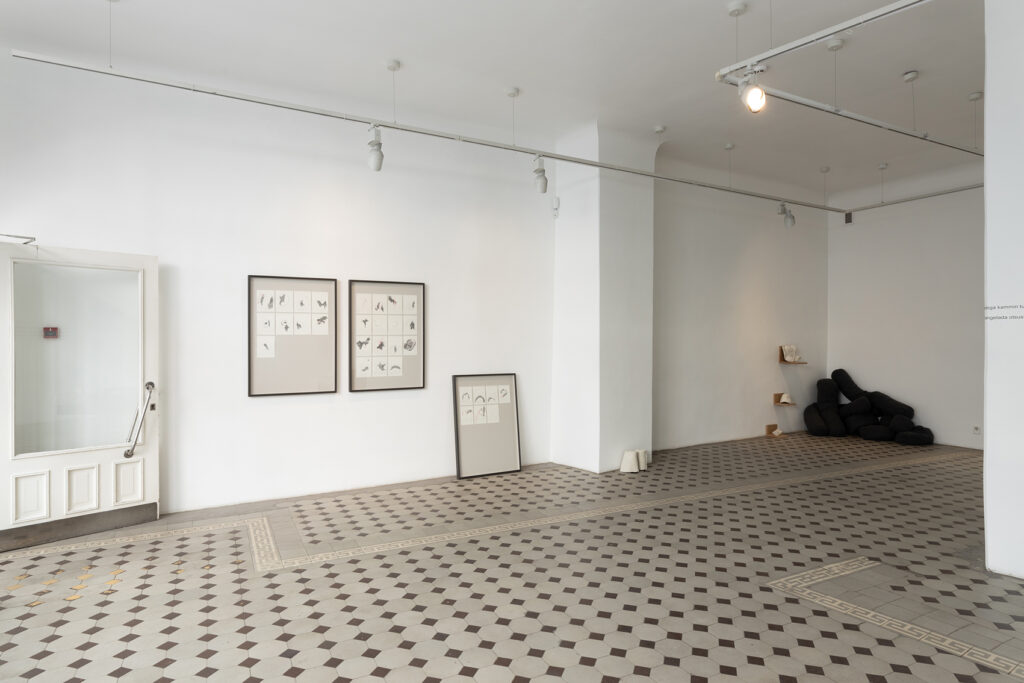
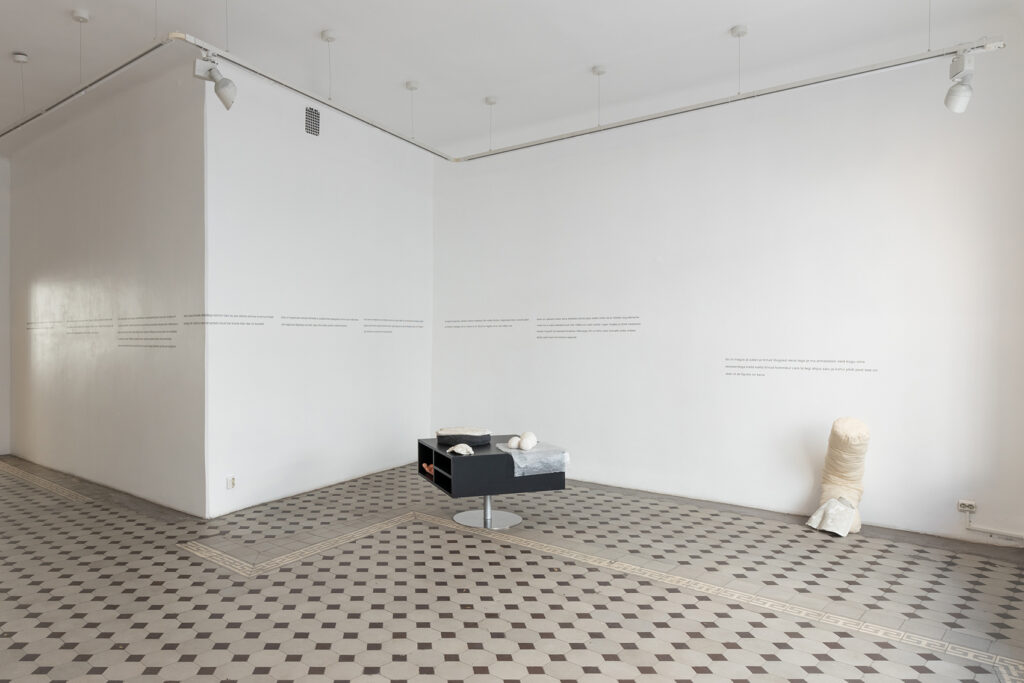
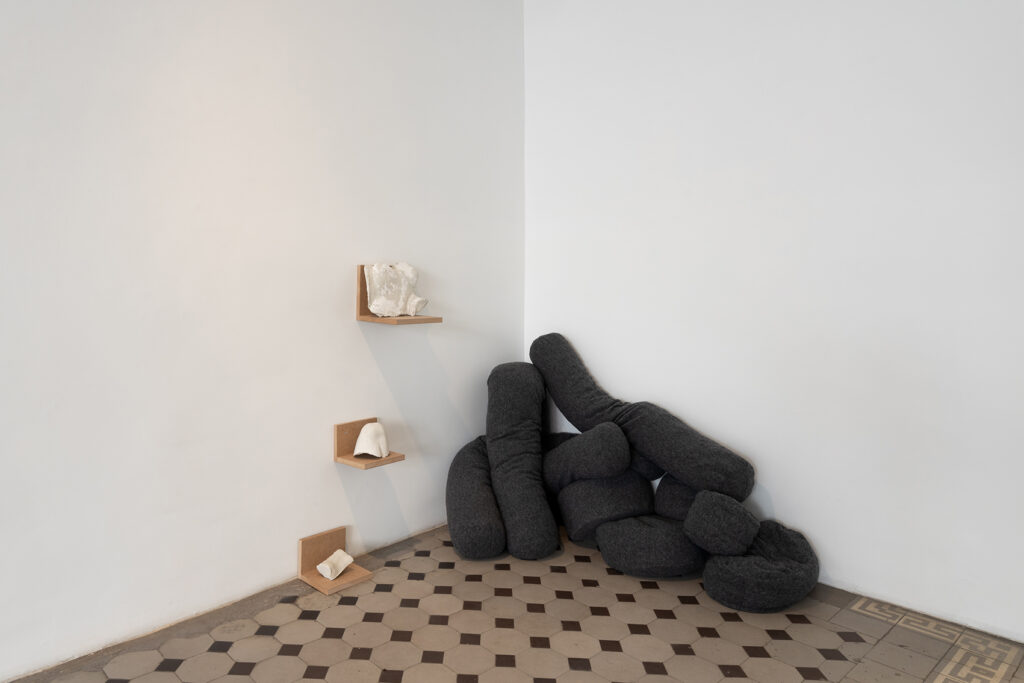
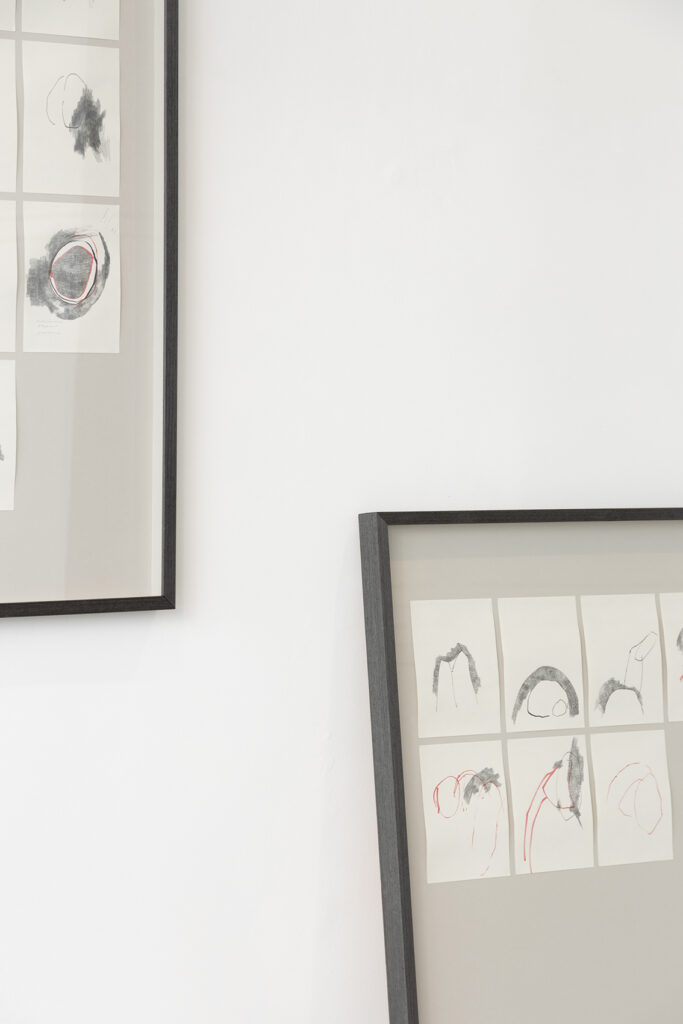
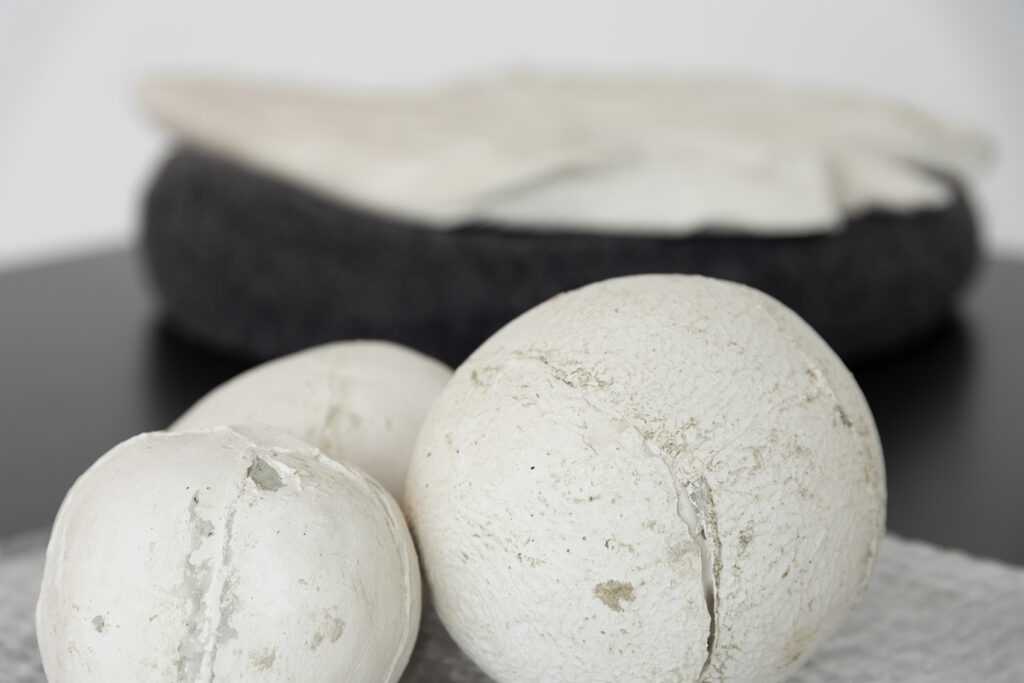
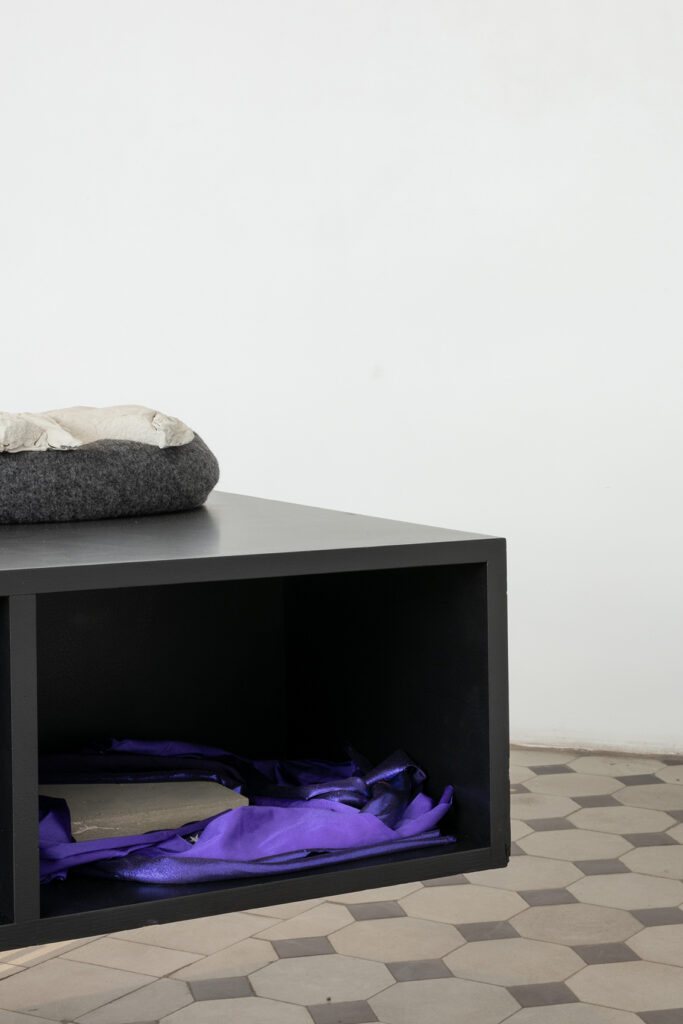
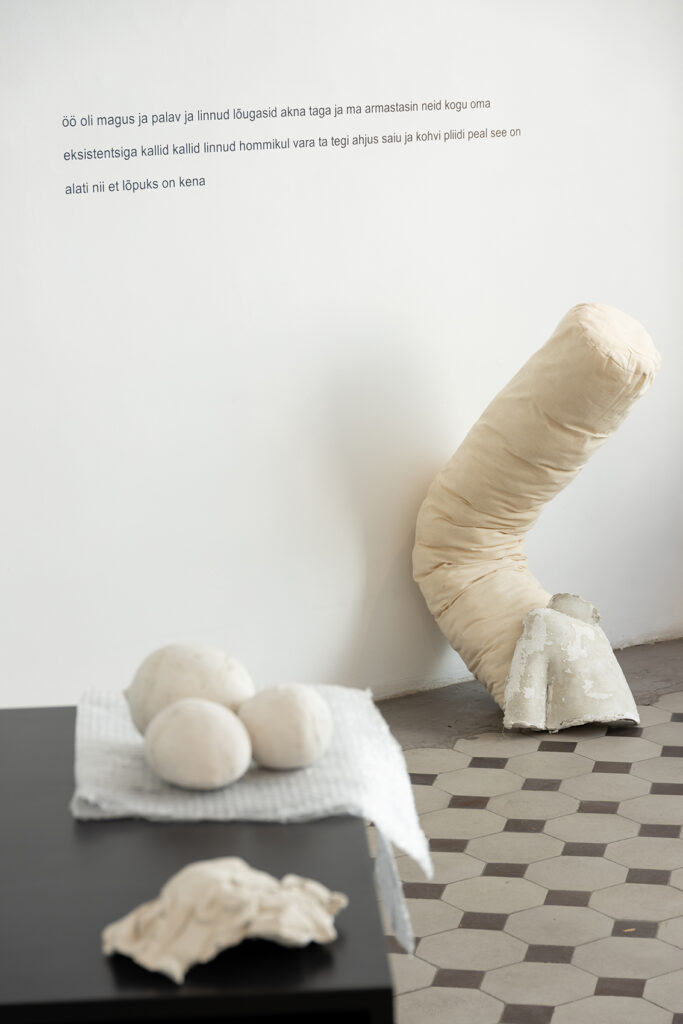
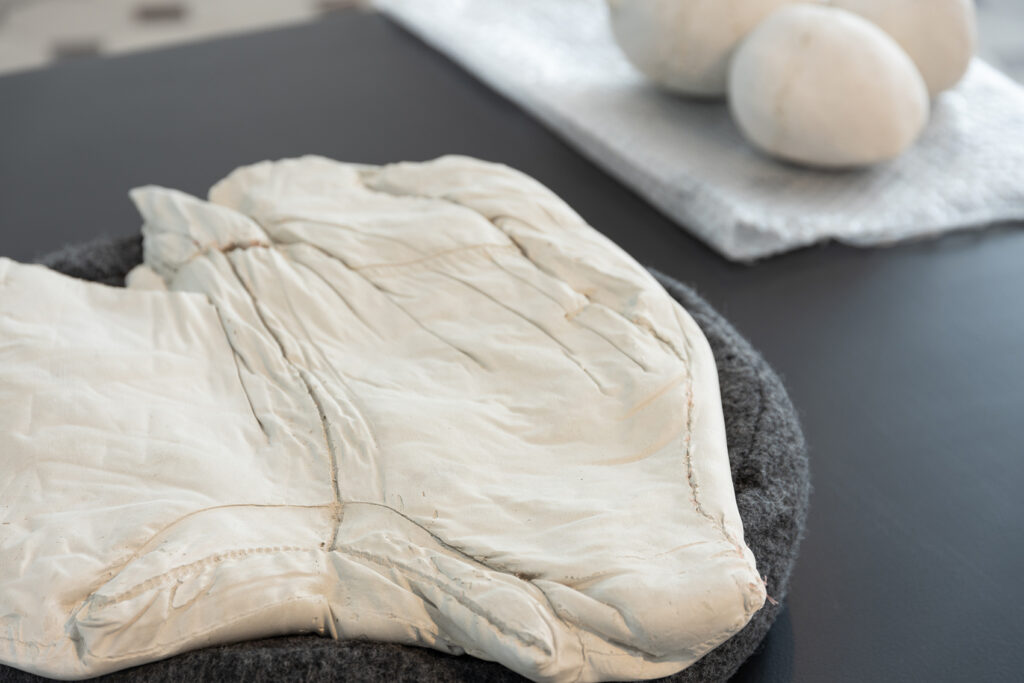
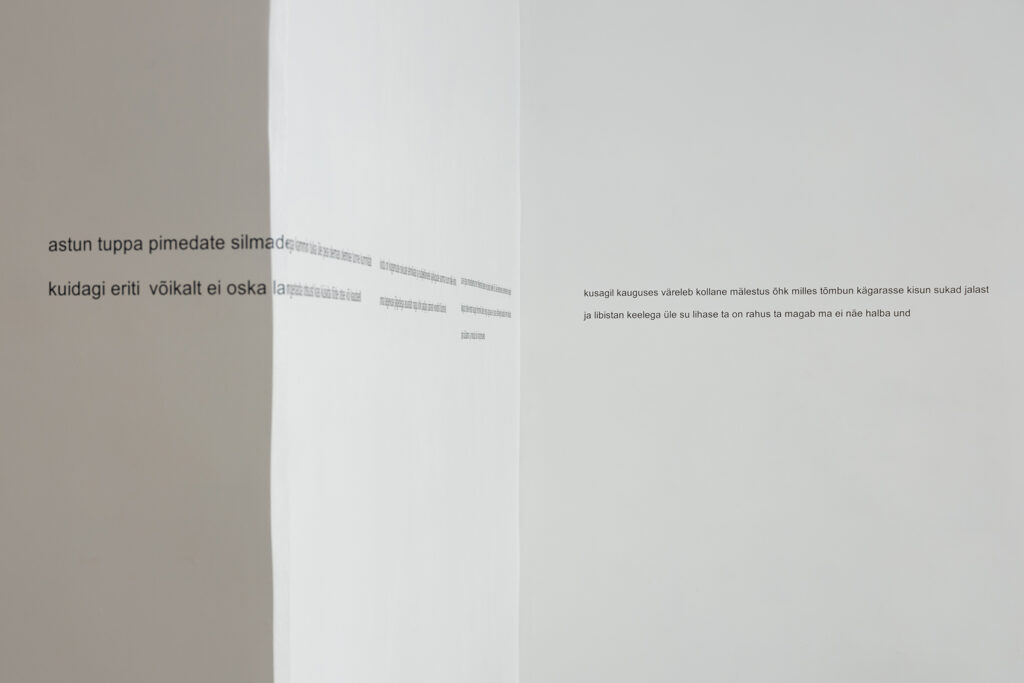
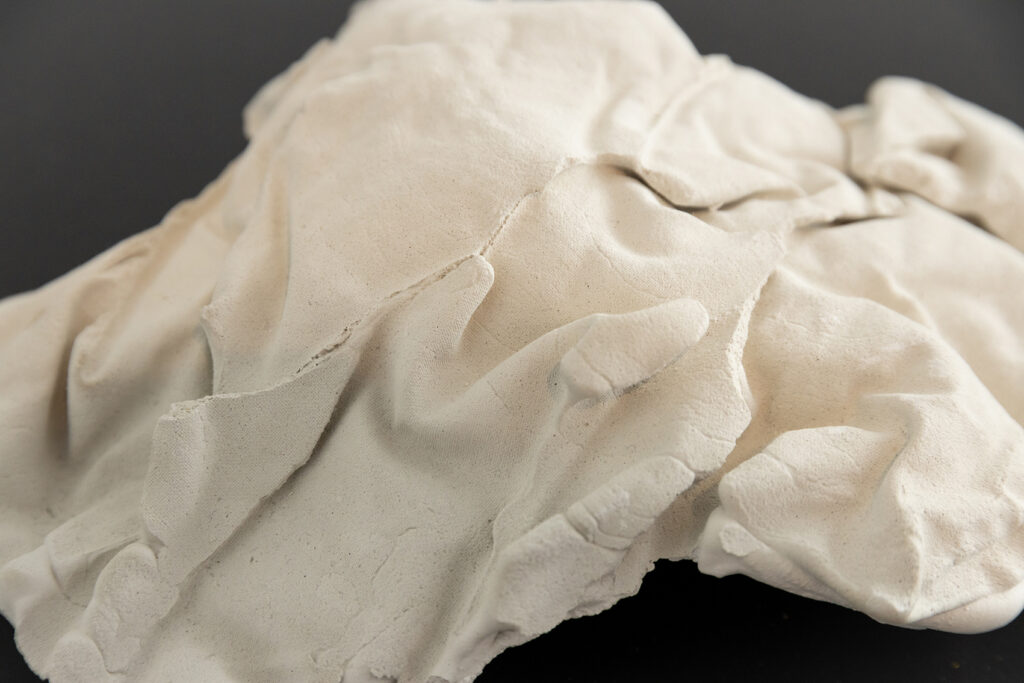
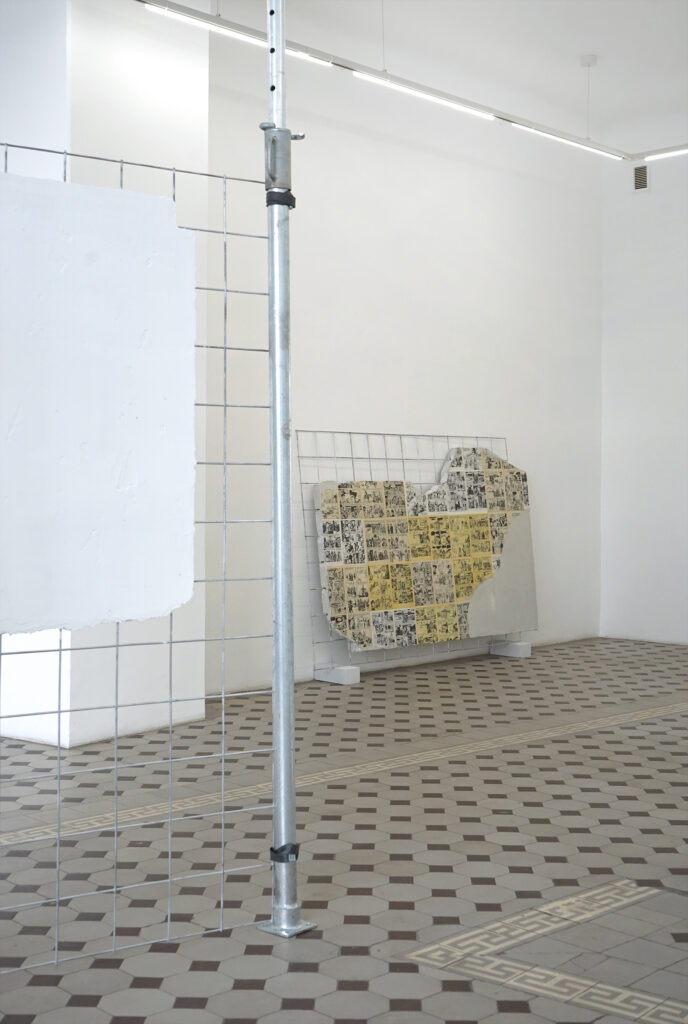
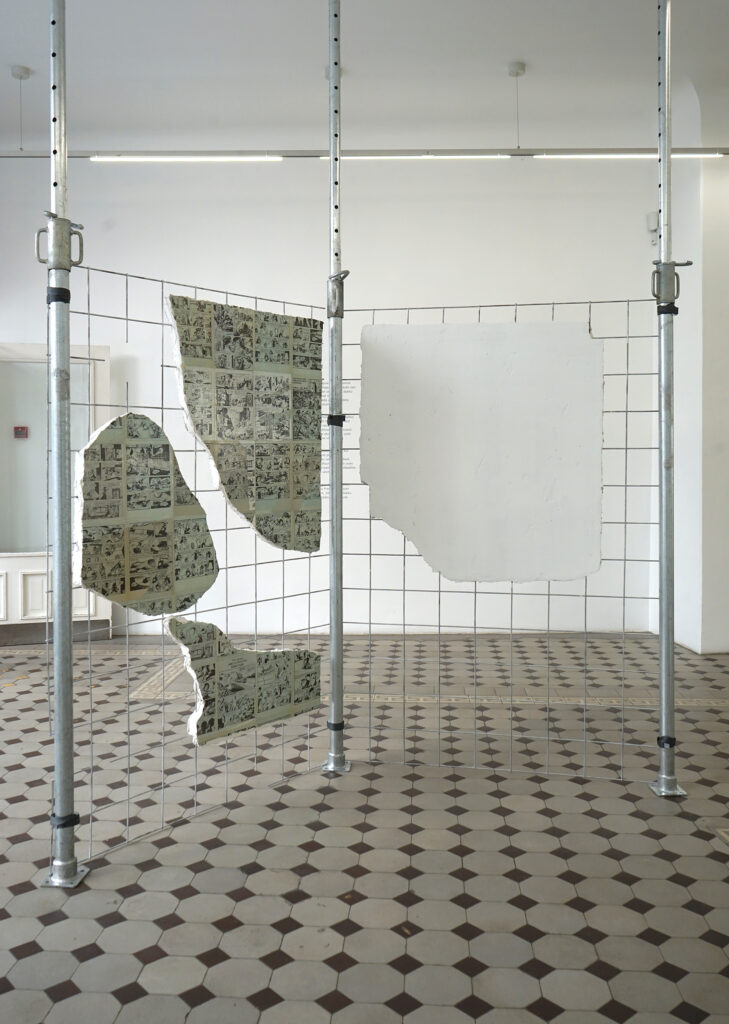
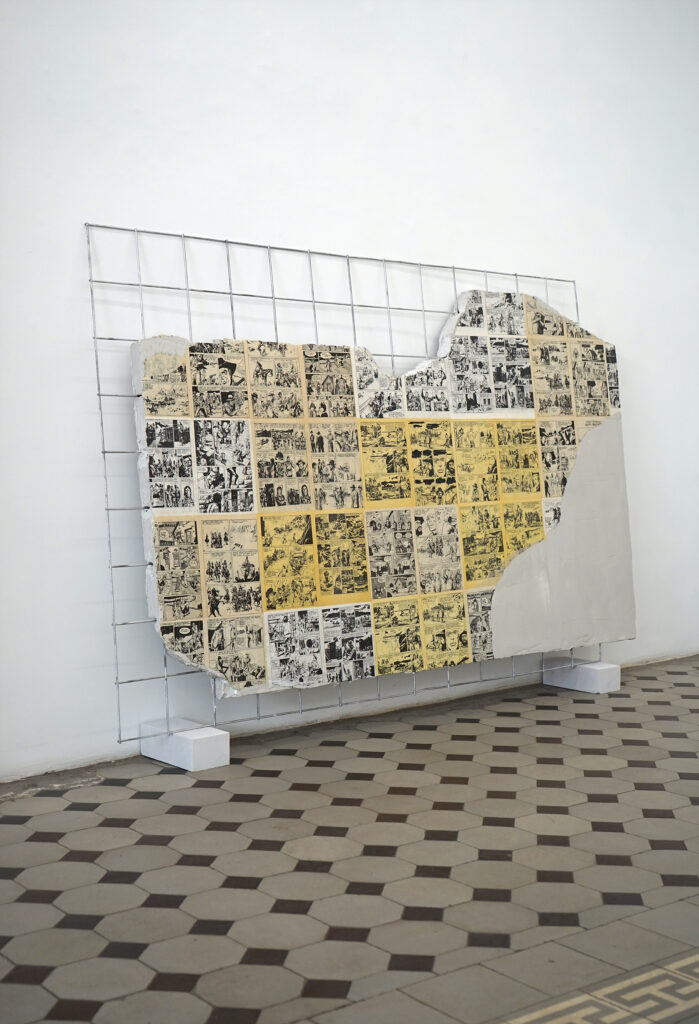
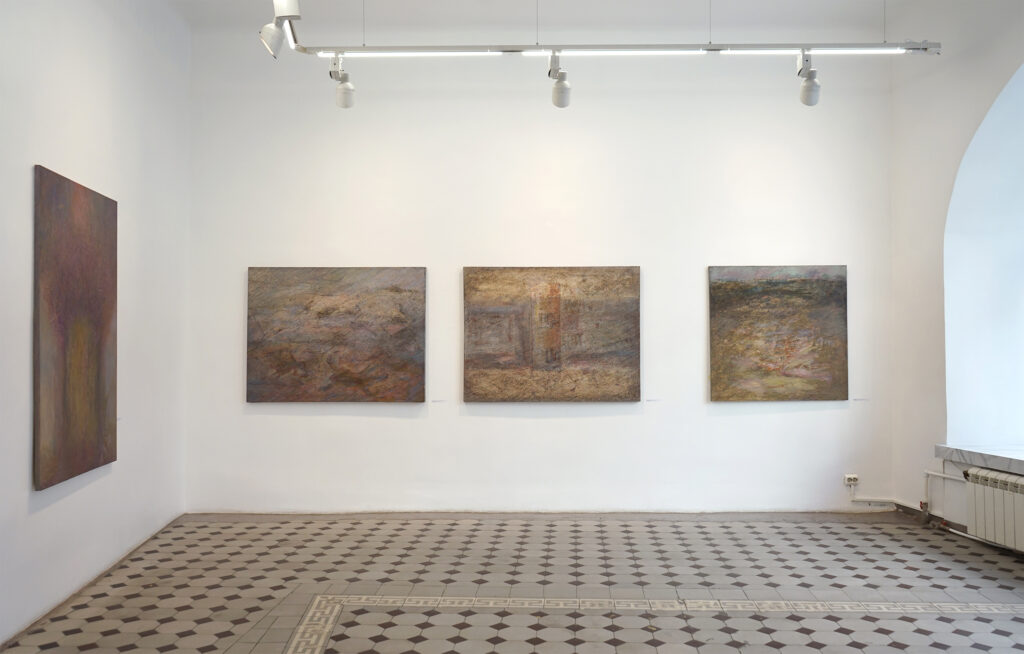
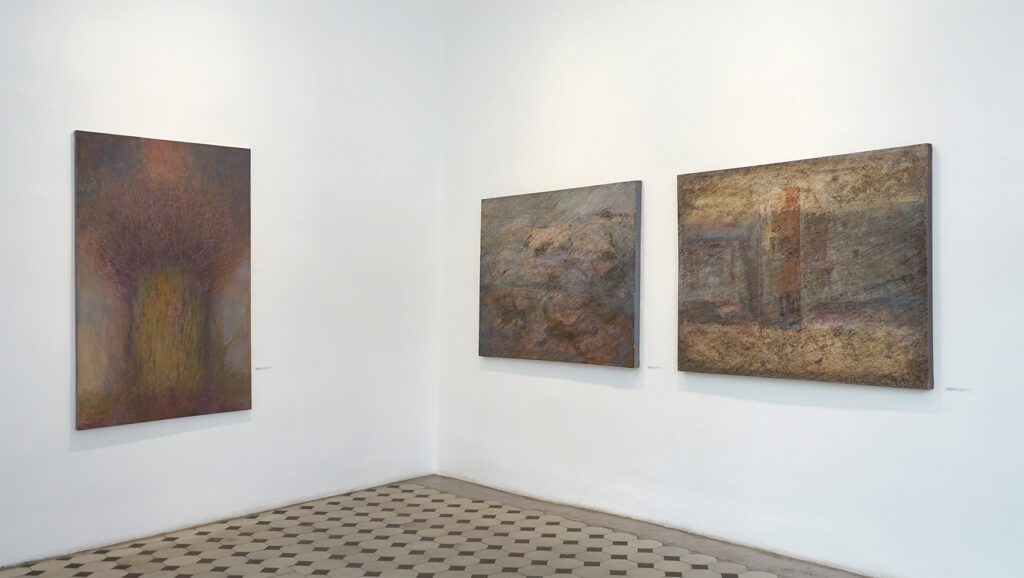
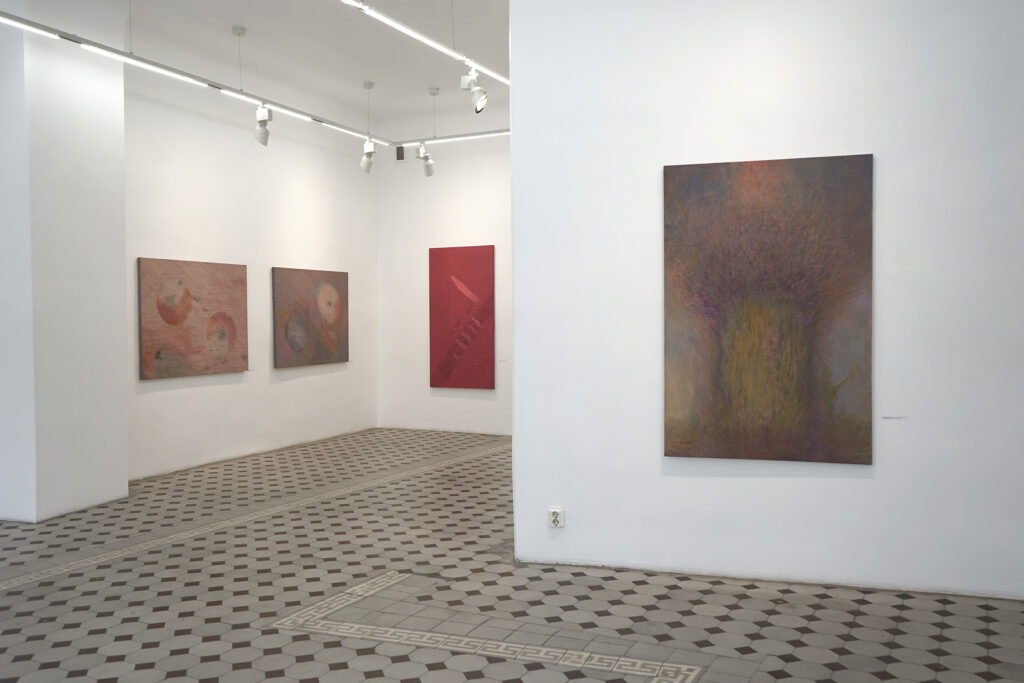
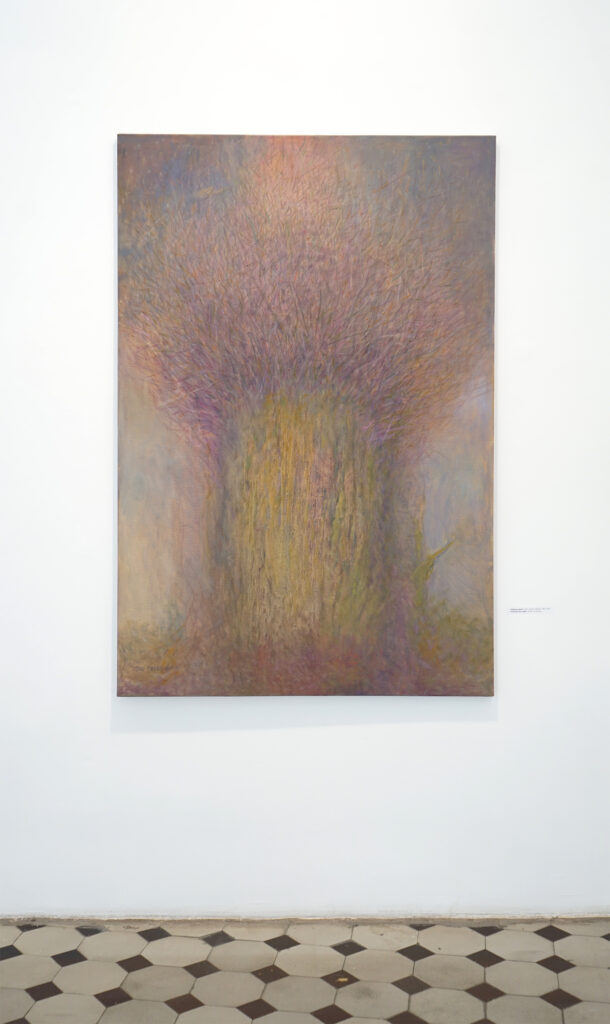
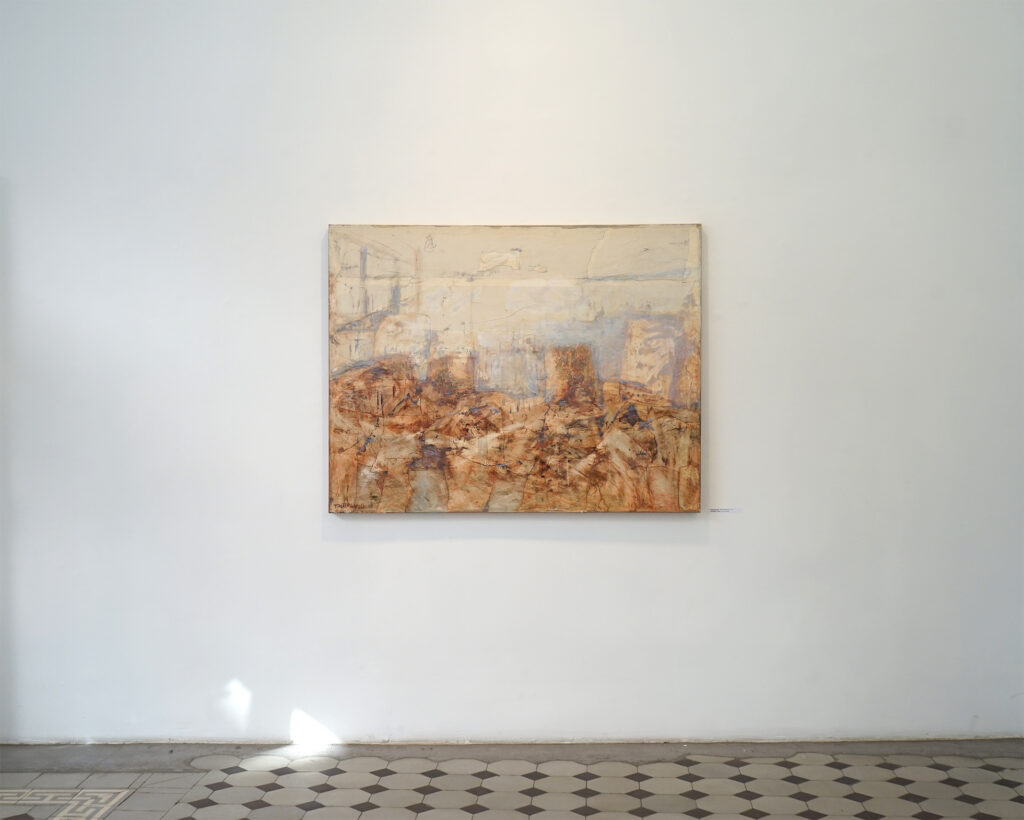
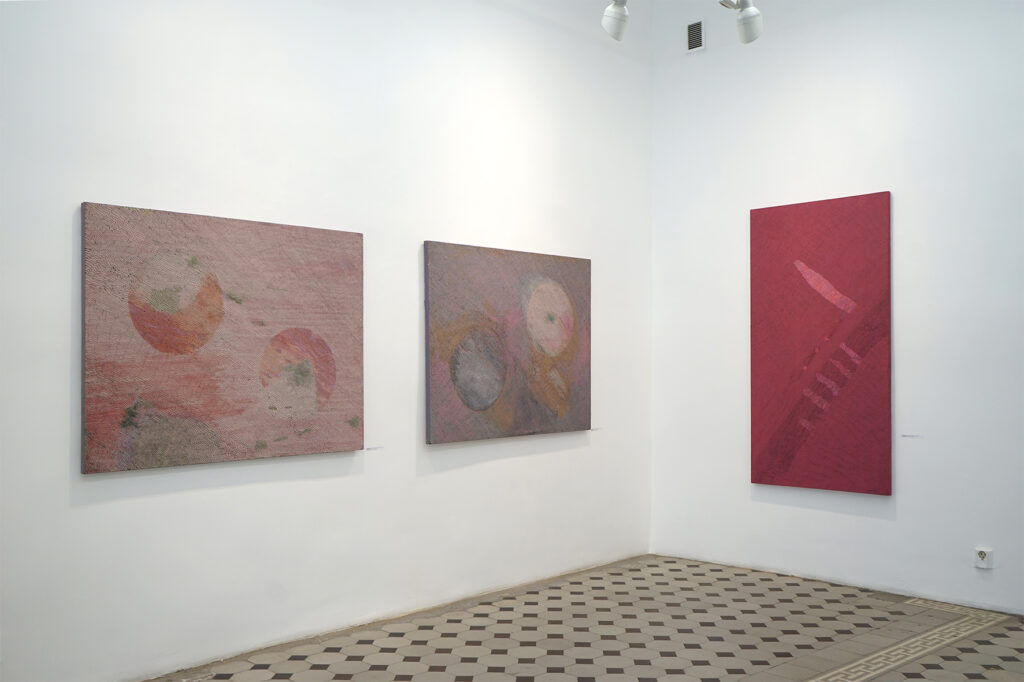
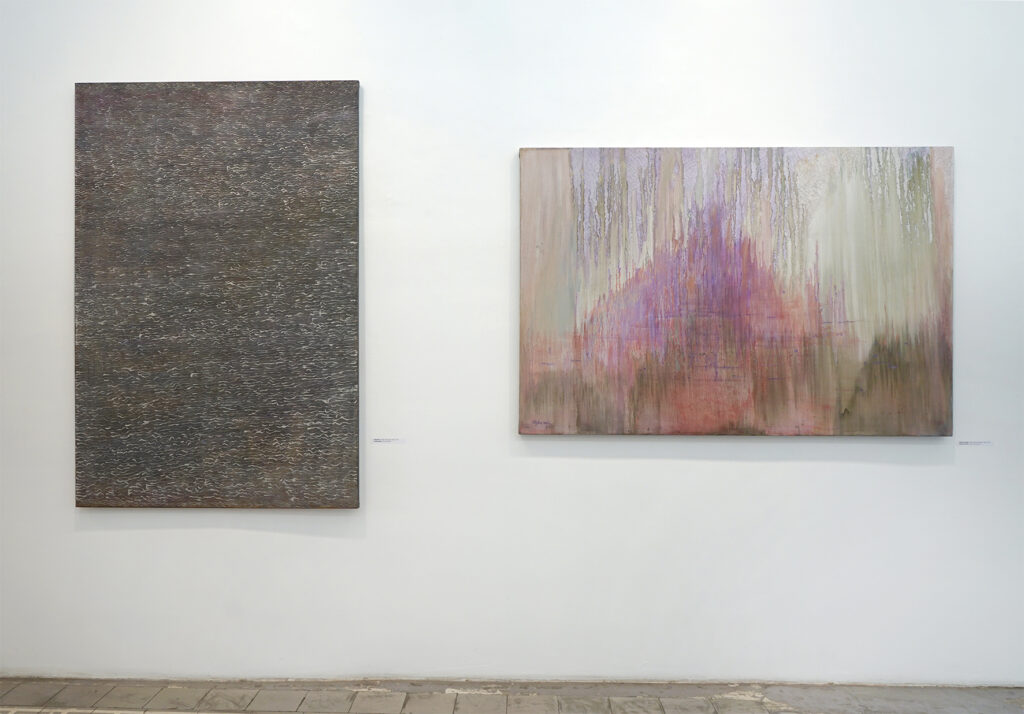
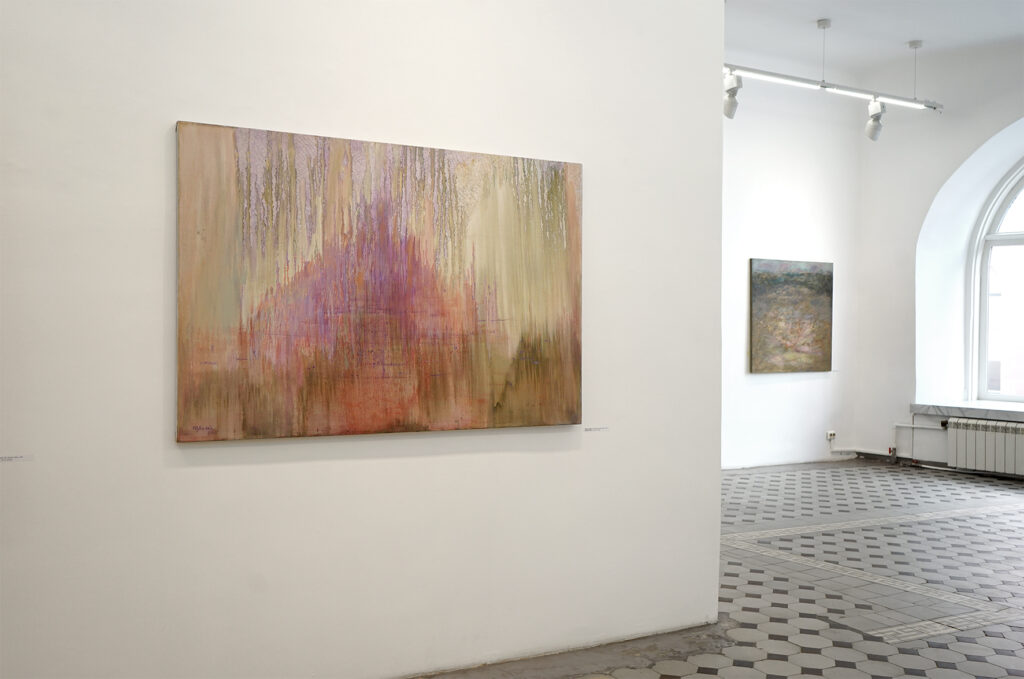
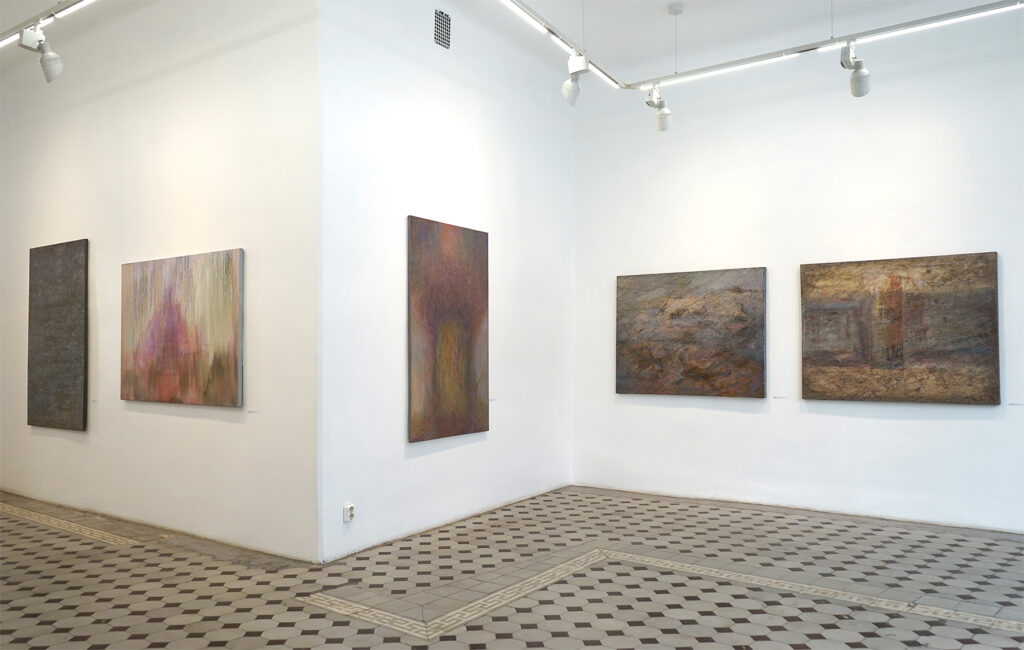
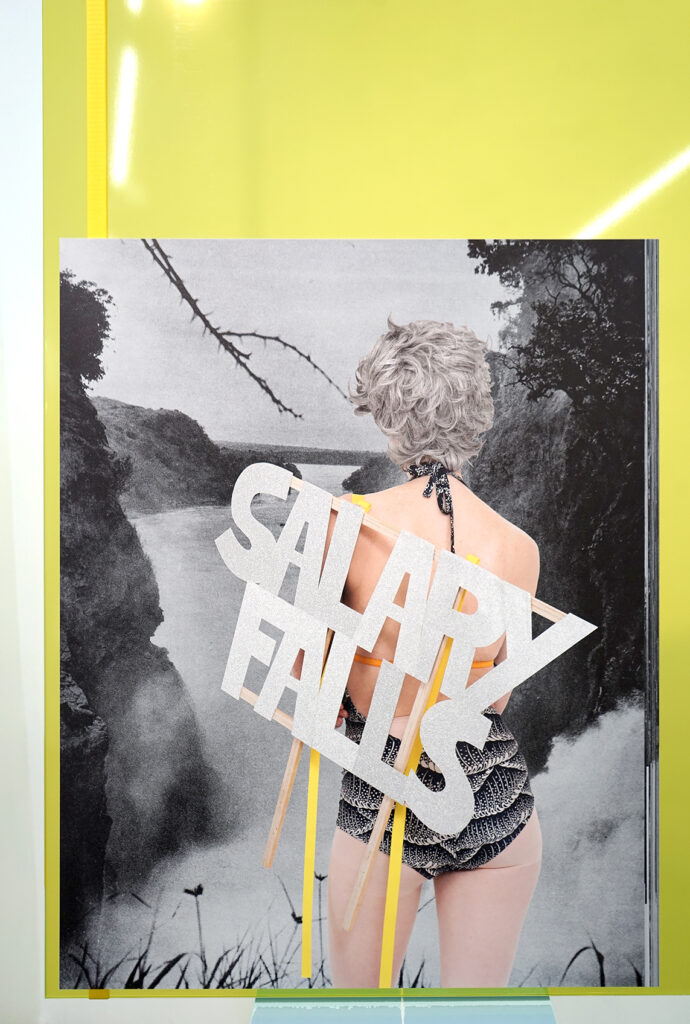
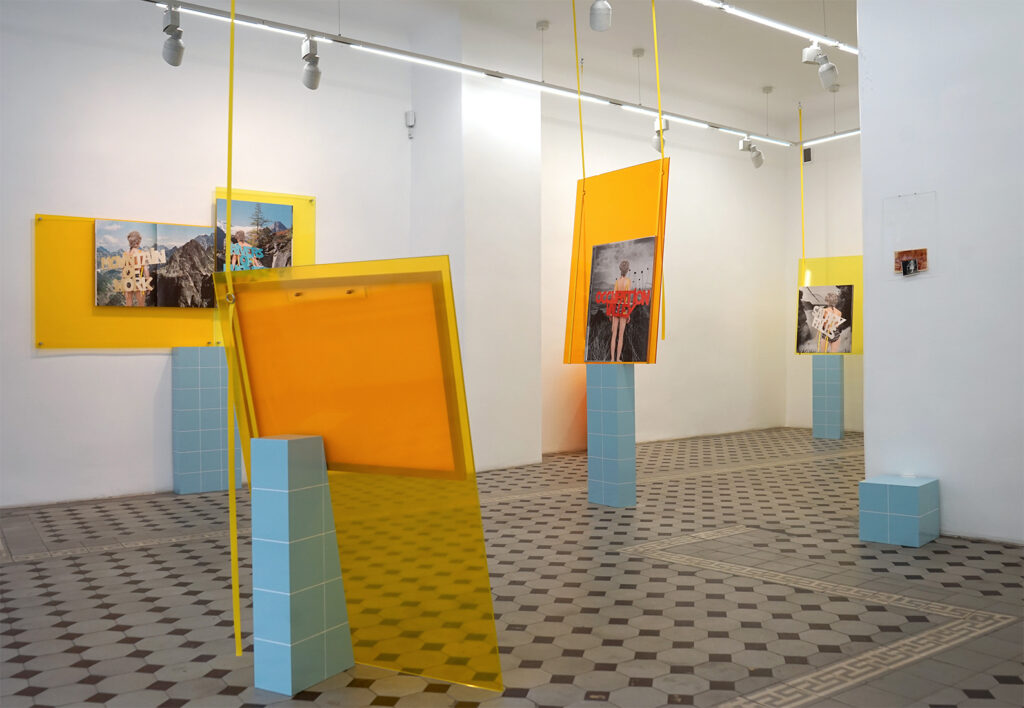
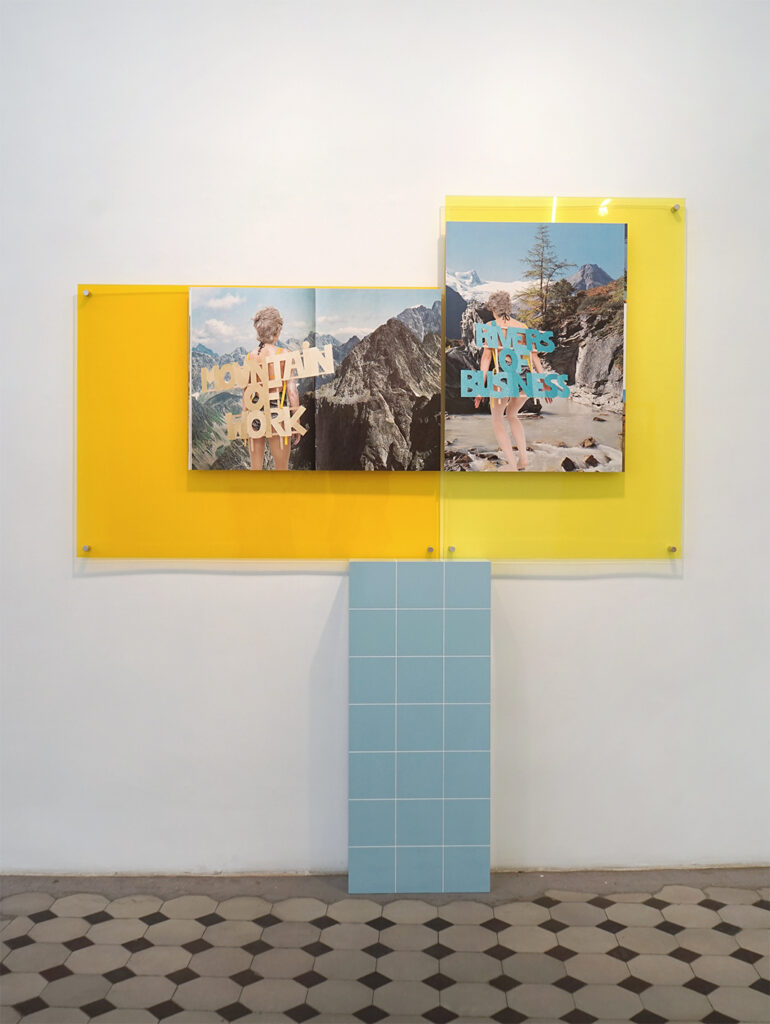
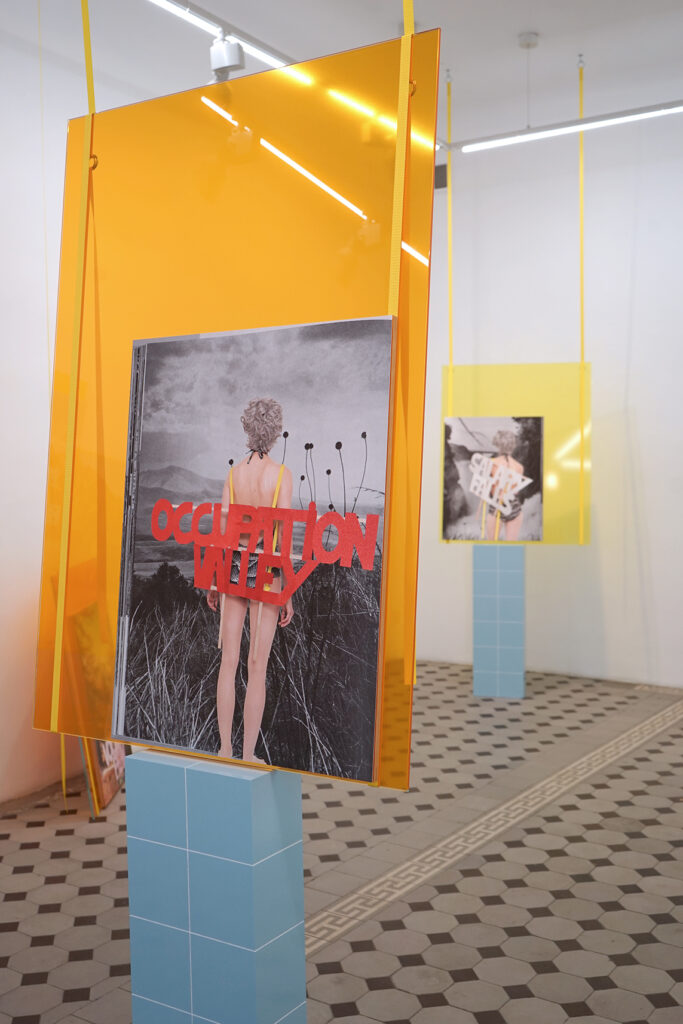
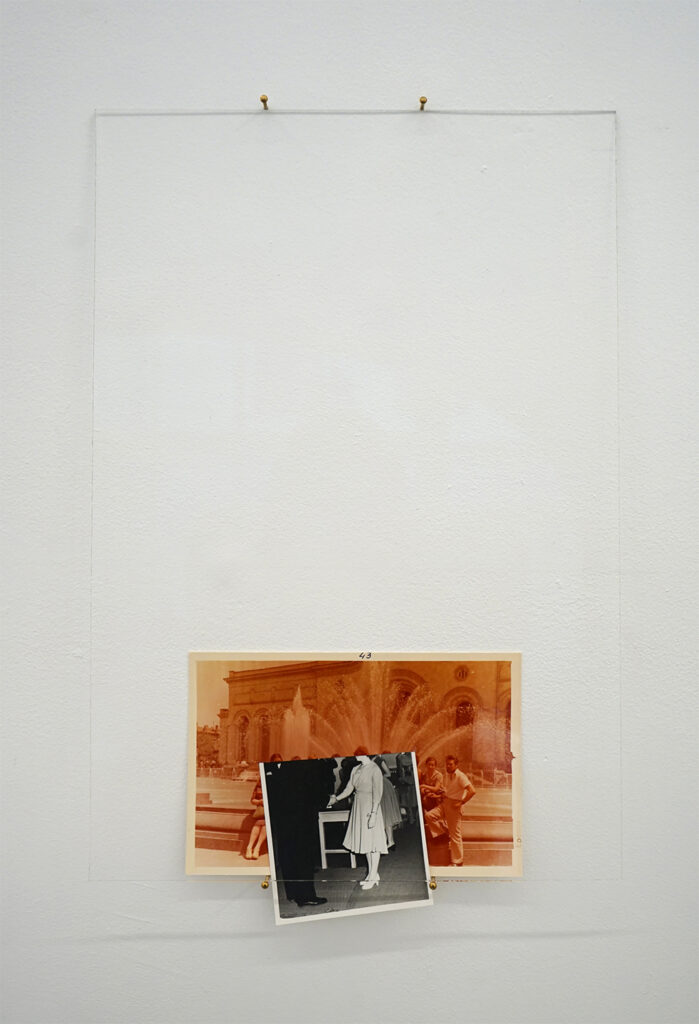
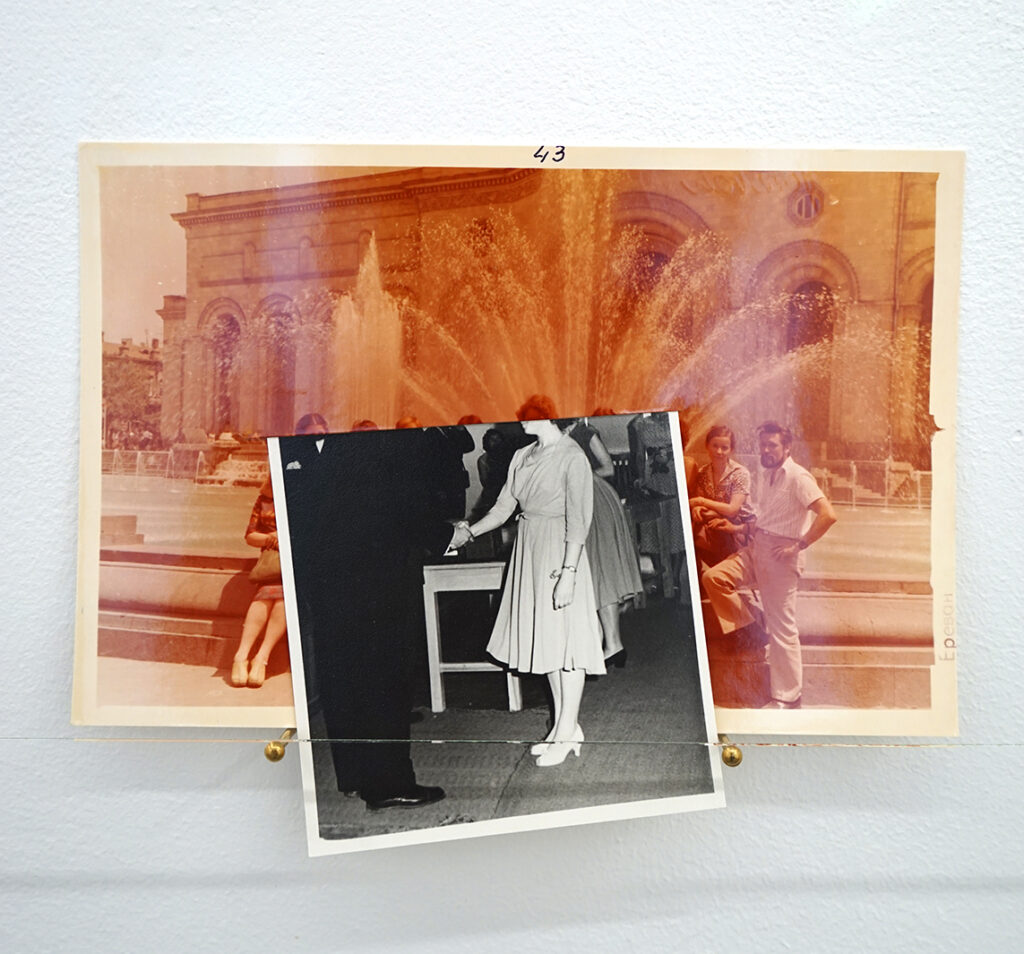
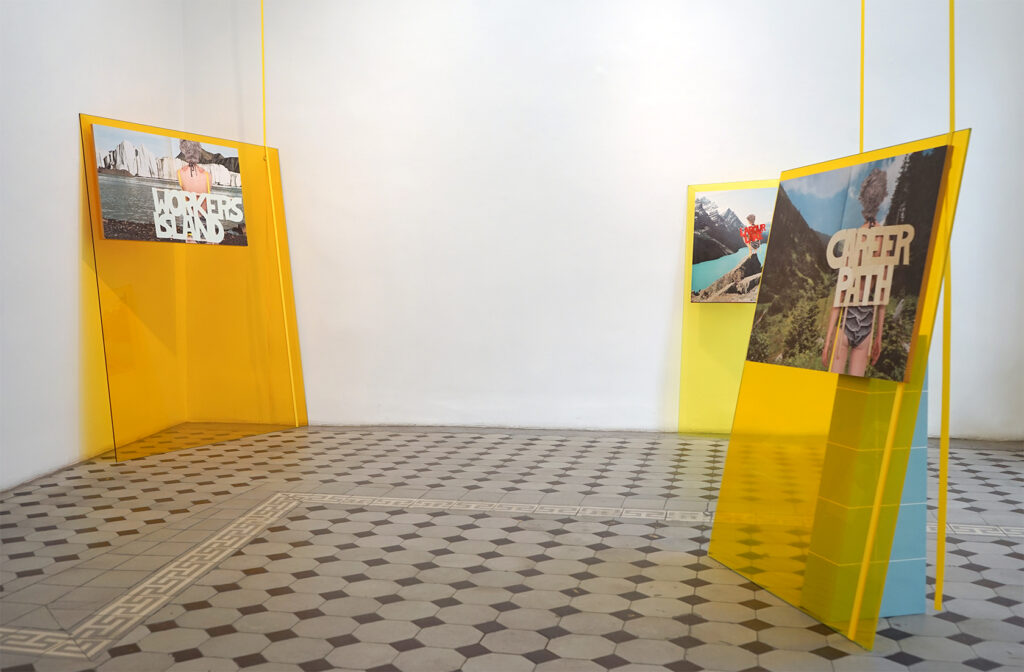
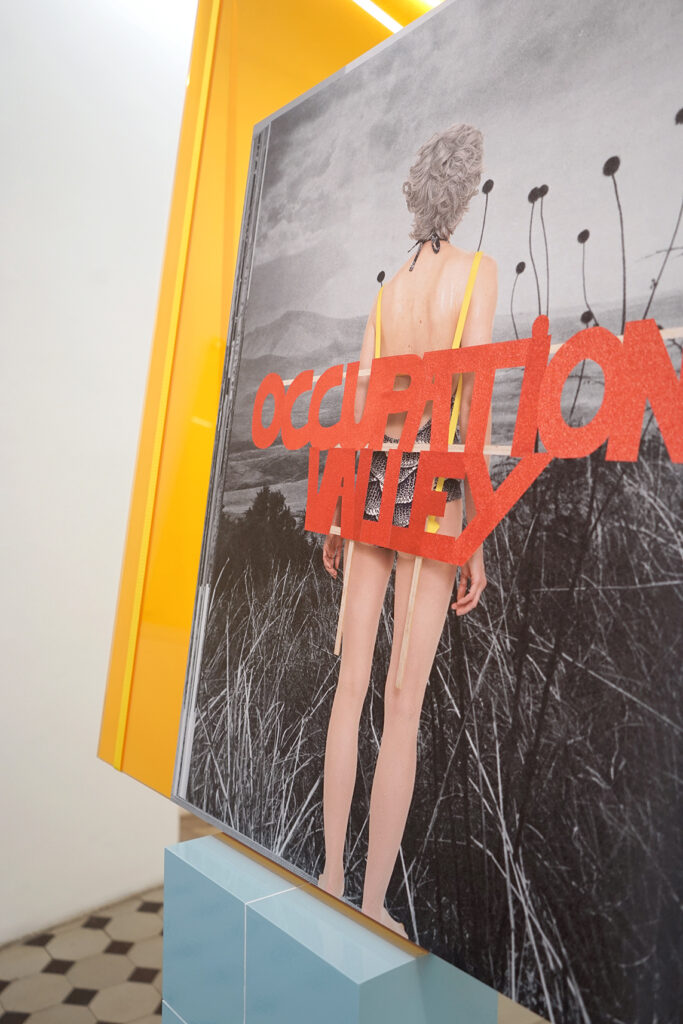
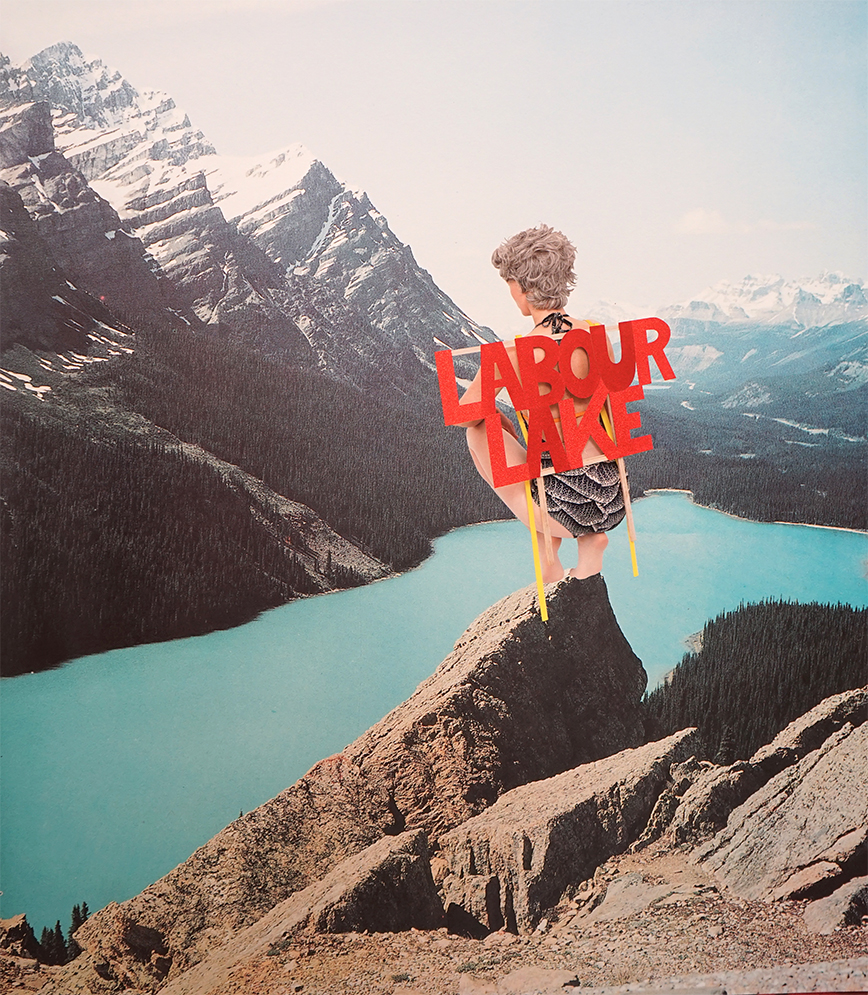
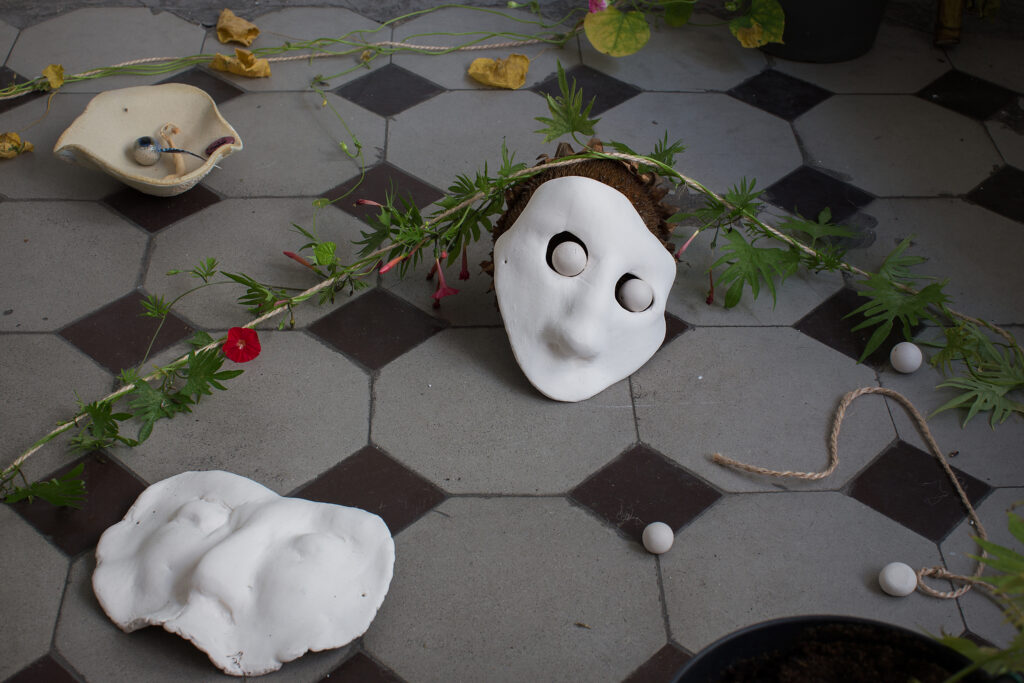
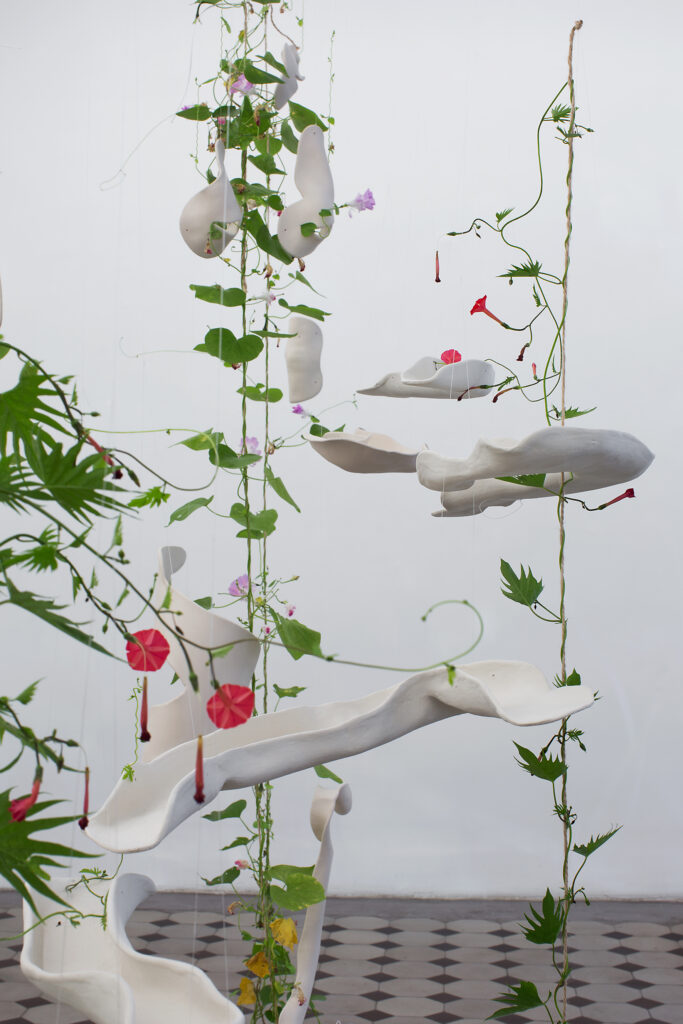
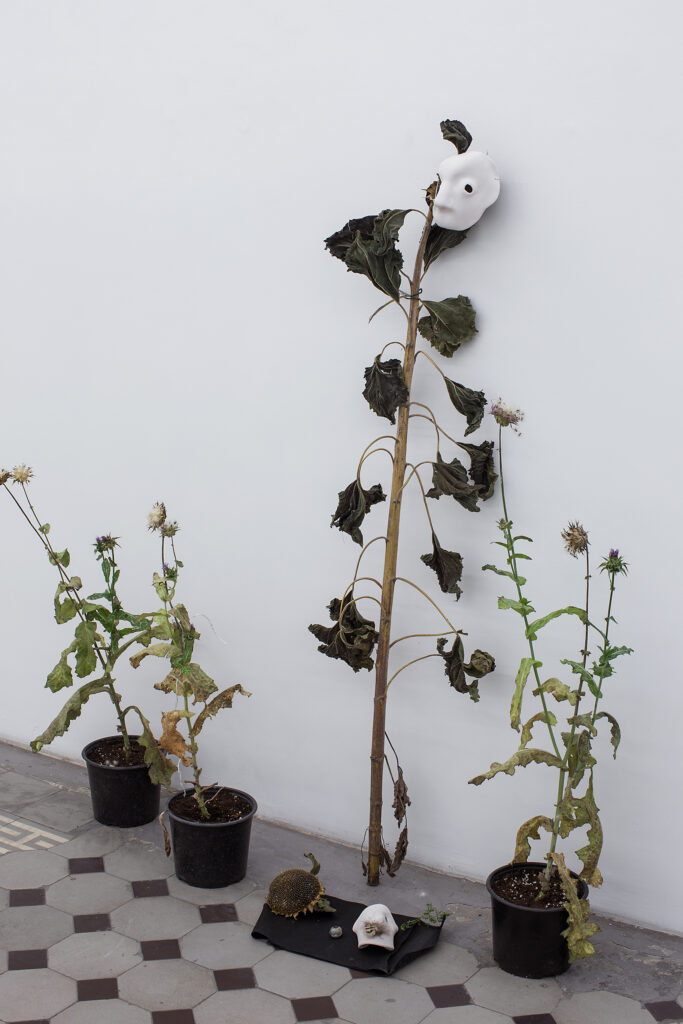
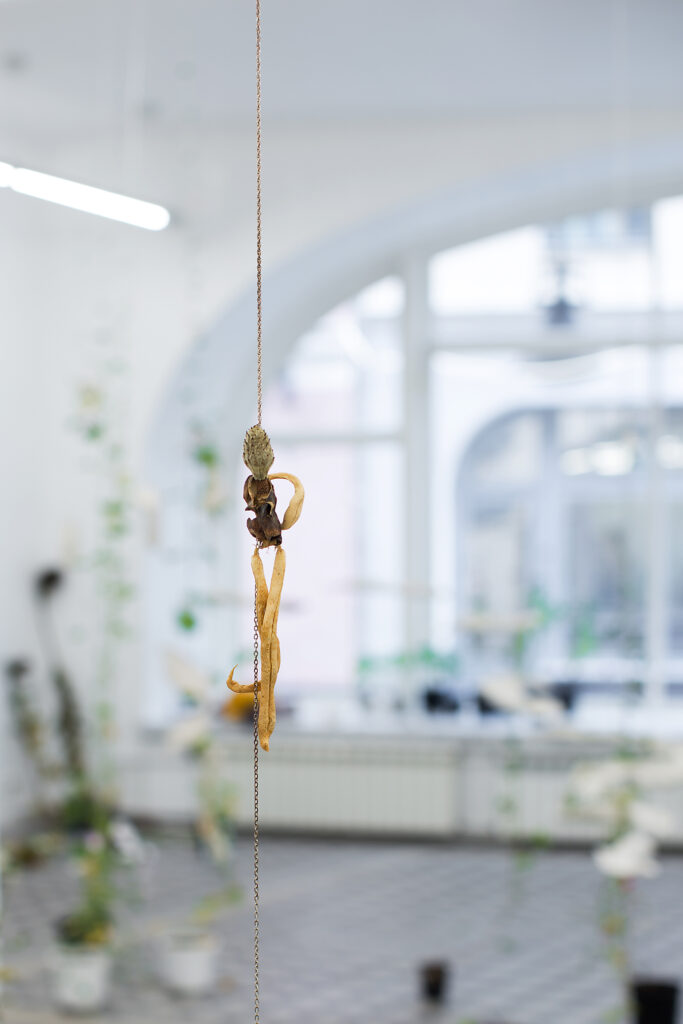
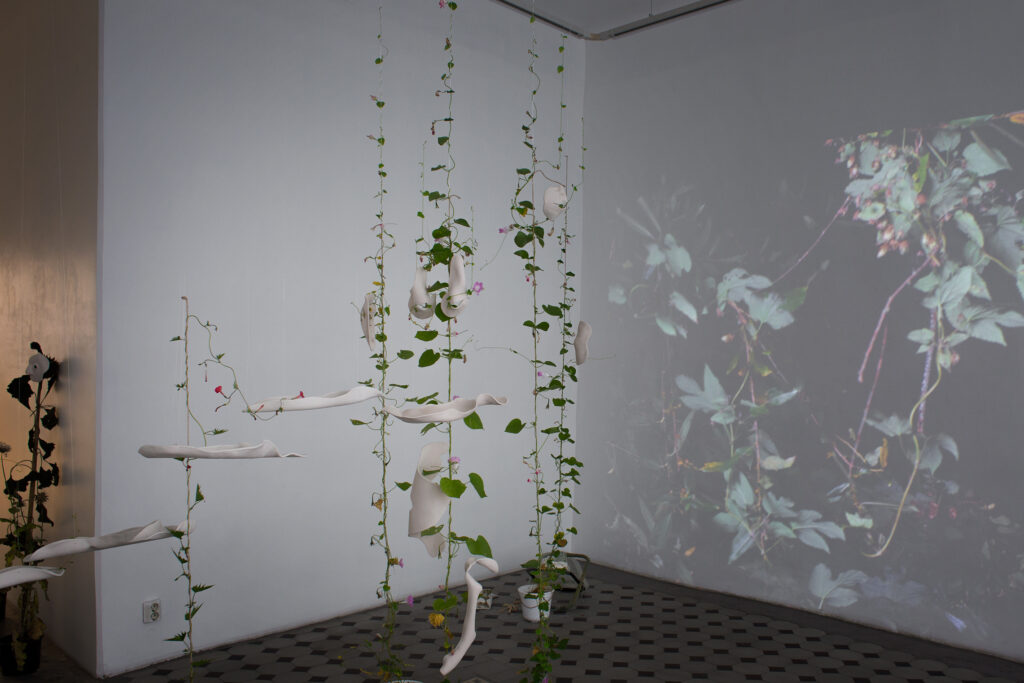
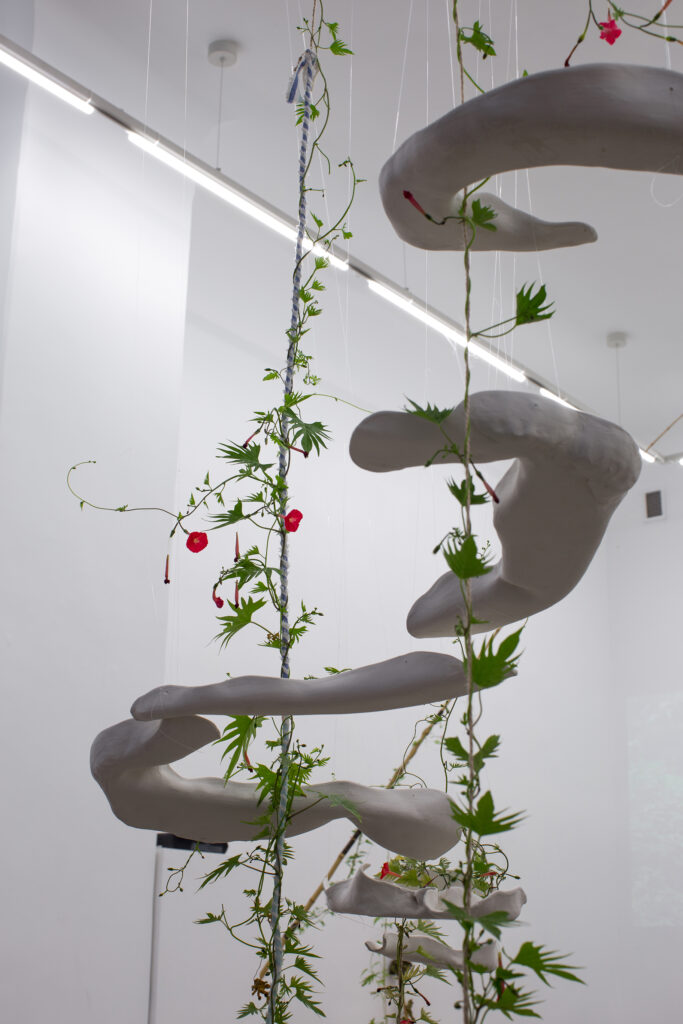
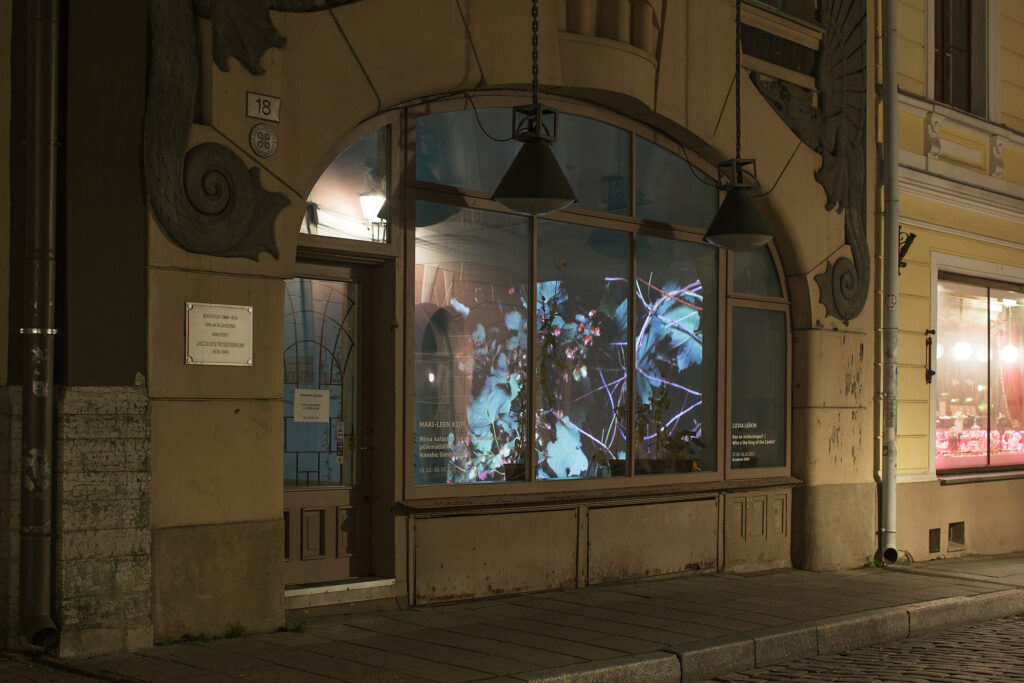
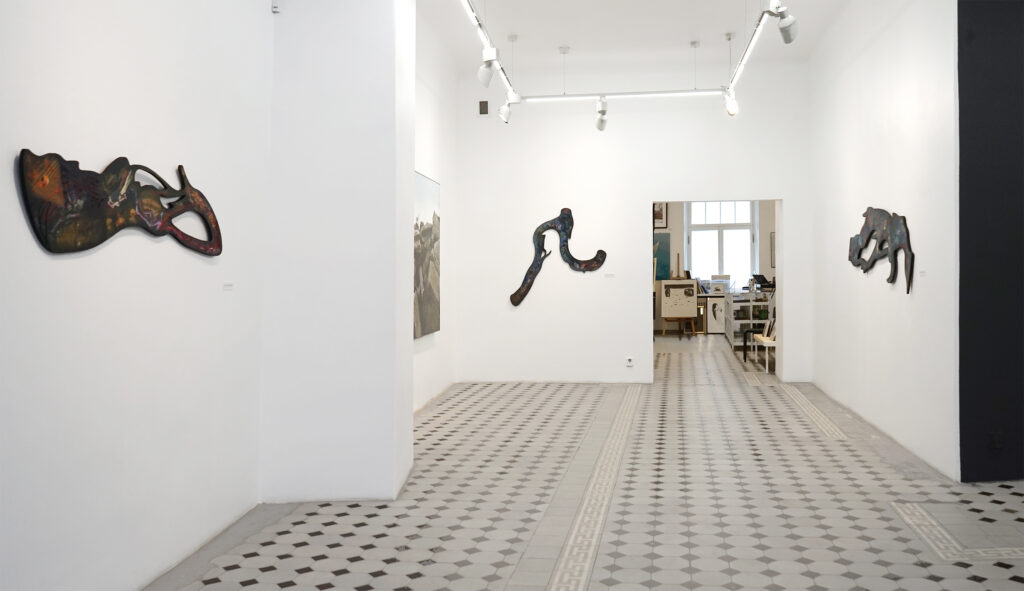
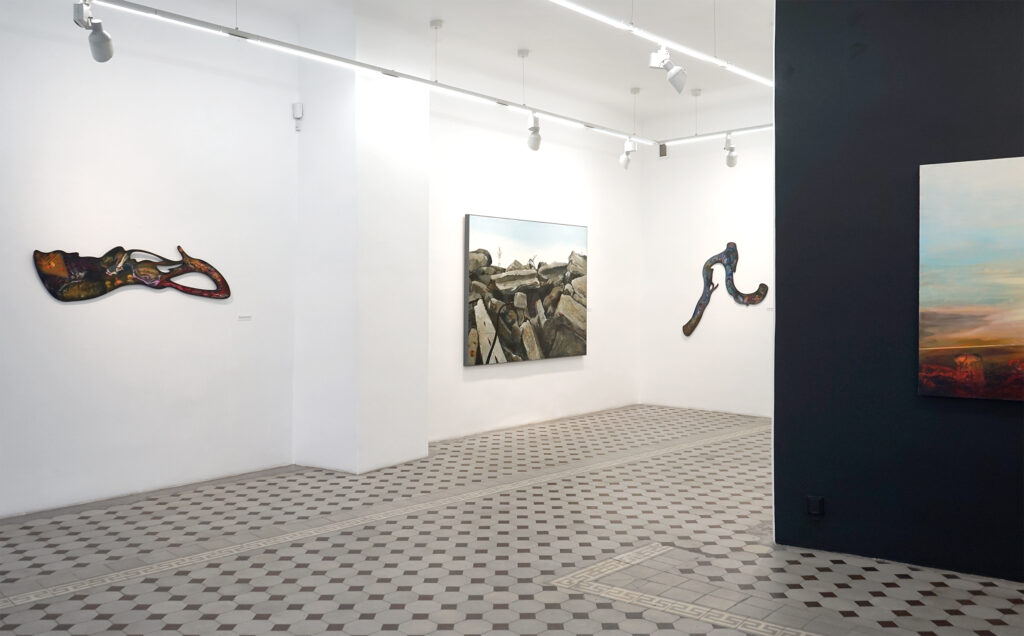
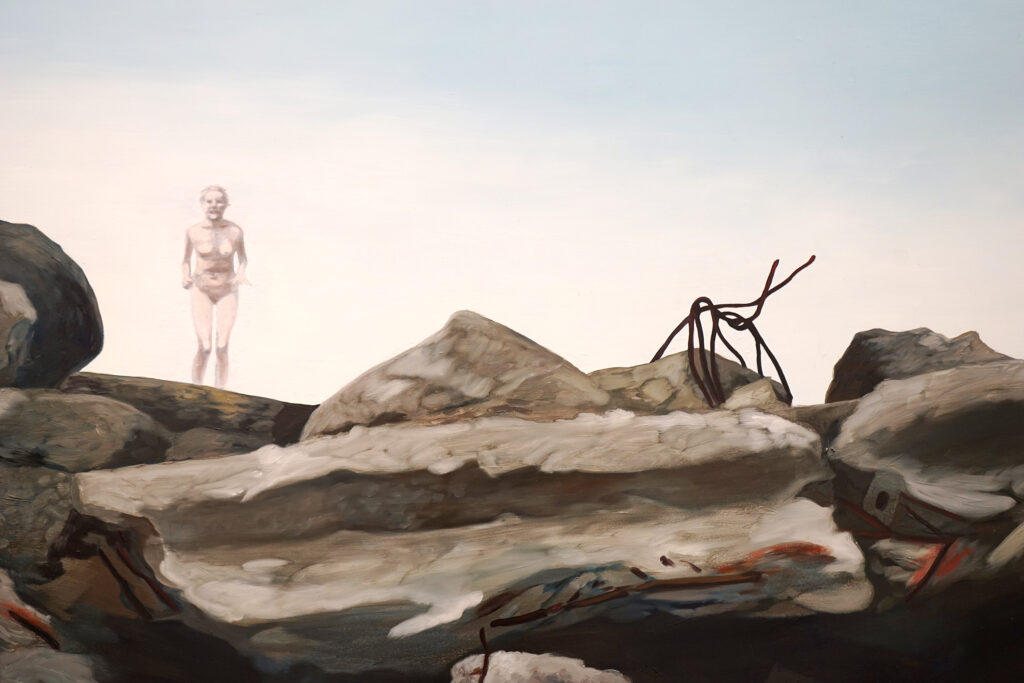
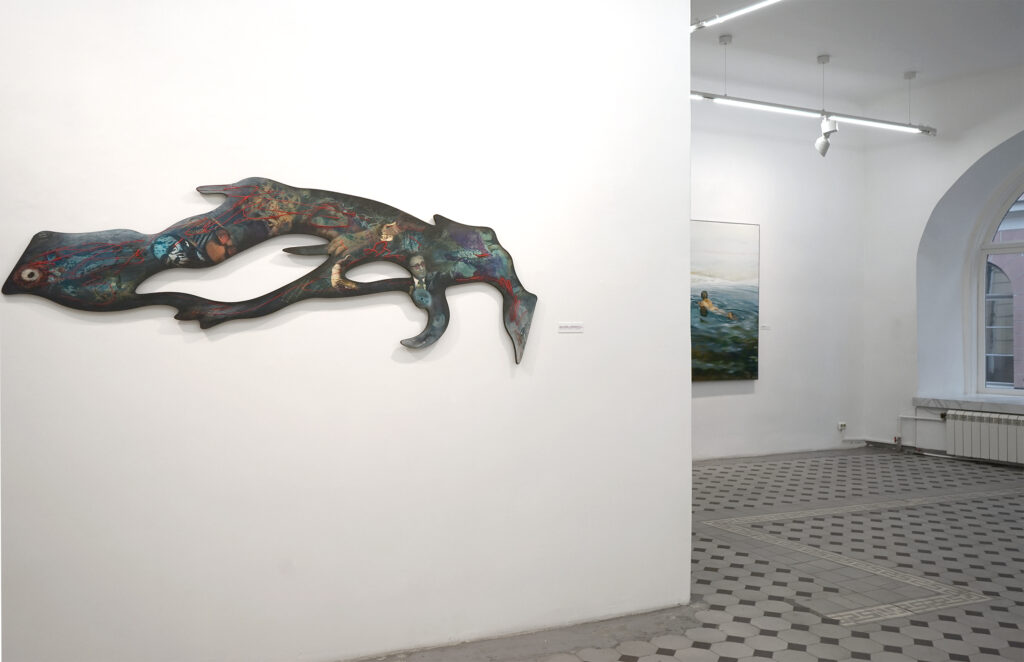
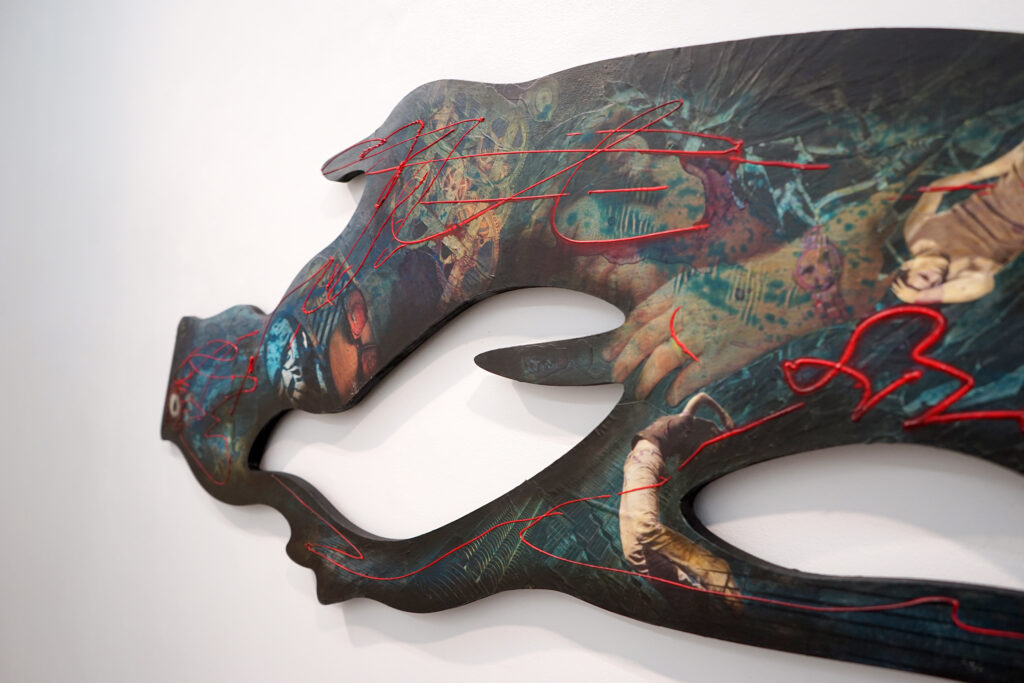
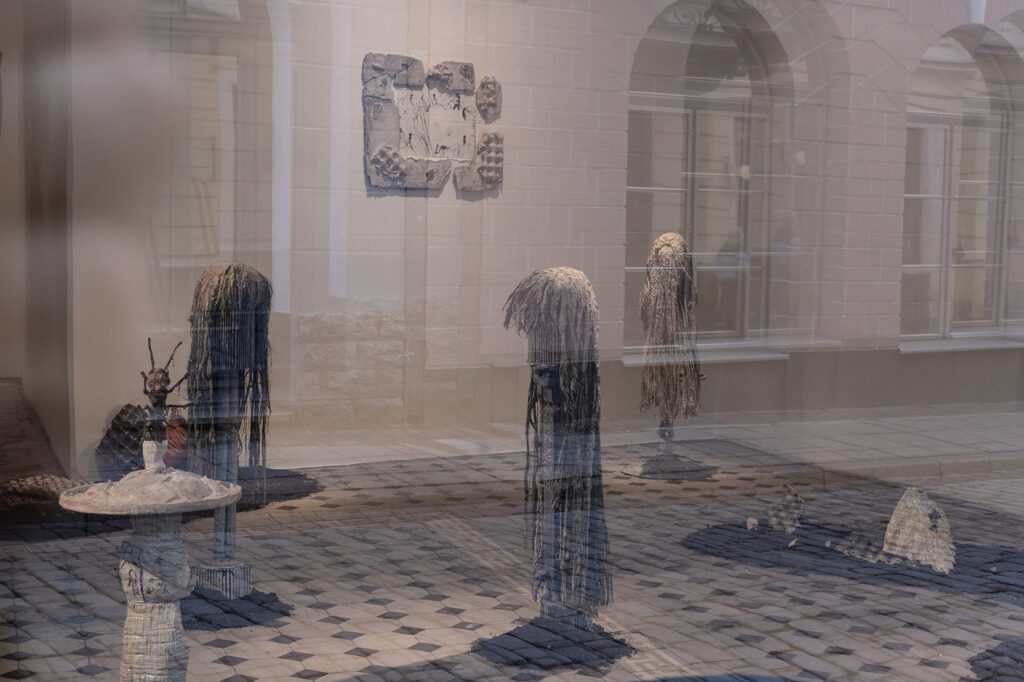
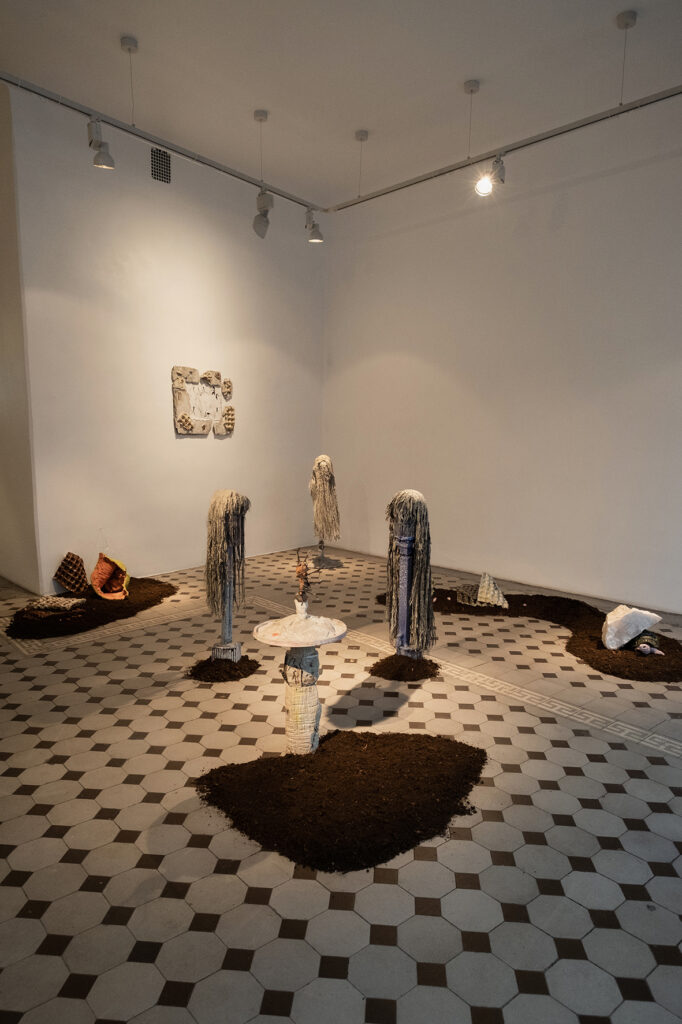
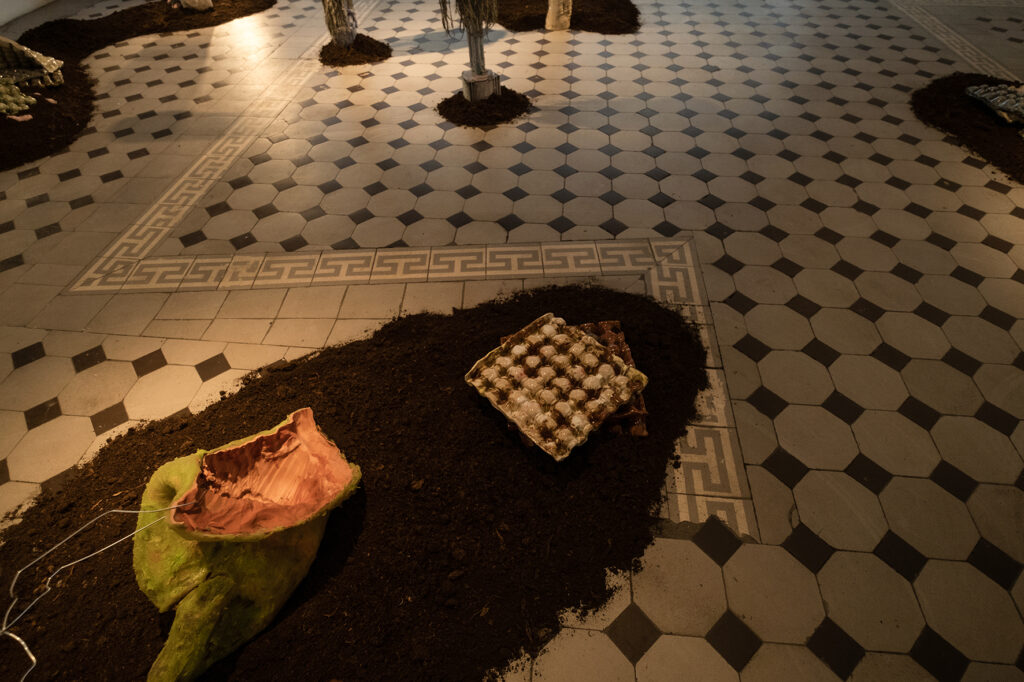
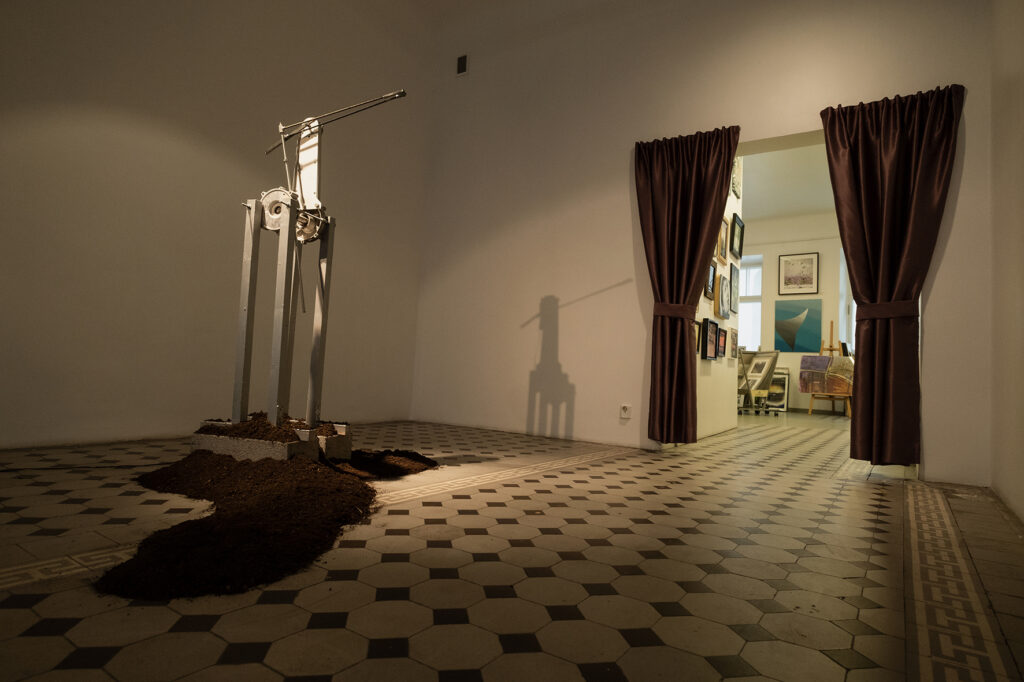
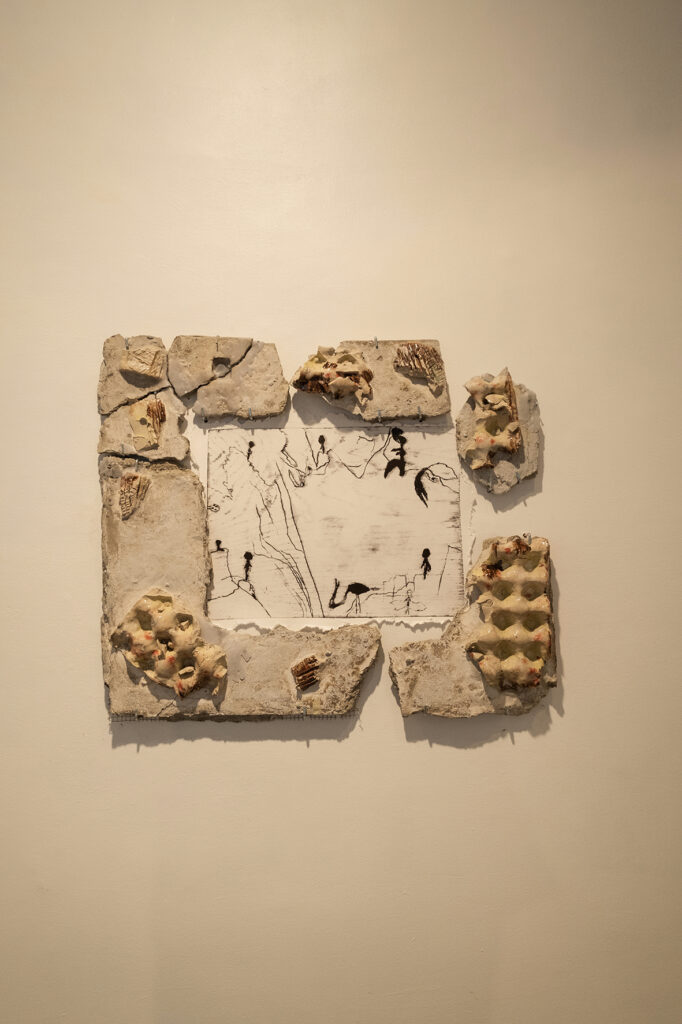
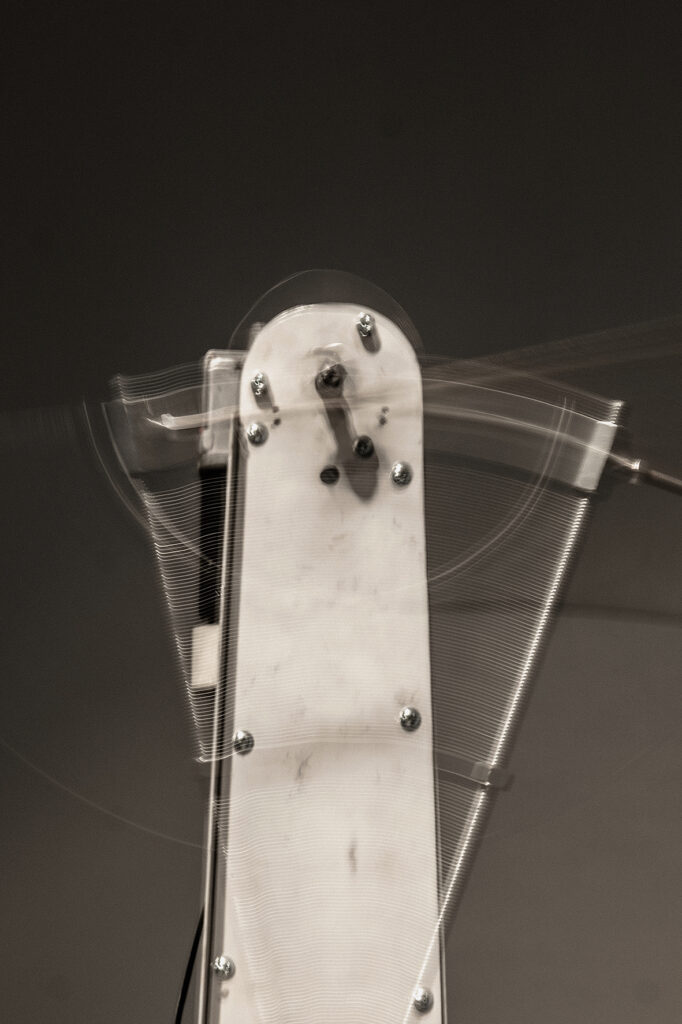
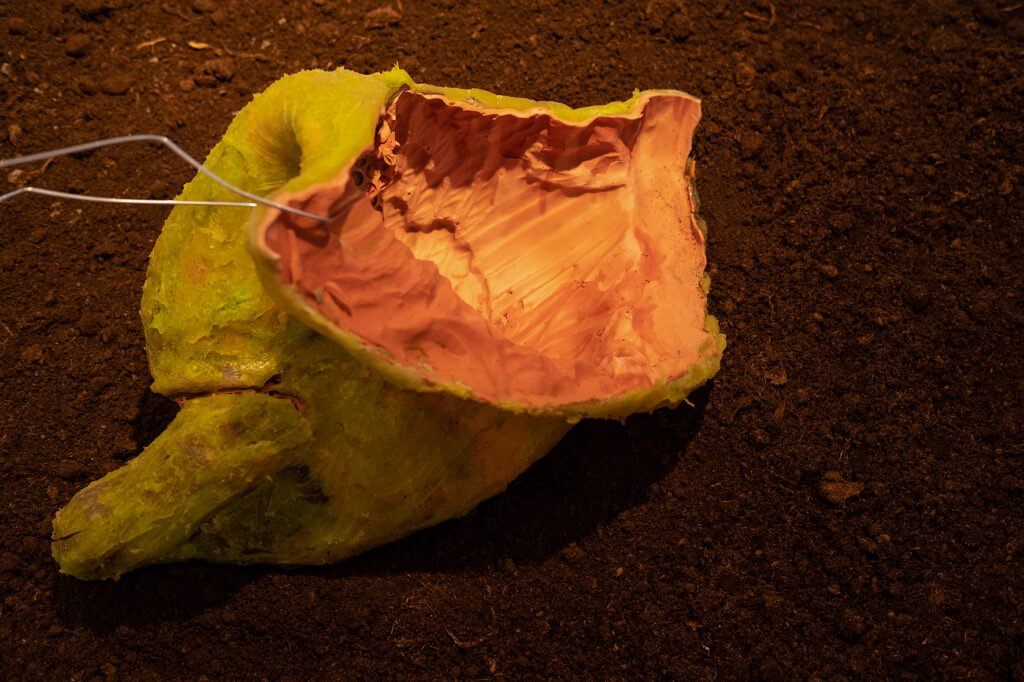
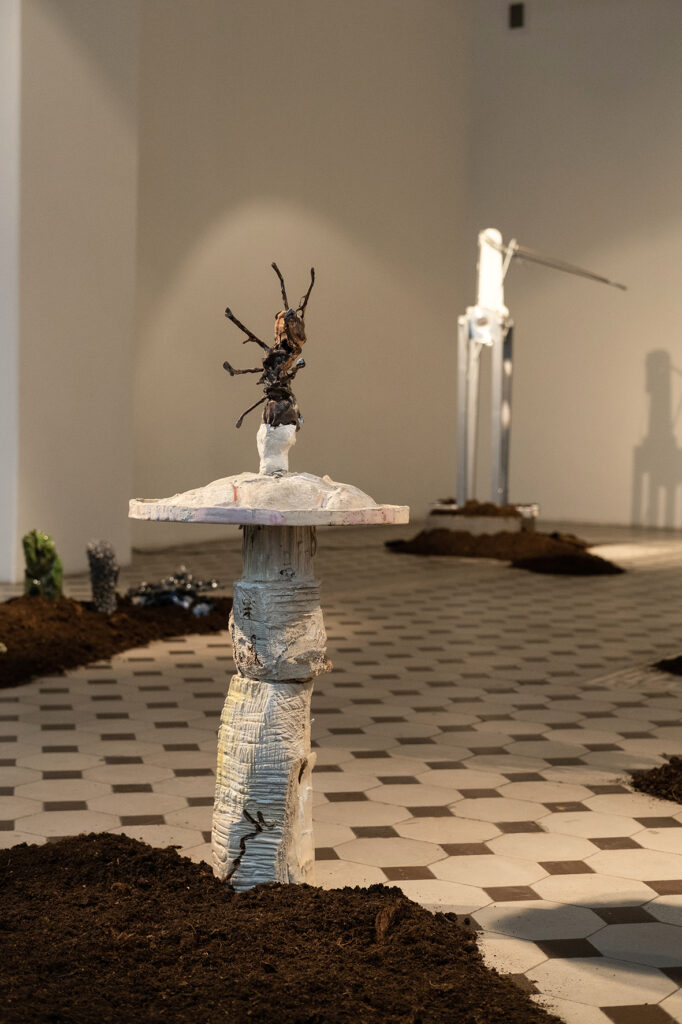
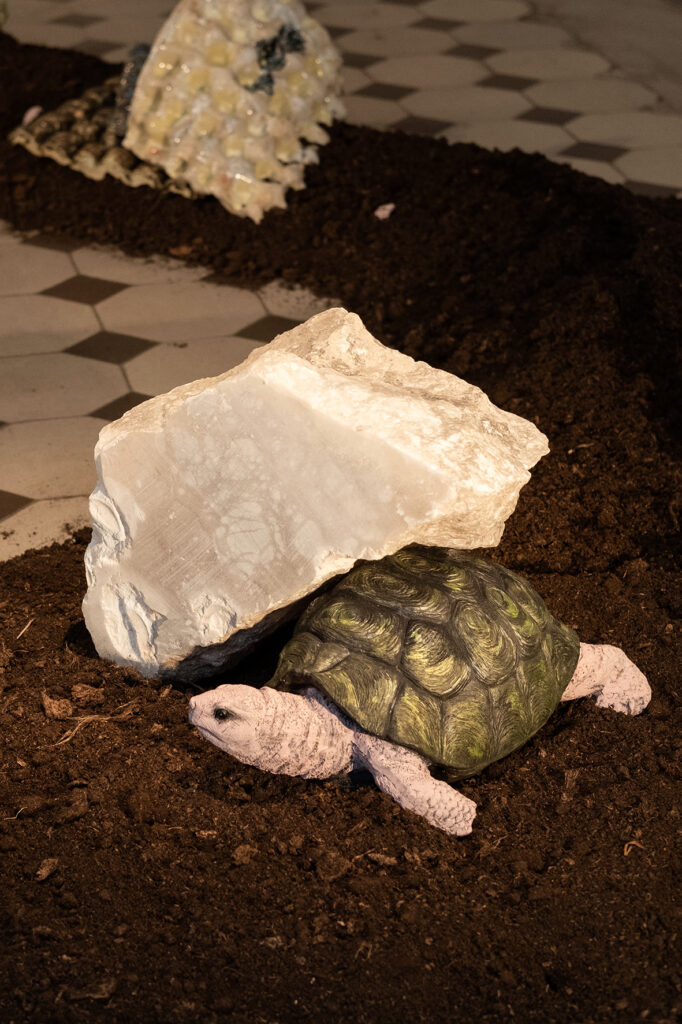
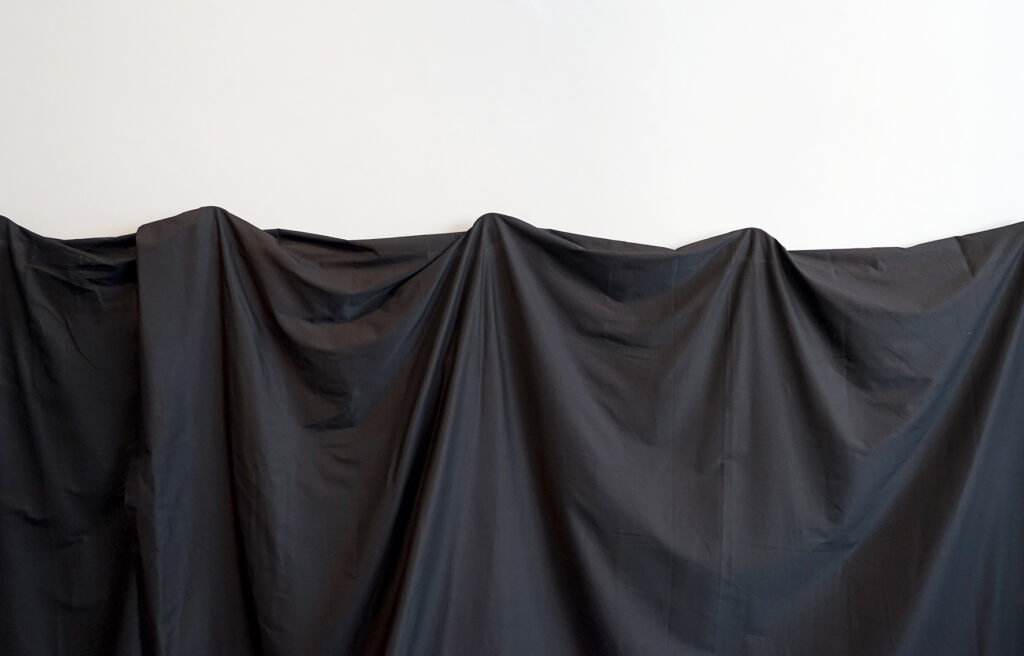
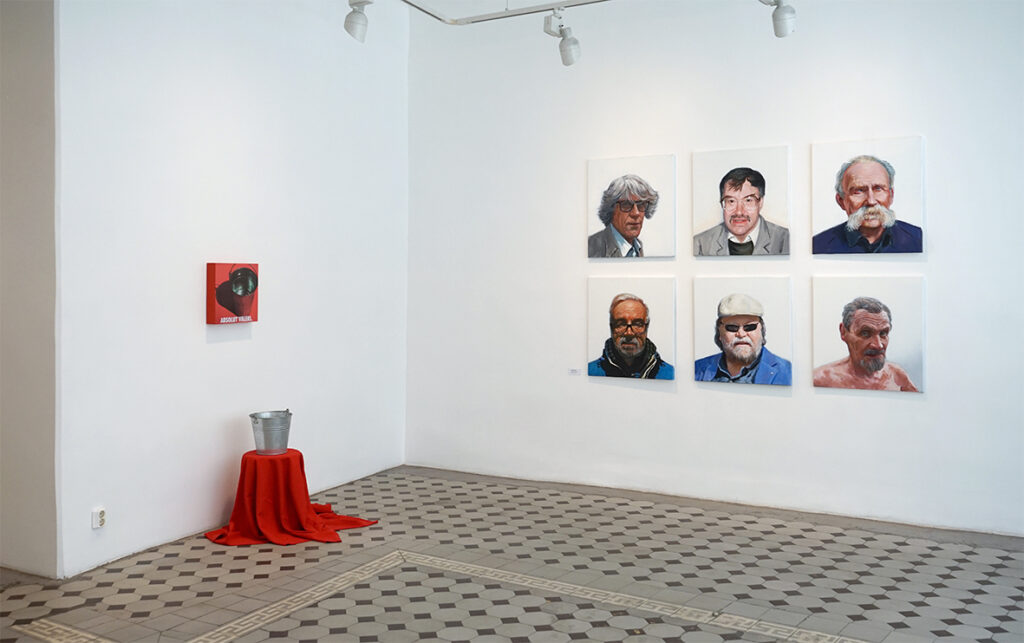
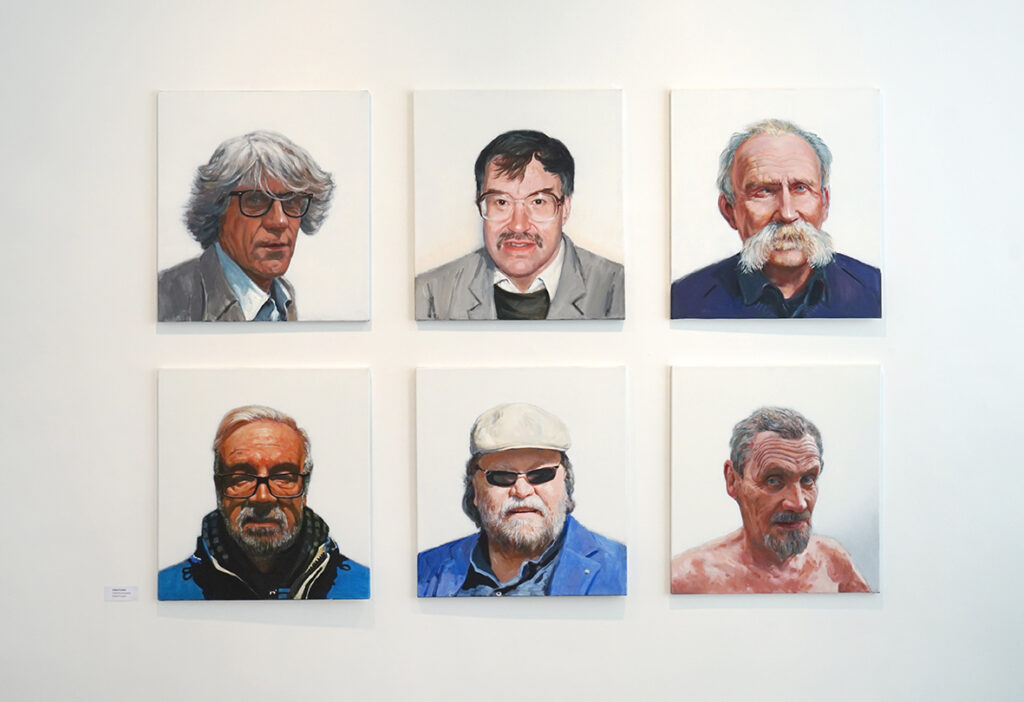
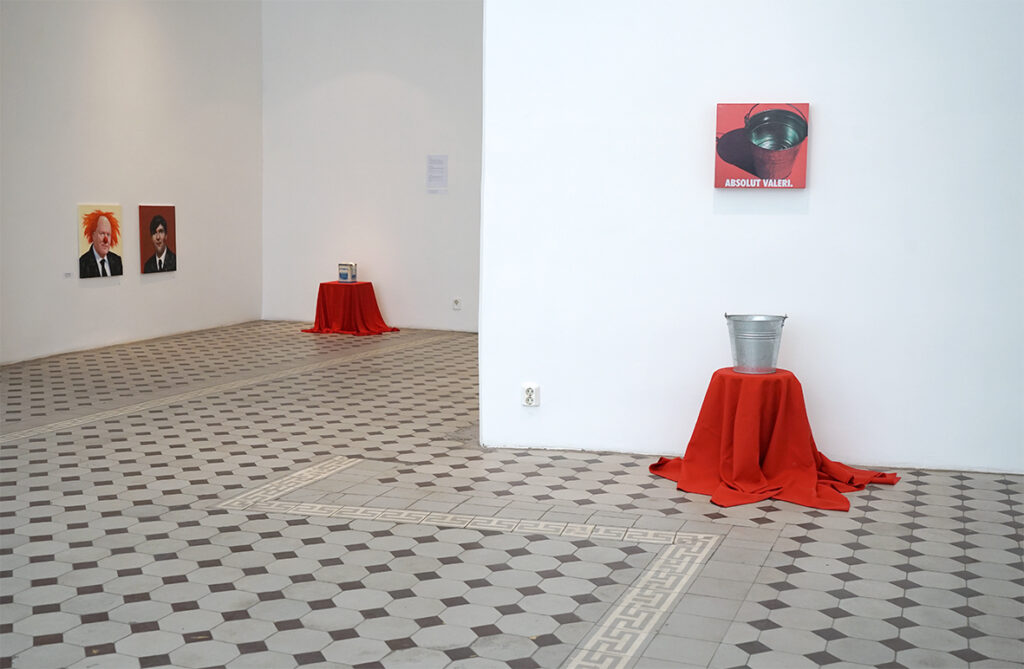
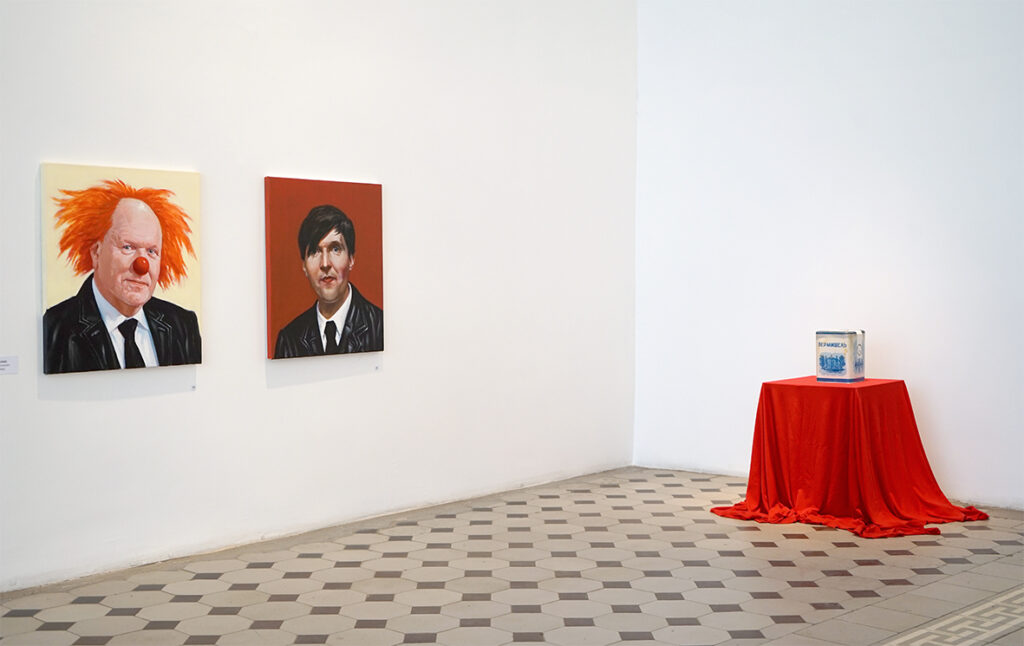
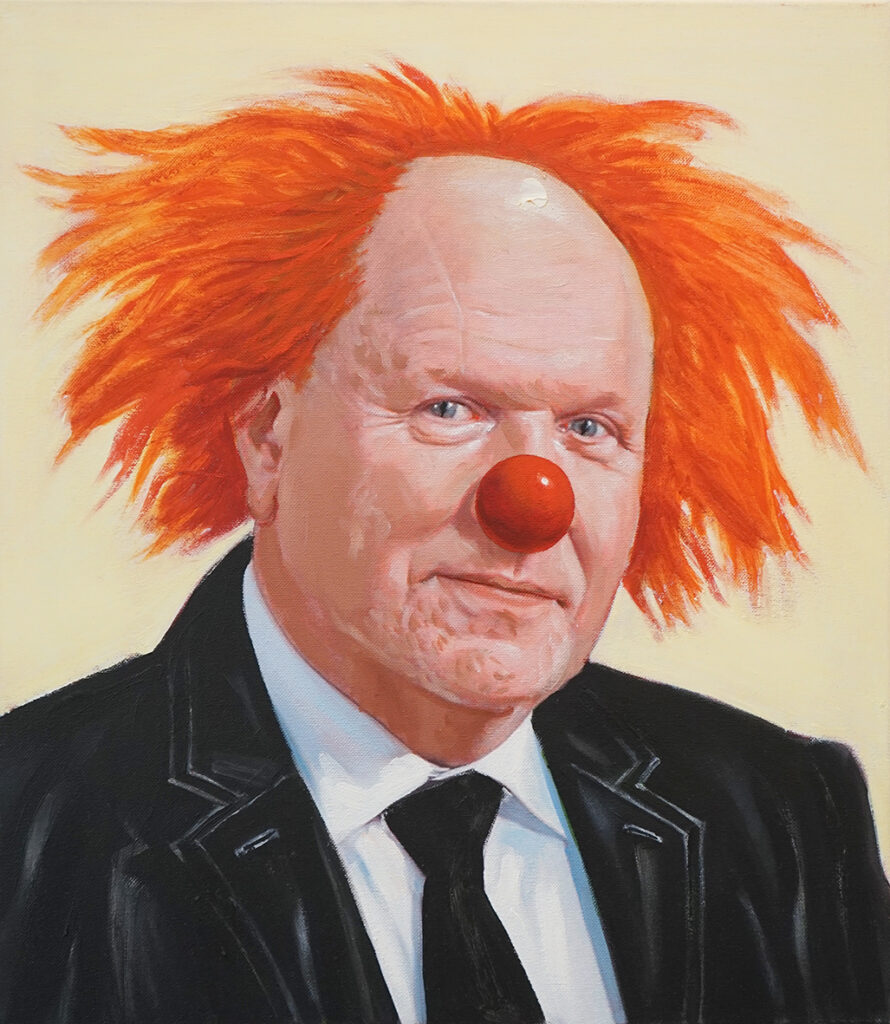
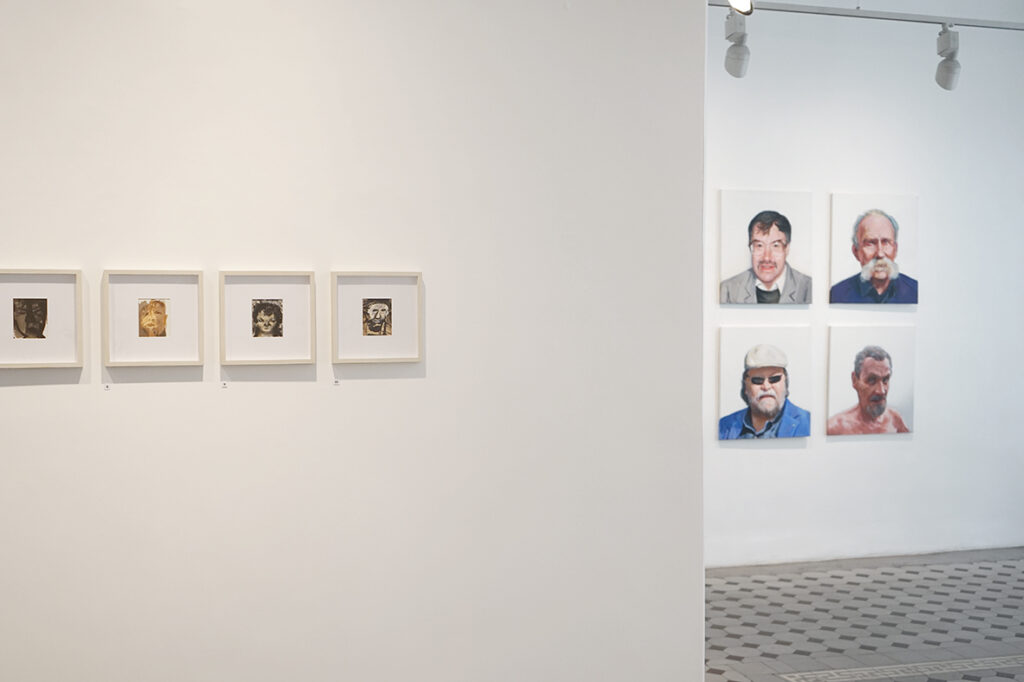
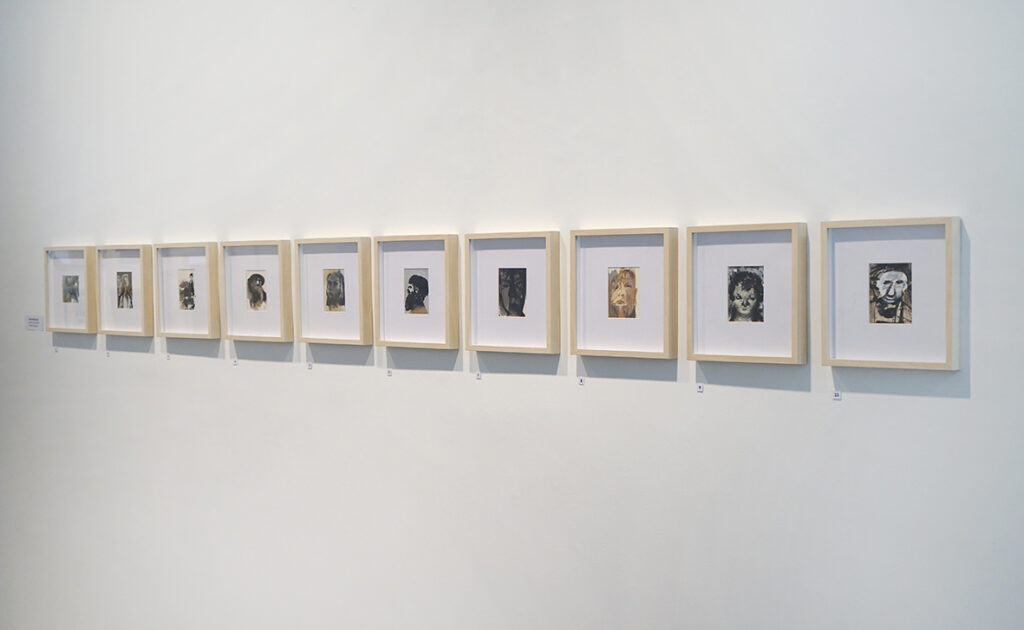
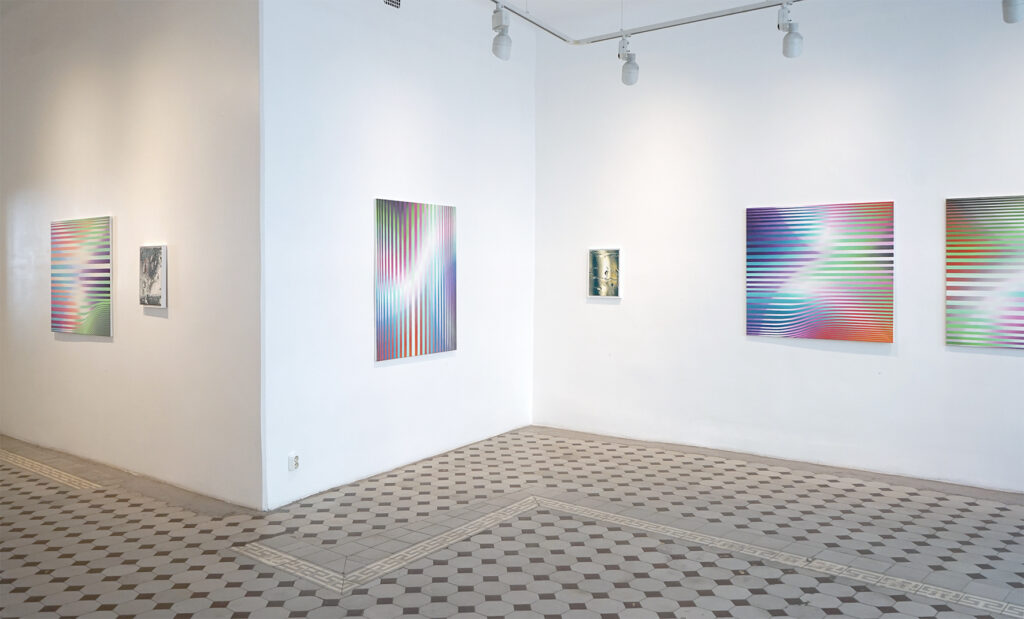
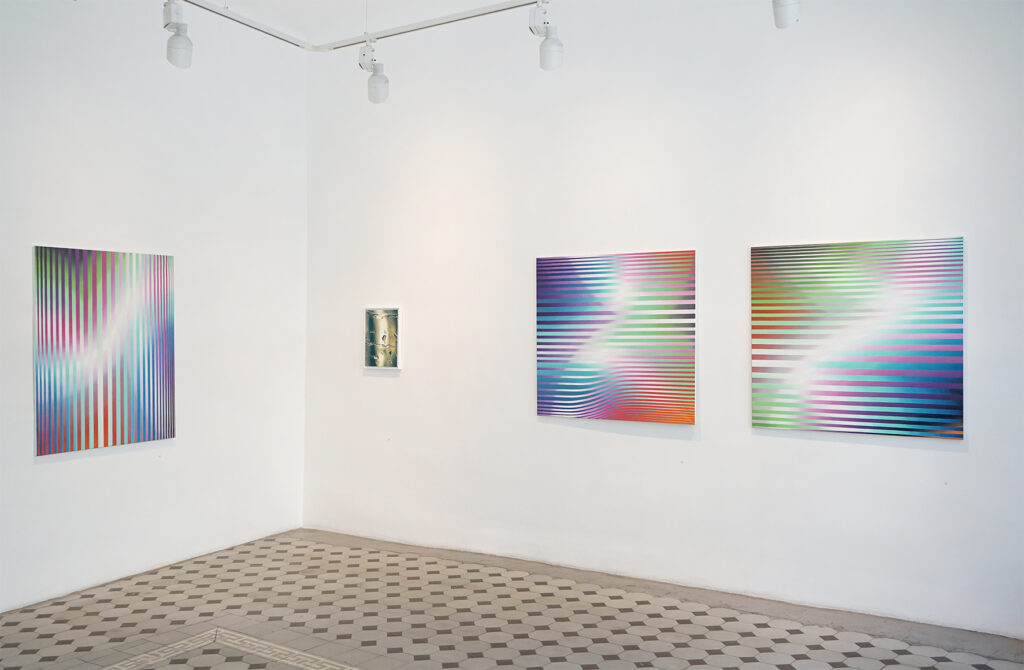
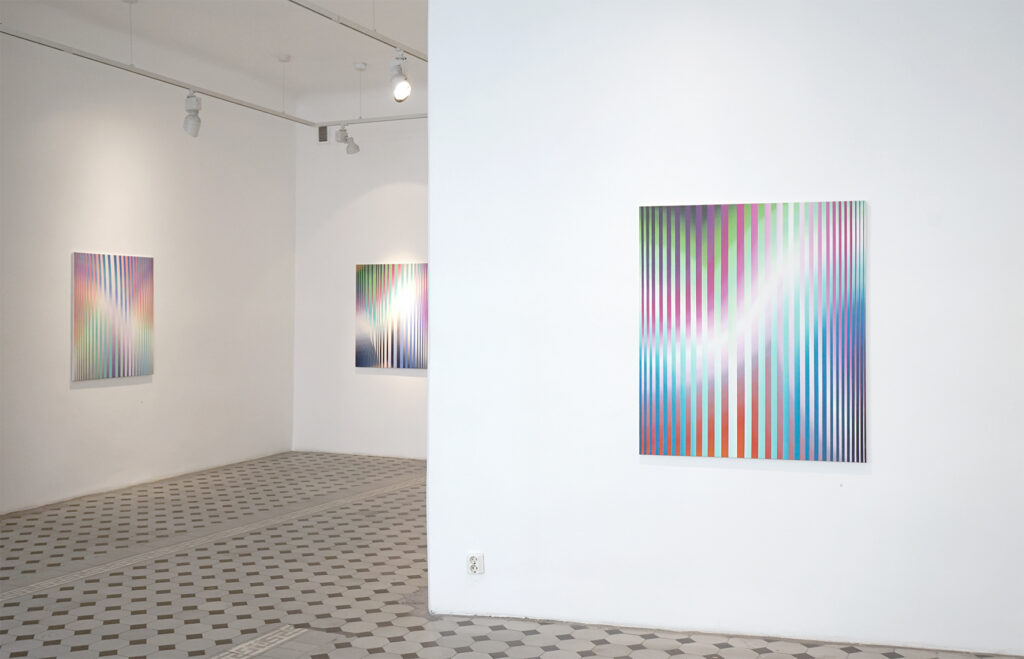
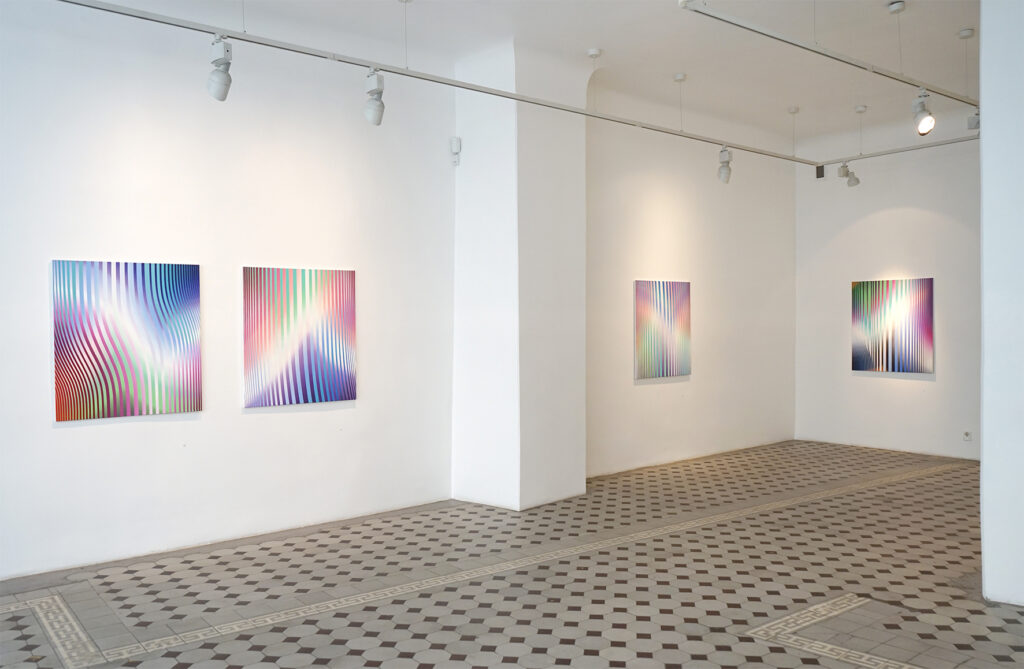
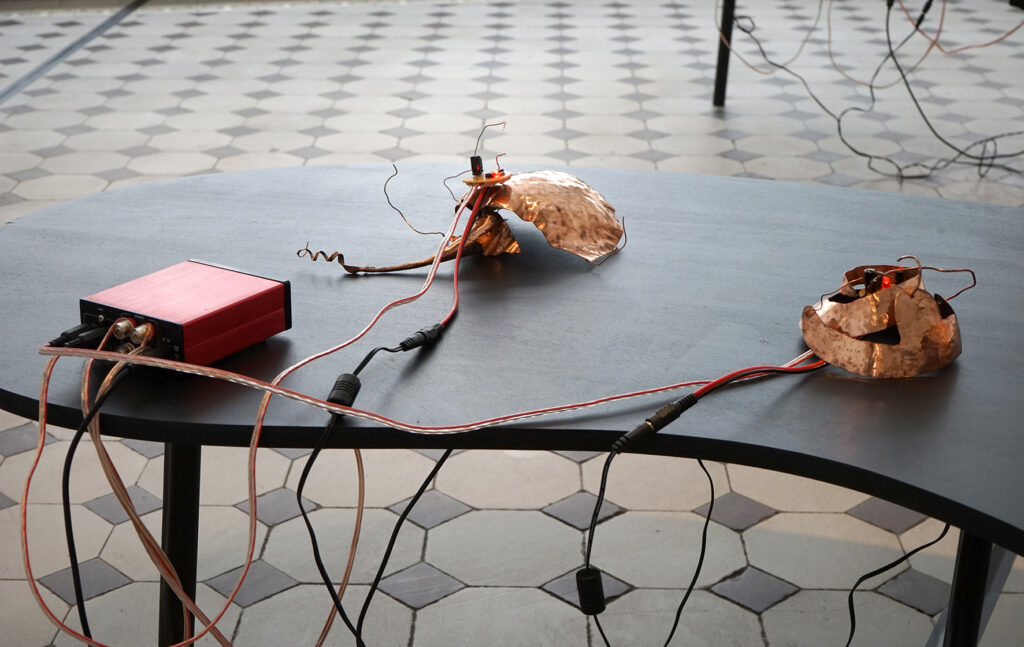
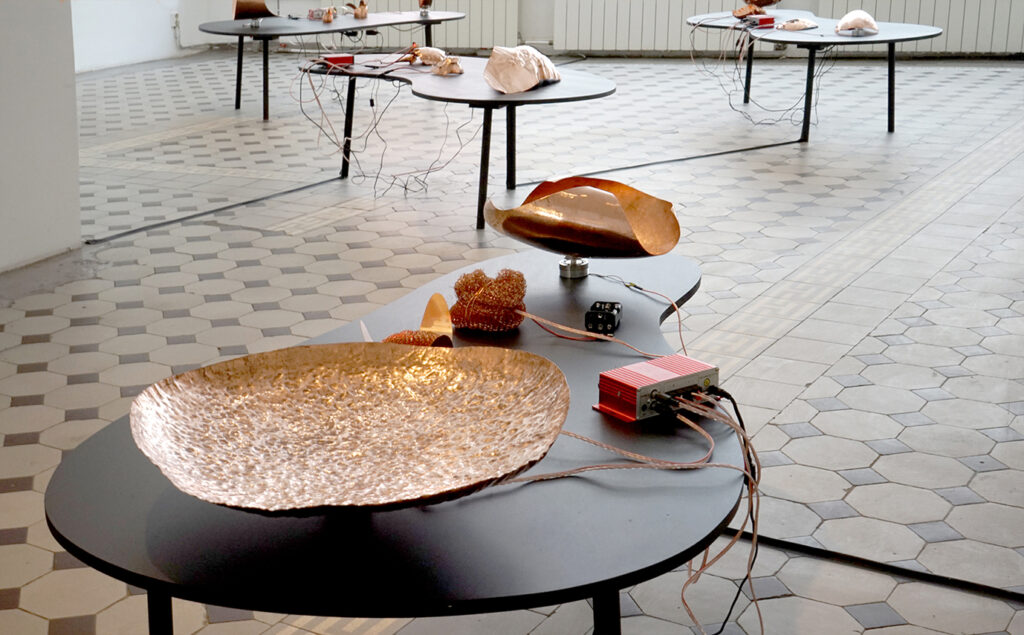
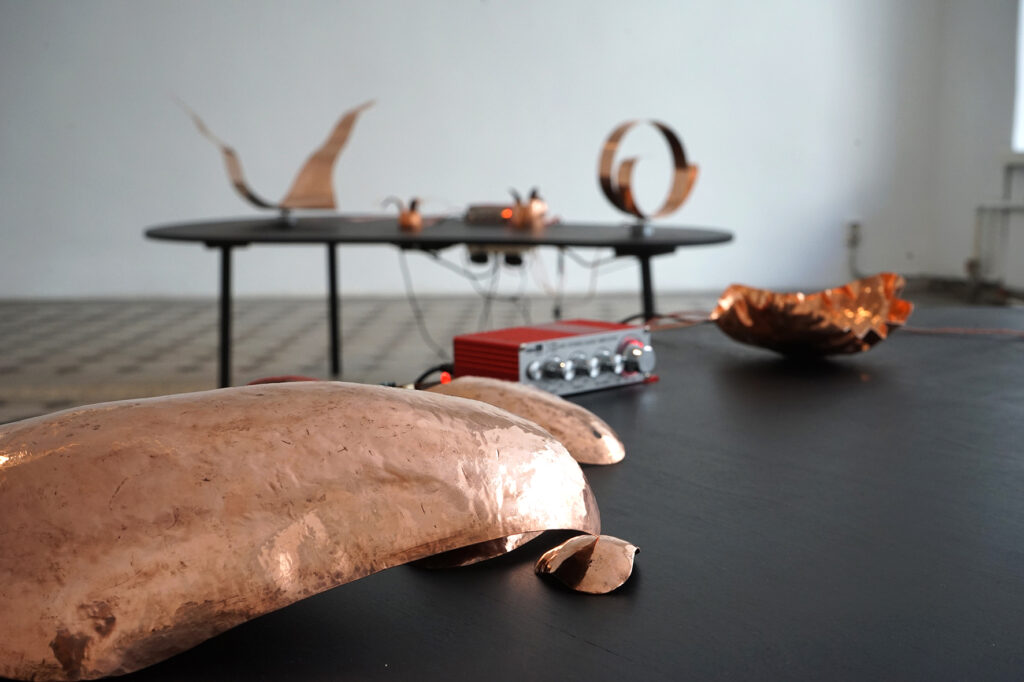
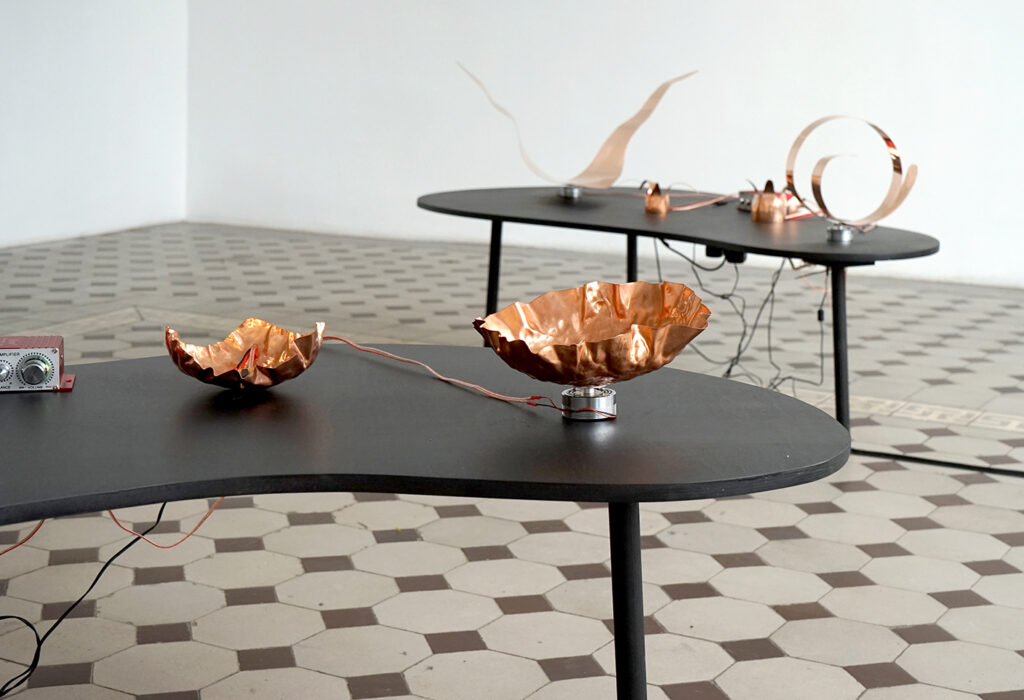
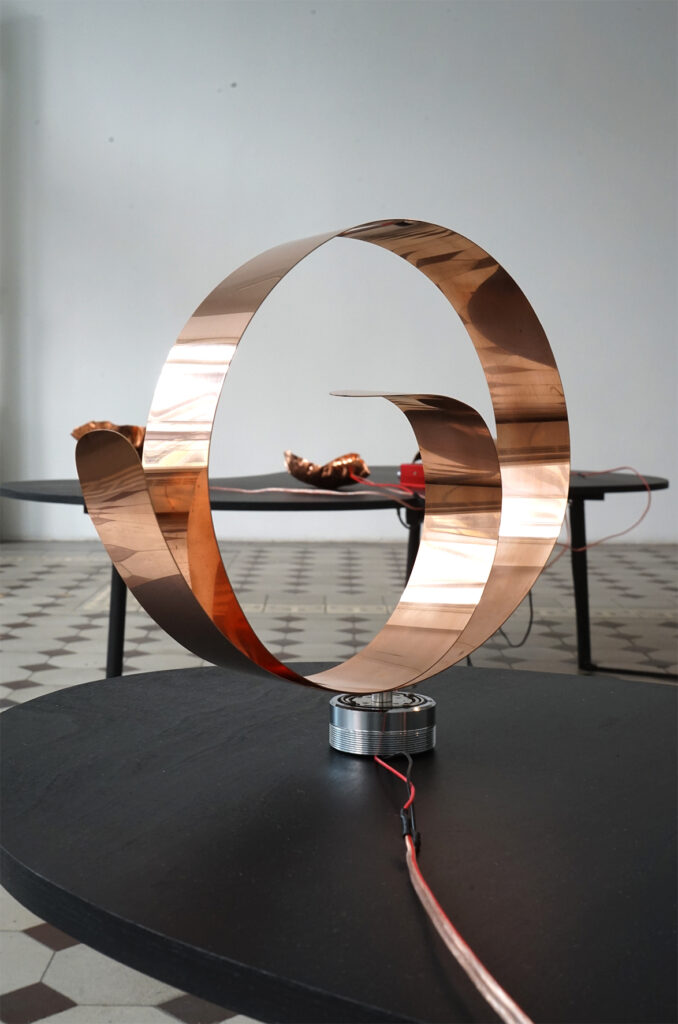
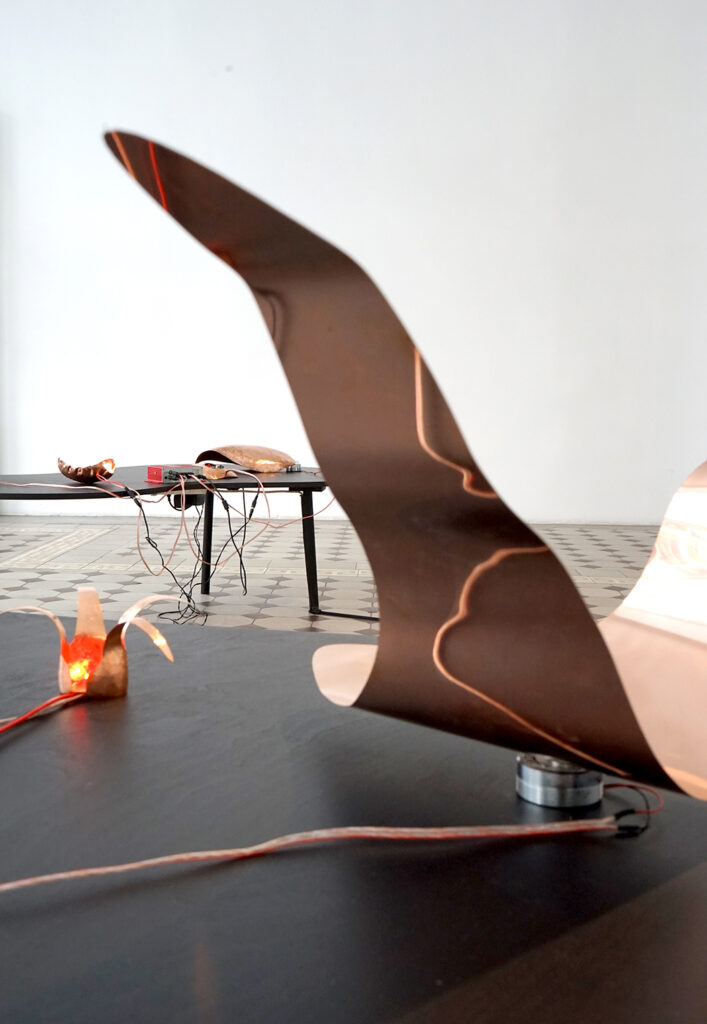
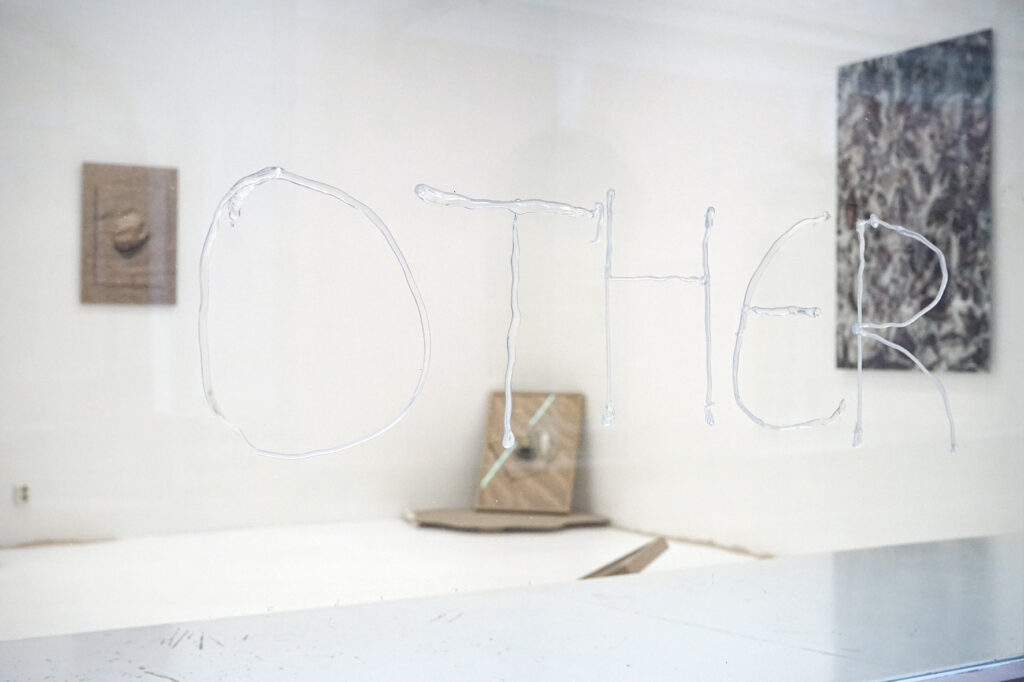
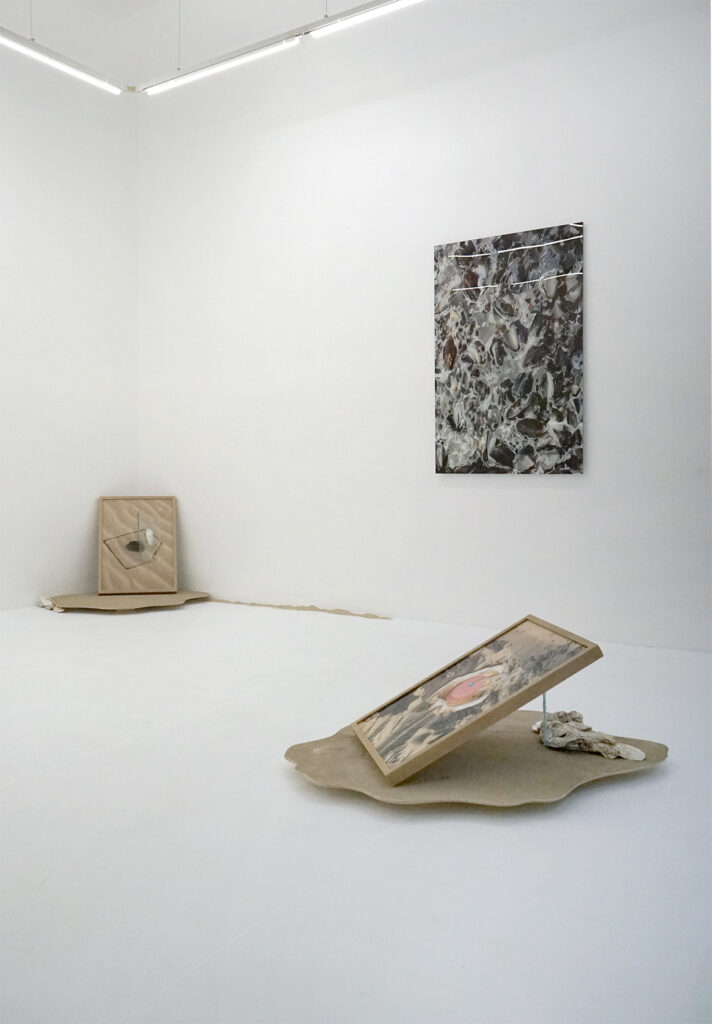
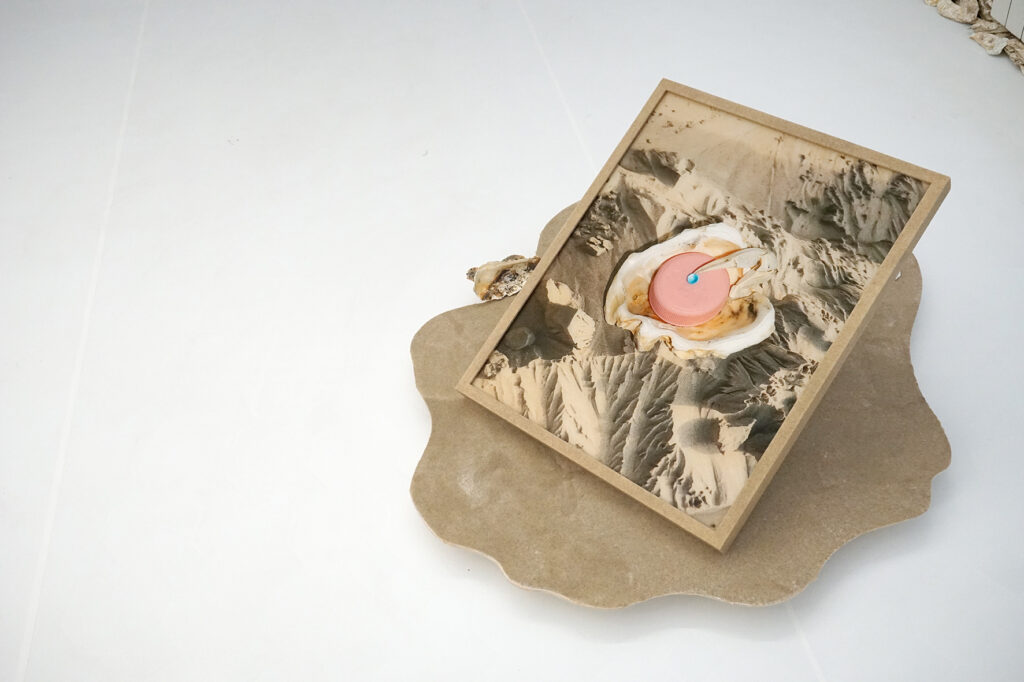
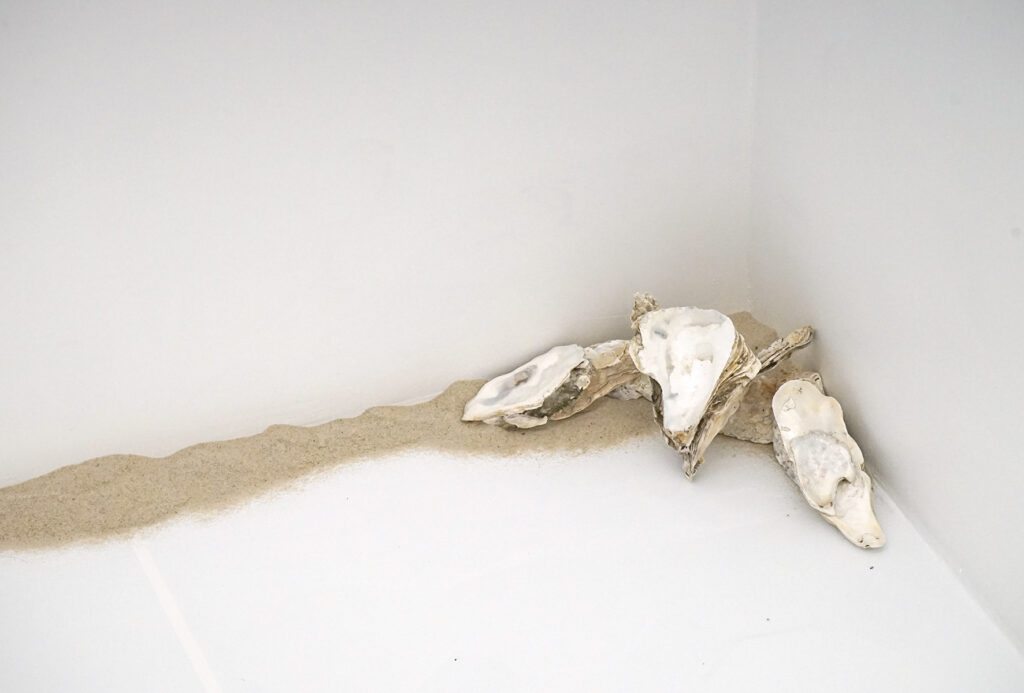
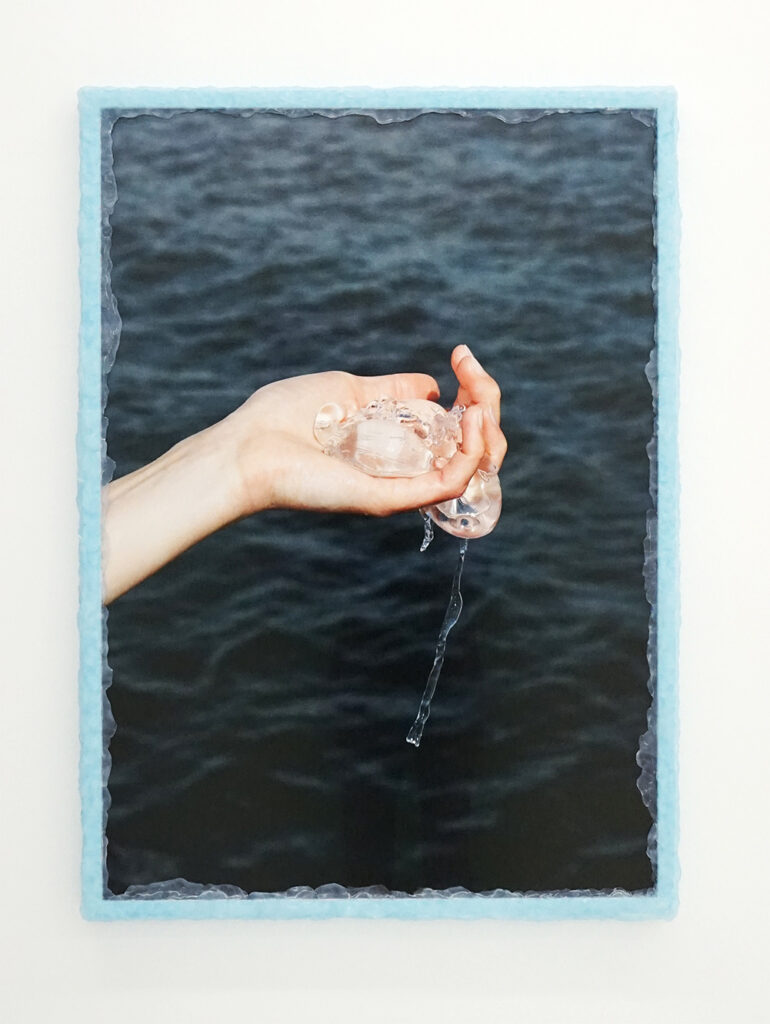
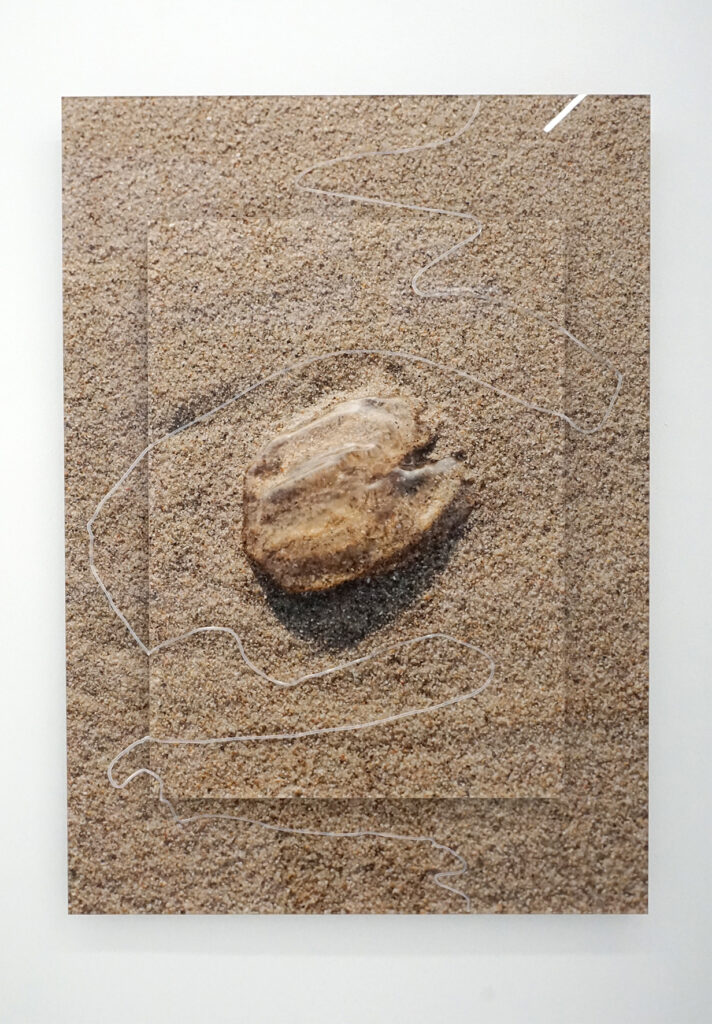
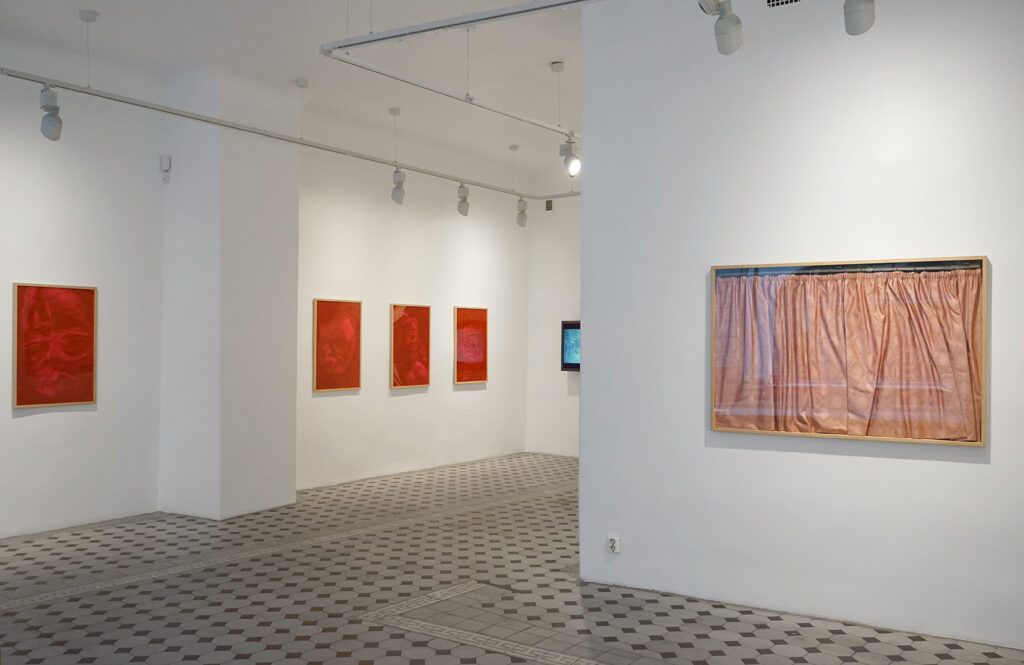
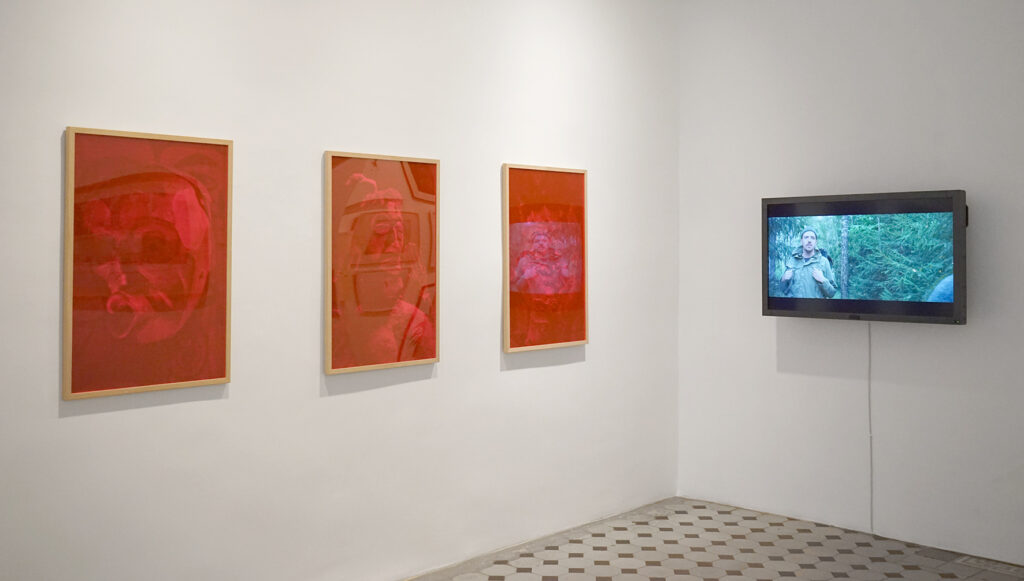
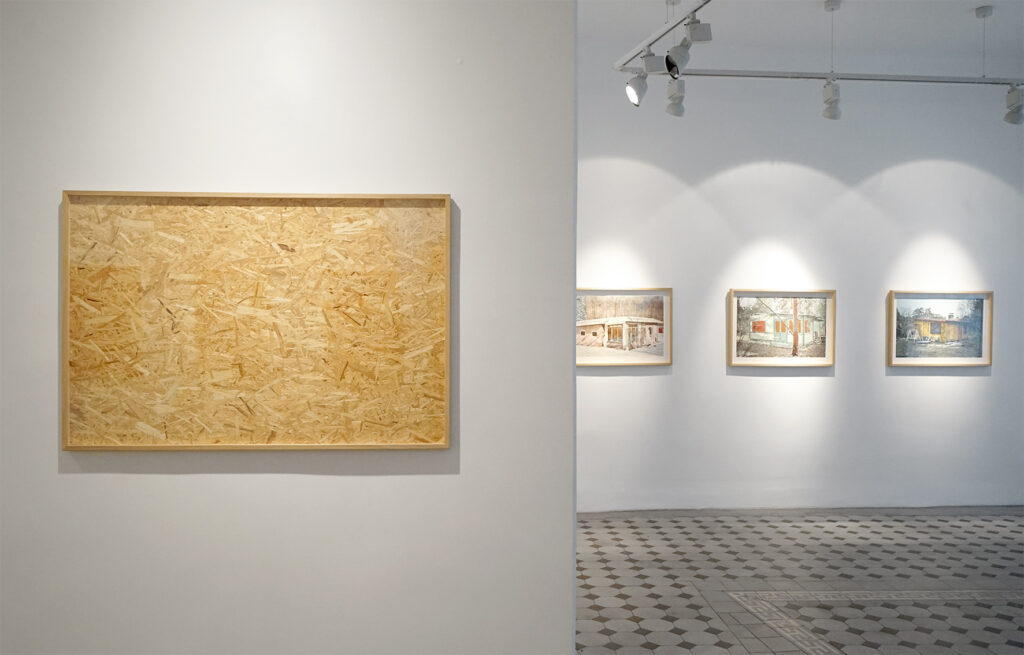
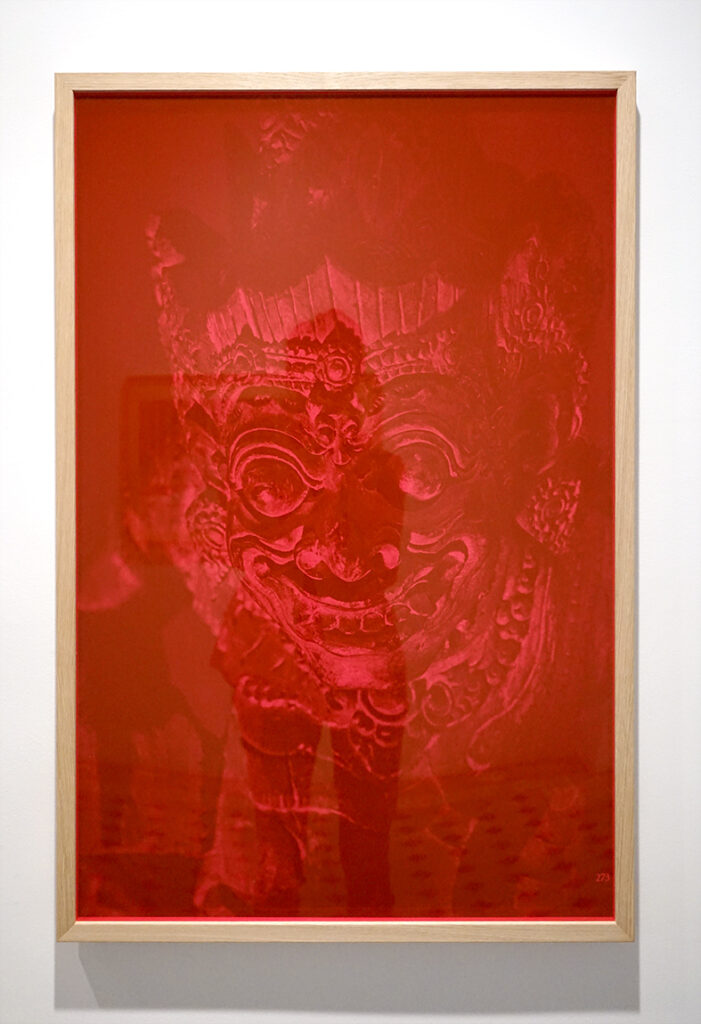
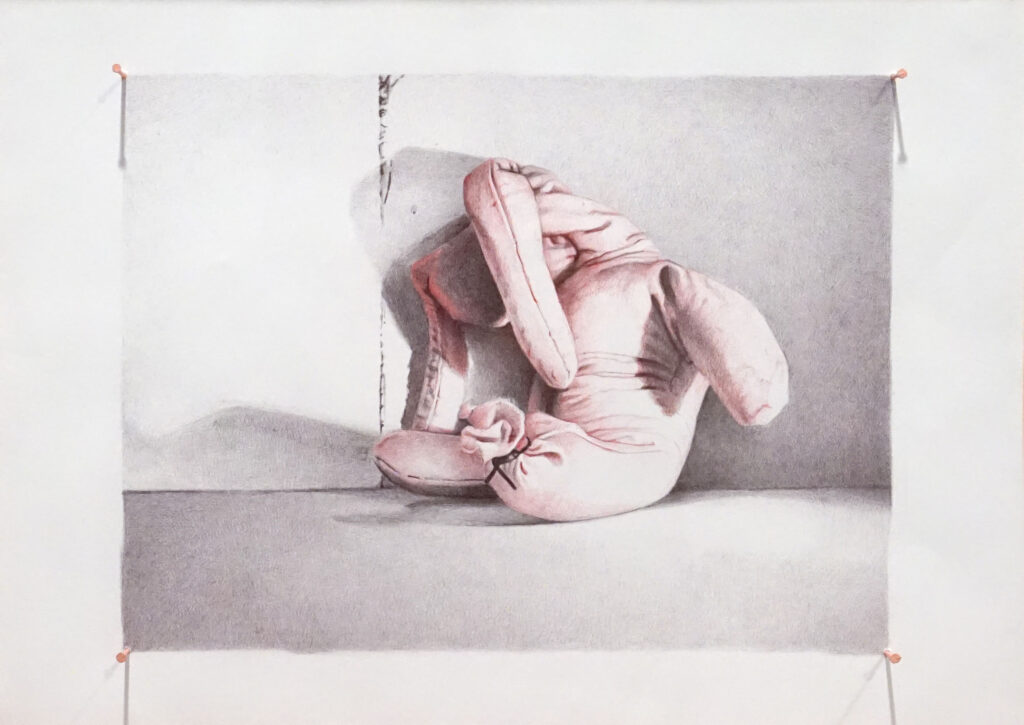
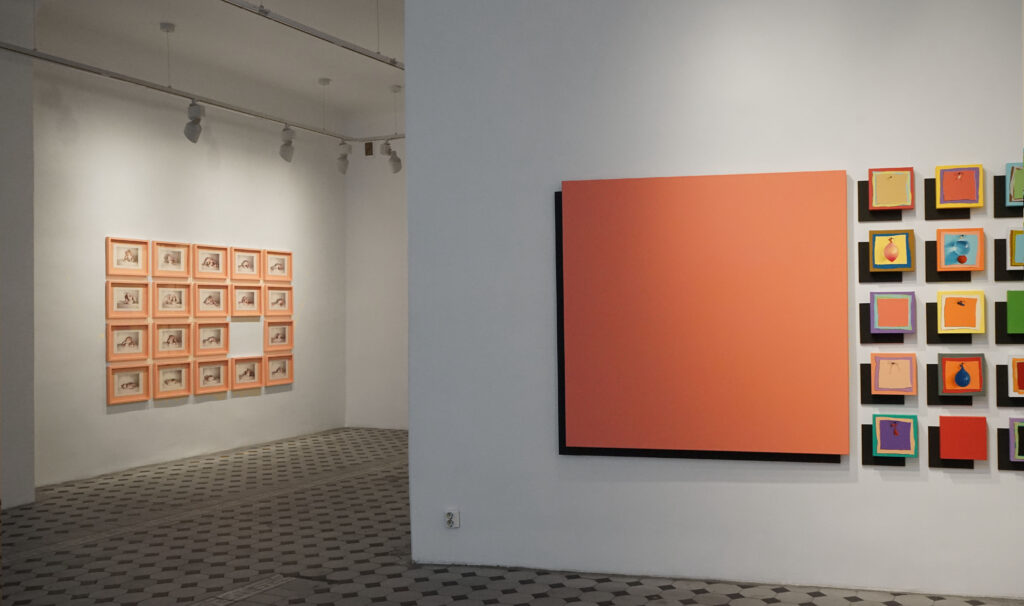
The co-exhibition Present yet-to-be by Lisann Lillever, Johanna Ruukholm and Denisa Štefanigova will be open in Hobusepea gallery from Friday, December 17th. Curator of the exhibition is Lilian Hiob.
When I was a young person I went to the university and I learned a rational language, to think with the left side of the brain. But in the right side of the brain you have intuition and imagination. Words are not the truth; they indicate the way to go, but you need to go alone, in silence. Symbols have a language that kills the words.
– Alejandro Jodorowsky
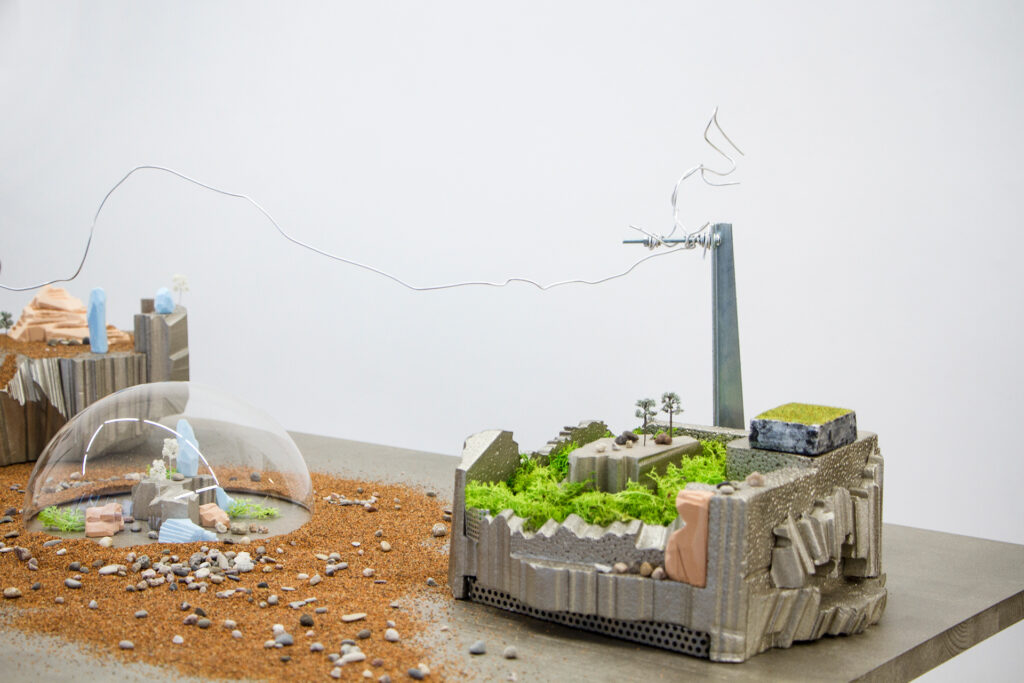
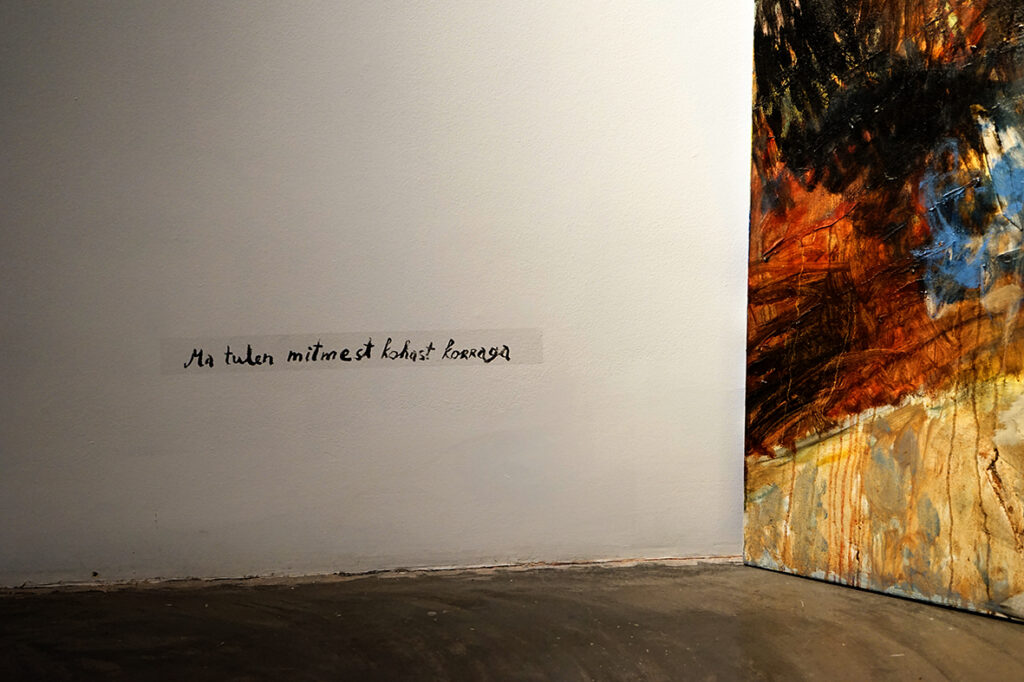
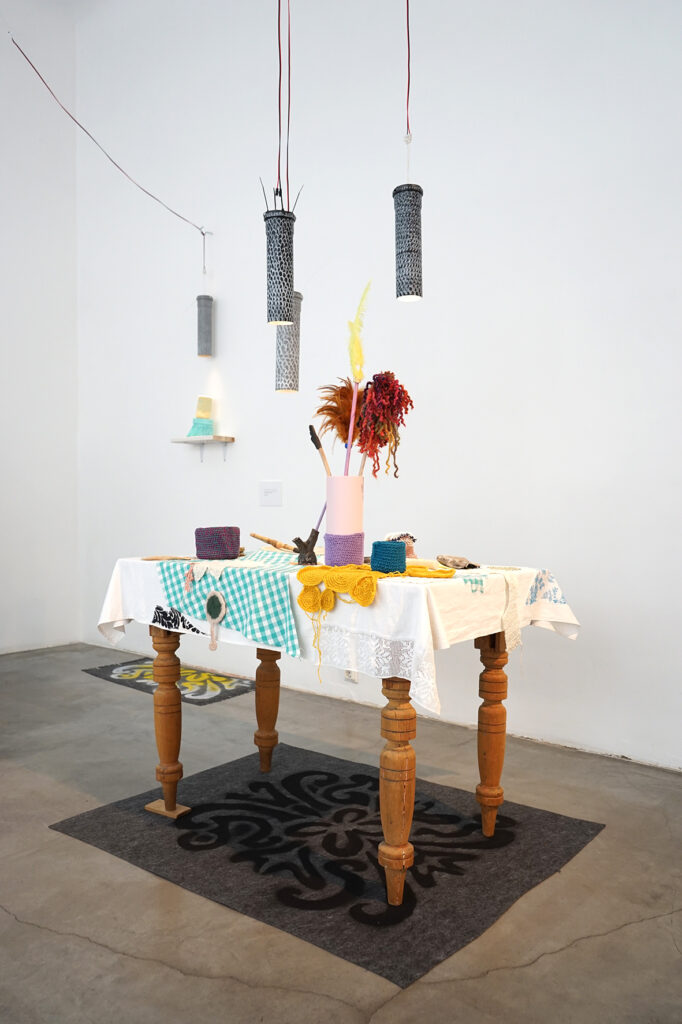
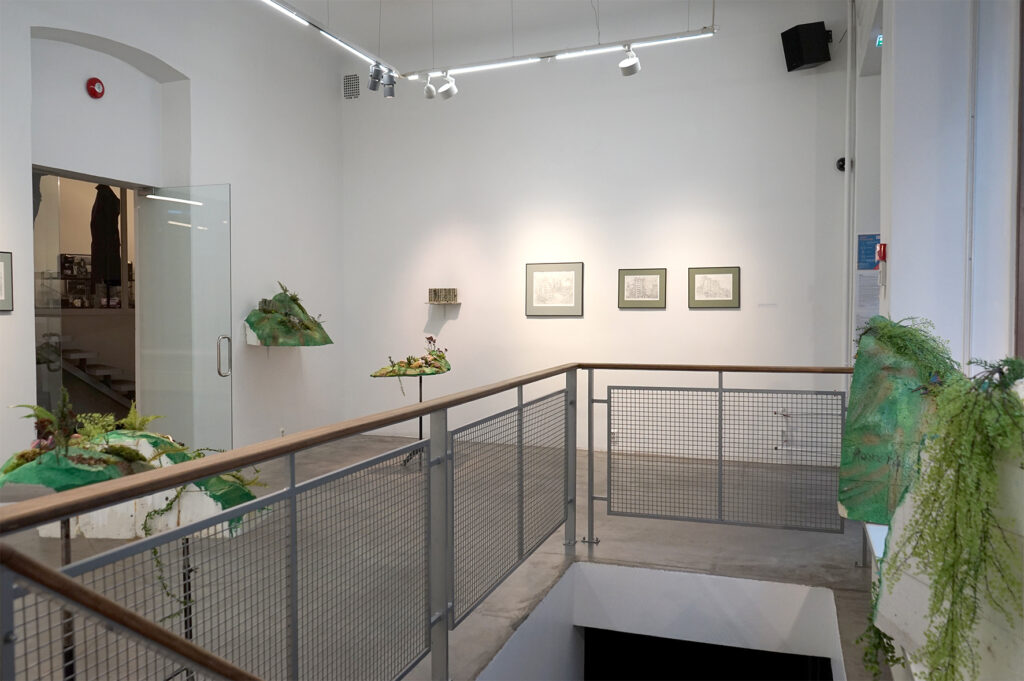
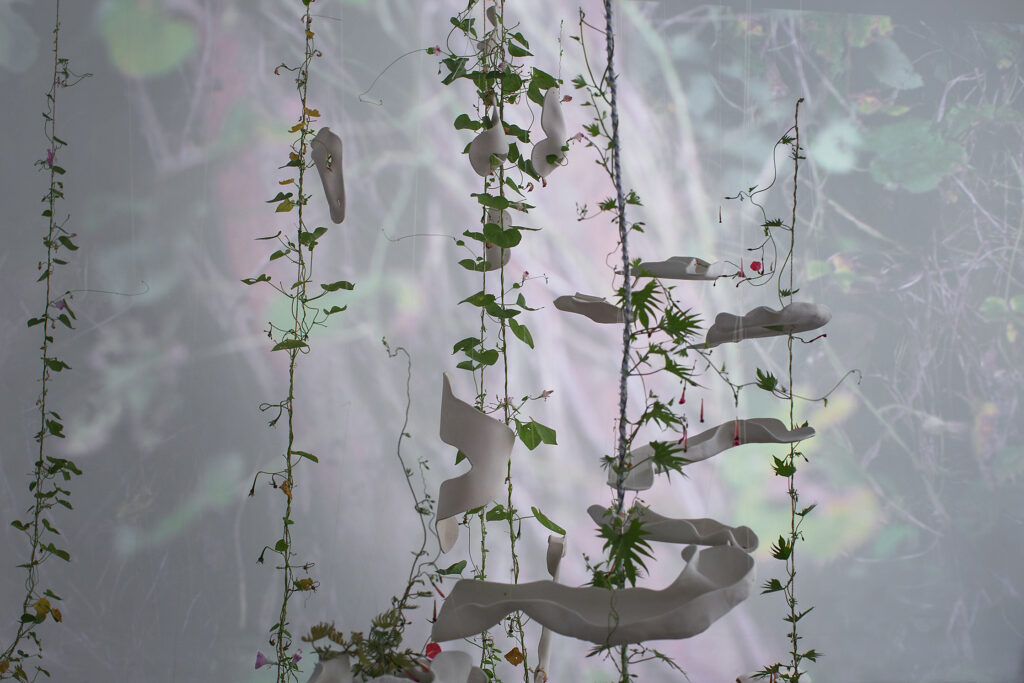
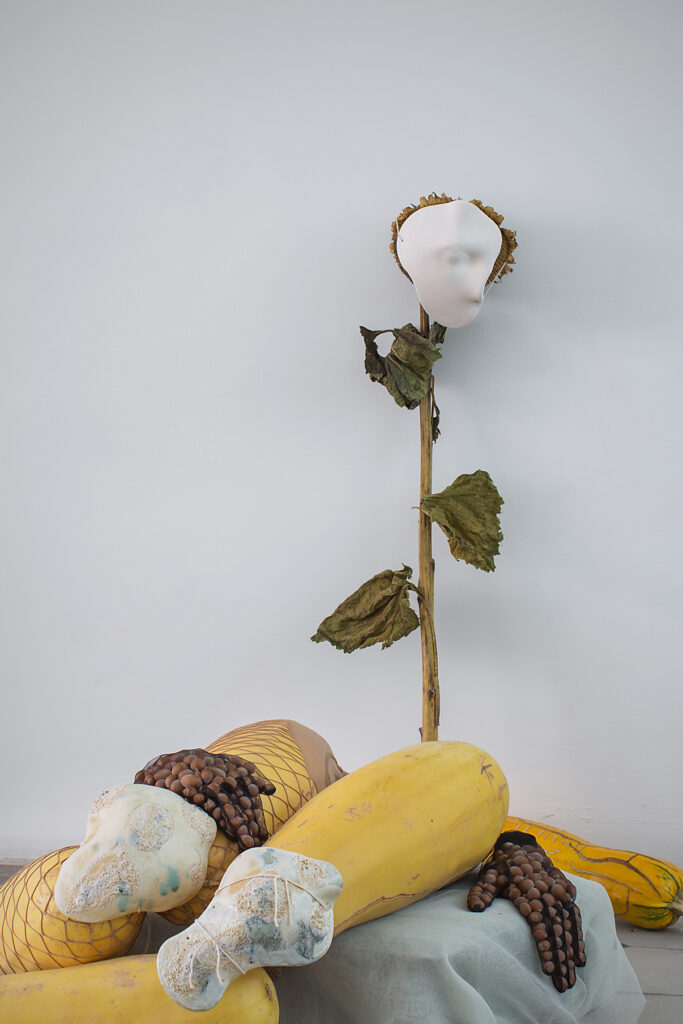
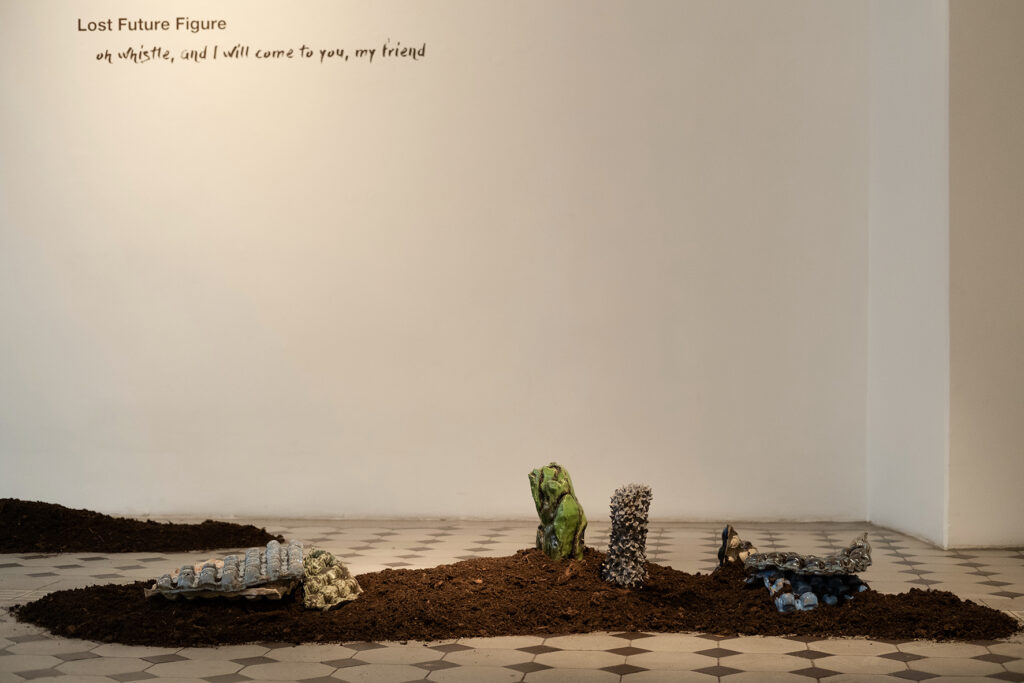
We form stories that could have happened and that can possibly happen. We play that today’s social order, existing rules and economic system are dislocated. The time axis is upside down – linearity as well as the growth and profit ideals are neglected. We recall the cultural layers from the past and allow sharpened sensations as well as stimulated imagination. We enjoy the affective charge that raises from the experience of existing as a human being while keeping in mind that human knowledge about the world is limited.
Is it possible to make a way and build ideas for transforming the ethical and political world if we’d take imagination, play and ability to value the unexpected excursions arising from errors next to our five senses and rational approach to living? How to reach ideas and acts that are not yet existing while the knowledge about the better state of things seems to be right here – in literature, art, philosophy.
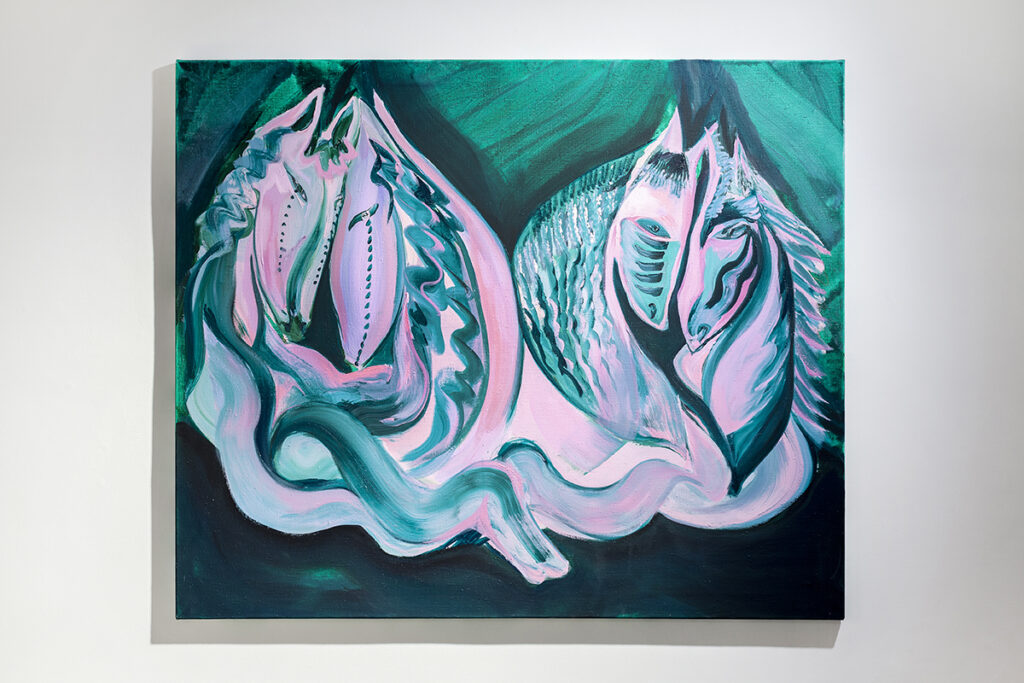
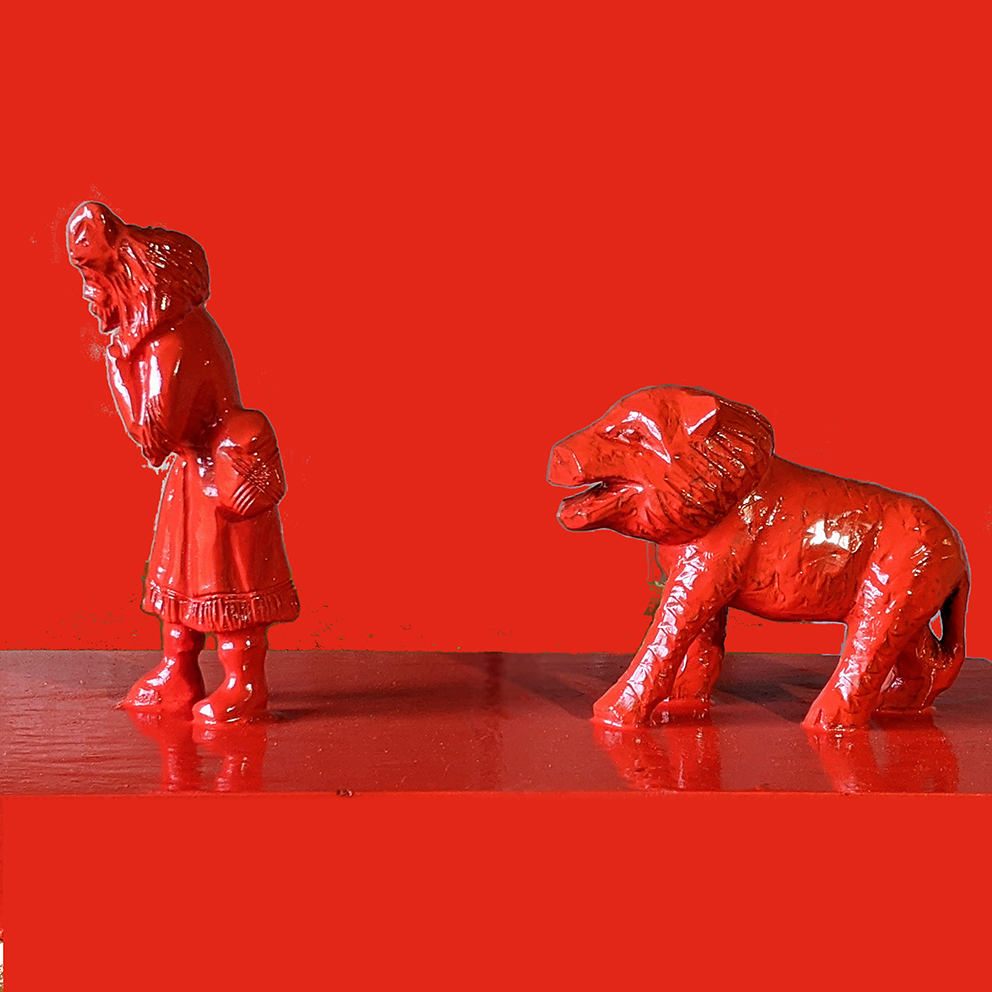
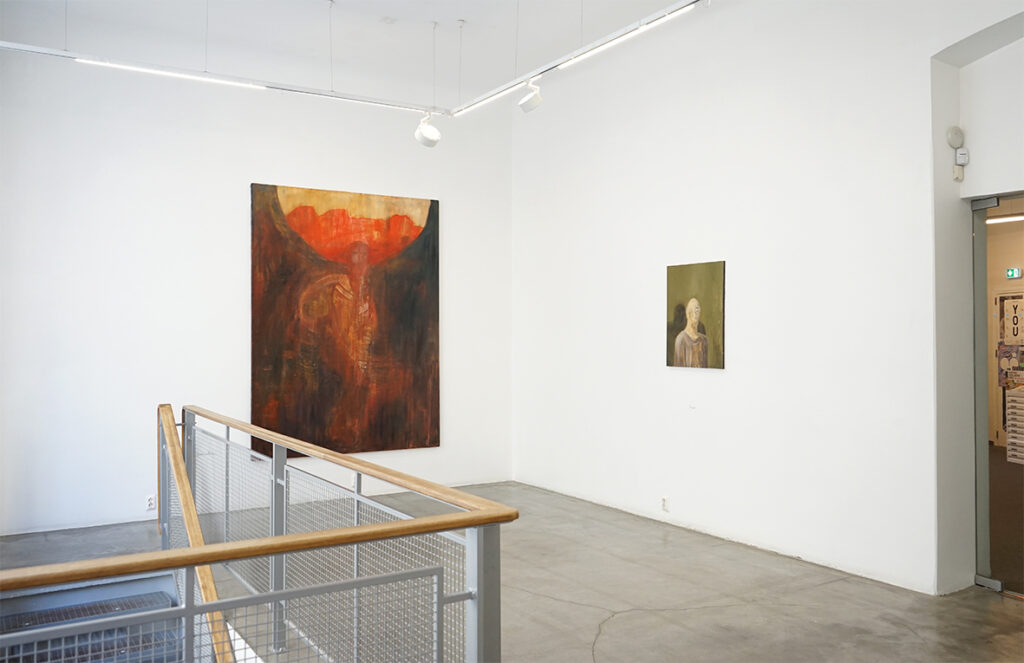
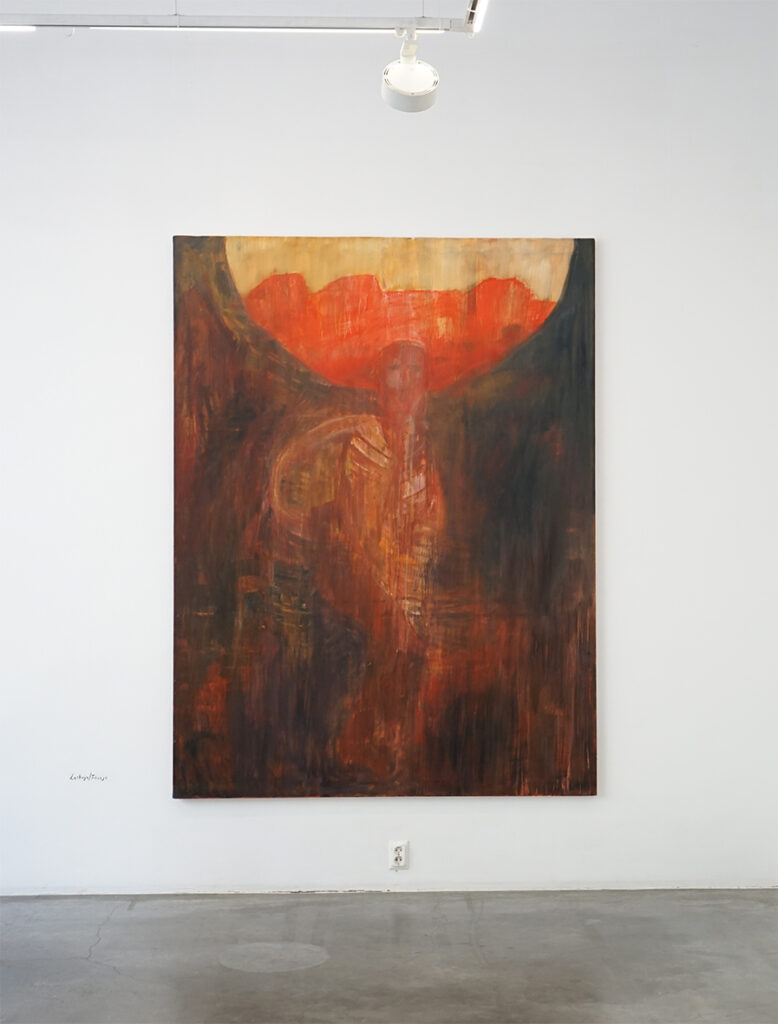
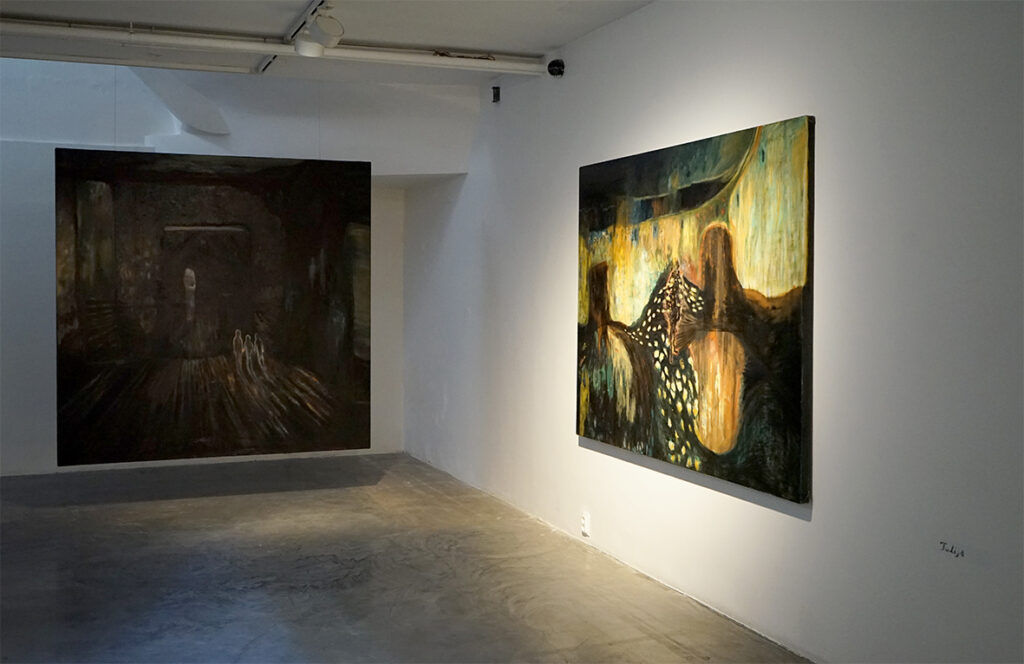
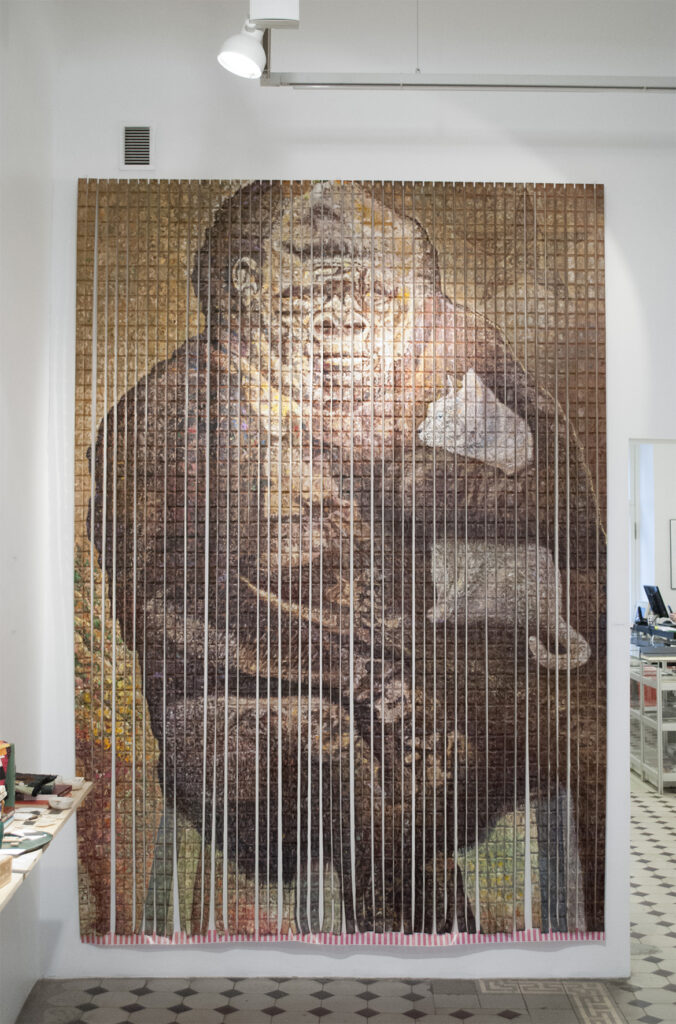
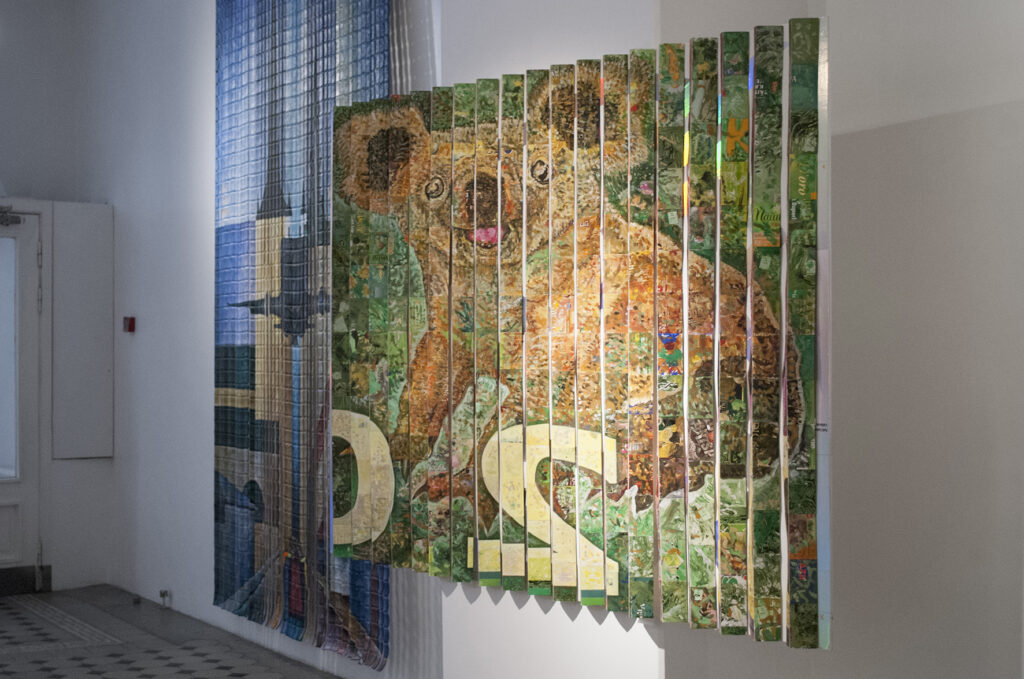
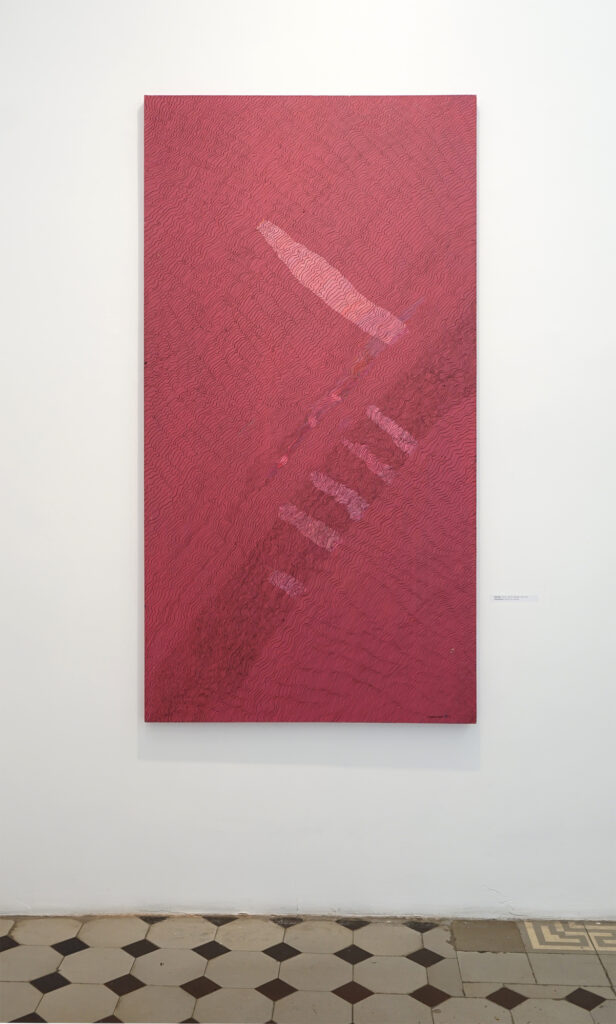
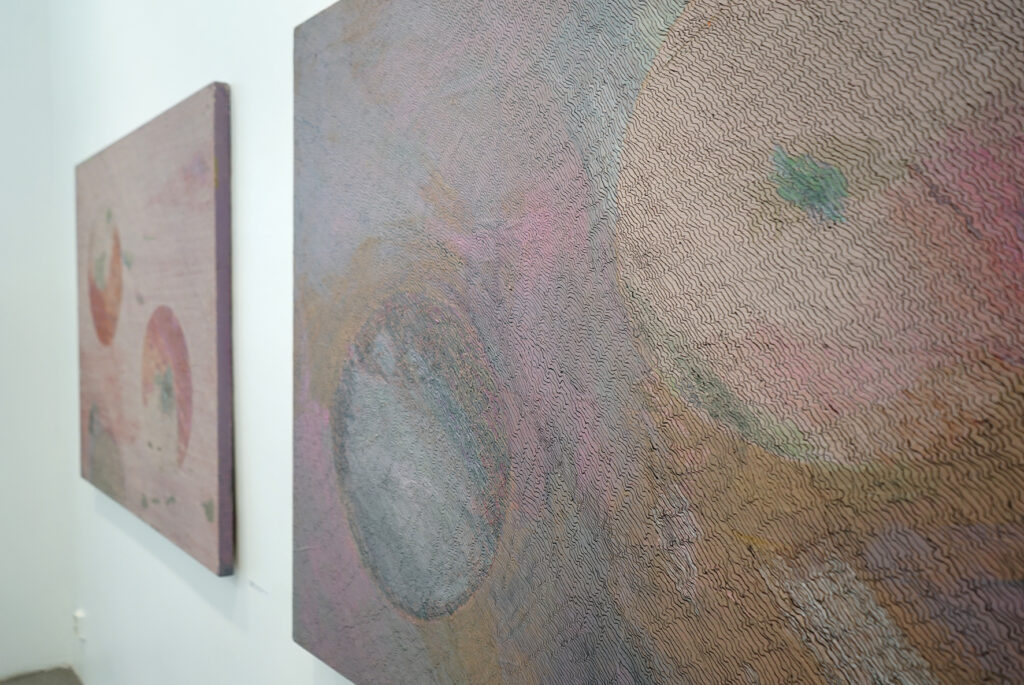
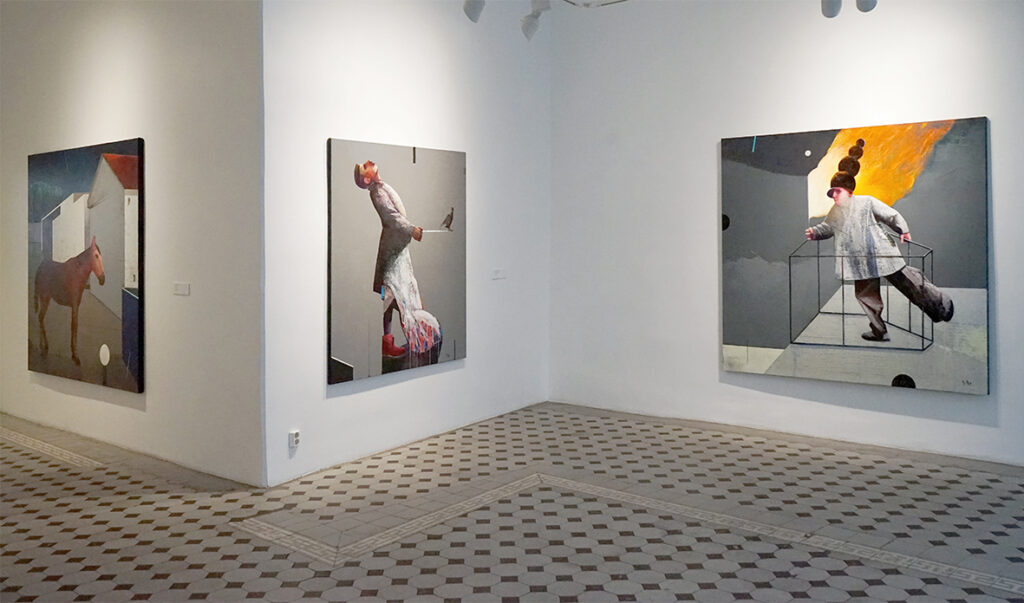
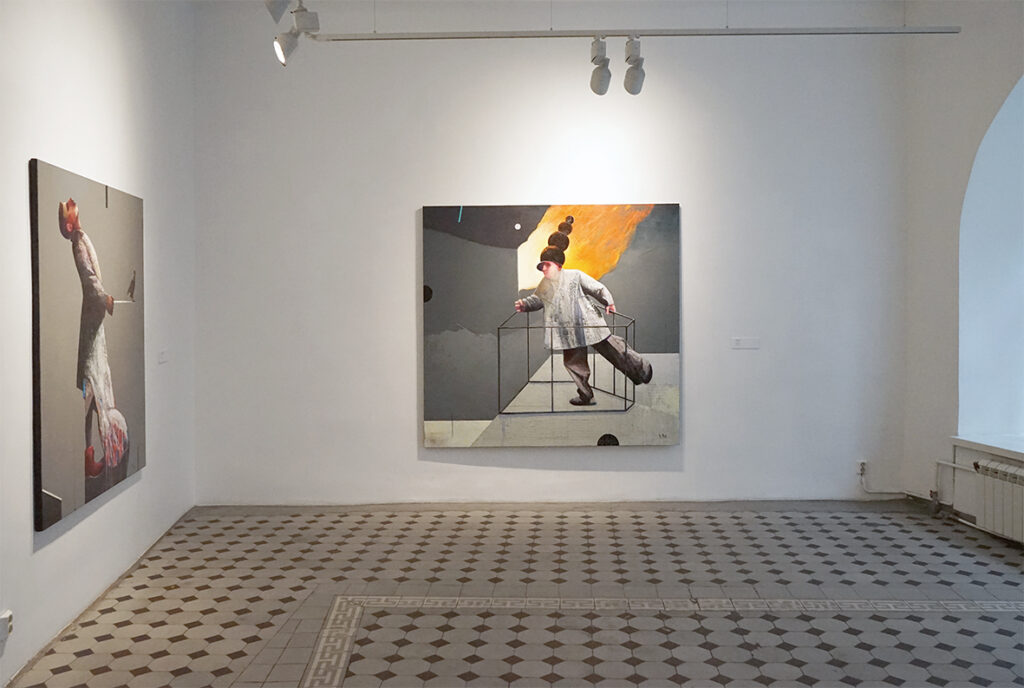
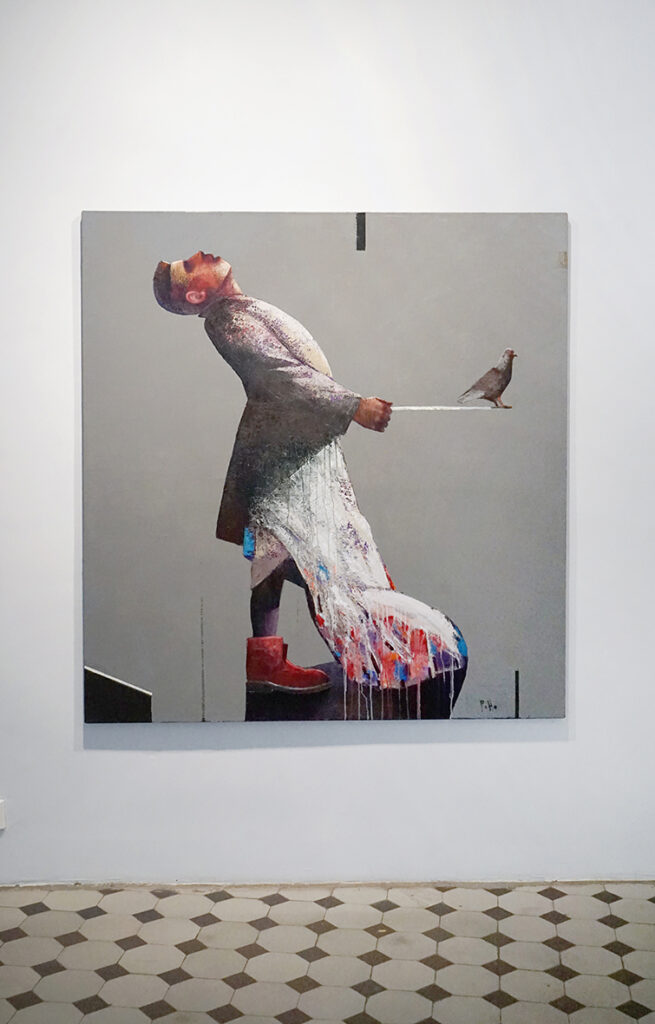
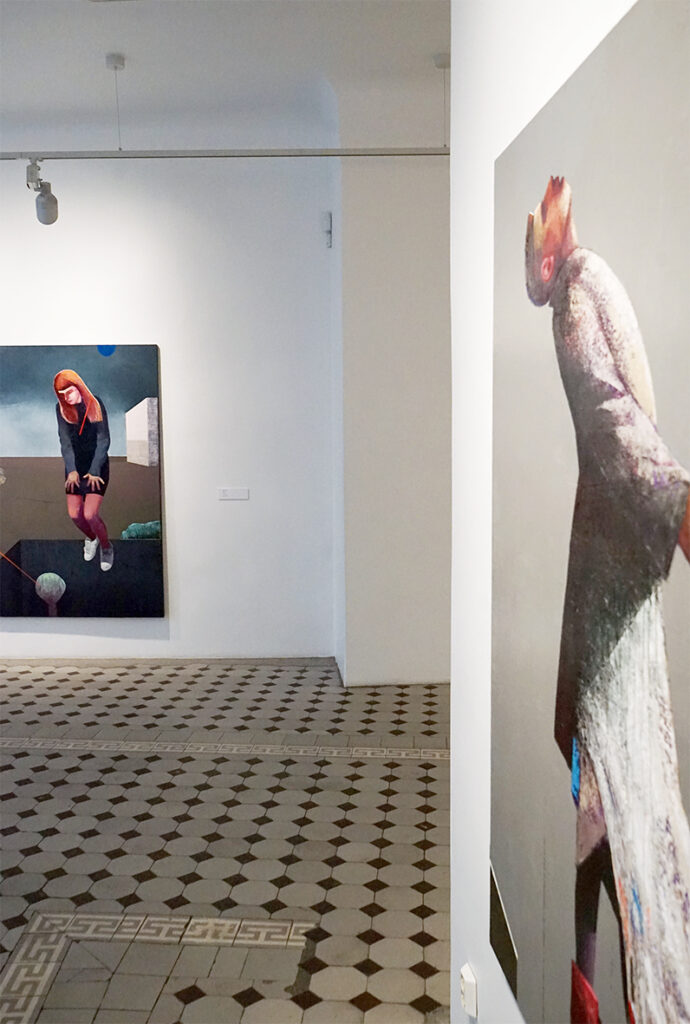
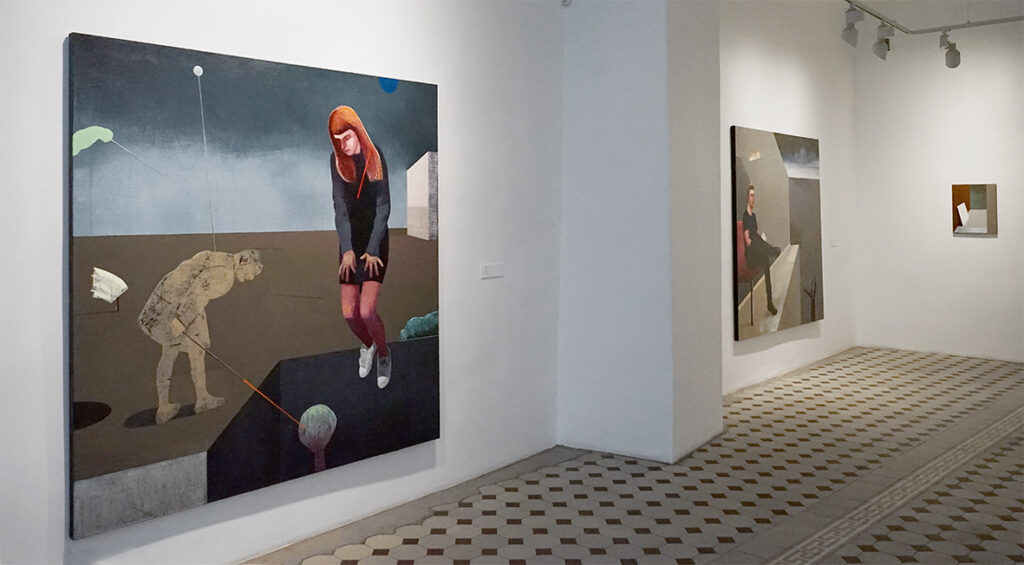
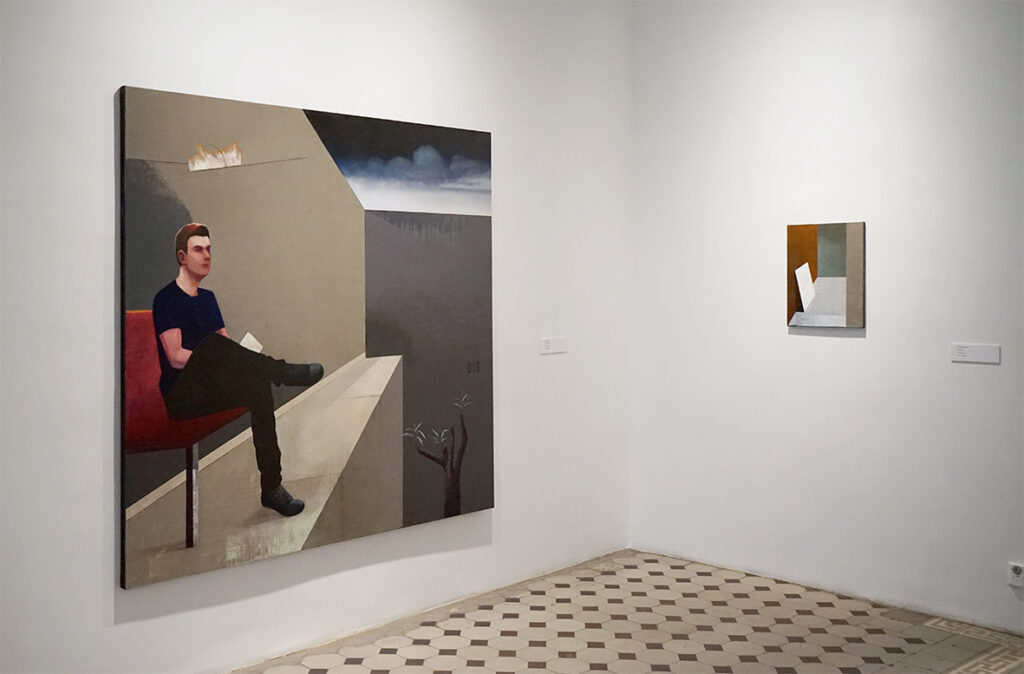
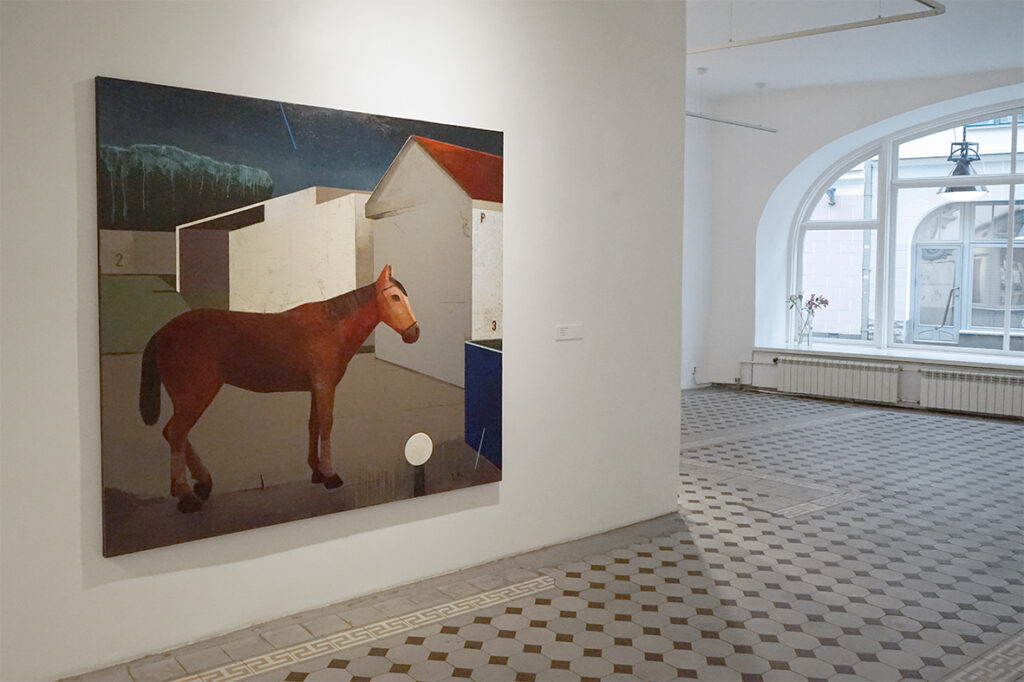
The people, animals and other beings depicted on the artwork by Czech painter Denisa Štefanigova are intermingled, blended into each other, playful and without explicit plastic form. The artist has removed the dichotomy and opposition between the man and the animal, nature and technology, desire and anger, rational and emotional. Štefanigova has painted beings from various species who interact with each other while referring to possible forms of co-existence where the dominance of a man has been disregarded and cross-species cohabitation and understanding is the new reality. The artist’s work reflects more consistent functioning where no living being is separated nor untouched from others – everyone is connected and related to each other, and the human being is not an exception. Philospher Donna Haraway has defined the abovementioned as „Chthulucene“ – that has been derived from the spider species Pimoa Cthulhu, a spider with extremely long legs. The eight legs seem to represent different points of view and possibilities yet are connected through their distinction and direction – none of the legs won’t function autonomously.
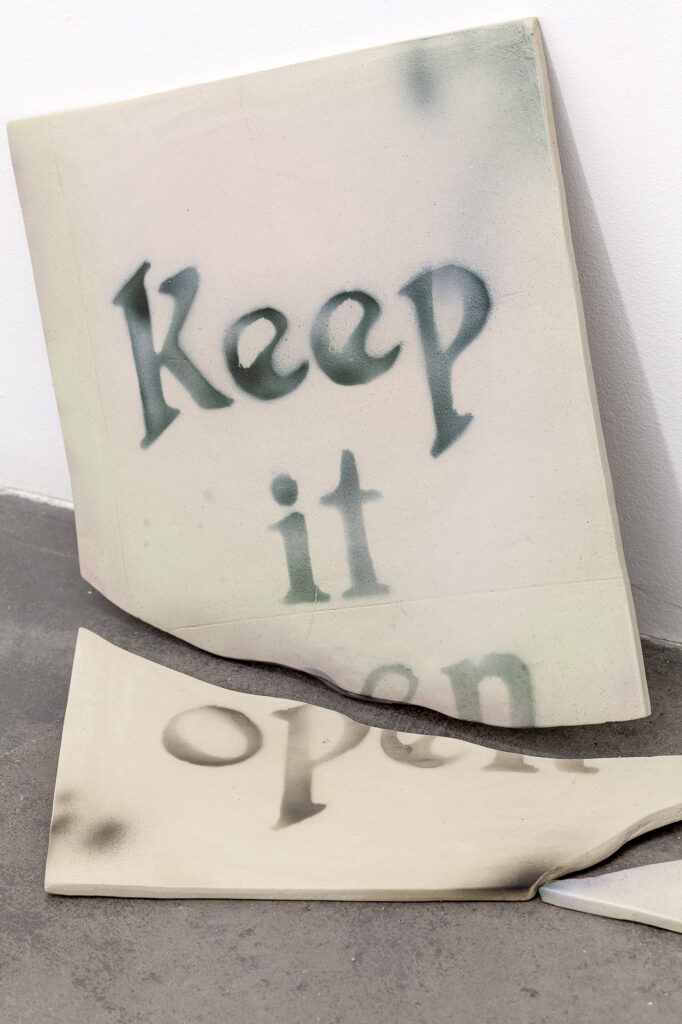
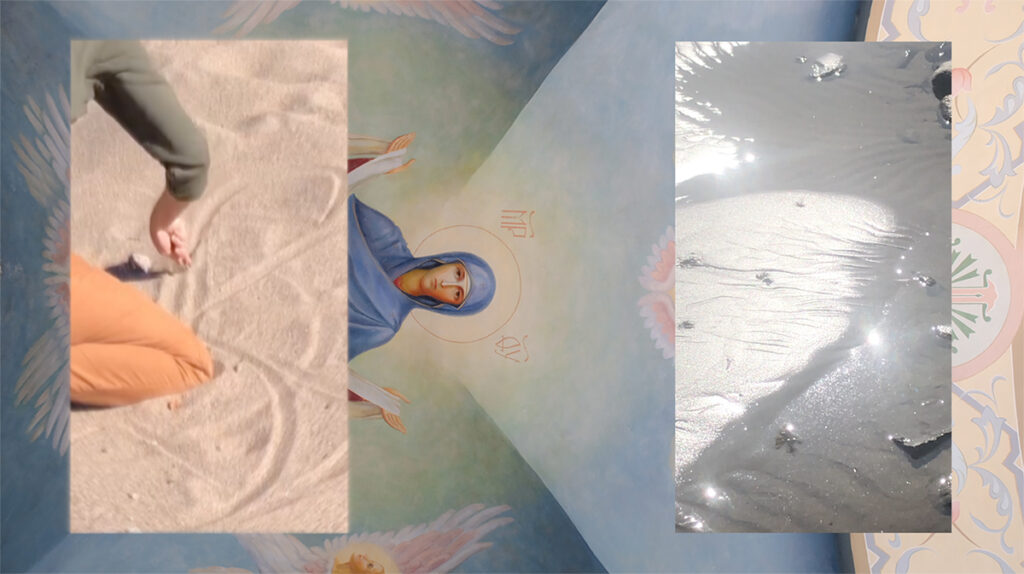
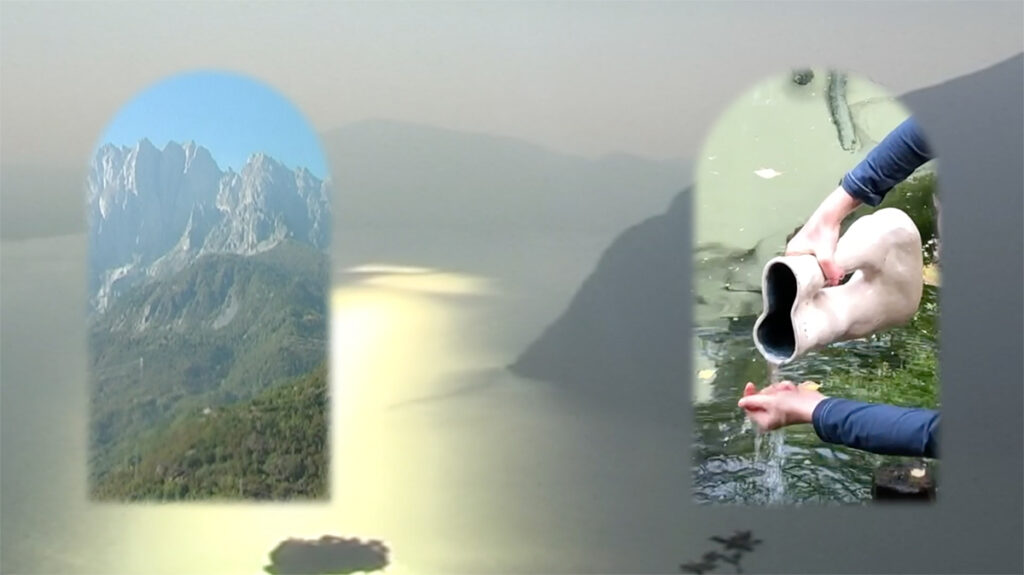
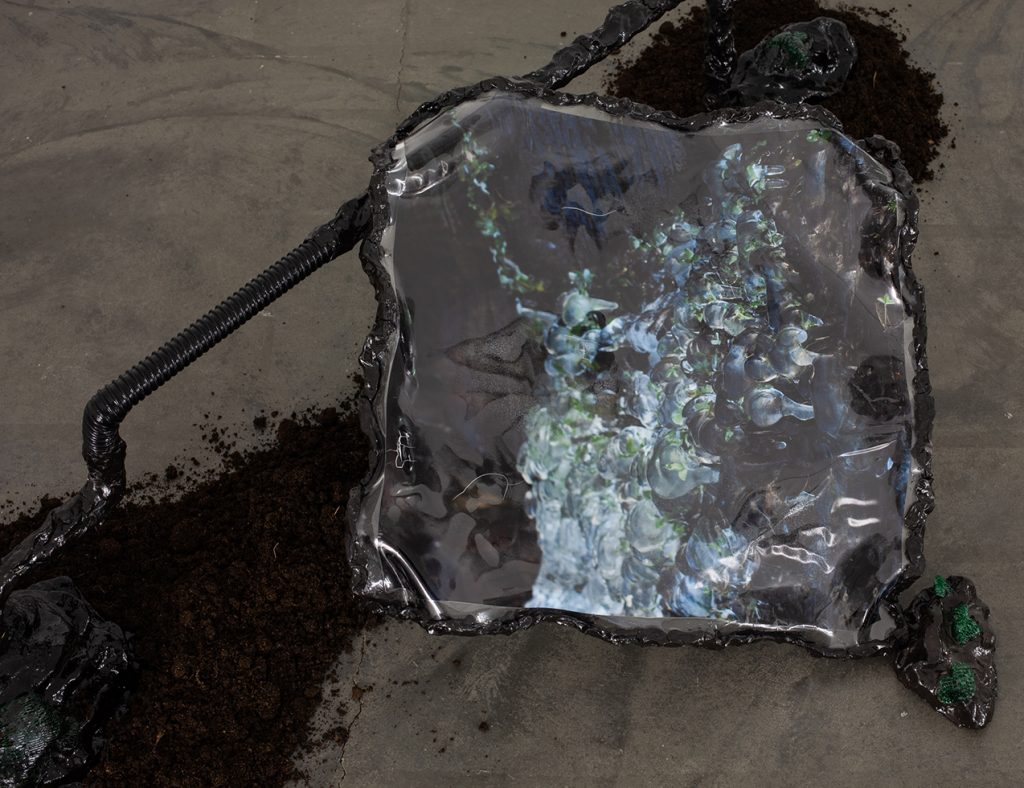
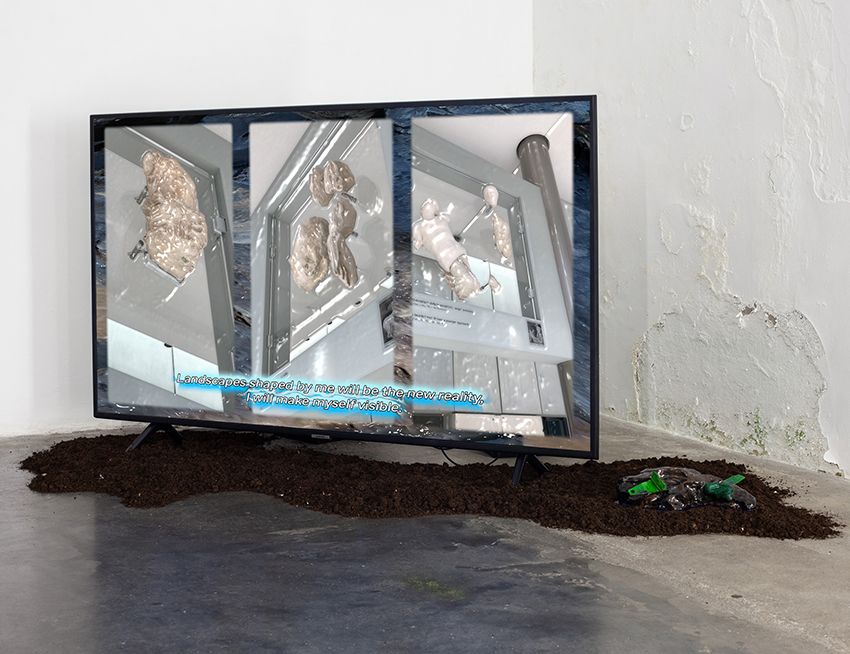
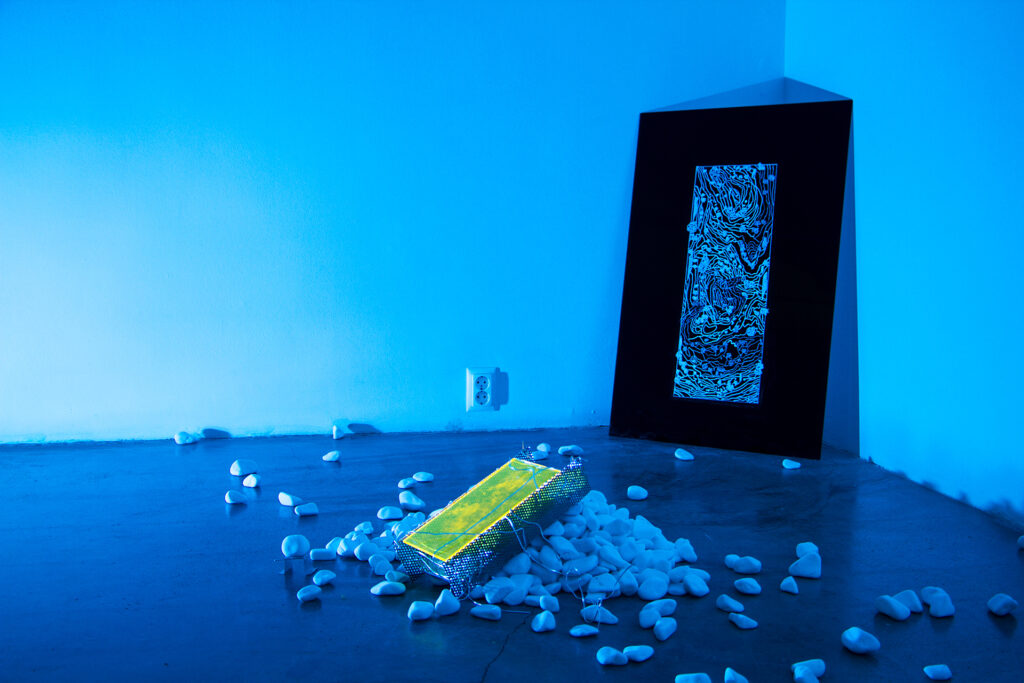
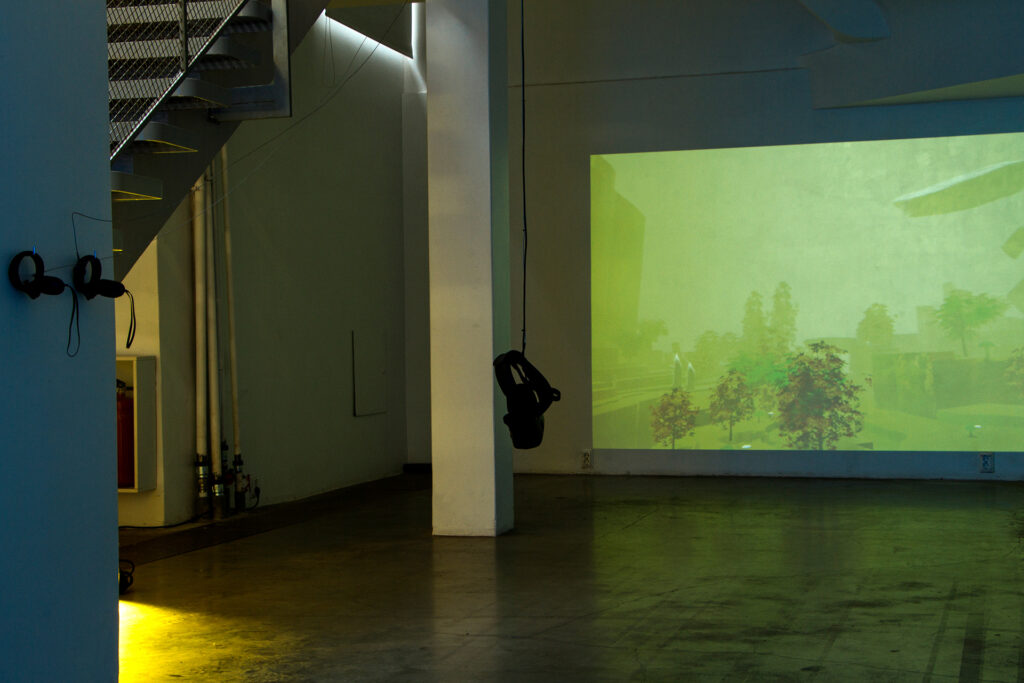
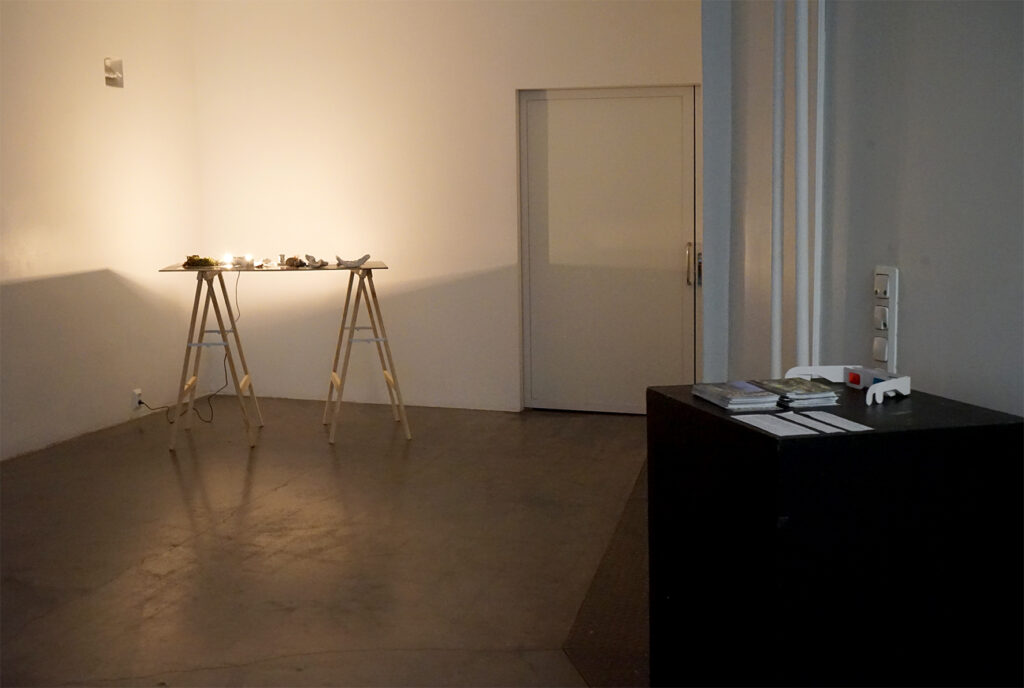
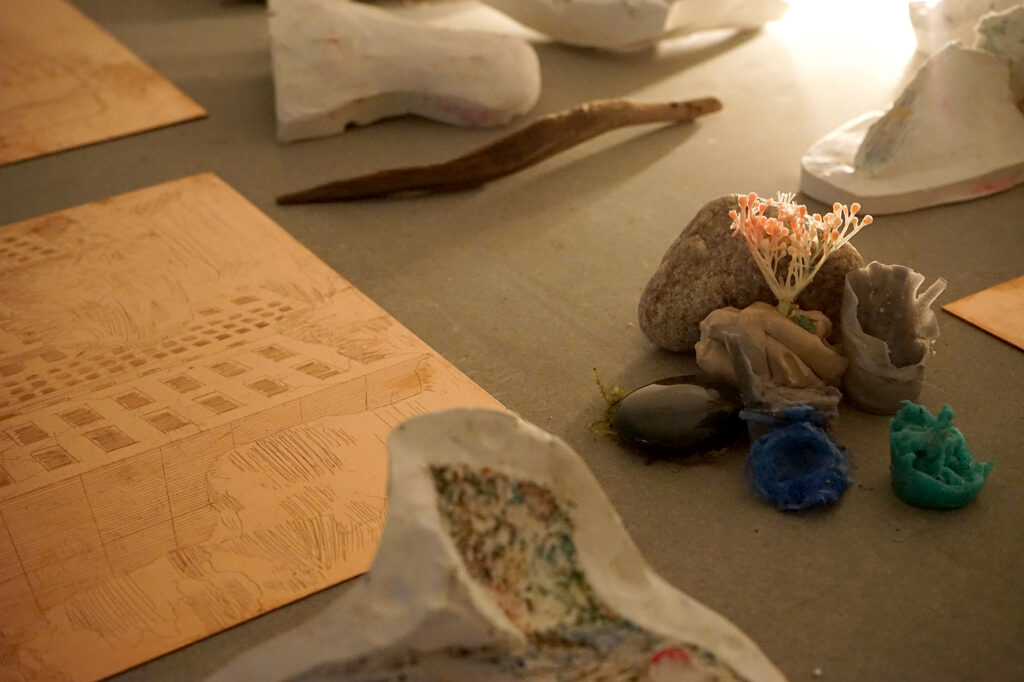
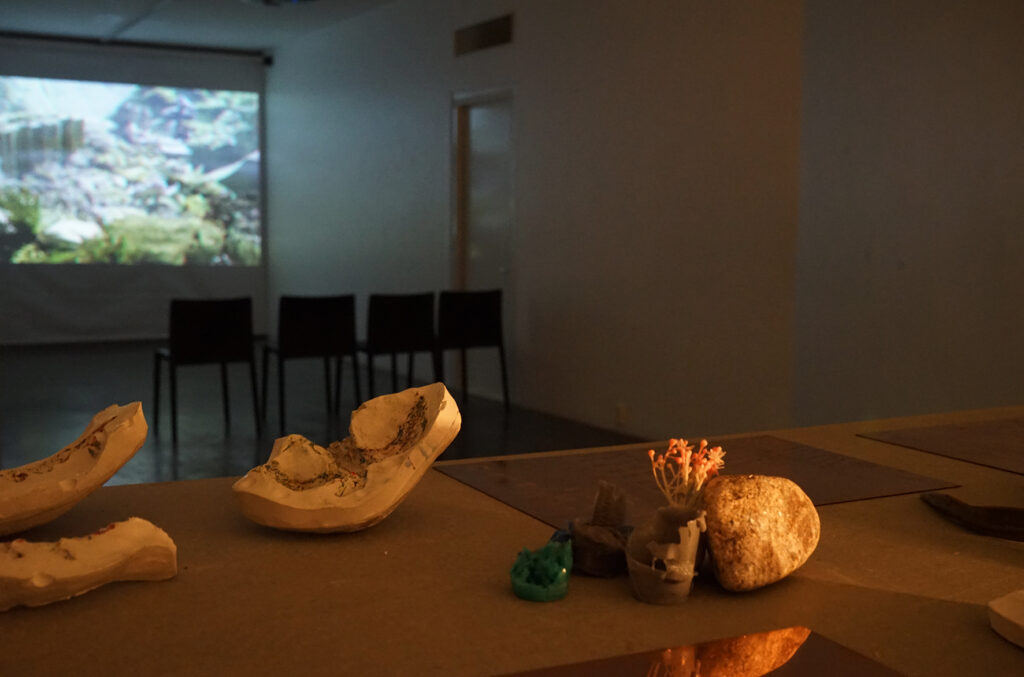
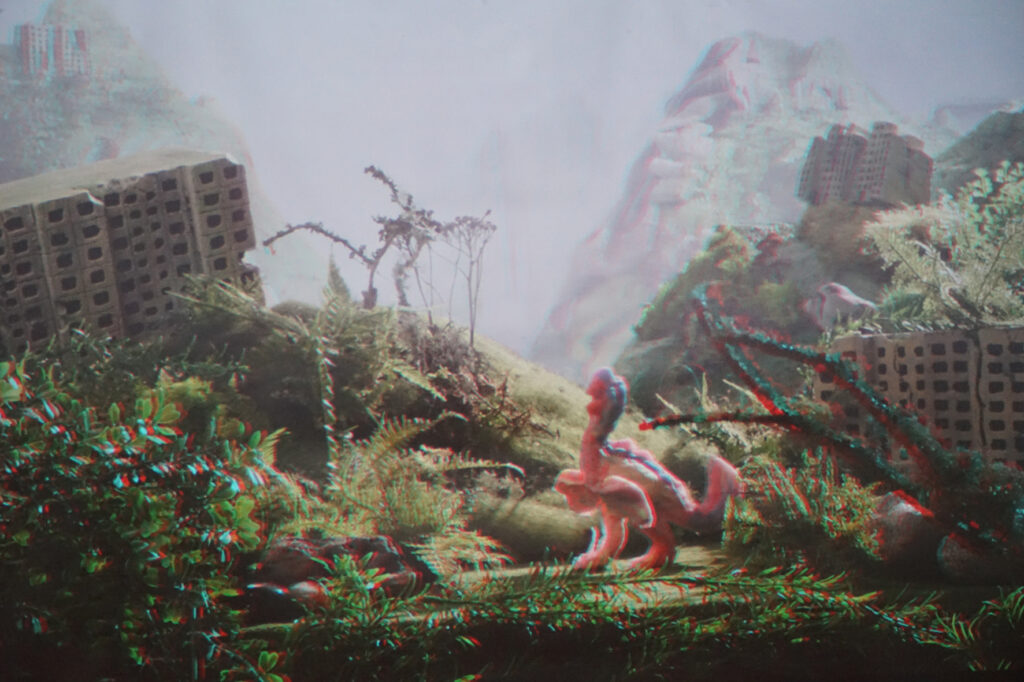
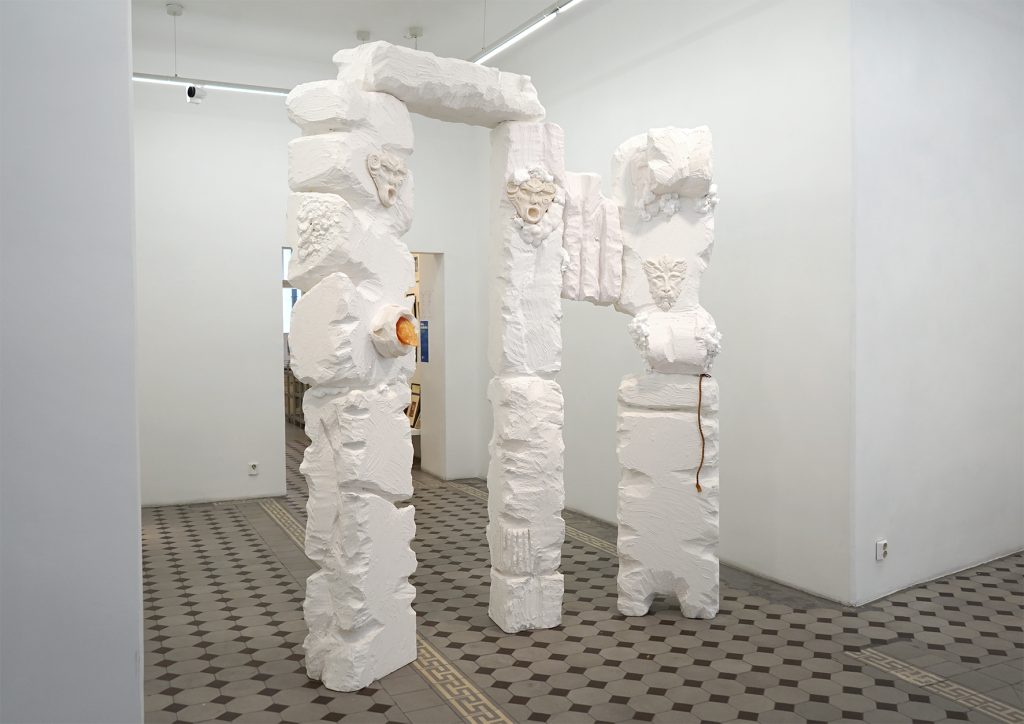
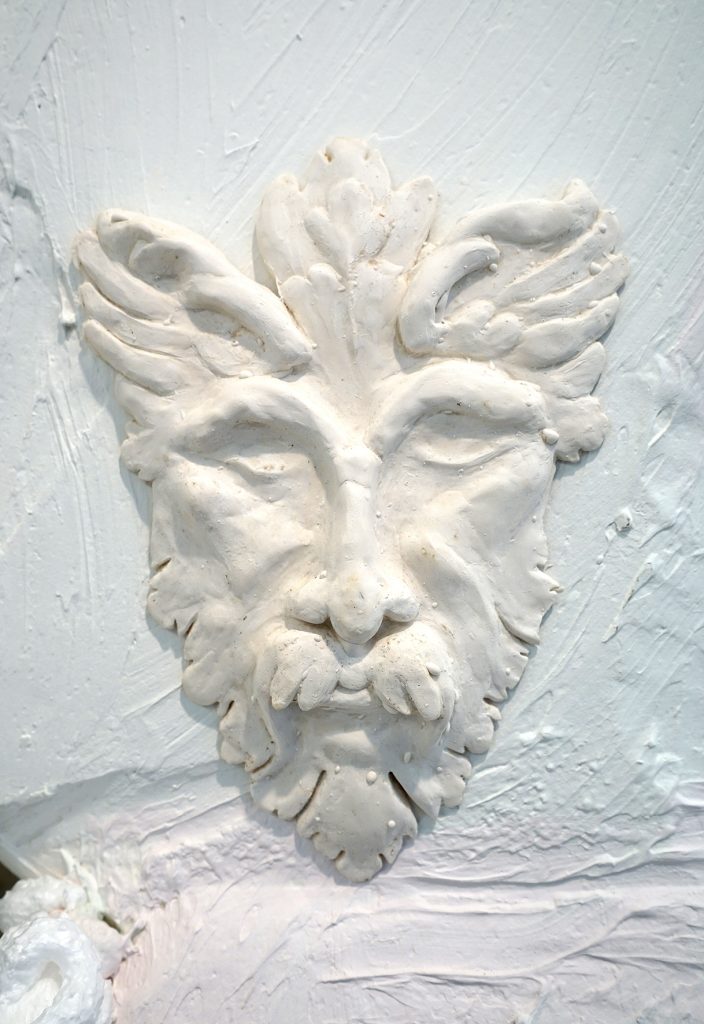
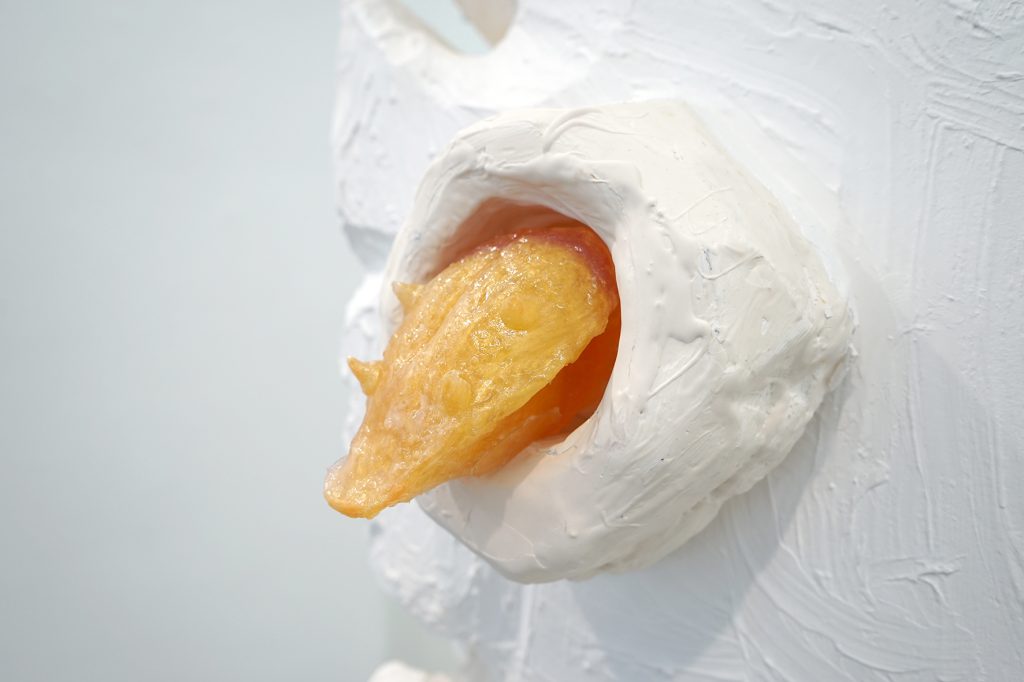
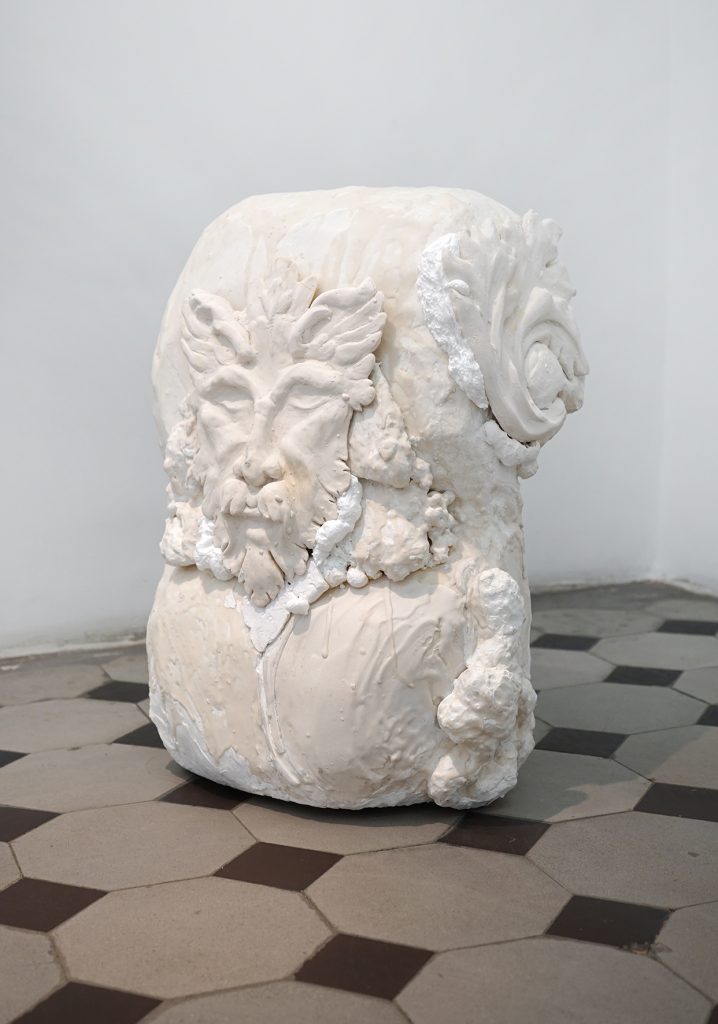
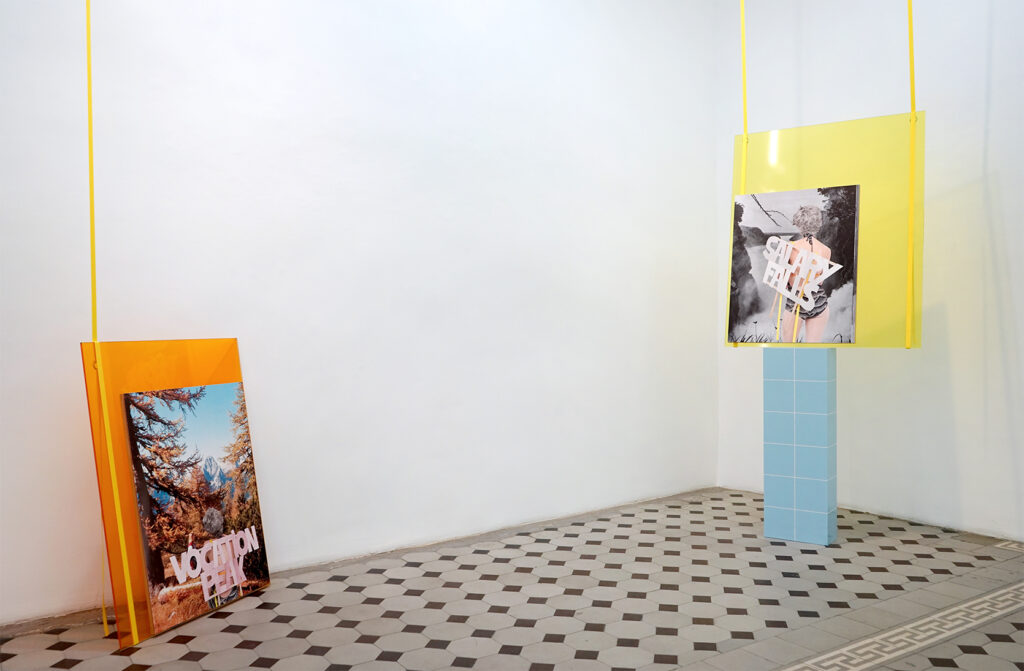
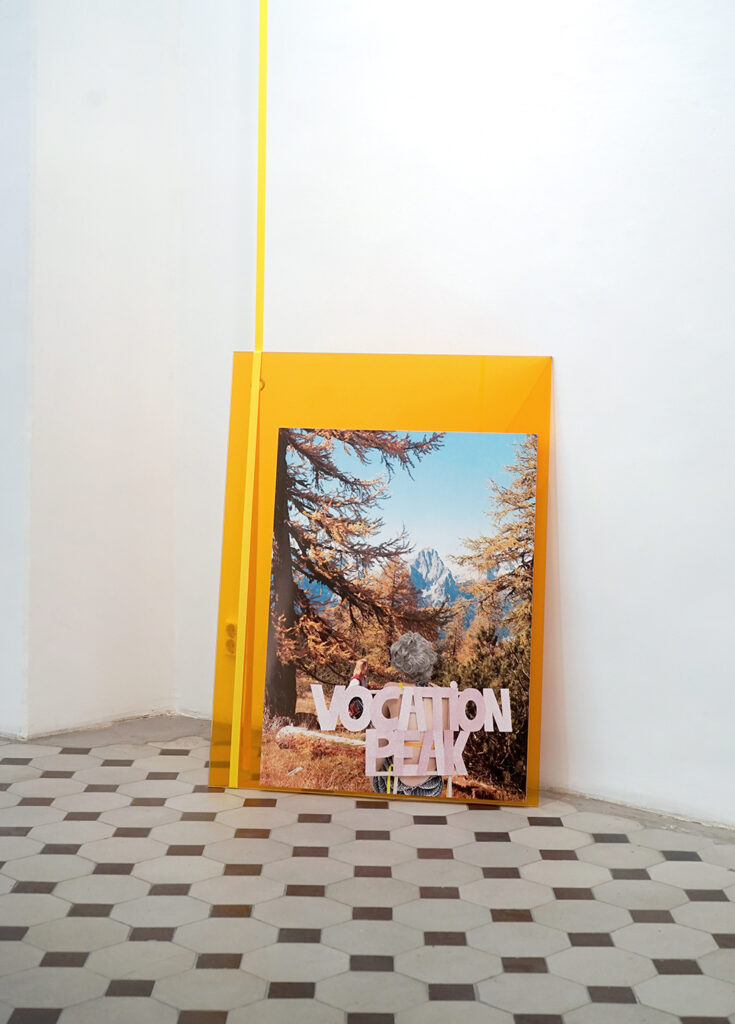
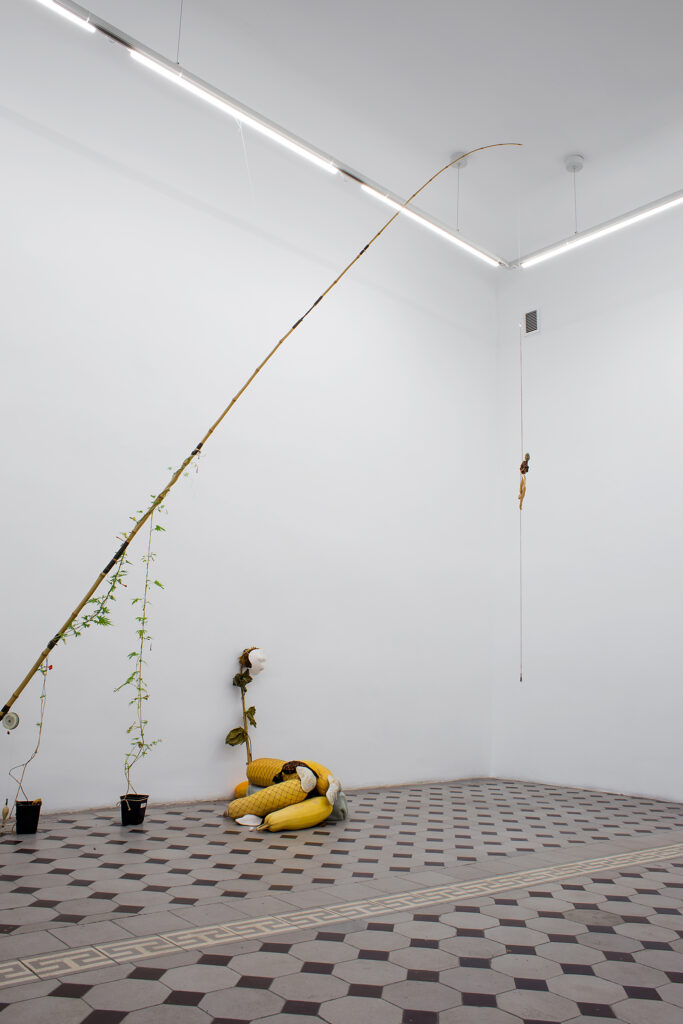
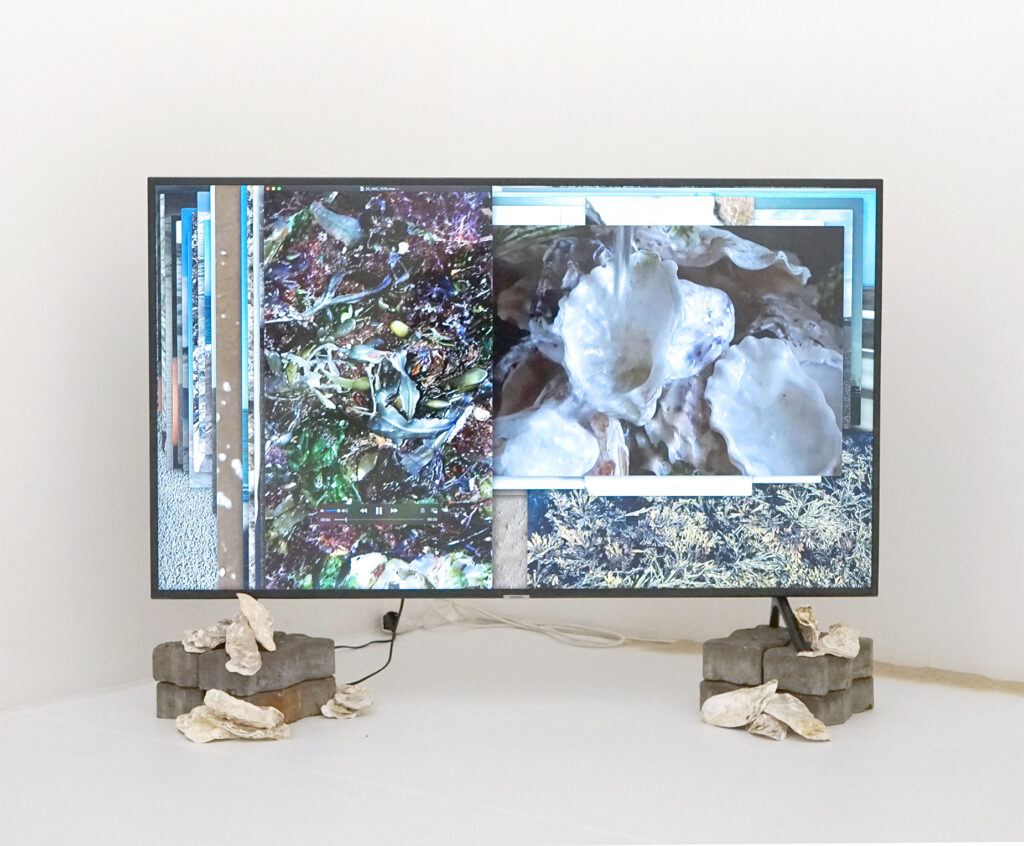
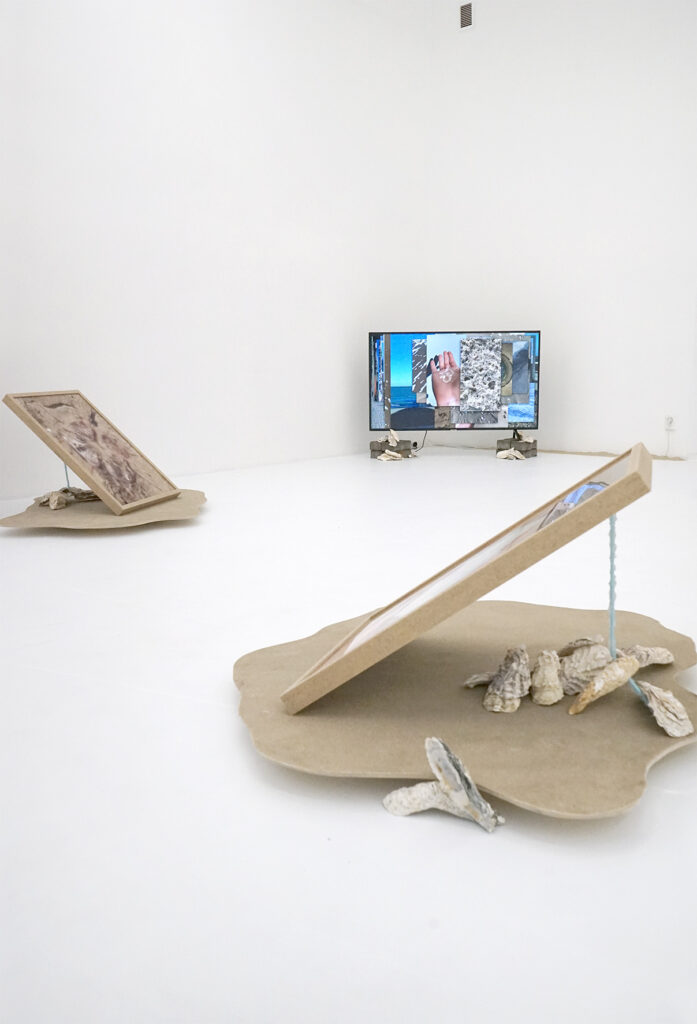
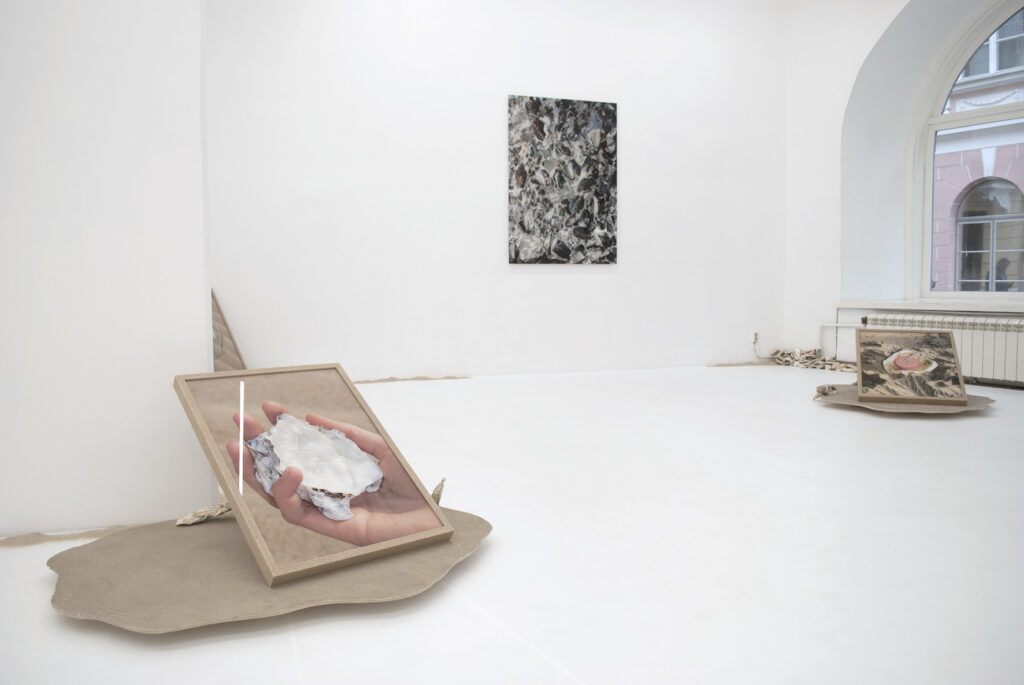
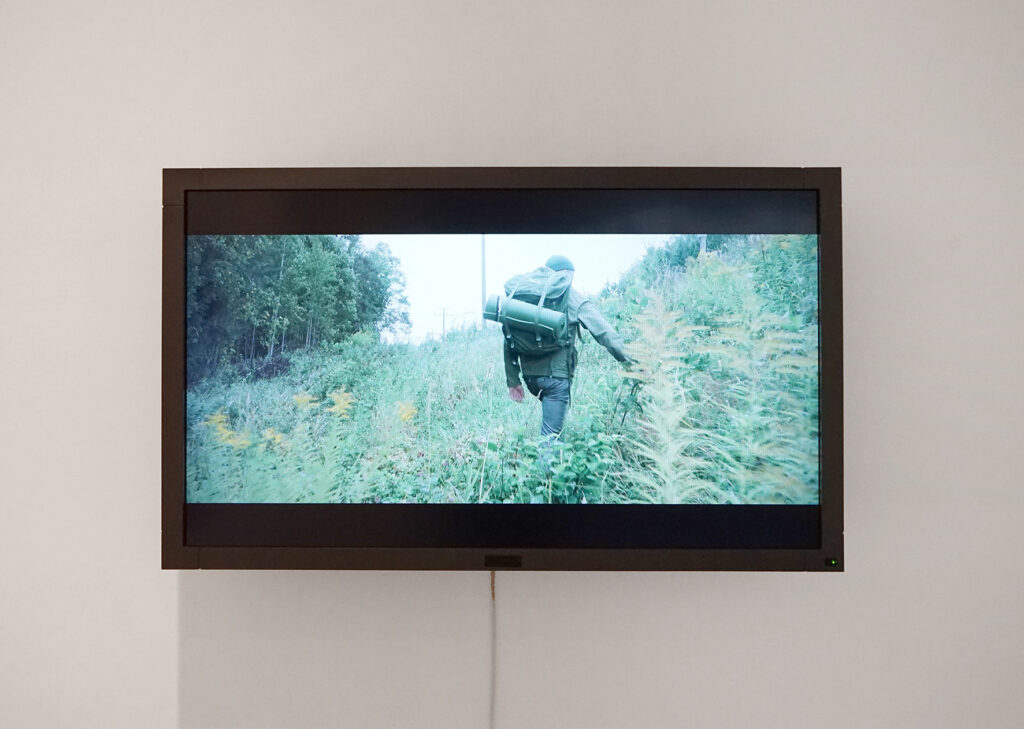
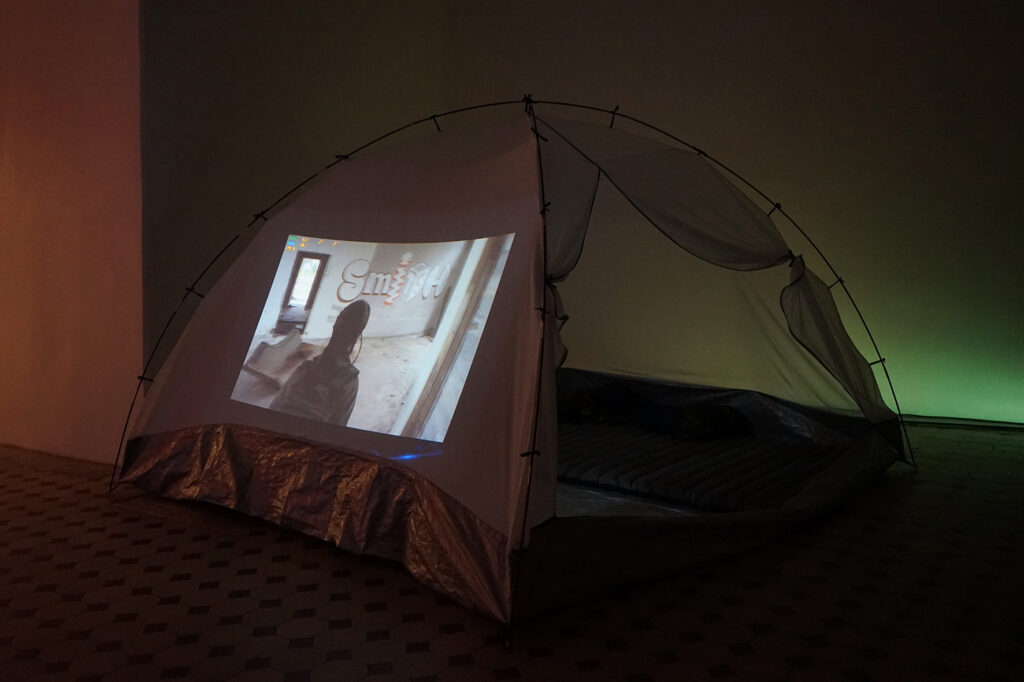
The sculptural installations and videos of the artist duo Lisann Lillevere and Johanna Ruukholm pursue the worldview of Chthulucene while mixing the cognitive orientation prevailing in contemporary society with archaic beliefs and behaviour. The artists aim at blurring the borders between existing meanings, interpretations, cognitive, personal and universal. In their artwork, Lillevere and Ruukholm refer to deep time and for human reason the length of such time is imperceptible – the artists show that the past and the present are inextricably intertwined and the connections are in constant state of flux. Perdition and recreation build new opportunities for reinterpretation and hope. This is a play with fantasy where existing social and ideological beliefs, linear perception of time as well as targeted growth and profit have been neglected.
The artists take a look at forgotten spaces, envision new corners and openings, navigate on the verge of principles, give a chance to mistakes, pleasures and unusual while flirting and intermingling with the present day, pop culture and current issues.
Sound of the video work by Johanna Ruukholm and Lisann Lillevere: Nathan Tulve, narrator: Hannaliisa Uusma, text: Lisann Lillevere, HU (Hannaliisa Uusma and Leslie Laasner), video effects: Jakob Tulve
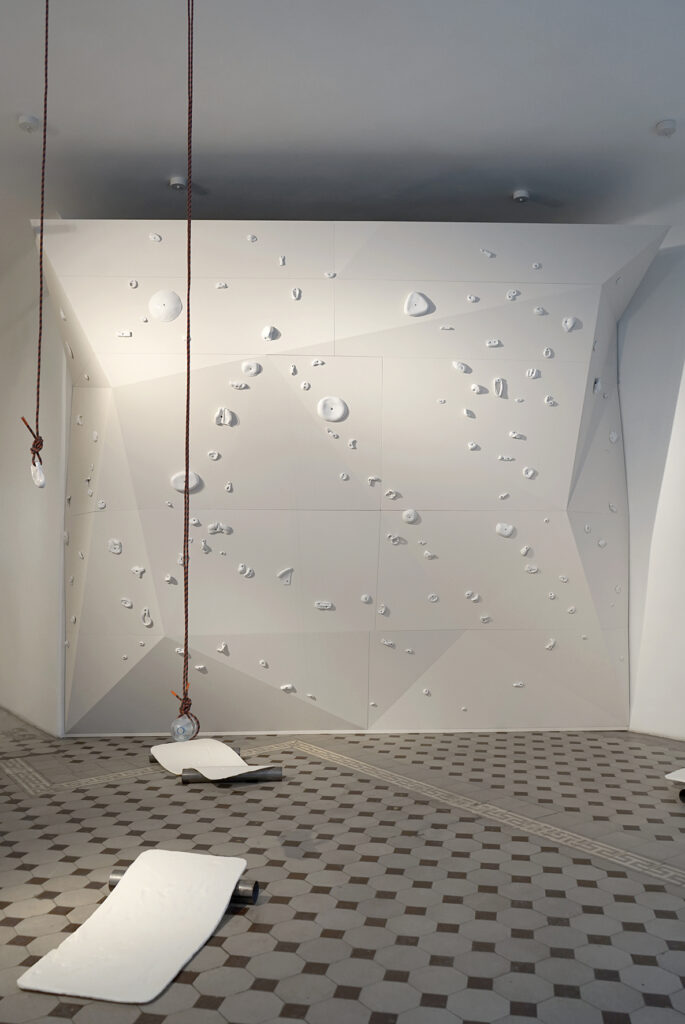
Installation Traction has been completed in collaboration with Joonas Timmi.
Exhibition is supported by the Cultural Endowment of Estonia.
The artists express their gratitude to: department of ceramics at the Estonian Academy of Arts, Maie Ruukholm, Allan Aug, Maria Helen Känd, Jaana Kormašov, Martina Gofman, Joonas Timmi, Merili Põllu, Marika Henriksson, Synlab Eesti Ltd., Uku-Kristjan Küttis, Leili Lillevere, Aivar Lillevere, Hannaliisa Uusma, Taavi-Peeter Liiv, Kristiina R.
Exhibition will be open until January 10, 2022.
Exhibitions in Hobusepea gallery are supported by the Cultural Endowment of Estonia, Estonian Ministry of Culture and Liviko Ltd.
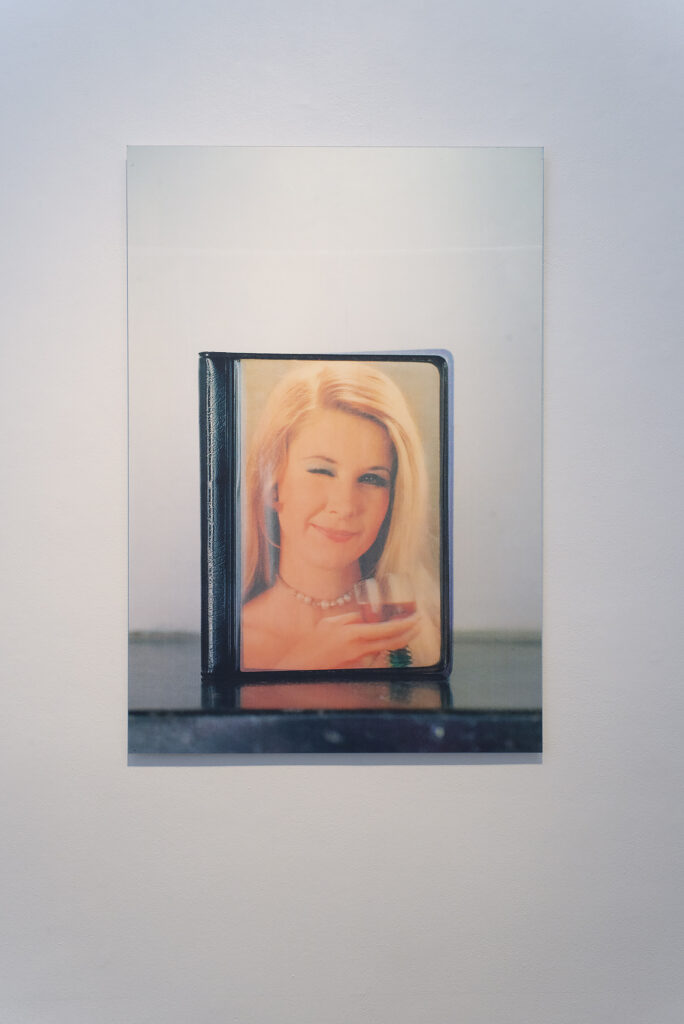
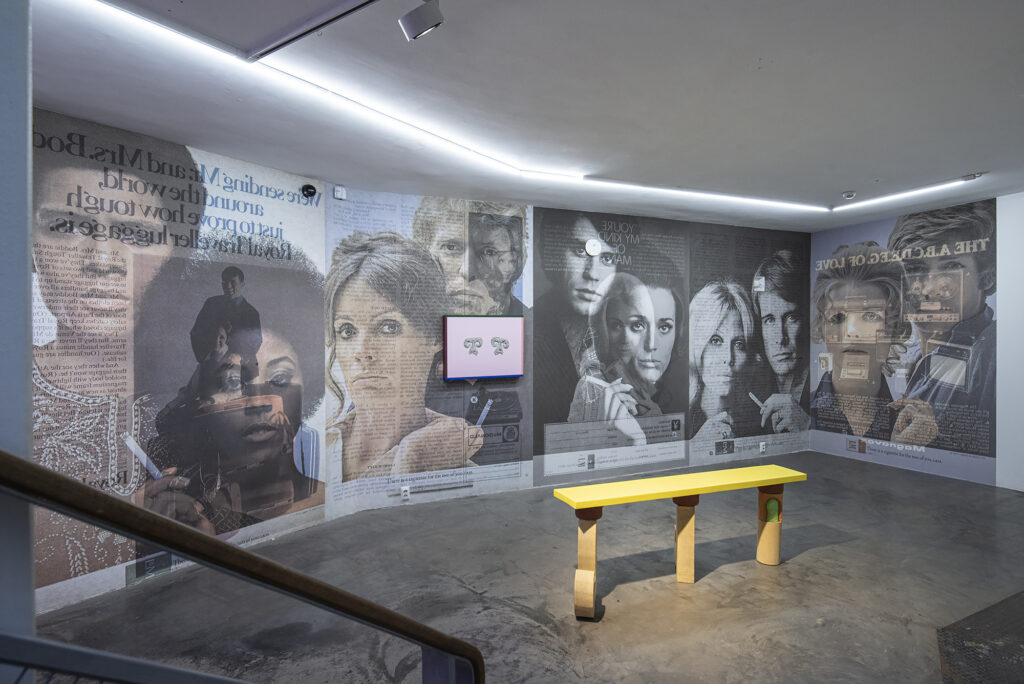
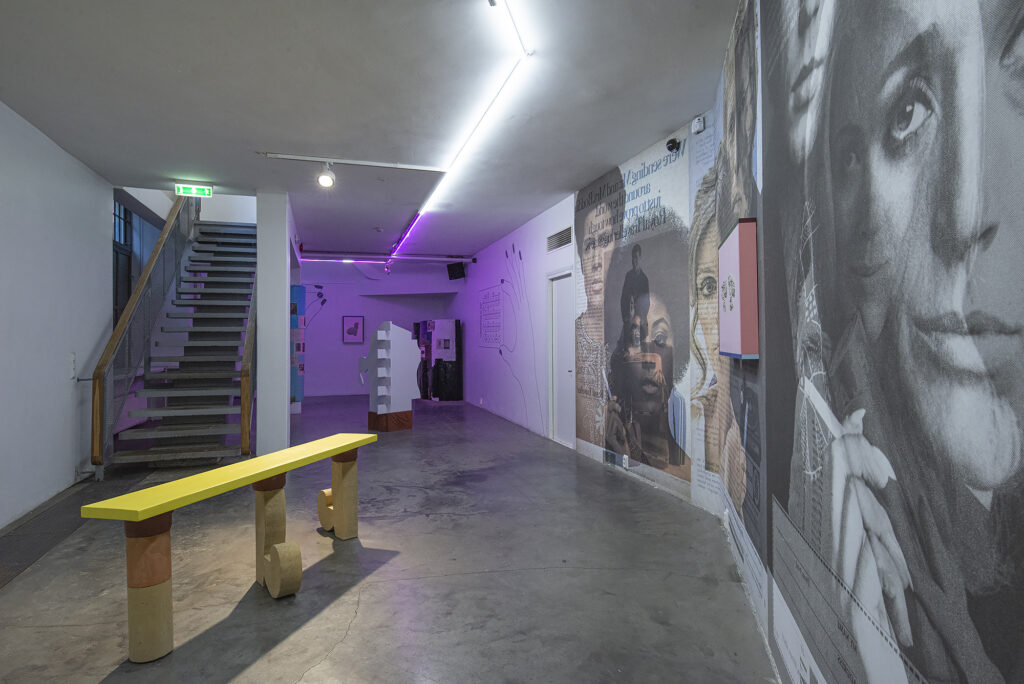
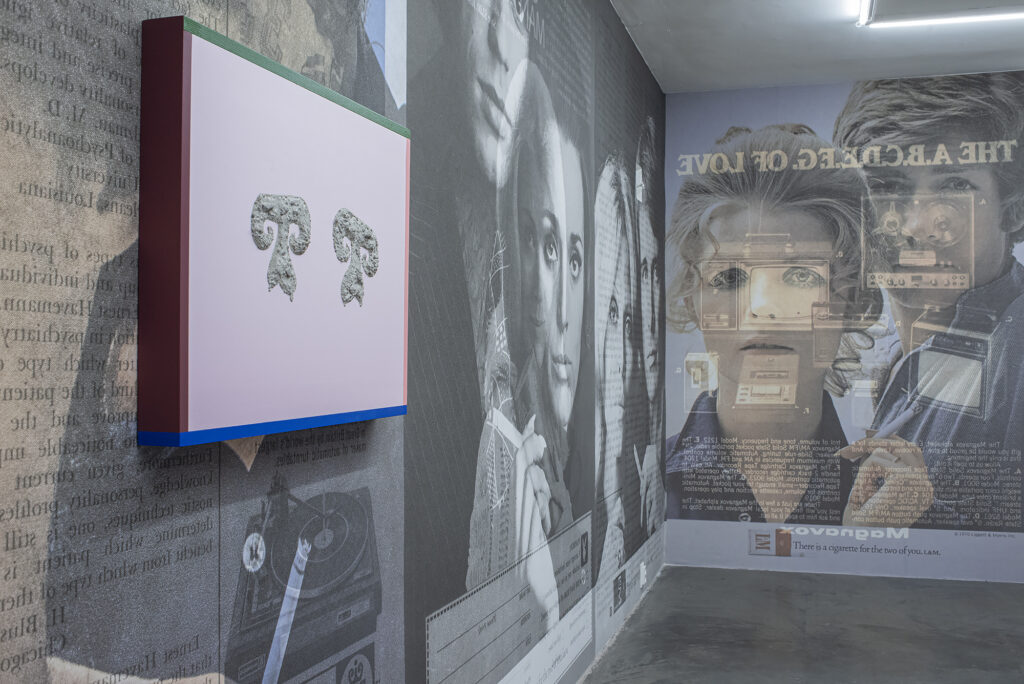
The co-exhibition The A. B. C. D. E. F. G of Love by Marge Moko and Maruša Sagadin will be open in Hobusepea gallery from Thursday, January 13th. The exhibition will remain open until February 7 th.
An exhibition is a point on a continuum.
The lives of objects—and artists—precede and follow individual events. That solid-state matter continuously self-chronicles with chemical technology preceding any digital blockchain. Their confluence and your coexistence distinguish this moment. We stand where a collective flow of mortal forms beget flickers of mechanical joys.
The personal and professional dialogue of Marge and Maruša before this moment may be invisible to you. But it’s tangible. What you see, comes from months. What you don’t, comes from years.
Describing one artist’s practice as photographic and the other’s as architectural merely skims the facts. A loose reading of their biographies defaults anyone to this conclusion. Left under-described are emotion and intent. Both artists embody honesty, sincerity, and empathy as individuals and through their chosen profession. In their first collaboration in a long relationship, their work synthesizes this extant energy.
You are amongst an assembly of characters. Marge and Maruša gave them names, but these characters invited you in. Juliana asks you to sit, Saša beckons you nearer. Lucy grants power, Marička elicits introspection.
Their names represent a catalogue of personalities. They preside over an alphabet of love. Every letter standing for a gift of self you’ll be proud to stand behind. And this is only the beginning.
Text by JL Murtaugh
JL Murtaugh founded the contemporary art platform Syndicate and is the director of Autarkia (Vilnius LT). He was born in Chicago and lives in Vilnius.
Graphic design by Kersti Heile and Indrek Sirkel.
The artist’s gratitude goes to: Raivo Plado (Plado Art Tranport), Anne-Liis Hunt (Overall), Marko Usler (Artsmart), Villem Säre.
The exhibition is supported by the Cultural Endowment of Estonia and Austrian Federal Council.
Exhibitions in Hobusepea gallery are supported by the Cultural Endowment of Estonia, Estonian Ministry of Culture and Liviko Ltd.
The co-exhibition A Visitor by Eero Alev, Marleen Suvi and Brenda Purtsak will be open in Hobusepea gallery from Thursday, February 10, 2022. Exhibition will stay open until March 7, 2022.
I don’t know what it feels to be dead, said a six-year-old girl to her father once. Her father listened, pondered, and remembered – neither did he know, but he yearned to. First, these twenty something thousand days given to us seem to last forever, but the more one moves along the axis, the days grow considerably shorter. We have a beginning and we have an end. Our visiting hours are limited and at some point, even without knowing it, we will leave all this behind. What did we find? Were we searching for something at all? How much did we ask and what did we give?
We arrive from somewhere we remember nothing about, and we are going somewhere we know nothing about.
Exhibition is supported by the Cultural Endowment of Estonia and Põhjala Brewery.
Exhibitions in Hobusepea gallery are supported by the Cultural Endowment of Estonia, Estonian Ministry of Culture and Liviko Ltd.
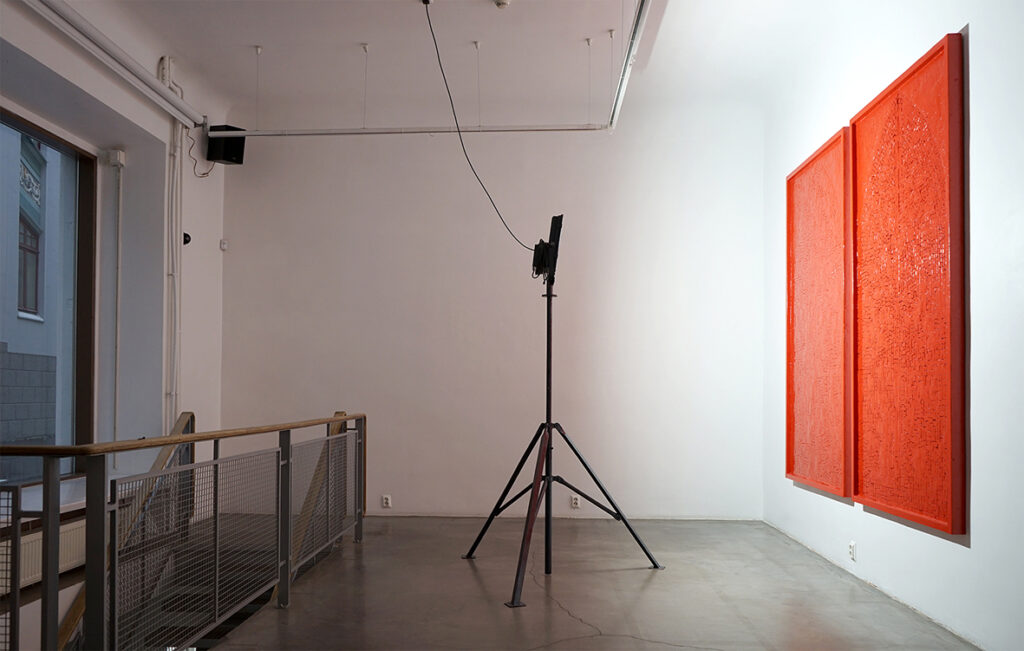
Jass Kaselaan‘s personal exhibition Monster Follows the Sheep Carrier will be open in Hobusepea gallery from Thursday, March 10, 2022. Exhibition will stay open until April 4, 2022.
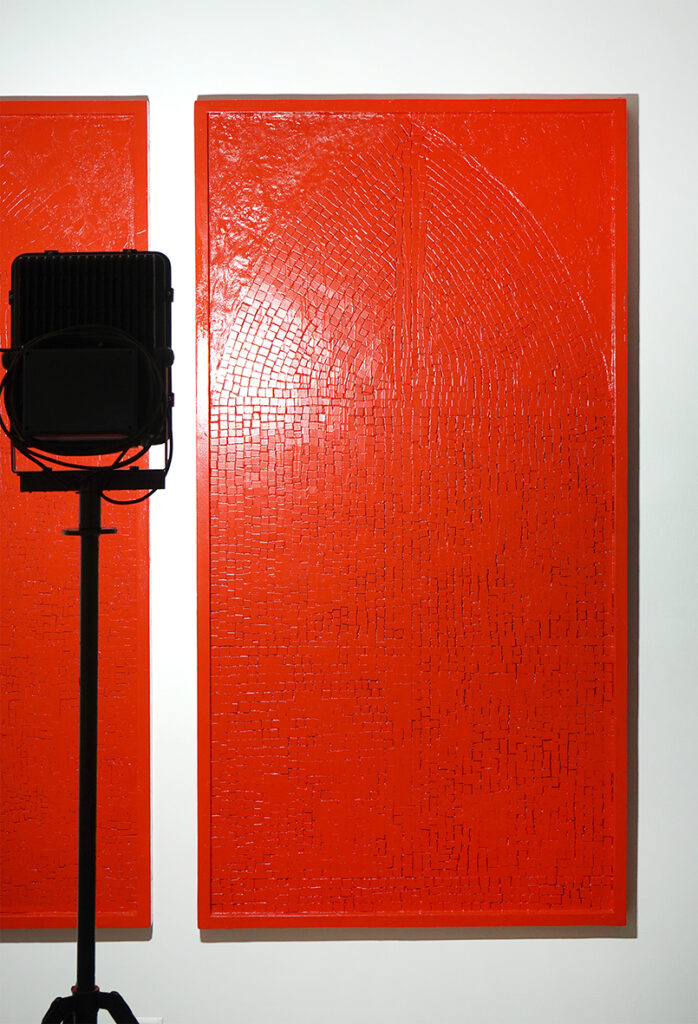
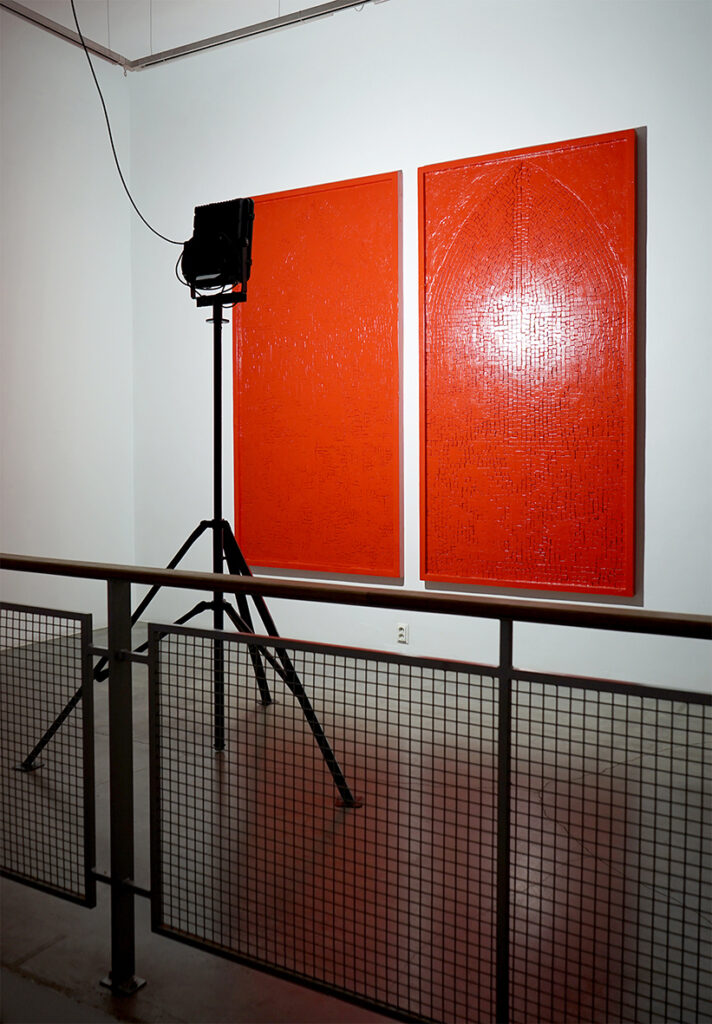
Jass Kaselaan: „Monster following the sheep carrier (the good shepherd) is an inevitability, a logical chain of cause and effect, natural and inescapable course of events. Current exhibition focuses on modeling of the resonation of pray-predator system and on creating a simulation. An important aspect here is both qualitative and quantitative analysis, evaluation and mapping of animated worlds as well as optimizing/organizing of these maps. Filtrating, designing and transforming of imported data. An attempt to make the unfathomable perceivable at least to some extent – to mark the indication about the deceptive state of free will.
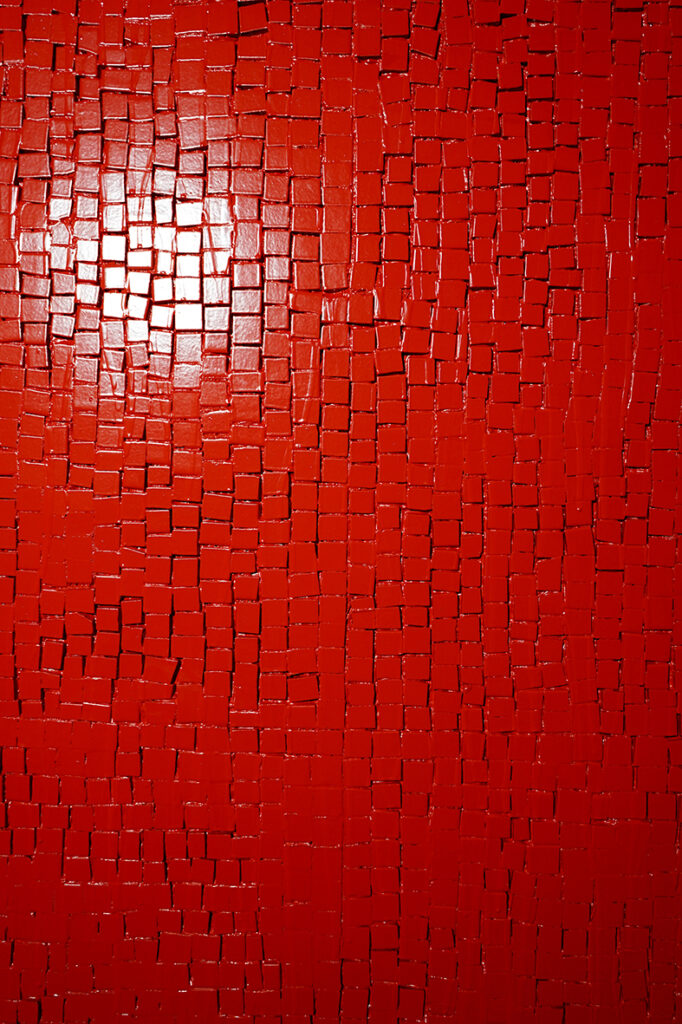
Two mosaic murals and five sculptural objects are exhibited in Hobusepea gallery.“
Exhibitions in Hobusepea gallery are supported by the Cultural Endowment of Estonia, Estonian Ministry of Culture and Liviko Ltd.
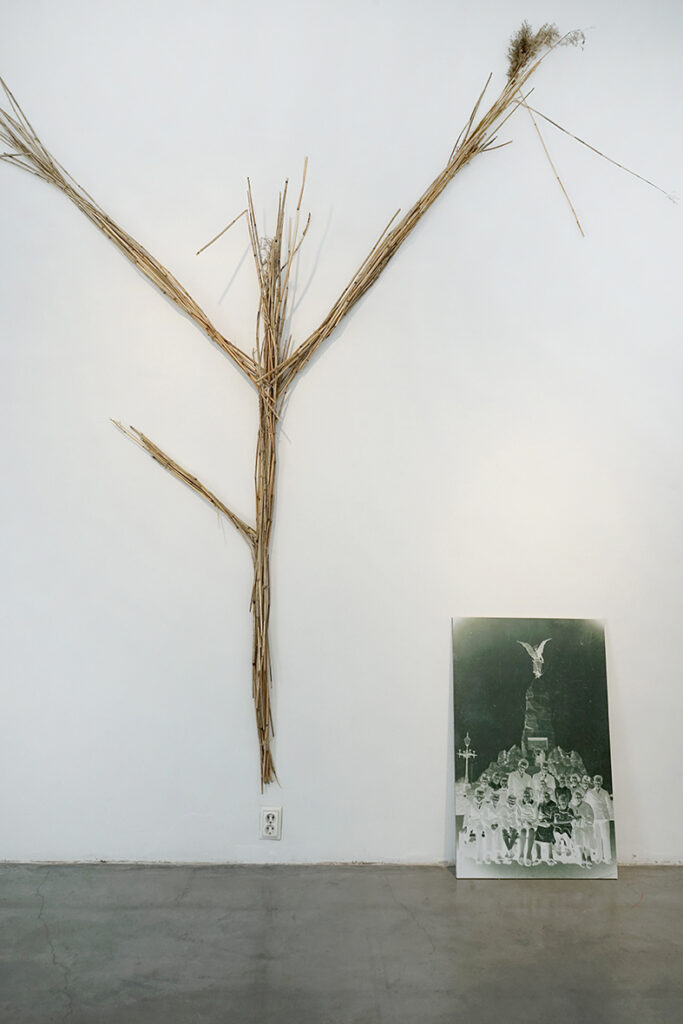
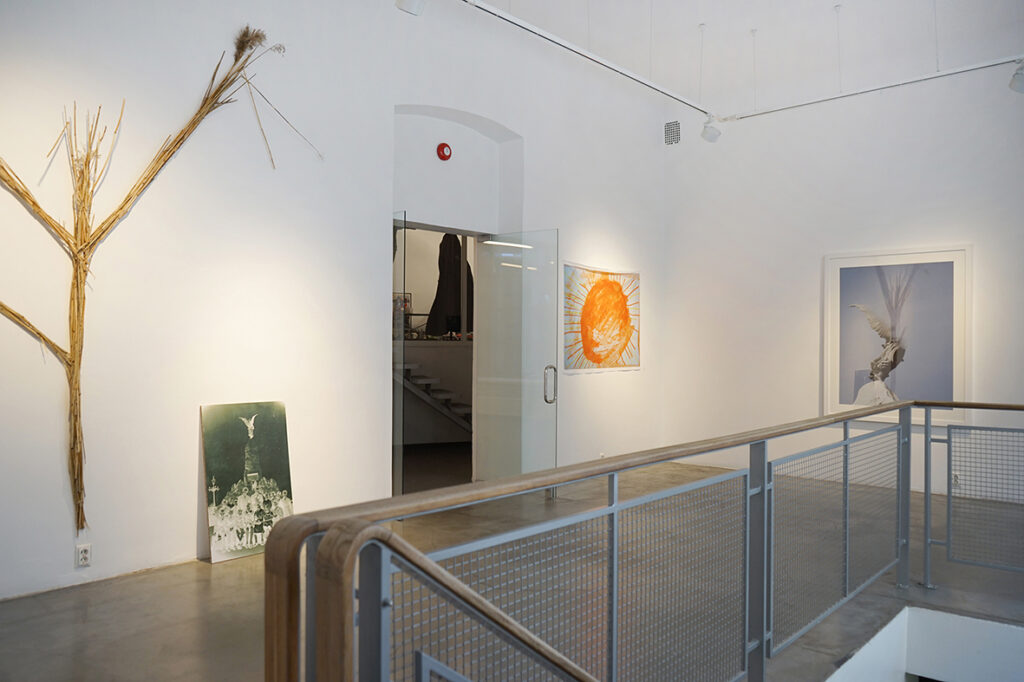
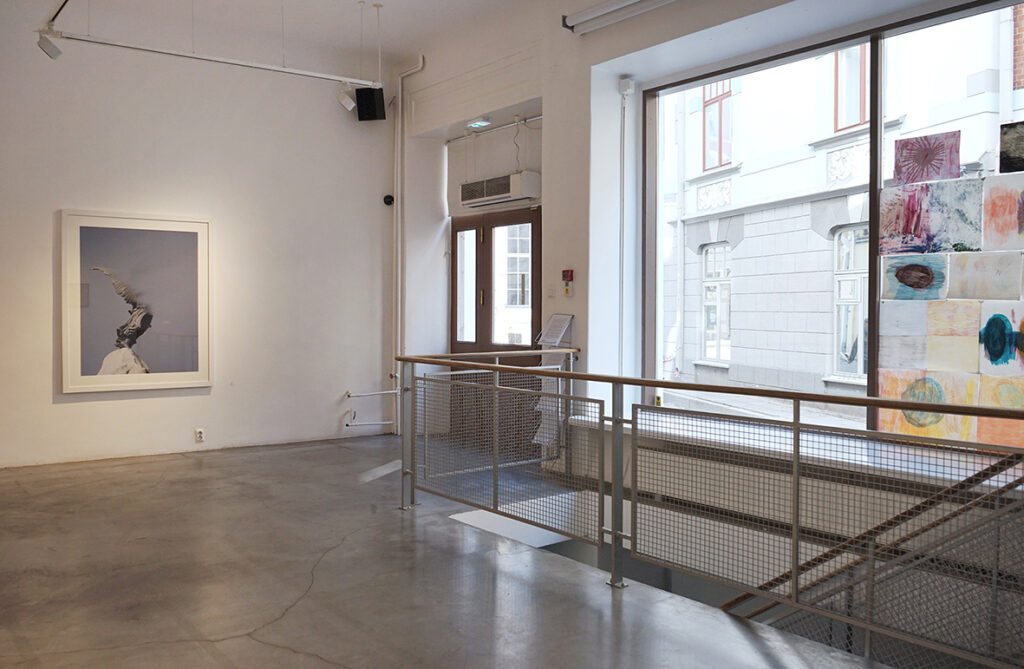
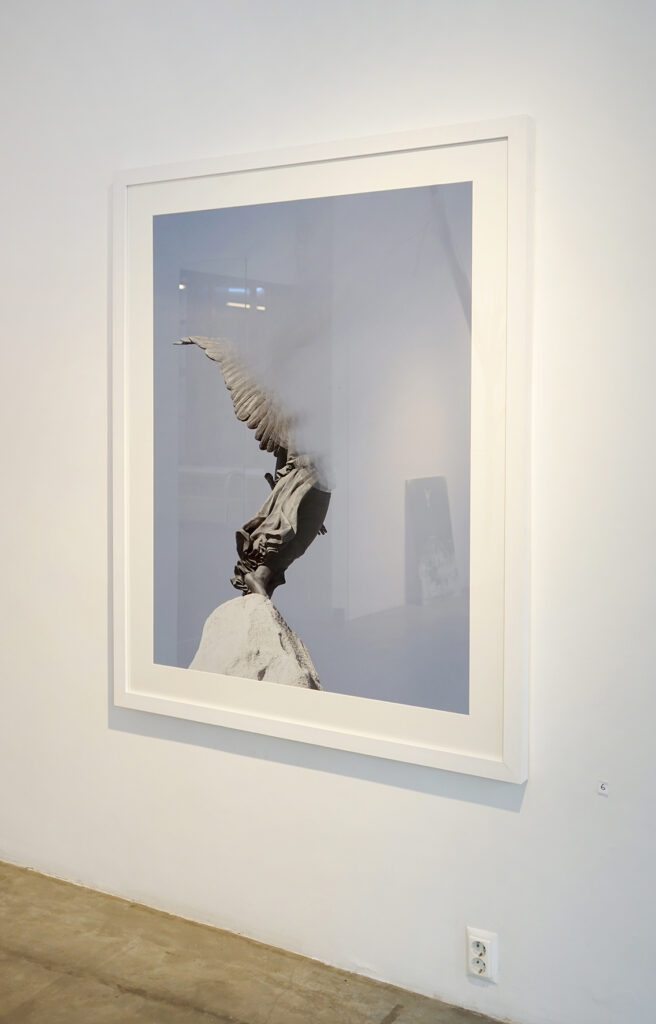
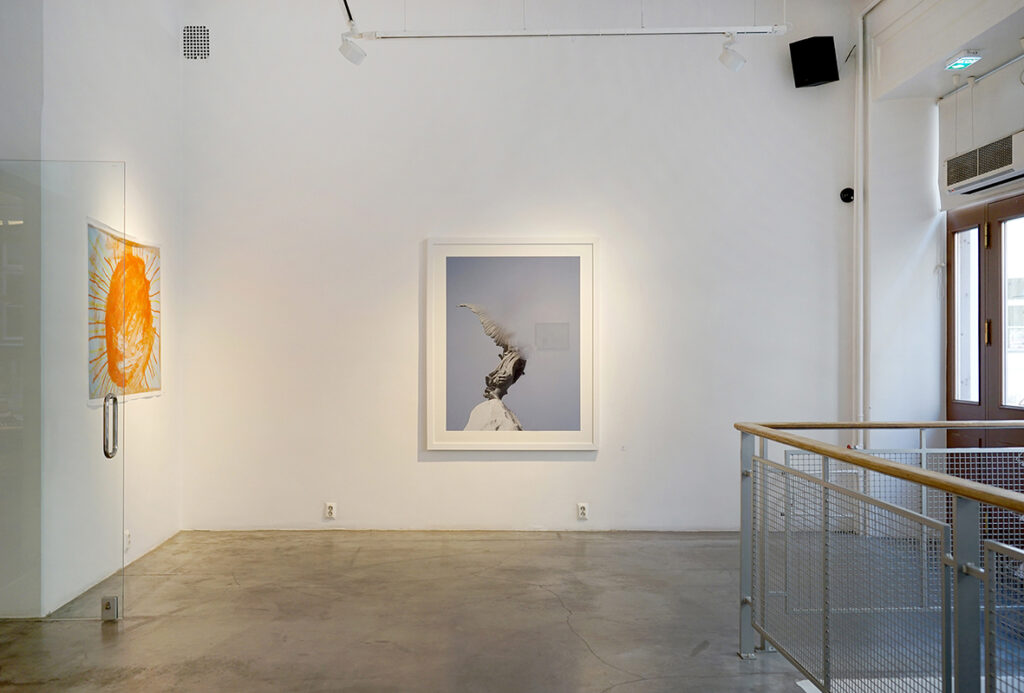
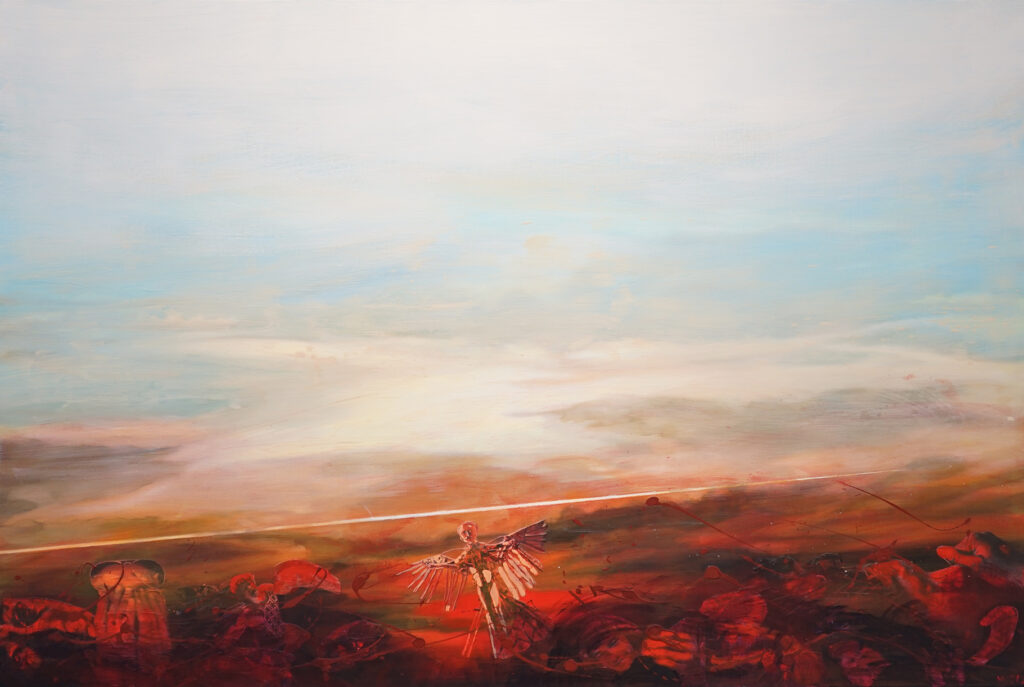
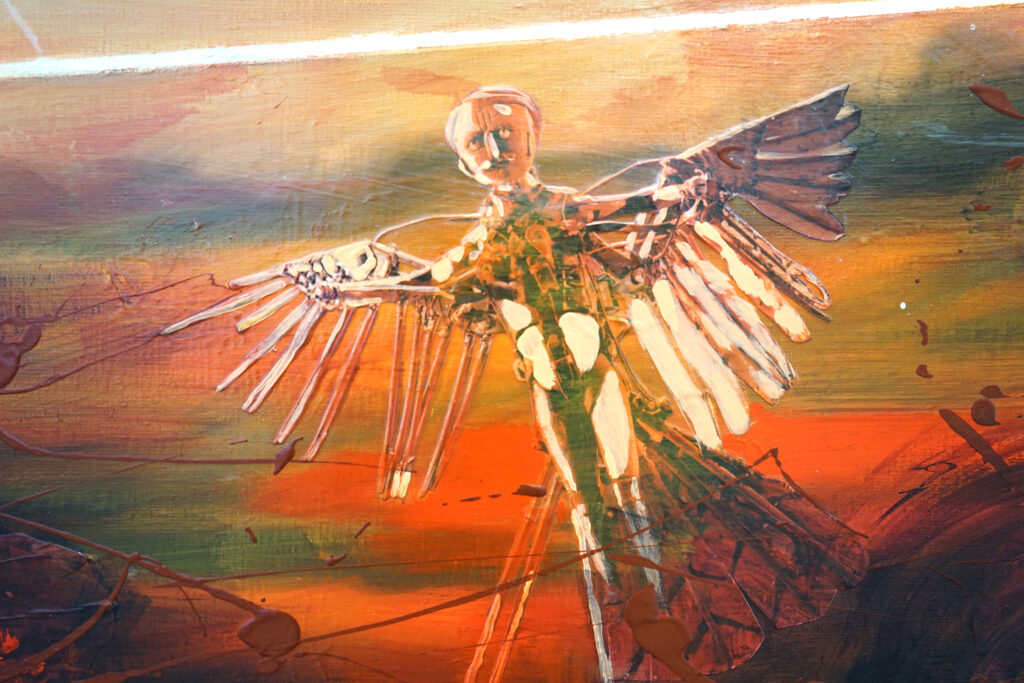
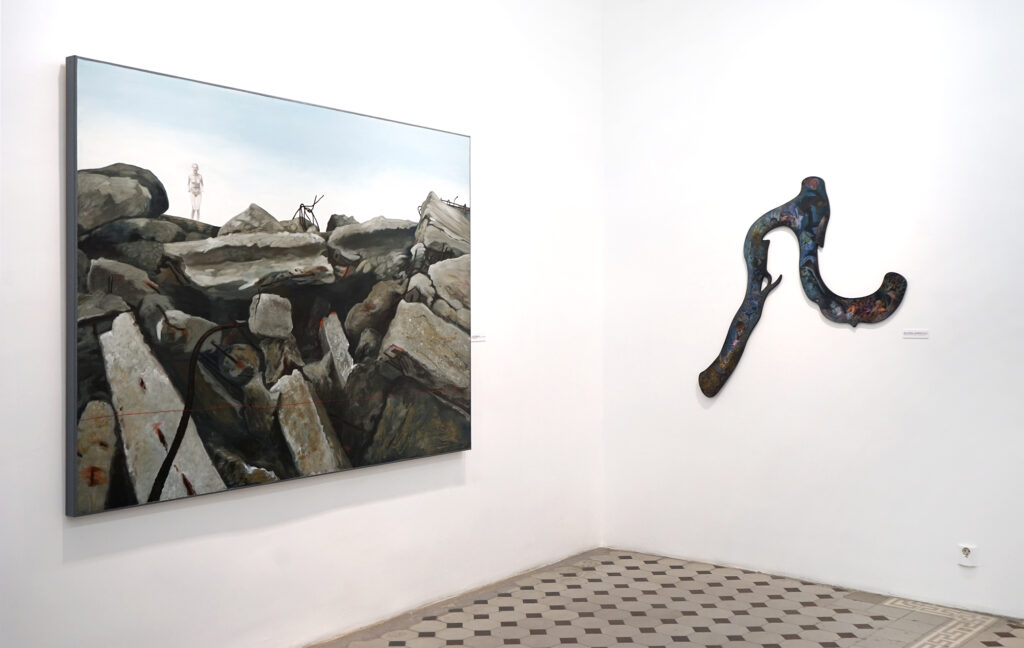
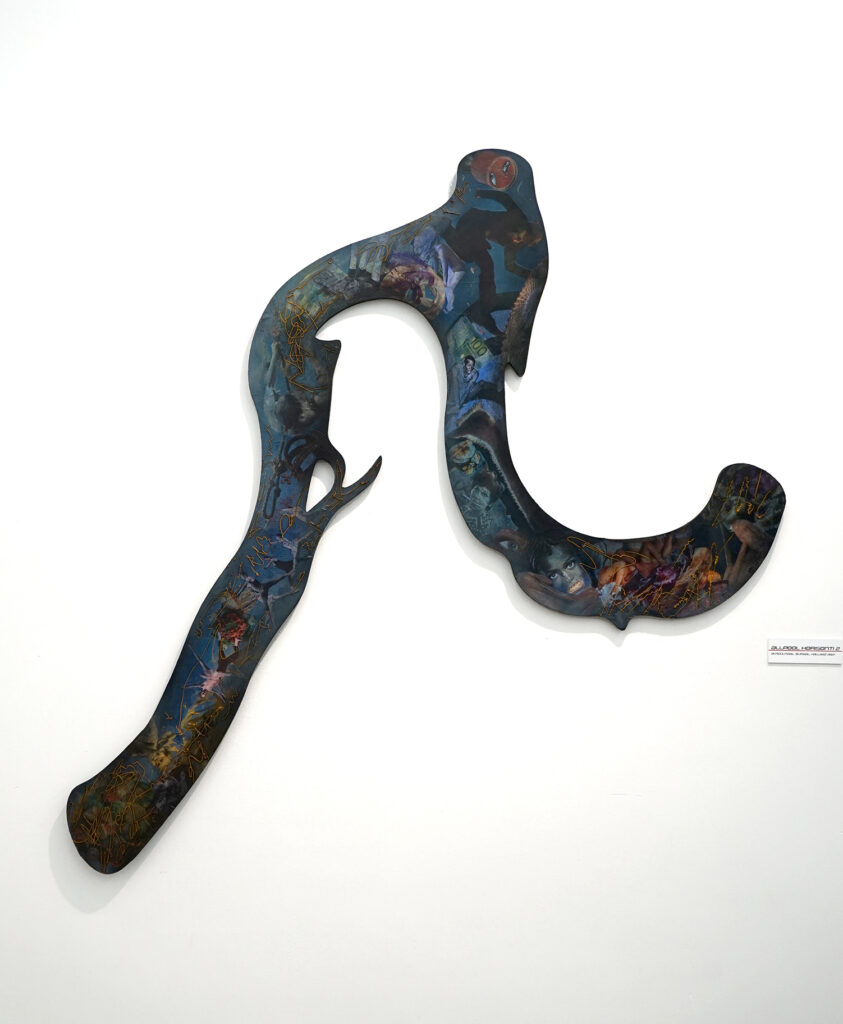
Tanel Rander‘s personal exhibition Angelus Novus will be open in Hobusepea gallery from Wednesday, April 6, 2022. Exhibition will stay open until May 2, 2022.
Tanel Rander: “Angelus Novus means that storm is blowing and the angel of history cannot close her wings. We are all watching her fading into the unknown future, with her eyes still nailed to the past.
This exhibition is an insight to my creative sources that I used to suppress and neglect, while being focused on the outside world and its conventions. In the same time these sources were always supporting me, carrying me.
We have built a pump house on our sources. And seen from that house every source is a resource. An instrument for something. Last year I wrote an article about this: “When Turbines Rotate, while Water Stands Still”. The article opens the context a bit and is available here: https://sirp.ee/s1-artiklid/c6-kunst/kui-turbiinid-poorlevad-aga-vesi-seisab/
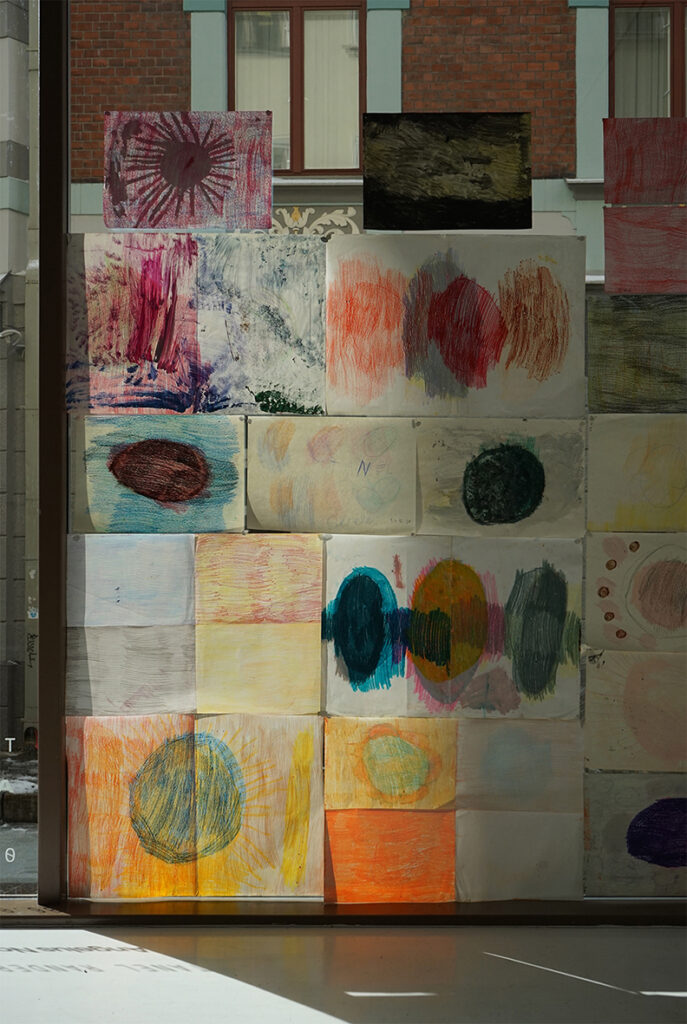
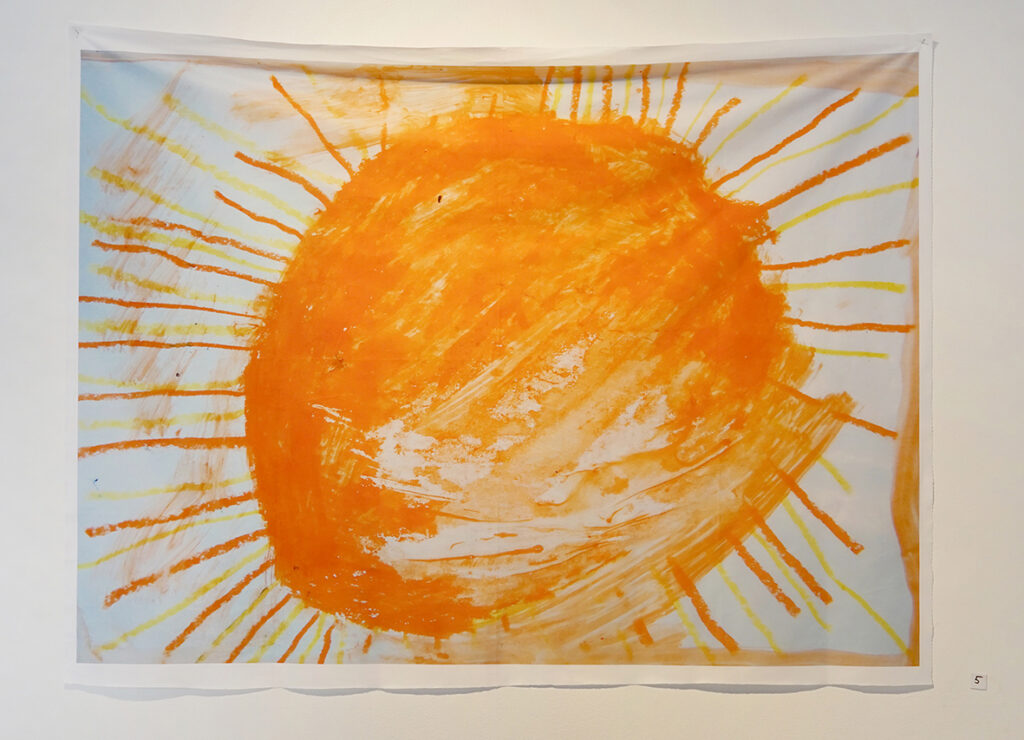
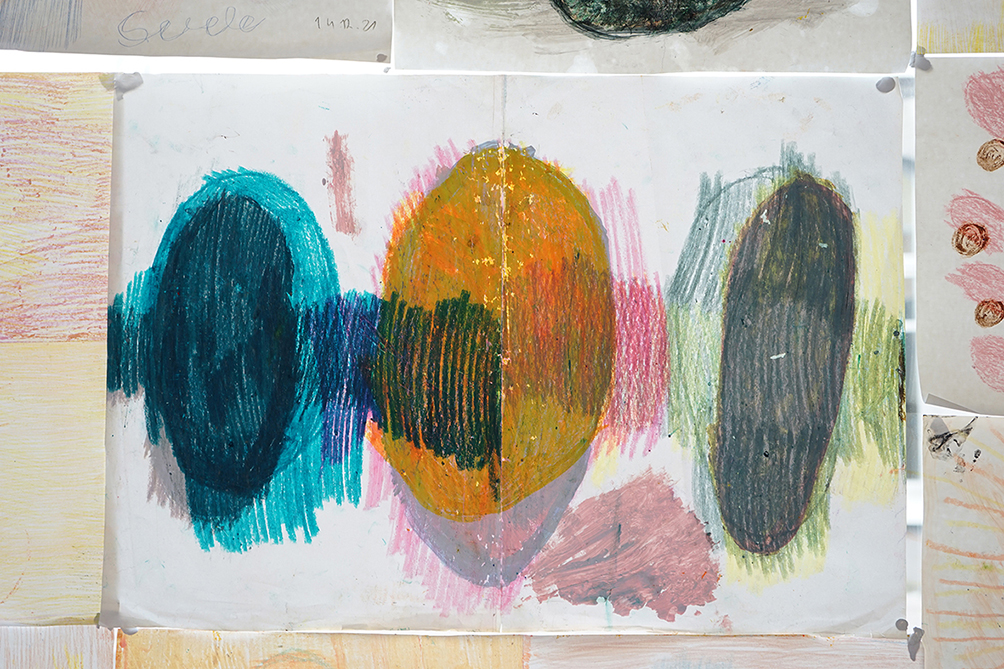
Not all the exhibited artworks come from my personal creative process. There are also some from my work with people with special needs that I have occasionally done during the recent years. So, this exhibition also includes contributions from Sirli, who I worked with in last winter. Her drawings hold a lot of radiating energy. Oil pastels quickly run short in her hands and drawing is a highly intensive process for her. It heals her mood and seems to protect her from something. My work with her was simply about drawing together. Neither of us had never studied drawing or painting. But we were drawing and we were painting. And it had good influence on us.
The central point of this exhibition is a personal symbol of my own. It was waiting for more than 10 years until I decided to show it in public. But then a heavy storm started to blow and my works that were mere abstractions, something that I had used mostly for myself, got exposed to it. Such storms can also be seen as teeth of time that crack all meanings that have been nailed to temporality and eat everything that is up to date. I will see what will be left of these works. The only sail in this storm that I have consciously hoisted is Angelus Novus – the fading angel of history, carried away by the wind.
I thank everyone who has supported me on my journey. Regarding this exhibition, Jelena Jokic Grobler played a very important role in helping me with means of psychodrama and art therapy. In latest times I was also influenced by Borut Holland, with who I shared some wonderous coincidences. I also thank people from Kärdla social centre, I thank Estonian Cultural Endowment and MTÜ Sada Paplit for supporting this exhibition and I also thank the people of Art Smart for being dedicated to their work.”
Exhibitions in Hobusepea gallery are supported by the Cultural Endowment of Estonia, Estonian Ministry of Culture and Liviko Ltd.
Tim Høibjerg, Siiri Jüris and Triin Marts will open their exhibition Then the Edge Asserts Itself in Hobusepea gallery on Thursday, May 5, 2022 at 18.00. Curator of the exhibition is Anne Vigeland. Exhibition will stay open until May 30, 2022.
Then the Edge Asserts Itself, which takes its title from Anne Carson’s book Eros the Bittersweet (1986), is a group exhibition that looks towards the complexities of human desire and emotional interaction. The exhibited artists share a common interest in corporal experiences – in the body as archive, material, landscape, haven. Through painting, sculpture, video, and installation, they explore what it means to be alone and together in a distressed and desolate world, with a particular attention towards the powers of touch, memory, and intimacy. In dialogue with each other and the materials and traditions that govern their work, they address how desire forms selfhood, how it makes and breaks us, and the abiding struggle to soften the edges of doubt.
The exhibition is supported by: Cultural Endowment of Estonia, Nordic Culture Point and Galleri Duerr.
Exhibitions in Hobusepea gallery are supported by the Cultural Endowment of Estonia, Estonian Ministry of Culture and Liviko Ltd.
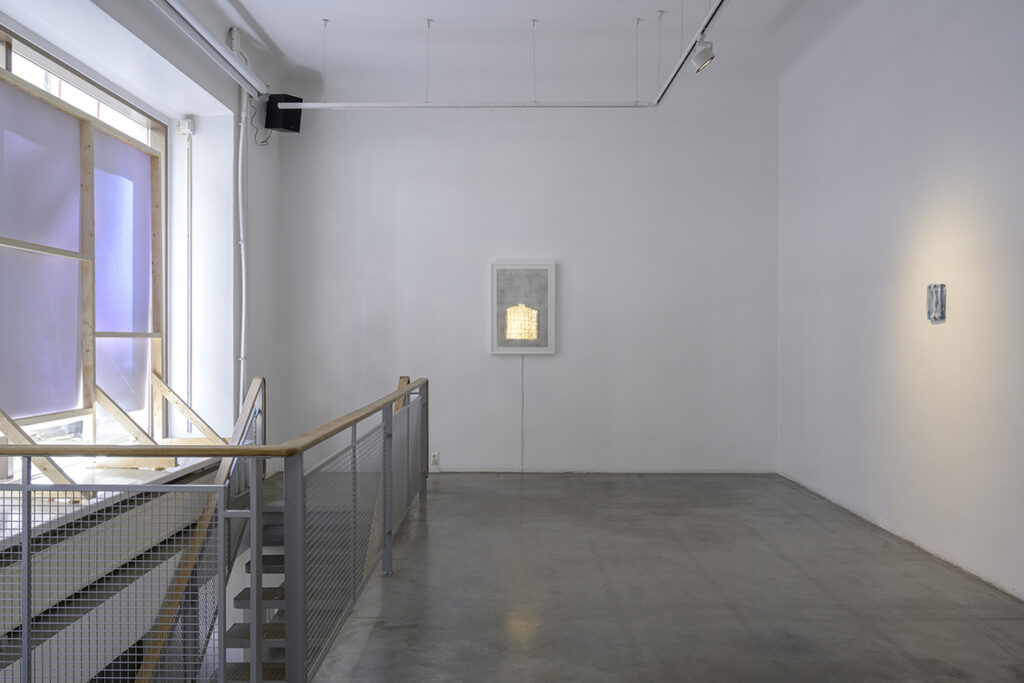
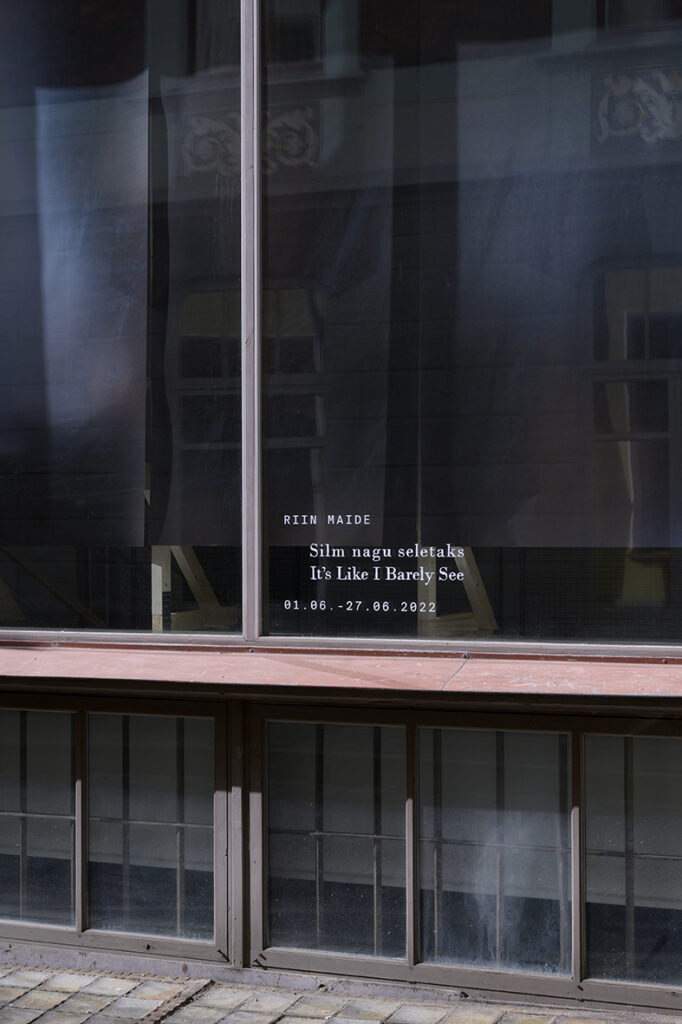
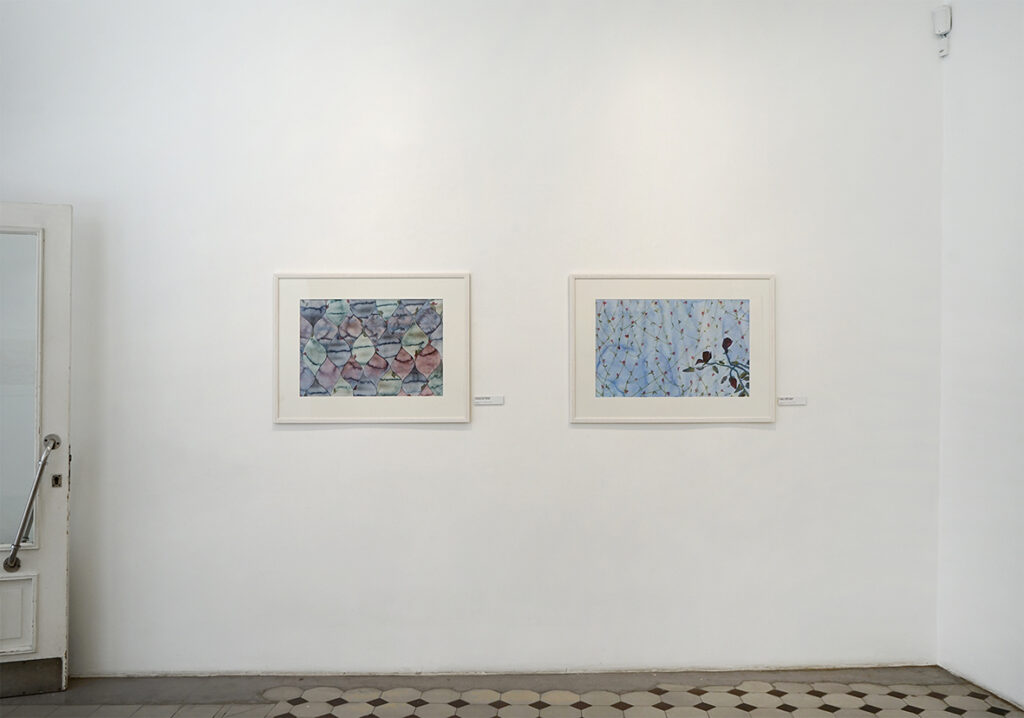
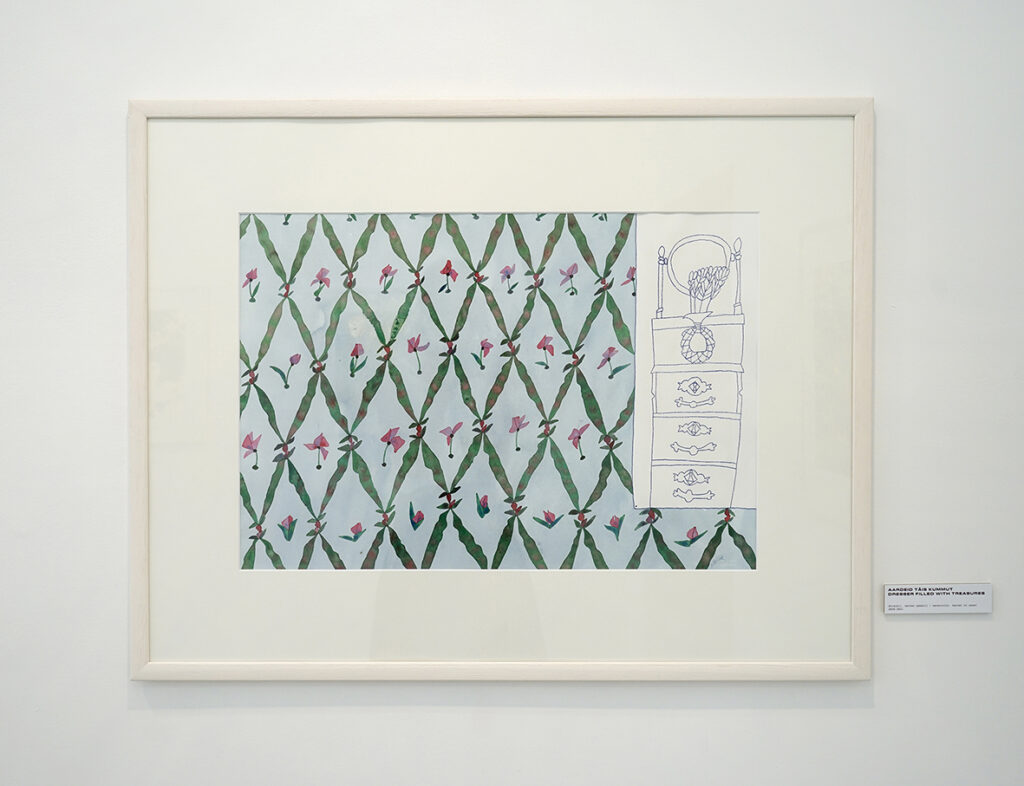
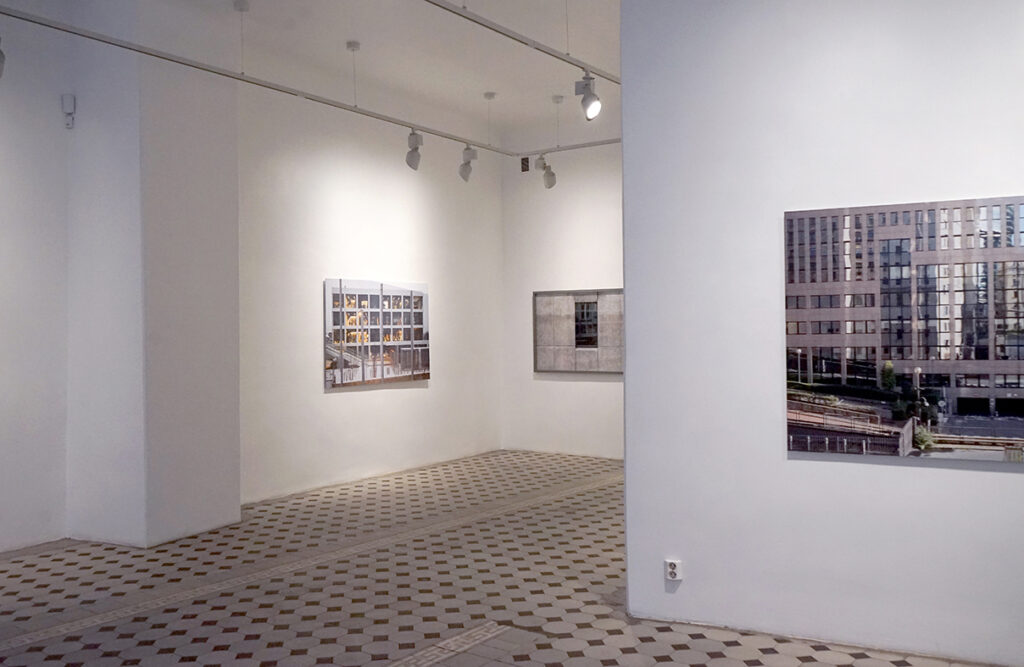
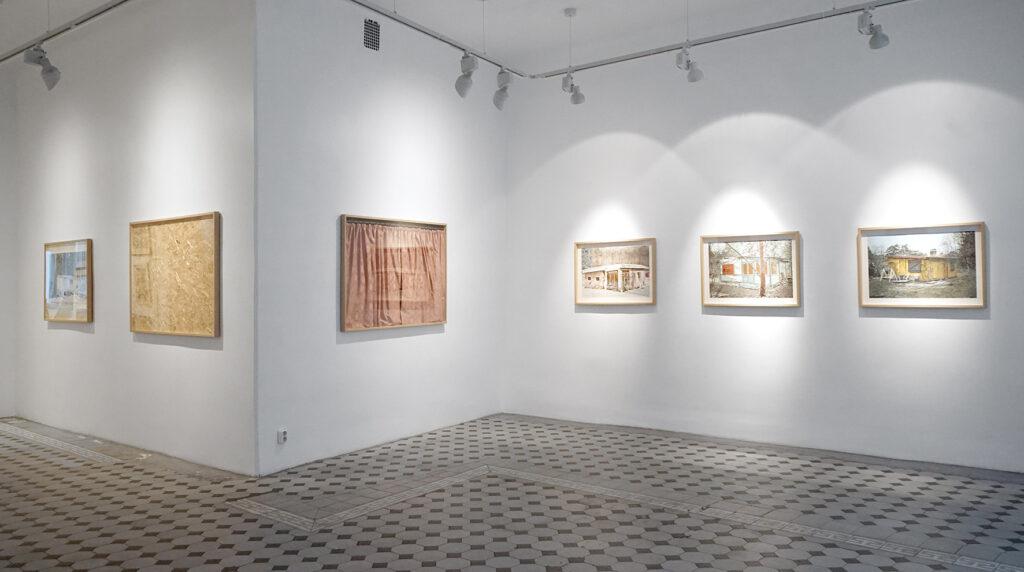
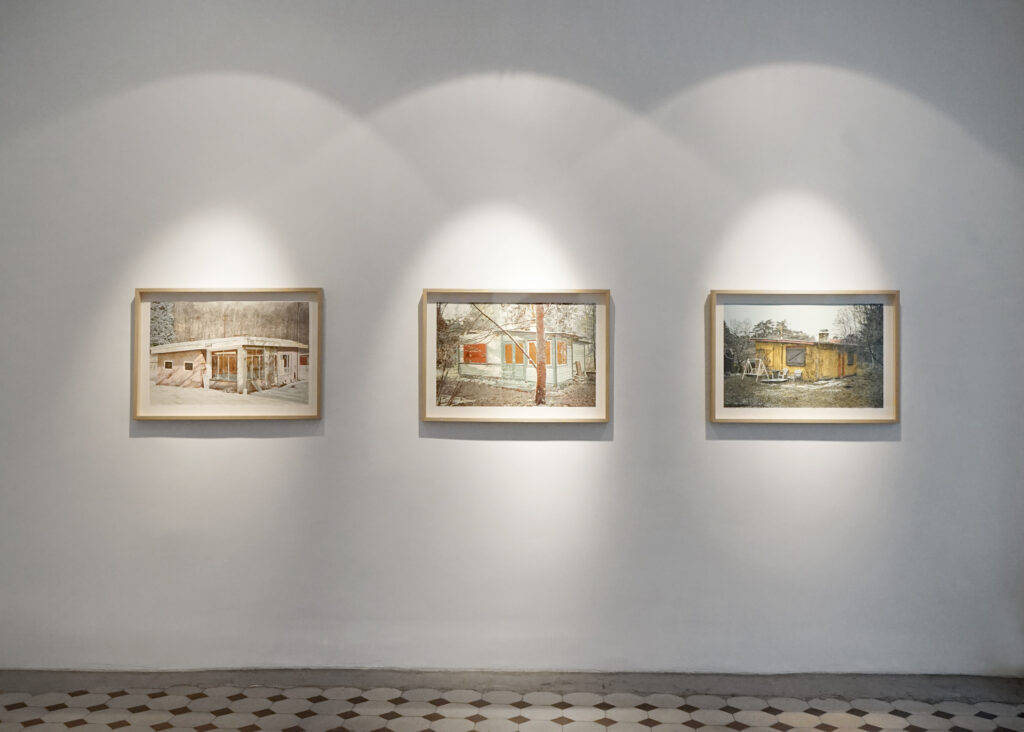
Riin Maide will open her personal exhibition It’s Like I Barely See in Hobusepea gallery at 6pm on Wednesday, June 1st, 2022. Exhibition will be open until June 27, 2022.
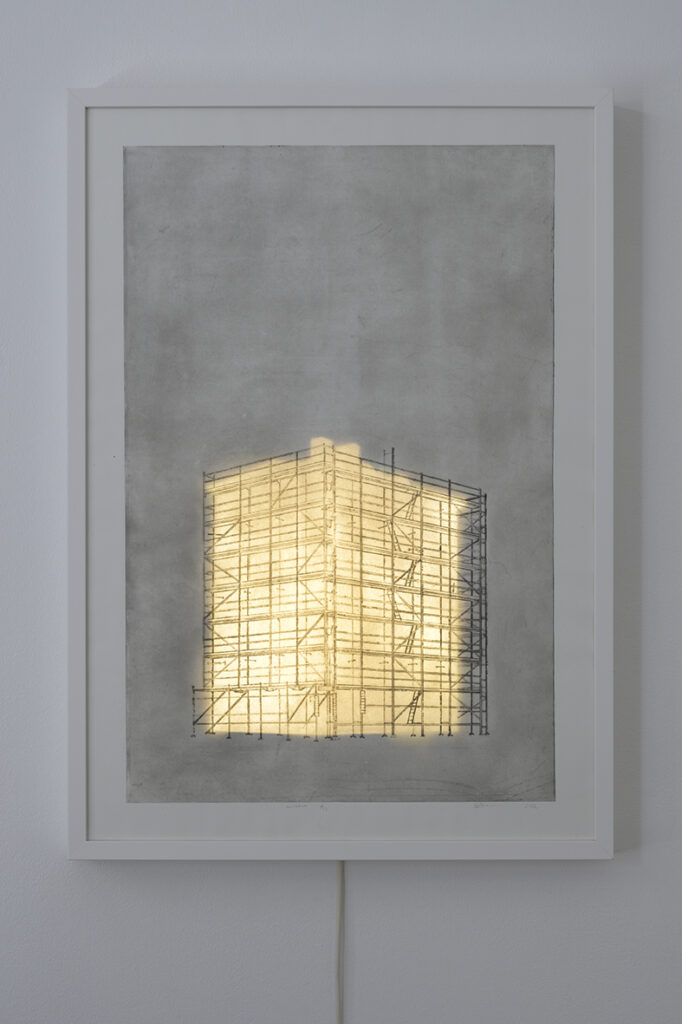
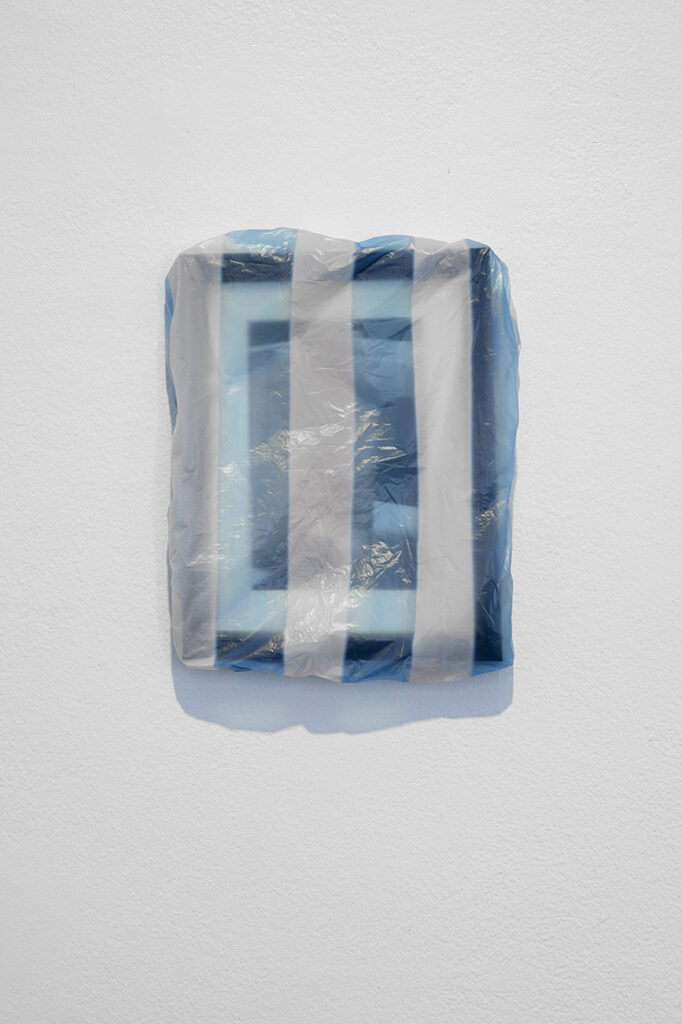
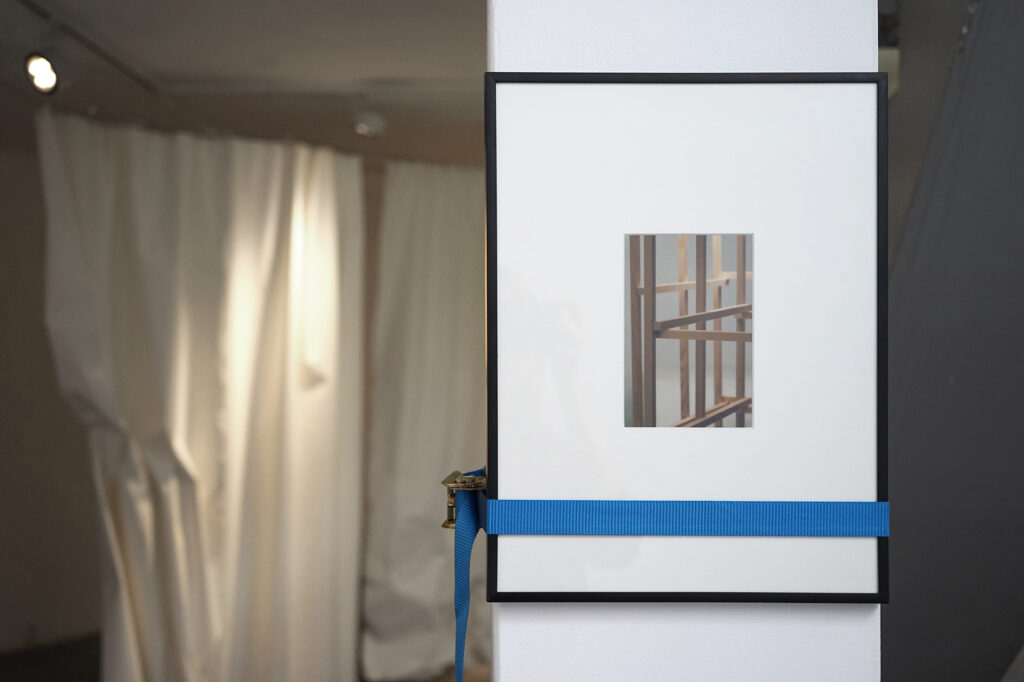
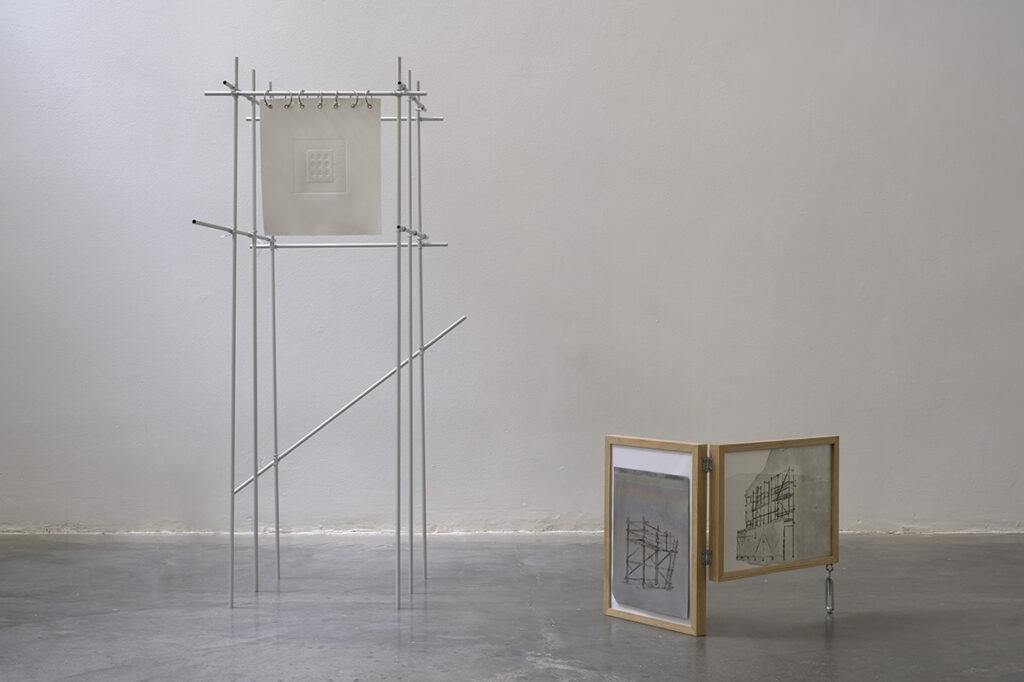
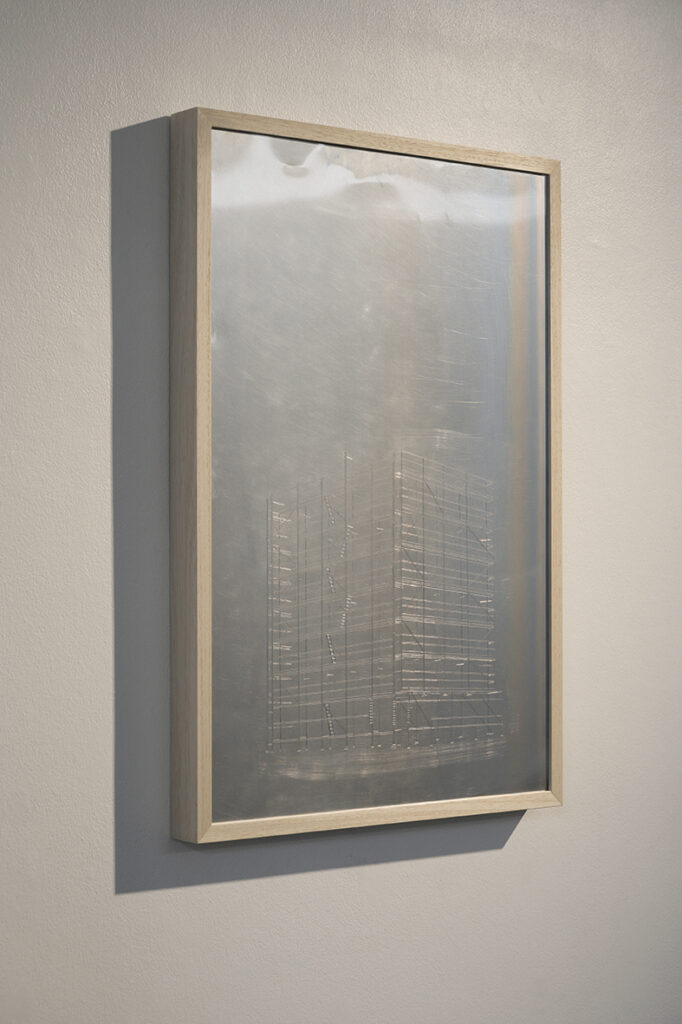
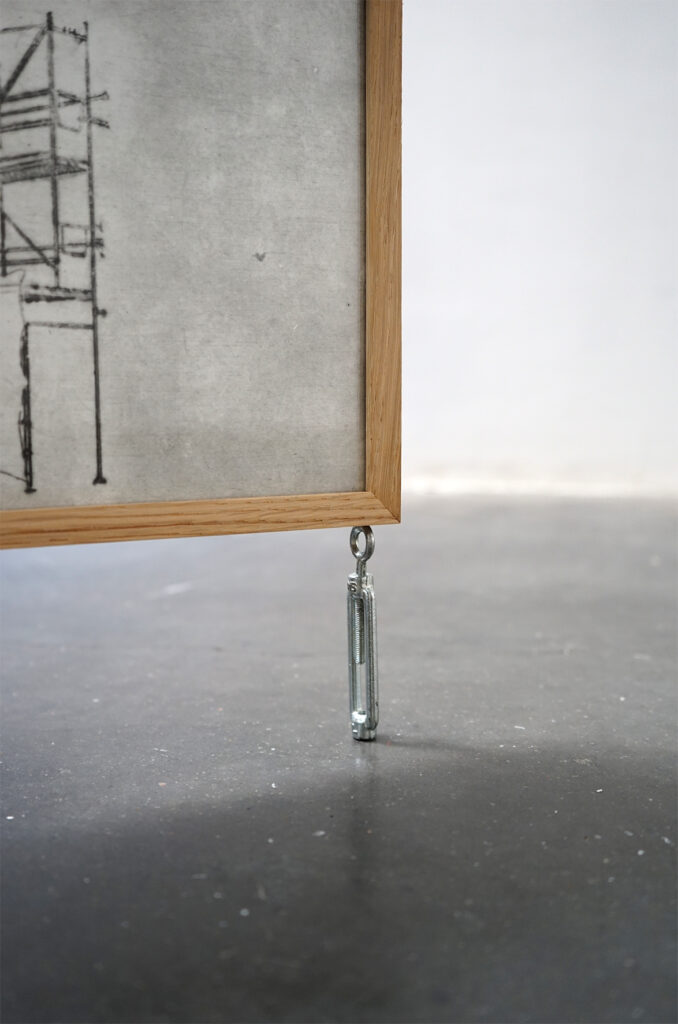
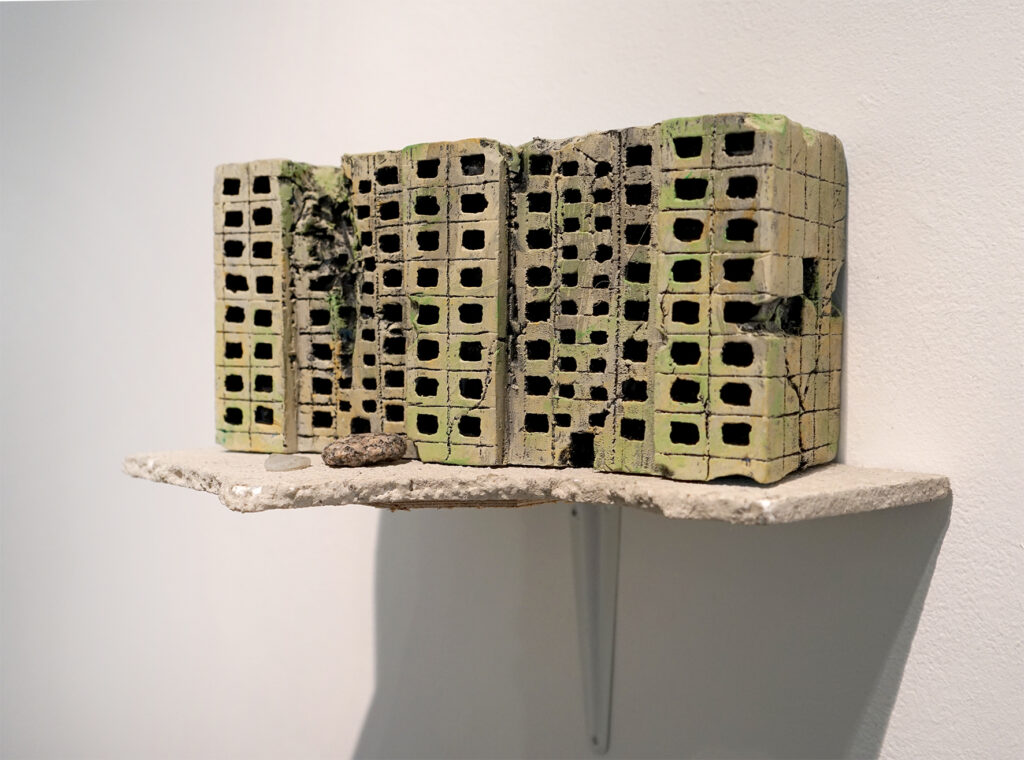
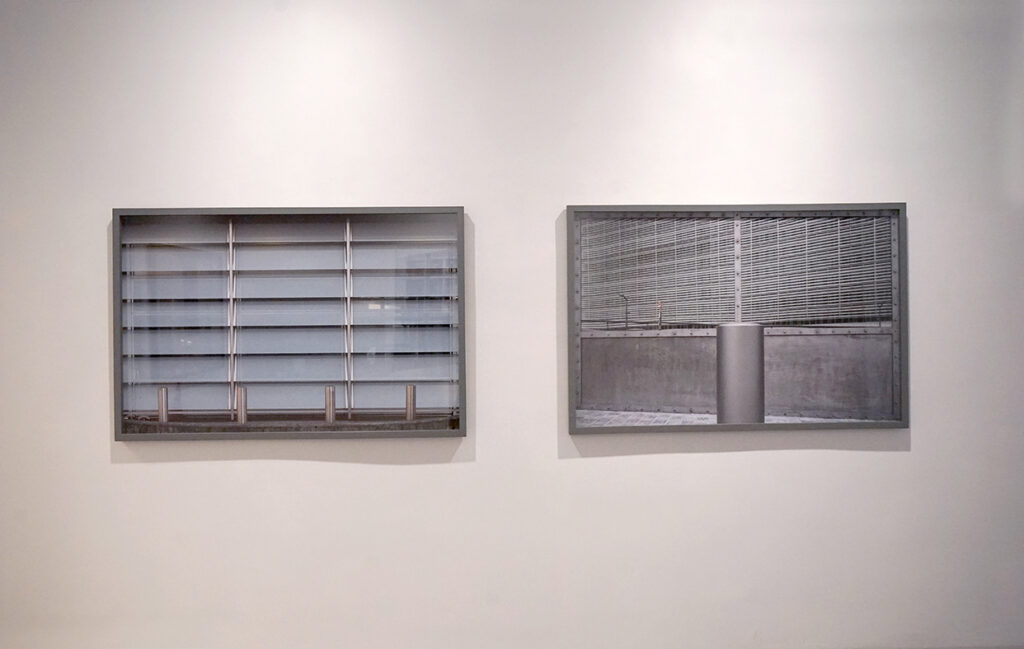
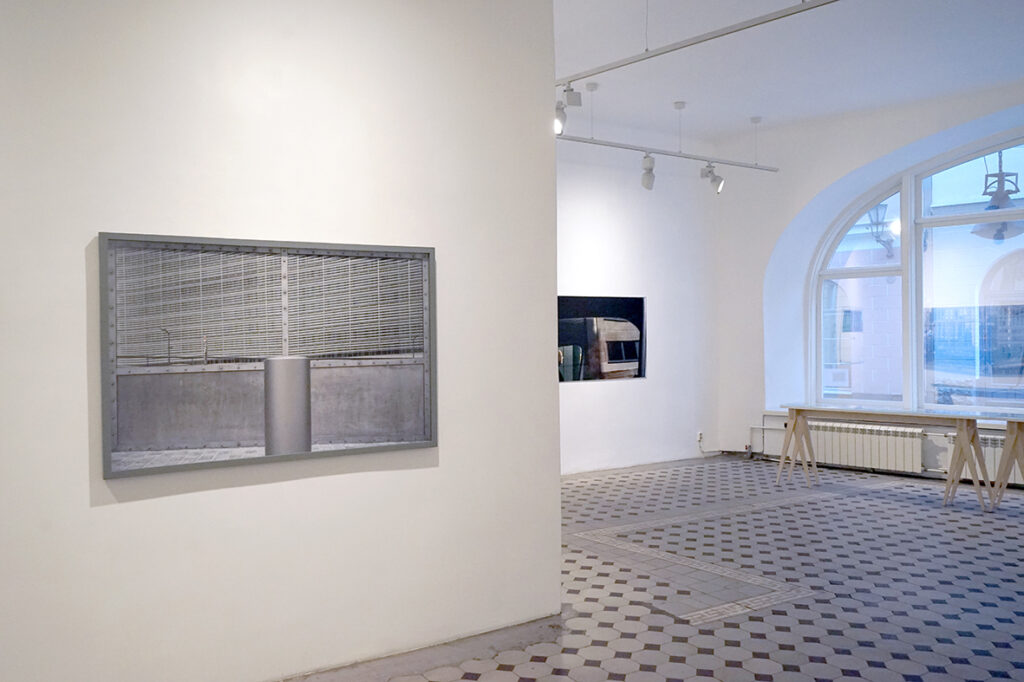
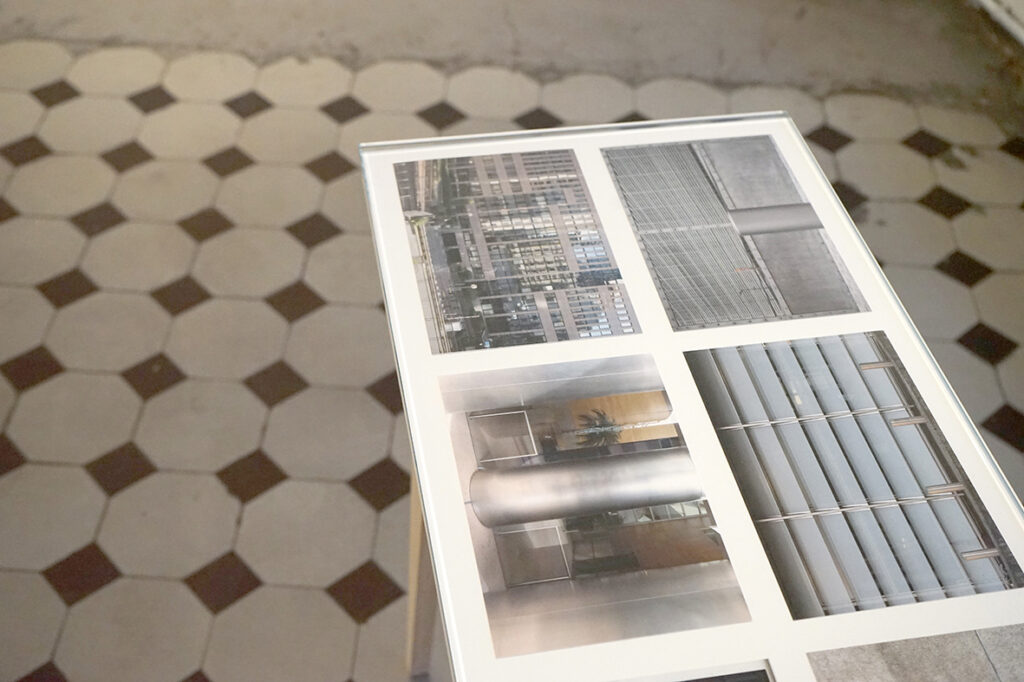
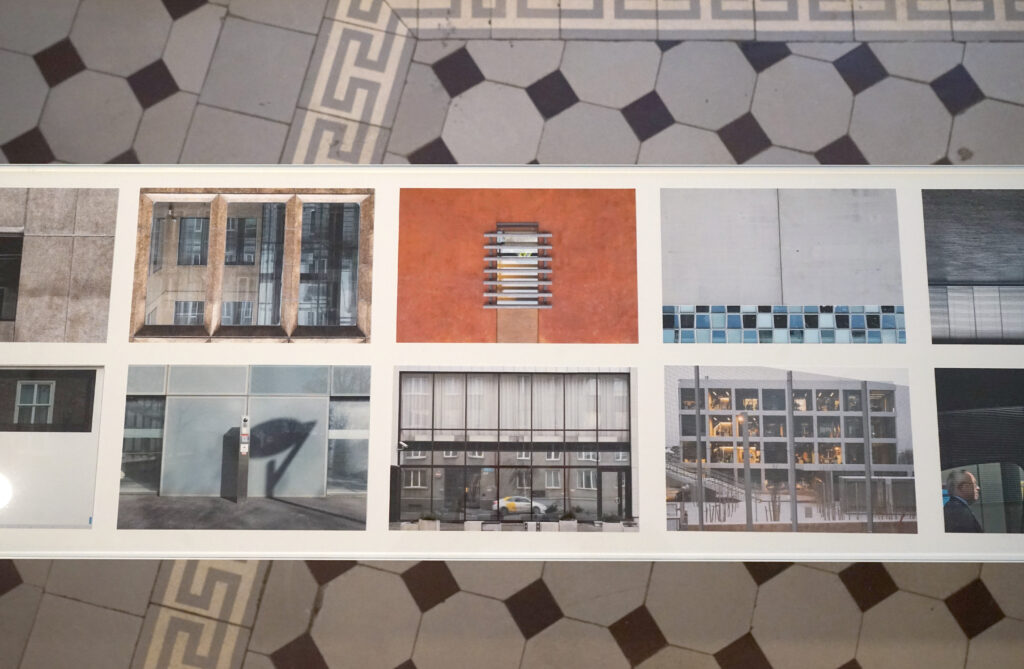
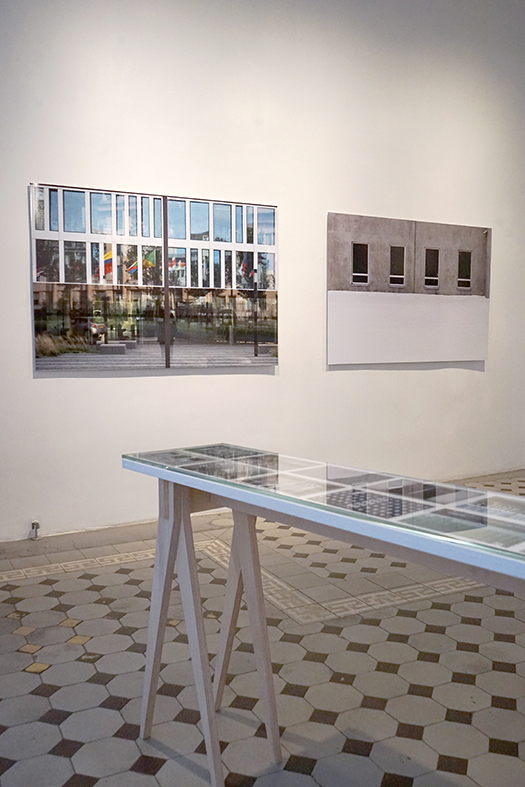
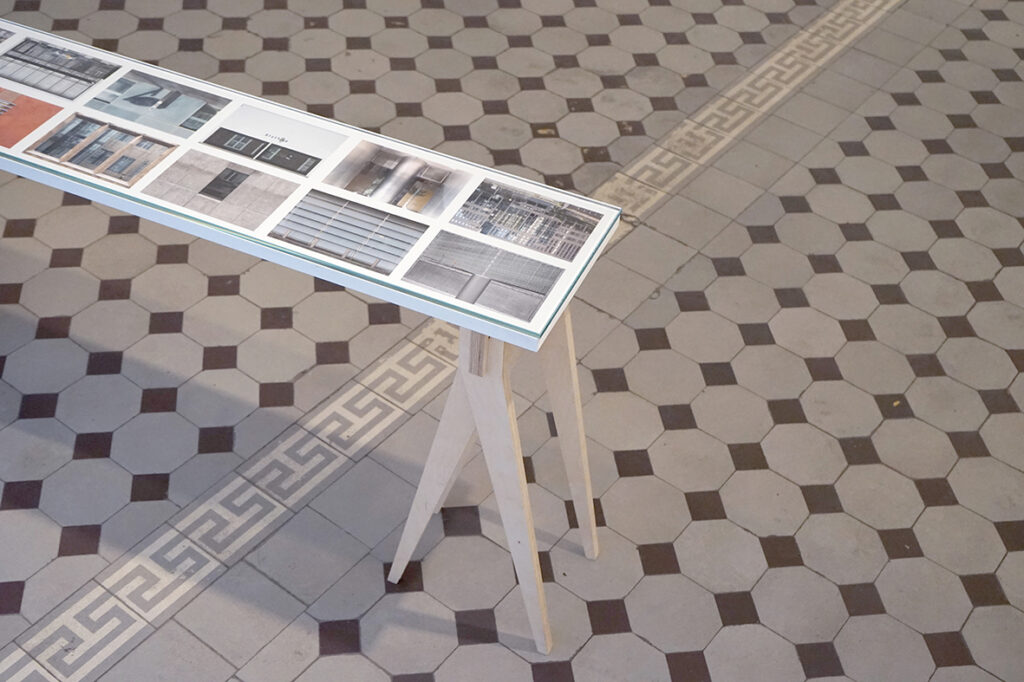
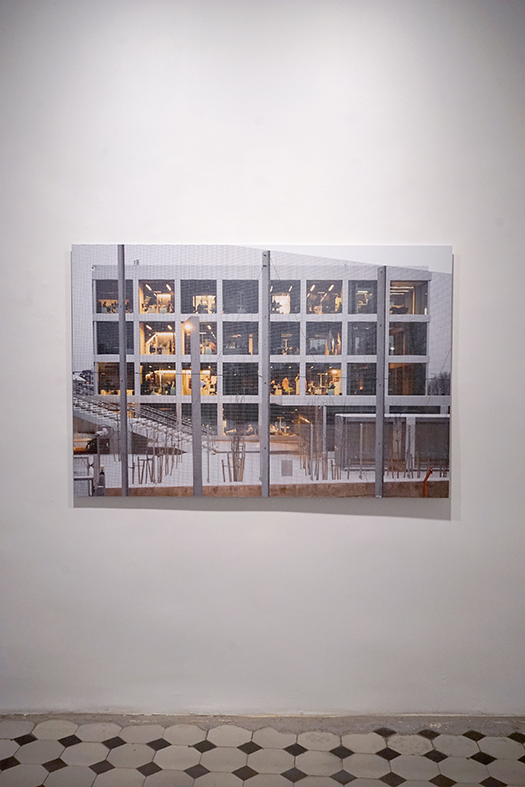
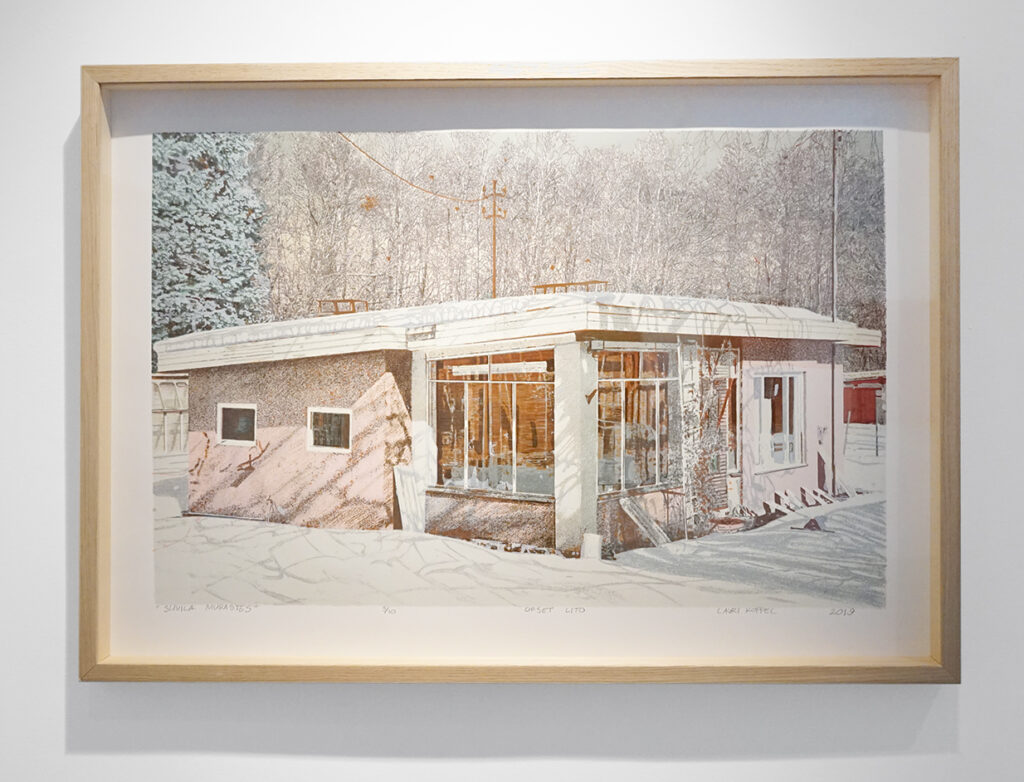
Windows covered by transparent plastic and scaffolding are normally the signs of something new or fresh arriving soon in an urban environment. Similarly to curtains, these elements denote certain anticipation and will be forgotten when they open up new views.
It’s Like I Barely See is pays homage to forgotten architecture. While depicting fragile phenomena in urban space, such as framework and construction, the artist attempts to stretch the temporary into something endless.
The artist expresses her gratitude to: Rain Kilkson, Cristo Madissoo, EKA graafika osakond.
Photos: Anna MAri Liivrand ja Roman-Sten Tõnissoo
Exhibition is supported by the Cultural Endowment of Estonia.
Exhibitions in Hobusepea gallery are supported by the Cultural Endowment of Estonia, Estonian Ministry of Culture and Liviko Ltd.
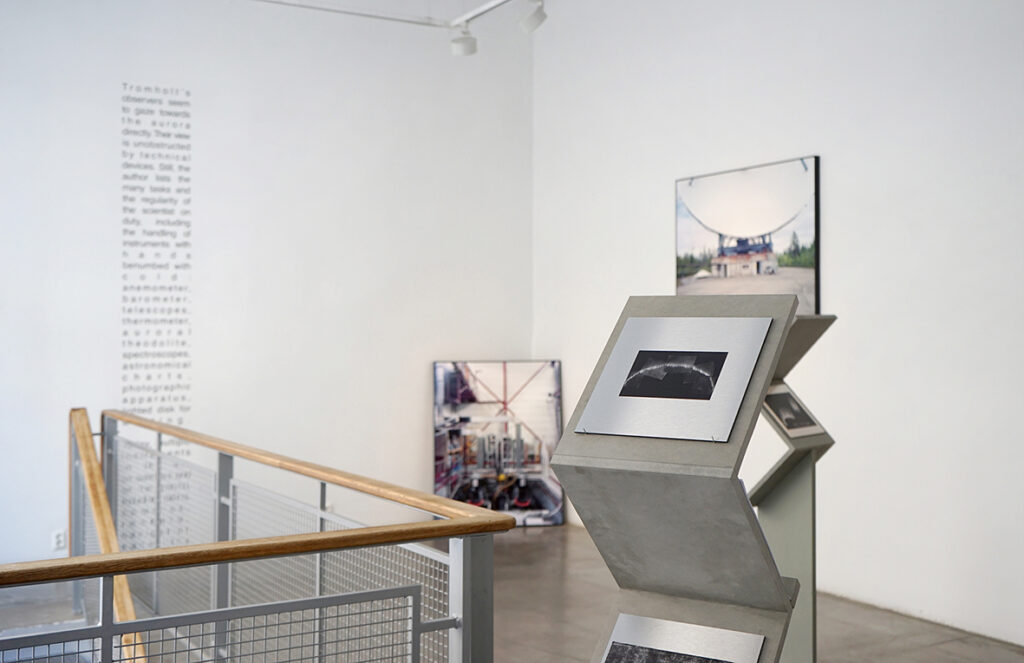
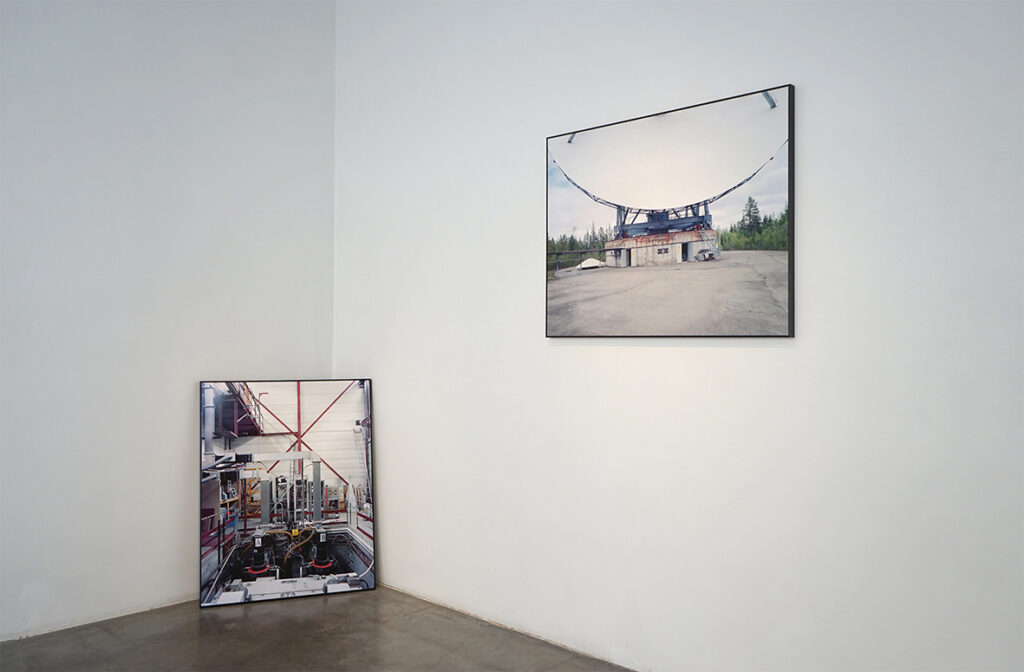
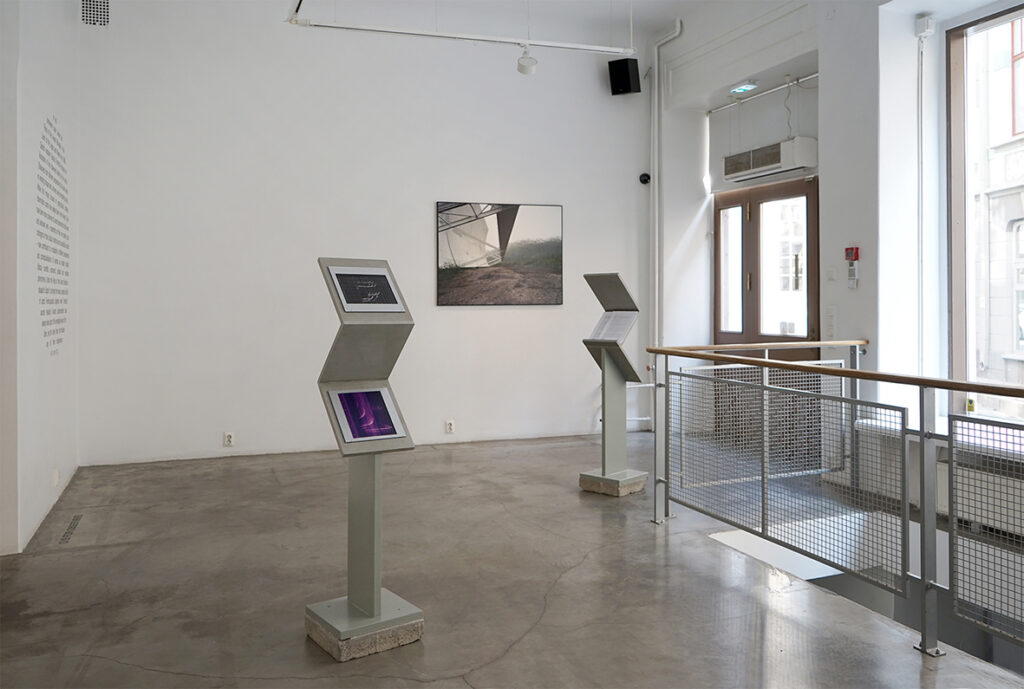
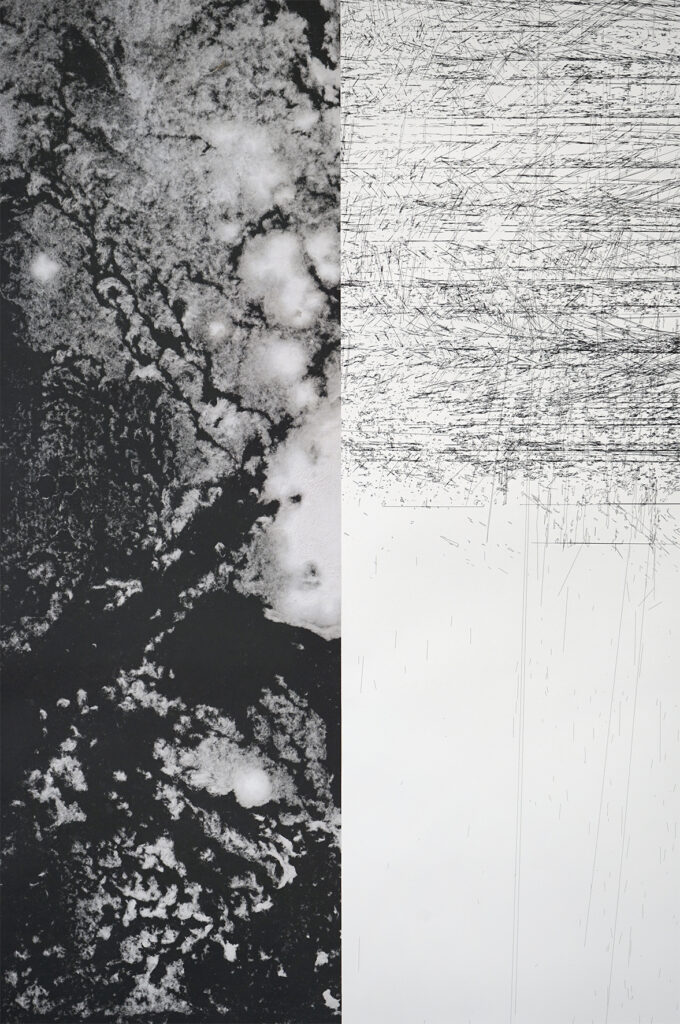
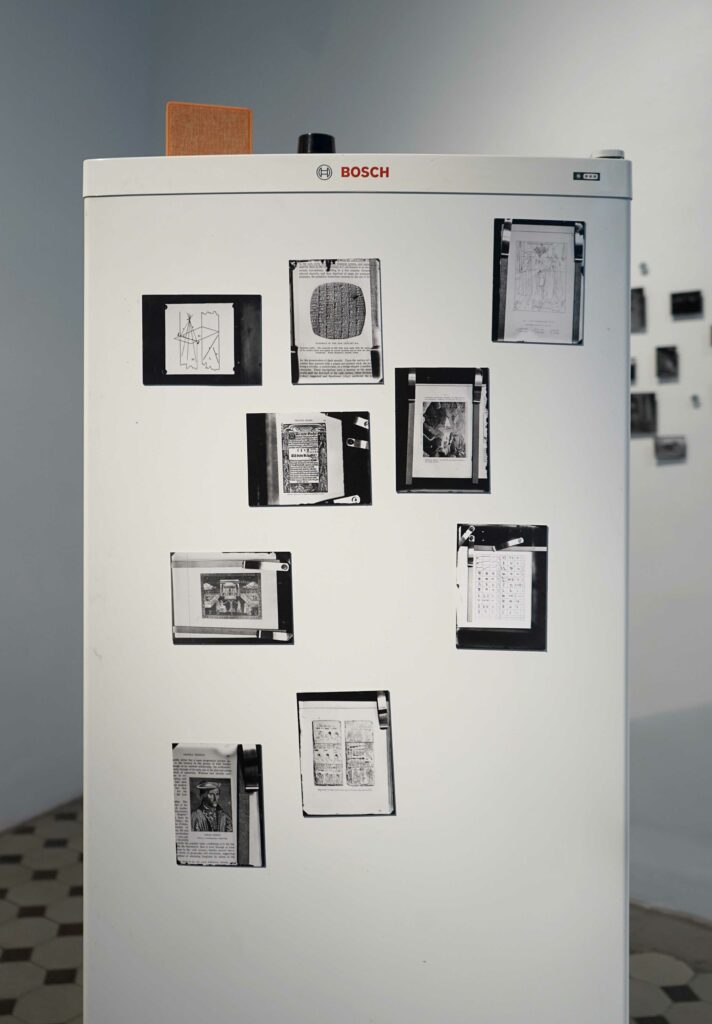
Towards Atmosperic Care, a research collaborative between Hanna Husberg and Agata Marzecova, will open their exhibition From Aurora to Geospace in Hobusepea gallery at 6pm on Thursday, June 30, 2022. Exhibition will be open until July 24, 2022.
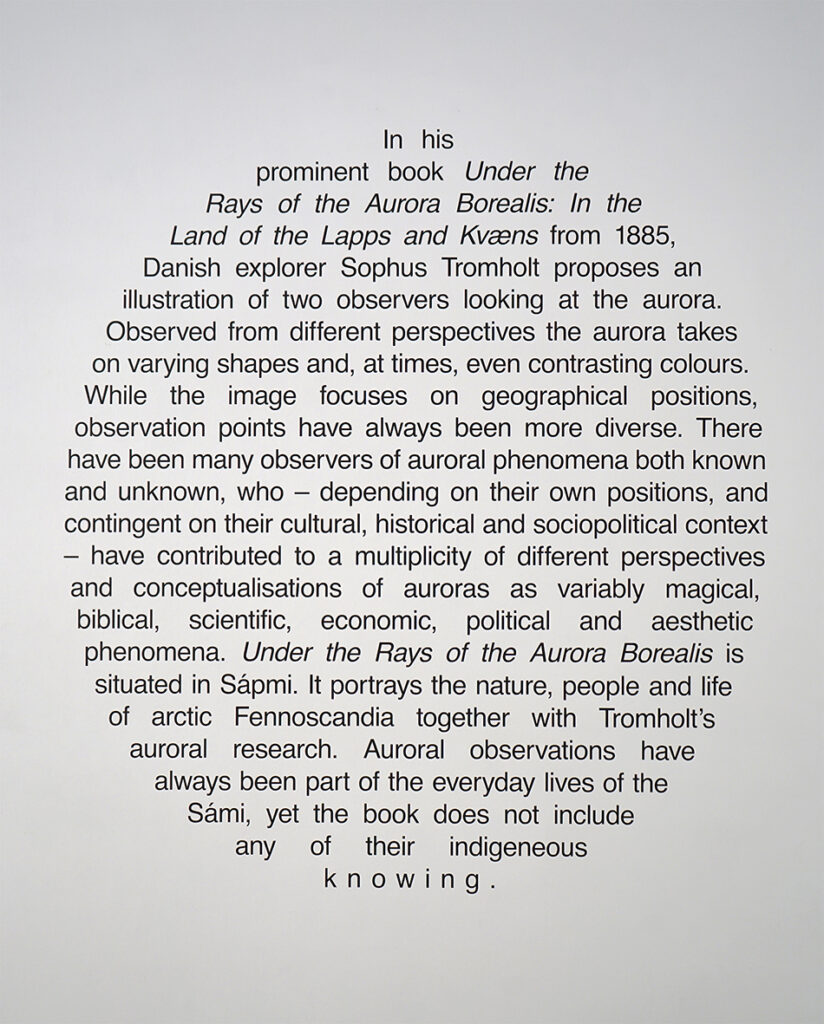
How do we depict something? Not only in artistic contexts but also in more scientific, more enlightening context? How do we agree on what is aurora and what is not?
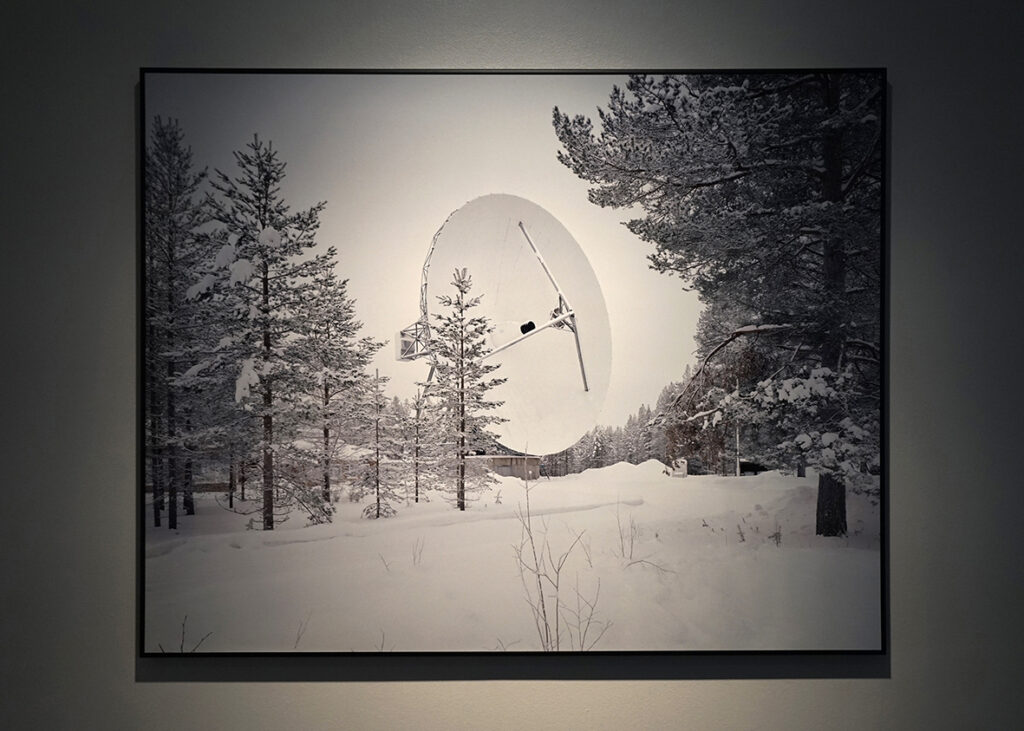
From Aurora to Geospace explores how historical interest in visible atmospheric phenomena, notably the aurora borealis or northern lights, has contributed to the uncovering of invisible processes and regions of near-Earth space (also called geospace) that are made perceptible only with the help of science. Rather than observing atmospheric phenomena as such, the installation looks at the instruments, historical circumstances, events and ideas that make atmospheric processes visible and thereby contribute to the construction of novel atmospheric imaginaries and sensibilities. Scientifically, the auroral phenomenon can be described as the coming together of forces from the Earth’s magnetosphere, the ionosphere (the region 70 km and above the Earth’s surface) and the sun’s particles. Irregularities in the ionosphere, also known as space weather, produce auroras and similarly affect radio, communication and navigation systems.
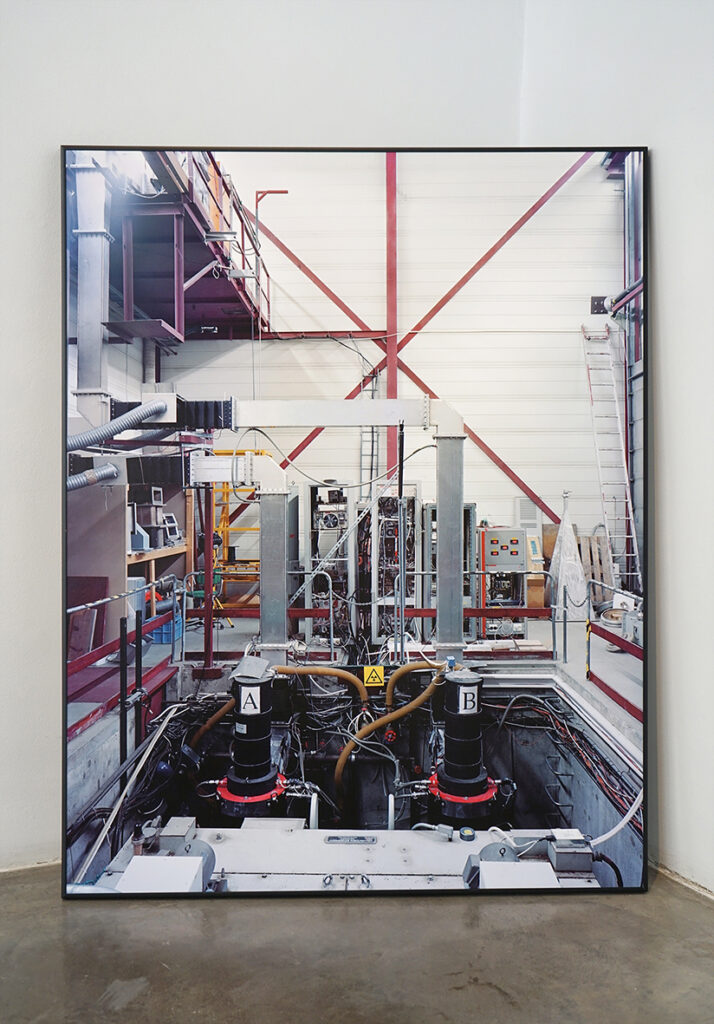
Due to low solar activity there were very little auroral events during the medieval period, and in 1707, after an absence of more than a hundred years, great spectacles of auroras reappeared. Auroral displays were visible as far south as France and Italy, at latitudes where no-one had seen aurora before. It was the beginning of the Enlightenment, and auroras were in the spotlight of knowledge production. This also drew attention to the arctic Fennoscandian territories, which during the last centuries have became one of the most important natural laboratories for conducting scientific research on the functioning of the atmosphere as well as the whole geosphere, and therefore also as a place where global atmospheric imaginaries are shaped. Today, the region hosts the ionospheric radar EISCAT infrastructure (the second largest European research project after the Hadron Collider) which studies the ionosphere as well as auroral phenomena by transmitting and receiving signals between large antennas and facilities located in Sodankylä, Kiruna, Tromsö and Kilpisjärvi.
Thanks to the conceptual tools of ionospheric science (to which facilities and places such as EISCAT contribute), planet Earth is no longer an isolated Blue Marble in the dark vacuum of outer space. Instead, it can be understood as energetically and materially interconnected with its galactic environment. However, such planetary sensibility is not simply accessible through human senses and embodied experience. Rather, it is dependent on technoscientific infrastructures and expertise only made possible through the entanglements of science, militarisation, commercialisation and the datafication of nature. In this light, we ask how to meaningfully consider, and care for, the representational, yet material sphere between what is perceptible and imaginable, and the outer space that, while difficult to comprehend, is permeated with satellites, and other technologies and environmental processes that condition our lives?
Combining photography, historical and scientific imagery, drawing, sound and text, From Aurora to Geospace approaches auroras as an access point to the upper atmosphere. It draws on conversations with scientists and researchers encountered during field trips to the ionospheric radar EISCAT infrastructures and their surroundings, and uses academic and historical sources as well as scientific materials brought up by the people we met, such as the prevalence of diagrams for shaping how we imagine vast, yet invisible, environments out of reach for the human senses. Situated and embodied understandings of science as always historically grounded, partial and never perfectly objective do not trivialize nor diminish the importance of scientific evidence, instead they create opportunity for engagement. In line with this, the different elements of the installation are organized as a fragmentary vocabulary, or clavis, providing some keys for interpretation without presupposing hierarchical relations between the scientific, aesthetic, historical and political.
Towards Atmospheric Care is a long-term research collaborative between Stockholm-based visual artist Hanna Husberg and Tallinn-based interdisciplinary researcher Agata Marzecova which explores air as a naturalcultural phenomenon situated in the nexus of media, science and technological mediation. Using installation, performance, writing and critical analysis, the project examines the overlapping boundaries between the aesthetic, science and politics of air and atmosphere. In addition to artistic and academic outcomes, the duo advances interdisciplinary pedagogic approaches, including joint teaching at the Estonian Academy of Arts as well as co-learning workshops (Heavens Field_Notes, 2019; Fantasies of Seamless Interoperability, 2021; How to care for air? Thinking lab, 2022). Their collaboration has been supported by the Technosphere Campus (HKW Berlin, 2016), The Seed Box (Mistra-Formas Collaboratory, 2017), the Bernadotte Fellowship (Royal Swedish Academy of Fine Arts, 2019-20), Kone Foundation (2020-22), and several residencies.
Exhibition is supported by the Cultural Endowment of Estonia, Kone Foundation
Exhibitions in Hobusepea gallery are supported by the Cultural Endowment of Estonia, Estonian Ministry of Culture and Liviko Ltd.
Andres Koort will open his personal exhibition Chaos and Order in Hobusepea gallery at 18:00 on Wednesday, July 27th, 2022. Exhibition will be open until August 22nd, 2022.
The title Chaos and Order refers to the two opposite forces and the motion between these two states. Etymologically, the word „chaos“ is related to Greek verb „χαίνω“ that denoted the yawning emptiness, void, gap. This is the initial existence of non-existence of things; a state consisting of a potential, a yearning for getting structured. This is the commencement phase of things charged with pure energy, the birth moment of all things. Also, exact sciences study the essence of „chaos“. According to the theory of chaos, there are a systematic ground structure, constant feedback, repetitions, self-resemblance, fractals and self-organization behind the seemingly random behaviour of chaotic complex system.
Andres Koort focuses on chaos and order in his artwork, whilst working with repetitions, self-resemblance, self-organization and the metaphor of butterfly effect according to which a tiny change in one state can result in large differences in a later state.
Exhibitions in Hobusepea gallery are supported by the Cultural Endowment of Estonia, Estonian Ministry of Culture and Liviko Ltd.
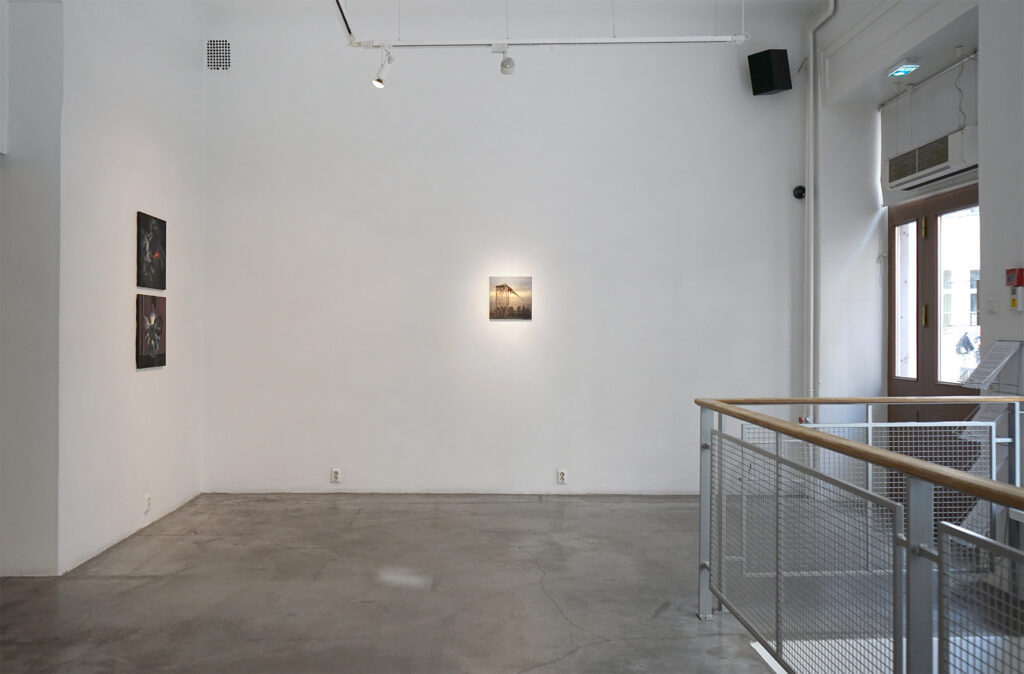
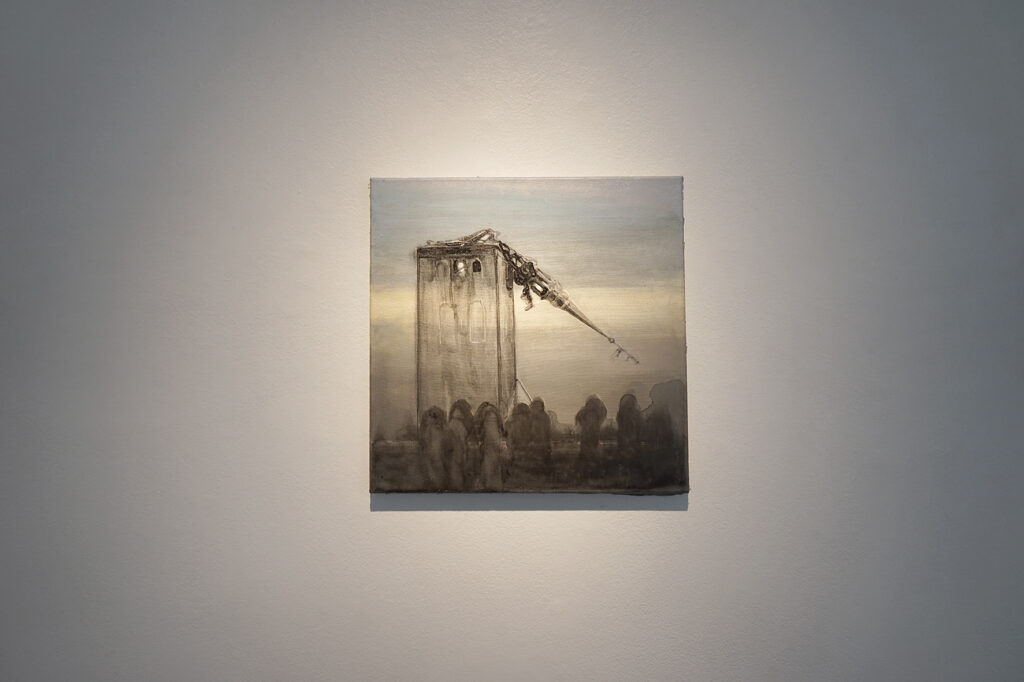
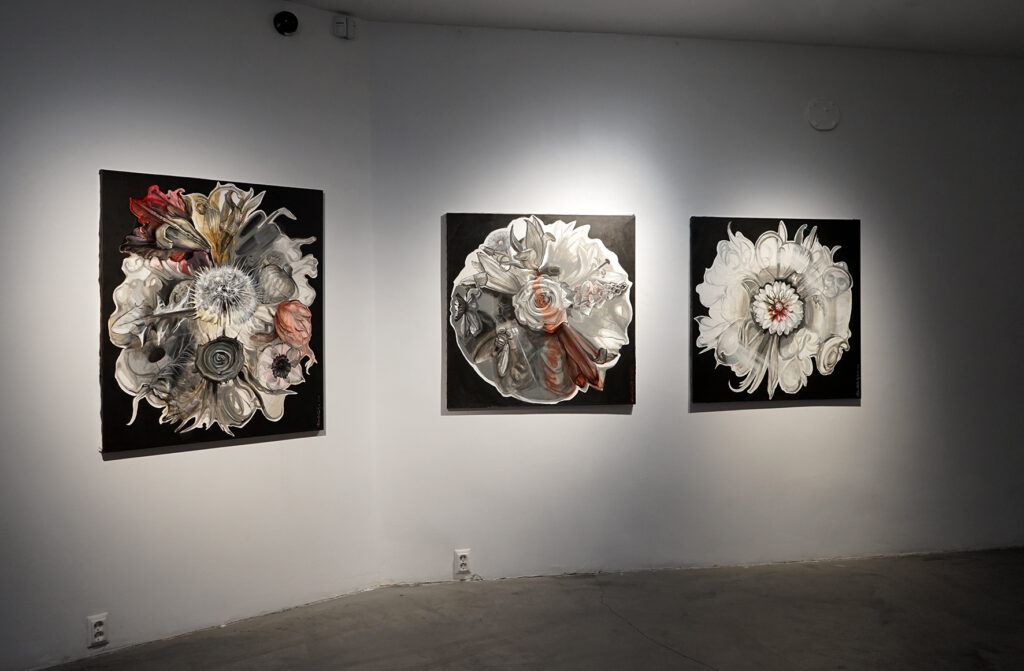
Kai Kaljo will open her personal exhibition Pile of Dirty Rags in Hobusepea gallery at 18:00 on Wednesday, August 24, 2022. Exhibition will be open until September 19, 2022.
„In February 2022, I created a folder Explosions and volcanoes in my computer. Actually, I had had it already for a year since I added there my first image.
After a few weeks, they suddenly started to kill people in the next room.
And then I realized that actually there has always been a war, peace is just a break between wars. These are the rules of life. And you know nothing of these.
My eyes were opening, I suddenly started to look at my home with a completely different gaze. I was amazed how many items I have that bear recollections about killing and war: drawings by Andrus Johan, silver jewellery from Afghanistan, a Kuznetsov porcelain plate that my grandmother brought with her when she left St. Petersburg in 1918, a book signed by Gustav Suits. Even my house has been rebuild on the very spot it was once bombed.
In April I took the first pictures as well, even if this first seemed an impossible effort.
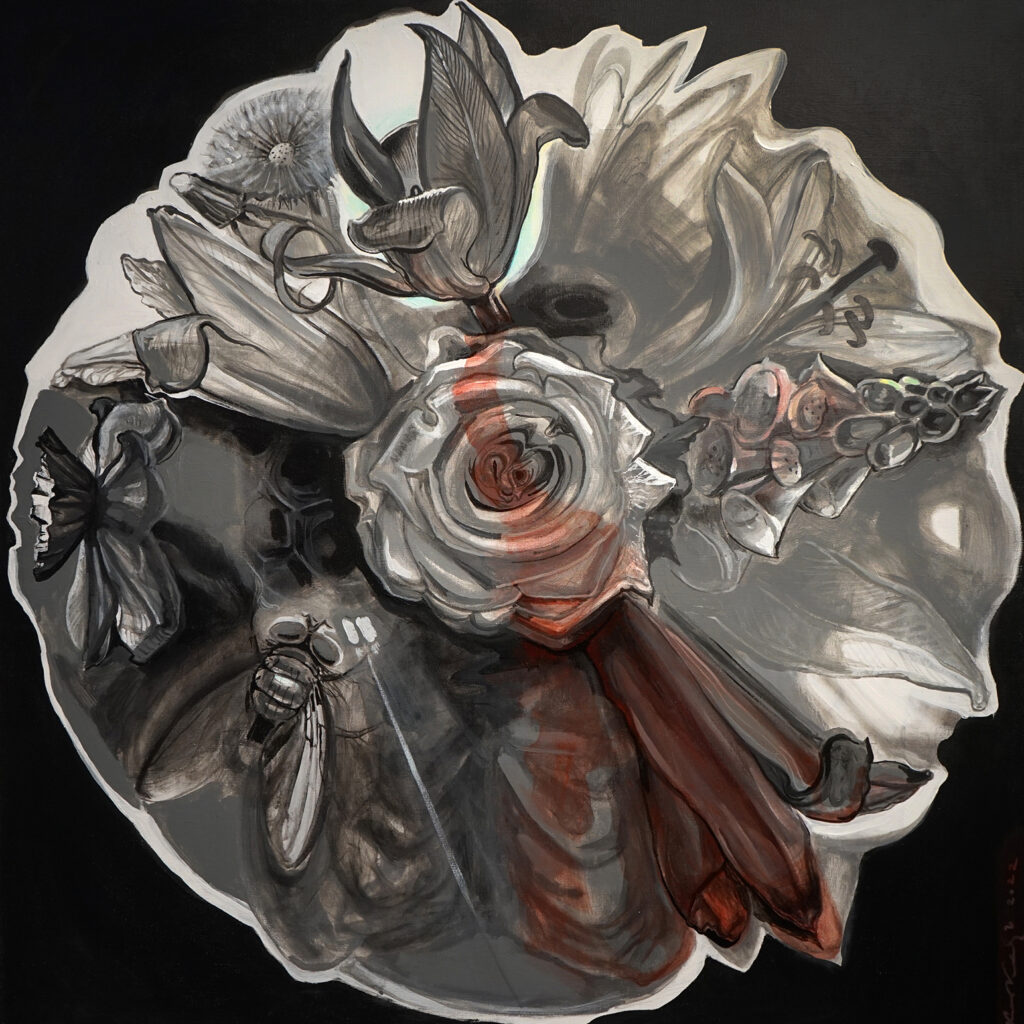
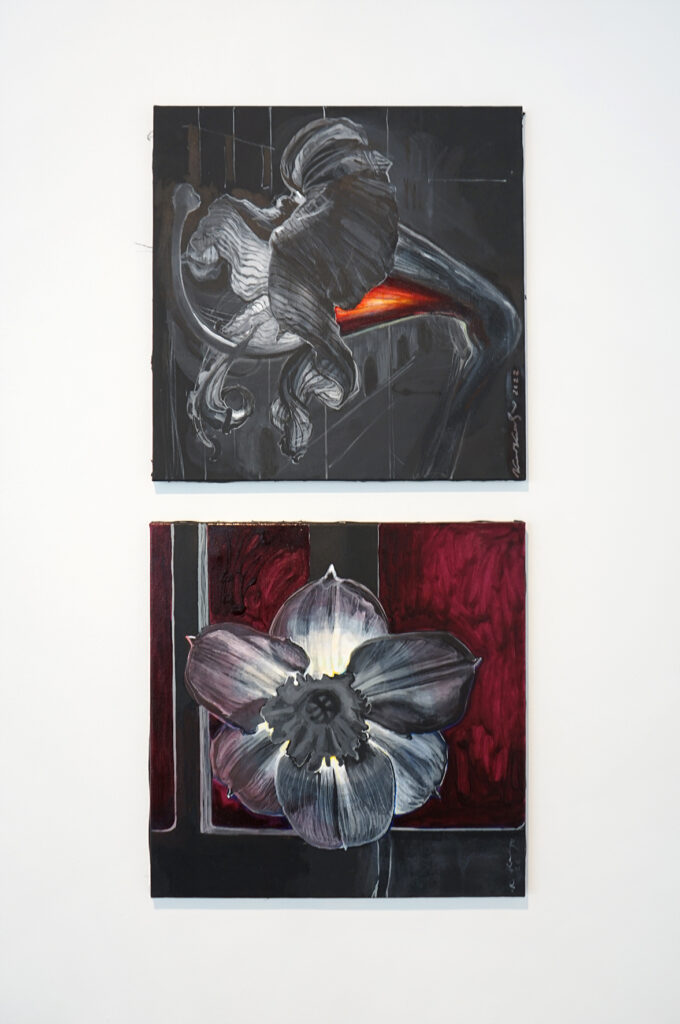
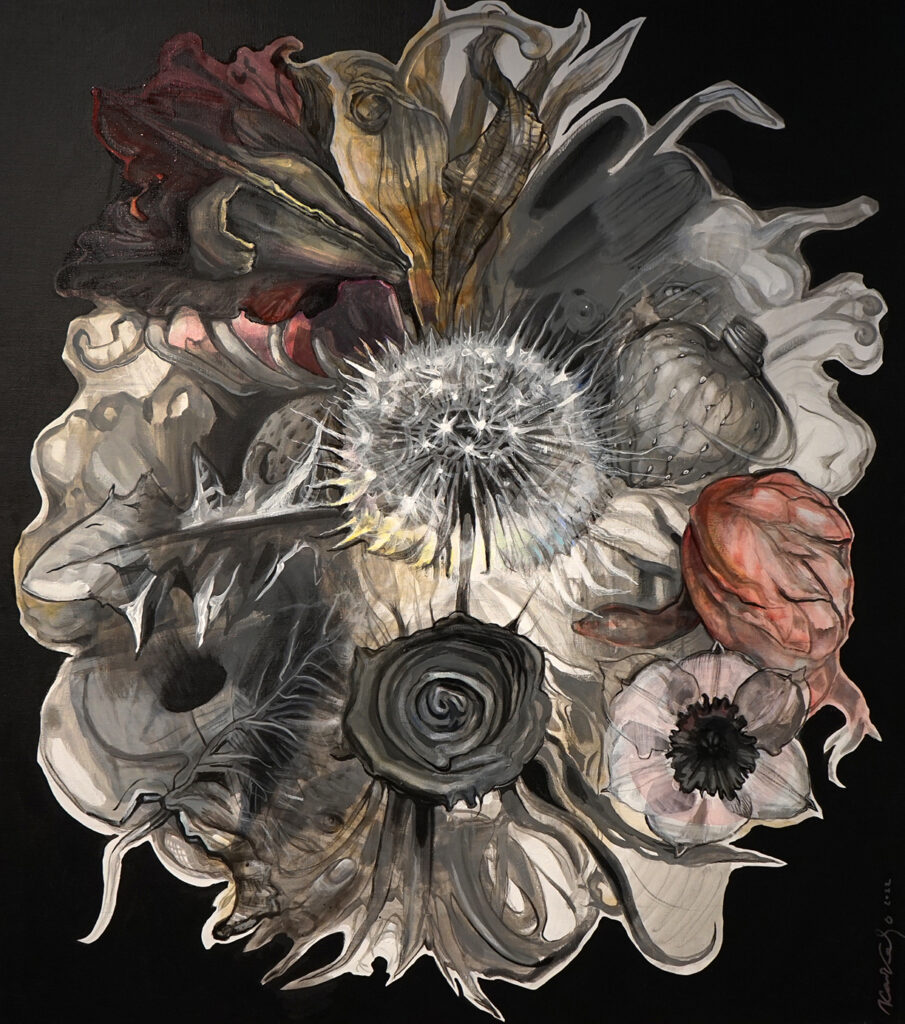
Two flowers: the first one reminding of a burnt corpse that has still some blood in the biggest blood vessel. I once worked at a forensic medical lab and the acquired skills suddenly started to reappear. The other flower has a window behind it, with the view of an exploding atomic bomb.
Pictures I never took but that were inside and around me all the time: a dog eating a man. A man eating a dog. Pieces of human bodies, corpses packed in plastic bags, fields covered with graves, the only thing that will be left of you is a pile of dirty rags …”.
Kai Kaljo
Exhibition is supported by the Cultural Endowment of Estonia, Väino Tanner Foundation.
Exhibitions in Hobusepea gallery are supported by the Cultural Endowment of Estonia, Estonian Ministry of Culture and Liviko Ltd.
Kert Viiart will open his solo exhibition As It Came Out of The Earth, It Returns in Hobusepea gallery at 17:00 on Friday, September 23rd, 2022. The exhibition will be open until October 17th, 2022.
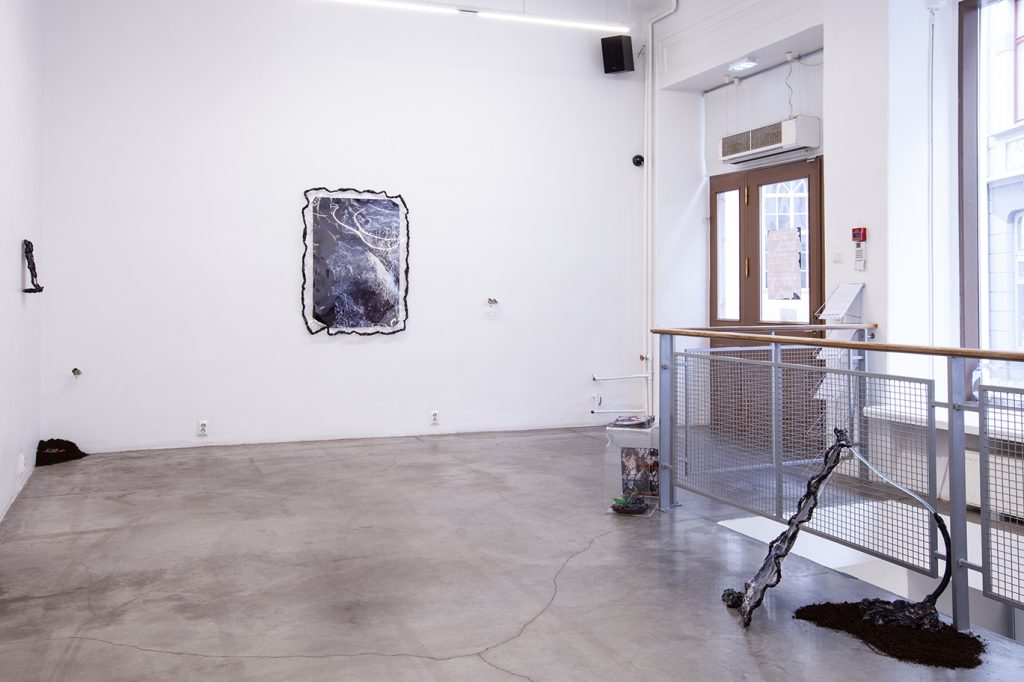
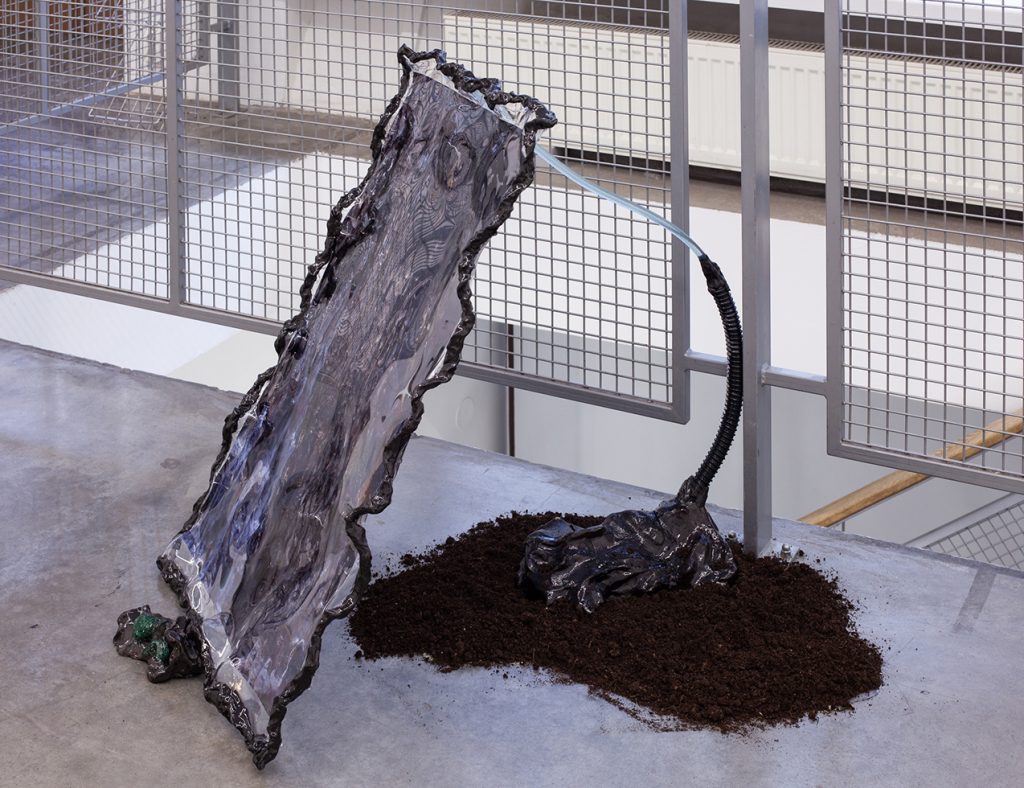
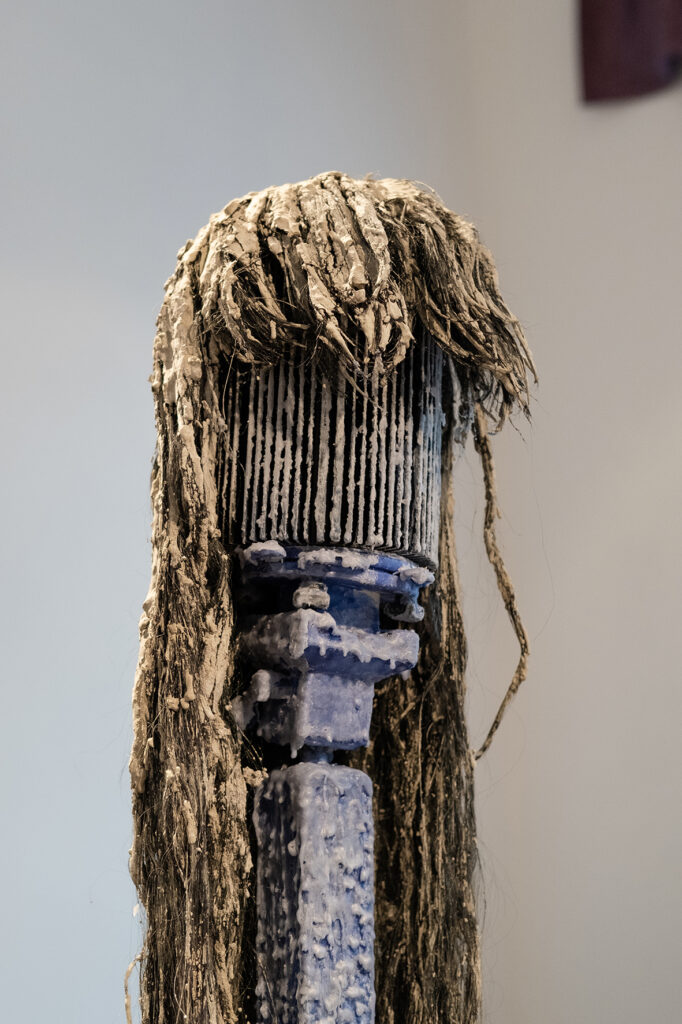
According to the artist, one can presume that the future in plastic ruins will arrive unexpectedly; however, the dystopian narrative has become almost an inevitable part of the future of our planet; creating unimaginable landscapes. Nondegradable plastic waste will be unavoidable part of the history of humankind. Perhaps instead of the achievements of certain civilizations, the future archaeology will tell about the dystopian results of civilization and humankind.
Through daily consumption and comfort habits, humankind creates new geological strata and future artifacts. Every year, almost 300 million tons of plastic waste is produced all around the world – but in order to handle all this, there is a lack of the necessary infrastructure as well as the economical and political will. The fact that plastic won’t degrade but “travels” through hundreds of years is intriguing me to treat the material from the archaeological perspective, as a part of the practice of future archaeology. At the current moment, plastic already has a huge role in the field of archaeology. In museums, plastic is used for presenting and preserving archaeological objects. A visit to the museum of archaeology may have the effect of a foretelling from the future. Plastic as a material is used in several different forms in order to narrate and present the history of ancient civilizations. We can only speculate what kind of afterlife the remains will have in case something drastic happened with the collections. One of the appalling examples is the National Museum of Rio de Janeiro. On September 2nd, 2018 the oldest and most important museum of archaeology and science in Brazil was ruined in fire. It is estimated that 92,5% of the 20 million objects in the museum collection were destroyed. Numerous forest and landscape fires that took place in 2019 and that have increased during the past years, make me think about the dystopian future scenarios. What kind of landscape is being created by these fires when the plastic things and construction materials will melt into one with the ground while forming new landscapes and leaving the surface made of plastiglomerate rocks for the future generations?
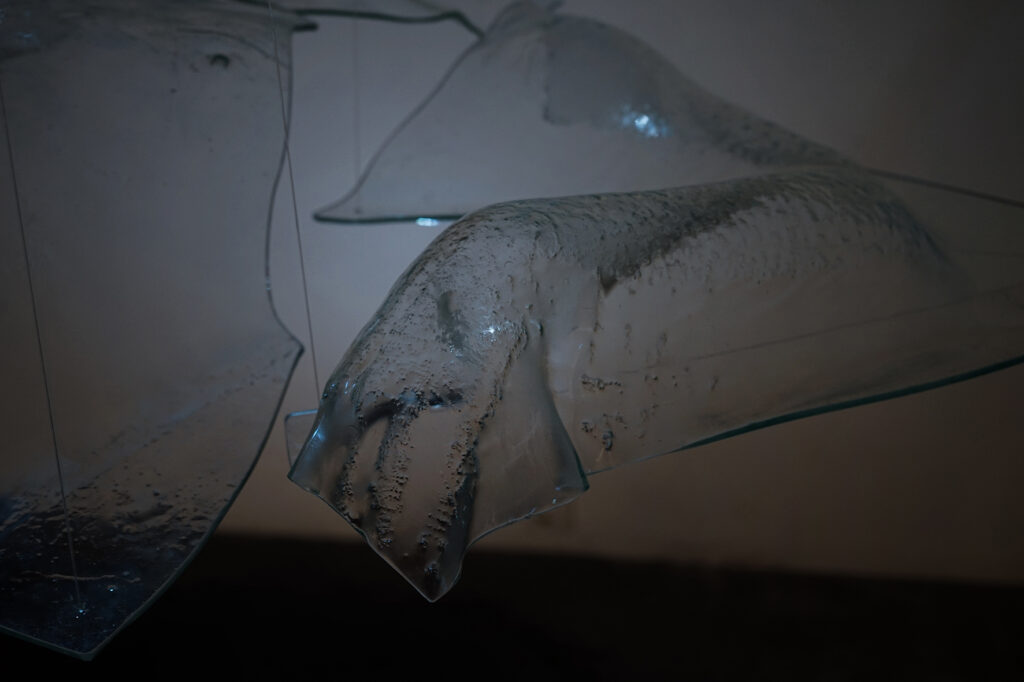
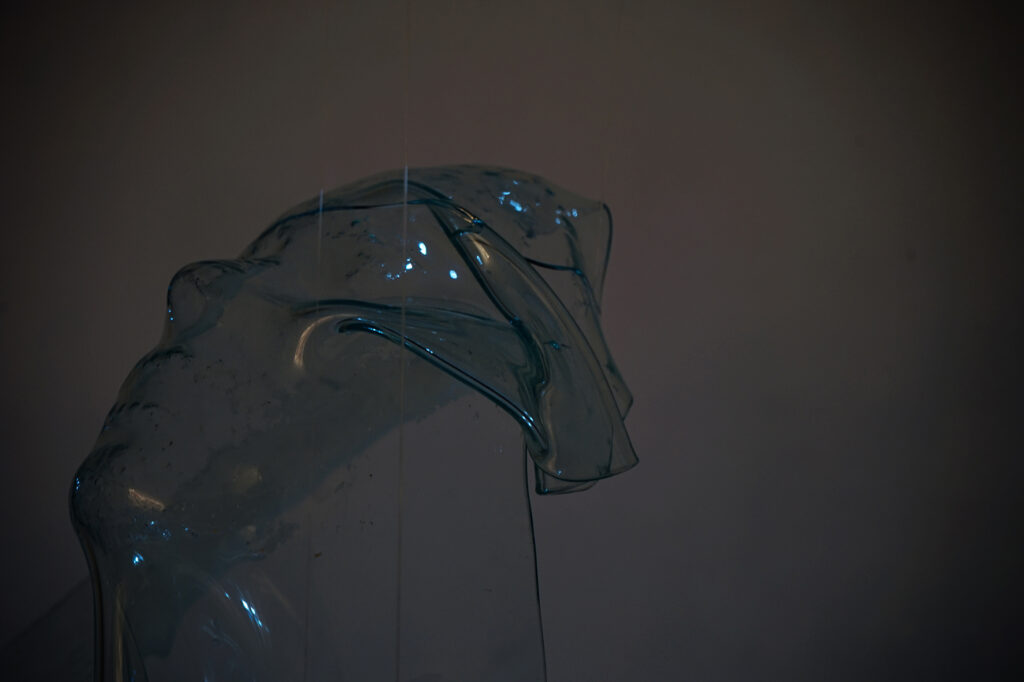
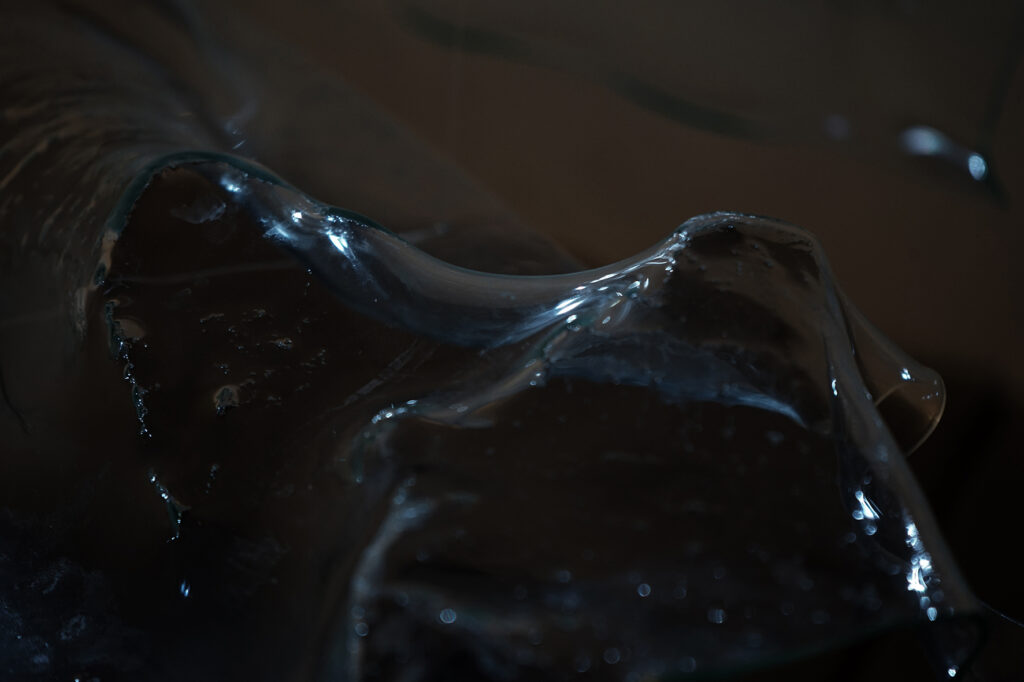
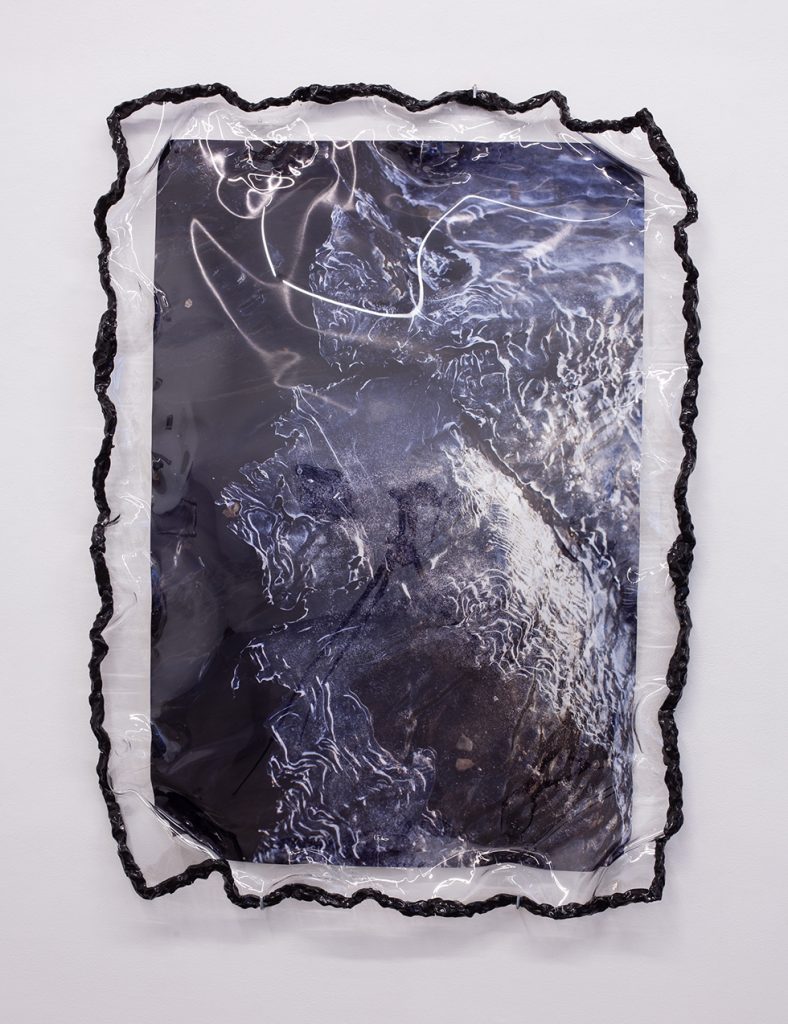
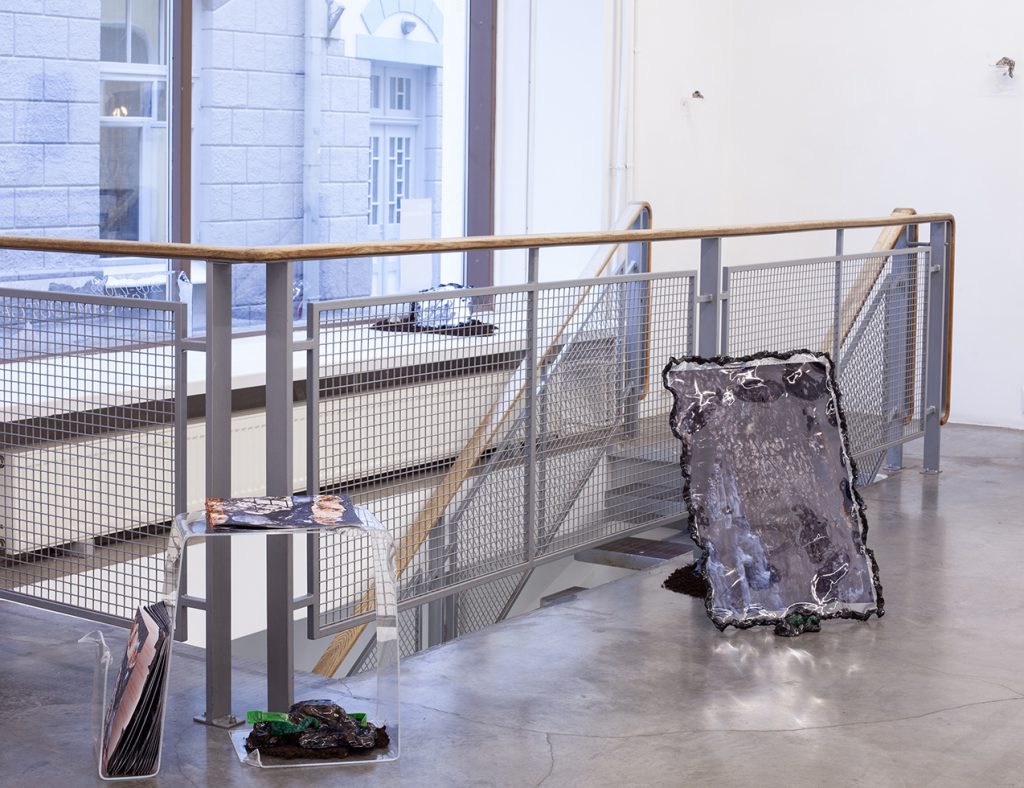
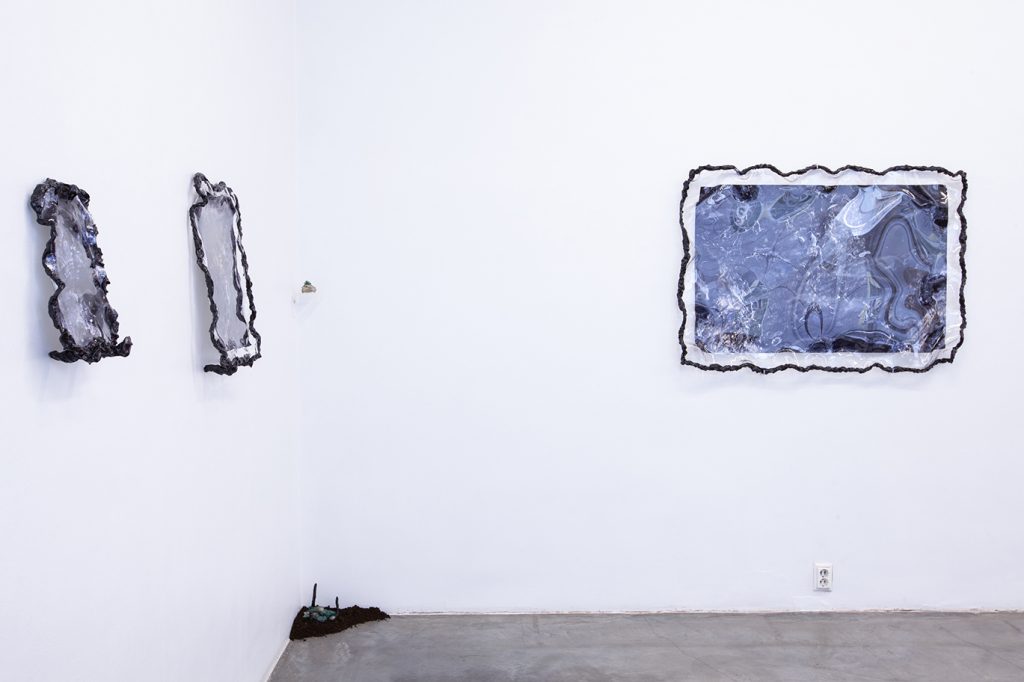
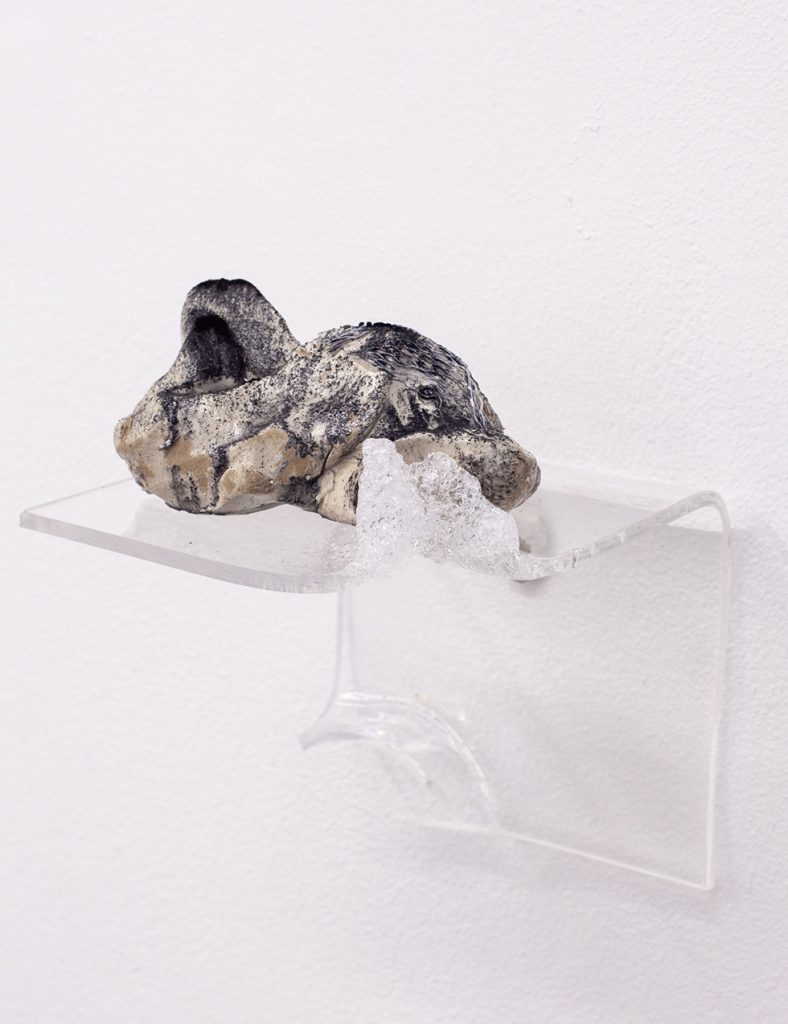
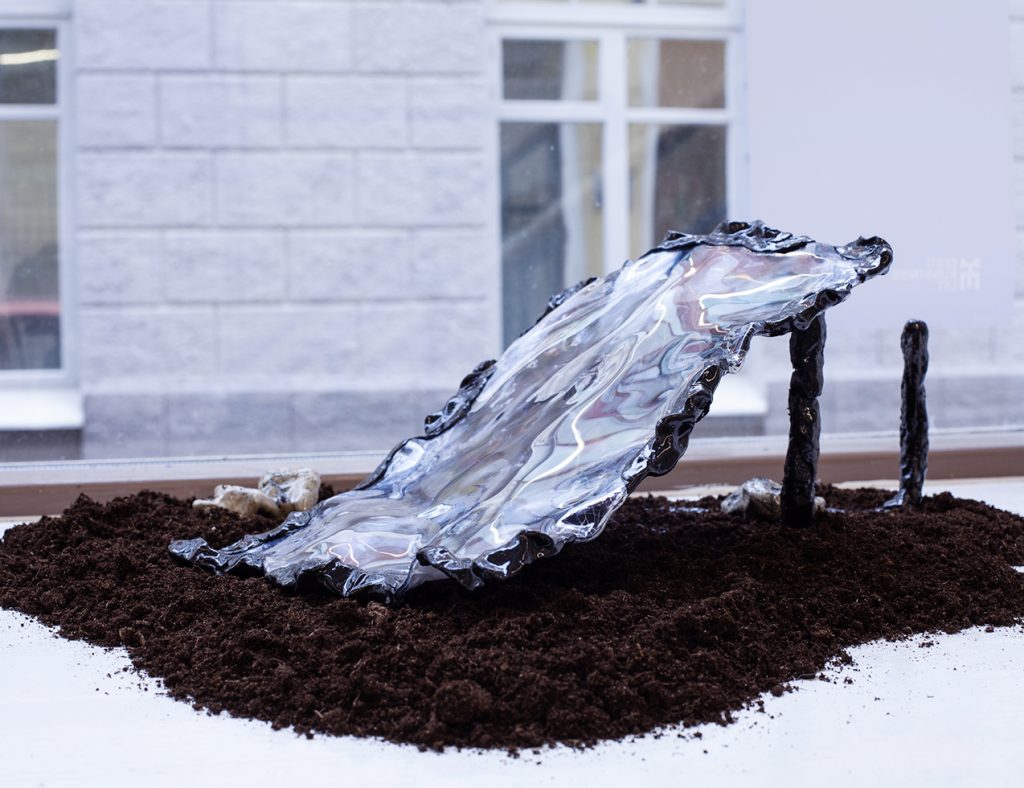
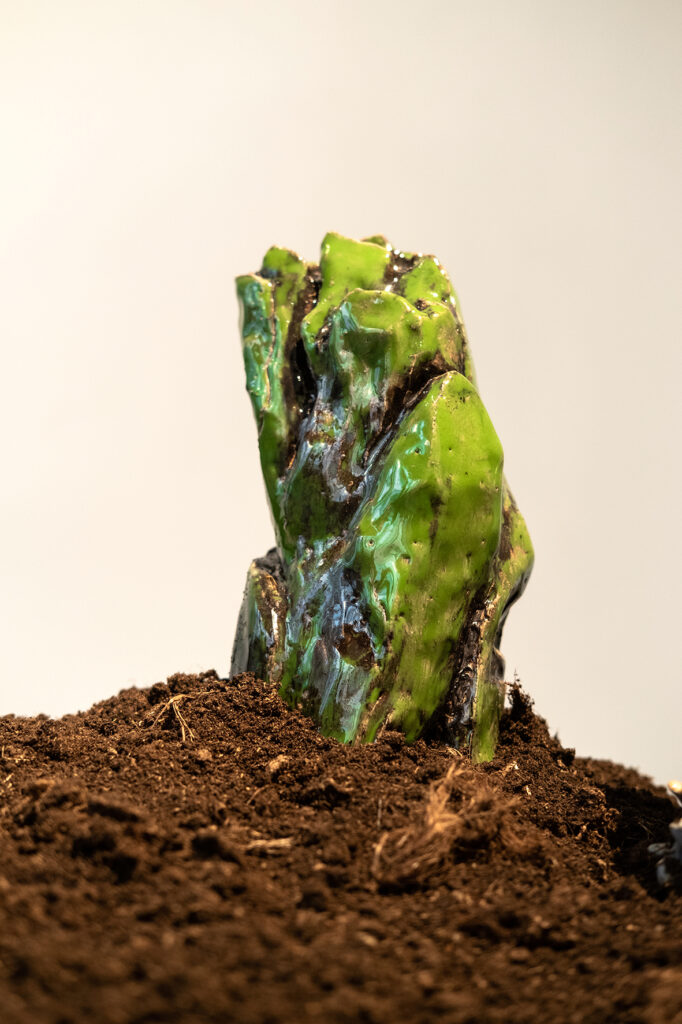
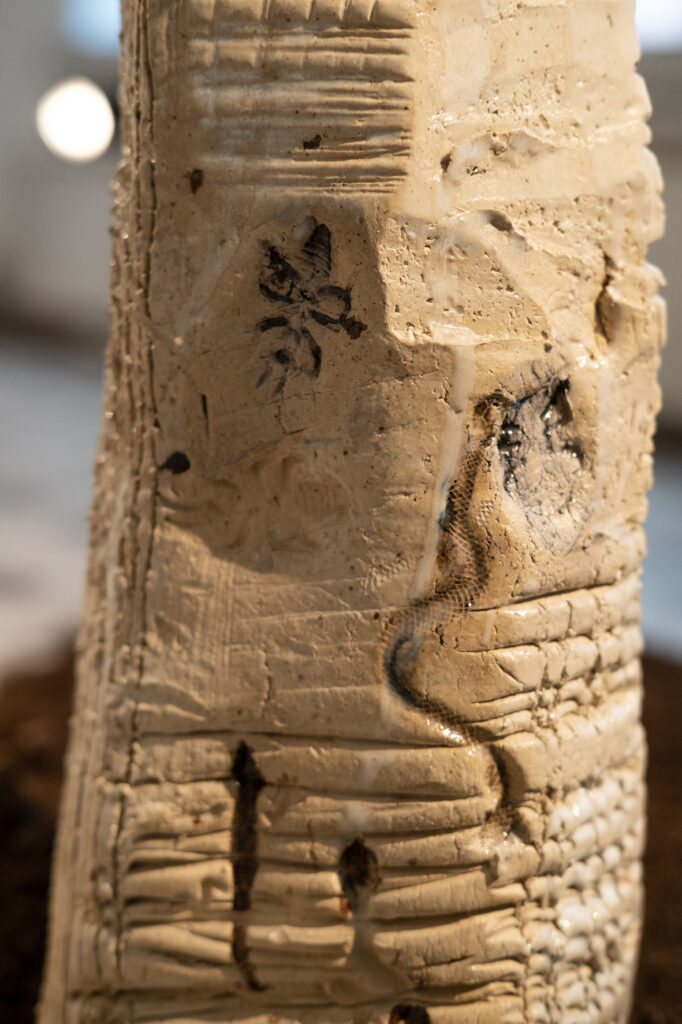
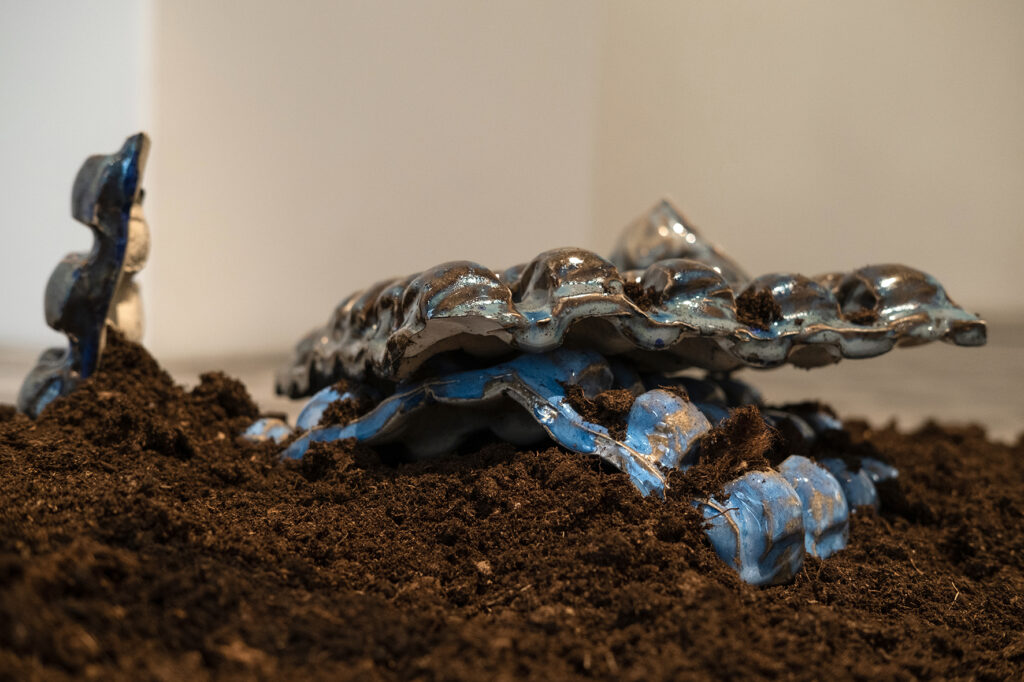
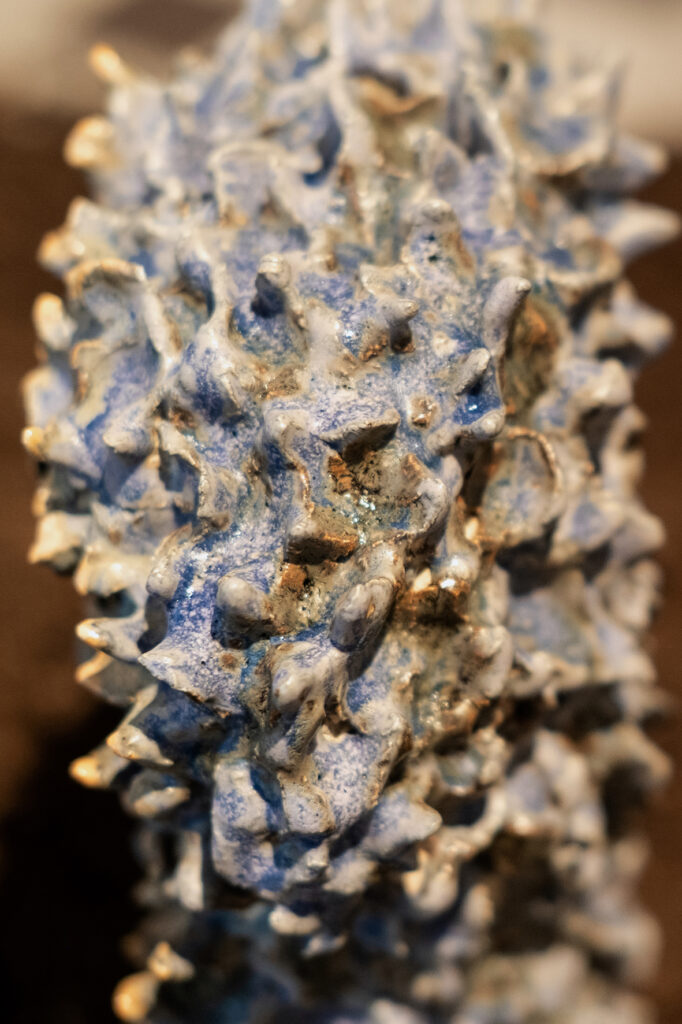
While studying and speculating around these themes, Kert Viiart has created the installation As It Came Out of The Earth, It Returns (2019–2022) that includes sculptural forms and video work with sound (5’46’’). Through the installation, the artist observes contemporary archaeological expositions, plastic-based support structures, and construction materials while doubting the choices made when selecting the materials. These hybrid objects are joint images including both imagination as well as the material reality that create a speculative view to the future archaeology. The objects have “traveled” through time and deformed, while becoming a part of the ground and acquiring value and archaeological meaning.
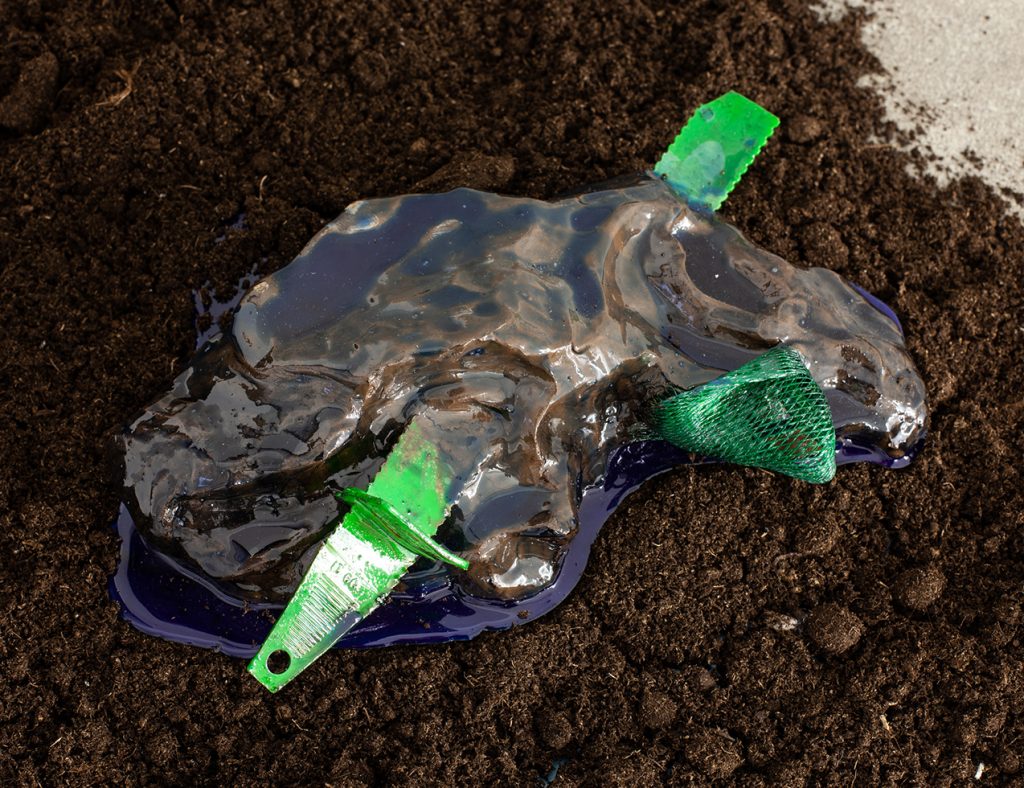
The installation combines various materials, including glay, epoxy resin, found plastic construction materials, leftover plexiglass, found plastic waste and soil.
Dialoguepartner and technical help: Kristina Õllek
Thanks: Hanna Laura Kaljo, Mijke van der Drift, Ruben Pater, Linda van Deursen, Federico Campagna, Niels Schrader, Roosje Klap, Tiiu Saadoja, Art Museum of Estonia and KABK master’s program Non Linear Narratives.
Photos: Kristina Õllek
The exhibition is supported by the Cultural Endowment of Estonia.
Exhibitions in Hobusepea gallery are supported by the Cultural Endowment of Estonia, Estonian Ministry of Culture and Liviko Ltd.
TASE’21 and EAA (Estonian Academy of Arts) Young Artist’s Award winner Karolin Poska will open her solo exhibition Pressure of the Gaze in Hobusepea gallery at 18:00 on Wednesday, October 19th, 2022. Exhibition will be open until November 14, 2022.
Karolin Poska: “Do you know the feeling when someone else has fixed their gaze on you? You can simply tell that someone is controlling you, stalking you with the gaze, measuring you or trying to create a visual contact. You feel it even if it is outside the field of vision, or you may realize this from the corner of your eye.
People assure that they literally feel how the eyes of “Mona Lisa” painted by Leonardo da Vinci are following them, irrespective of the physical location of the spectator. This phenomenon – when the eyes of an artwork observe the spectator in the room – is called the Mona Lisa effect. However, researchers have found that this phenonenon won’t apply to Mona Lisa since the gaze of the painted figure has been directed too much to the right.
Creating a direct eye contact is perhaps the most frequent and powerful non-verbal signal exchanged between human beings; it is also a means of intimacy, frightening and social influence. Eye contact is such a primeval way of communication common to all animal species: predators intensely keep their eye on their prey before the moment of dashing towards it; babies become intimate with their parent through visual contact; fish turn their eyes black during an aggressive act.
The oldest found fossil’s eyes are 540 million years old, the first Homo habilis or the achaic human dates back to approximately 2 million years ago. Now I feel different when looking out of the window, knowing that I am using eyes of the precedecessors being 538 million years older than a human being.
It is easier to catch human gazes than those of other species since human eyeball has a special construction – we have more sclera (the white layer of an eye). That, in turn, makes it much easier to identify the movement of the iris of an eye that has darker colour as well as determining the direction of the gaze due to constrasty colours. Surprisingly, human eyes have the closest similarity with the ones of an octopus and a squid who both have big eyes consisting of the lens, the iris and one big vitreous body.
According to my calculations, the old town of Tallinn has 77 street cameras, so you were probably looked at already when you were on your way to the gallery. You probably did not perceive this because the surveillance cameras have less constrasty eyes and different construction. Also, the sculpture in the old town that you probably passed did not follow you with its eyes since it wears glasses and unfortunately has no sclerae. And yet, lots of people say that it is namely the eyes of an artwork that make you feel something.
While preparing for the current exhibition, I went to galleries and streets and looked at art; and also looked at others looking at art and let the artworks look at me and my act of looking. I really hope that you will find something worth looking at!”
Thank you for the dialogue and technical assistance: Theodore Parker and Maret Tamme.
Exhibition is supported by the Cultural Endowment of Estonia.
Exhibitions in Hobusepea gallery are supported by the Cultural Endowment of Estonia, Estonian Ministry of Culture and Liviko Ltd.
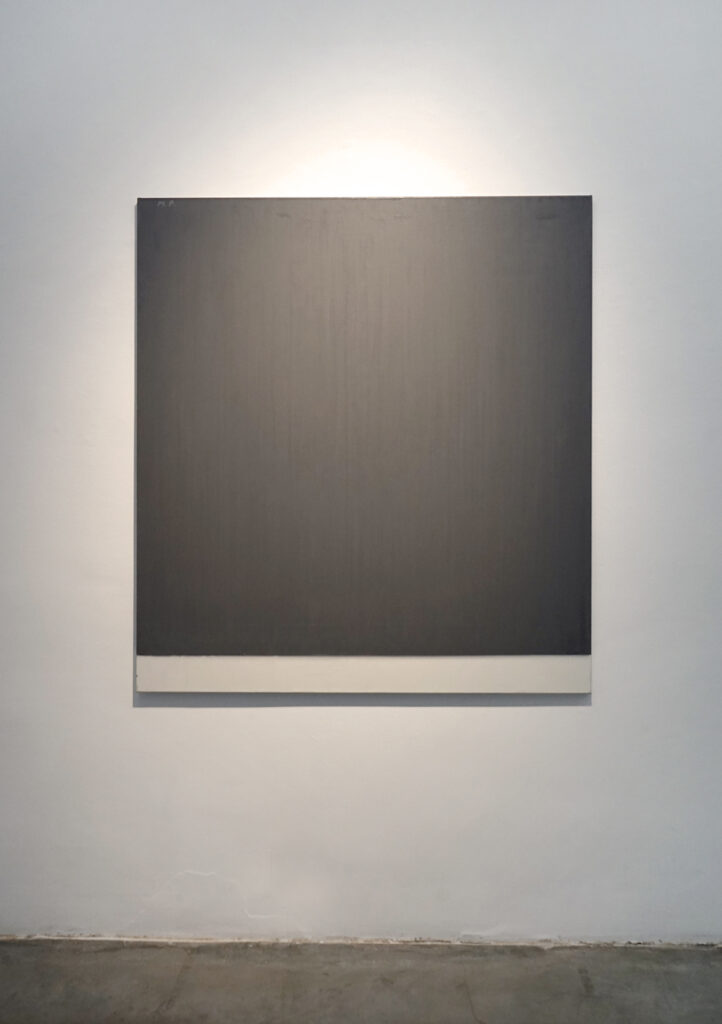
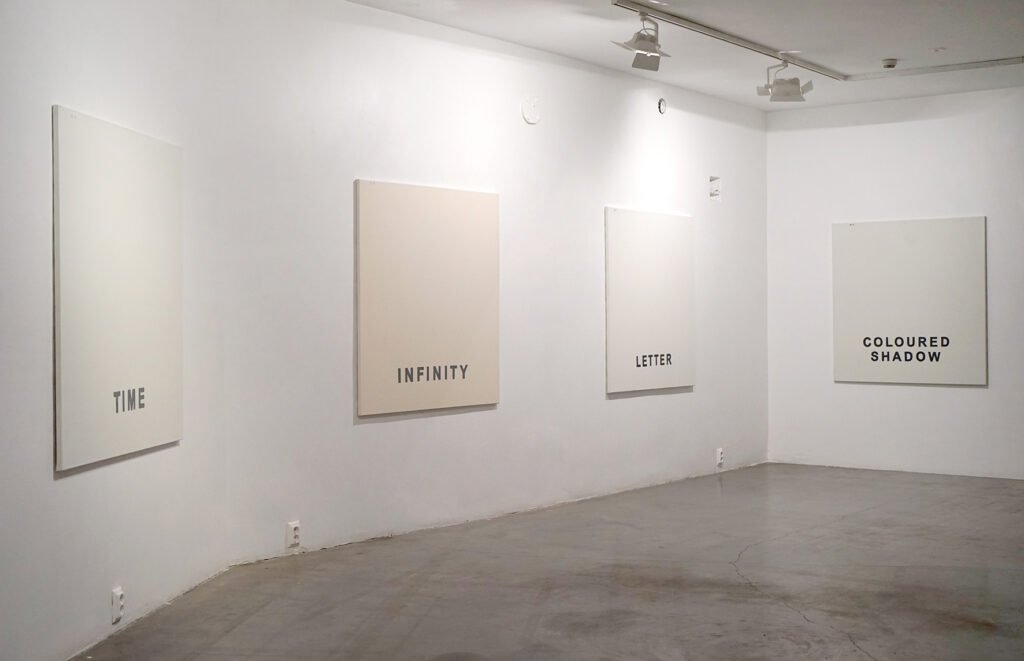
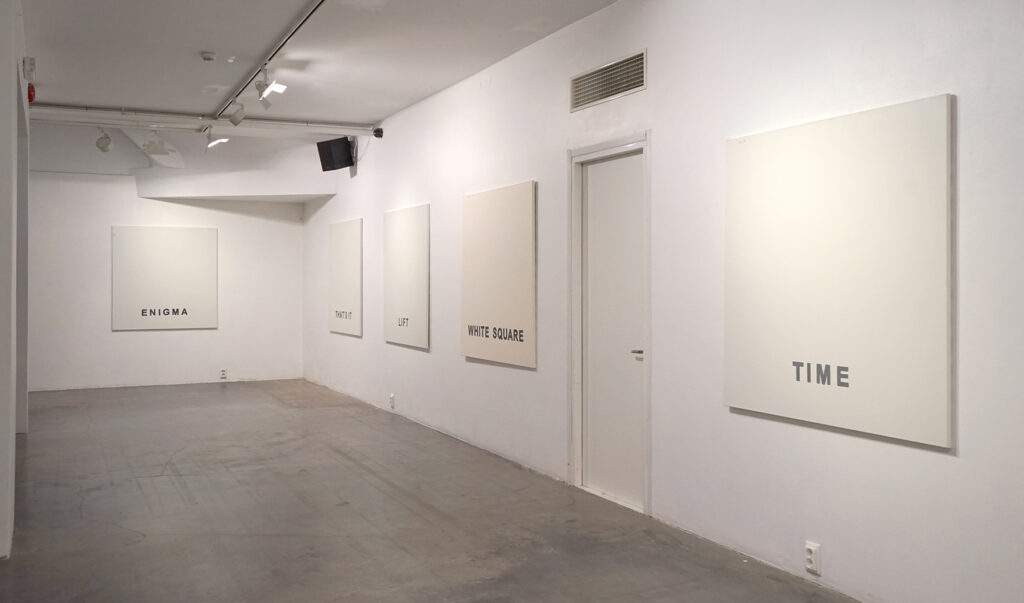
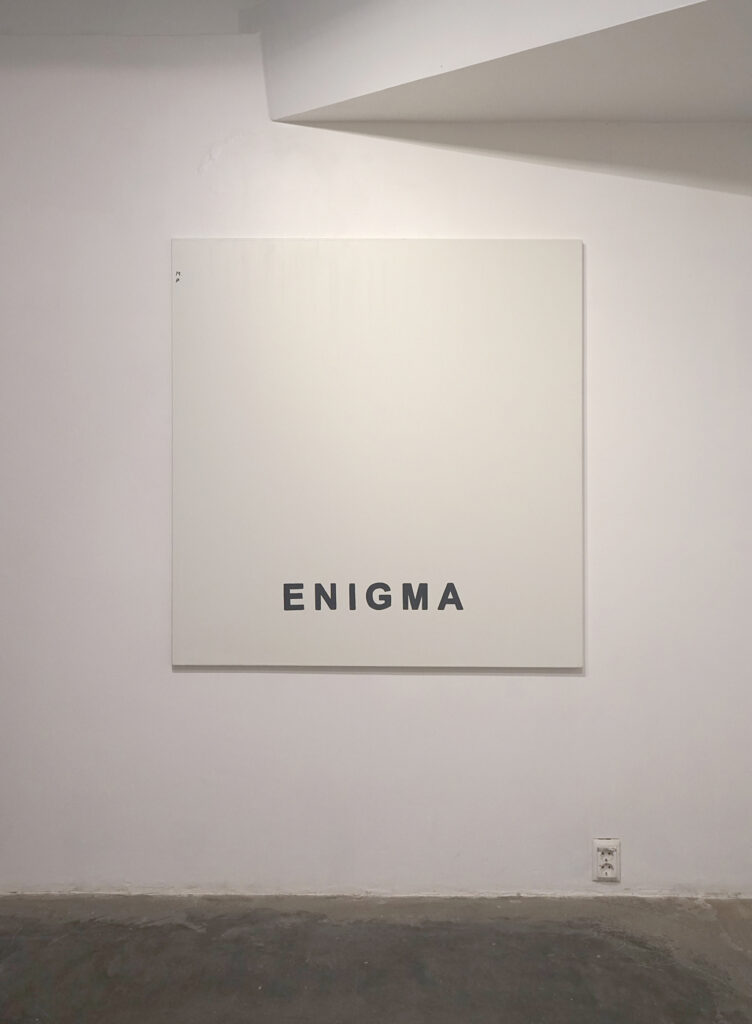
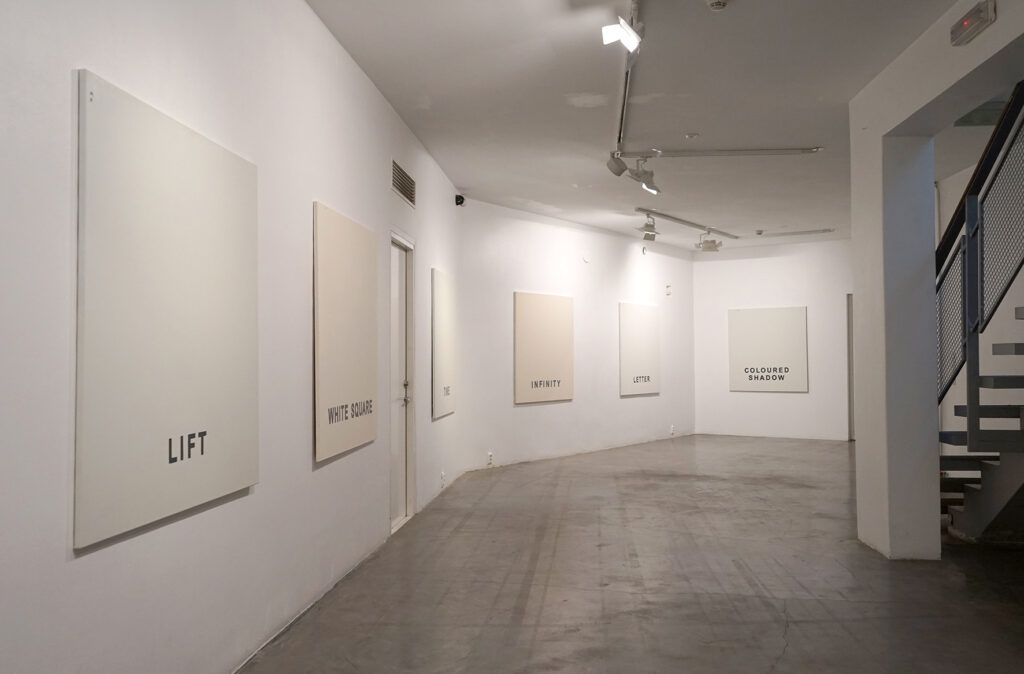
Mall Paris‘s personal exhibition Infinity will be open in Hobusepea gallery from Wednesday, December 16, 2020. Exhibition will stay open until January 11, 2021.
Word —- image —- imagination. Either every word separately or together as a line. The space fades into a complete idea or single images …
Words compose an image or an attempt appearing in time.
Infinity is far
or close
Infinity is close
or
far …
Sympathy for certain arrangement yet infinity that is letting go, drifting away …
Infinity is far
or close
Infinity is close
or
far …
following as a shadow …
Mall Paris
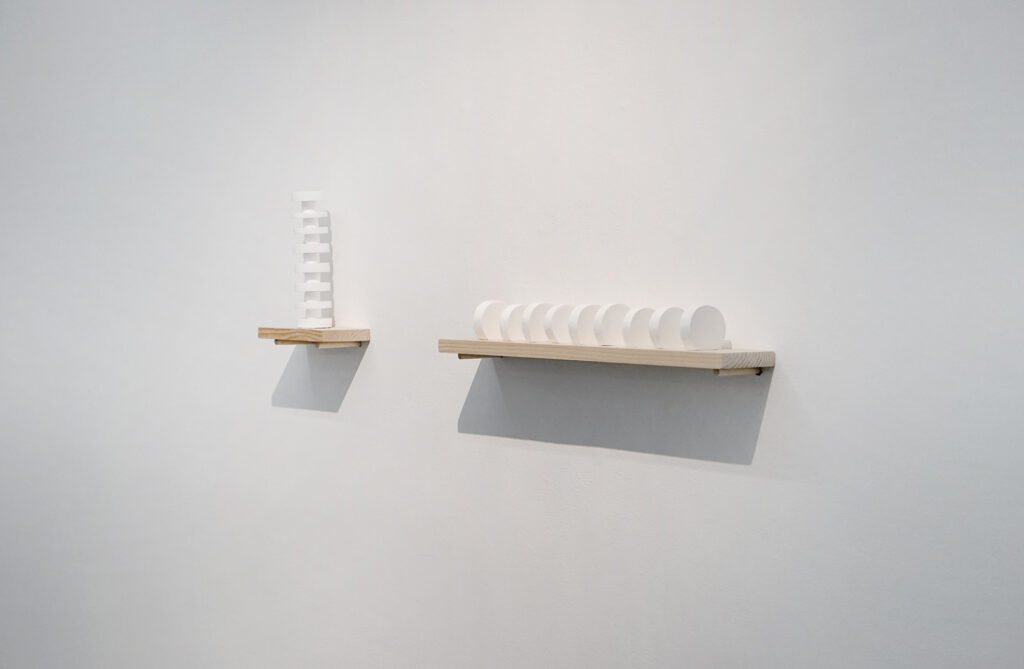
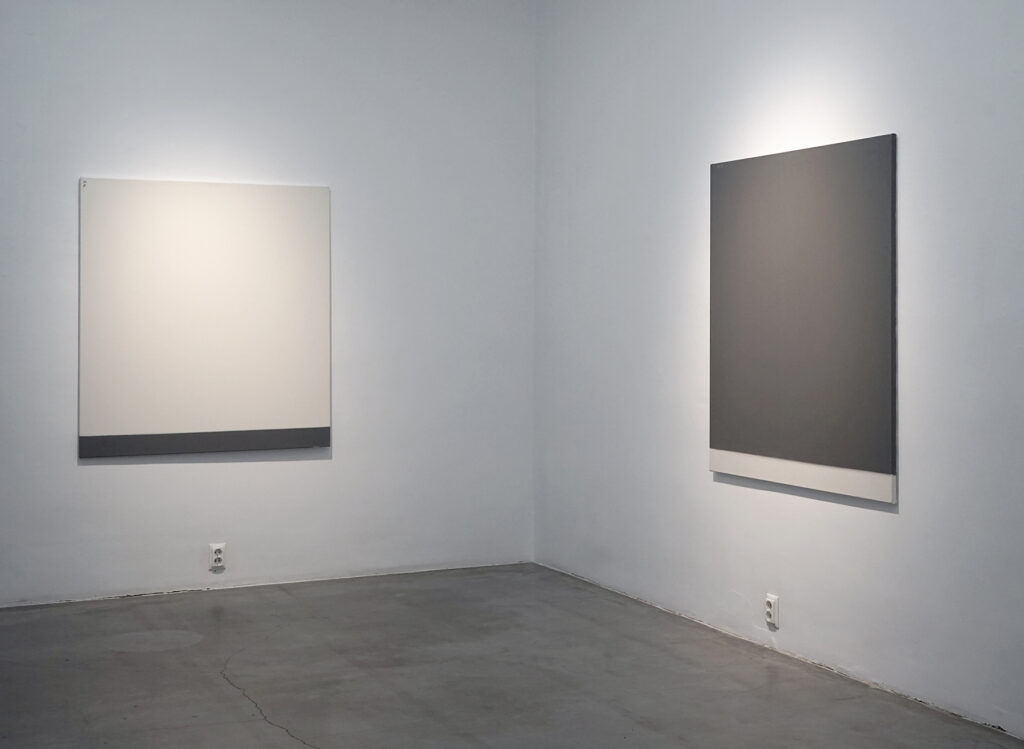
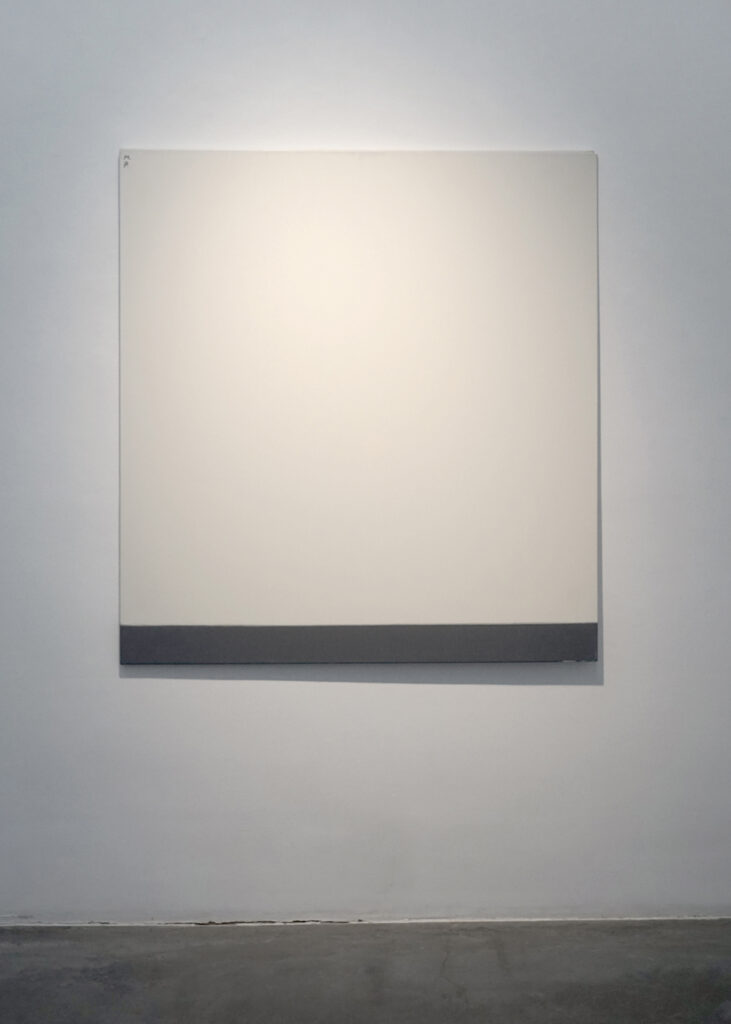
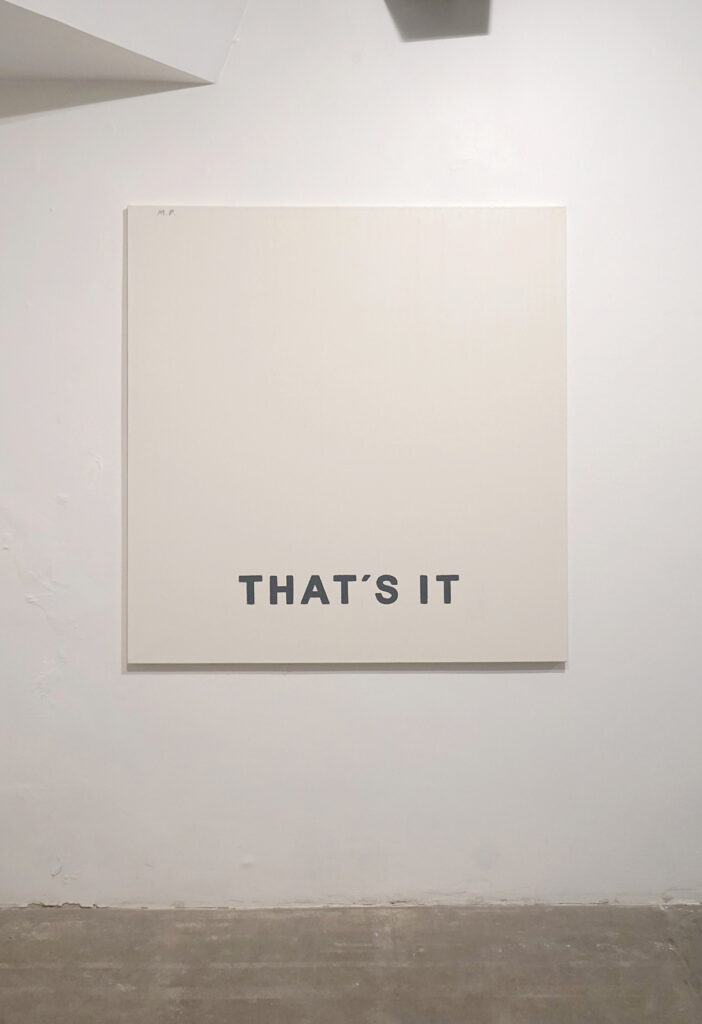
According to the artist, her current exhibition is a conceptual continuation to her previous exhibition Word held in Vabaduse gallery in 2019. Art historian Juta Kivimäe has stated that Mall Paris is one of the purest practitioners of abstract and minimalist painting in Estonian art. Paris’s painted imagery is close to a geometric approach but also including almost always something else, something undefinable. Her artwork has traces of minimalism and poetical arte povera. In her emphatic way, Paris poeticizes way of living and art that has grown out of the most scarce means; and yet, her paintings express the most exquisite features of the art of painting. Tamara Luuk, curator of the Tallinn Art Hall, has characterized Mall Paris as a silent and consistent artist who is always present; and who in her creative practice is steadfast and uniquely elegant. Paris’s work has been led by the seriality of minimalist paintings where the recurrence of an image has simultaneously a maddening effect as well as caressing the viewer’s eye with its pulsating multitude of nuances.
Exhibition is supported by the Cultural Endowment of Estonia.
Exhibitions in Hobusepea gallery are supported by the Cultural Endowment of Estonia, Estonian Ministry of Culture and Liviko Ltd.
Joint exhibition Parasitic Symbiosis by Pille-Riin Jaik and Miriam Esther Meyer will be open in Hobusepea gallery from Thursday, February 4, 2021. Exhibition will stay open until February 22, 2021.
With Parasitic Symbiosis Pille-Riin Jaik (EE) and Miriam Esther Meyer (DK/MX) try to investigate expected collaborative behavioral patterns, rivalry, modernistic thought models as well as frames and materials, while considering both what would benefit themselves and the exhibition as a whole. The terms parasitic and symbiosis may appear paradoxical, but were chosen consciously to include both the give and take of the overall process and outcome. Did they successfully create a balance between seeking harmony and maintaining two autonomous viewpoints? That remains an open-ended question.
For Meyer Parasitic Symbiosis presented an opportunity to free herself from restrictive working conditions and develop an awareness of what she can compromise on before the result becomes stifling. “For me, this journey has not been a straight-forward trajectory. The plan was to challenge the conditions of my performative drawing concept Dependency Action Documentation – a concept that I realized was less of a co-dependency and more a self-destructive reliance on my part as well as one with limited creative possibilities – in the hope of developing a healthier process and outcome. That happened in phases – five to be exact – each of them involving having to overcome new obstacles that presented themselves along the way. Some of those obstacles were specifically related to the collaborative nature of this exhibition and some would have arisen, regardless of context. The result is Dependency Action Liberation, which includes the presentation of my original hypothesis and premise, a description of the different development stages and a conclusion, reflecting the overall take-away, as well as three paintings, sealed in latex. I think the works can be approached in different ways, but for me, the personal impact has been greater than expected. Somehow the conscious choices I had to make have made me more aware, and I hope that that is somehow conveyed in the works – if nothing else, in an abstract way,” she says.
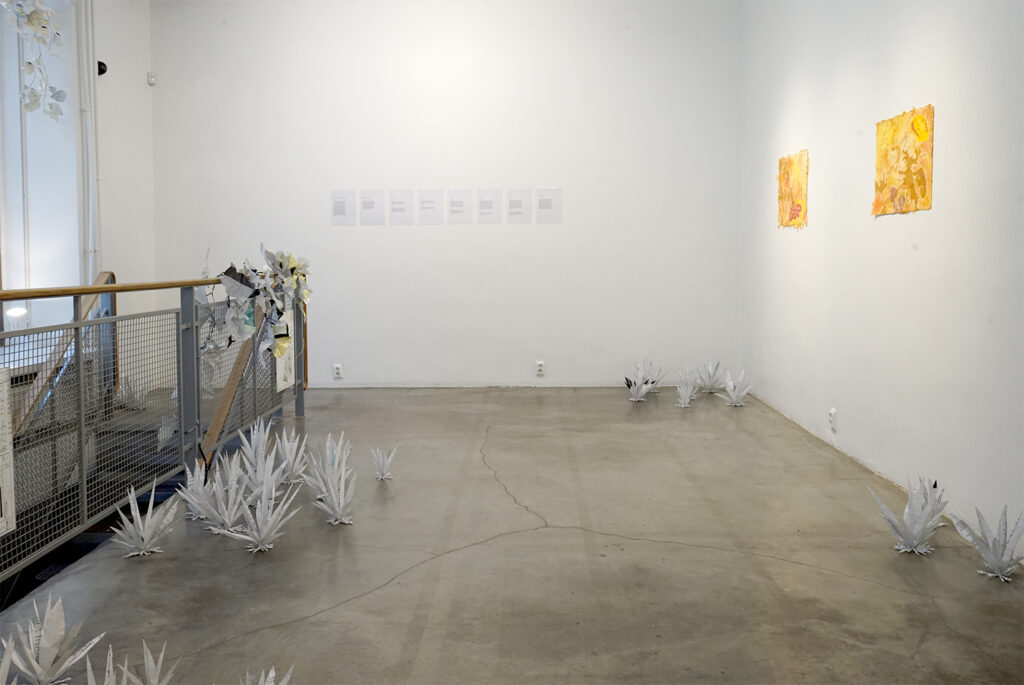
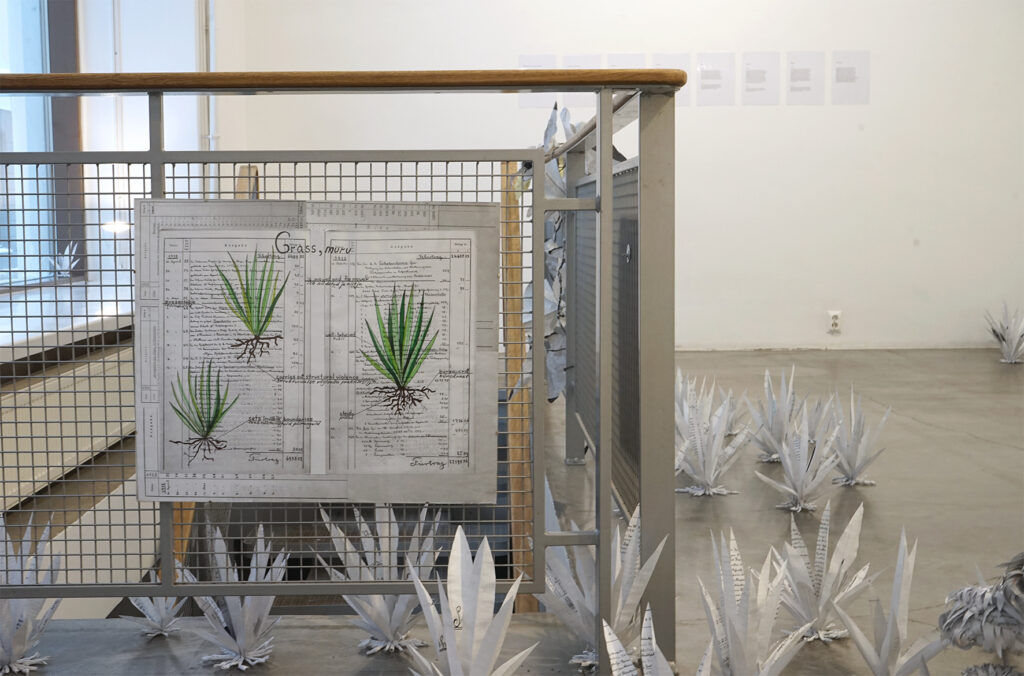
For Jaik it means questioning how radical transparency would look like in the artworld: “We all have stolen something from someone, even if it’s from history. There can be such a thing as ethical stealing though, in my opinion. A kind of stealing that can make things grow. Subconscious stealing, for example, when you admire someone’s work or are exposed to it frequently. It could also be ideas that are close to your heart that you feel need to be elaborated on. Parasitical Symbiosis is made from such thoughts and attempts; questioning the myth of single-minded genius and its habitat, the White Cube. In my installations I try to show how I am never able to fully work alone. Each of my artworks depend on someone else’s talent and in some cases, someone else’s work may be the reason for their formation in the first place. For example, in the double installation “So, I weed” and “So, I weed & I weed” I dug into an archive at the art academy of Vienna and translated the findings into vegetation – oppressive weeds, boring bureaucratic grass and a hidden, nonexistent rose (women’s letters to demand right for education that were excluded from the archive). I try to question the ground I stand on, my own soil and with what limitations and preset patterns one is allowed to grow.”
In 2018, she and Pille-Riin Jaik collaborated on the work Moving Body in Aggressive Motion, which was shortlisted for the Jury Award and streamed at Frauen Filmfestival 2018 in Vienna, Austria. Parasitic Symbiosis will be the second collaborative effort between Jaik and Meyer.
The artist’s gratitude goes to: Cultural Endowment of Estonia, Austrian Embassy in Tallinn, Gerda Nurk, Irmeli Terras, Martti Toivar, Mari-Liis Jaik.
Exhibition is supported by the Cultural Endowment of Estonia.
Exhibitions in Hobusepea gallery are supported by the Cultural Endowment of Estonia, Estonian Ministry of Culture and Liviko Ltd.
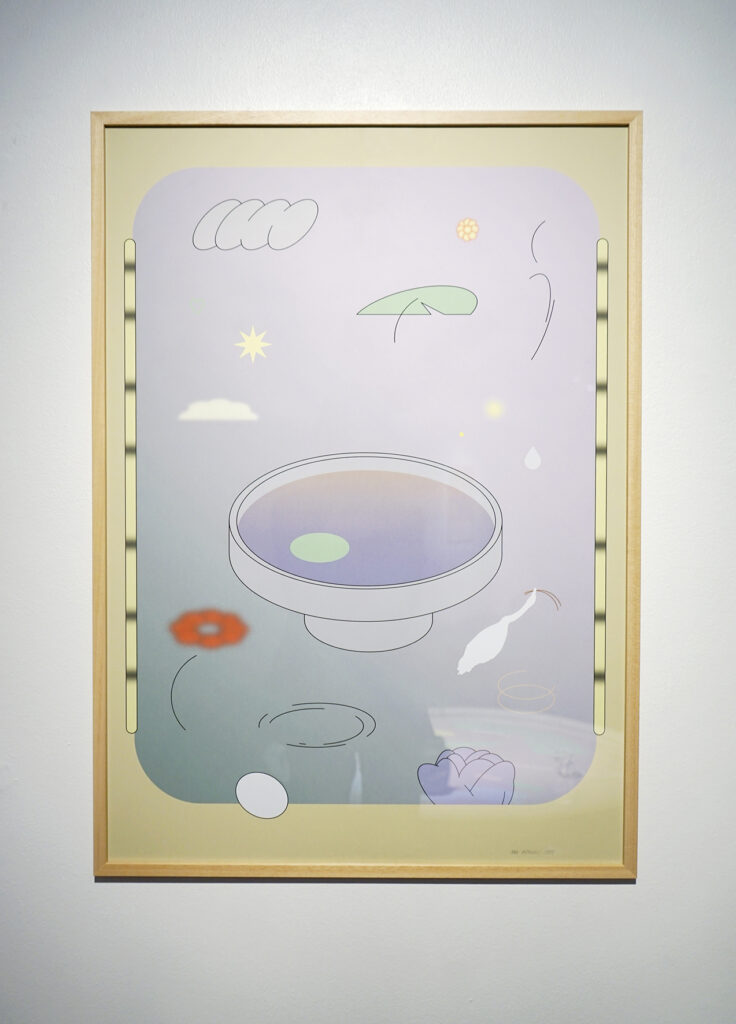
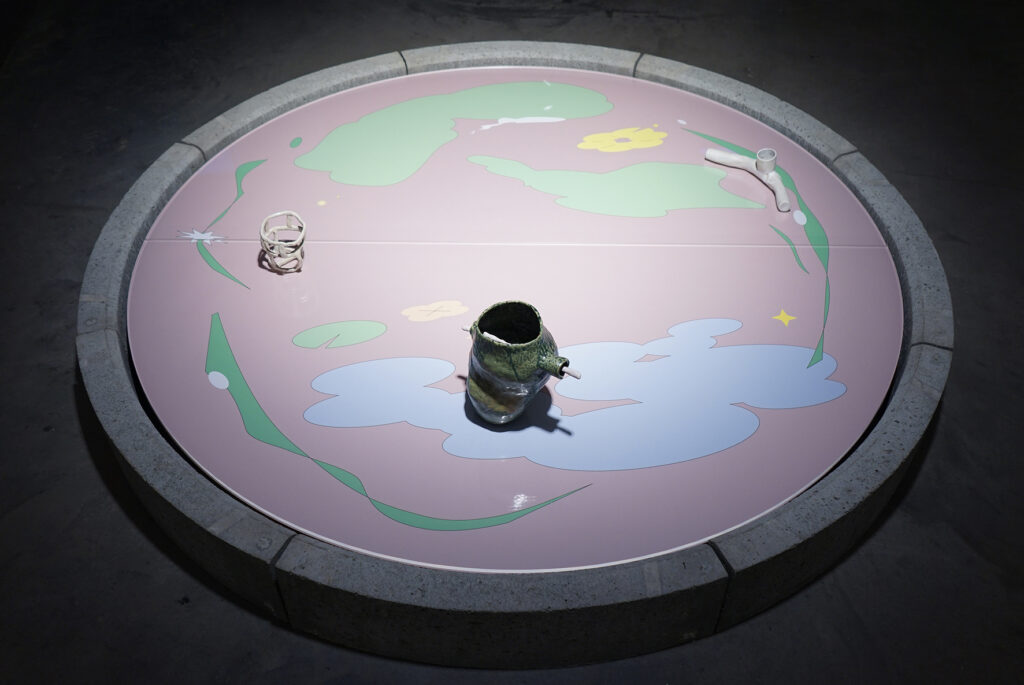
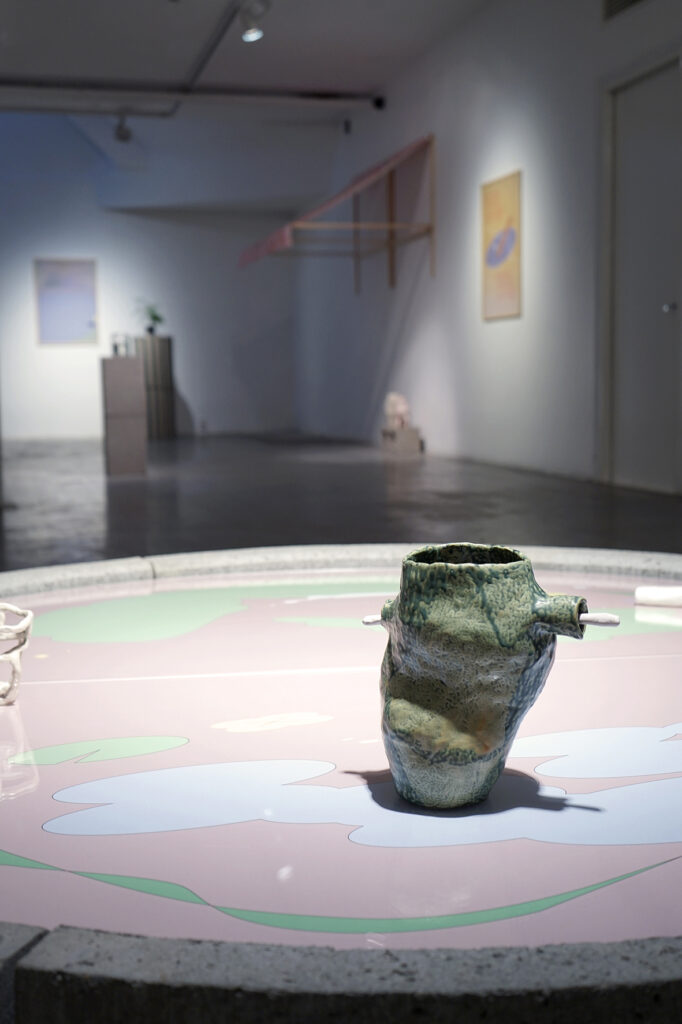
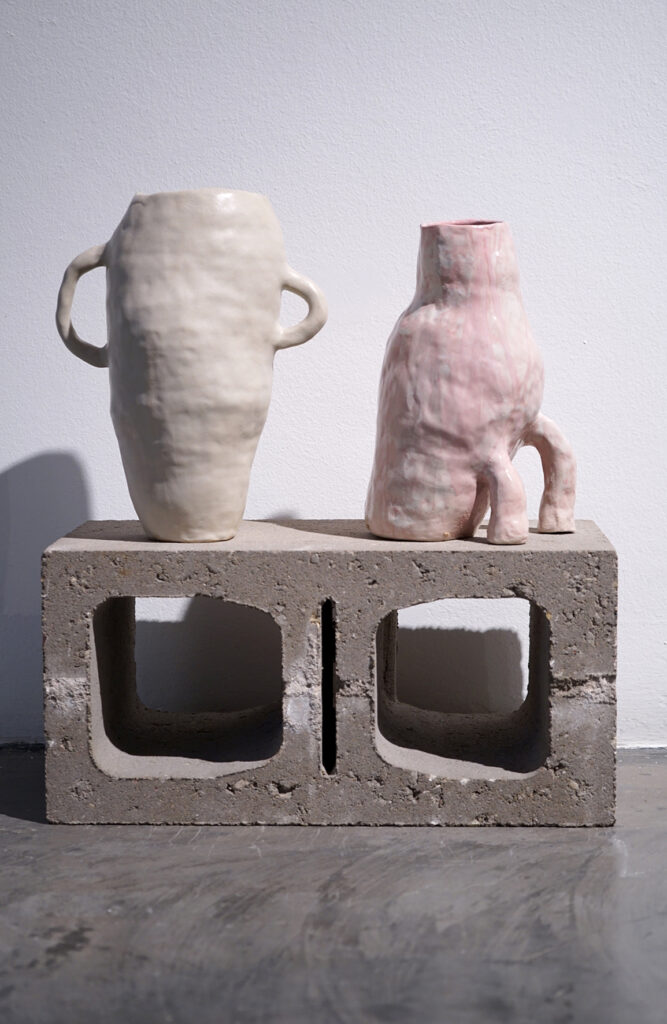
Joint exhibition Spring Express by Ann Pajuväli and Misa Asanuma will be open in Hobusepea gallery from Thursday, February 25, 2021. Exhibition will stay open until March 15, 2021.
By weaving together drawing, ceramic, concrete products and found objects, the exposition constructs a wandering narrative about the longing to be elsewhere and creating fictional worlds into your everyday. The exhibition invites you to a swift sensory journey, in which a comforting familiarity that comes with previously perceived objects and phenomena is mixed with playful scenes of imagination.
☆
Where do you go when days blend into one, when nostrils are longing for spring?
Where do you go when slipping into reverie?
cutting through bushes
sticking to the path
going by curves and angles
muddy diagonals on sprouting grass
Ann Pajuväli
The Exhibition is supported by Cultural Endowment of Estonia.
Exhibitions in Hobusepea gallery are supported by the Cultural Endowment of Estonia, Estonian Ministry of Culture and Liviko Ltd.
Urmas Lüüs‘s personal exhibition Yet Another Example of the Porousness of Certain Borders will be open in Hobusepea gallery from Thursday, May 20th, 2021. Exhibition will be open until June 7th, 2021.
Urmas Lüüs: „After my grandmother’s death I started to empty her apartment before the renovation works – 83 years of life piled up in front of me. In three summer months, I was able to dig through hardly half of the layers imbued by a human spirit. The pile included a coat hanger secured by a wooden stick and a band aid; a dress made of a curtain; mended socks; a patched oilcloth. There were some kind of knowledge and presence in all of these things. I gathered that I was able to read this knowledge more and more every day. When I discovered a shelf full of crocheted and embroidered doilies, I got the feeling that I was the one who had to continue with the tools I also found there. So I learned from what was there in front of me and gradually my skills improved. Soon I was able to read the stitches and tracing patterns just like a musician reading sheet music. It seems that the gap between two worlds was not an obstacle for communication.
A few words about myself – my name is Urmas Lüüs (b. 1987) and I have obtained BA and MA degrees in blacksmithing at the Estonian Academy of Arts. In my artistic practice I combine various media such as video, performance, conceptually charged everyday objects, photography, sculpture and sound. I work in my studio at 2 Hobusepea Str, Tallinn; supervise students at the Estonian Academy of Arts and in Gothenburg University; write about culture for different publications; and participate in a sound art group Postinstrumentum.“
Exhibition is supported by the Cultural Endowment of Estonia and Estonian Academy of Arts.
Exhibitions in Hobusepea gallery are supported by the Cultural Endowment of Estonia, Estonian Ministry of Culture and Liviko Ltd.
Margit Säde will open her personal exhibition Zone d’attente in Hobusepea gallery at 6pm on Wednesday, June 9th, 2021. Exhibition will be open until July 5th, 2021.
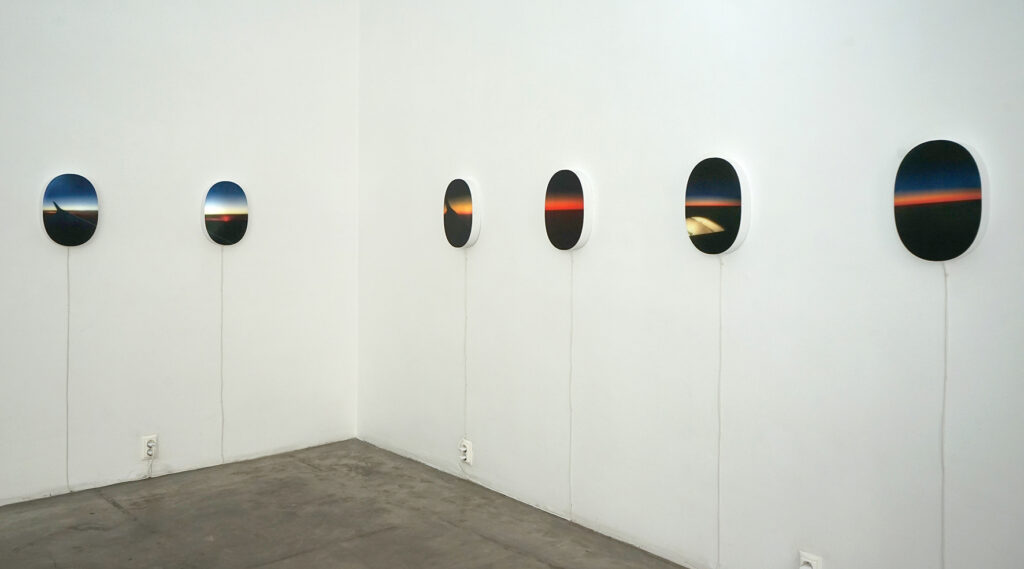
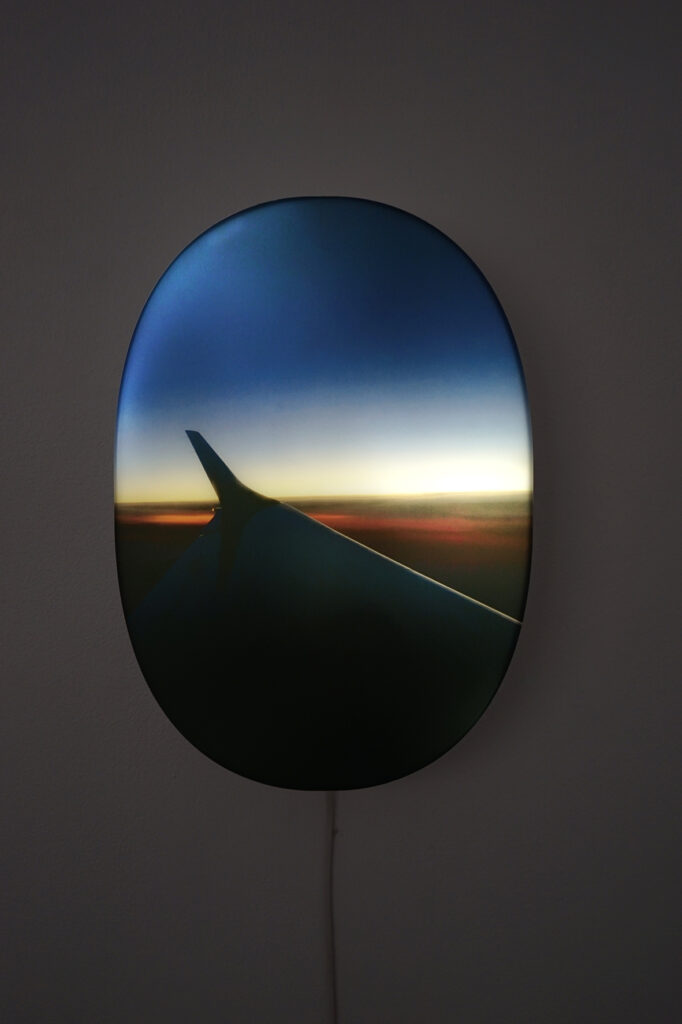
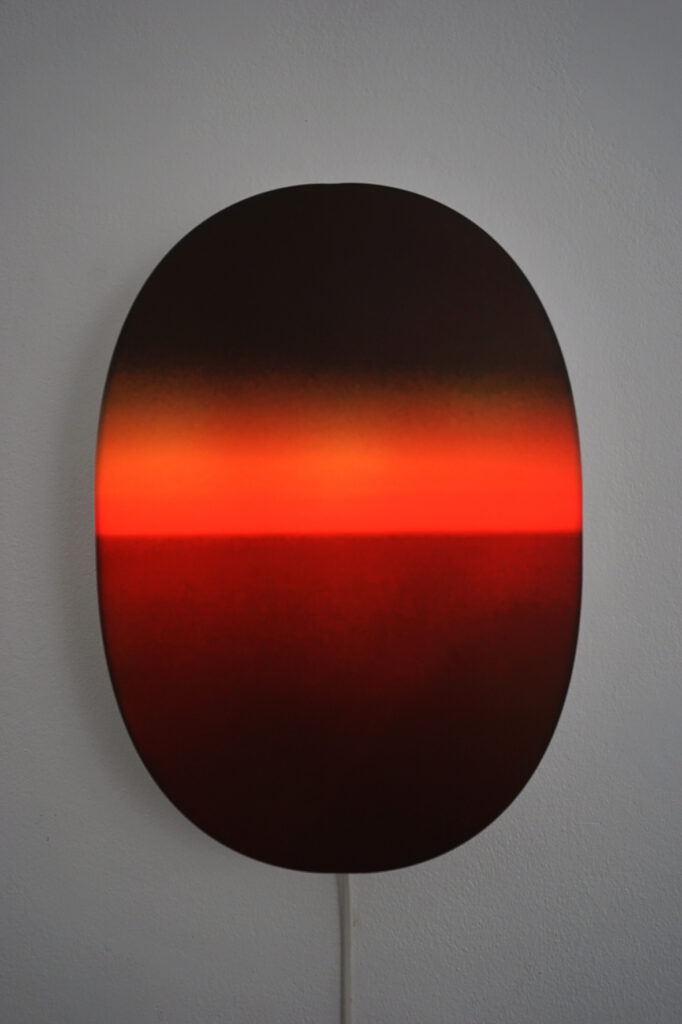
Margit Säde: “Due to my work, I have commuted between Tallinn and Zürich for the last ten years. During the past three years, I have been flying on 65 days, taken off and landed 138 times in total. My flights have been delayed, cancelled, changed, overbooked. I have been flying in an almost empty airplane, with bad weather, with good weather, during the pandemic.
Flying is more sterile and more effective than daily life – and all services are within a short walk or a touch away. And yet, flying is always accompanied by a controversial feeling – there is a desire to both ignore and celebrate the control. I am flying into the sky while being safely chained to my seat. Where some people see an open sky, others witness a framed view of sea with the dimensions of a standard airplane window. While pushing my nose to the tightly closed, cold window I activate the airplane mode on my smartphone and enter the time-free zone of flying. The zone of anticipation is just like a closed circle where there is no past and the future has not started yet – there is only a present in a vacuum. It is similar to the phase in depression when the worst is over but the person has not recovered yet. This is a vague indication about the state where you happen to be at the moment and where you are going to be soon – the moment when your life and everything you desire to do is put on hold. Just like the airplanes circling above the airport, waiting for the moment to land.”
Supported by the Cultural Endowment of Estonia.
The artist’s gratitude to: Urs and August Säde Lehni, Anna Škodenko, Eleonore de Montesquiou, Lightmaker, Tuul and Tallinn Secondary School of Science.
Exhibitions in Hobusepea gallery are supported by the Cultural Endowment of Estonia, Estonian Ministry of Culture and Liviko Ltd.
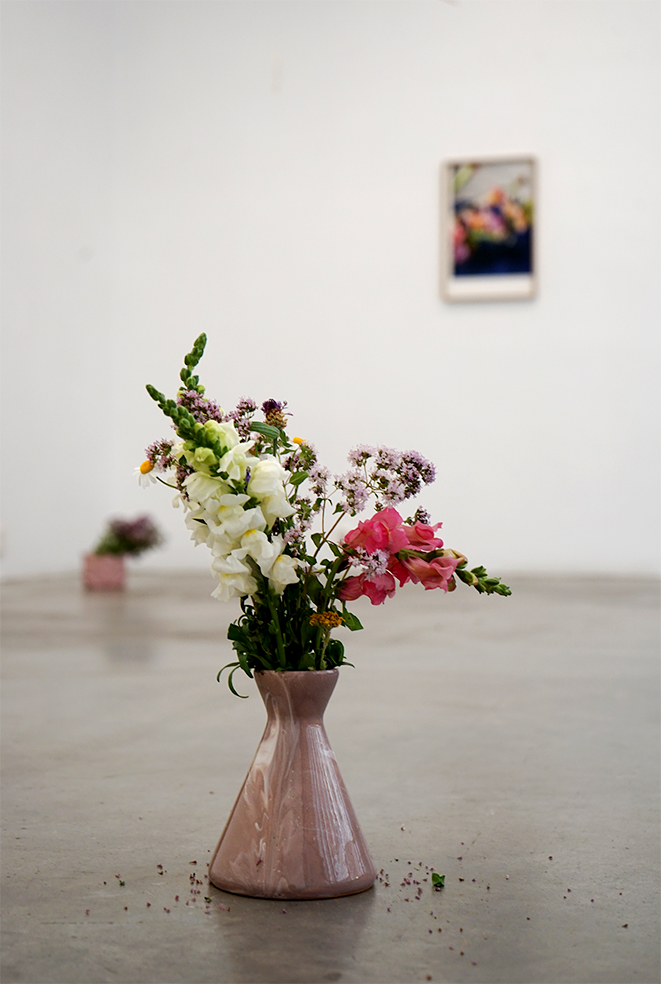
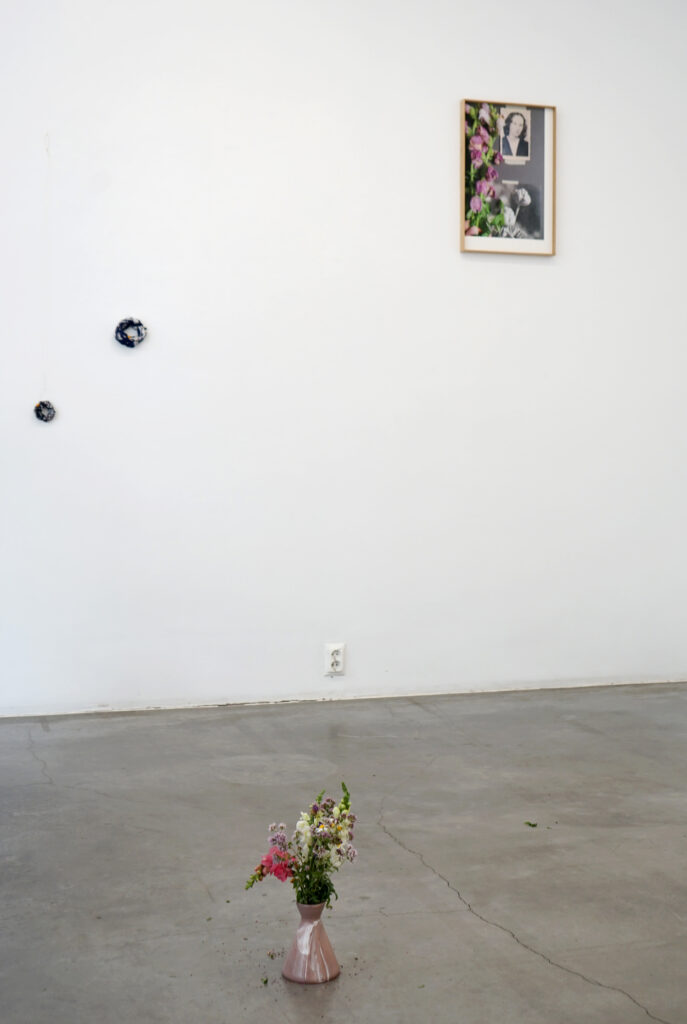
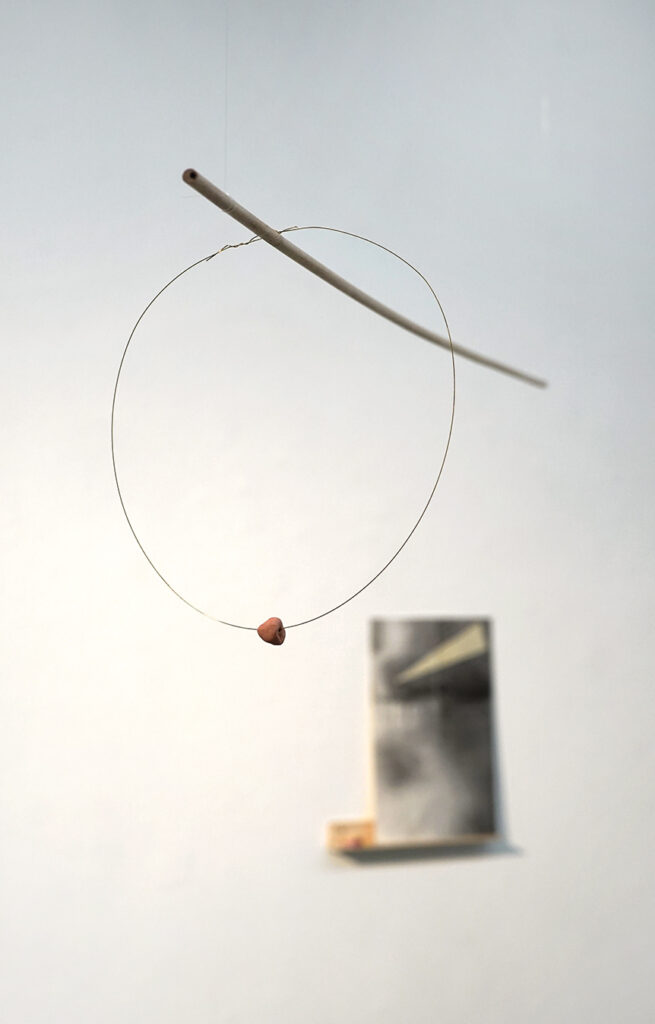
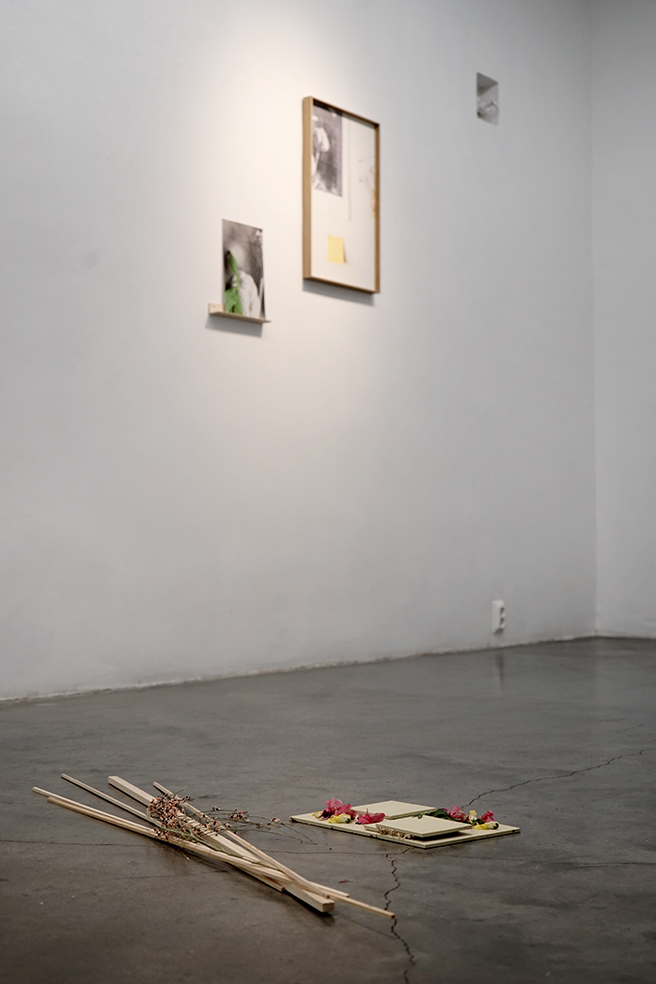
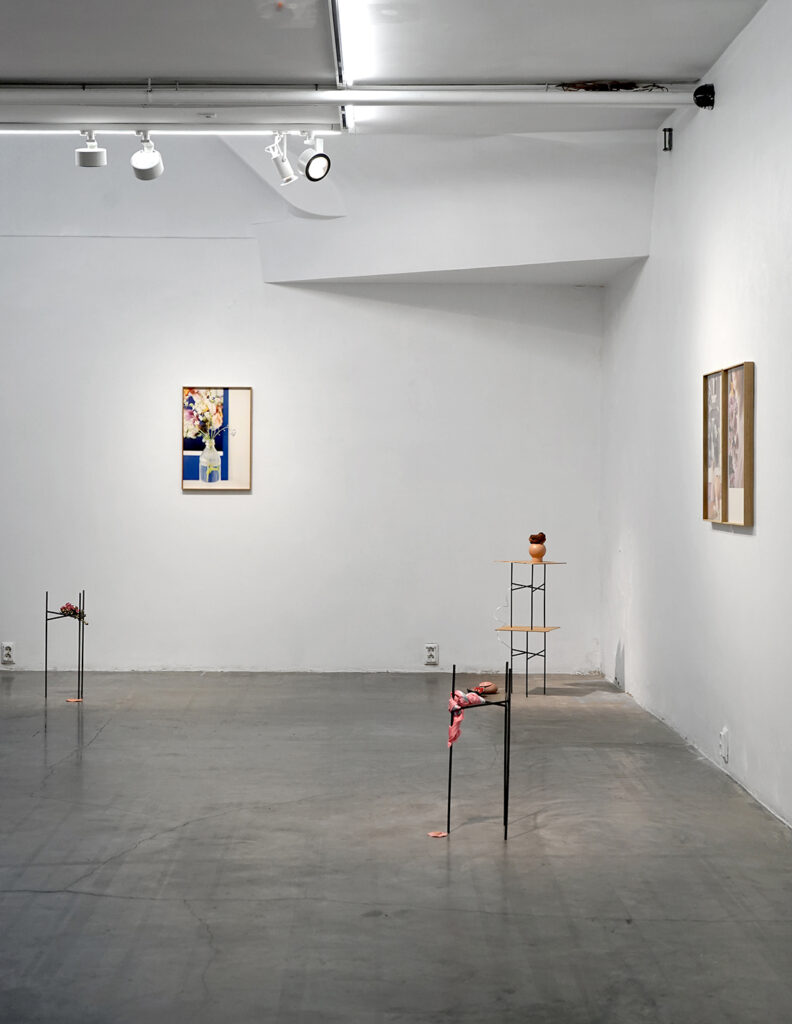
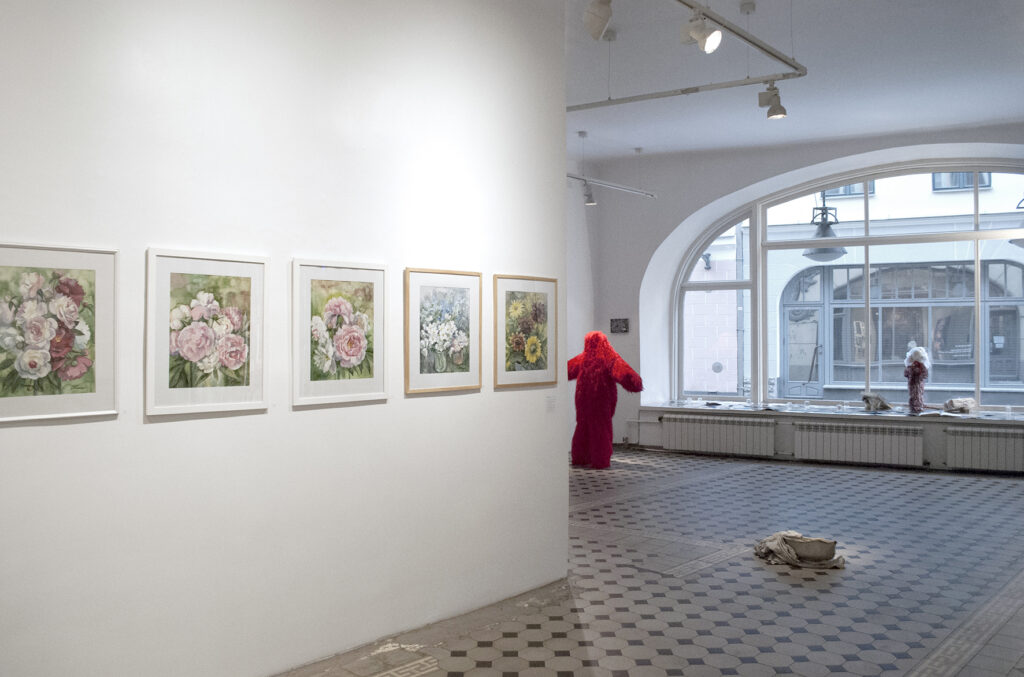
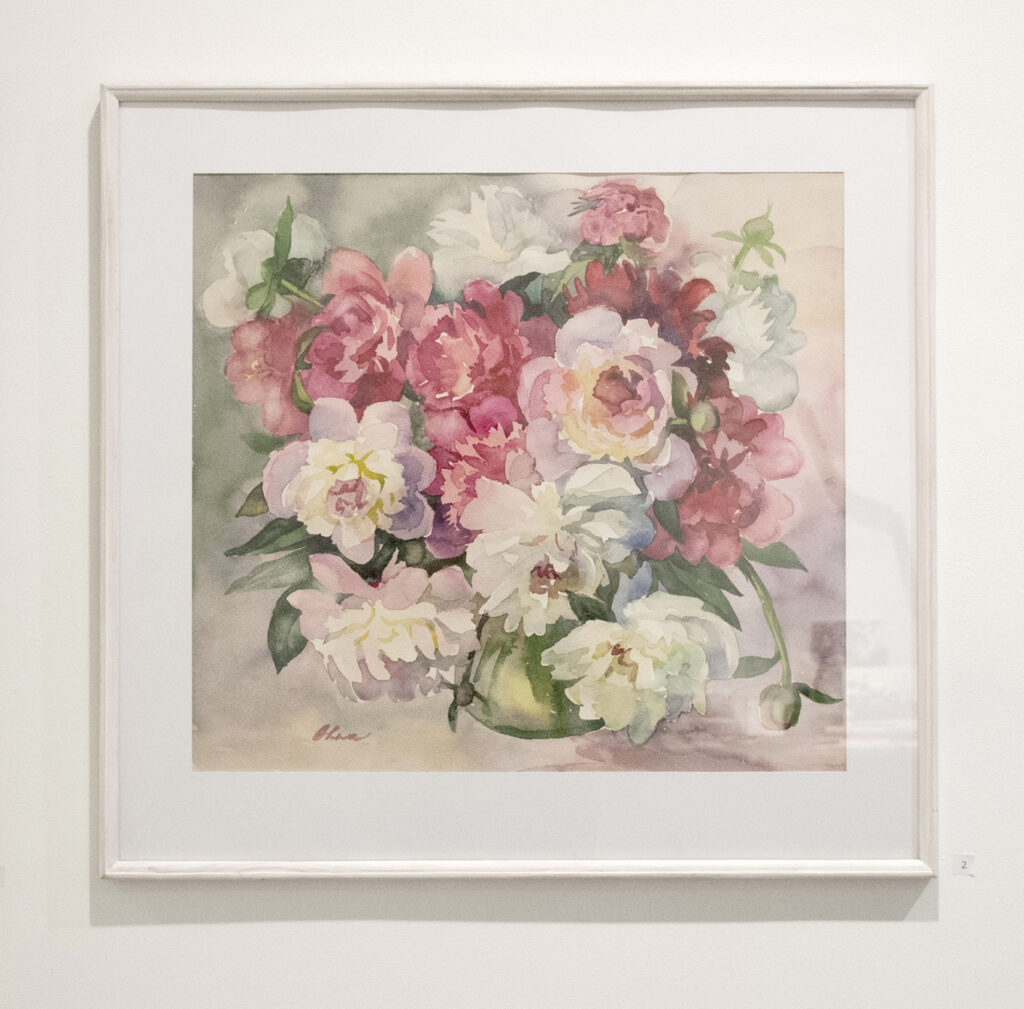
Hedi Jaansoo will open her personal exhibition Sweet Peas, Snapdragons and Forget Me Not in Hobusepea gallery at 5pm on Thursday, July 8th, 2021. Exhibition will be open until August 2nd, 2021.
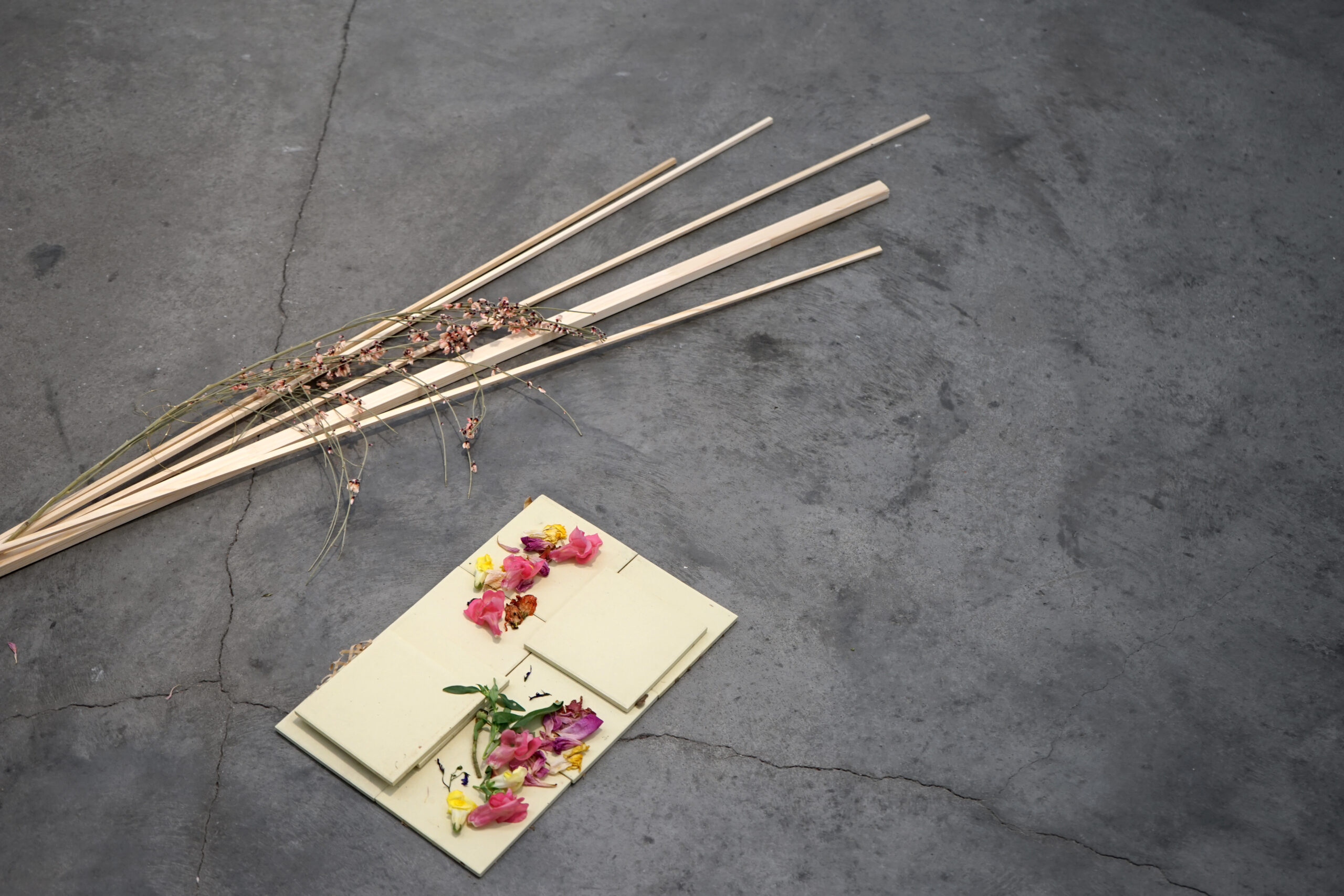
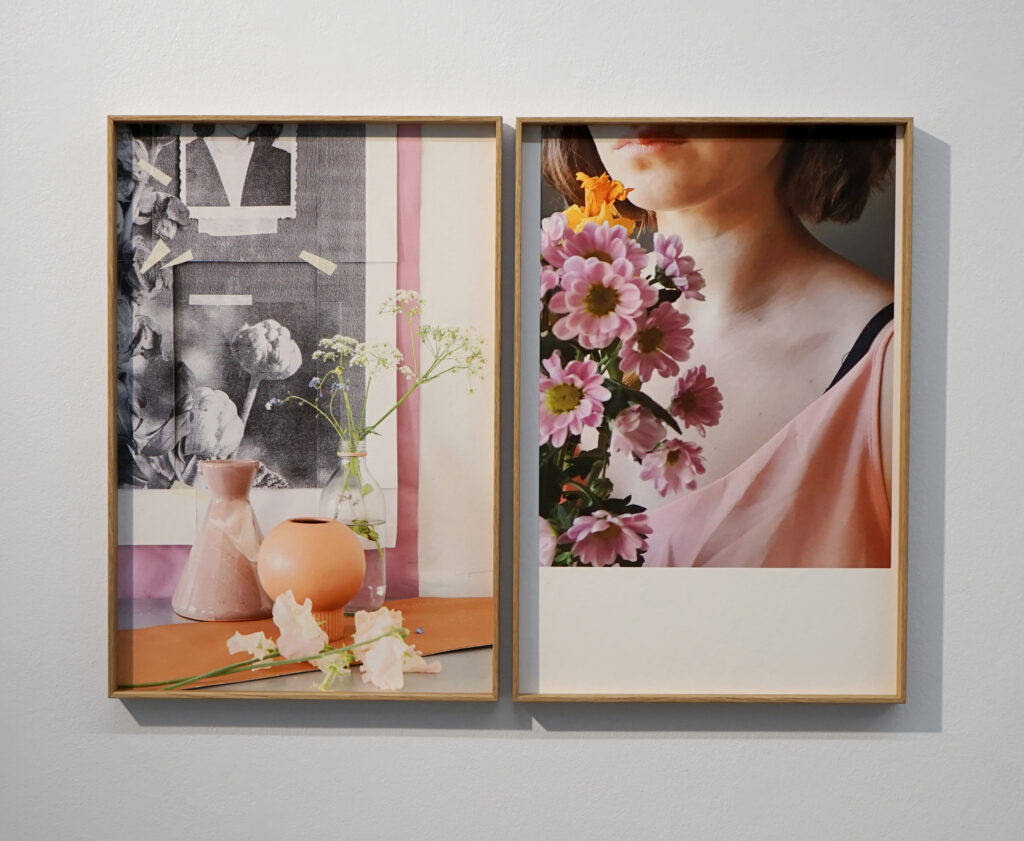
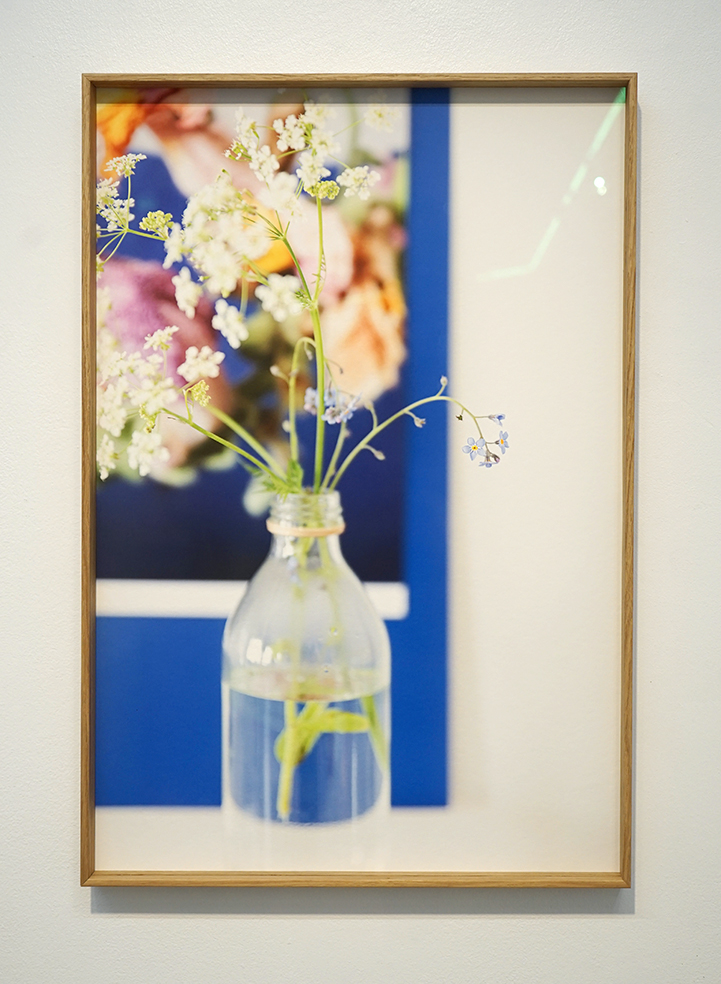
Hedi Jaansoo: “I have photographed half-dried cut flowers. I have depicted these with myself, with the wall, with my granny. I have glued the pieces of pictures together and photographed these with more or less fresh flowers, notes, walls and vases. I have pressed wrinkles into the clay. I have braided scarves. I’d like to be like a snapdragon, symbolizing the strength of women. I’d like to polish my nails again, but afterwards I have to take it off, and I have no time, and then these remain longer in a half-polished state. Like flowers in a vase, lasting much longer when half-dried than fresh. I’d like to say there’s no need to press yourself together, because it won’t help.
The beautiful nymph Paeonia once caught the eye of Apollo. However, Paeonia turned self-conscious and blushed as she noticed that Aphrodite had observed their flirtation. Aphrodite got angry and turned Paeonia into a red peony.
During the Victorian era, people sent each other little flower arrangements to express feelings that was considered a social taboo. Flower dictionaries were used in order to decode the talking bouquets. One of the most popular dictionaries of this kind is “Language of Flowers” (Routledge, 1884, illustrated by Kate Greenaway, a book with numerous reprints). So, during the Victorian era, one had to speak literally through flowers about things that were prohibited.
And they say you should not let peonies wither, because it will bring bad luck.
I’d like to be like a snapdragon.”
The exhibition is supported by the Cultural Endowment of Estonia.
The exhibitions in Hobusepea Gallery are supported by the Cultural Endowment of Estonia, Estonian Ministry of Culture and Liviko Ltd.
+372 5594 4447
hedijaansoo@gmail.com
www.hedijaansoo.com
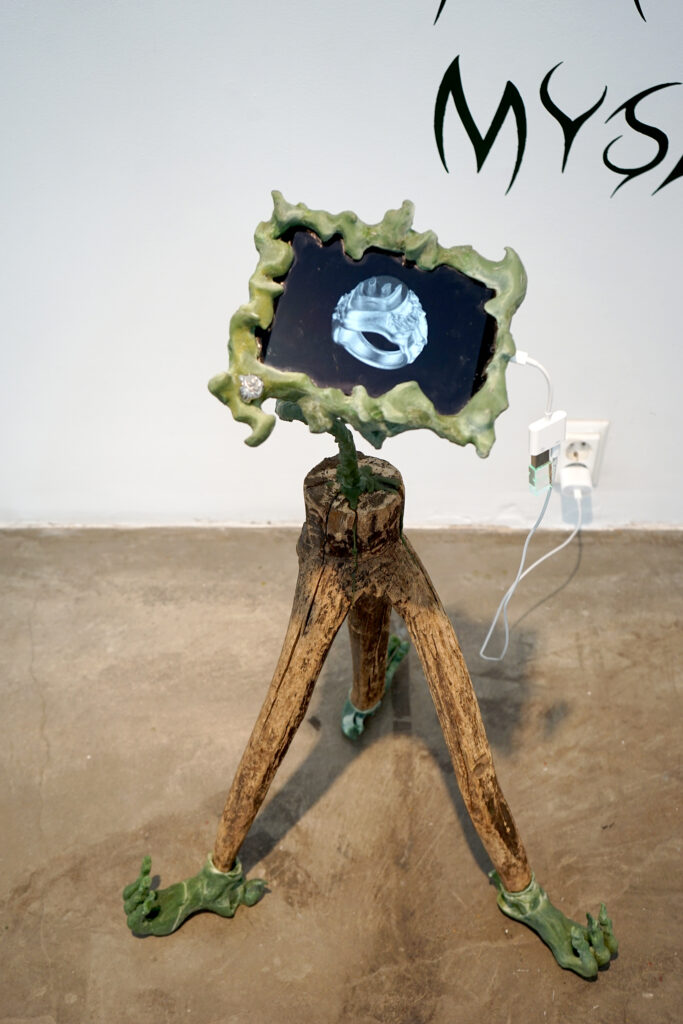
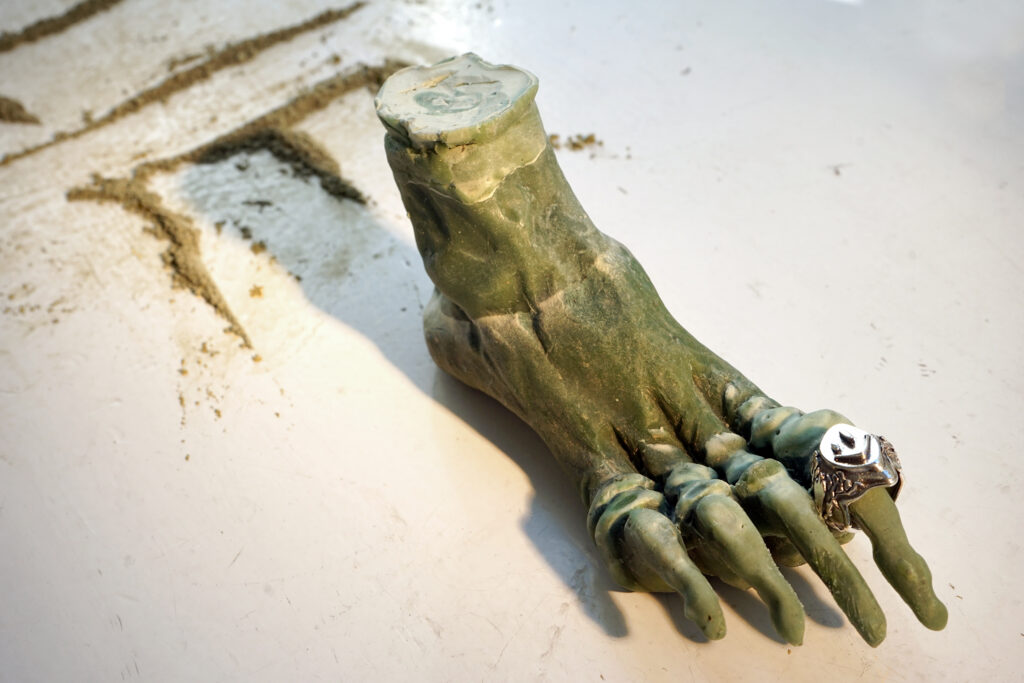
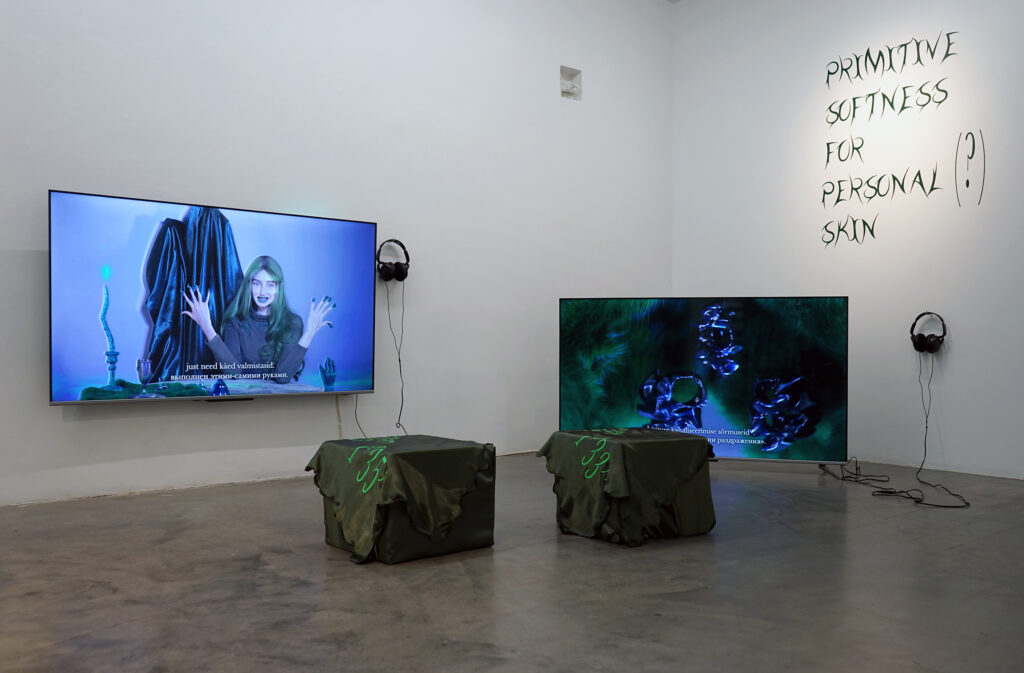
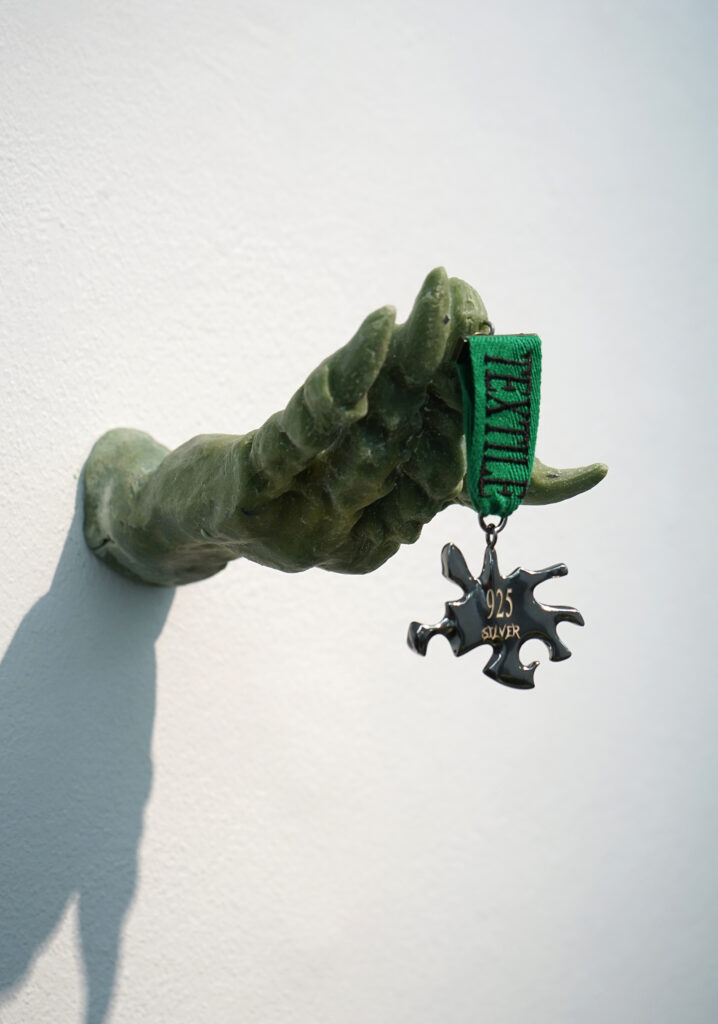
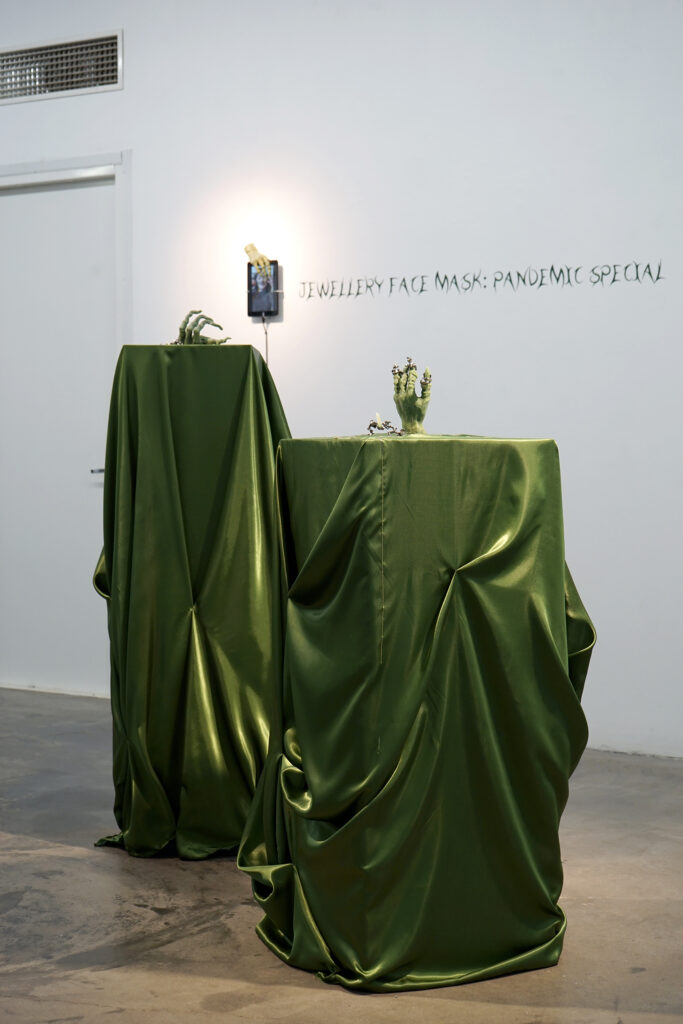
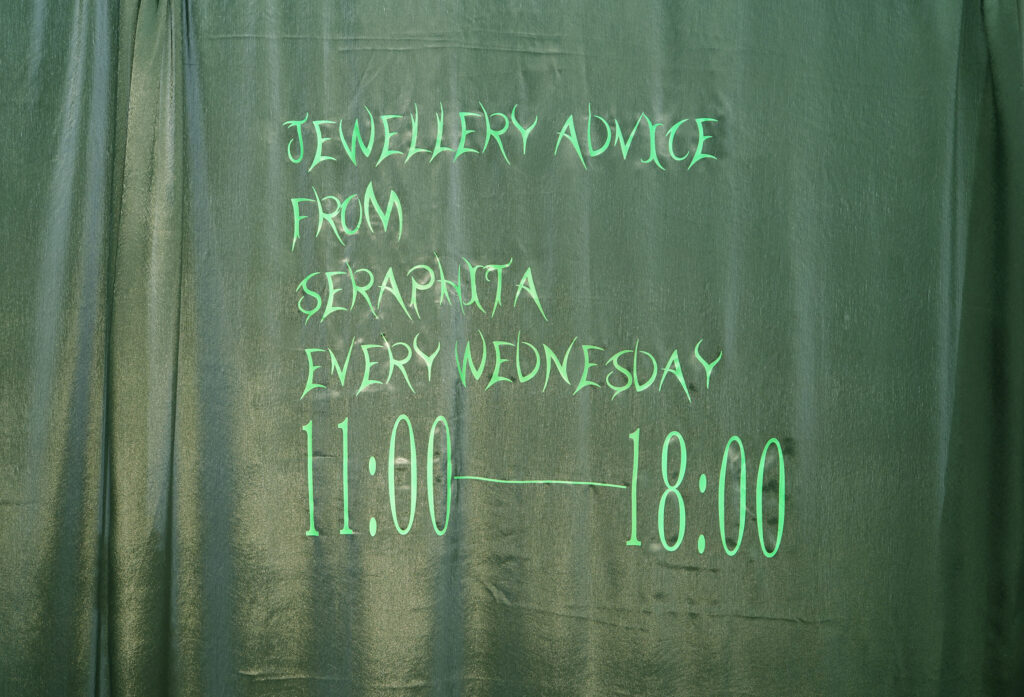
The exhibition Tactilite: Stone that Tickles the Gaze by jewellery artist Darja Popolitova will open in Hobusepea gallery at 6pm on August 5th Hobusepea gallery. The solo show incorporates five video works, jewellery and installations that will create a fictional world where witch Seraphita helps to cope with the frustrations of everyday life.
“Seraphita is a fictional character who helps me to expand the usual functions of jewellery. For example, to shoot jewellery so that the viewer would be much more interested in watching a video clip rather than a stand-alone artifact attached to the stand,” says the author.
The video tutorials and jewellery tools in the exhibition are tailored to the specific needs of people – either for becoming more self-confident for some, bringing lost intimacy into life or coping with aggression for others.
The artist considers materiality not only as a physical component but also as a digital one. The action performed by witch Seraphita on the screen becomes a “ritual” involving corporeality. Without such powerful wearable symbols as jewellery, human life would not have sentimental values — gift-giving rituals, tactile moments, personal memories.
Darja’s works have been published in local and international media. Kelly Riggs, a contemporary critic and curator, writes about Darja’s work in the Dutch art magazine Current Obsession:
“Though the physical jewellery objects are the crux of what Popolitova creates, they are also just a part of the total picture, or the collective persona she presents when she shares that jewellery online.”
The exhibition can be visited from 4th to 30th of August 2021, every day (except Tuesday) 11:00-18:00.
Gallery address: Hobusepea 2, Tallinn.
The exhibition has been completed in collaboration with Jakob Tulve (VFX) and Andres Nõlvak (sound).
Artists’s gratude goes to: Aleksandr Popolitov ja Nadežda Popolitova, Ando Naulainen, Anastasia Dratšova, Eesti Kunstiakadeemia doktorikool, Eesti Kunstiakadeemia ehte- ja sepakunstiosakond, Eesti Kunstnikeliit, Elnara Taidre, Karl Kivinurm, Norman Orro, Kadi Veesaar, Kadri Mälk, Karmo Järv, Keiu Krikmann, Kristo Pachel, Miikael Danieljants, Pire Sova, Raivo Kelomees.
Sponsors: Cultural Endowment of Estonia, Estonian Academy of Arts, Moe OÜ, Õllenaut OÜ, Hobusepea gallery, Orbital Vox Studios.
Exhibitions in Hobusepea gallery are supported by the Cultural Endowment of Estonia, Estonian Ministry of Culture and Liviko Ltd.
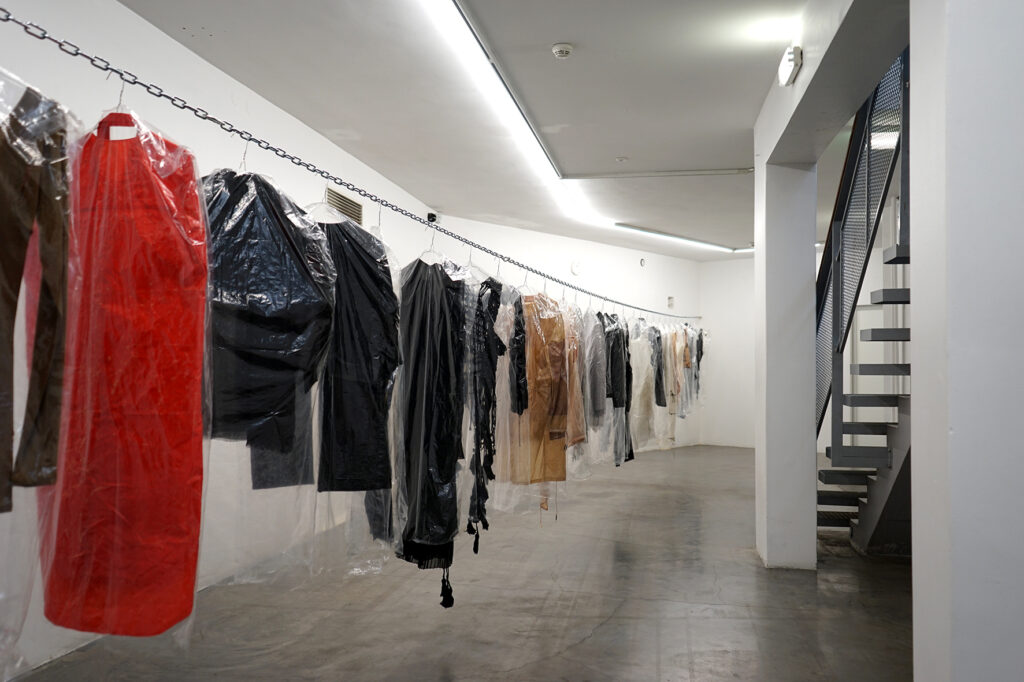
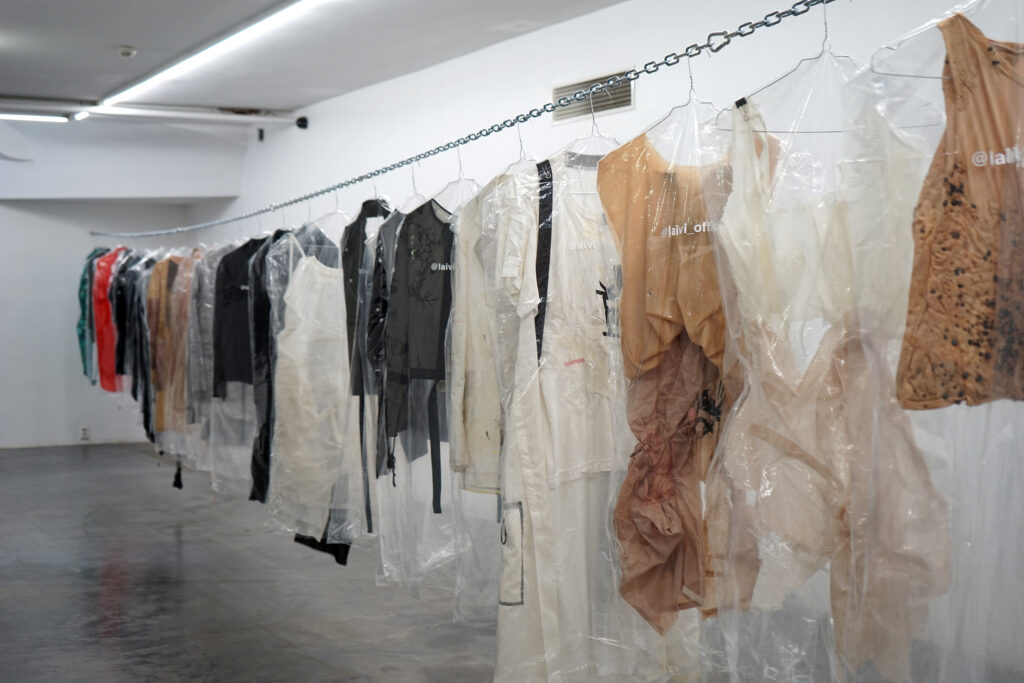
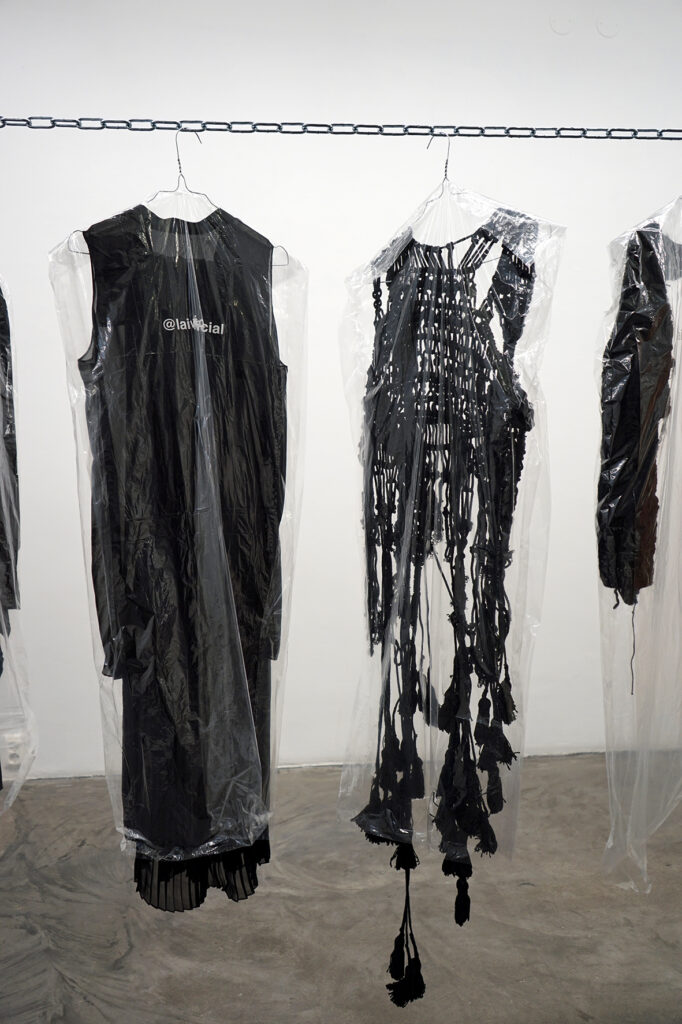
Laivi‘s personal exhibition Collecting and Preserving will be opened in Hobusepea gallery at 6pm on Thursday, September 2nd, 2021. Exhibition will be open until September 20th, 2021.
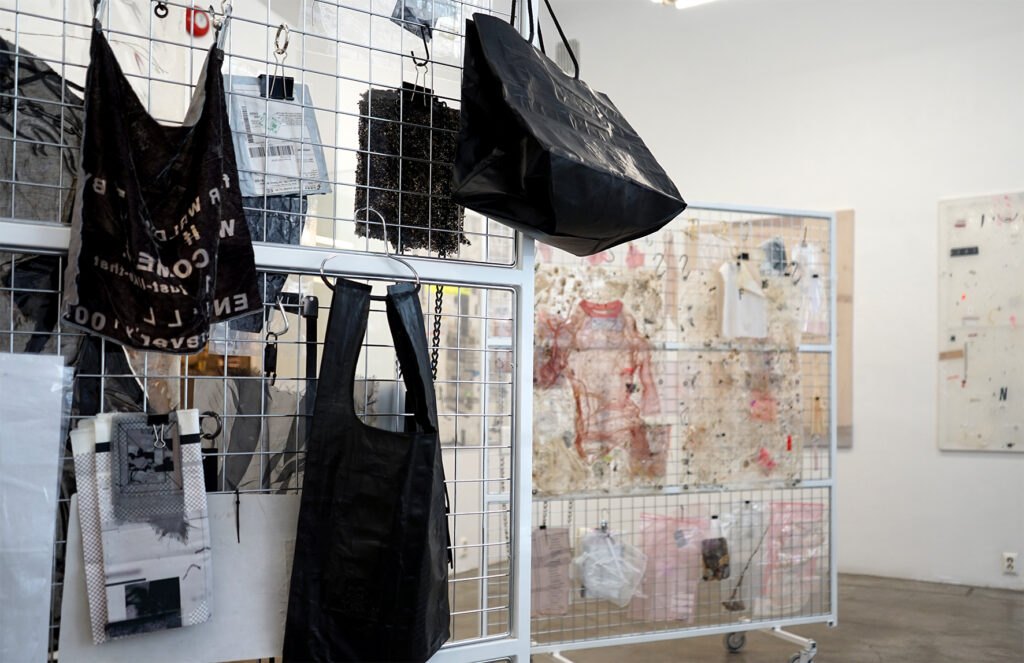
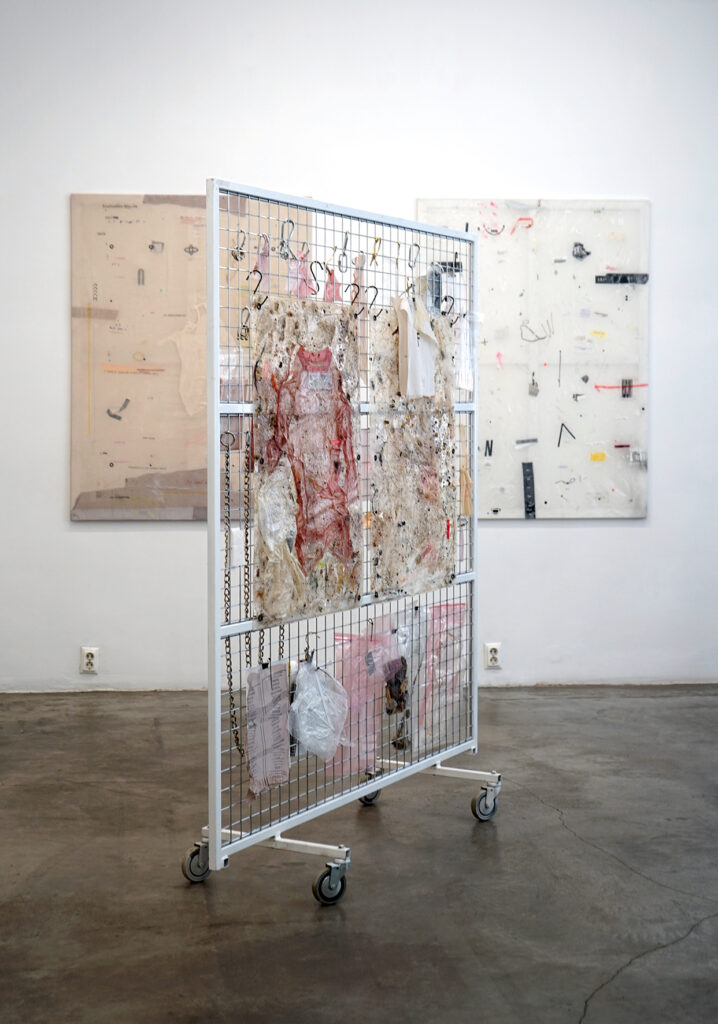
Collecting and Preserving is a fashion exhibition about business and art, posing the question whether the only solution for helping the society suffering from crises would be a political one?
The basis for the coping mechanism in our society is petroleum that has emerged from the organic substance deposited either in the seabed or underground 300 million years ago. What kind of material for the future we are creating with today’s sediments?
Exhibition is supported by the Cultural Endowment of Estonia.
Exhibitions in Hobusepea gallery are supported by the Cultural Endowment of Estonia, Estonian Ministry of Culture and Liviko Ltd.
https://cca.ee/kunstnike-andmebaas/laivi
www.laivi.ee
www.instagram.com/laivi_official
Katrin Koskaru‘s personal exhibition Engine Noise from the Sun will be open in Hobusepea gallery from Friday, September 24th, 2021. Exhibition will be open until October 11, 2021.
„The sky above Annelinn district was thick with noise. Especially at night. The daytime sky was cheerful, full of colourful parachutes. Sports in the sky involves military objectives, and that is a well-known fact. Tu-16K, followed by Tu-22M3, Tu-4D and the colourful, bright Il-76MD. Some of the Il-76MD models were in Aeroflot’s colours and armed with automatic guns, and in Aeroflot’s colours, but armed with automatic guns and equipped against the ground-to-air and ground-to-air rockets. Helena? An arm’s length to the right from the gray cloud! Diligent exercises for observing airplanes, considerations, considerations, diligent exercises may vastly decrease the time spent on searching for an airplane. An airplane can appear in upper layers. A thumb’s length to the right from the church tower. Only silence can be heard. To understand, to understand that you have to run. Riddle me, riddle me! It is neither fast nor slow, it is loud but one can hear it only in silence, in one’s body, inside one’s head. First in one ear – a phantom; then in the other ear – deception, a whistle, battle scenes. From somewhere inside, from the head. Sound waves that keep gathering and gathering, until the body escapes the sound waves, the body starts to move faster, the speed should be at least 343 metres per second, 343 seconds through sound waves, diligent exercises take the body quickly through with a blast. There won’t be a blast without the movement of the body of one’s individual type. The body escapes the sound waves and the spiders started to weave a huge fabric for the body, a robe stronger than steel, but too slowly, so that goats were taken to help out, but even they turned out to be too slow and did not achieve the desired results. Helena was found in her room at home, weaving a purple carpet, enormously big, consisting two wide parts where battles have been beautifully knitted inside.“
Katrin Koskaru
Exhibitions in Hobusepea gallery are supported by the Cultural Endowment of Estonia, Estonian Ministry of Culture and Liviko Ltd.
koskaru@gmail.com
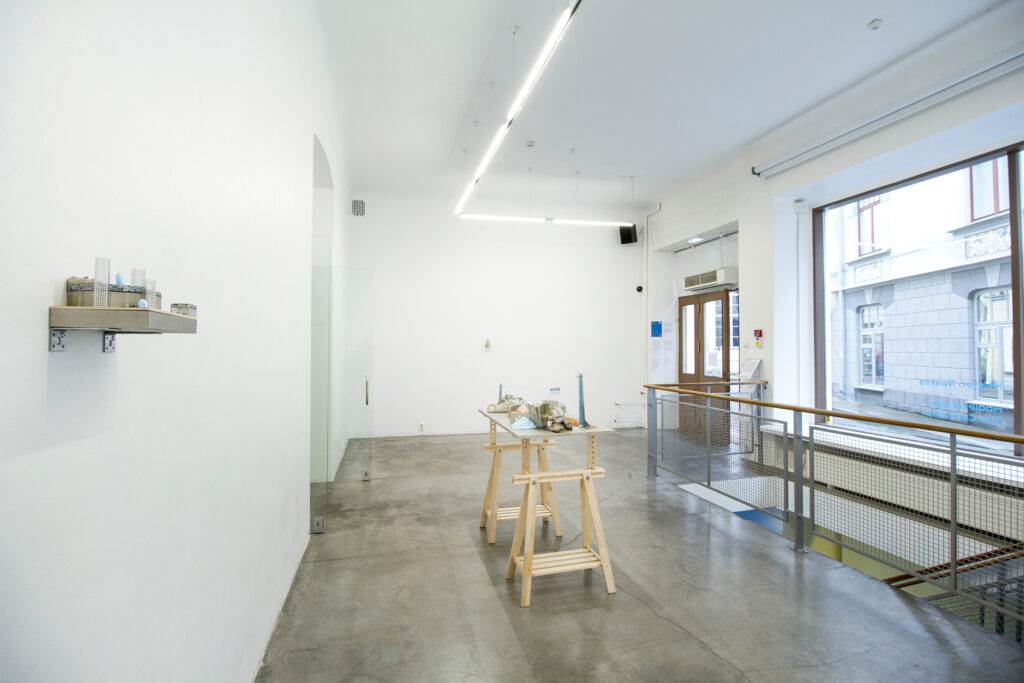
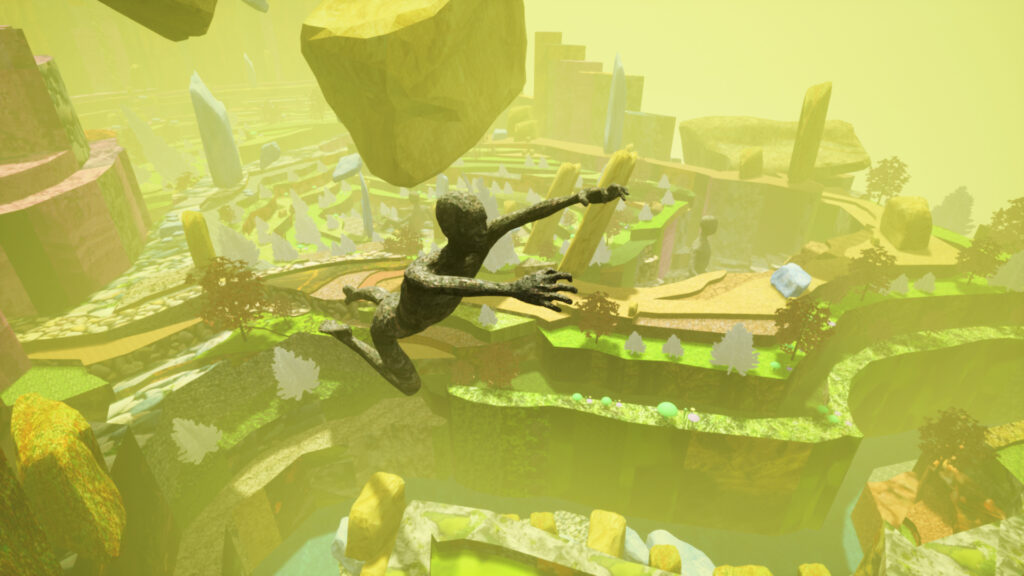
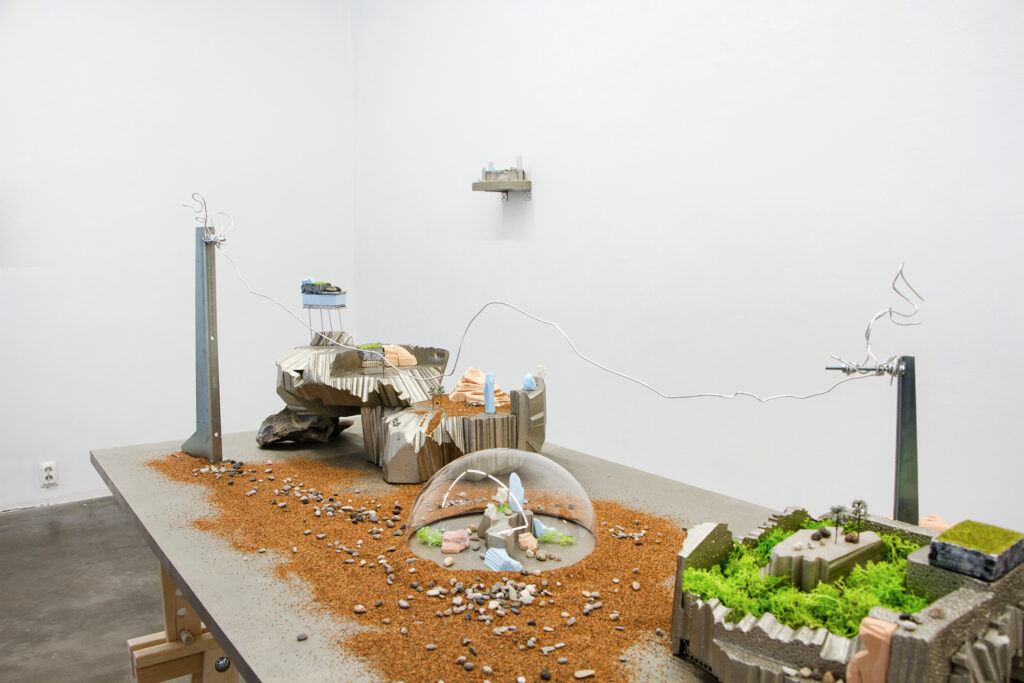
Kristen Rästas‘s personal exhibition The Caretaker will be opened in Hobusepea gallery at 6pm on Thursday, October 14, 2021. Exhibition will be open until November 1st, 2021.
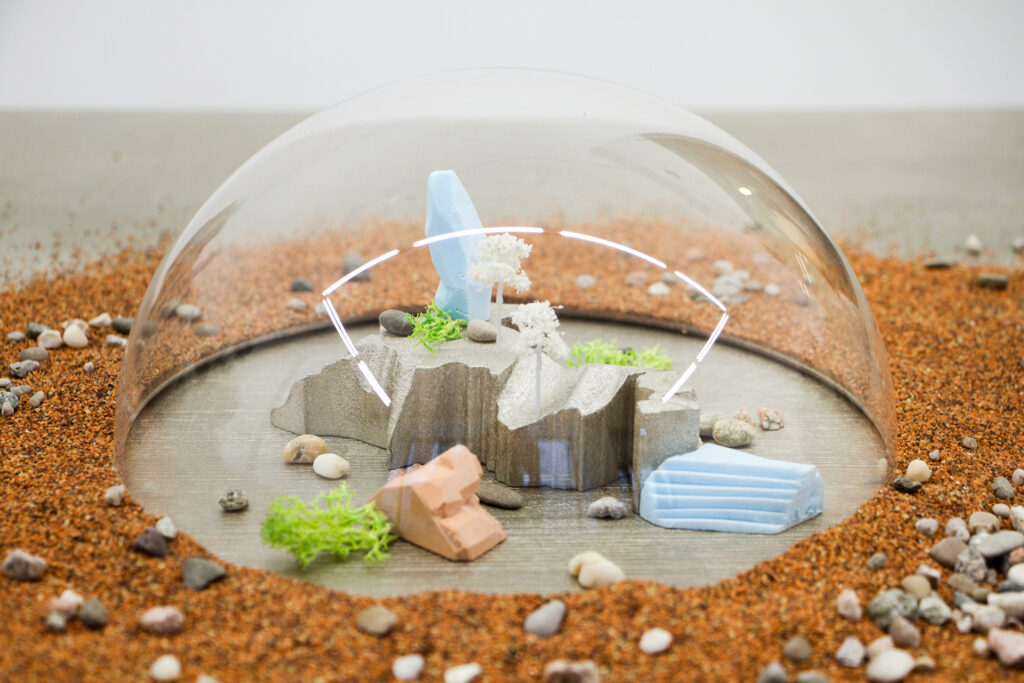
At his present exhibition, Kristen Rästas presents a VR artwork The Caretaker and sculptural landscapes which have been inspired by the visual forms of the main artwork. The fictional character, the Caretaker, has been named after its figurative position as the creator of the environment. The virtual, eternal landscape is something that the Caretaker tries to design according to the memories of the real world. The empirical journey tells about the desire to preserve and improve the surrounding, increasingly fragile and perceptible environments, while creating artificial visual out of the same environments. And sometimes, these may seem much more ideal and inviting than the real environment. The monologue that is made of the Caretaker’s memories, is slightly nostalgic and related to the surrounding landscape. The repetitiousness of audio clips, motionlessness of the environment and the interactive flying ability of the artwork viewer create an uncanny medium as a primary emotion through recognition of natural environment. One cannot be quite sure whether the viewer has been put in the Caretaker’s role or has the viewer been taken to a virtual-archeological exposition in the memories of someone unknown that at the same time have the effect of a collective memory while depicting universal natural forms and textures. Through his artwork, Kristen Rästas presents his vision about creating completely new artificial environments and contemporary landscape image as well as the various ways to experience and interpret these environments.
In order to achieve the maximum experience, the interactive virtual artwork needs to be viewed with VR headset and the viewer has to use the remote control. There is a 3D-world that the viewer can discover while hauntingly flying around on his or her own. It is a free platform without a linear beginning and an end. Every viewer continues where the last viewer has left his or her experience.
Artist’s gratitude to: Kelli Gedvil, Kennet Lekko, Simon Dalzell, Ian-Simon Märjama.
Exhibitions in Hobusepea gallery are supported by the Cultural Endowment of Estonia, Estonian Ministry of Culture and Liviko Ltd.
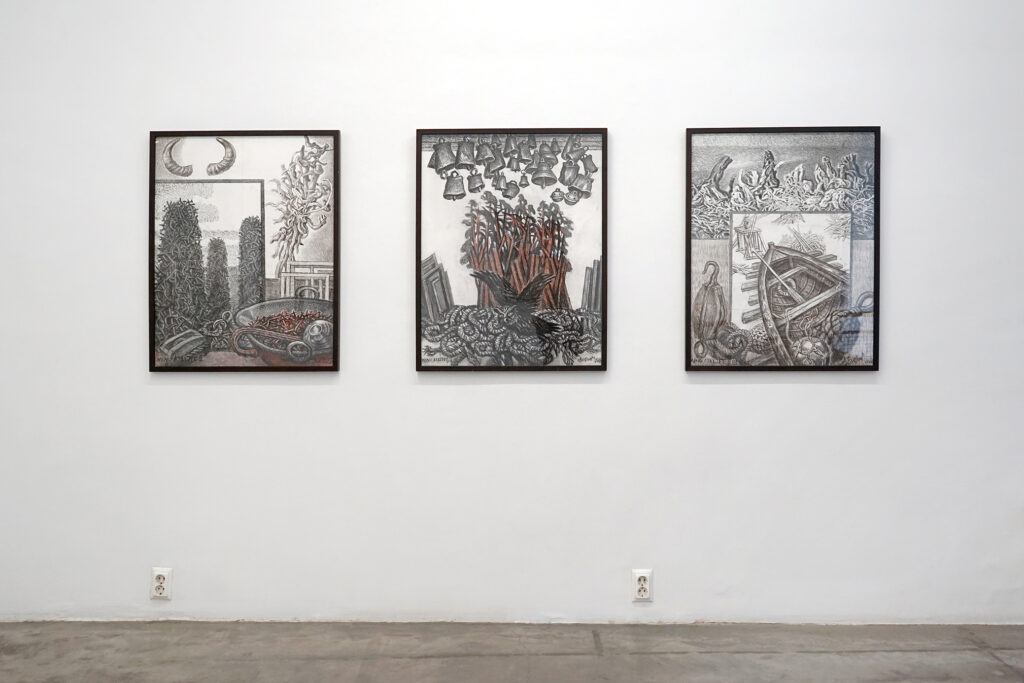
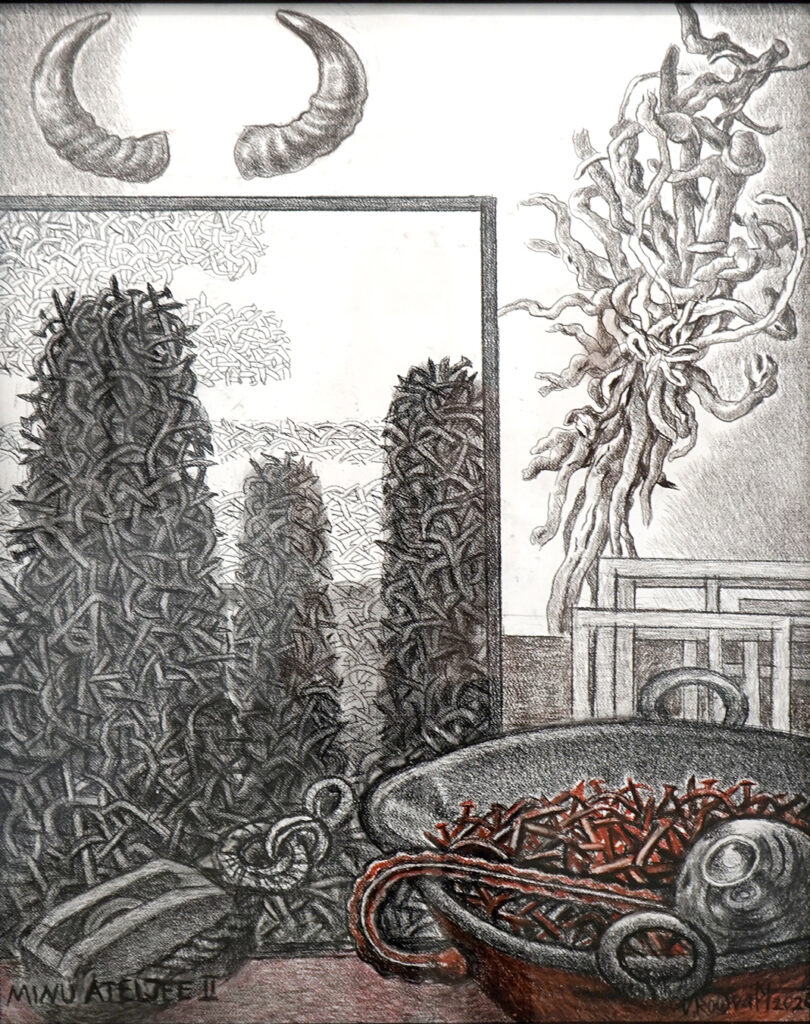
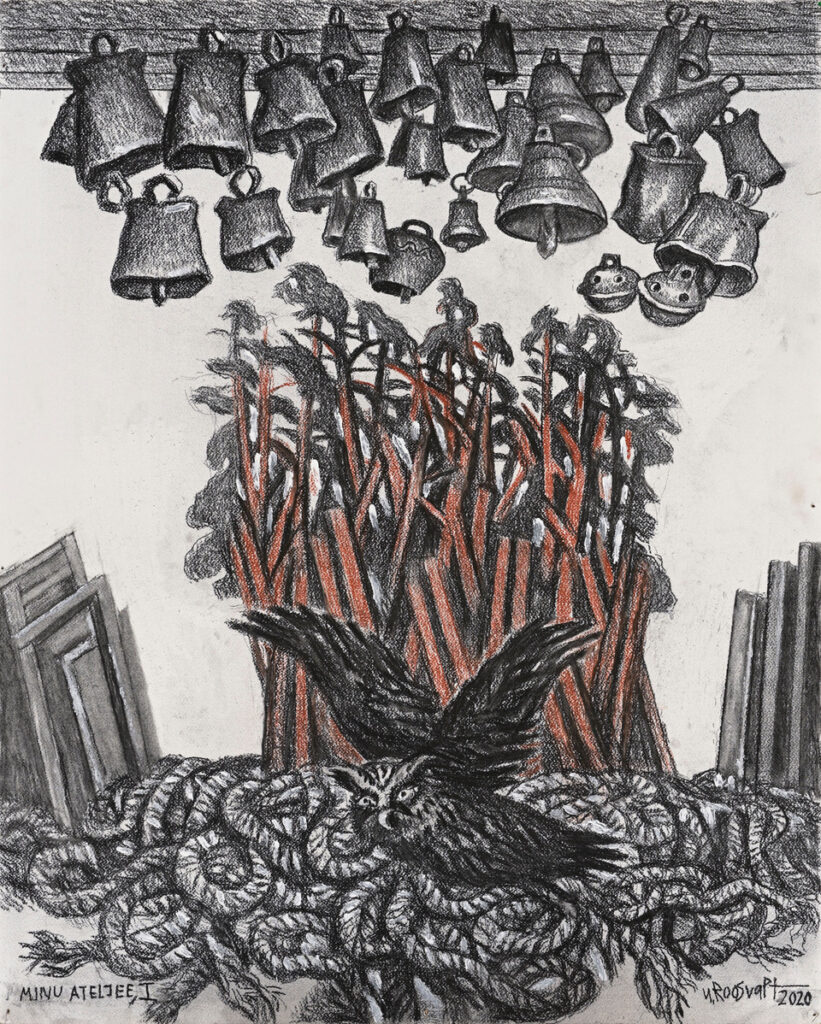
Uno Roosvalt‘s anniversary exhibition My Studio will be opened in Hobusepea gallery at 6pm on Wednesday, November 3rd, 2021. Exhibition will be open until November 22, 2021.
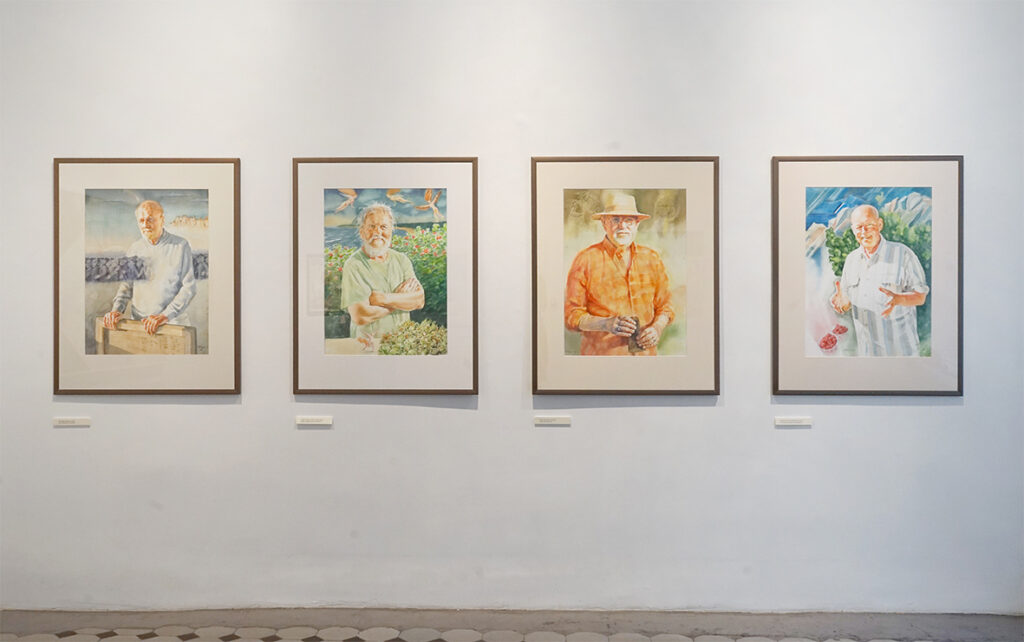
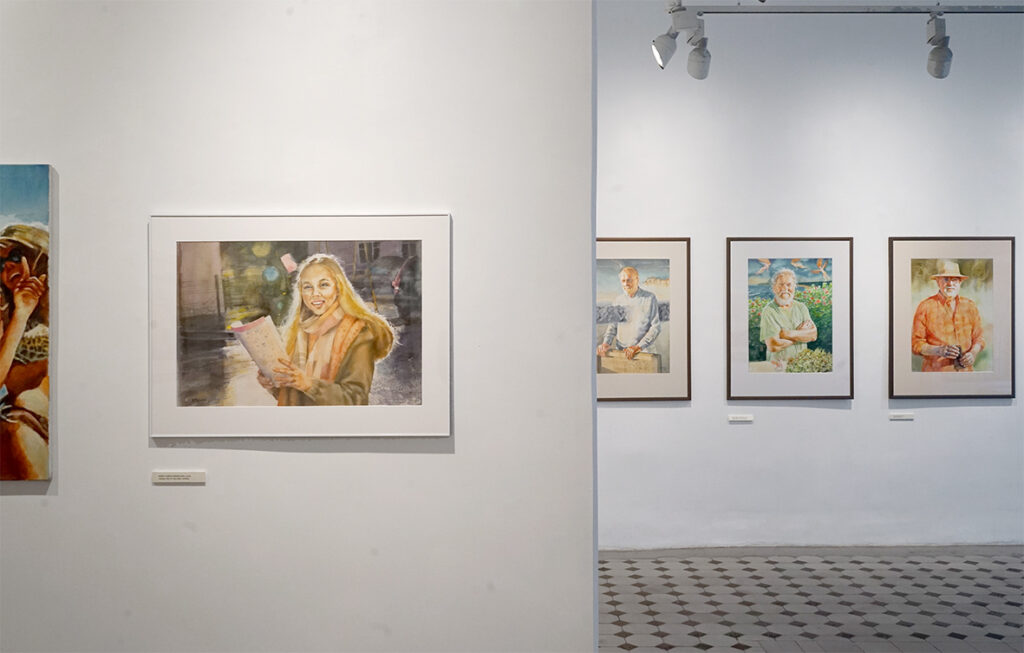
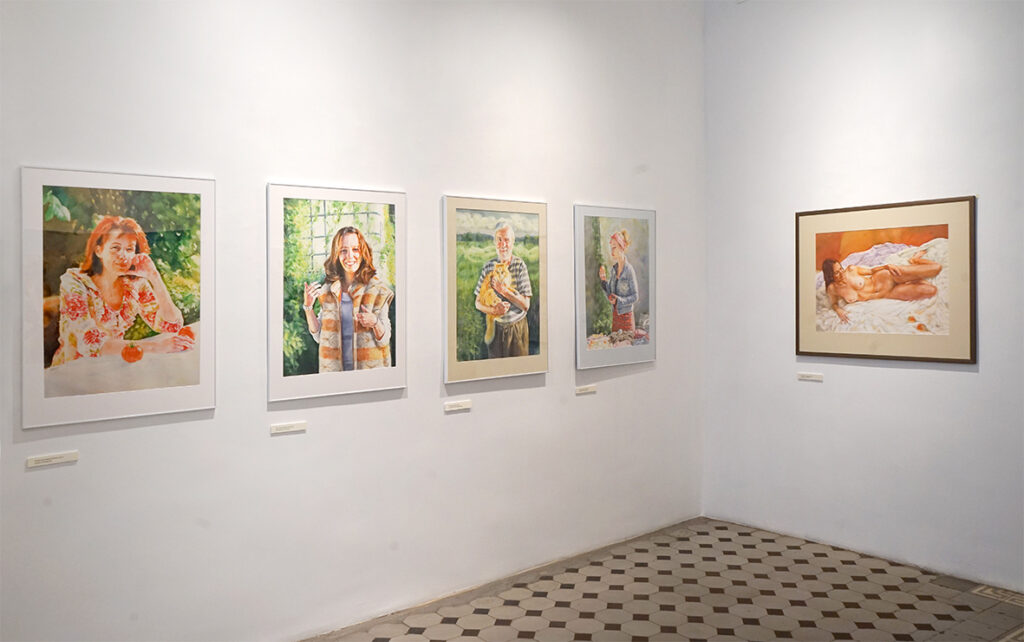
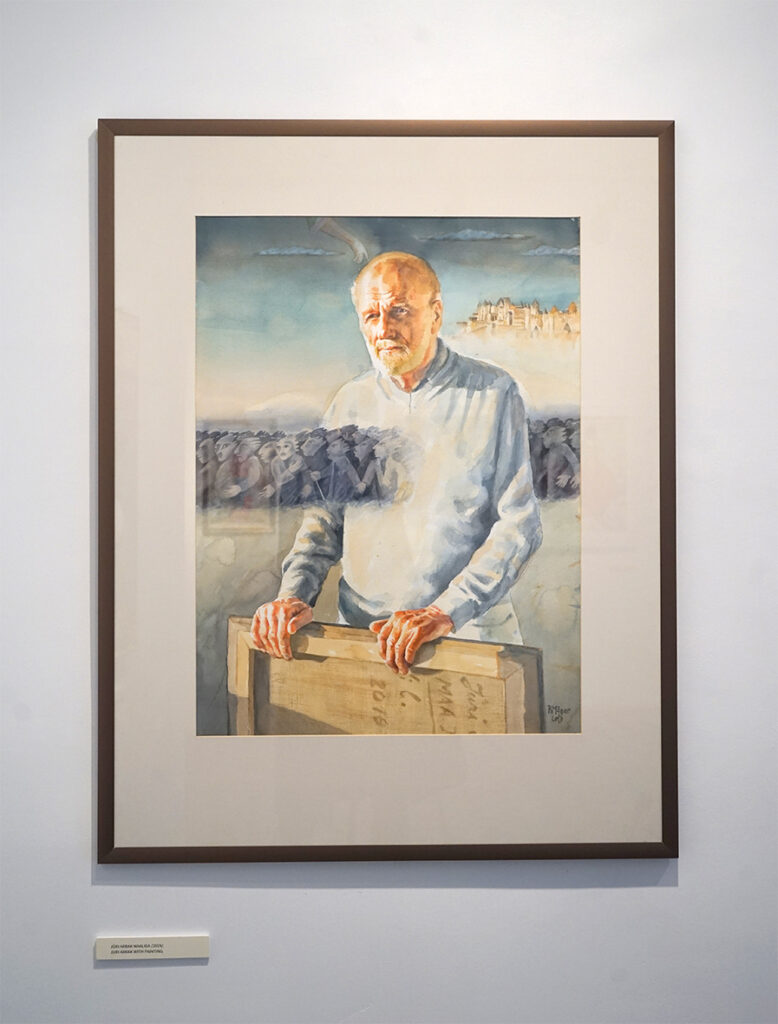
Uno Roosvalt turned 80 in August this year. Current exhibition comprising Roosvalt’s drawings is one way to celebrate this important landmark in the artist’s life. Uno tends to lead his life with a modest flow – and his loving gaze accompanies the various subjects of his artwork, whether it be Nordic nature, coastal landscapes, evergreen bushes or cats and dogs. And there have always been cats and dogs in the Roosvalt family’s home.
Artist’s studio is an artist’s home. It is the birthplace of the artist’s artwork. Even when the works leave the studio, there will be a memory of the space in the artworks as the space in the artist’s head where the creative ideas were born. Yearning for one’s studio is a part of every artwork’s charm. An artist needs a studio – it is a place where artists keep their tools, a place they can leave and return. Uno Roosvalt’s studio is located in Maarjamäe district, Tallinn. It is on the first floor of his home. A narrow staircase leads upstairs, and there are many artworks hanging on the walls (including those by Estonian art classics Eerik Haamer, Johannes Võerahansu, Evald Okas; and Uno Roosvalt’s contemporaries Marju Mutsu and Naima Neidre), including the artist’s own works from the earlier years of his artist’s practice.
The studio is old, Uno Roosvalt has worked here for many years. Despite its small size, the studio has no suffocating effect. All the paintings and drawings surrounding you in the studio seem to be like openings to the worlds that offer more space and expanse for being: coastal landscapes, views to the cliffs and from the cliffs in Iceland, Gotland, Åland; Estonian coasts with junipers, megaliths, boat wrecks, heaps of fishing nets, glass buoys. Even if the artist depicts people or an animal, there is always some open view in the background, whether some kind of landscape or a window overlooking the garden. Uno Roosvalt’s studio is like a space with numerous windows.
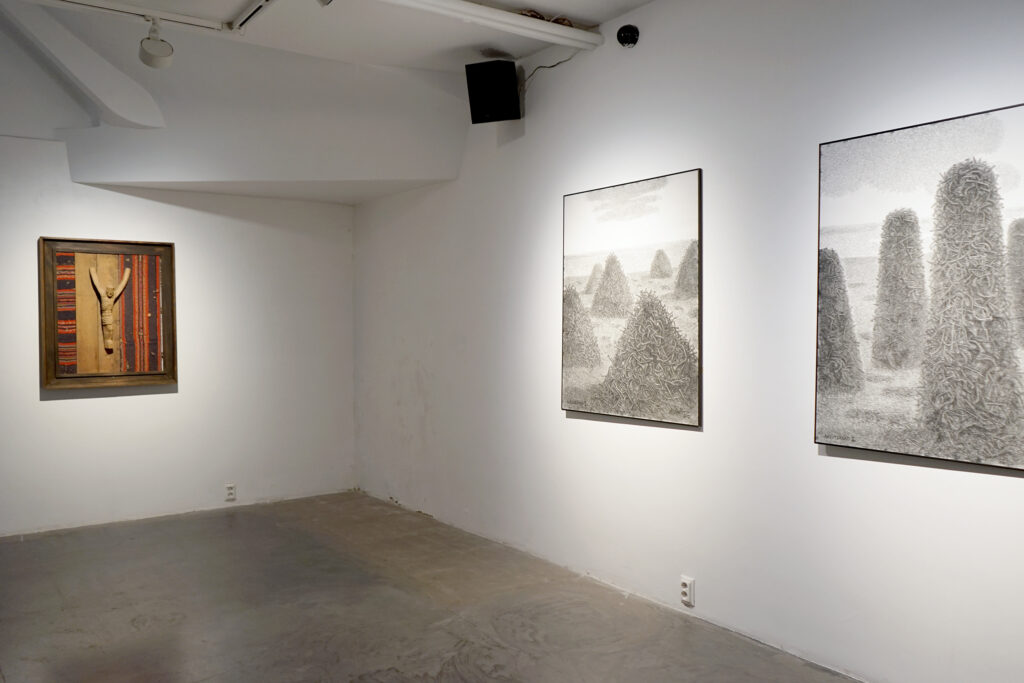
His newest series of drawings „My Studio“ has been completed in 2021 and has inspired the artist to give the exhibition the same title. The series depicts views of Roosvalt’s studio, including the things surrounding him every day, drawings and paintings. With his new series, the artist takes a retrospective approach while referring and quoting his own earlier artwork. Roosvalt has used similar quoting method before – for instance, in his drawing series exhibited in Draakon gallery in 2018 where the artist entertained himself with the familiar images known from Eduard Wiiralt’s graphic prints.
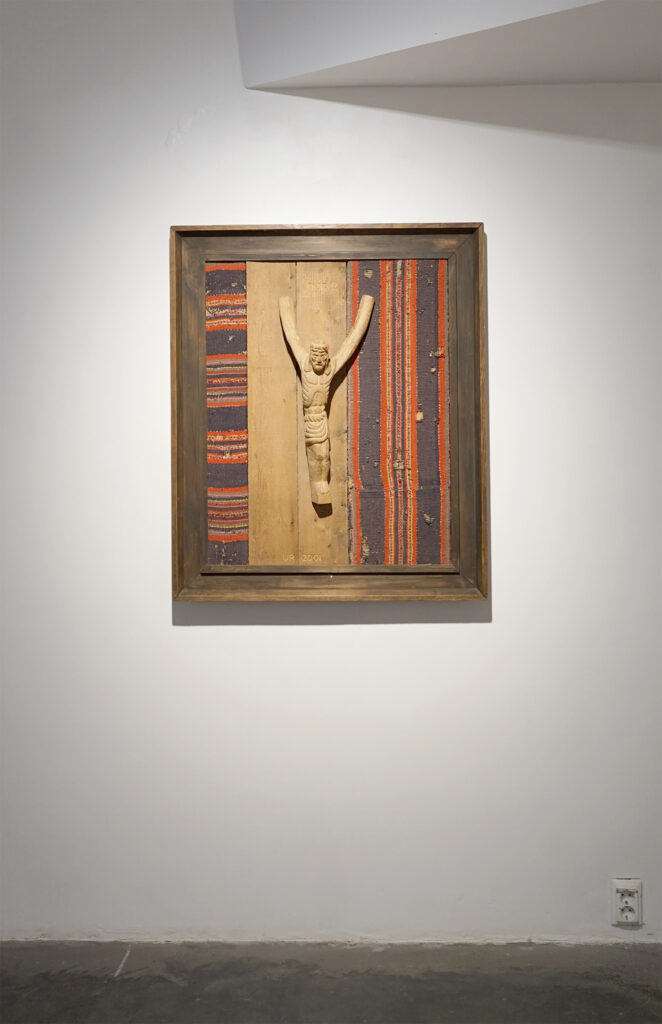
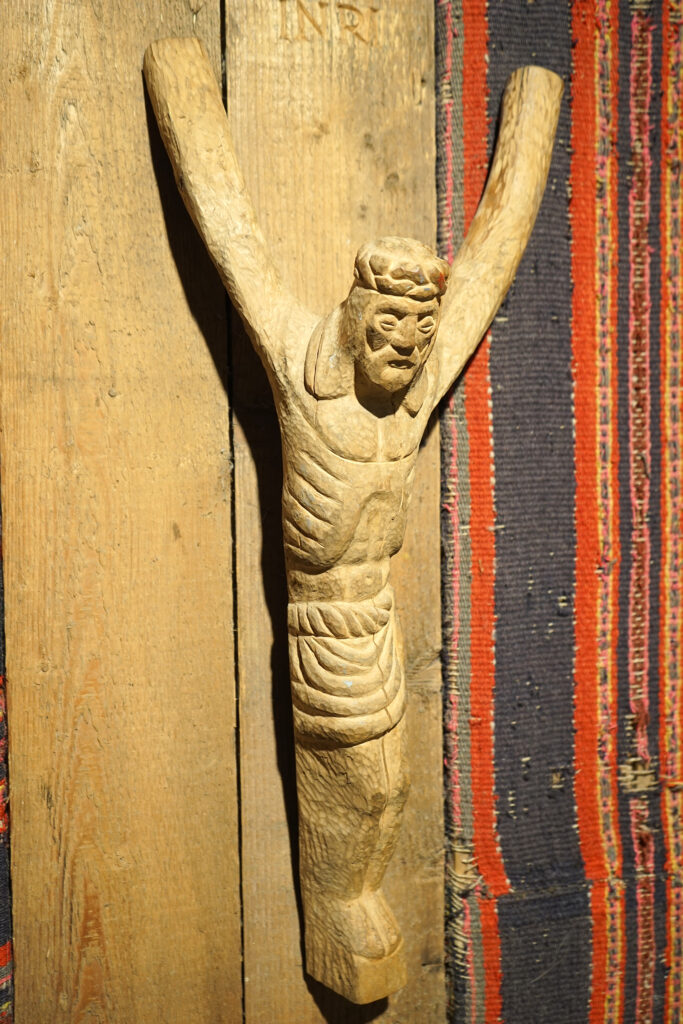
The warm humour on these drawings has been replaced by silent contemplation. One can see much more depicted than the artworks in Roosvalt’s studio. The studio is an artist’s real home and therefore Roosvalt has been also attracted by the themes of Jesus Christ, stories of his sufferings and the messages of joy. Uno Roosvalt’s father, church minister Albert Roosvalt, served in St. Lawrence Church in Kuusalu; and Uno Roosvalt’s mother (maiden name Liidia Volmer) graduated from the Tallinn Industrial Art School. The intellectual environment in his home has influenced Uno Roosvalt when growing up and becoming an artist, on a somewhat very elementary, essential level.
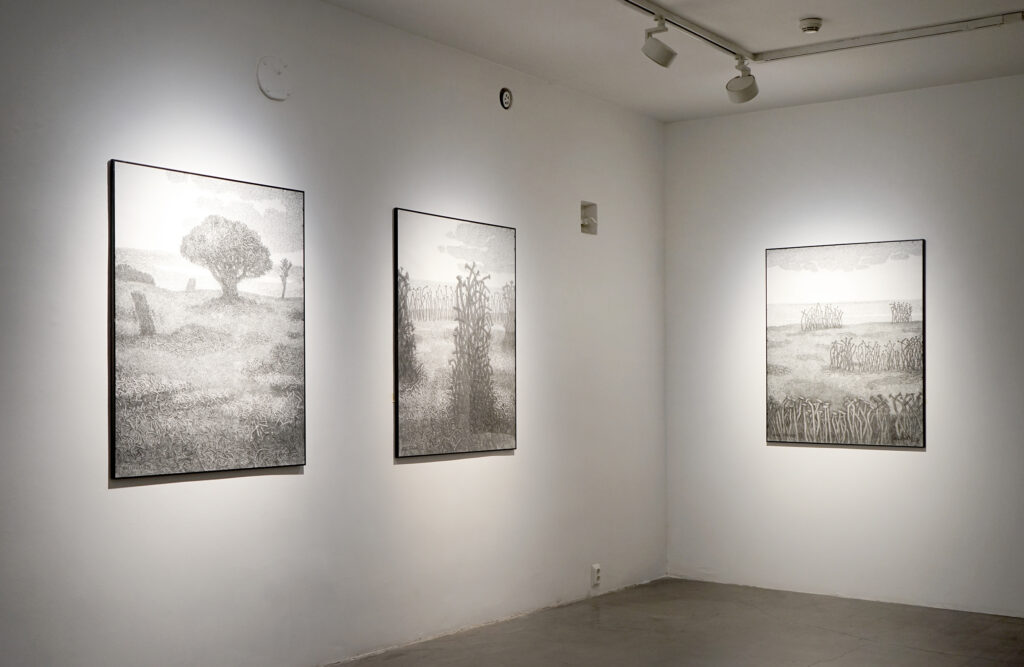
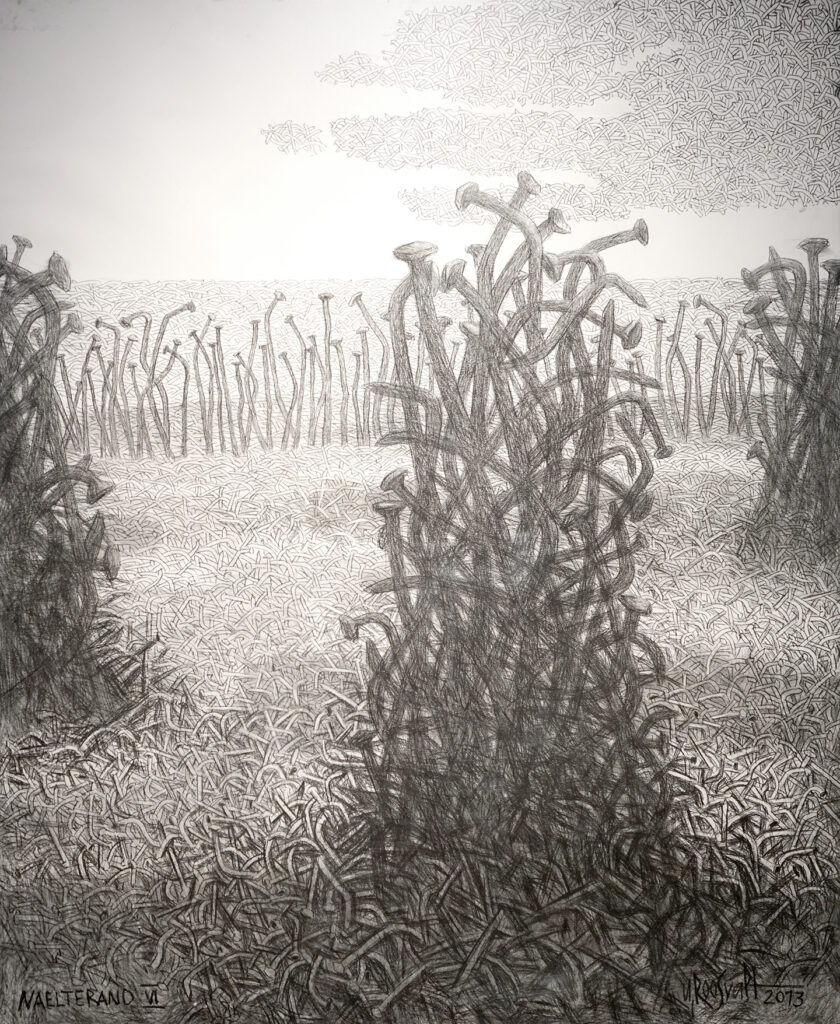
Uno Roosvalt’s studio is located on the upper floor of his home; the series „My Studio“ is exhibited on the main floor of Hobusepea gallery. When going downstairs to the lower ground of the gallery – a space that could refer to subconsciousness and the hidden – one can see heaps of nails. The series of drawings „Coast of Nails“ has been completed in 2012–2013. Nails follow the shapes appearing in nature – views to the sea horizon or meadows that have been always characteristic to Roosvalt’s work. Nails penetrate the entire earthly existence and our surroundings, whether from the crucifix or the firewood burnt to ash in the oven. These are the parts of Uno Roosvalt’s artist’s world, designiting both the earthly and the mental plane.
Sirja-Liisa Eelma
Curator of the exhibition: Sirja-Liisa Eelma.
Design: Kaarel Eelma.
Exhibition is supported by the Cultural Endowment of Estonia.
Exhibitions in Hobusepea gallery are supported by the Cultural Endowment of Estonia, Estonian Ministry of Culture and Liviko Ltd.
Kaisa Maasik‘s personal exhibition Blow Hot and Cold will be open in Hobusepea gallery from Wednesday, November 24. Exhibition will be open until December 13, 2021.
The saying „blow hot and cold“ expresses ambivalence, alternating between two states. In her artwork presented at the current exhibition, Kaisa Maasik examines depicting of (alternation of) emotions.
When it comes to languages, expressions about moods tend to involve opposite colours: for instance the saying „see red“ means the same as „turn blue with anger“ in Estonian, and yet, in both languages, one becomes „green with envy“. Various studies have also proved that human face is changing undertones depending on a specific emotion (Benitez-Quiroz, F., Srinivasan, R., Martinez, A. M. (2018) Facial color is an efficient mechanism to visually transmit emotion. Proceedings of the National Academy of Sciences.) When the mood swins, the blood circulation in facial skin subconsciously helps to express how we feel, while receiving mutually gentle signals from our communication partners.
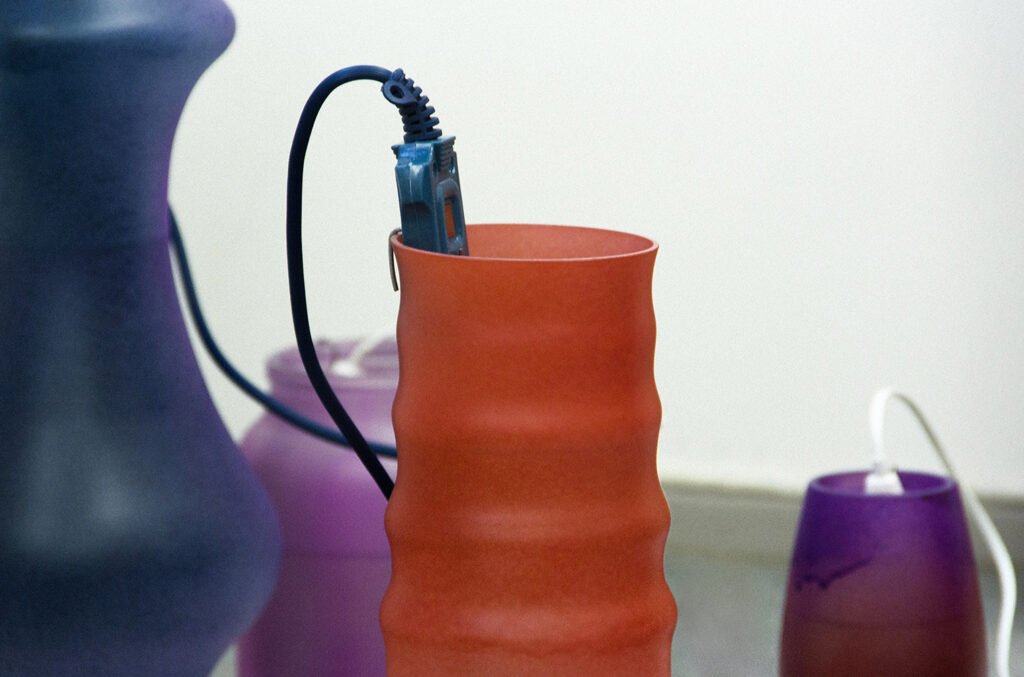
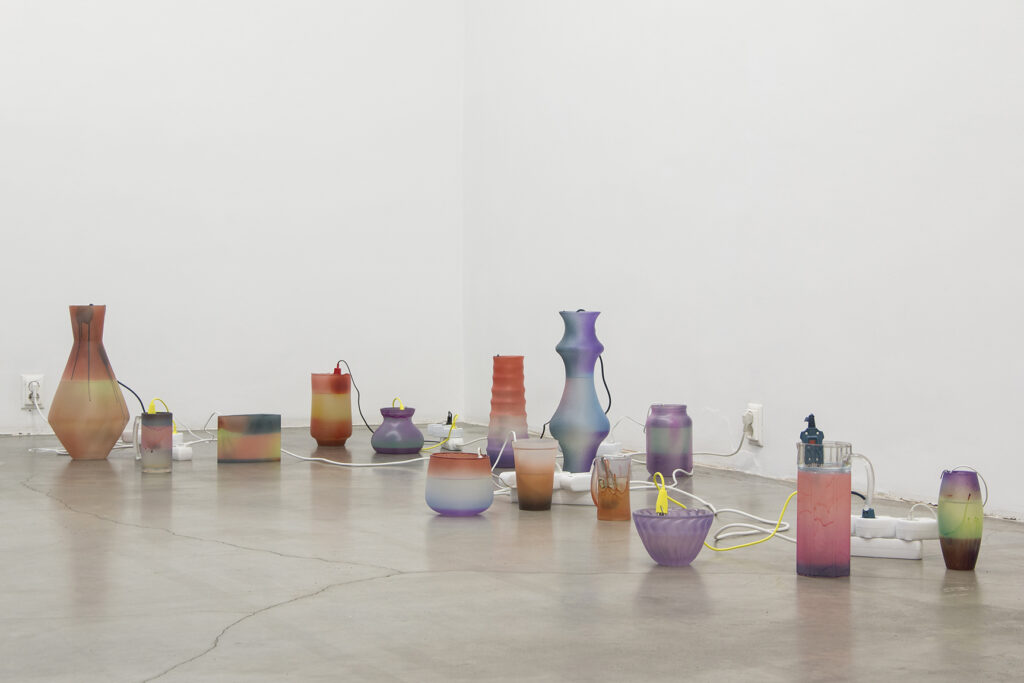
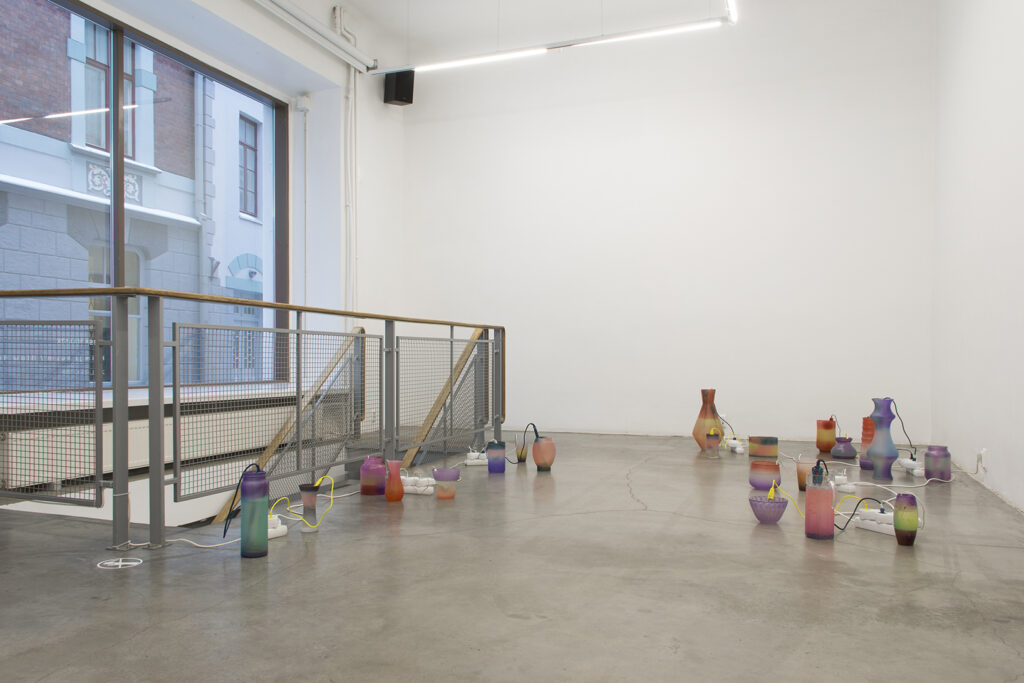
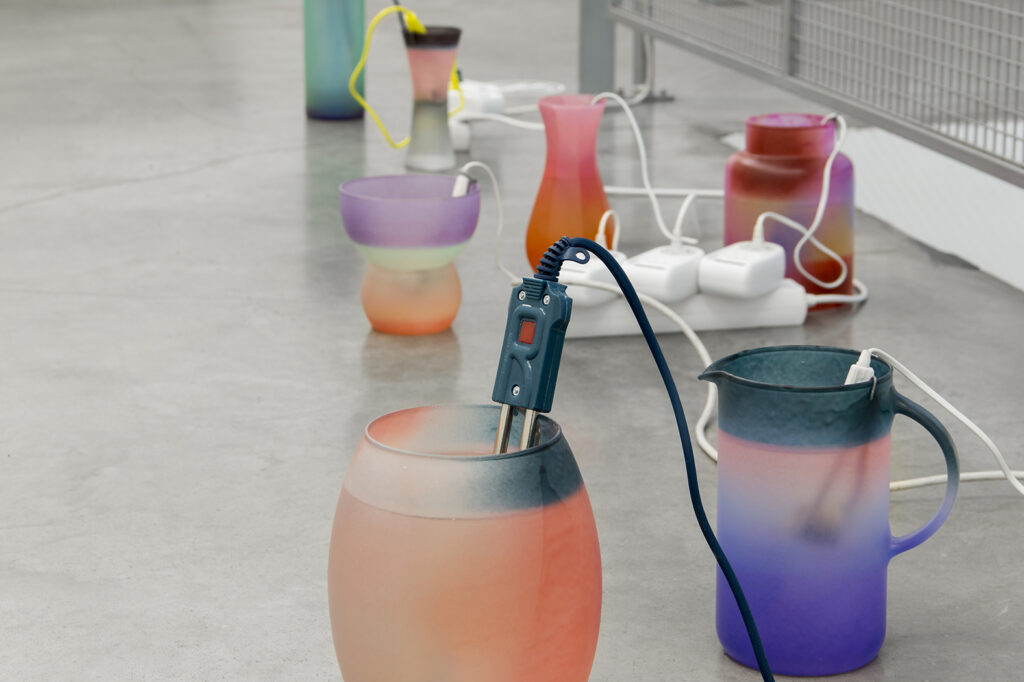
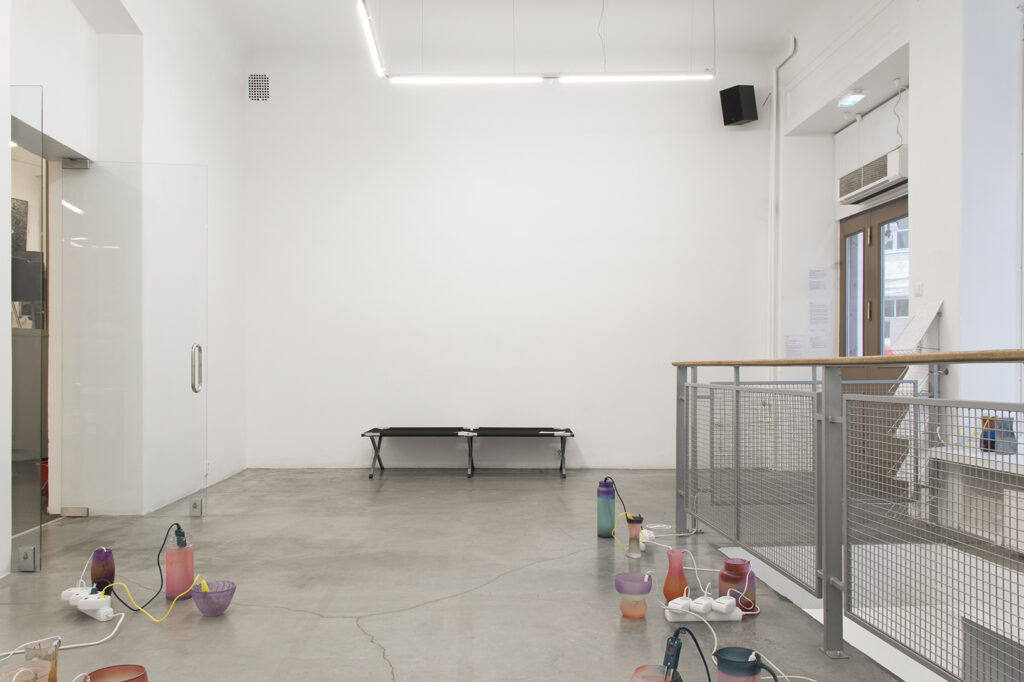
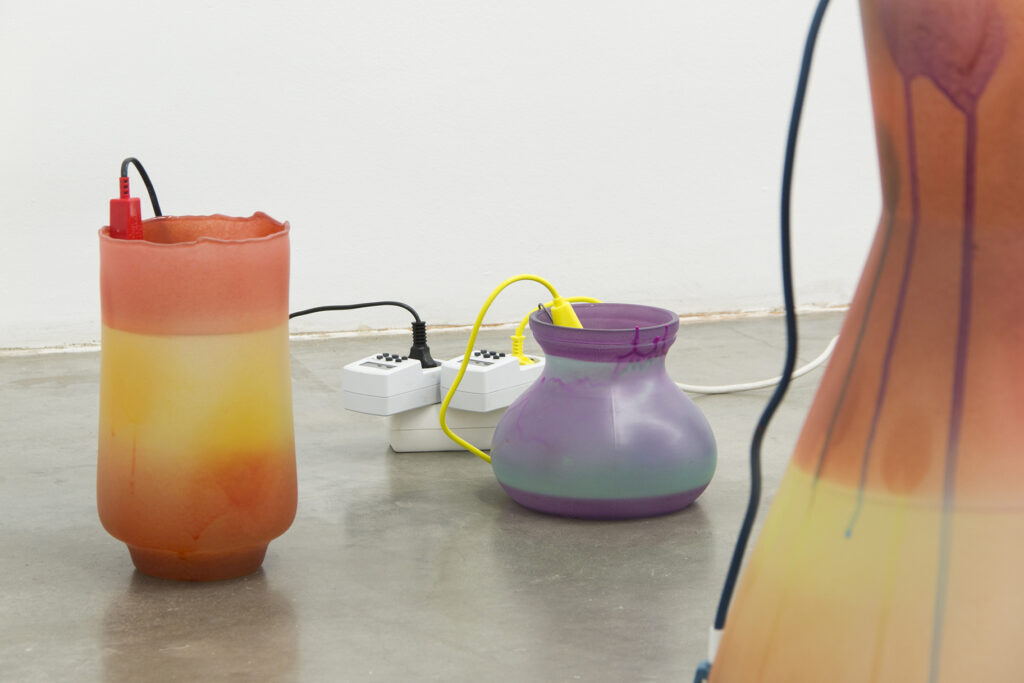
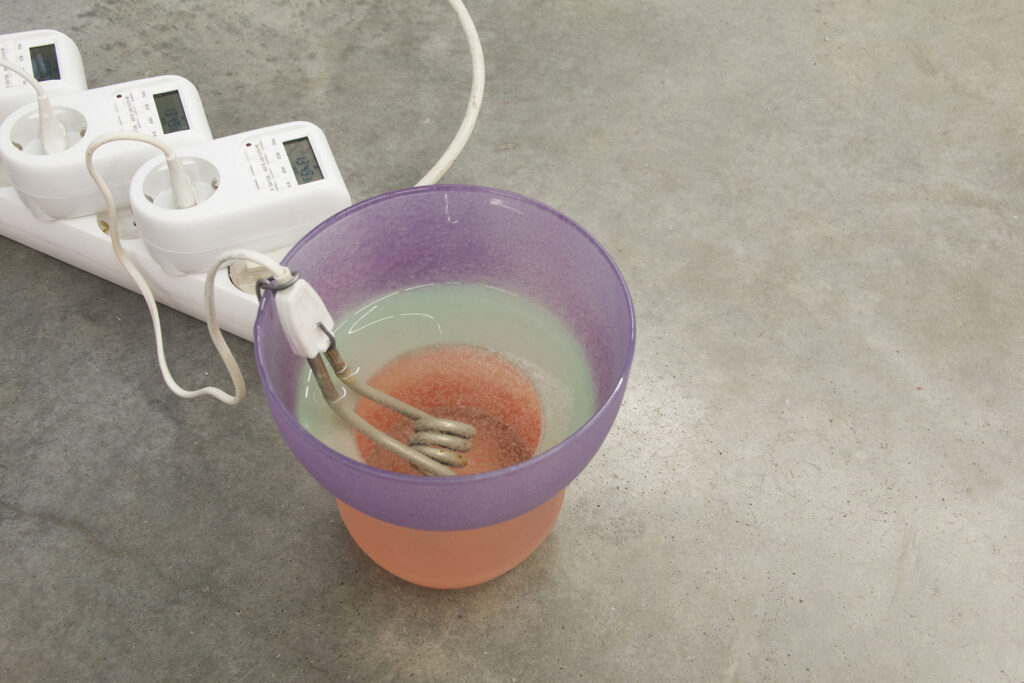
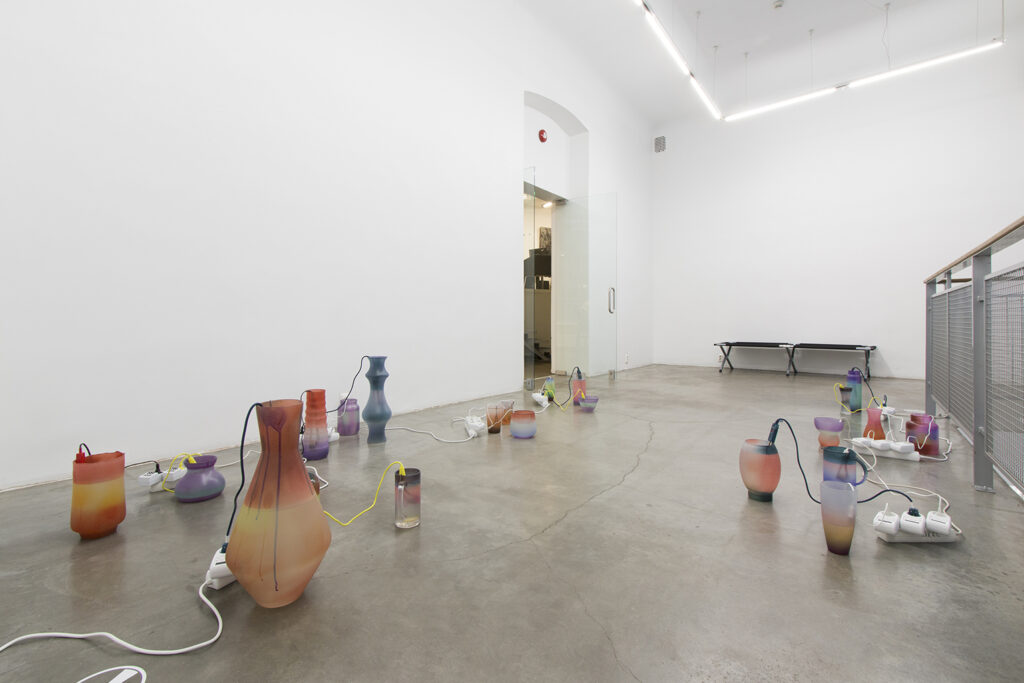
At the current exhibition, a scheduled spectacle opens up in the form of vessels changing colours. Also, the subject of emoticons with similar pattern is brought up – specific colours are attributed to certain facial expressions. The kinetic cycle starts with water heaters while inviting the viewer to slow down and observe alternating shades. These static beings, frequently changing moods, become hot and cool down just like hinting at something.
The artist expresses her gratitude to : Andra Jõgi, Anne Eelmere, Astra Aavik, Benedikte Bjerre, Chih Tung Lin, Estonian Artists’ Association, Eve Koha, Fabrikken for Kunst og Design, Indrek Köster, Karel Koplimets, Merike Estna, Otto Varjust, the Maasik family, proloogkool, Tiiu Saadoja, Tõnu Narro.
Exhibitions in Hobusepea gallery are supported by the Cultural Endowment of Estonia, Estonian Ministry of Culture and Liviko Ltd.
+372 5396 2524
kaisamaasik@gmail.com
www.kaisamaasik.com
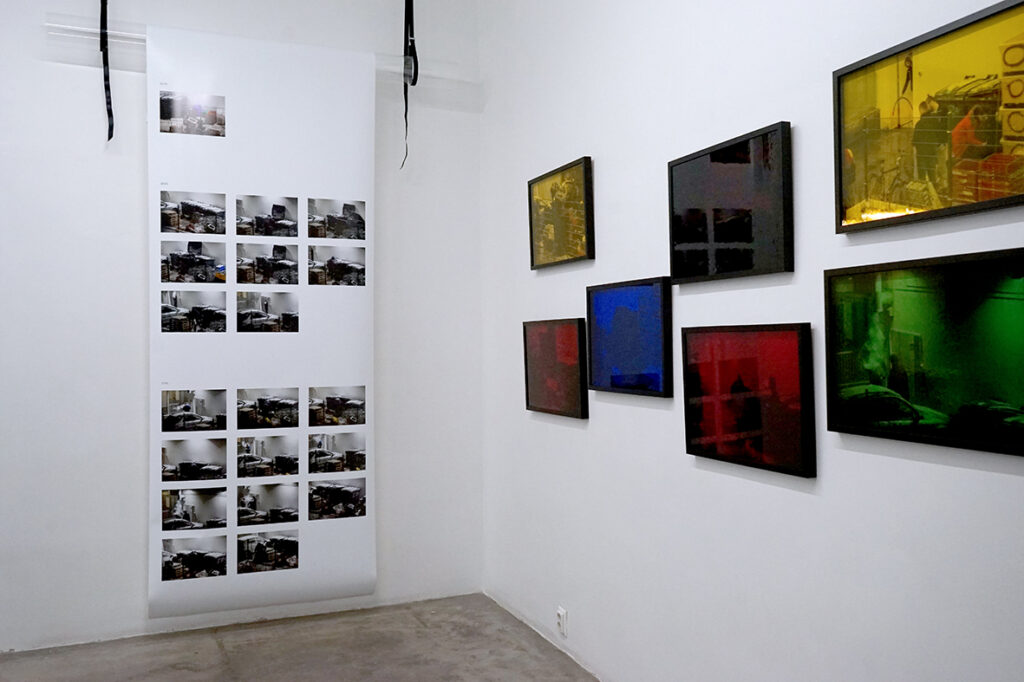
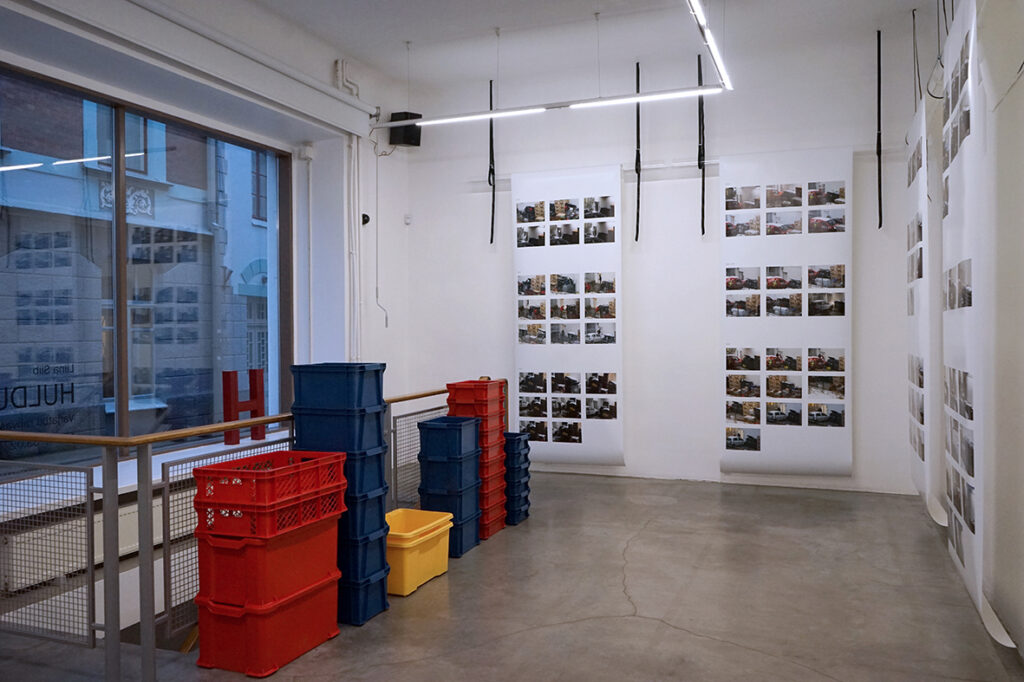
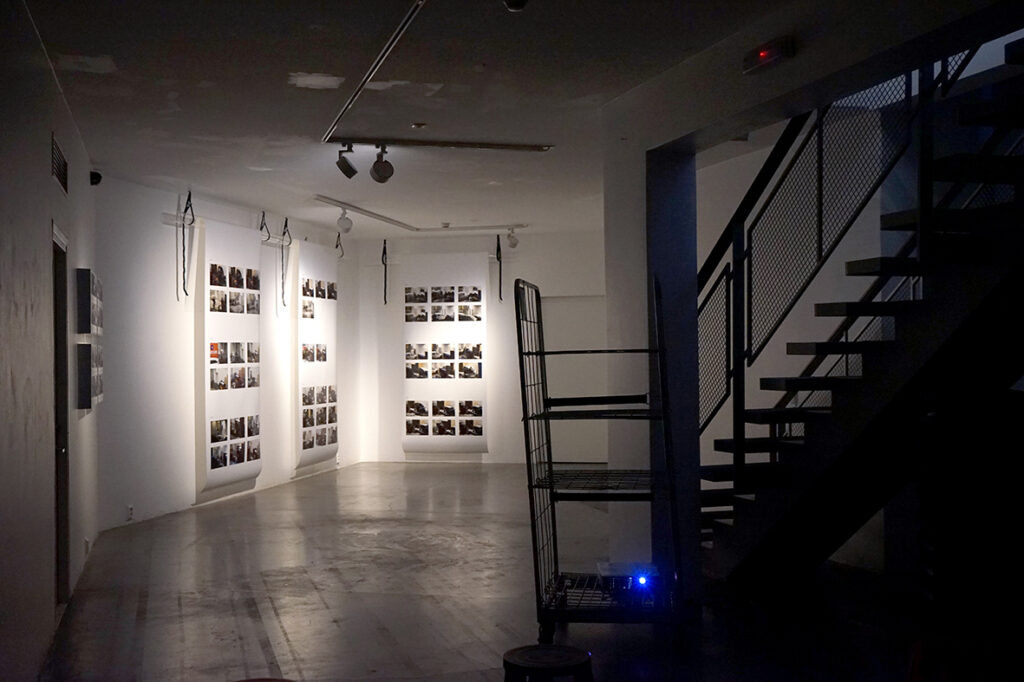
Liina Siib will open her personal exhibition Huldufólk / Hidden People in Hobusepea gallery at 6pm on Wednesday, January 15th, 2019. Exhibition will be open until February 3rd, 2020.
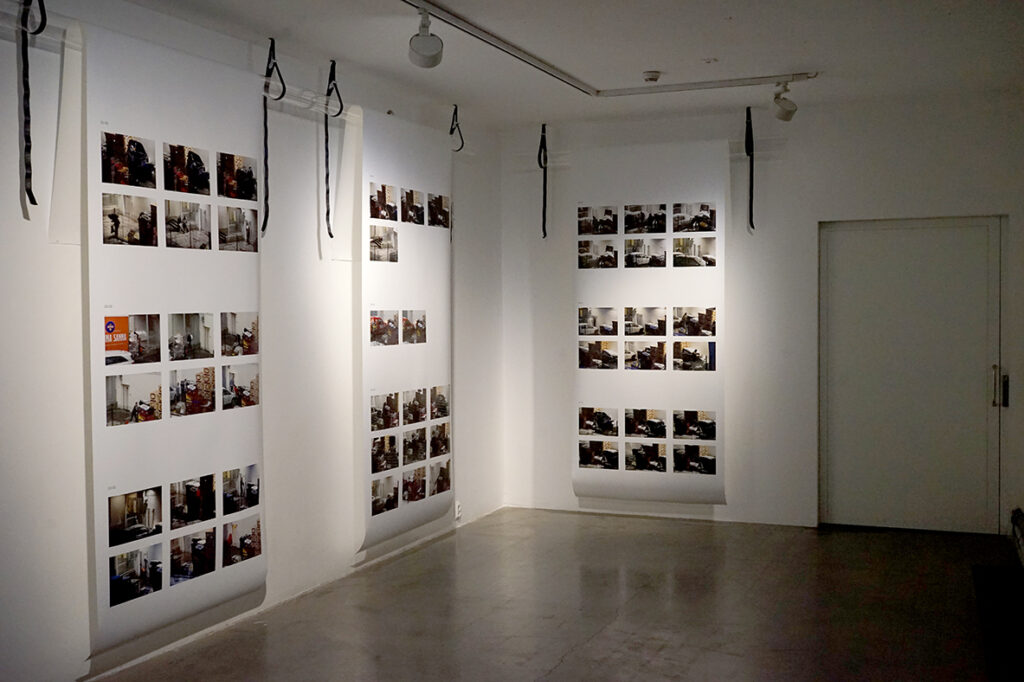
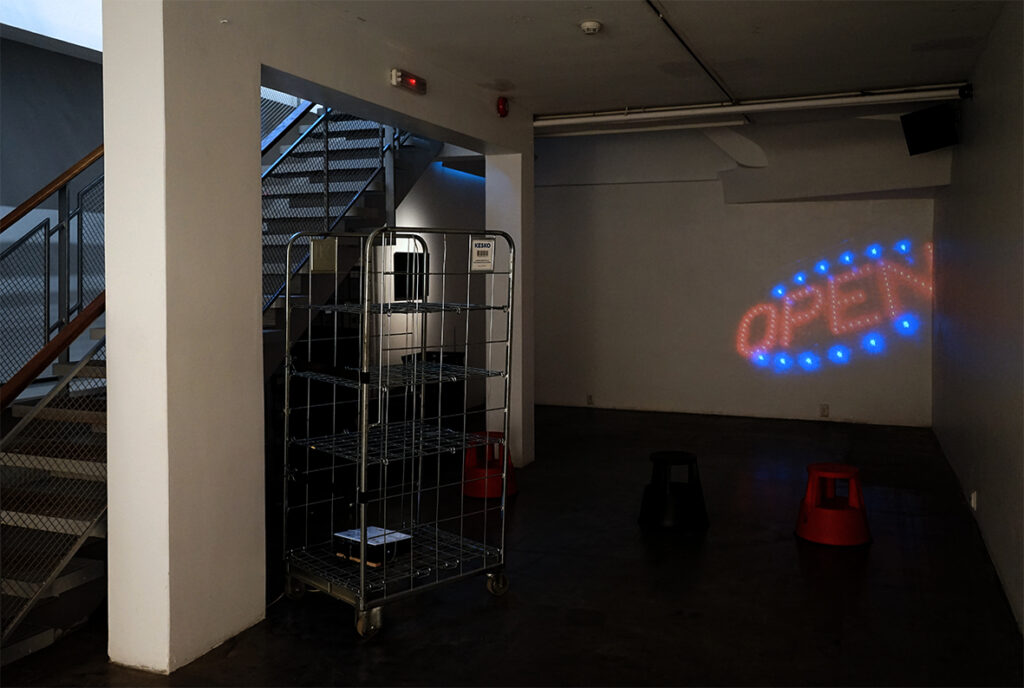
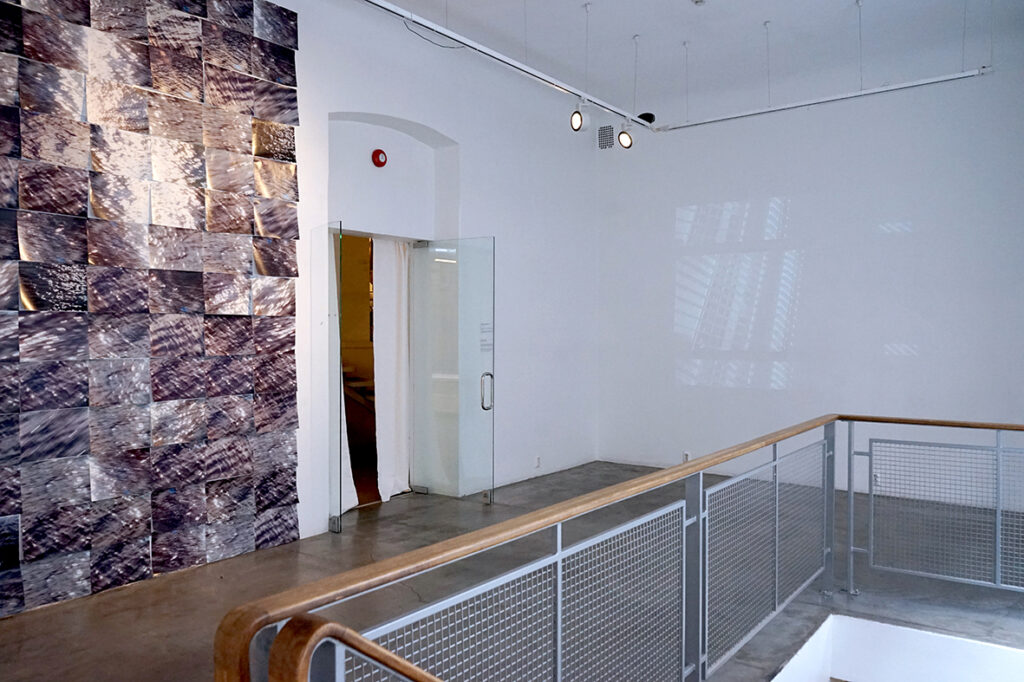
The highlight of Liina Siib’s installation „Huldufólk“, located on both floors of the gallery, lies in the silent tragicomical piece composed by photographs, a tragicomedy with derived words, a silent film and a comic strip.
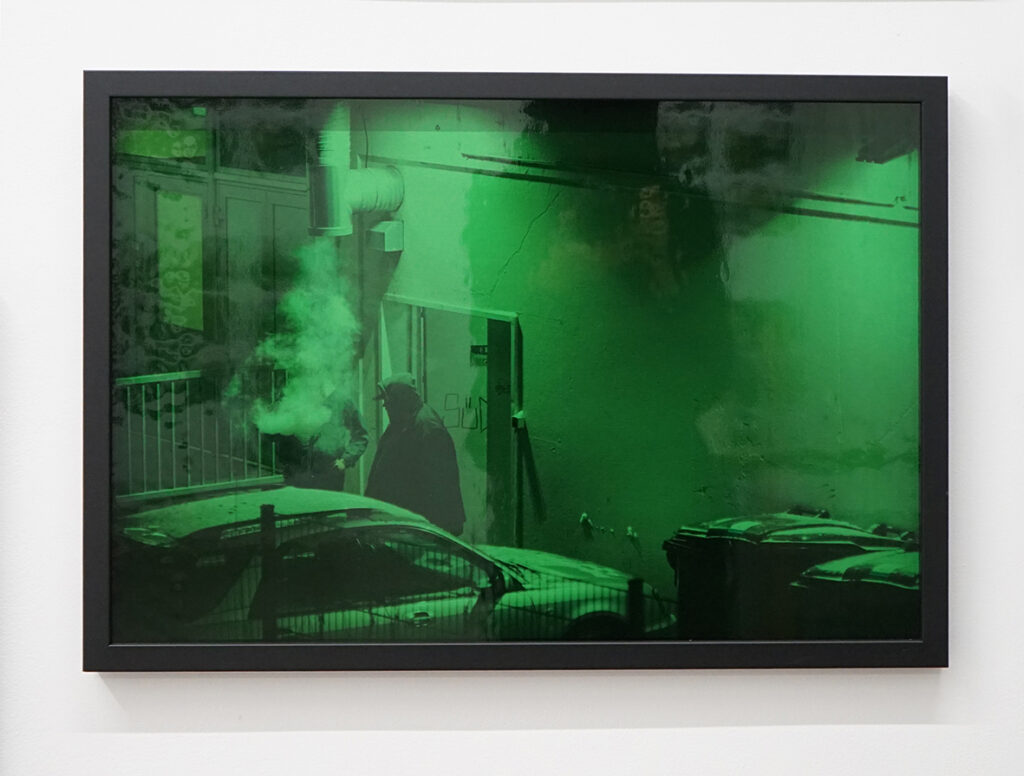
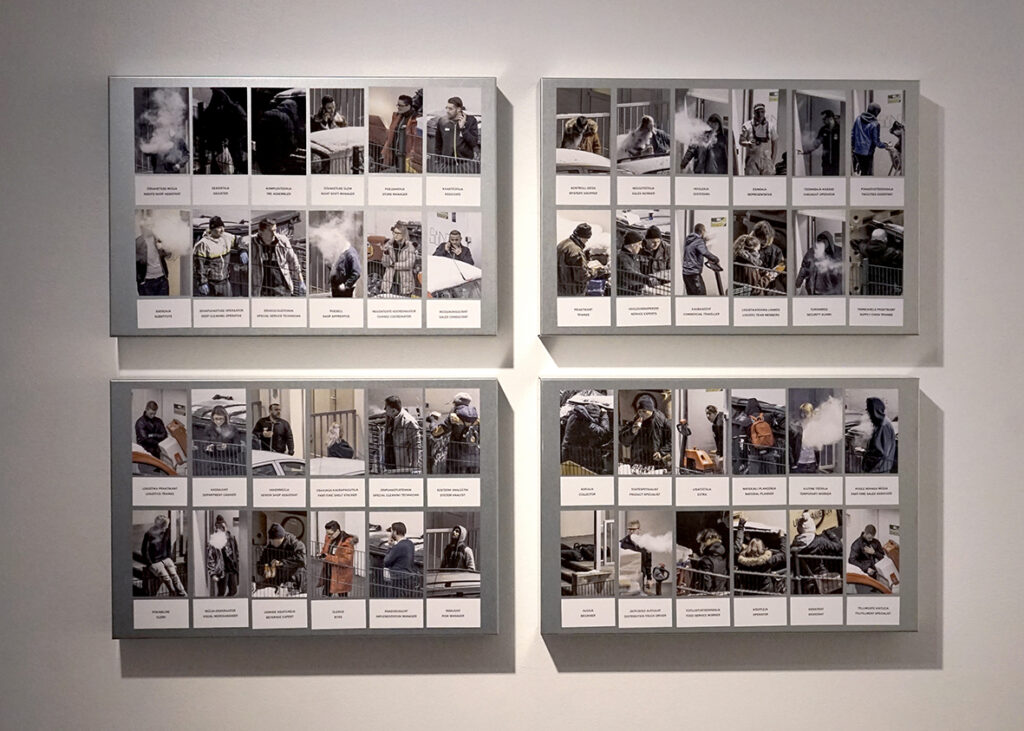
The tragicomic strip is set in winter, in the surroundings of the back door of a 24-hour food store in Reykjavik. The geographical location does not really matter here much more than perhaps recognizing larger fish crates, longer lasting nights, rapid change of weather and temperatures; depicted activities and related attributes can be found anywhere in the world. One can see single or several store workers smoking in front of the open back door either during the day or in the evenings while now and then re-organizing the towering heaps of crates in their limited territory.
At the end of the month, the scene will be changed by the crowd consisting people from Eastern European countries and other non-local individuals entering the “stage”, performing various cleaning work. Just like the store is open 24 hours a day, so the backyard of the store is never empty while those interested in the contents of the garbage bins keep coming and going. Everyone in this crowd seems to have his or her own role in the exchange and movement of the goods.
„Huldufolk“ means “hidden people” in Icelandic – these are supernatural beings who look and behave like normal people but have their own activities in their own parallel world. They can make themselves visible for humans who can see them through a colourful glass.
The photographic and film material has been collected in 2018 when the artist worked in the residency at The Steina and Woody Vasulka Archive at the National Gallery of Iceland.
The artist’s gratitude goes to: Vasulka Chamber at the National Gallery of Iceland, Cultural Endowment of Estonia, Estonian Academy of Arts, Kristin Schewing, Ragnheidur Vignisdottir, Sandra Fritz, Terry Gunnell, Mark Fisher, Mánudjass, 10-11 food store in Reykjavik, Reimo Võsa-Tangsoo, Corina Apostol, Rait Miltorp, Fred Reeds, Kaire Rannik, Maria Izabella Lehtsaar and Liis-Marleen Verilaskja.
Exhibition is supported by the Cultural Endowment of Estonia.
Exhibitions in Hobusepea gallery are supported by the Cultural Endowment of Estonia, Estonian Ministry of Culture and Liviko Ltd.
Kirke Kangro and Sheri Wills will open their exhibition The Solemn Admonition of Your Breathing in Hobusepea gallery at 6pm on Thursday, February 6th, 2020. Exhibition will be open until February 23rd, 2020.
Today as then I turn to stone
in your presence, sea,
but no longer feel worthy
of the solemn admonition of your breathing
Eugenio Montale
You look at the sea, and your substance begins to change. You look at it to look at something that’s not you. To implode and collapse. To be boundless, diverse and present. This view you could mount on a wall. To go back, to return in microscopic particles. Accelerating gaze, looking at the evading view.
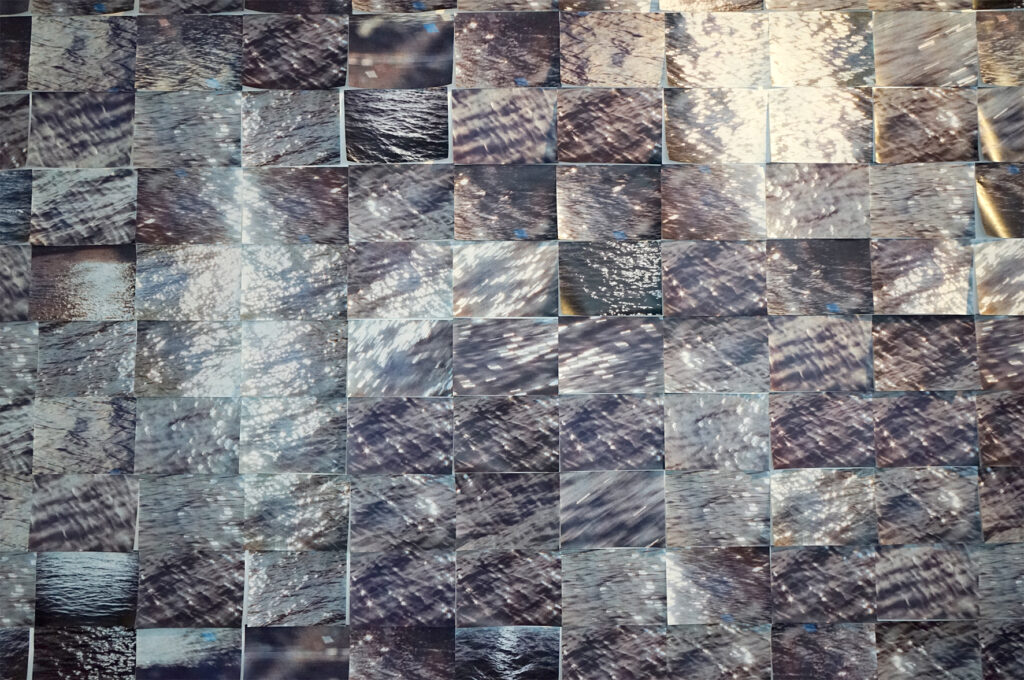
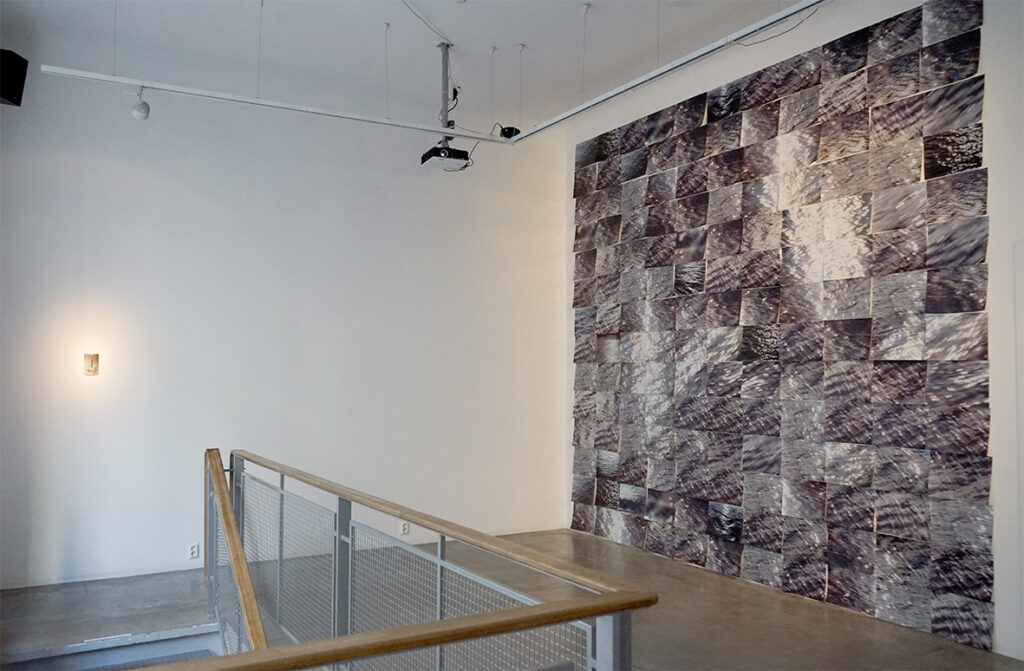
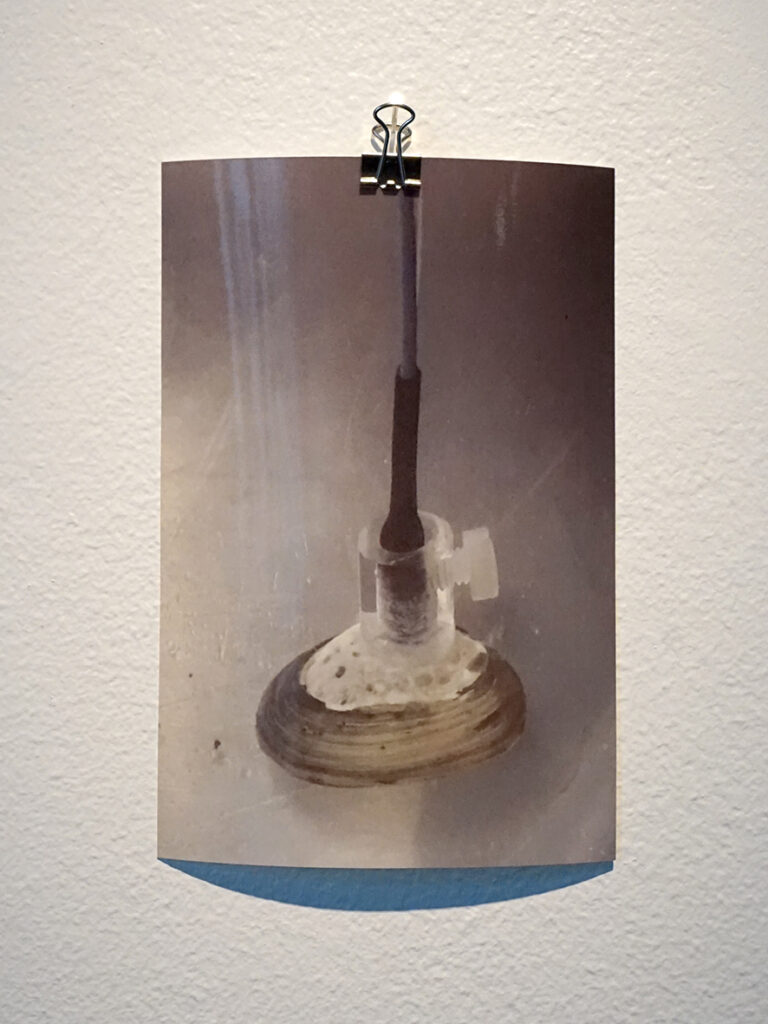
The exhibition is carried by human imagination of an ancient, lasting, uninterrupted existence. Force of nature that is captivating in its wild independence. The title is a line from Eugenio Montale’s poem that presents a nostalgic view of an uncontrolled and curing nature. It’s an idea of a powerful agency that surrounds us, yet stays untouched by us, being able to cleanse itself. In the poem, the sea casts out all the “useless rubble”, inutili macerie. But our traces are everywhere. You need to measure the heartbeats of a mussel to recognize the unexpected impact of your rubble.
The installations deal with the pleasures of looking and the way they may evolve.
The gallery environment presents a view that the artists are trying to control.
Or are they trying to show something uncontrollable?
The artist’s gratitude goes to: Cultural Endowment of Estonia, TalTech Department of Marine Systems Basseinikatted Ltd, Riisipere Puit, Estonian Environment Agency, Rhode Island School of Design, Estonian Academy of Arts, Kai Künnis-Beres, Ivan Kuprijanov, Toivo Lehtmets, Ain Kilk, Tatiana Kuznetsova, Anastasiia Kovtun-Kante, Tanel Tätte, Hans Otto Ojaste, Maarja Kangro, Anna Magdaleena Kangro, Neeme Külm, Andrus Lauringson, Margit Säde, Madis Luik, Tarvo Varres
Exhibition is supported by the Cultural Endowment of Estonia.
Exhibitions in Hobusepea gallery are supported by the Cultural Endowment of Estonia, Estonian Ministry of Culture and Liviko Ltd.
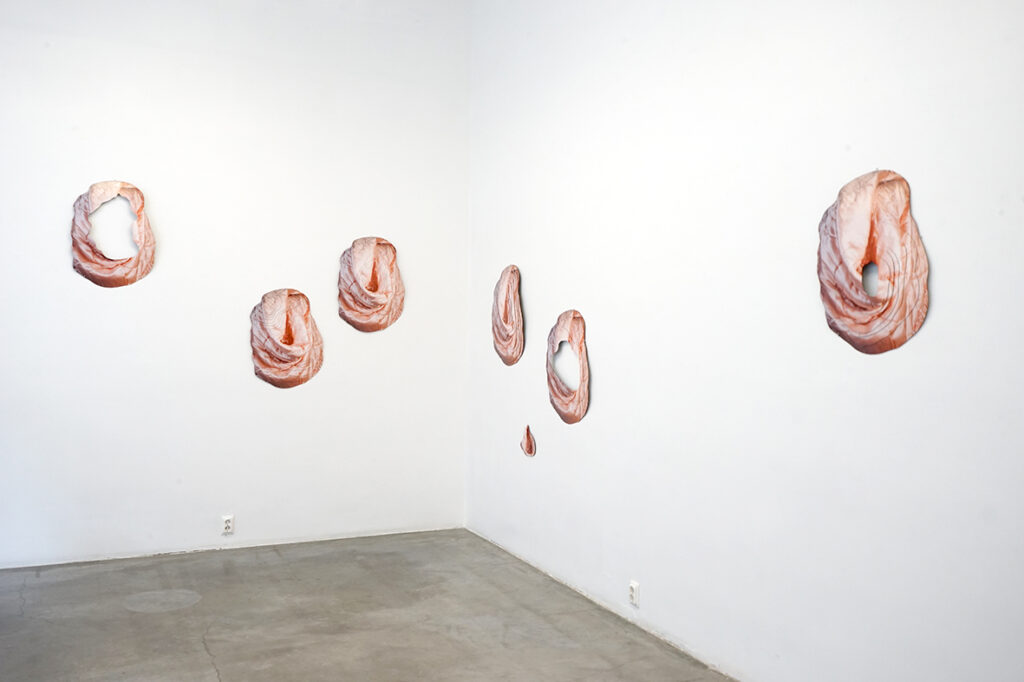
Cloe Jancis and Maris Karjatse will open their first co-exhibition Meanwhile at 6pm on Wednesday, February 26th, 2020. Exhibition will be open until March 16.
With their first collaboration project, artists Maris Karjatse and Cloe Jancis focus on objects related to human body as well as on the dynamics and tension developing between public and intimate space.
Through activating objects and materials as well as interpreting the communication of their inner and outer characteristics, the artists create artifacts with new meanings. The working process of Cloe Jancis and Maris Karjatse includes constant, if not continuous becoming something; endless transformation of form and representation; delay of the result; or even return to the beginning in order to proceed.
Maris Karjatse has been inspired by the principle of singularity and multiplicity while completing artworks for the current exposition. The artist’s theoretical source is Gilles Deleuze’s idea about losing the limitations between objects and thoughts as both are inseparable and without each other both would lose their transformative identity. The series of photographic objects “Sub Rosa” refers to process, unfinishedness, deterritorialization of an object, resistance of material and working with form. Her textual piece “Tekkst” compares text to a blanket and vice versa ‒ everything that a text / a blanket covers is most exposed and vulnerable. Both a text and a blanket are made of vibrant matter, including both suffocating danger and softening solace.
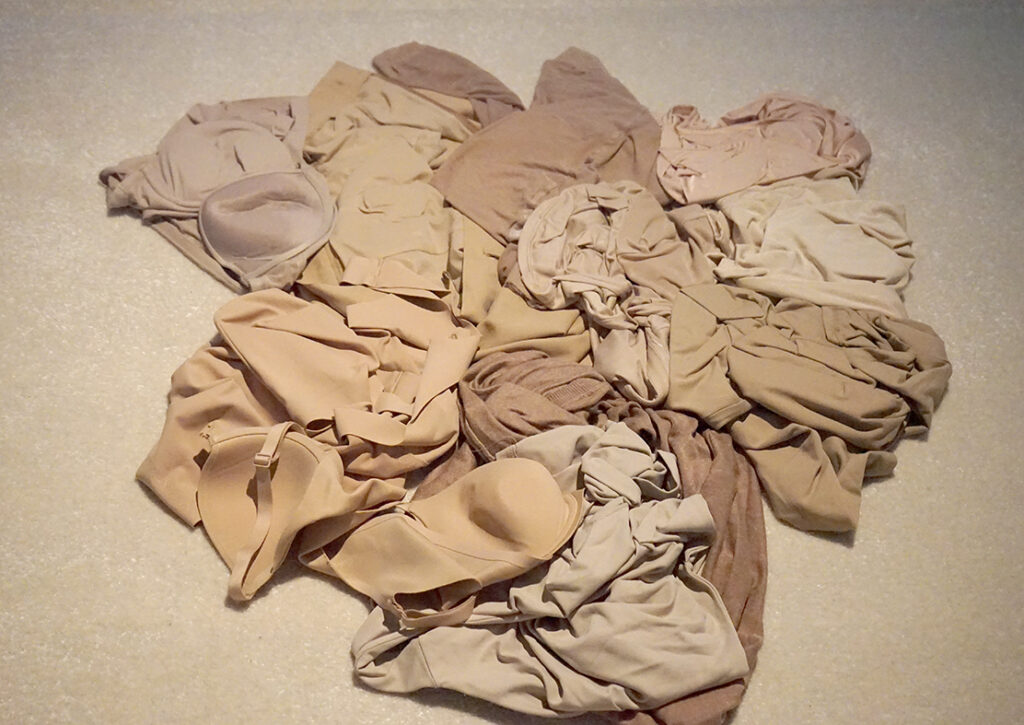
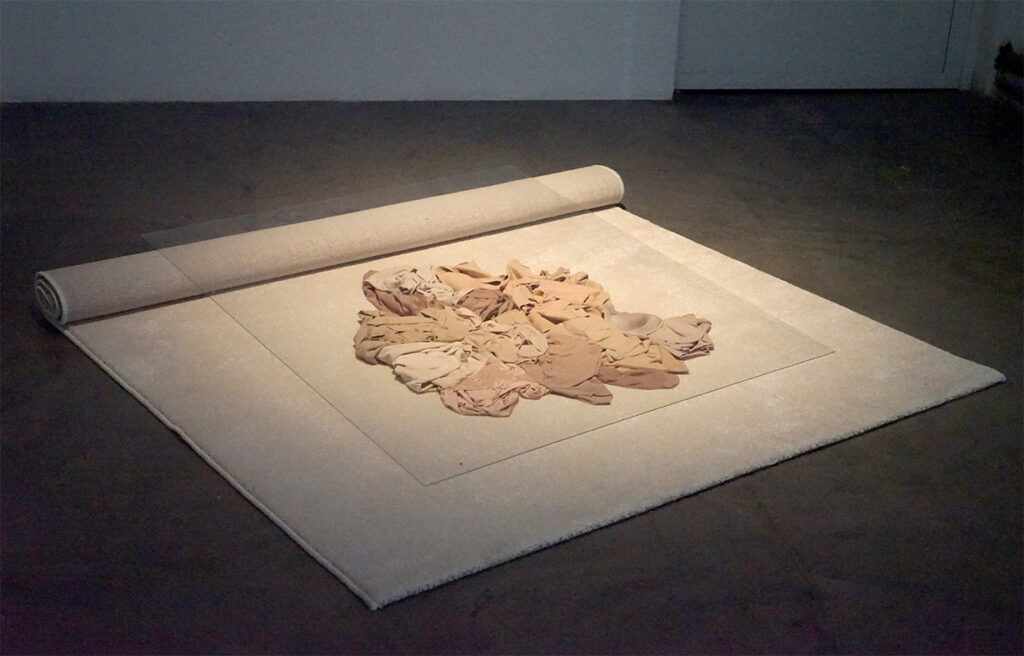
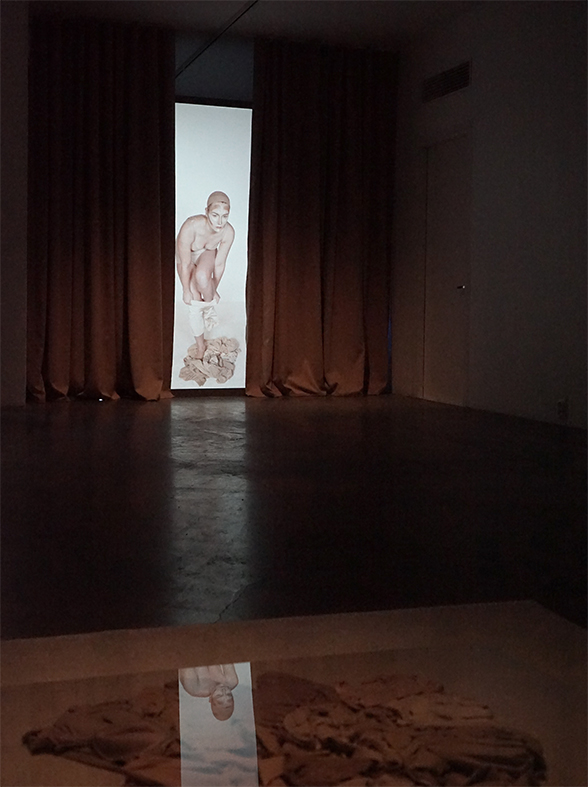
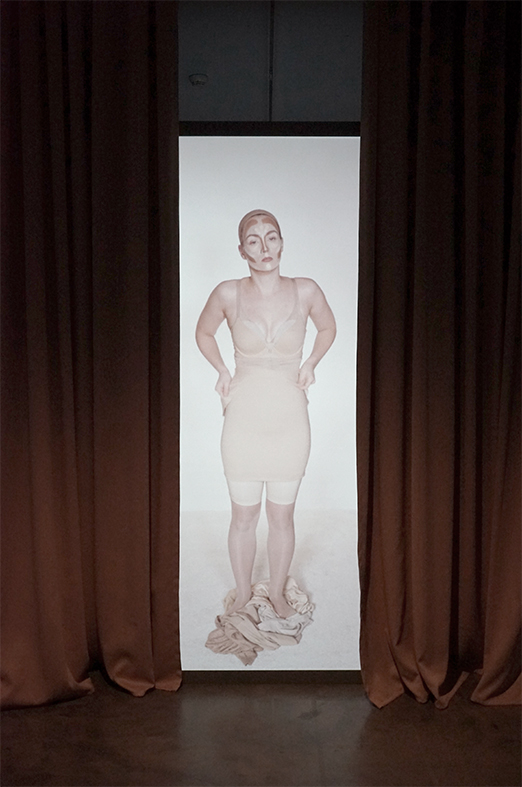
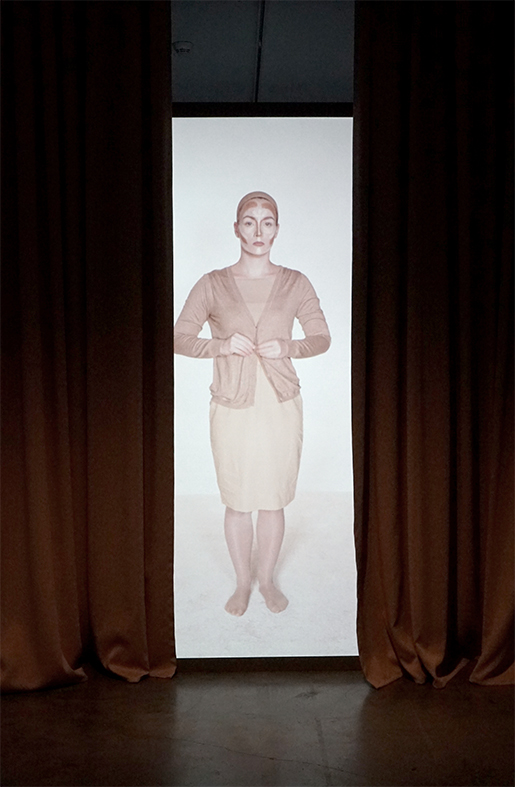
Cloe Jancis with her two-part work “Befitting Flesh” focuses on nude objects widely used in today’s make-up and fashion industry; objects that aim at matching one’s skin tone, at emphasizing the selected body parts as well as hiding the unwanted. The artist is intrigued by the phenomenon where the objects, that should blend in with the body and remain invisible, will boost as an artificial shell while conquering the body as an object. The piece “Befitting Flesh I” highlights items of clothing as a material in anticipation of filling and fulfilling ‒ a body and desiring gaze ‒ in order to realize. Video installation “Befitting Flesh II” rehearses fitting process through repetition while nullifying achieving the desired form.
Exhibition is supported by the Cultural Endowment of Estonia.
Exhibitions in Hobusepea gallery are supported by the Cultural Endowment of Estonia, Estonian Ministry of Culture and Liviko Ltd.
The artists give their gratitude to: Tõnu and Marie Karjatse, Kiki, Aksel Haagensen, Liina Siib, Marco Laimre, Sirja-Liisa Eelma, Reimo Võsa-Tangsoo and the department of photography at the Estonian Academy of Arts, Madis Kaasik (Prototyping Lab at the Estonian Academy of Arts), Tarmo Rämmi (Digifoto), Pille Kraas (UBS Repro), Veiko Illiste (Deviis), Carl-Robert Kagge, Martin Buschmann, Aadu and Maara Lambot, Laura Cemin, Marge Monko, Kulla Laas, Kaupo Reisenbuk (Datel), Järsi LLC, Cultural Endowment of Estonia.
Manfred Dubov‘s personal exhibition Revellers in the Dark will be open in Hobusepea gallery from Wednesday, May 20th, 2020 and will stay open until June 29th. With his current exhibition, the artist asks whether it is possible to be happy during the difficult times, in the middle of a catastrophe?
Catastrophes and happiness may happen both on a personal and global level. One way of being joyful is not having to worry about the essentials. A catastrophe can be defined as a larger amount of problems and lack of resources for coping with the situation. Self-realization is possible only when basic needs are guaranteed. Thus, we can call ourselves happy when we don’t have to be concerned about the essentials. Even during the pandemic-free period our basic needs can be perceived – what is vital and what’s not. At first glance, the theme of the exhibition may seem dead serious, but the paintings on display are rather humorous and introspective in nature.
Revellers in the Dark places the characters in a darkened space where they seem to be glowing. The character of The Arriver seems to be burnt – the surrounding blotches of paint or flashes of light as well as the distorted space refer to flames. The Descender/Ascender is smiling despite the hellish surroundings and the physical deterioration of the character’s body, while being able to exit the space. The sky above the character is bright and full of sunshine, and there is a future perspective even in death. I Come from Several Places at Once refers to a group of exhausted characters who have gathered in difficult conditions and who will move on together. The Traveller is a vague character, searching for an anchor in a wasteland while probably being also the one providing support.
Manfred Dubov
Exhibitions in Hobusepea gallery are supported by the Cultural Endowment of Estonia, Estonian Ministry of Culture and Liviko Ltd.
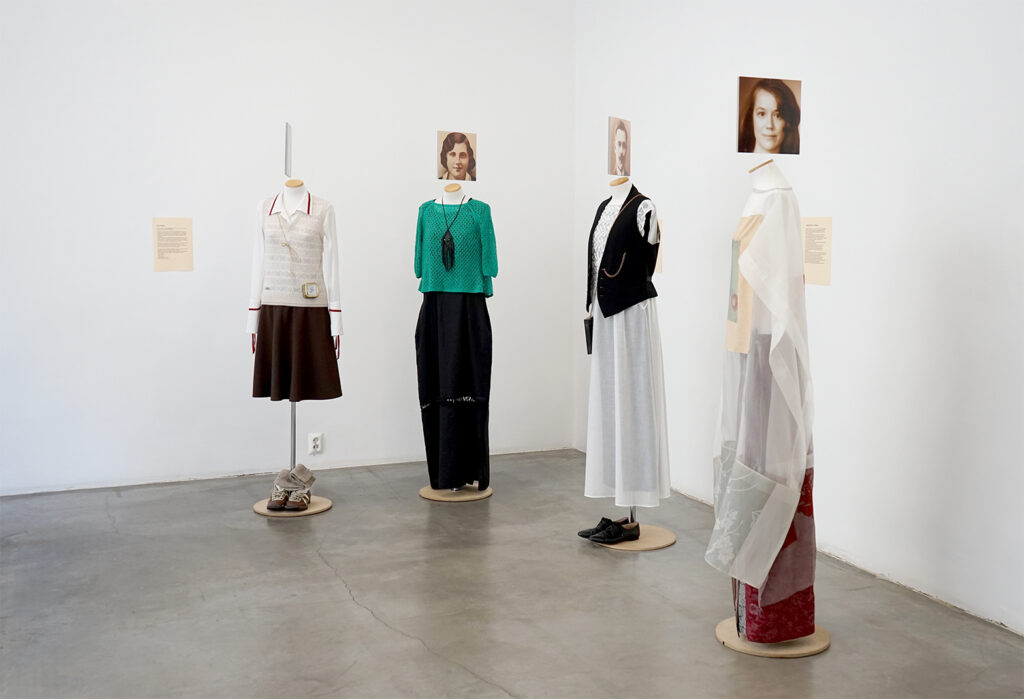
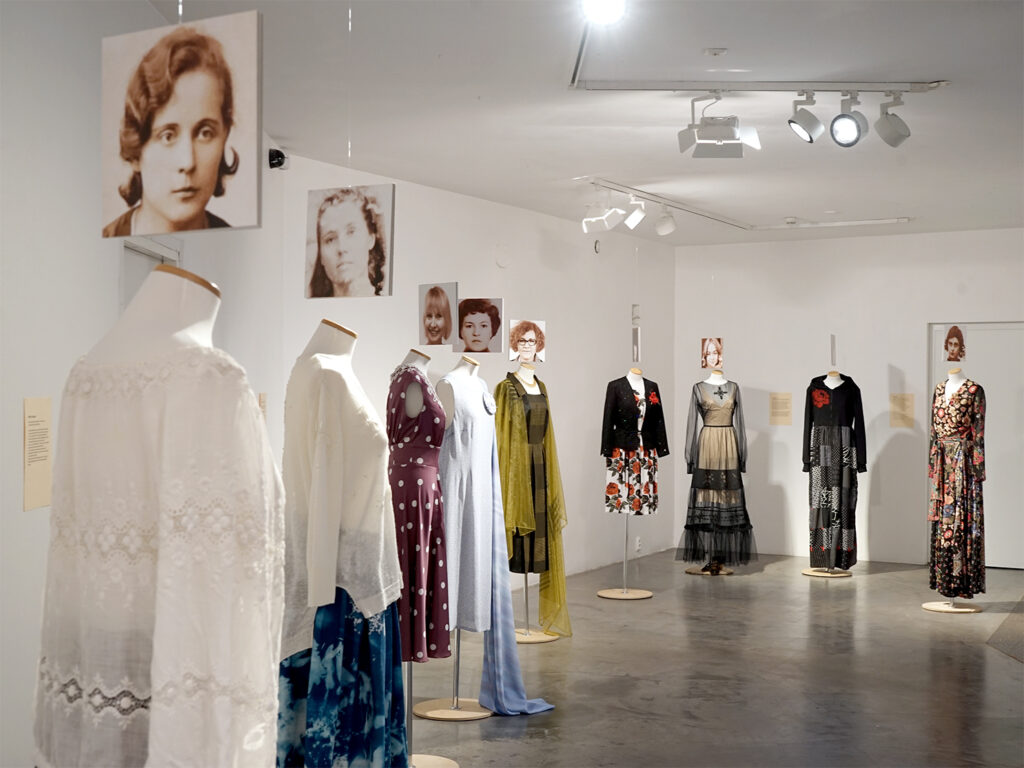
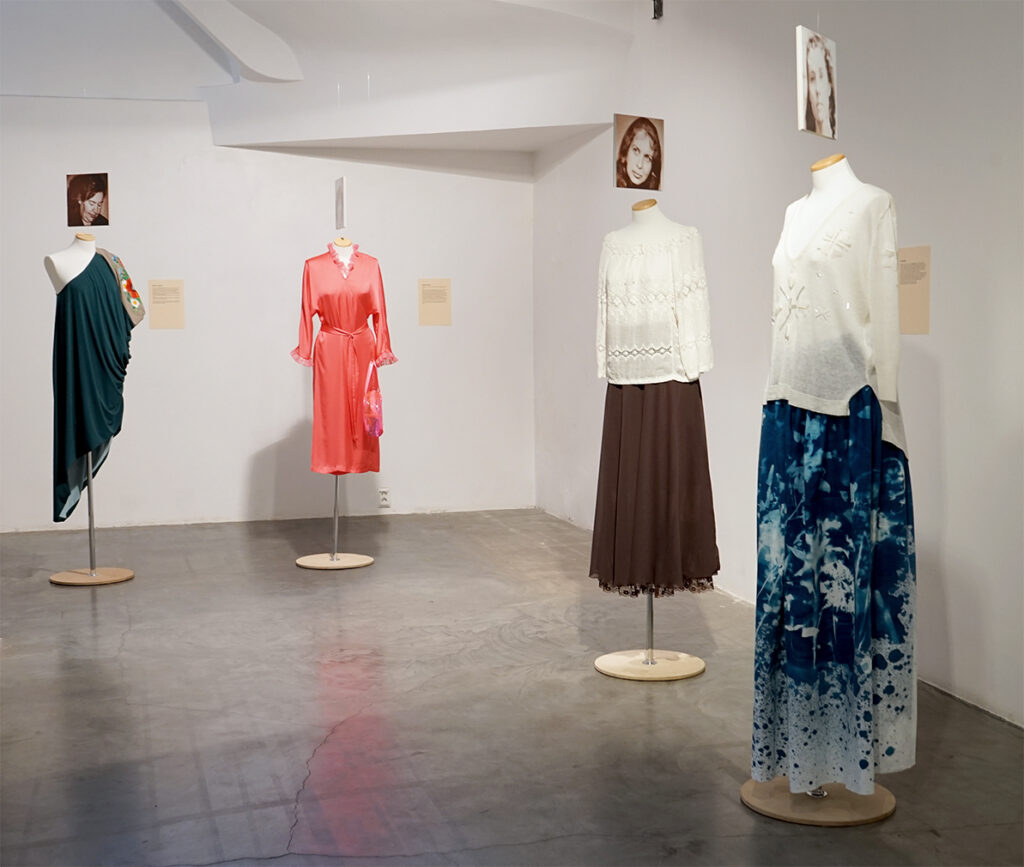
The annual exhibition From the Roots of the Estonian Fashion Designers’ Union will be open in Hobusepea gallery from Wednesday, July 1st 2020. Exhibition will be open until August 3rd.
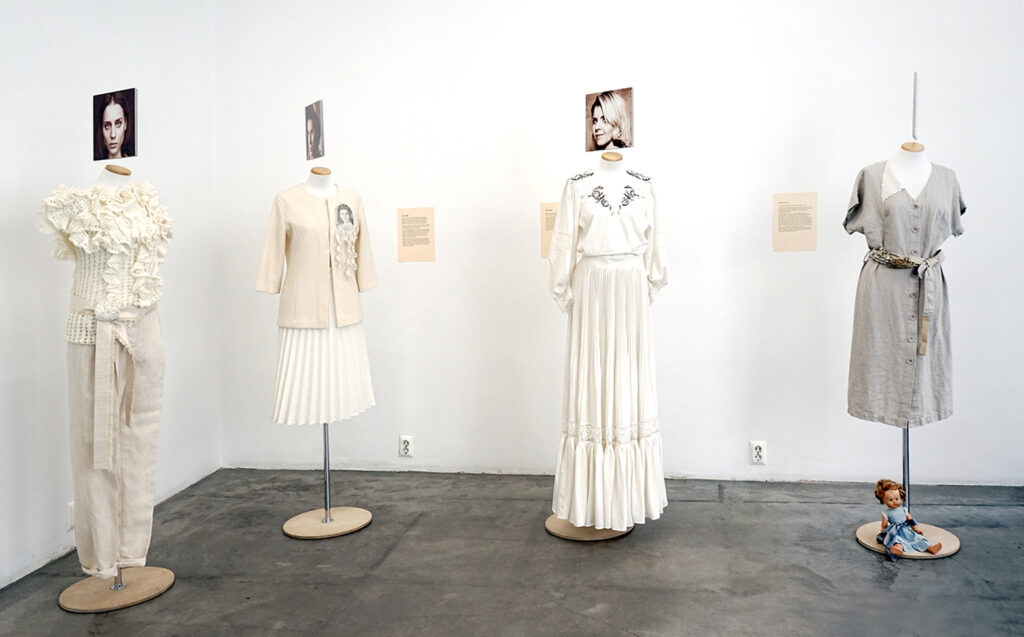
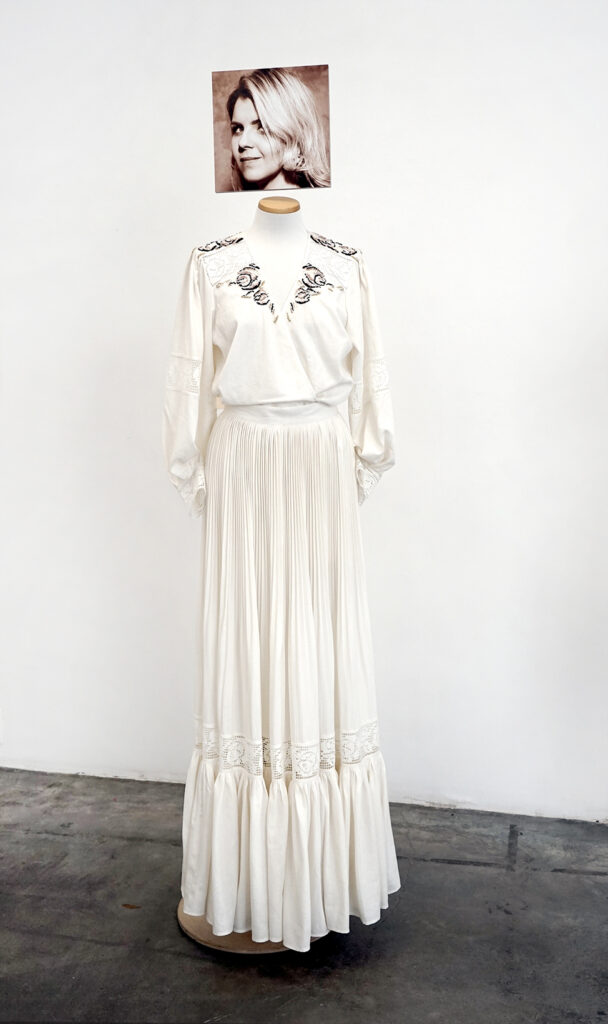
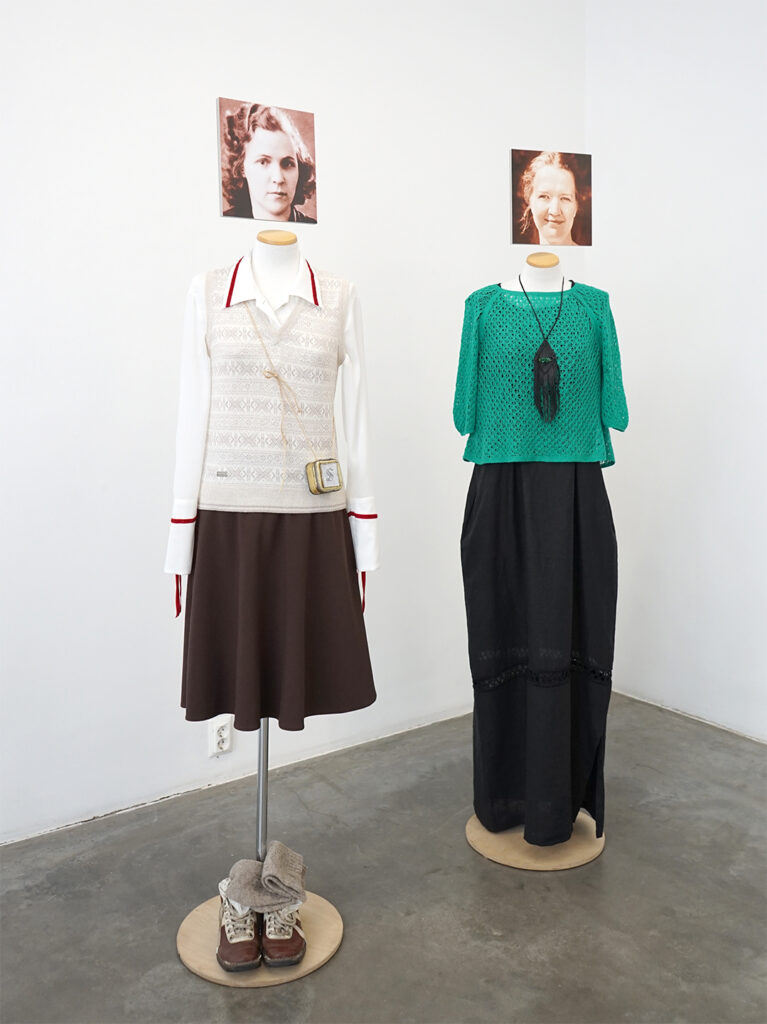
At the present exhibition former clothing culture meets contemporary fashion design. Through innovative working methods and modern solutions, fashion designers express respect towards their origin, beauty ideals of various generations as well as the phenomenon of continuity.
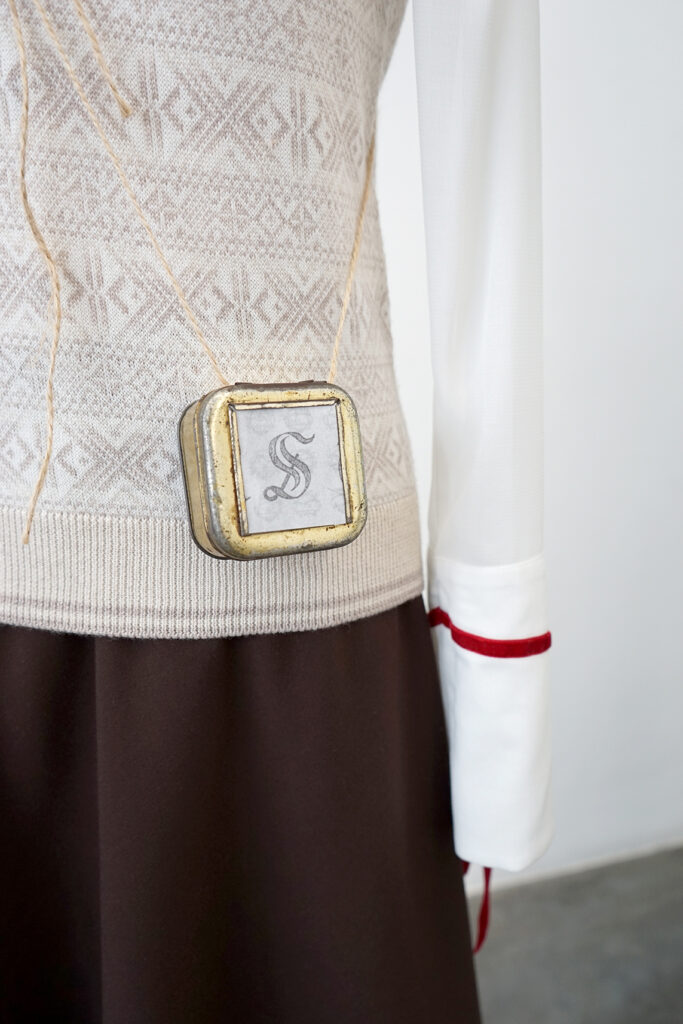
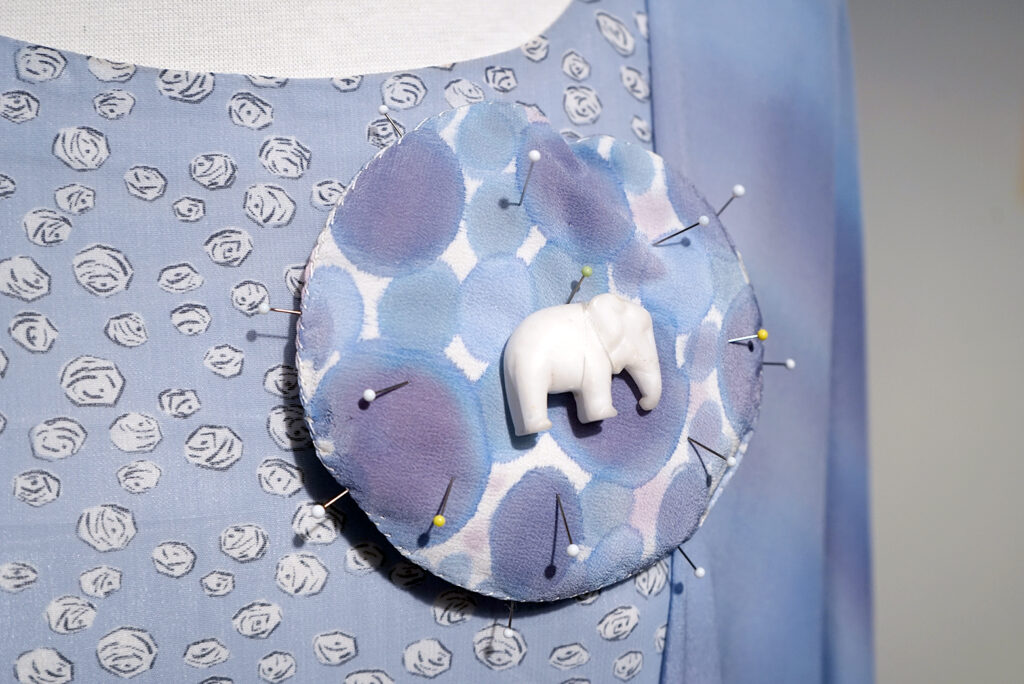
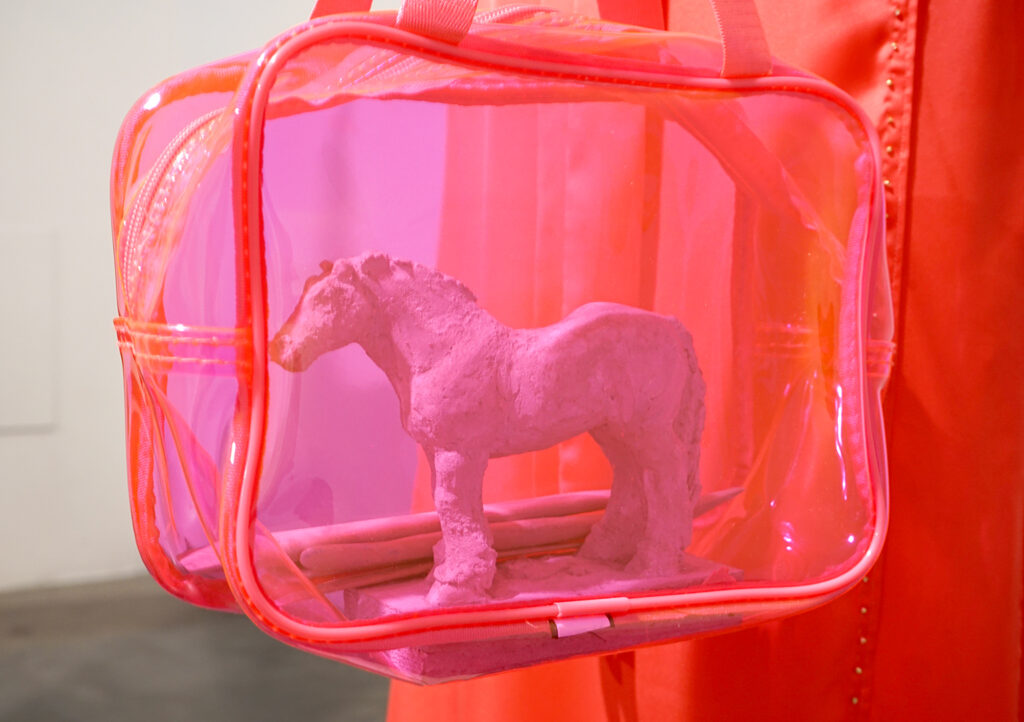
In their creative process, the participating artists have been most inspired by a clothing item or an everyday object that has belonged to the artist’s close family member. The artists have been influenced by the activities, rituals and clothing of their relatives dating back to the artists’ childhood – while now analyzing the aspects connecting or disconnecting them to the individuals related to their memories. Participating artists have chosen the old photographs, letters and everyday items that have deeply influenced them and these are now on display for the exhibition viewers who can thus test the strength of their so-called genetic code and contemplate on the inevitability of one’s roots. Every exhibited piece is equipped with an explanatory text and the portraits of both the artists and the close relatives who have inspired them.
Participating artists: Ainikki Eiskop, Anu Hint, Anu Ling, Anne Metsis, Astri Müül, Diana Denissova, Eve Tiidolepp, Ilona Tamm, Joan Hint, Kai Saar, Katre Arula, Kärt Karjatse, Küllike Tuvikene, Külli Kerttu Siplane, Liivika Põvat-Straus, Merle Lõhmus, Piret Kuresaar, Thea Pilvet Martinson, Tiia Orgna.
Organizer of the exhibition: Estonian Fashion Designers’ Union
Exhibition design: Anu Hint
Supporters: Estonian Artists’ Association
Publications: MinuPrint
Exhibitions in Hobusepea gallery are supported by the Cultural Endowment of Estonia, Estonian Ministry of Culture and Liviko Ltd.
Lylian Meister‘s personal exhibition Treasure Island will be opened in Hobusepea gallery at 5pm on Wednesday, August 5, 2020. Exhibition will be open until August 31st, 2020.
Lylian Meister comments on her present exhibition as follows:
Treasure Island is an exhibition about restlessness, yearning, searching, journeys and in a way meaningless desires. Eclectic and colourful, composed with lightness.
I was working on the exhibition as an amateur anthropologist, researching myself. I simply took paintings off the walls of my bedroom and brought these together with my other domestic things to my gallery for one month. I contemplated on my personal Odyssey and Penelopeia. I stitched and glued roses in order to share my secrets below these. I drew a new continent on the globe with borrowed pencils. I did what I wanted.
I went to the sea in the island of Muhu,
The blacksmith of Sõrve peninsula offered me sauna,
And I wove fabric in Kerala.
I floated as a Great Mother on water. The salty sea was around me and instead of blood there was sugar floating in my veins. I wept and sugar crystals sank to the ground as pearls. Life like a shipwreck! The pirates of Suuremõisa Castle threw me a lifebuoy, gave me the keys to the treasury and caused me nightmares at night. Their castle has double ceiling and the whole island is not real. Hiiumaa is a continent that rises from water on a full-moon night once a century. On my birthday. I receive as many presents as I can carry, yet nothing belongs to me … not even my lover … . I am living a double life with double standards.
Medusa’s snakes are reborn while guarding my great treasure on the continent. When is the moment when another person’s artwork is reborn and becomes mine? Is it enought when I have added a third eye to a cross-stitched cat and decorated every spot with my initials? I am a sugar-blooded thief. I want to obtain and win! Every evening I gamble myself away in order to win. When does one become a property of another? My lover says: „You cannot appreciate your game partners.“ He has not decided yet for what he wants to trade me.
Residents of Hiiumaa island buy me off. They know all the winds and they have a boat in every harbour. The wind turns, I’ve got navigational charts, my father’s compass and my grandpa’s pocket watch. Treasure hunt is but a pretext; what I want is a journey that would hit and amaze me. I will get myself back in a hundred years if I can carry the present ashore. In Hiiu Shoal, human years start to go backwards.
According to poet Ilmar Laaban, „the end of an anchor chain is a beginning of a song …“.
Present exhibition involves collaborators: Katarina Meister – paintings, Father Imanta (Imanta Lember from Sõru parish, Hiiumaa island) – ironworks; Kristel Kaerma – details, crocheted snake; Aet Randorg – patchwork quilt; and many unknown authors.
I wish to express my gratitude to: Tarmo Rajangu, resident of Hiiumaa island, who allowed me to explore his shed full of treasures; Kaido Lember, resident of Sõru parish, Hiiumaa island, and his wife Velda Lainoja who borrowed me Father Imanta’s creative heritage; Mall Tamberg who completed most of the needleworks; Vasudevan and Tasara Art Centre in India where threads were dyed and cotton textiles were woven according to my designs; Marko Nautras who helped to complete the photographs; Mika Orav who allowed me to use his personal estate; Hiiumaa Vocational School and Suuremõisa Castle non-profit association for their extensive support; Kristel Kaerma, Einar Keskpaik and Volli Lainoja for their assistance and inspiration.
Supported by the Cultural Endowment of Estonia.
Exhibitions in Hobusepea gallery are supported by the Cultural Endowment of Estonia, Estonian Ministry of Culture and Liviko Ltd.
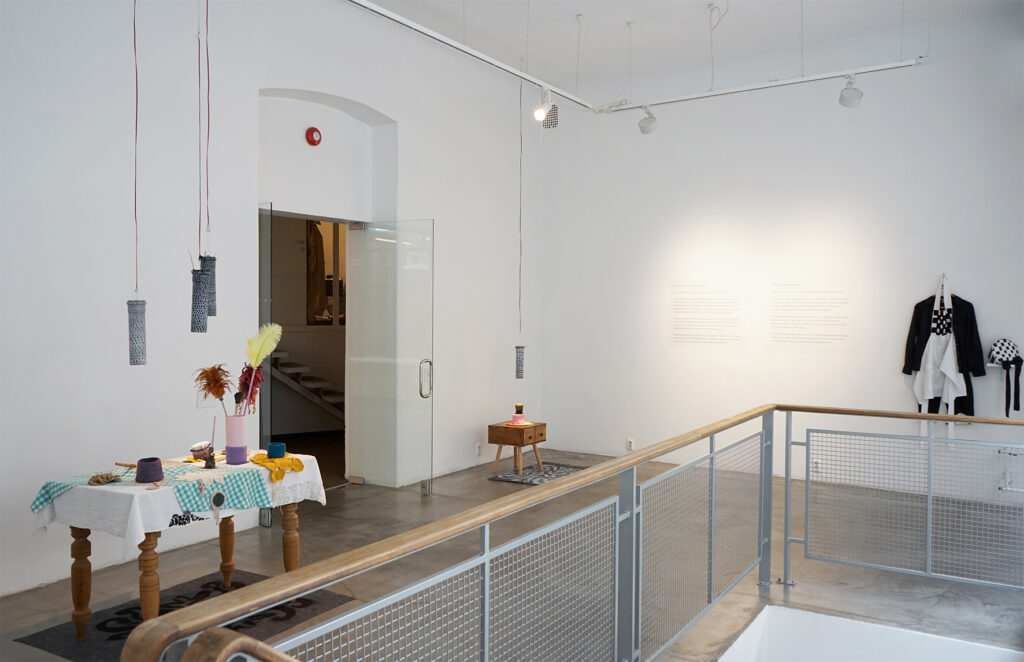
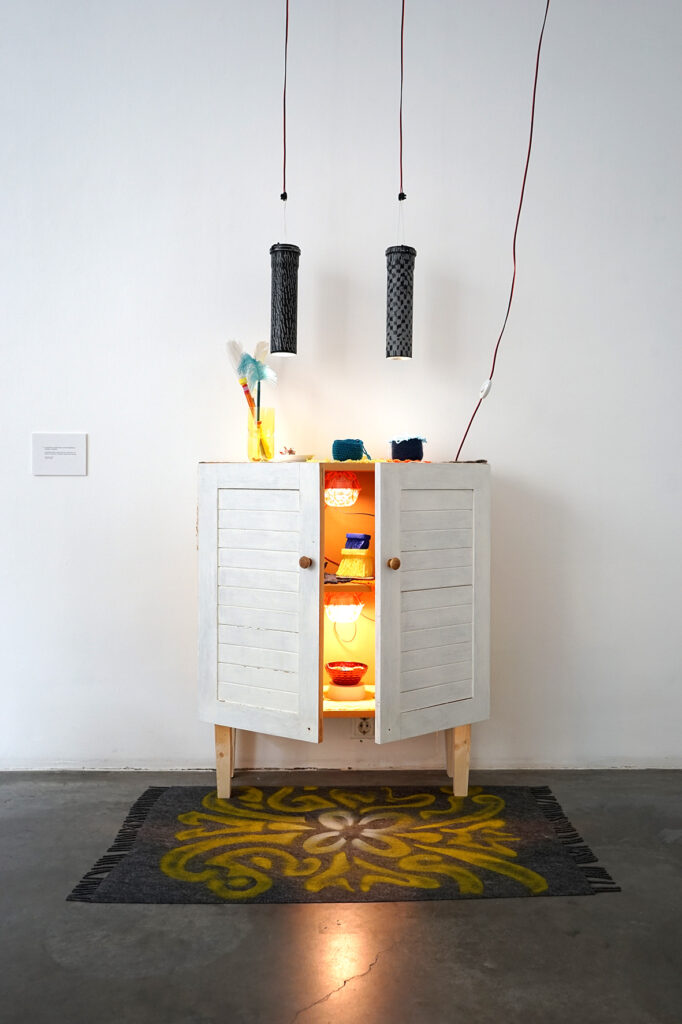
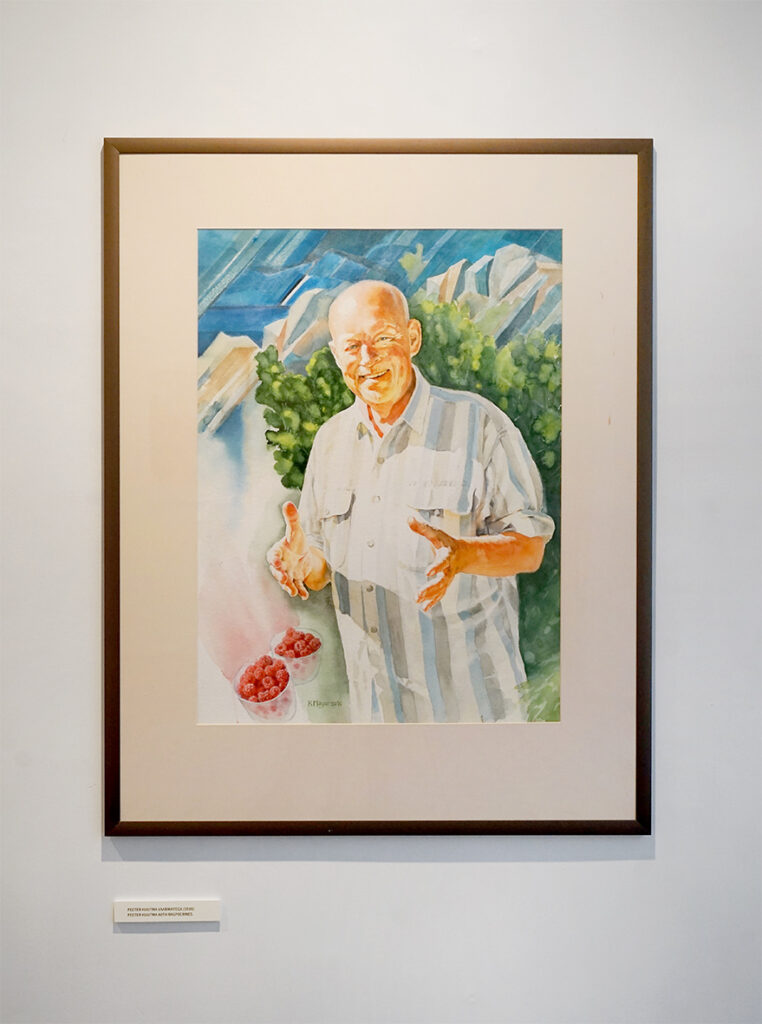
Ulvi Haagensen’s solo exhibition Thea Koristaja Museum at Hobusepea Gallery opens on Wednesday, 2 September 2020 at 6pm. The exhibition is open until 21 September, 2020.
“Welcome to our place”, says Thea Koristaja, as she opens the door and indicates for us to enter an exhibition that explores the connections between art and everyday life. Thea Koristaja is an imaginary person, an artist, and a cleaner and this is her museum. Together with two other imaginary artists, known as Olive Puuvill and Loome Uurija, she works with Ulvi Haagensen, who is quite real, to explore how art and life can meet, converge, overlap and sometimes clash.
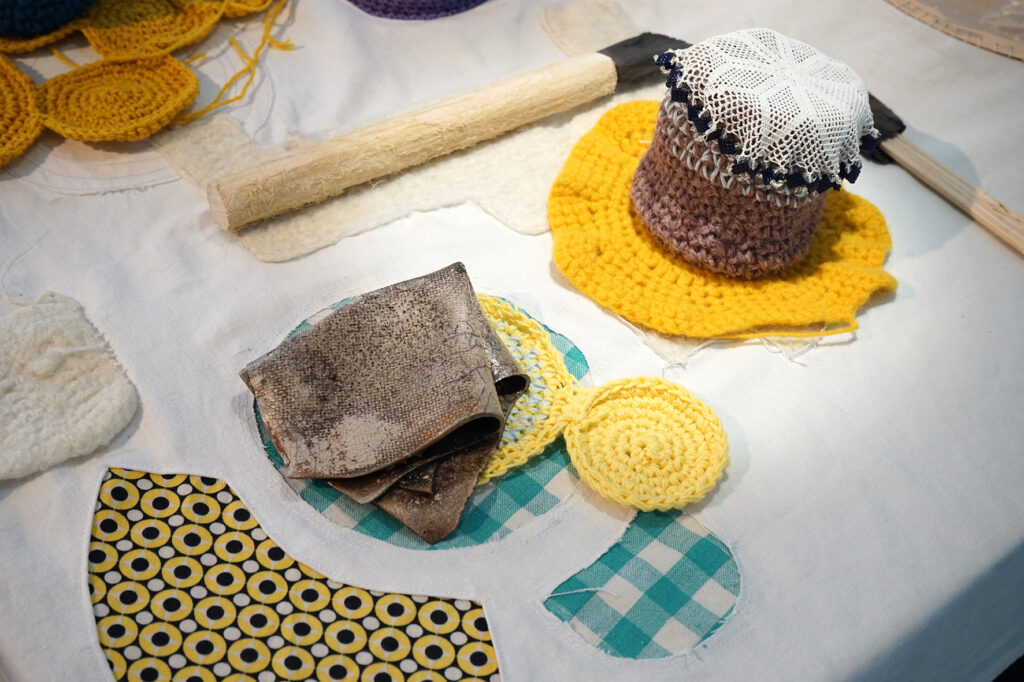
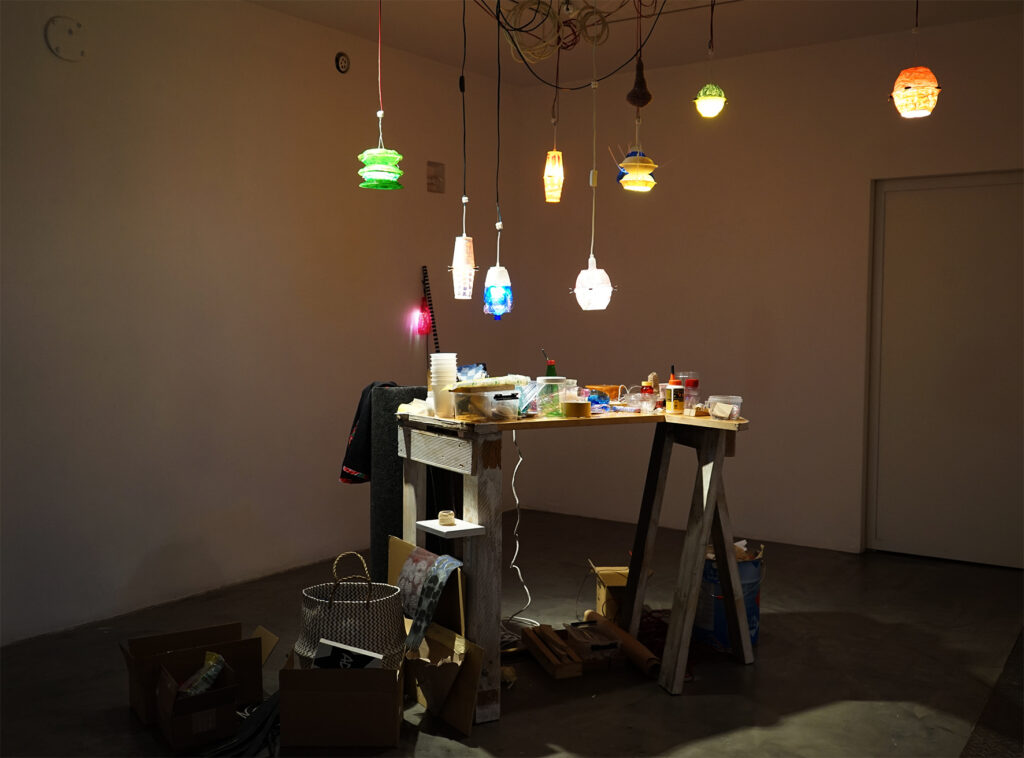
The exhibition uses the upstairs and downstairs of the gallery to present two different contexts – the exhibition space and the studio. Upstairs is clean and tidy, not dissimilar to a living room or hallway in a home – after all, we want to make a good impression, don’t we? But the real action of everyday life may in fact take place somewhere else, in the kitchen, the laundry, in front of the telly, in the everyday, when the visitors aren’t visiting. Downstairs is the cluttered, untidy workspace. This is where Haagensen and her imaginary team discover the unexpected as they push the familiar into new territory. A discarded greeny-blue Värska mineral water bottle, new and recycled timber, a length of rusted steel, wool and cotton yarns in a myriad of colours – all start to find a persona or a potential they never knew they had. Is it possible, here in the studio, to see the most exciting part, the magic of making, the moment when the thing emerges as a thing? Or is that something that takes place in the artist’s mind and can’t be shared?
Exhibitions at Hobusepea Gallery are supported by the Estonian Cultural Endowment, the Ministry of Culture and Liviko AS.
Angela Soop‘s personal exhibition War and Peace I will be open in Hobusepea gallery from Thursday, September 24th, 2020. Exhibition will be open until October 12, 2020.
There is no war, yet someone hurts my heart every day.
Madis Kõiv
Angela Soop: “Current exhibition serves as the first one from the cycle consisting of four parts. The cycle arises and changes according to the surrounding and inner state. The meanings of the words “war” and “peace” depend on the ways of interpretation and the context. While preparing for this exhibition I was unable to foresee the situation today. Concepts have become more reverse, yet the lights seem to have turned down a bit. Borders become vague, volumes coincide and transform. The exhibition is based on perceiving the states and observing various influencing factors. In one case the focus lies on status and the other case concentrates on activity.
Strong contrasts and soft lights, sharp corners and round reflections, great words or silence – the connection will be made in any case. While navigating inside oneself and solving the areas of conflict, it is possible to win time and space in order to survive. The exhibition is not a statement but an opportunity for being.”
The artist expresses her gratitude to: Hans-Otto Ojaste, Maiu Mooses, ARS Art Factory, Vaba Lava, Cultural Endowment of Estonia, Siim Soop, Lea Tammik, Ra Sun.
Exhibitions in Hobusepea gallery are supported by the Cultural Endowment of Estonia, Estonian Ministry of Culture and Liviko Ltd.
August Sai‘s personal exhibition Paint Story will be open in Hobusepea gallery from Wednesday, October 14, 2020. Exhibition will stay open until November 2nd, 2020.
Once upon a time, chunks of ice lived on a faraway planet. On a hot and sunny day, they started to crack and melt. Five chunks of ice saw the opportunity for an adventure during the changes. They drifted apart from others in the sea of ice and headed for the seven seas to search for happiness.
However, halfway during their trip the chunks of ice started to crack. One of the chunks got frightened and turned around. Four chunks fearlessly continued their journey and melted. But it turned out that nothing terrible happened. The chunks became a part of the sea and this gave them new powers. They started to discover the expanse of the sea while diving deep to the sea floor and rising as foamy waves on the shore. All this was exhausting for them so they took a peaceful nap under the sun.
When waking up, they realized with terror that they were floating in the air and rising in the form of vapour above the sea. One of the chunks did not dare to take off and remained in the sea. Three chunks went up to the sky and became a cloud. After all, it was quite fine to be a cloud and to be flown around by the wind. They flew above mountains, deserts and forests. But before they grew tired of being a cloud, a sudden rumble could be heard. The cloud started to shake and grew thicker and thicker. A lightning struck. The chunks hidden in the cloud were startled and began shivering even more. One chunk of ice did not dare to let go of the cloud and squeezed it so that two chunks became rain and poured down from the sky at an enormous speed, followed by the orchestra of an echoing rumble and the bright lightnings. They dashed down until they crashed something immense and unknown. Everything all around was filled with silence and darkness.
At the same time, the situation at the sea of ice was heated up since the chunks of ice that had remained were quarreling with each other. Some of them were looking for the reasons behind their trouble in the seagulls flying by and in the waves arriving from the faraway countries. The chunks evil-mindedly terrorized other chunks with the flocks of seagulls and tsunamis. Despite the fact that seagulls prefer to gather on dumping grounds. And tsunamis normally won’t arise without a reason but due to the earthquakes taking place in the deep sea. It is so deep down that no chunk of ice wouldn’t bother taking a look at it, since the chunks are already filled with water because of staying put and hiding their cracks.
When the chunks of ice that rained down from the cloud finally recovered, they found themselves floating above the ground between trees. They had turned into fog. One of the chunks didn’t want to be fog and vaporized back to a cloud. The last existing chunk of ice was floating as fog in a shady forest. It hugged the tree trunks and moistened the moss until it arrived at a sunny clearing and fell down as drops to the ground. The earth swallowed the chunk that had turned into water. There was silence and peace in the deep inside of its dark bosom. Suddenly everything the ground started to shake around the chunk. A rapid stream grabbed hold of the chunk and dragged it along. The chunk was surrounded by the babbling and deafening sound. The stream twirled and squeezed the chunk while pushing it up and down, to the right and left and throwing it out to bright light from total darkness. Now the chunk had become a fierce river on the ground. Having flown with foam for quite some time, the river’s flow grew slower – it had reached the sea.
It noticed the chunk of ice in the sea that had left behind from others, but the chunk didn’t recognize the river. Then the chunk in the river saw the chunk of ice floating in the sky as a cloud and the fog that thought it was a cloud – and together they held tight to each other while squeezing tears out of the cloud. But they didn’t recognize the river as well. The chunk in the river realized that even those chunks who had left behind in the sea of ice remained strangers. They won’t know that all of them are everything at the same time – the sea, the clouds, the rain and the fog, the rivers and the lakes, and also the characters of a fairy tale. That’s the end of the story. If you wish to continue the adventure then choose to GO TO THE EXHIBITION!
Paint Story is an exhibition about paint that cannot stand still. While searching for the new ways of self-expression for the painting, paint is changing its form and testing the limits of its abilities. The fairy tale ends and the adventure continues.
August Sai
Exhibitions in Hobusepea gallery are supported by the Cultural Endowment of Estonia, Estonian Ministry of Culture and Liviko Ltd.
Exhibition His Dreams were Nothing Remarkable by Art Allmägi and Keiu Virro will be open in Hobusepea gallery since Wednesday, November 4th, 2020. Exhibition will be open until November 23rd, 2020.
Early this year, Art Allmägi made an inventory of his artwork. Different exhibitions have included numerous sculptures and installations which have no extra function, unlike the artwork produced for public space. Among them are the sculptures exhibited in his personal exhibition “I Had a Dream Last Night” in Hobusepea gallery in 2012. Actually, these sculptures should have been stayed in a storage. Not because of damage by mice nor the battered beds but because of the controversial content of the dreams that Art has described beside the sculptures.
Hence, if there is something under question that perhaps it should not exist, Art’s artistic vision is mainly as follows: it should! If someone says that men with guns in art should be already left behind as history, Art makes six of them (“Paint it Black”) and shows the pieces several times.
The exhibition “I Had a Dream Last Night” included insane descriptions about dreams where several men approach Art with indecent proposals. Alas, these texts have started to remind of the fear of homosexuality, the topic that our government members seriously tend to discuss these days. Now it felt necessary to overview these texts. However, how to stay away from the situation that these won’t become a part of bulk of texts recreating negative approach? What if Art would sincerely rewrite these dreams, would these have the same impact on the spectator? It is not only the question of being, but also of seeming. Classics.
So it happened that Art Allmägi called someone who seemed trustworthy enough and seems to be the opposite of the meaning of his original texts. Journalists (as “social influencers”, thought Art by himself) think and write on these subjects. Art called Keiu Virro asking her to rewrite his texts. While being skeptical about influence, optimistic about Art’s ideas and having not seen the devastation by mice yet, Keiu said “yes”.
Thanks to: Anette Parksepp, Mari-Liis Vind, Alo Allmägi, Taivo Timmusk, Kristi Kongi, Cultural Endowment of Estonia.
The exhibitions in Hobusepea Gallery are supported by Estonian Clutural Endowment, Estonian Ministry of Culture and Liviko Ltd.
Britta Benno‘s personal exhibition Ruinenlust in Lasnamäe will be open in Hobusepea gallery since Wednesday, November 25th, 2020. Exhibition will be open until December 14, 2020.
When waking up from a lunch-time nap, it had transformed to a gigantic future dinosaur that no one had ever seen before. One can imagine the soaked bulks of houses thrown on a hillocky landscape behind the fog. These are the ruins of concrete panel houses that have luckily survived in a spot that once was called Lasnamäe.
The cuboids had no windows nor doors, darkness smirked its toothless grin behind the cavities. And yet, there was no emptiness there – new life had moved in Lasnamäe. Creatures like the dinosaur were living there – huge, miraculous animals whose ancestors originated from the Anthropocene.
Ruinenlust in Lasnamäe is a science fictional prospective to post-human urban landscape where jungle and mountaneous terrain with the future creatures have taken over the ruins of a former bedroom community. Pleasure of looking at the ruins, Ruinenlust, is projected to the district of Lasnamäe that has lost the heavy burden of meanings. The message has been expressed through the models of houses characteristic to Lasnamäe have been used in puppet animation as well as the etching drawings that look like findings from an ancient civilisation.
Marginal and old-time arts, printmaking and stereoscopic puppet animation accompanied by harpsichord music form a staged installation. Concern about the dystopian state of our environment motivates to imagine the post-human future. Hybrid art and layered combination becomes the tool of such imagination and depiction.
Current exhibition also serves as Britta Benno’s second peer-reviewed creative output of her studies in the Doctoral School at the Estonian Academy of Arts. In her artistic research, Benno concentrates on depicting science fictional landscape in the extended field of drawing and printmaking.
Benno’s last pop-up exhibition Of Becoming a Shape of a Land(Scape) was completed during a residency in Iceland and was opened for a few days in Outver gallery, Iceland. In Tallinn the same exhibition project, titled as Once I Had, was held together with Heather Beardsley in Kraam Project Room in the autumn of 2019. The most prominent personal exhibition Dystopic Tallinn was open in Tallinn Art Hall gallery in the summer of 2019.
The artist expresses her gratitude to: Ragnar Neljandi (cameraman, animator, post-production), Heigo Eeriksoo (puppet master), Mait Eerik (prop master), Cultural Endowment of Estonia, Nukufilm LLC.
Exhibitions in Hobusepea gallery are supported by the Cultural Endowment of Estonia, Estonian Ministry of Culture and Liviko Ltd.
Martin Buschmann‘s personal exhibition Doc. Photo 2020 will be open in Draakon gallery from Tuesday, December 14, 2021. Exhibition will be open until January 8, 2022.
Since the objective of documentary photography is to record events on the spot then in case of virtual events and environments we are bound to think about how to be present and how to reflect the events of virtual environment through photography? What are the common characteristics of the real and the virtual world? What are the possibilities and restrictions; how does contemporary photography theory function and survive in virtual environment?
The artist presents photographs of concerts that have taken place in various virtual (game) environments. Buschmann manipulates with contemporary concert photography in virtual environments while observing the ways of forwarding the dynamics of the visual (including mood, flow of events, characteristics).
Martin Buschmann directs his “camera” to concert environments and related events while reflecting the virtual action in the light of international events and political situation. The Target supermarket in flames, in the event of virtual club Elsewither (that is the virtual copy of Club Elsewhere located in Brooklyn, NYC), was synchronized with the rioting in New York in June 2020, the same can be said about the performance by Pussy Riot at Block by Blockwest Festival. Both events took place in Minecraft environment that was the fastest, most convenient and perhaps the cheapest solution for creating a virtual concert in conditions of Covid-19 restrictions.
All this is counterbalanced by images about the so-called commercial environments: a photograph about the audience at the concert by Lil Nas X held in Roblox environment and the Lost Horizon festival in Sansar. Whereas in other environments, the avatars representing men remain rather similar to human beings then in Sansar environment also characters with a carrot appearance are allowed to the dance floor.
Also, the question of personal data and personal protection becomes increasingly important – how can a person be characterized when existing in a virtual environment? In real (optics-based) photography, we know and distinguish persons according to their facial features and posture, but how one should do it in photography of virtual world where avatars have been created by the game developer?
Artwork of the current exhibition has been completed with the support of the Cultural Endowment of Estonia.
The artist forwards his gratitude to: Reimo Võsa-Tangsoo, Kristel Schwede, Veigo Kuzmenko, Tiiu Buschmann, photography department of the Estonian Academy of Arts, photography magazine “Positiiv”, Cultural Endowment of Estonia. Also, the environments of Roblox, Minecraft and Sansar and everyone who have been involved in the concerts taken place in these environments.
Exhibitions in Draakon gallery are supported by the Cultural Endowment of Estonia, Estonian Ministry of Culture and Liviko Ltd.
Laura Cemin‘s personal exhibition a slash is a dash is a splash will be open in Draakon gallery from Wednesday, January 12, 2021. Exhibition will be open until February 5, 2022.
a slash is a dash is a splash is a scenography for a play, a training room, or perhaps a leaky text that escaped the 2 dimensions of the page.
Playing with different degrees of abstraction, Laura Cemin literally translates puns and idiomatic expressions into material objects, while simultaneously creating a new abstract language. A sequence of bodily traces, exhaled sounds and physical impressions to allow slippages away from the straight, the vertical, the controlled.
The exhibition is the latest iteration of the artist’s research on the connection between movement and language and the connotations that language attributes to simple motions. Here falling and slipping, usually associated with failure and defeat, are no longer feared or despised, but seen as possibilities to release control, embrace vulnerability and yield to the support of the earth.
The biggest thank you to Jessie Bullivant, Mika Helin, Essi Kausalainen, Sille Kima, Kaisa Kruuse, Michael McCrea, Maarit Mustonen, Marie Raffn, Eva Volmerson, Helsingin Kiipeilykeskus, Maa-tila and Septaria Kerasil.
The exhibition is supported by supported by the Cultural Endowment of Estonia, Estonian Ministry of Culture, Liviko Ltd. and Arts Promotion Center Finland.
Kadri Toom‘s personal exhibition Ways of Seeing the Periphery will be open in Draakon gallery from Tuesday, February 8, 2022. Exhibition will be open until March 5, 2022.
Empty landscapes exist in their non-existence, pulsating and undulating in yearning.
The idea of Ways of Seeing the Periphery has born out of a landscape experience. The artist has exhibited graphic prints that can be conceptually divided into three:
The focus in the pieces completed in tondo format lies on peripheral, marginal landscapes that bear no visible trace of human activity. One can visualize a fallow ground – an open field, covered with dry and thin layer of soil. Empty planes have been repeatedly surveyed, photographed, drawn, explored, digitalized and marked. Such peripheries, planes and brushy hillocks are potential spaces. Periphery has potential for spatial change, an empty space has potential for metamorphosis. While creating digital strata, intensive and highlighted tones are involved. The luminous screens mediating information emphasize the glow of landscapes. These are cryptical, intensive, enchanting and organized. Out of this concurrence, new and uncanny visions will arise to the brown fields.
There are outlines of bog pools and reflections of clouds on the gallery walls, talking about the bodily experience of landscape. The unique opportunity to physically enter the landscape gives a privileged status. To glide into a soft, dark and slippery bottomless bog lake. To be surrounded by dark water and to observe the sky reflecting back from the surface of the water. To float between the sky and the ground, to surround oneself entirely by the landscape.
The printmaking series “Where did the globeflowers go? Homage to Lore Kutschera (1917–2008)” reveals the roots of nine plants. The botanical drawings by Austrian botanist, phytosociologist and researcher of plant root systems have been used in the series where Toom has transferred these into cyanotypes. The layers of paint have been printed while using the monotyping and screenprinting techniques. The choice of vibrant colours emphasizes the decrease of the biodiversity in soil and refers to the overall mentality that agitates to produce more, faster and with less costs.
Exhibition is supported by the Cultural Endowment of Estonia and Estonian Ministry of Culture.
Exhibitions in Draakon gallery are supported by the Cultural Endowment of Estonia, Estonian Ministry of Culture and Liviko Ltd.
Jaan Elken‘s personal exhibition ON_OFF will be open in Draakon gallery from Tuesday, March 8, 2022. Exhibition will be open until April 2, 2022.
Jaan Elken: “As an artist, I create worlds that claim to be a visual whole and which intellectually charged coordinates have influenced me in one or another way.
The architectonics of metaphorical landscapes has been inspired both by collapsing glaciers and rocky deserts (“Snow Line of the Atlas Mountains”, “Turquoise and Ice”), also by the ruin ensembles of exotic cultures as well as sign systems (“Northern Africa, revisited”, “Morocco”). Aesthetics that poeticizes degradation as well as observes the intersection between the inside and the outside has become less important now; I rather see a million opportunities next to the territories engaged by mass tourism and kitsch industry to map the reality according to my own rules.
In 2020–2022 there were no travels to be accumulated into my artwork; however, it lies in the power of a painter to create strong simulations. It is a true physical feeling how the power of the art of painting can be found in emotional high-voltage – I seem to be in trance while sketching the unknown and/or something that lies ahead.”
Taavi Talve‘s personal exhibition (re)constructed points of view will be open in Draakon gallery since Wednesday, April 6th, 2022. Finissage of the exhibition will take place at 6pm on April 29th.
There is no evidence in the structural logic of the filmstrip that distinguishes footage from a finished work. Thus, any piece of work may be regarded as footage that can be used in any form to construct or reconstruct a new work.
Hollis Frampton, filmmaker
(Re)constructed points of view by Taavi Talve places film as a found material in the middle of the installations. Based on the fact, current exhibition refers both to the materiality of (the illusion of) film and the irreconcilable contradiction in the center of moving image – its
immobility.
Exhibition will be open until April 30, 2022.
Supported by the Cultural Endowment of Estonia, Estonian Artists’ Association.
Exhibitions in Draakon gallery are supported by the Cultural Endowment of Estonia, Estonian Ministry of Culture and Liviko Ltd.
Hanno Soans and Silvia Sosaar open their co-exhibition Reformation in Draakon gallery at 6PM on Wednesday, May 4th, 2022. Exhibition will be open until May 28, 2022.
But where is the final destination of the roots of an event? Where are the last cells of an event-organism? These are nowhere. These exist only if agreed upon. This is especially obvious when observing the retroactivity of the specific event comparatively, let’s say in the context of Criminal Code and the possible feeling of guilt.
Jaan Kross, „Kajalood“, 1980
Present exhibition is a result of a several years long process – yet, it has the fixed beginning and the end point. It was a beautiful sunny autumn day 2018 when we planned to go the Papal Mass, carrying the slogan borrowed from Henry of Latvia “Laula, laula pappi!”*. Exhibition involves gestures that stay experimental and veiled gestures that add extra charge to the exhibited objects. Silvia Sosaar’s powerful installation memento mori brackets Hanno Soans’s more fragile artwork while addressing the public space in front of the Russian Embassy in Tallinn. The geographical locations presented at the exhibition refer to the island of Saaremaa, Kaliningrad, Münster and Tallinn as well as the timescale of the exhibition material extends back to 13th century of the Chronicle of Henry of Livonia throughout the year of 1997 up to the present day.
Every Reformation is initially an action. Reformation is born as a spontaneous reaction to the environment that is structured by traditions. Reformation flirts with personal space charged with public rites, whether these be finally represented in an exhibition hall, an icon or iconoclasm. At least for a few stimulated moments, Reformation serves as a symbolic counter-attack to the historical past or present or at least as a disquieting unrealized potential of this gesture. Reformation is a hygiene procedure and they say you have to wash yourself regularly.
The artists express their gratitude to: Andres Gailan, Madis Kaasik, Jaak Soans, the Sosaar family, Uku Toomet, Reimo Võsa-Tangsoo.
Exhibition is supported by the Cultural Endowment of Estonia.
Exhibitions in Draakon gallery are supported by the Cultural Endowment of Estonia, Estonian Ministry of Culture and Liviko Ltd.
* “Sing, sing Priest!” (translation from Estonian), taken from “The Chronicle of Henry of Livonia”
Sirja-Liisa Eelma and Tiina Sarapu will open their co-exhibition Black Mirror in Draakon gallery at 5pm on Tuesday, May 31st 2022. Exhibition will be open until June 25, 2022.
Black surface absorbs light and colours; while looking at black surface, one can see info infinity, unknowing, solitude and protective tenderness. Mirror gives you the honest truth. The danger to get stuck in reflections and in the reflections of reflections is as big as the temptation to touch the snoozing screen of a smartphone in order to open completely different kind of worlds.
Landscape painter of 17th century Claude Lorrain made use of black mirror as an optical aid. Compared to a clear mirror, the details are more subtle and the reflection of black mirror is more simplified. The black reflection brings forth the tonal range as well as reduces the intensity of tones.
The encounter of the reflecting and painted worlds refers to the multilayeredness of existence. The layer of glass in front of the painting is protecting the artwork but also creating the distance between the painting and the viewer. This way, the viewer misses the opportunity of directly experiencing the materiality, fragrance and smell of the paint. The reflections, flickers of light and shadows of the glass function either as disturbance or as an unstable and captivating finesse on the surface of painting.
Photos: Anna Mari Liivrand and Stanislav Stepaško
Exhibition is supported by the Cultural Endowment of Estonia.
Exhibitions in Draakon gallery are supported by the Cultural Endowment of Estonia, Estonian Ministry of Culture and Liviko Ltd.
Kelli Valk will open her personal exhibition Walk-through Rooms in Draakon gallery on Monday at 6pm on June 27th, 2022. Exhibition will be open until July 23rd, 2022.
Look through my eyes how time is bending backwards. These are the patterns of a life, won back from oblivion. To observe the rooms walked through during the years. A meeting with a secret spot where inner monologue can be held and everything that has happened can be explained to oneself. To be honest, to breathe together with a unique landscape of patterns. A pleasant view offers comfort; and tender feelings can be openly felt towards domestic objects. The sequence of repetitions is unspeakably enchanting. The wall patterns of the rooms are waking up, humming, yearning, crying, ranting, dreaming, falling asleep. Every room provides a stop on the journey towards oneself. Everything that is on this side of the walls remains in the view. Blending the dream and the reality sheds light to the bottomless depths of inner space. What happens is a sensuous tour from one room into another while making the real mental home for sadness. Stories can be told also without words, sometimes the important things are hidden in the untold. I feel that I am a gardener taking care of plants. Sometimes feeling joy, and then again, being sad. There are times of sleepless nights, just like frost at the night time. Life is just like weather – always changing. There is a huge difference between the summer heat and the winter chill. A ray of light is enough in order to lit up complete darkness.
Kelli Valk
The artist expresses her gratitude to: Karoliina Kagovere, Ott Kagovere, Anni Kagovere.
Exhibition is supported by the Cultural Endowment of Estonia.
Exhibitions in Draakon gallery are supported by the Cultural Endowment of Estonia, Estonian Ministry of Culture and Liviko Ltd.
Sirje Petersen will open her personal exhibition Flow of Light in Draakon gallery at 18:00 on Monday, July 25, 2022. Exhibition will be open until August 19, 2022.
Light shows us colours.
What’s out comes in and what’s in gets out.
Openness and closeness.
Light helps us to see details
and light makes darkness go away.
Everyone has a place and a space in this world,
sometimes it is warm and cosy, sometimes cold and bleak.
Sometimes it is noisy, sometimes it is too silent.
Always changing – in light and in shadow.
No-one can grow in darkness.
It becomes possible in light.
Darkness may seem endless but a ray of light can always lit it up
and make everything alive.
There is no absolute reference system. Everything is relative, even the flow of time.”
Sirje Petersen
Exhibition is supported by the Cultural Endowment of Estonia.
Exhibitions in Draakon gallery are supported by the Cultural Endowment of Estonia, Estonian Ministry of Culture and Liviko Ltd.
Jüri Kass will open his personal exhibition Black-and-White in Draakon gallery at 18:00 on Monday, August 22, 2022. Exhibition will be open until September 17, 2022.
With his current exhibition, Jüri Kass continues with the minimalistic means of expression that he has been presenting in various techniques at several personal exhibitions. The artist chooses the most simple way for creating a visual trace while translating this „elementary particle of a picture” in various ways – and at the present exhibition, this elementary particle will be served by the hole in paper.
The artist expresses his gratitude to: Kadi Kiipus (restoration centre of the Estonian National Library).
Exhibitions in Draakon gallery are supported by the Cultural Endowment of Estonia, Estonian Ministry of Culture and Liviko Ltd.
Mari Männa will open her personal exhibition Let’s live in friendship! in Draakon gallery at 18:00 on Tuesday, September 20th, 2022. Exhibition will be open until October 12, 2022.
“Let’s live in friendship!” refers to a text that was found on a blackboard of a schoolhouse in Novyi Bykiv in Chernihiv Oblast in Ukraine after the pillage by Russian soldiers. Current exhibition alludes to a self-contradictory Russian propaganda campaign.
Mari Männa has combined playful artwork and documentary found material in her unique world. The landscape she has created alludes to a location that is flushed by conflicting energy. The artwork that has formed is just like a frozen moment in this chaos. Männa started to work with her new sculptures before the Russian invasion to Ukraine. Her half-figures began to embody the ongoing events while taking on the emotions, postures and objects of the changing society.
Graphic design: Henri Kutsar
Thanks: Piret Männa, Iaroslav Iakubivskyi, Kristjan-Julius Laak
Exhibition is supported by the Cultural Endowment of Estonia.
Exhibitions in Draakon gallery are supported by the Cultural Endowment of Estonia, Estonian Ministry of Culture and Liviko Ltd.
Mihkel Maripuu will open his solo exhibition Fata Morgana in Draakon gallery at 18:00 on Friday, October 21st, 2022. Exhibition will be open until November 12, 2022.
Fata Morgana is a phenomenon presenting a complex mirage that stages reality and then will unexpectedly disappear. It usually happens in early morning following a cold night when frozen temperatures will be replaced by the desert heat at dawn of day. A deceptive apparition is created at a far distance – a mystical vision, reality full of illusions, chowing down its own content, is appearing beyond reach on the horizon. Figuratively speaking, fata morgana creates, both as a concept and a phenomenon, parallels between daily news and contemporary post-truth society. What we are dealing here is a manipulation charged with symbols and narrative ambiguity, leading to either short-term or long-term consequences.
Manifestations of amorphous (formless, shapeless) truths are staged in the virtual flow of information. Information is mutually absorbed, every act is performatively charged, every path that is taken is analyzed. Therefore, an artificially unique reality is being designed, created by an individual based on his or her personal interests. And yet, it is still an experience mirrored by a warped and shifted virtual space – a simulation of reality that is often far more real than reality itself. An entropic implosion (that is an inwardly explosion of unsystematic chaos) takes place, an act of macroscopical broadening of microscopical meanings – an infinite speed where everything will disappear immediately after being born. This is not the past but the virtual eternity that is the sum of all possible possibilities, emerging and disappearing at the same moment.
To believe or not to believe?!
Exhibitions in Draakon gallery are supported by the Cultural Endowment of Estonia, Estonian Ministry of Culture and Liviko Ltd.
Erki Kasemets’s personal exhibition Karl Marx in the Animal Kingdom will be open in Draakon gallery from Tuesday, December 15th, 2020. The most lightweight painting in Estonia can be seen at the exhibition and 37 years later, Erki Kasemets is collaborating with Reet Ohna, the artist of the board game that Kasemets invented in his childhood.
“When I was in the seventh grade, I took part in the competition of designing a board game inspired by the natural world. My invention was awarded the 2nd prize, and the 1st prize was not given out. They decided to place my game into production – before that, the rules were adjusted and simplified; the artist designed the board and the packaging that were depicting animals. The product was titled “Journey in the Animal Kingdom” and tens of thousands of copies of the game were printed. Even the reprints of the product were made later.
Current exhibition Karl Marx in the Animal Kingdom is like a journey back to my childhood. I was inspired by handy materials while I was creating the animal game – mostly the heaps of books with animal photos that were in my home. As a child, I had often been browsing through these books and several images had been etched into my deepest memory. At the same time I was even more interested in the political map of the world, numerical data and short descriptions of various countries that I could find in a guide titled „Countries in the World“. I have also been trying to assemble the images of the animals and political geography in a mechanical way. Creating “real” animal kingdoms started in an alphabetical order – countries for antelopes, monkeys etc. Every “kingdom” was naturally provided with a special flag and coat of arms. Yet, the most important thing was to find the most accurate social and economical solutions for the animal species. Democracy for monkeys and kingdom for antelopes? Is capitalism suitable for wolves, the national animal of today’s Estonia? What is the most popular religion in the country of hares? Well, I never reached these last questions since I could not cover more that the species beginning with H and J while compiling the alphabetical review of animal kingdoms.
Anthropomorphism – the attribution of human traits, emotions etc. to non-human entities, such as (toy) animals – is considered to be an innate tendency of human psychology and is a phenomenon that develops in early childhood. Attaching the functioning of human society to animals could be one of the extended forms of expression of this phenomenon. A game where the existing elements are the basis for creating new combinations based on form and where all game pieces are equal. On the contrary to equality, one of the philosophical belief expressing the relationship between men and animals is based on the statement that human beings stand apart from the rest of the natural world. Humans are just like detached from nature and is only functioning due to the continuous state of opposition.
Hasso Krull has described similar concept of human nature as follows: „… a human being is an animal to another human being – however, instead of being friendly they are hostile, immediately becoming aggressive when they are being approached too close and without warning. The animal inside of a man is a predator, and natural society is predatory. Such confession of faith provides a good foundation for the ideology of liberal capitalism according to which altruistic impulses must be suppressed. Such ideology continuously emphasizes that true wellness will be achieved only through the contradiction of egoistic interests.”
Confrontations, either black-and-white and colourful ones, can be found in the artwork exhibited at the current exposition. Therewith, one of these pieces, a painting bearing a black-and-white confrontation, is one of the most lightweight painting in Estonian – one square meter of the painting weighs less than 30 grams. The guest artist of current exhibition is Reet Ohna from Otepää. She is the artist who designed the board game “Journey in the Animal Kingdom” that went into production. We did not know each other before the exhibition.
Erki Kasemets
Exhibition will be open until January 9, 2021.
Exhibitions in Draakon gallery are supported by the Cultural Endowment of Estonia, Estonian Ministry of Culture and Liviko Ltd.
Laurentsius‘s personal exhibition The Group of One will be open in Draakon gallery from Tuesday, February 2nd, 2021. The exhibition will be open until February 20th, 2021.
The Group of Seven or Algonquin School was a group of Canadian landscape painters in the first half of 20th century. The Estonian counterpart of this practice could be considered painter Konrad Mägi. The Group of One is an exhibition of landscape paintings by Laurentius who got inspiration for completing this series from the nature in Canada. According to the artist, nature has undergone diverse filters during the process of painting. This has resulted in dreamy landscapes from the hidden corners of the memory, reflections, shifts of perception and a solid amount of technical tricks of painting; there is also the feeling as if something suspicious yet good has been consumed.
Exhibitions in Draakon gallery are supported by the Cultural Endowment of Estonia, Estonian Ministry of Culture and Liviko Ltd.
Raul Keller‘s personal exhibition Perfect Wordls will be open in Draakon gallery since Tuesday, February 23rd, 2021. Exhibition will be open until March 13, 2021.
Keller’s installation in Draakon gallery presents a travelling exhibition consisting of three related expositions toured in people’s homes during four months from October 2020 to January 2021. The exhibition set has been produced with the method of contact printing (as it is known in analogue photography) using the medium and large format negatives. These have been glued to magnet mountings and the results serve as fridge magnets. People participating in the travelling exhibition project could exhibit a selected compilation of pictures in their homes and listen to the soundtrack, specially composed for the exhibition, from the small portable speaker. The participants had also the opportunity to take one photo relating to the exhibition while using the disposable photo camera loaded with black and white film. Raul Keller is exhibiting all three exhibition sets in Draakon gallery, including the soundtrack and the photo series consisting pictures that were taken by the participants of the travelling exhibition.
The basis of the three photographic series is a set of glass negatives that should have been exhibited as contact prints on fridges in Draakon gallery in April 2020. The glass negatives probably date back to 1920-1930s, depicting reproductions of art, philosophy, theology and geometry photographed from books on a copy board. When the monumental events in spring 2020 postponed the current exhibition by one year, the artist decided to re-photograph his pieces. He worked with the found images during the past year while the photographic series Perfect Wordls was born.
Exhibition is supported by the Cultural Endowment of Estonia. The artist expresses his gratitude towards everyone who has participated in the travelling exhibition.
Exhibitions in Draakon gallery are supported by the Cultural Endowment of Estonia, Estonian Ministry of Culture and Liviko Ltd.
Veiko Klemmer‘s personal exhibition What You Can’t Get for Money will be open in Draakon gallery from Tuesday, May 18th, 2021. Exhibition will be open until June 5th, 2021.
Artworks of this exhibition serve to continue the series of abstractions that Klemmer started working with in 2011. Presently exhibited pieces have been completed during the autumn and winter of 2019. The exposition was initially planned to be exhibited in 2020, but due to the conditions of pandemic the exhibition takes place a year later.
Veiko Klemmer comments on his exhibition: „On one hand, the purpose of creating artwork has been mainly the process itself, particularly the experiments with adding tension to space and stimulating a sharpened state of mind where an artwork hovers between an image and imagination. On the other hand, there are definitely some motifs and ideas floating in zeitgeist recorded in the exhibited works. And yet, I guess there is no point in translating the pictures into words for the audience, since all sorts of meanings can be attributed to abstraction. This is a part of the liberating game of art – in order to take part in it, one needs something more than traditions, a cow or money. The artworks are presented without titles. If you wish you can touch them gently.“
Exhibition is supported by the Cultural Endowment of Estonia.
Exhibitions in Draakon gallery are supported by the Cultural Endowment of Estonia, Estonian Ministry of Culture and Liviko Ltd.
Anna Škodenko will open her personal exhibition Stranger at Home in Draakon gallery at 6pm on Wednesday, June 9th, 2021. The exhibition will be open until July 3rd, 2021.
The artist comments on her current exposition: “You are looking through the large gallery window and make the decision to step inside of a home that is unknown for you – the space of my exhibition.
The phrase “stranger at home” can refer to a stranger in somebody else’s home. It can also mean an alteration in the perception of the external world, transforming close things to something distant. It can allude to a poetic sensation of crossing the borders and facing the unknown. Or it can just happen that at home one feels stranger than in foreign countries. I would like to leave you enough space here to wander towards whatever direction that feels accurate.
However, one of the artworks you see needs an introduction:
While daydreaming I always return to an old house of my family. For me both dreaming and that house are embodied in one painting from my childhood. It is a small touristic painting depicting mountain landscape on one side and hiding an image of a forest on the reverse side of it. Apparently, the author of the painting discarded it, and painted the scene over with black. There is no loneliness greater than the loneliness of failure. The failure is a stranger in his own house. But if to look at something intimately, every error has its beauty. As a child I was thrilled to discover that semi-erased landscape. I have spent days looking at it and restoring the painting in my imagination with the most marvelous colours and details. Eventually, I painted a building crane on top of the mountain landscape in order to fit the painting into my new home and level the two sides of it.
Now, please proceed to the exhibition space. I will try to keep the volume of construction work down.”
Exhibition is supported by the Cultural Endowment of Estonia.
Exhibitions in Draakon gallery are supported by the Cultural Endowment of Estonia, Estonian Ministry of Culture and Liviko Ltd.
Nele Tiidelepp will open her personal exhibition words can’t describe but are good enough in Draakon gallery at 6pm on Tuesday, July 6th, 2021. Exhibition will be open until July 31st, 2021.
Nele Tiidelepp: “Current exhibition will show (corporeal) forms, movements and actions fading to the abstraction. I’ll concentrate on the body released from its corporeality and rules. The body is abstracted and lies or is stretched out. It is hanging, leaning, reclining, protruding, freezing, flowing. It has freed itself from its initial finiteness, but taken a new direction into an unnatural position, denying preliminary movement, bodily essence. A living physical object strangled by desires, fears, horror. It has forsaken its corporeality which is limited in parallel by furniture, garments and space.
Installation represents drawings, round objects (bodies), textile surfaces/covers and positions. The movements of the character spread out in the exhibition space repeat themselves and the initial meaningful trajectory in the air will lose its functionary associations while obtaining new, visual and choreographic qualities. Blurring and transformation of meanings. Moving from one aspect to another. Conciliation with multiplicity of pasts and studying different layers, illuminating the layers.”
Editor: Kristel Rebane
Designer: Siim Hiis
Photos: Joosep Kivimäe
Thanks to: Martin Tiidelepp, Villem Säre, Sidney Lepp
The exhibition is supported by the Cultural Endowment of Estonia.
The exhibitions in Draakon Gallery are supported by the Cultural Endowment of Estonia, Estonian Ministry of Culture and Liviko Ltd.
Sven Parker will open his personal exhibition Walls, panels, fragments in Draakon gallery at 6pm on Tuesday, August 3rd, 2021. Exhibition will be open until August 28th, 2021.
This exhibition is inspired by one of the first „westernized “comic book series published in Estonia in the 1990s. Western narratives and characters entered Estonian storytelling soon after the fall of the Berlin Wall, marking the beginning of a paradigmatic shift. As the cold war ended, the capitalist ideology reached Eastern Europe and brought about expansive commodification and transition to a new liberal-democratic mode of governance.
American political scientist Francis Fukuyama has described this time period as “the end of history”, the disappearance of great historical narratives based on the tension and ideological opposition between East and West. Yet recent events have created new grand narratives, such as the fight against terrorism, the climate crisis and most recently, the sometimes long bouts of social isolation, to name a few.
Indeed, one can argue that history has not ended, instead becoming fragmented and a commodity on itself, as suggested by the cultural theorist Fredric Jameson. The desire for capitalism has been given a physicality, which addresses its own temporality and the space surrounding it. Following this framework, the works on display are mapping out past collective experiences, with fragments as starting points for historical narratives to emerge.
The panels on display are intended as markers of the period when western and eastern narratives and imagery meet. They draw a parallel between fictional stories and historical events from the past, presenting these realities as still frames in the midst of a transformative change. The comic strips are applied onto the panels as a collage, mimicking layers of wallpaper added and removed, portraying ideological fragments to be built or demolished.
The artist’s gratitude goes to: Merilin Paart, Mait Luhasoo, Aivar Paart, Roman-Sten Tõnissoo, Mihai Nica
The exhibition is supported by the Cultural Endowment of Estonia.The exhibitions in Draakon Gallery are supported by the Cultural Endowment of Estonia, Estonian Ministry of Culture and Liviko Ltd.
Tiiu Pallo-Vaik will open her personal exhibition VIRG. RIDGES in Draakon gallery at 6pm on Monday, August 30th, 2021. Exhibition will be open until September 18th. The artist is exhibiting her paintings completed in 2016–2021.
Mai Levin: “RIDGES-it’s difficult to find the right equivalent to the Estonian word VIRG, which refers to a dense, regular and varying pattern drawn either by the wind to the sand or by the water to the seabed. VIRG can be also described as a grid consisting of fine lines, applied orderly by Tiiu Pallo-Vaik on canvases covered with various red shades. Underneath the grids there are vague shadows reminding of various images according to every viewer’s fantasy.
One of the earlier paintings following the similar pattern was titled “Vibrations” by the artist. This and also other titles of Pallo-Vaik’s artwork – such as “Ebb and Flood”, “Movement” – emphasize the kinetic effect of the pattern of lines. In order to define this kind of magical influence, the concept of VIRG seems to be the most appropriate one to create associations with the play of shadow and light on the sand washed by the wind and water. For the past six years, VIRG has offered Tiiu Pallo-Vaik opportunities for various looking paintings; however, it is unlikely that her restless, curious nature will stick to this method for too long. A certain new expressiveness has emerged in Pallo-Vaik’s new painting “Towards the Light” (2021).”
Exhibitions in Draakon gallery are supported by the Cultural Endowment of Estonia, Estonian Ministry of Culture and Liviko Ltd.
Sigrid Viir will open her personal exhibition False Vacationers Workcation Travels in Draakon gallery at 6pm on Tuesday, September 21st, 2021. Exhibition will be open until October 9, 2021.
Sigrid Viir’s current exhibition False Vacationers Workcation Travels serves as a conceptual continuation of the artist’s personal exhibition recently held in the Contemporary Art Museum of Estonia (EKKM) where the artist focused on the subject of blurring the borders between work and vacation in contemporary society.
The border between work and leisure time seems to become increasingly vague – this is also clearly proved by the use of the following neologisms such as workcation (also written as workation; work+vacation), bleisure (business+leisure), or bizcation (business+vacation) in English-speaking environments. According to George Lakoff and Mark Johnson (“Metaphors We Live By”, translated into Estonian and published by Tallinn University Press, 2011), the metaphors of the resources of work and time change the way we understood the concept of leisure time – and thus, leisure time is becoming something very similar to work.
Work isn’t a rabbit that will run away!
An unemployed rabbit doesn’t need to turn tail!
Mountain of work
Hours for what we will
Mountains of work
An hour for what we will
A mountain for what we will
Hours of work
Mountains of will
An hour of work
What we will of work
Mountain of hours
Hours of work for mountains we will
We will work for mountains of will
We will hours of work
We will hours for what we will
The artist expresses her gratitude to: Cultural Endowment of Estonia, Villem Säre, Kristiina Hansen.
Exhibitions in Draakon gallery are supported by the Cultural Endowment of Estonia,
Estonian Ministry of Culture and Liviko Ltd.
sigridviir@gmail.com
sigridviir.com
visiblesolutions.eu
Mari-Leen Kiipli‘s personal exhibition Nanshe Gone Fishing has been open in Draakon gallery since October 16, 2021. You are welcome to the finissage of the exhibition at 4pm on Friday, October 29, 2021.
“I have the feeling that now is the right time to flounder about by the river, struggle in brushwood, lay one’s body into the riverbed, swim by cattails, water lilies, pondweed, on one’s back with ears under water, to listen to the thundering of mud. While fishing in the depths of a quiet river, I am pulling out endless tufts of grass, old boots, shinbones, hollow thoughts, confusing emotions. Uncontrollable proliferation takes place on the riverbanks – the blood-colored Himalayan balsam, bindweed and hops have turned the riverbanks of the River Jägala into a dense brushwood. The toxic substances coming from Kehra paper mill are drifting downstream, changing the river, its life and flora. Why do I have the feeling that some kind of a whole is expressing itself through this damn brushwood – something that is much more than just alkaline residue? That something or somebody is also defining and characterising the new environment. An active character that is manifesting itself through me, while surrounding me and blurring my boundaries. A nightshade, a henbane, an Atropa Belladonna are budding from my chest.”
Writer Daisy Hildyard has said that we have another body that is as personal and material as the physical body we are aware of. This other body is also a version of ourselves – it extends outside from us, accompanies us on our flights, floats above the factory, enters someone’s lung, flows in the riverbed and rides in a cargo. It is understandably difficult to keep this in mind that we are always connected to this other body, since we are daily present in our primary body; but the fact is that we actually host both bodies. Why are we not touched enough when they speak about global effect? Why does it seem so nonpersonal? Compared to the smallness of our private lives, this scale is unfathomable and our second body is limitless. A closer look at our body shows that it is also conditional in nature – there is always oxygen and atmosphere in our body, and our body moves in atmosphere, similarly we are connected to water and nutrients. While being permeated by matter that is surrounding us everywhere, we form a certain whole with the toxic substances in natural environment, flourishing grass, our body and everyday commodities.
Exhibition will be open until October 30, 2021.
Exhibition is supported by the Cultural Endowment of Estonia.
Exhibitions in Draakon gallery are supported by the Cultural Endowment of Estonia, Estonian Ministry of Culture and Liviko Ltd.
Mall Nukke will open her personal exhibition Earthly Borders in Draakon gallery at 6pm on Tuesday, November 2nd, 2021. Exhibition will be open until November 20, 2021.
Mall Nukke: “We love to watch the horizon – that liberates our senses and lets us feel ourselves as a part of the universe. A beautiful sunset on a summer evening is an experience that helps us to overcome the winter darkness when the foggy, grey sky and bluish white fields of snow become one with the horizon. What will become of this enchanting, even romantic view when there is something totally haunting appearing on the earthly border? Paintings at the current exhibition depict a vision of the state where the mankind has led itself to, while actively rearranging nature.
What we see while observing the horizon depends on where we are at the moment. The two largest paintings at the exhibition – “Horizon I” and “Horizon II” – interpret the idea that according to our position in a landscape one and the same view can have a totally different effect. When you have taken a seat too low, then the horizon will seemingly appear somewhere far away, out of reach. And the future the horizon could forecast is also vague and looks foggy. This makes us feel insecure since our mind’s eye is veiled. When you have climbed too high, yearning for partaking in a transcendental experience; and then you are suddenly hit by despair because there is no beautiful border between the earth and the sky behind the concrete landscape polluted by artificial environment.
The symbiosis of previous paintings has been depicted on the painting “The Earthly Border 2” where two opposing worlds meet – the pure, pristine sky on one hand and the human carpet covering the ground that has been devastated by aggression on the other. The artificial god of war is standing in the middle of the horrendous creation, amids human remains, while stretching wings and getting ready for conquering the sky that is still intact.
The painting series “Below the Horizon” is in a way a continuation to the painting “The Earthly Border 2” but the series follow the form of the watercourse of the world’s largest rivers – Amazonas, Mississippi and Volga. Nukke’s paintings depict human rivers streaming all over the world, at times flooding and then again receding. Human rivers carrying greed, ignorance, hunger for power and indifference flow through the devastated landscape. However, one should not fall into deep depression while viewing the exhibition since my paintings are never unambiguously dead serious – there is always a tiny drop of irony included in my work. Instead of forwarding the message about the imminent apocalypse, paintings at the current exhibition simply confirm the state of things. So the mankind can be also viewed as flourishing mould, as a so-called carpet people whose horizon is set low, in the middle of dust bunnies. Among other things, I was also inspired by the possibility to return to my older artwork in order to re-use the collage technique, but this time to interweave it with oil painting.”
Exhibitions in Draakon gallery are supported by the Cultural Endowment of Estonia, Estonian Ministry of Culture and Liviko Ltd.
Gloria Hao’s and Madlen Hirtentreu’s exhibition Lost Future Figure. oh whistle, and i’ll come to you, my friend in Draakon gallery will be open from November 24, 2021.
l
An old nun steps out of the abbey after years of isolation. Perhaps she is on a
mission. She meets two strangers. What does one see and think of the world
outside the walls of the abbey after years of living in one religious utopia?
What doubts does she meet in herself and what can she share with those two strangers?
In nowadays society the Nun stands out as a representation of several
alternative values, whereas centuries ago she might have been the role model of
values. Today the Nun, who lives in celibacy and without materialistic needs,
becomes a sort of alien Other in contrast with western market-driven society.
In this show we will inhabit the role of the Nun, to see what aspects
of ourselves we can discover and merge with. By getting closer and contorting
the image of the Nun, we aim to create a figure in-between the Nun and
ourselves, between the stranger and ourselves.
We approach the Nun as a metaphor for ‘isolation’ in the pandemic and at the same time we approach the process of becoming a stranger to oneself.
In our investigation we ended up in a garden. An Archival Garden of thoughts and figures.
II
I went to walk on the ice that day. 843 steps.
A wide-spread garden.
Where ants were dreaming.
I let myself indulge in my obsession with digging.
A metallic moving pipe. One eye and a body of a swan. One feather acid green.
It invited me to look through its huge big eye.
I stepped inside that head that day. Soft and rather warm.
A distant swirl and gurgle of water.
Grandma would go out to the backyard with bottles and bury them halfway, with the whole neck underground.
How I liked that bond that had never been broken.
The water gave a hiss, covering the ground in a wet mud carpet.
An oval-shaped stone, apple-green, the size of a small baby.
There it was, the spirit of a volcano and its body.
An ant acting like a propeller, repeatedly, teaching language and building techniques to a group of girls.
The rain stopped. I filled up puddles into small lakes.
Boy, did I dig. And boy, did I whistle.
Madlen Hirtentreu and Gloria Hao both address the duality between inner other self and outside other, primal zone, and recurringly dwell in peripheral zones of society, through which they hope to unveil a possibly lost utopia or simply, find stages between subject and object, between the stranger as a outside continuation and the one inside, in order to open up for estranged natures and alternative readings of futures.
Exhibition will be open until December 11, 2021.
Thank you: Cultural Endowment of Estionia, Taadu Jaan, Alissa Šnaider, Jaan August Viirand
Exhibitions in Draakon gallery are supported by the Cultural Endowment of Estonia, Estonian Ministry of Culture and Liviko Ltd.
Rein Mägar will open his personal exhibition Facial Recognition in Draakon gallery at 5.30pm on Monday, January 13th, 2020.
„Facial recognition is a special purpose computer program or function used for identification or automatic verification or examination of a person.“ (Wikipedia)
Current exhibition mainly consists of portraits while offering an amusing opportunity to search for common features between computer-based work and portrait painting, as also the title of the exhibition – „Facial Recognition“ – is referring to. A computer program is able to spot a human face in a frame in a fraction of a second while comparing the face to thousands of other faces. Therewith the program uses 68 points for defining a face whereas the tip of the nose is always the point No. 31 – the coordinates of all points together will provide the line of numbers characteristic to the person’s face.
Teaching portrait drawing and painting involves similar basic knowledge – one has to find the connecting points and if carefully sticking to the coordinates between the points, it will be possible to achieve resemblance to the model. This forms the beginning, yet today’s computer algorithms can also read the mood on human face – anger, sadness, joy, surprise and probably other expressions. Rein Mägar uses photography in his artistic practice – but unlike the photographer a century ago who made his model freeze in pose, Mägar attempts to record the model’s mood and movements with the help of the means of contemporary photographic technology. He has often succeeded in catching the model’s cheerfulness and smiles.
The common feature in all Mägar’s portraits, and perhaps in his artistic style in general, is depicting the model’s bust only. According to the artist, this method allows him to depict hands and the related activities in order to give a better overview of the characteristics of the one portrayed – for instance, a metal artist holding an axe. He has added motifs from his artwork, such as flying female figures. This approach gives a chance to compare the pieces with ex libris. Besides the portraits painted on watercolour paper the present exhibition also shows compositions where Mägar has used a technique that is quite the opposite to the one of the classic watercolour painting, using a dry brush on an undercoated canvas.
Exhibition will be open until February 1st, 2020.
Supported by the Cultural Endowment of Estonia.
Exhibitions in Draakon gallery are supported by the Cultural Endowment of Estonia, Estonian Ministry of Culture and Liviko Ltd.
Sten Eltermaa‘s personal exhibition Transparency Register wil be open in Draakon gallery from Tuesday, February 4th, 2020.
„Transparency Register“ is a project based on image and language, making the windows and facades of governmental authorities visible to the audience. The project involves various layers: reflective window transparencies, photographs on the wall and on the showcase table, and publication of the artist’s research.
The title of the work, Transparency Register, also refers to the US-inspired database introduced in 2011 to shine public light on the communication between lobbyists and the representatives of EU institutions. The database’s main objective is to create trust in regard to institutions and the policies the institutions or their representatives are pursuing, but also oversight to make it impossible to do the bidding of murky and corrupt interests.
In general, parallels can be drawn in the context of this work with the architecture used in modern and postmodern institutions of power and governance, and the rhetoric that liberals have used or currently use – specific, technical, rational, inaccessible and often conducive to apathy and mistrust: a “cold” selection of material (concrete and stone, glass and steel) and intricate engineered load-bearing structures. The buildings are often homogenous and based on repetition and their facades are made up of regular vertical and horizontal lines – so that they are reminiscent of a crossword or Sudoku. There is the sense that the interiors might be the same way – a monotonous, Kafkaesque world that is easy to get lost in. I would argue that architecture of this type is of a rational type and also reflects the rational rhetoric characteristic of liberal force.
Present exhibition displays photographic series taken in Brussels and Tallinn in 2016-2019, depicting institutions of power and governance, whereas the focus being on the windows of these buildings. Many landmark buildings should be recognizable to the viewer on these photographs, for example, the seats of the European Parliament, the European Commission, the Council of the European Union, Eurojust, Europol, the International Criminal Court and the International Criminal Tribunal for the Former Yugoslavia. In addition, the sites include several local institutions in The Hague, such as the Supreme Court of the Netherlands, the Hoftoren, the headquarters of the Dutch national police force, The Hague City Hall and a number of ministry and embassy buildings. The buildings photographed in Brussels also include several EU buildings in the European Quarter as well as embassies and local government institutions.
The selection in Tallinn includes the “Superministry” building, the IT Agency, the
Ministry of Foreign Affairs, the Harju County Court and the Tallinn City Government.
The artist’s gratitude goes to: Marge Monko, Sven Parker, Olesja Semenkova, Arvi Anderson, Digifoto, Estonian Academy of Arts
Exhibition will be open until February 22nd, 2020.
Finissage of the exhibition will be on February 22nd at 18.00
Supported by the Cultural Endowment of Estonia.
Exhibitions in Draakon gallery are supported by the Cultural Endowment of Estonia, Estonian Ministry of Culture and Liviko Ltd.
Juss Piho‘s personal exhibition Punctum will be opened in Draakon gallery at 5pm on Tuesday, February 25th, 2020.
Juss Piho: “My paintings are largely made of events experienced in life and fragments that are hard to verbalize; of the associations between both positive and negative emotions; of situations that cannot be fully explained; of sensations and moments between human beings; of combinations of the recollections of seemingly unimportant details. I am toying with various compositions of memory while documenting the most influential for myself. The role of colour temperatures and tension as well as compositional structure play far more important role than the abundance of colour in my work.“
Reet Varblane has stated that „Juss Piho’s paintings can be called metaphysical due to the theatrical space with some culturally charged details in the art of painting, but also surrealistic while thinking about weird features. And yet, when quoting Toomas Raudam then these weird details can be as familiar and cosy as a dust cloth or a chandelier or the broom with a red handle in front of a stove. Because it is immediately clear what has been depicted. Majority of Piho’s paintings are figurative, depicting either men or animals. His paintings can be characterized as staged narratives where the characters are interconnected but it remains unclear what kind of relationships they are having. There are usually several small, seemingly occasional stories and mises en scène inside of a big narrative. When thinking of Roland Barthes’ vocabulary related to photography, the charm and also the intrigue in Juss Piho’s paintings won’t lie in studium or the composition but in punctum, or in other words in details, gestures, facial expressions, gazes that may be first disregarded. This is specially the case when the expression or gaze is imaginary, since the figure lacks either a face, eyes or a mouth. The artist doesn’t use a brush when painting – among this tools there are palette knives and scrapers of various sizes. He won’t start painting on white canvas but using a dark ground coat in order to achieve mysteriously bright colour. Yet, similarly to a theatrical performance, Juss Piho’s paintings act in a completely different way in an every new composition and exhibition space. Instead of existential anguish, there is rather a hope of freedom in his work. Similar tendency can be perceived also with his other compilations. But as it is a common fact with Piho’s paintings, everything remains ambivalent.“
Exhibition will be open until March 14, 2020.
Exhibitions in Draakon gallery are supported by the Cultural Endowment of Estonia, Estonian Ministry of Culture and Liviko Ltd.
Aksel Haagensens‘s personal exhibition At Sea will be opened in Draakon gallery on Tuesday, May 19th, 2020.
At Sea
No man is an island entire of itself.
There is and will always be a boat on the horizon – obscured by an overhanging tree, hidden in the barn or deep in the forest. How many harbours are there left to offer us shelter?
When does a refugee stop being a refugee? At the beach – which beach? – when they have found refuge or many generations later? When did they start being refugees? Could it have been long before they stepped aboard and if so, we are all refugees who have not yet stepped aboard.
Aksel Haagensen is a third generation boat-person and artist.
Saskia Lillepuu is a fourth generation boat-person and curator.
The Cultural Endowment of Estonia, Abakhan Fabrics Eesti, Event Center, Taavi Kasemägi, Javier Ortín Cervera sit across from us on the starboard side.
Valeri Vinogradov‘s personal exhibition Vinogradov Without Dubossarski will be open in Draakon gallery since Tuesday, June 9th, 2020. The exhibition will be open until July 4th.
Painter Valeri Vinogradov (b. 1952 in Moscow) has studied in Moscow State Academic Art School 1905 and in former Estonian State Art Institute (now Estonian Academy of Arts). Vinogradov has participated in exhibitions since 1984 – besides holding numerous personal exhibitions, the artist has taken part in more than three hundred group exhibitions both in Estonia and abroad. Vinogradov’s artwork has been acknowledged with Konrad Mägi Award (1992) and Kristan Raud Art Award (2010).
Valeri Vinogradov’s artwork can be characterized by the balanced combination of aesthetics and intricacy. Art historian Ants Juske has interpreted Valeri Vinogradov’s professional genesis as follows: „In the spirit of strict Russian realism, Vinogradov acquired a strong basis for academic painting in the Moscow art school. His painting style changed considerably in more liberal conditions in Estonia where he gradually reached pure abstractionism.“ As the result of his strong basic education in painting and refined perception of the world, Vinogradov has gained recognition with his conceptual works of painting and sociocritical collages since 1990s.
The central piece of his current exhibition – portrait „Exorcism“ – depicts a Yakut shaman Aleksandr Gabyshev who embarked on a 5000-kilometre-long journey to Moscow in order to drive President Vladimir Putin from power as Gabyshev called him demonically possessed. Gabyshev became widely known in 2019 when he called Putin „evil“ and started to walk more than 2000 km from Siberia to Moscow while collecting many supporters and disciples on his way. However, he was arrested in Buryatia in December 2019 and taken to a psychiatric hospital in Yakutia.
Current exhibition also presents Vinogradov’s series of portraits „Sobutõlniki“ that depicts the artist’s friends with whom they have discussed more or less important subjects throughout the past decades. Another series „Other persons“ depicts various individuals who have reached Vinogradov’s paintings during various times, covering the empty walls. The artist comments on his work: „Throughout the times and moments of history, people have deserved to be recorded, although for very different reasons, purposes or places. A portrait can serve either as a glorification, recollection, memory or research – since the concept itself can be interpreted in several ways and places in a contemporary context.“
Special gratitude to: Anne Parmasto.
Exhibition is supported by the Cultural Endowment of Estonia.
Exhibitions in Draakon gallery are supported by the Cultural Endowment of Estonia, Estonian Ministry of Culture and Liviko Ltd.
Ivar Kaasik‘s painting exhibition Breaking Lights in Draakon gallery will be open from Tuesday, July 7th, 2020. The abstract paintings have been completed during the period of 2018-2020. Exhibition design has been completed by Andro Kööp. Exhibition will be open until August 1st.
Light seems to be white or transparent for our eyes. Physically, light is mostly perceived as warmth. In the process of diffraction either on the edge of glass or in the mirror, light becomes rainbow-coloured. In Kaasik’s artwork, these diffractions have acquired fixed borders and specific form. Abstraction and hyperrealism can serve the same purpose – to
direct the viewer to forgotten roads as well as open them up for new experiences. Minimalistic, simple spots of paint on the canvas remind of reflections of touch on the screen or the diffracted rays on the surface of various matters. With the brush and paint, Kaasik has created dynamics, lines and vibrations that will obtain special meaning only in the eyes of the viewer.
Ivar Kaasik will held an artist talk in Draakon gallery on Saturday, July 18th at 12.00. With advance notice it is also possible to visit the artist in his studio on Kreutzwaldi Street, Tallinn. In order to make an appointment, please write to: ivarkaasik@gmail.com.
Exhibition is supported by the Cultural Endowment of Estonia.
Exhibitions in Draakon gallery are supported by the Cultural Endowment of Estonia, Estonian Ministry of Culture and Liviko Ltd.
Gudrun Koppel’s exhibition She hoped that Angels see and understand – She hoped that someone sees and understands in Draakon gallery will be opened on Monday, 3rd of August at 18.00. The exhibition remains open until August 29.
Just as a mythical snake that devours itself from its tail continues to eat its tail in a total endless eternal circle, so everything is the same and has already happened here under the Sun. In retrospect, arbitrary generalizations are made, about which there is no complete truth, because narratives have been interpreted as reflective in the world behind the mirror.
The way angels are portrayed, as we understand them in the Western Christian world, comes from Persia, the oldest monotheistic religion, Zoroastrianism.
The island of Antirhodos sank to the seabed due to a tsunami caused by an earthquake in the 4th century. According to sources, the sea retreated from the port on August 21, 365: ships sank sideways, sand was filled with gobbling fish, people wandered aimlessly along empty streets. The city was then invaded by a body of water, throwing water and ships over houses – a disaster that killed 50,000 people in Alexandria alone. She hoped that Angels would see and understand. Based on historical sources, the city ruins were found intact in 1996 in the port of Alexandria at a depth of 6 meters.
It is known that one of the first female mathematicians worked in the same city. The astronomer and philosopher Hypatia (355 – 415) lived and taught in Alexandria during this stormy time. In March 415, she was attacked by a group of Christians led by the then patriarch. They tore Hypatia’s clothes, cut out her eyes – she was torn to pieces, her limbs were carried in a cart through the city and finally set on fire. She hoped that someone would see and understand. This event is seen as the beginning of the end of the educational and cultural center of the then empire in Alexandria.
St. Catherine the Great (287-305) did not want to renounce her faith in the city of Alexandria, and as punishment she was so brutally and so long punished by the pagan authorities that her whole body was covered with wounds from which blood gushed out. During her captivity, angels wounded her wounds, she was fed by a heavenly dove. When the wheel of torture, which was meant to end her life, broke, her head was finally taken off. She knew that Angels see and understand. According to tradition, the angels took Catherine’s body to Mount Sinai, where St. Catherine’s Monastery still operates today.
And when little Estike had given rat poison to her cat with milk, grabbing the dead cat and taking a firm step into the ruins of Weinkheim Castle to do the same, she felt peace within herself and smiled at how things were connected; she felt that these events were no longer connected by chance and coincidence, but that an indescribably beautiful meaning curved as a bridge over the emptiness between them… She knew full well that the angels were already on their way. (László Krasznahorkai “Satantango ”)
The graphic compositions depict an arbitrary reference to kummastused (Kummastus is a manner used in art through which the object is taken out of the perception routine. Things are disconnected from the habitual connections, resulting in a special perception of the object, not recognition) And everything can be given meaning, because the background is historical, but the approach is arbitrary. The ready-made graphics (old anatomical drawings, photographs) used in the visually saturated world are snakes that devour themselves. The eternal subconscious story of capturing something has created an obscure narrative. An approach that is ephemeral and vanishing and eternally repetitive: She hoped that Angels see and understand, she hoped that someone sees and understands.
The Artist’s gratitude goes to: Cultural Endowment of Estonia, UBUNOIR, Lauri Koppel
Exhibitions in Draakon gallery are supported by the Cultural Endowment of Estonia, Estonian Ministry of Culture and Liviko Ltd.
Katrin Enni’s exhibition Shivers in Draakon gallery will be opened on Wedenesday, 2nd of September at 18.00. The exhibition remains open until September 19.
Katrin Enni’s solo show “Shivers” is a sound environment made of copper – one of the first metals that humans learned to use. In the gallery, each instrument has a voice of its own, producing different rhythms and frequencies. Together these create a sound environment that can be experienced in a way similar to natural sounds – existing and developing on its own with visitors invited to step in, observe and listen. The structure of the sound piece is not fixed but based on combinations that emerge from endless repetitions. The vibration speakers placed under copper objects add physical dimension to the sound. The speakers act as mechanical filters and while making the objects shiver these produce unexpected echos, reverbs and overtones.
The objects can be seen as pseudo-historical artefacts – a reference to different eras in the history of copper. The manually hammered copper vessels and forms are made using ancient metalworking techniques. Primitive analogue synthesizers, wired with copper, refer to the post-industrial period when copper usage increased due to its electrical conductivity. Mass-produced cables, speakers and amplifiers are more contemporary, but still contain various components made of copper.
Katrin Enni says: “While creating an ecosystem of sounds, I am driven by the human desire to play God, to create artificial nature. But when I rely on a material that is being extensively mined on this earth, I am simultaneously contributing to the destruction of an already existing ecosystem.” By giving voice to copper, she detaches the metal from the functions that human need places upon it, re-interpreting the story of technological progress and proposing an alternative symbiosis of nature and technology.
The exhibition is supported by the Cultural Endowment of Estonia.
Special thanks: Kleer Keret Tali, Aksel Haagensen, Holger Loodus, James Prevett, Vesa Rahikainen, Frank Brümmel, Tuomo Rainio, Alejandro Olarte, Ekke Västrik, Toomas Savi, Mart and Mari Tudre, EKA wood workshop, Baltic Steel Center OÜ.
Exhibitions in Draakon gallery are supported by the Cultural Endowment of Estonia, Estonian Ministry of Culture and Liviko Ltd.
Kristina Õllek’s exhibition Filter Feeders, Double Binds & Other Silicones in Draakon gallery will be opened from Tuesday, 29th of September. The exhibition remains open until October 10.
By breathing in and out of the water,
being with others, livings and non-livings.
Sand, silica, silicon, and other silicones.
Blending in and becoming
Hydra.
Hydrate me,
with a soft squishy feeling.
And yet,
it’s no spa, but urgency.
Kristina Õllek
Filter Feeders, Double Binds & Other Silicones is an installative exhibition based on Kristina Õllek’s research and personal observations of anthropocentric influences on marine ecology, focusing on the North Sea coastal area and its filter feeders – blue mussels, oysters and the expanding jellyfish population. In the past 2 years, Õllek was living in The Hague, on the coast of the North Sea, and became interested in filter feeder organisms, such as mussels and oysters. They are called filter feeders because they purify water and act as filters for polluted water; hence, they are considered ecosystem engineers. On the Dutch coastline there are many oyster and blue mussel farms (aquaculture), most of these are based in Zeeland, an area that is largely below sea level and one of the most human-engineered regions in the Netherlands. In 1953 the most devastating flooding in the Dutch history took place there, and the Deltaworks Neeljte Jans dike was built after this, which changed some of its landscape into a dystopic and alienated surface. With the on-going work she’s thinking with the North Sea, and its speculative assumptions and changes in marine ecology.
In 2019 Kristina Õllek received the Artproof production grant for her project Filter Feeders, Double Binds & Other Silicones at Foto Tallinn Art Fair. The photography-based works presented in this exhibition are sponsored by Artproof 5000€ production grant, with the support of TruLife Acrylic by Tru Vu Inc.
Artist thanks: Kert Viiart, perekond Õllek, Angeliki Tzortzakaki, Taavi Rekkaro, Siim Vahur, Niekolaas Johannes Lekkerkerk, Kulla Laas, Rundum, Het Wilde Weten, 1646, Billytown.
Exhibition is supported by: Artproof, Estonian Cultural Endowment, L-Disain OÜ (Lauri Lenk)
Exhibitions in Draakon gallery are supported by the Cultural Endowment of Estonia, Estonian Ministry of Culture and Liviko Ltd.
Lauri Koppel‘s personal exhibition Demiurge’s Tupperware will be open in Draakon gallery from Tuesday, September 13th, 2020. Exhibition will stay open until October 31st, 2020.
The idea of the world being an abnormal state is emphasized by Gnosticism, a collection of religious ideas and systems originating from early Christian and Jewish sects. Demiurge, a fallen divine but evil being has created a world of negative matter. A global direct seller company Tupperware produces plastic containers for food storage and preparation – the hermetic and waterproof containers of various shapes have become a part of today’s household culture.
There is a pressurized social utopia present in the neglected summer cottages, built during the Soviet era. The Modernist way of thinking was applied in construction process, with the aim of humanising the functionalist architecture. Summer cottages were meant to provide the ultimate rational space for recreation – such fashionable keywords as ‘organic architecture’ and ‘cornice architecture’ were expressed in the cottages dating back to the times of the Soviet Socialist Republic of Estonia. However, instead of neatness and cleanliness, something else has intruded into the cottages – something that should not have been there. Illnesses and death.
Empty spaces without people living inside will go on living on their own. While observing some forsaken hedonistic temple of the sun on a cold day, condensed water can be seen on the window panes. The Northern coast of Estonia has numerous similar deserted summer houses without owners, buildings that lie between the outer and inner temperatures. On my long walks, I started to notice the mental and physical pollution on Modernist form of expression caused by time. Summer cottages do not fit into the model of market economy. Lots of buildings of a refined architectural taste have been torn down. Some of these have been renovated or conservated with cheap building materials. Many of these cottages have been replaced by residential houses that have been constructed in conditions of negotiable building acts.
Exhibition Demiurge’s Tupperware is a paranoid view to our collapsing architectural heritage with the examples of summer cottages. Time is merciless and Demiurge is its devilish governer. If there is no one left in the space, then who will be there? It is Demiurge, in the Demiurge’s personal airtight storage box. While speaking about the failure of architecture, then it is the easiest way to start with the Soviet-time summer cottage. With its strict geometry it is an organized space with clear borders to be observed. And Demiurge is grinning. Now and forever.
Supporters: Rein Muuluka, Ingvar Toomas Heamägi, Mario Ansip, Gennadi Baranov, Gudrun Koppel and the Cultural Endowment of Estonia.
Exhibitions in Draakon gallery are supported by the Cultural Endowment of Estonia, Estonian Ministry of Culture and Liviko Ltd.
Co-exhibition by Keiu Maasik and Madis Kurss 100 Ghz to Midnight will be open in Draakon gallery from Wednesday, November 4th, 2020. Exhibition will be open until November 21st, 2020.
The authors of current exhibition 100 GHz to Midnight study the simulation of post-apocalyptic world through contemporary computer games. In standard online shooting games the player contests in a team against other teams. During the past ten years, first-person shooting games have increasingly gained popularity – in these gaming platforms, everyone stands for himself and the playground is much more expanded.
Battle Royal is a term used to describe a battle with multiple participants until the last man standing. At the beginning of the game, the player has nothing, all equipment has to be found on the battleground. Finding good equipment will often decide the result of the conflict. Although the diminishing battleground forces players to be in constant moving, it is possible to avoid the enemies and wait until the danger is over. In reality it could turn out to be the cleverest tactics. Simulating the crisis situations could be taken as a preventive measure for black scenarios outside the game.
In competition level such games require quite powerful computers for playing. In order to be highly visible on the market, the hardware for playing solutions comes with complicated light solutions, called RGB (red-green-blue). Lucent computer cases have become distinct showpieces where besides the computer’s power various RGB solutions can be observed. Preapocalyptic beauty of life curtains the events on the horizon.
Graphic design: Henri Kutsar
The artists express their gratitude to: Contemporary Art Museum of Estonia, Hans-Gunter Lock, Heiki Maasik, Henri Kutsar, Karel Koplimets, Kristiina Kams, Laivi Suurväli, Liina Siib, Risto Vaidla, Tondi Firing Range.
Exhibitions in Draakon gallery are supported by the Cultural Endowment of Estonia, Estonian Ministry of Culture and Liviko Ltd.
Katrin Piile‘s personal exhibition The Rabbit Who Fell into the Pool Full of Balloons will be open in Draakon gallery from Tuesday, November 24, 2020. Exhibition will be open until December 12, 2020.
„I am sitting in my studio, the leaking boiler counts the time like a clock. Emergency situation has lasted for years. Self-isolation has become a daily routine. Repetitions, repetitions, repetitions. For a long time, I have been thinking how such closed life has influenced me. The new reality has lasted for so long that I cannot remember the old reality any more. My self-isolation and the new reality have hyperrealistic dimensions where the contact with the world is set up through various channels of internet. I got the answer to my question what the isolation has done to me from other people who were forced to stay home this spring. According to Facebook posts, I realized that there was certain ironic attitude towards the emergency situation influencing our mental well-being. Our environment and the surrounding objects obtained a new dimension – people identified with things against all odds. What was considered absurd earlier became a new normality. Some of these people never planned to return to their earlier lifestyles.
I used to think that perhaps it would be better not to talk about it at all. Perhaps I’ll leave a strange impression. These people, however, keep posting their oddities in Facebook day by day. Therefore I confess: for years, I have considered myself to be a saggy stuffed toy rabbit lying around the window sill of my studio (Fuck! Now I suddenly remembered that I was a rabbit at the carneval that took place when I was in the 2nd grade. Perhaps I started to relate myself to a rabbit already back then.) So that’s how I keep encapsulating and shrinking.
The world is existing somewhere else. The algorithm throws me the world through glamorous colour photos in the internet flow: it is perfect, glossy, bright and acrylic. Which reminds me of the fact that I have run out of black paint, exactly having completed half of the work. The shop is too far and going there would break the routine. At the same time, the rest of the world seems to be just like Candyland – pretty, colourful, with glossy latex and film and yet somehow indecent and hardly holding together. It is fragile just like a balloon filled with water, waiting for being destroyed. Actually everything is good, since my brother promised to come and fix the boiler and perhaps we’ll also go and shop some paint. The rabbit thing was more of a joke. See you at the exhibition!“
Like Piile’s earlier artwork, current exhibition continues the search for formal abstractness through realistic objects. Oil paintings and ball-point pen drawings repeat and transform two objects until these lose their formal identity, finally heading towards emptiness or formlessness. The artist’s hyperrealistic pieces can be characterized by high technical quality. Her artwork plays with form as in the field of sculpture as well as contains the qualities of seriality and documentation related to photography and video. The volume of work with hyperrealistic painting and drawing technique leaves an absurd impression when expressing the idea; but sometimes art supposedly becomes art when rationally unjustifyable choices are made.
Supporters: Martin Piile, Art Allmägi, Enriko Mäsak and Cultural Endowment of Estonia.
Exhibitions in Draakon gallery are supported by the Cultural Endowment of Estonia, Estonian Ministry of Culture and Liviko Ltd.